03
Etiology Spp. of genus: L. monocytogen, L. welshimeri, L. seeligiri & L. ivanovii
Caused by : L. monocytogenes
Small rod,
Gram-positive,
Nonsporulating,
Facultatively anaerobic rod (1-2µ x 0.5µ),
Facultative intracellular : Reticulo-endothelial cells
Grows in a range of 3-45oC (optimum 30-37oC)
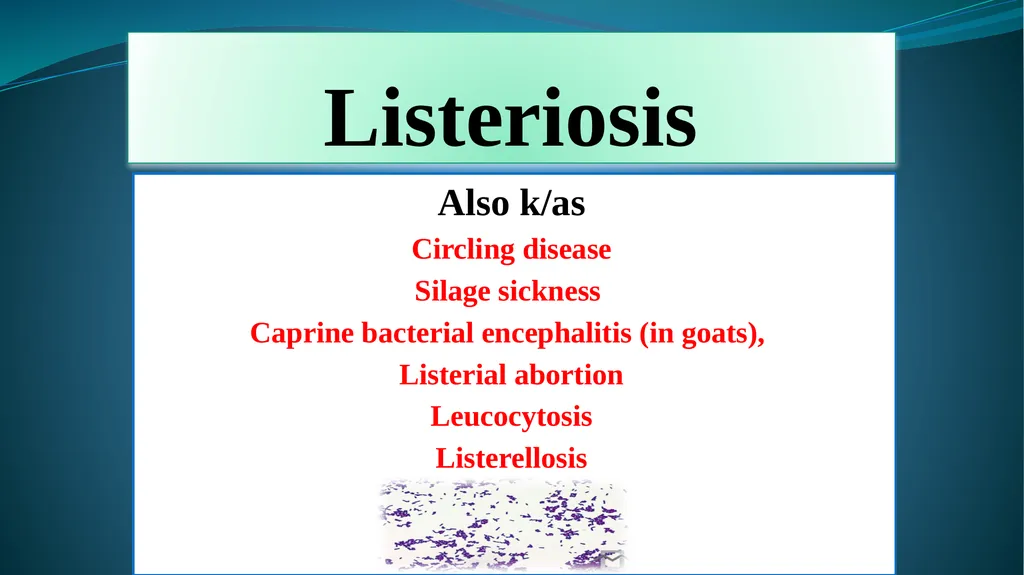
Tumbling motility at or around 25oC
pH B/W: 6 to 9
Serovars: 11 known to cause human listeriosis
: 1/2a, 1/2b, 1/2c & 4b most human / animal cases<br>
04
Epidemiology Distribution of disease: Worlwide
Ubiquitous in nature
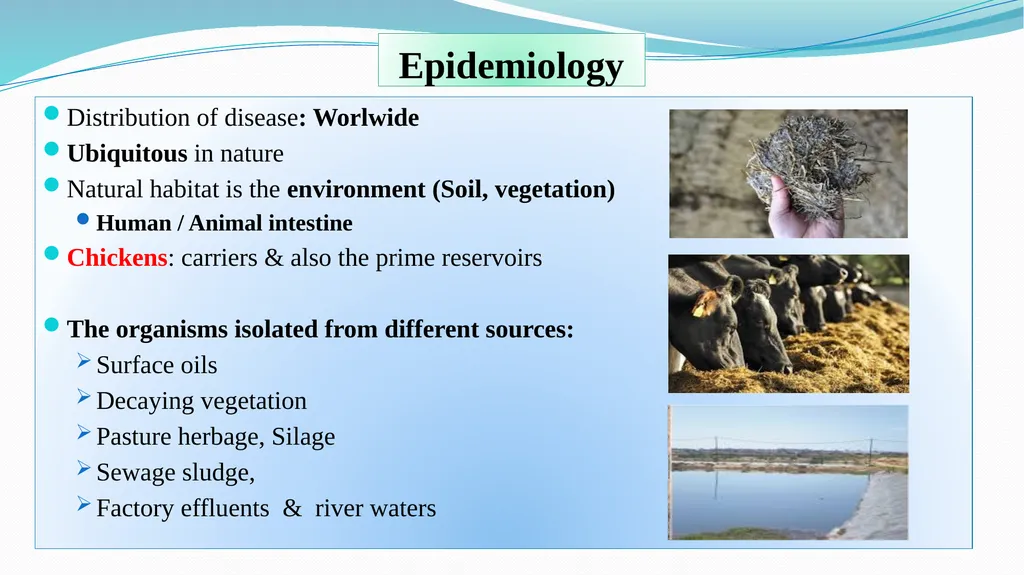
Natural habitat is the environment (Soil, vegetation)
Human / Animal intestine
Chickens: carriers & also the prime reservoirs
The organisms isolated from different sources:
Surface oils
Decaying vegetation
Pasture herbage, Silage
Sewage sludge,
Factory effluents & river waters<br>
05
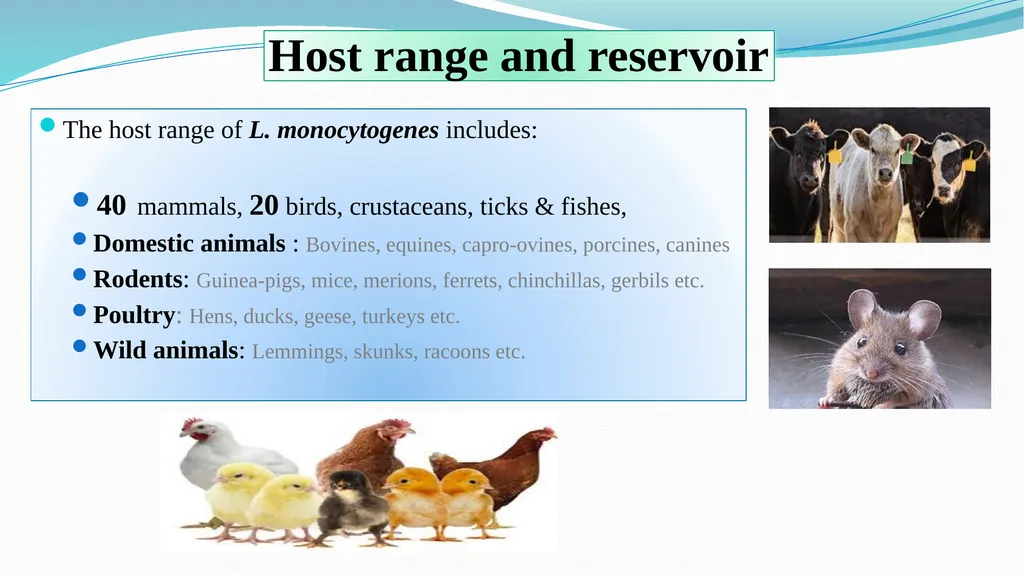
Host range and reservoir The host range of L. monocytogenes includes:
40 mammals, 20 birds, crustaceans, ticks & fishes,
Domestic animals : Bovines, equines, capro-ovines, porcines, canines
Rodents: Guinea-pigs, mice, merions, ferrets, chinchillas, gerbils etc.
Poultry: Hens, ducks, geese, turkeys etc.
Wild animals: Lemmings, skunks, racoons etc.<br>
06
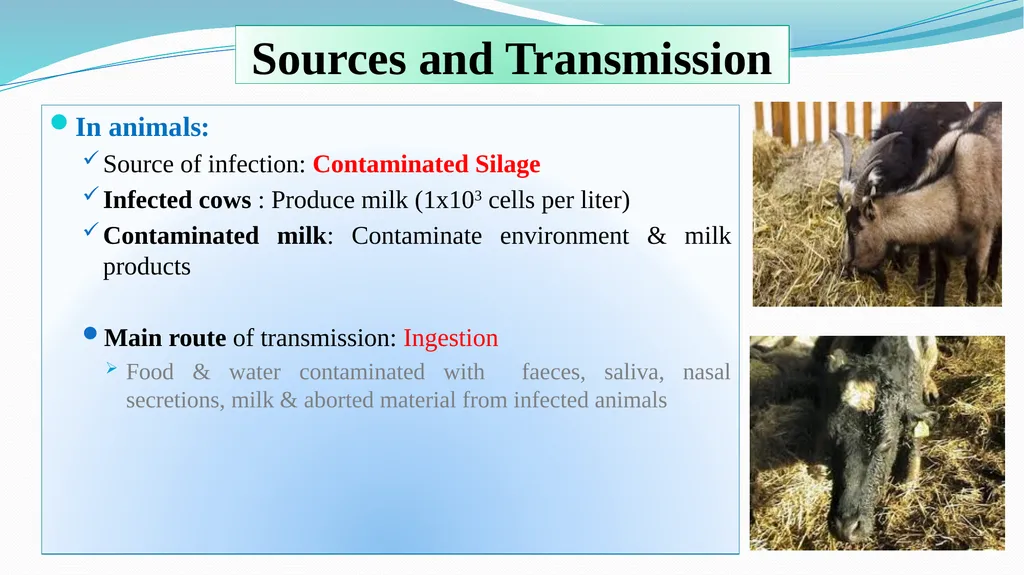
Sources and Transmission In animals:
Source of infection: Contaminated Silage
Infected cows : Produce milk (1x10³ cells per liter)
Contaminated milk: Contaminate environment & milk products
Main route of transmission: Ingestion
Food & water contaminated with faeces, saliva, nasal secretions, milk & aborted material from infected animals<br>
07
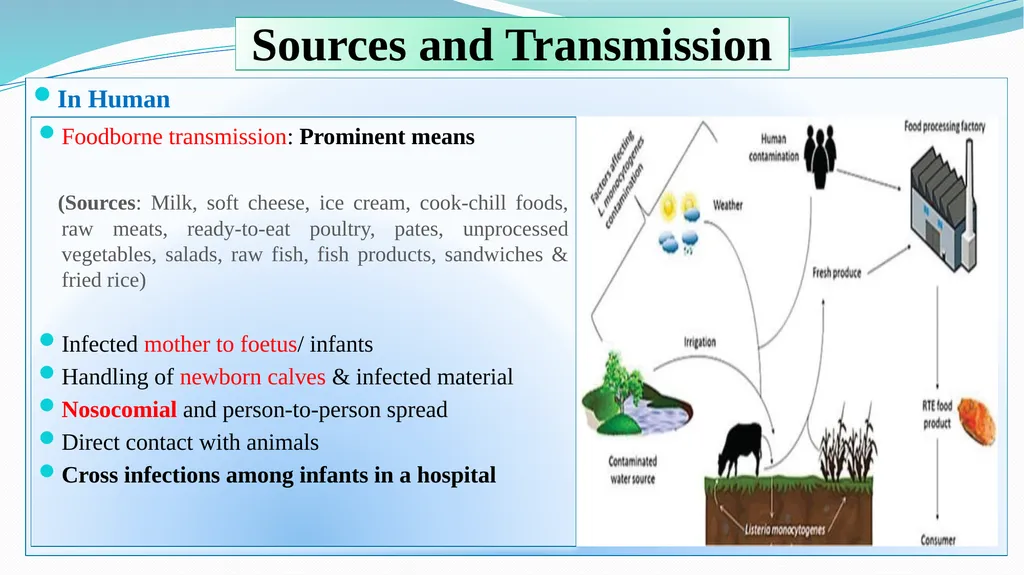
Sources and Transmission In Human Foodborne transmission: Prominent means
(Sources: Milk, soft cheese, ice cream, cook-chill foods, raw meats, ready-to-eat poultry, pates, unprocessed vegetables, salads, raw fish, fish products, sandwiches & fried rice)
Infected mother to foetus/ infants
Handling of newborn calves & infected material
Nosocomial and person-to-person spread
Direct contact with animals
Cross infections among infants in a hospital<br>
08
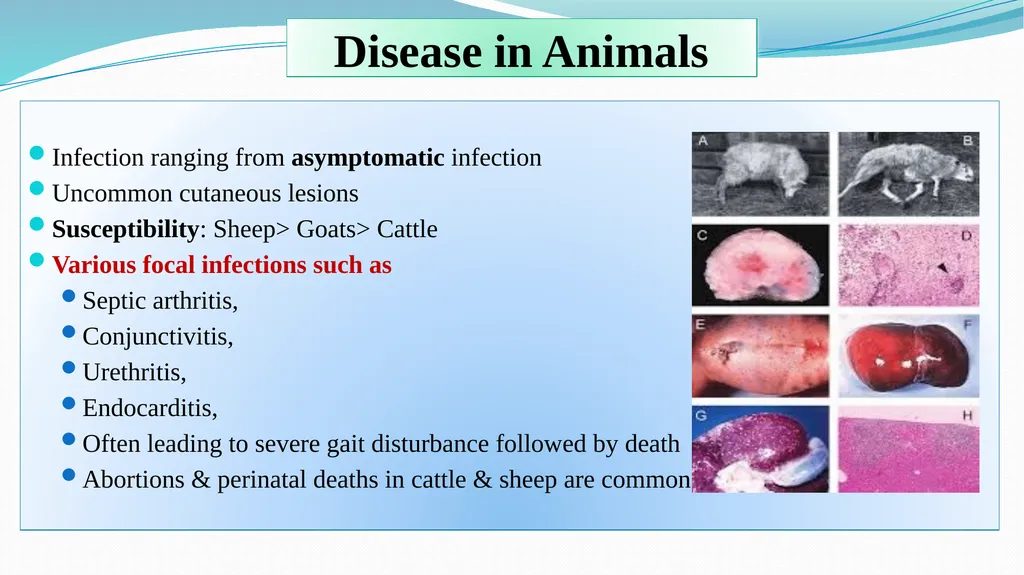
Disease in Animals Infection ranging from asymptomatic infection
Uncommon cutaneous lesions
Susceptibility: Sheep> Goats> Cattle
Various focal infections such as
Septic arthritis,
Conjunctivitis,
Urethritis,
Endocarditis,
Often leading to severe gait disturbance followed by death
Abortions & perinatal deaths in cattle & sheep are common<br>
09
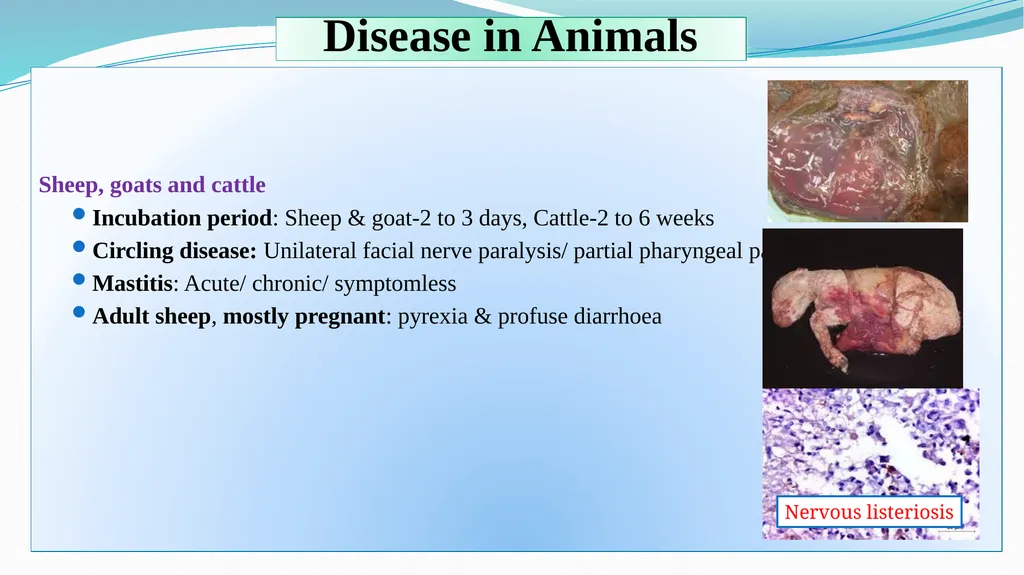
Sheep, goats and cattle
Incubation period: Sheep & goat-2 to 3 days, Cattle-2 to 6 weeks
Circling disease: Unilateral facial nerve paralysis/ partial pharyngeal paralysis
Mastitis: Acute/ chronic/ symptomless
Adult sheep, mostly pregnant: pyrexia & profuse diarrhoea Disease in Animals Nervous listeriosis<br>
10
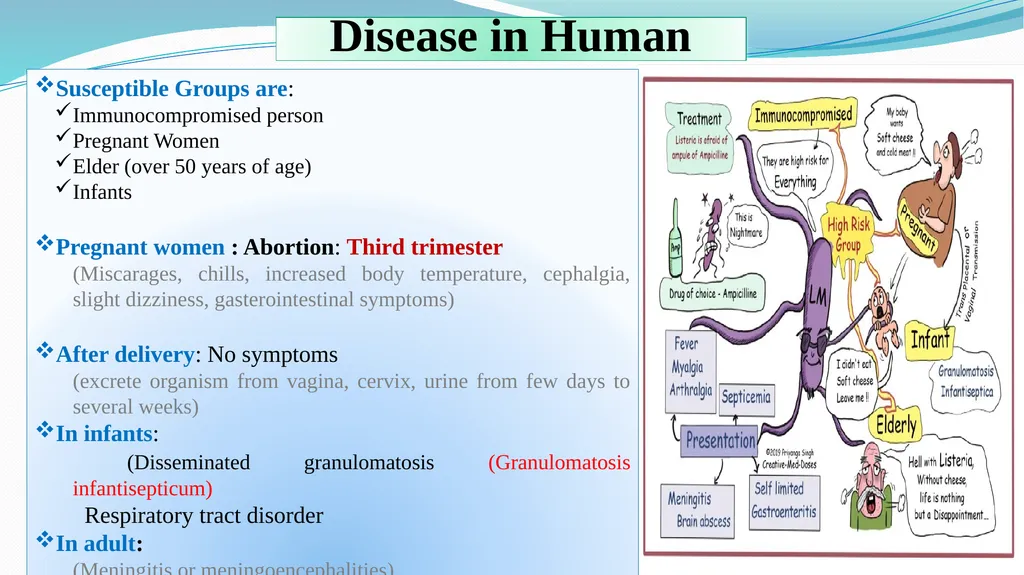
Disease in Human Susceptible Groups are:
Immunocompromised person
Pregnant Women
Elder (over 50 years of age)
Infants
Pregnant women : Abortion: Third trimester
(Miscarages, chills, increased body temperature, cephalgia, slight dizziness, gasterointestinal symptoms)
After delivery: No symptoms
(excrete organism from vagina, cervix, urine from few days to several weeks)
In infants:
(Disseminated granulomatosis (Granulomatosis infantisepticum)
Respiratory tract disorder
In adult:
(Meningitis or meningoencephalities)<br>
11
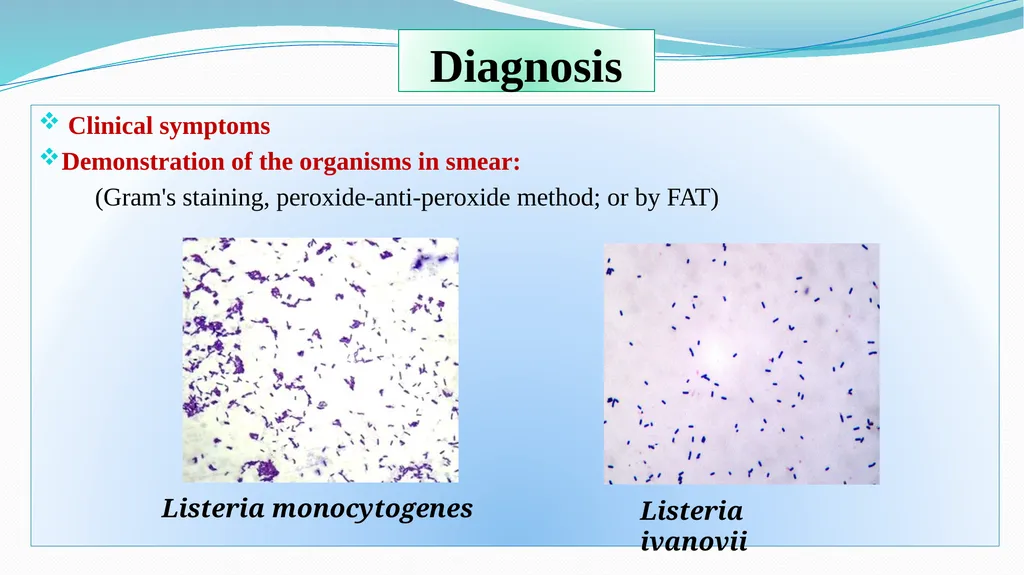
Diagnosis Clinical symptoms
Demonstration of the organisms in smear:
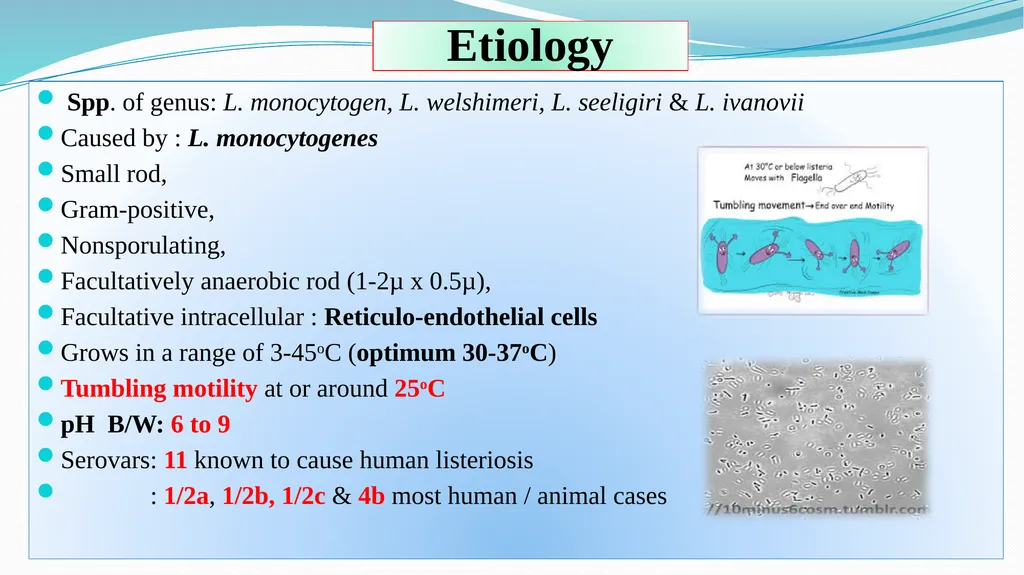
(Gram's staining, peroxide-anti-peroxide method; or by FAT) Listeria monocytogenes Listeria ivanovii<br>
12
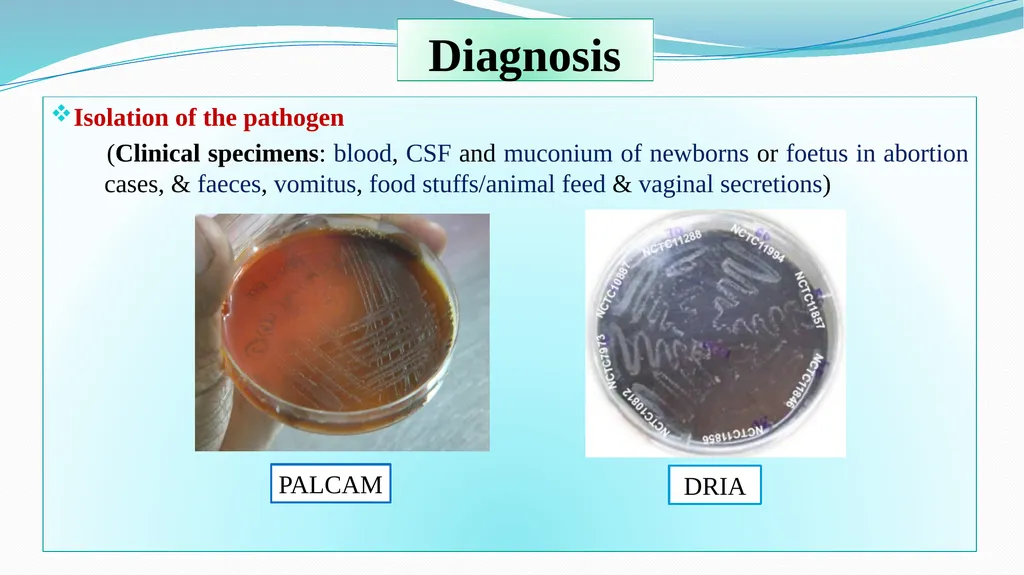
Isolation of the pathogen
(Clinical specimens: blood, CSF and muconium of newborns or foetus in abortion cases, & faeces, vomitus, food stuffs/animal feed & vaginal secretions) Diagnosis PALCAM DRIA<br>
13
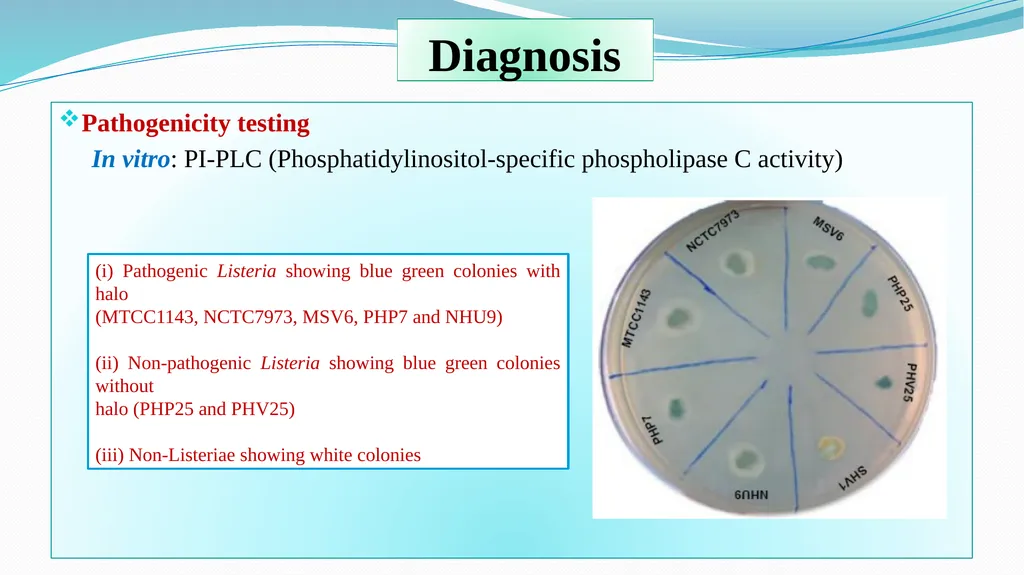
Pathogenicity testing
In vitro: PI-PLC (Phosphatidylinositol-specific phospholipase C activity) Diagnosis (i) Pathogenic Listeria showing blue green colonies with halo
(MTCC1143, NCTC7973, MSV6, PHP7 and NHU9)
(ii) Non-pathogenic Listeria showing blue green colonies without
halo (PHP25 and PHV25)
(iii) Non-Listeriae showing white colonies<br>
14
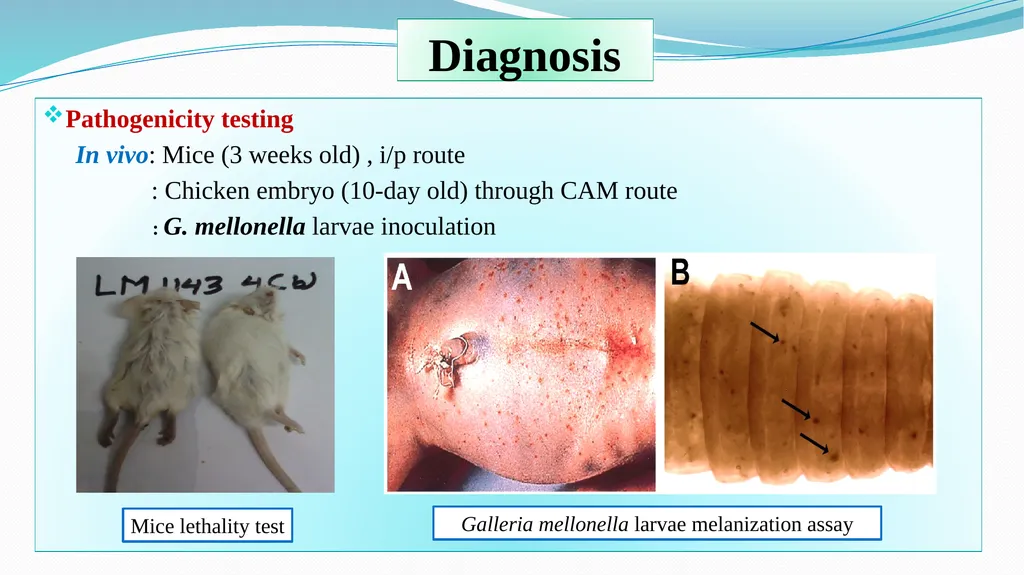
Pathogenicity testing
In vivo: Mice (3 weeks old) , i/p route
: Chicken embryo (10-day old) through CAM route
: G. mellonella larvae inoculation Diagnosis Mice lethality test Galleria mellonella larvae melanization assay<br>
15
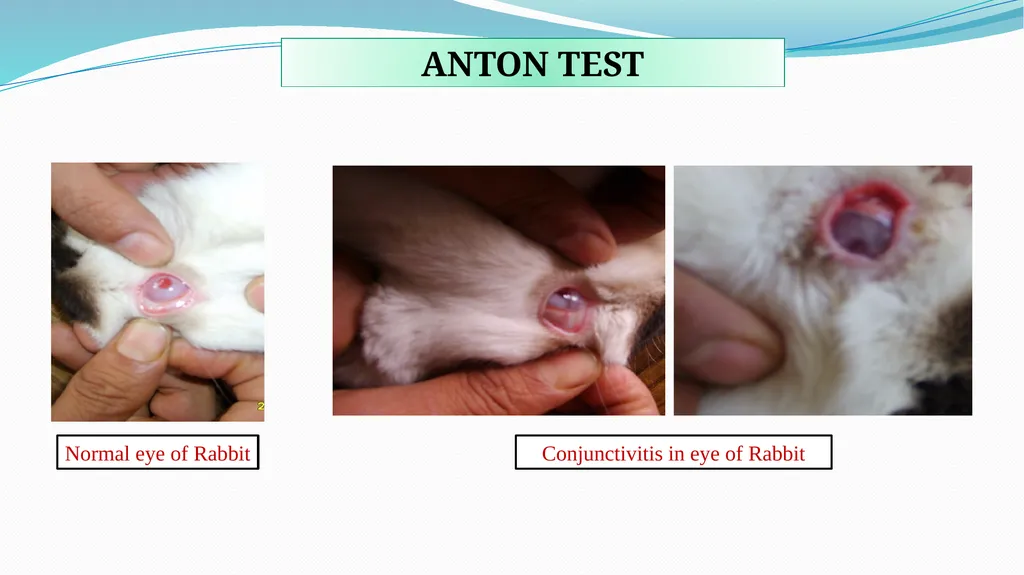
ANTON TEST Normal eye of Rabbit Conjunctivitis in eye of Rabbit<br>
16
Diagnosis Examination of CSF: Detection of soluble antigen, protein concentration (>0.4g l-1) & WBC count about 1.2x10⁷
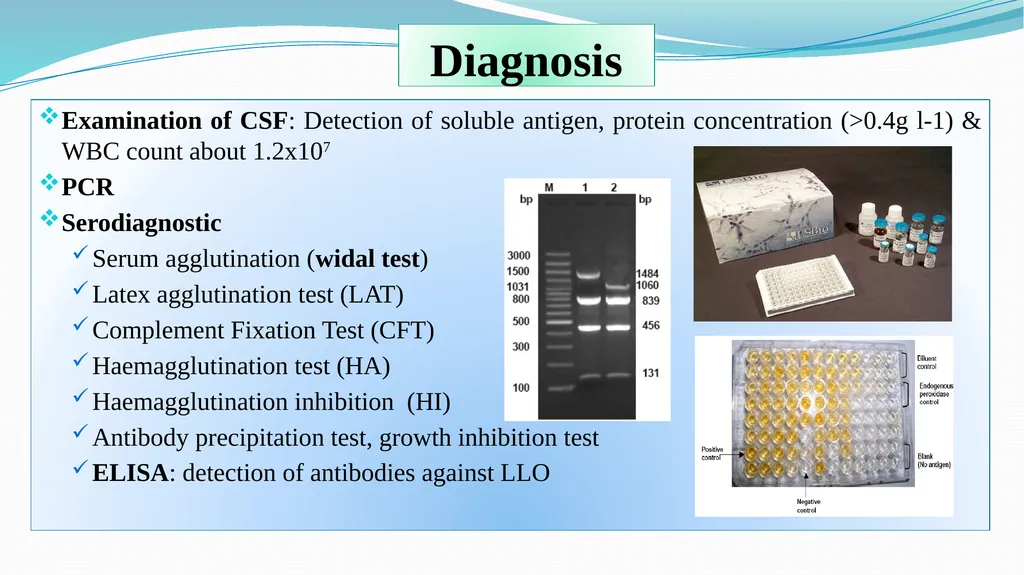
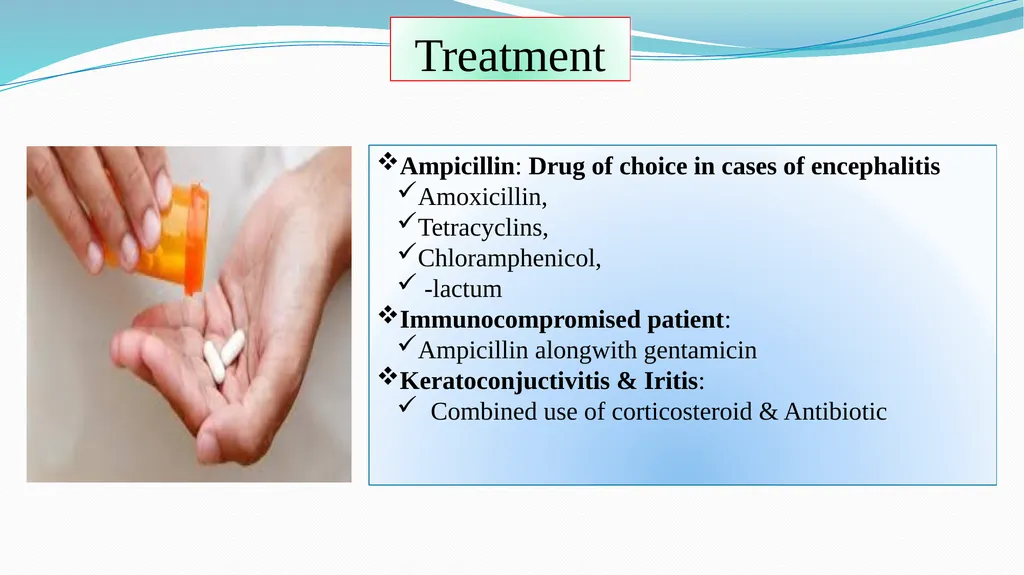
PCR
Serodiagnostic
Serum agglutination (widal test)
Latex agglutination test (LAT)
Complement Fixation Test (CFT)
Haemagglutination test (HA)
Haemagglutination inhibition (HI)
Antibody precipitation test, growth inhibition test
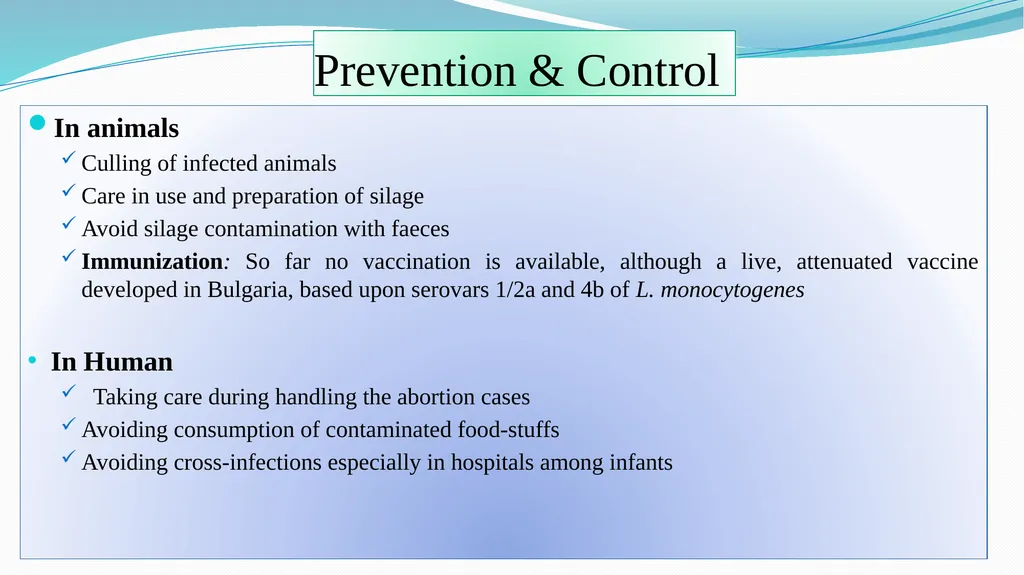
ELISA: detection of antibodies against LLO<br>
17
Treatment Ampicillin: Drug of choice in cases of encephalitis
Amoxicillin,
Tetracyclins,
Chloramphenicol,
-lactum
Immunocompromised patient:
Ampicillin alongwith gentamicin
Keratoconjuctivitis & Iritis:
Combined use of corticosteroid & Antibiotic<br>
18
Prevention & Control In animals
Culling of infected animals
Care in use and preparation of silage
Avoid silage contamination with faeces
Immunization: So far no vaccination is available, although a live, attenuated vaccine developed in Bulgaria, based upon serovars 1/2a and 4b of L. monocytogenes
In Human
Taking care during handling the abortion cases
Avoiding consumption of contaminated food-stuffs
Avoiding cross-infections especially in hospitals among infants<br>