Vipin Kizheppatt AXI Protocol 16082024 AMBA Specification 2 Advanced Extensible Interface is part of ARMs AMBA (Advanced Microcontroller Bus Architecture) specification AMBA is an on-chip interconnect specification for connection and
"Vipin Kizheppatt AXI Protocol 16/08/2024 AMBA" is the property of its rightful owner. Permission is granted to
download and print the materials on this website for personal, non-commercial use only, and to display it
on your personal computer provided you do not modify the materials and that you retain all copyright
notices contained in the materials. By downloading content from our website, you accept the terms of this
agreement.
Presentation Transcript
01
Vipin Kizheppatt AXI Protocol 16/08/2024<br>
02
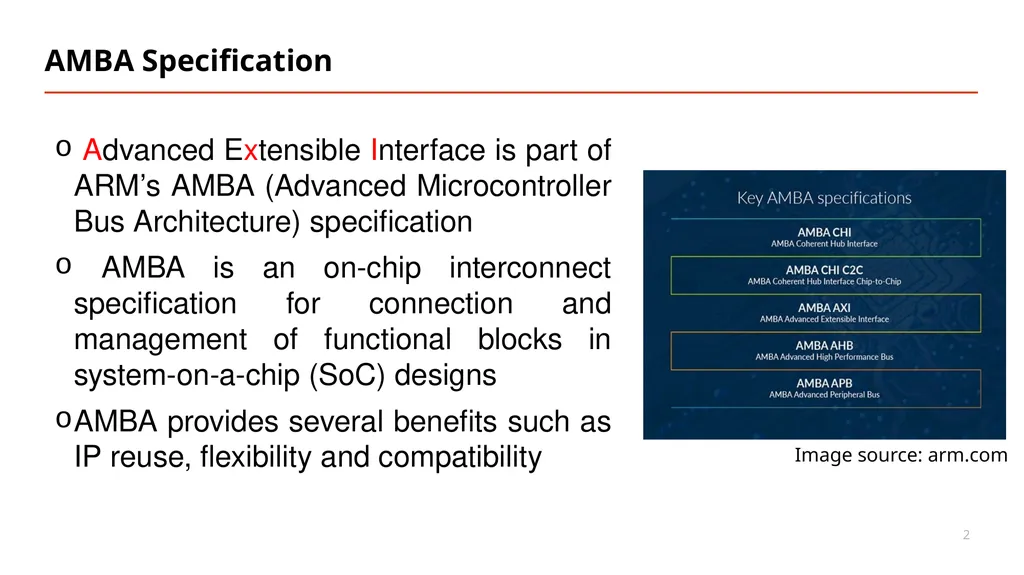
AMBA Specification 2 Advanced Extensible Interface is part of ARM’s AMBA (Advanced Microcontroller Bus Architecture) specification
AMBA is an on-chip interconnect specification for connection and management of functional blocks in system-on-a-chip (SoC) designs
AMBA provides several benefits such as IP reuse, flexibility and compatibility<br>
03
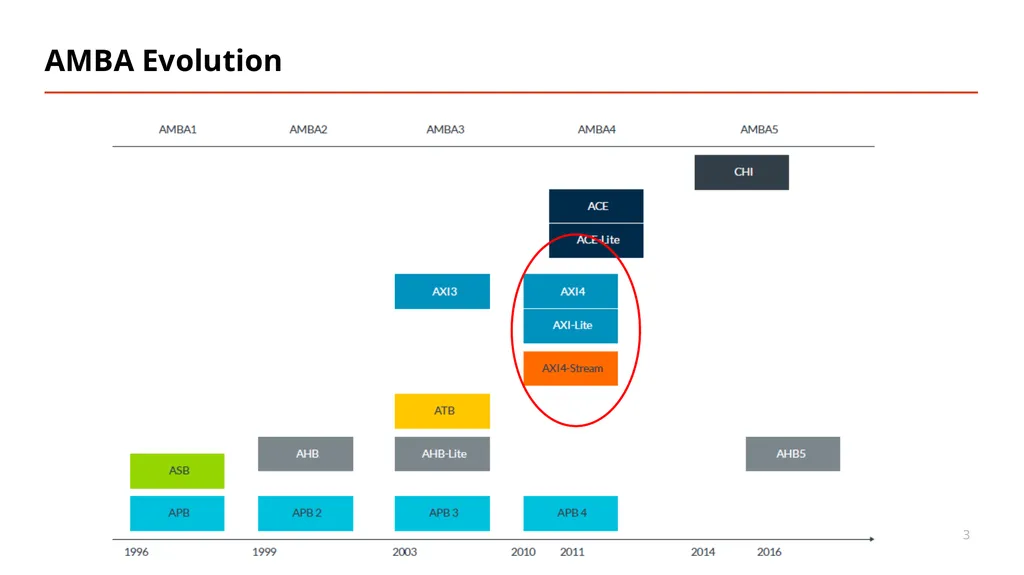
AMBA Evolution 3<br>
04
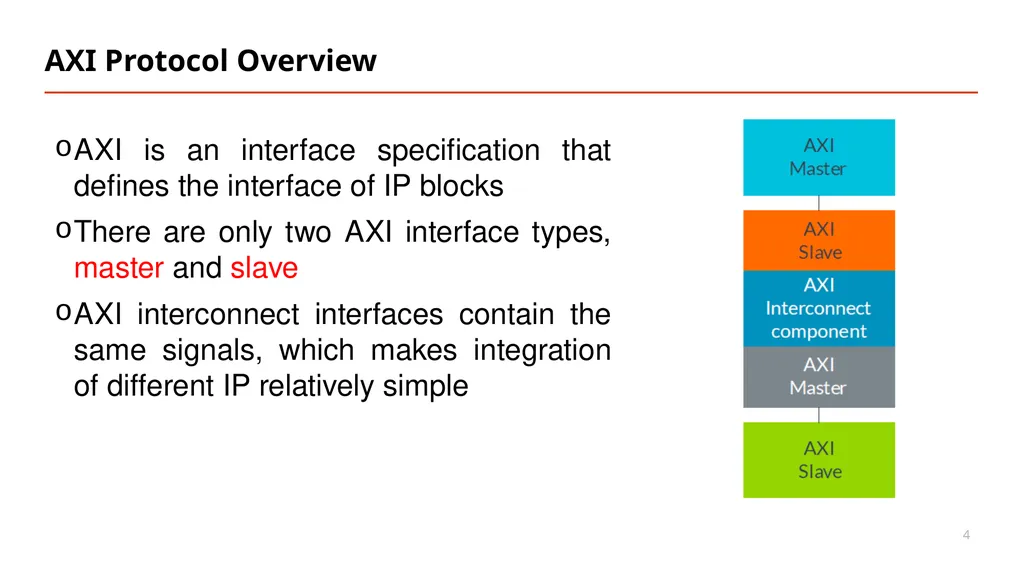
AXI Protocol Overview 4 AXI is an interface specification that defines the interface of IP blocks
There are only two AXI interface types, master and slave
AXI interconnect interfaces contain the same signals, which makes integration of different IP relatively simple<br>
05
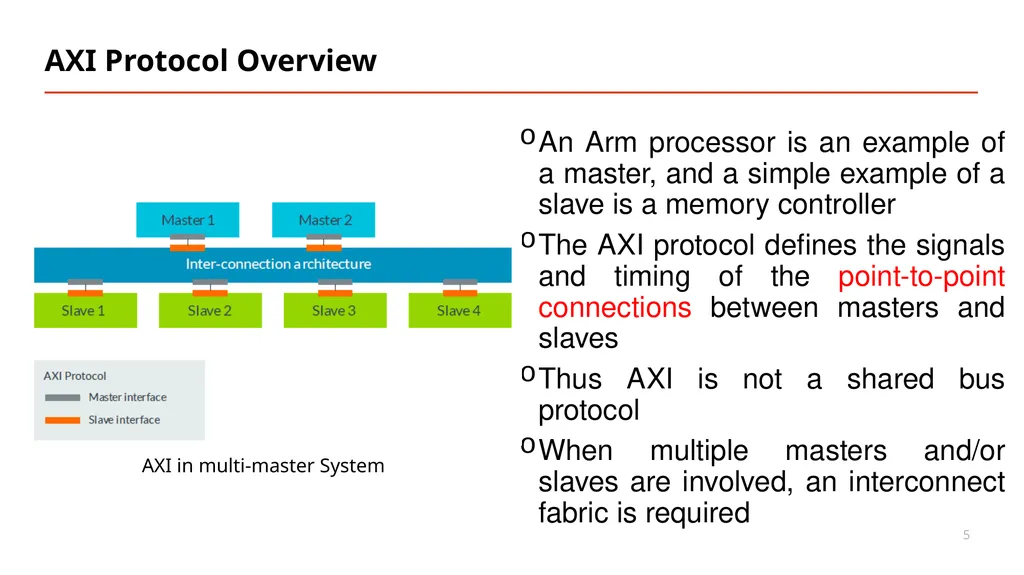
AXI Protocol Overview 5 An Arm processor is an example of a master, and a simple example of a slave is a memory controller
The AXI protocol defines the signals and timing of the point-to-point connections between masters and slaves
Thus AXI is not a shared bus protocol
When multiple masters and/or slaves are involved, an interconnect fabric is required<br>
06
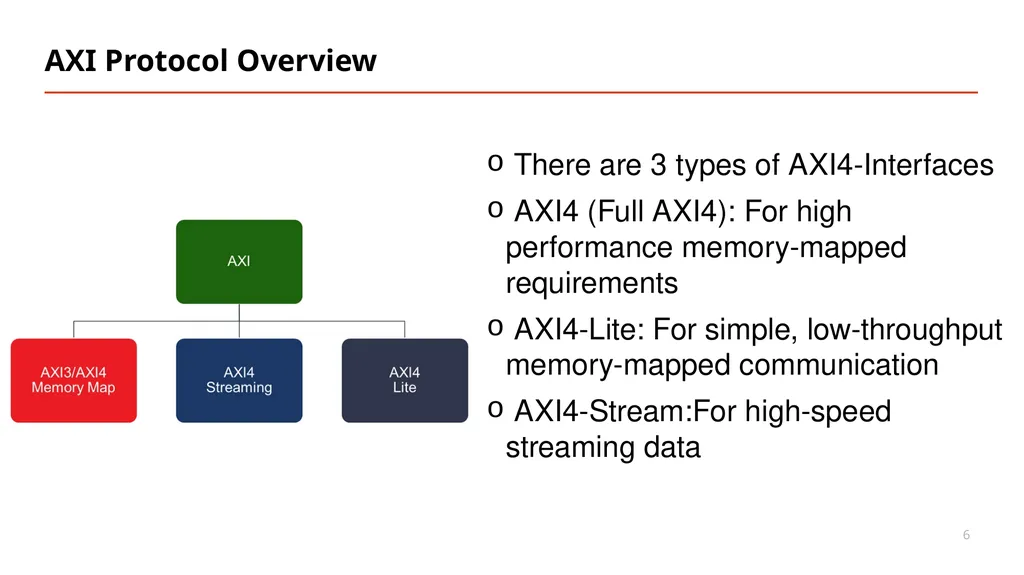
AXI Protocol Overview 6 There are 3 types of AXI4-Interfaces
AXI4 (Full AXI4): For high performance memory-mapped requirements
AXI4-Lite: For simple, low-throughput memory-mapped communication
AXI4-Stream:For high-speed streaming data<br>
07
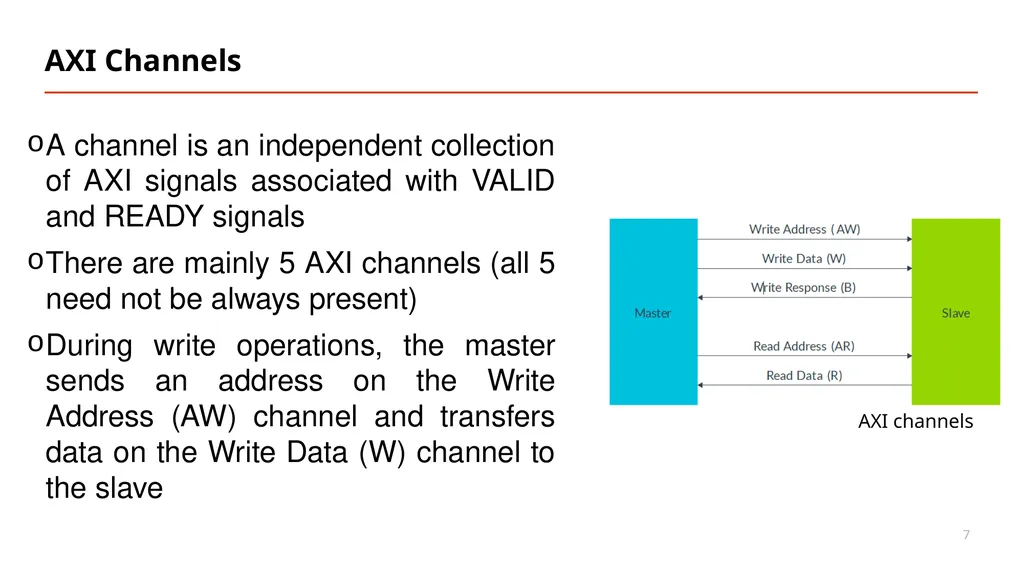
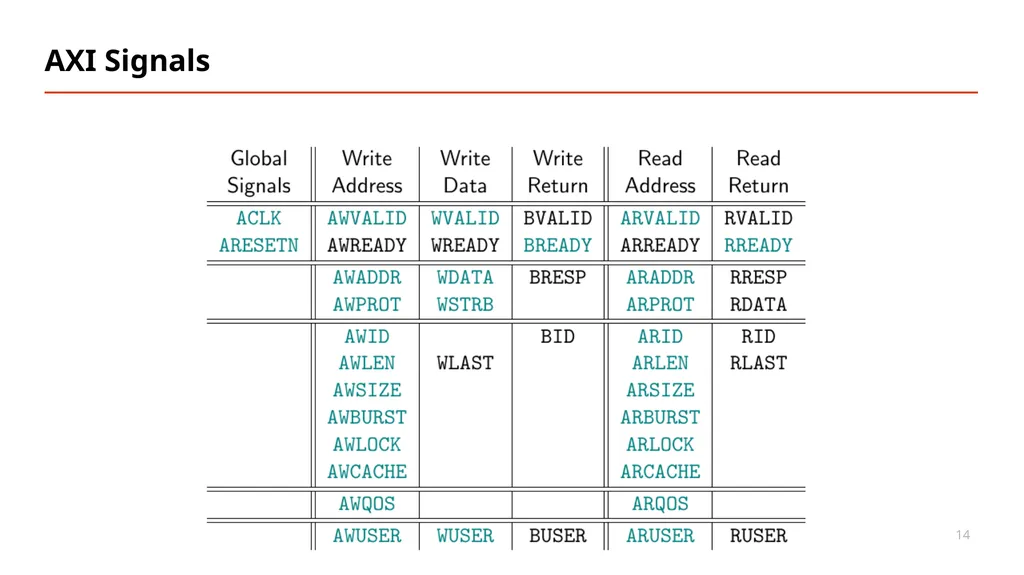
AXI Channels 7 A channel is an independent collection of AXI signals associated with VALID and READY signals
There are mainly 5 AXI channels (all 5 need not be always present)
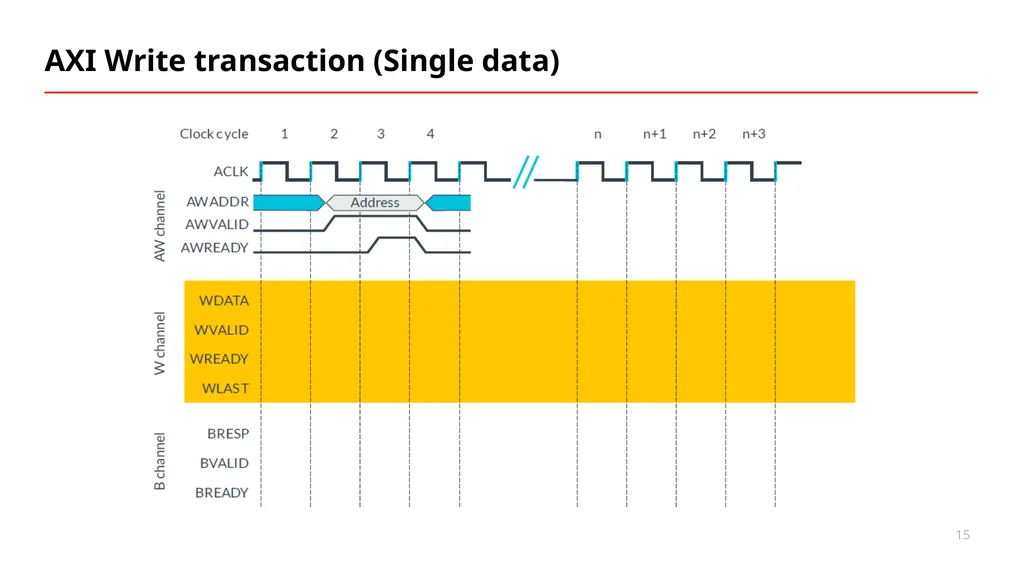
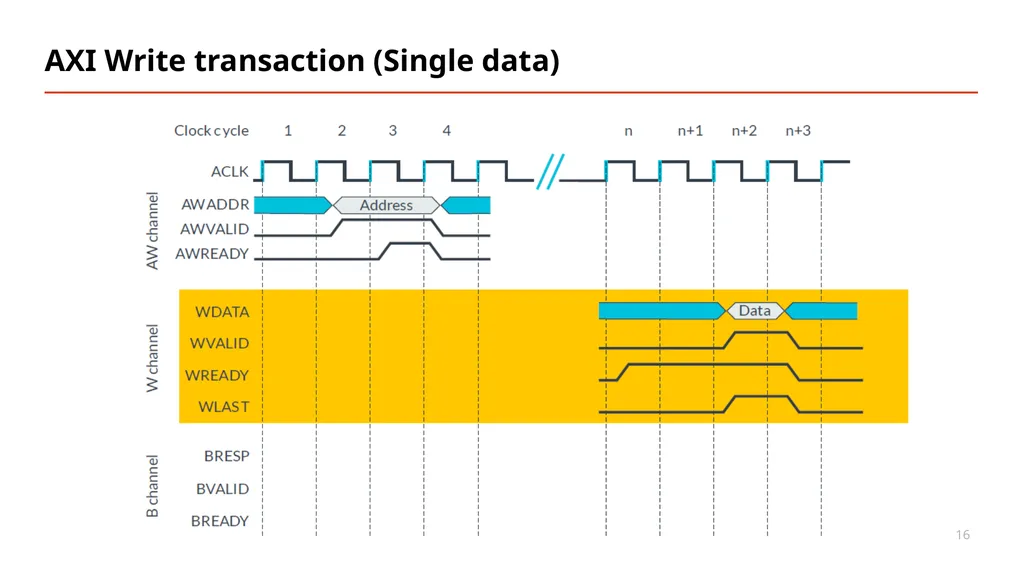
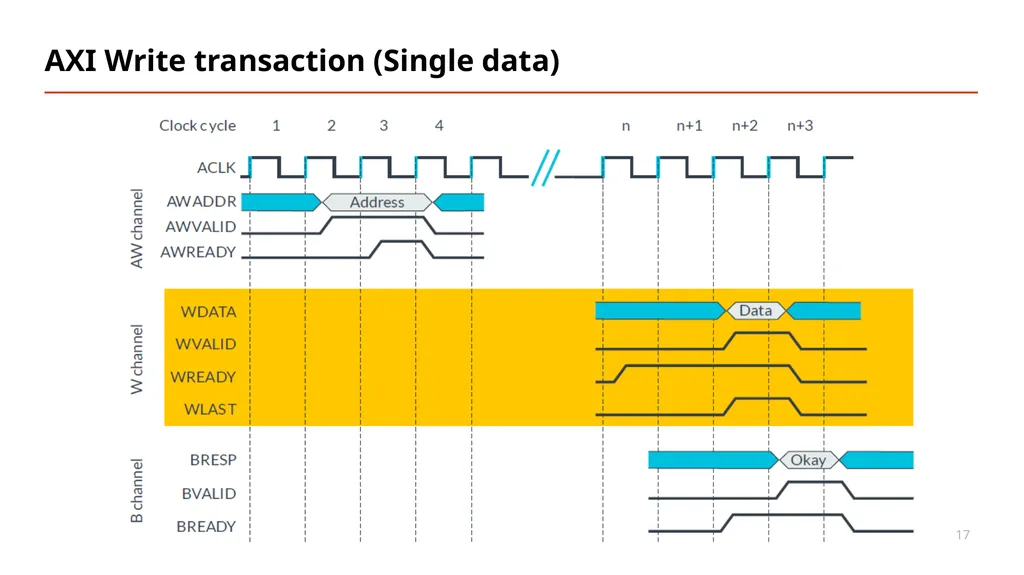
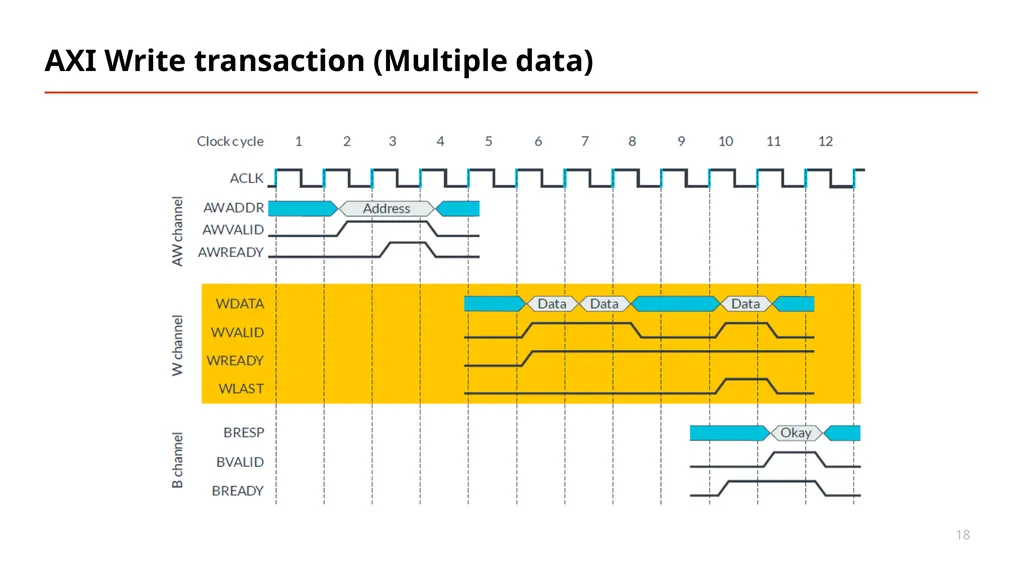
During write operations, the master sends an address on the Write Address (AW) channel and transfers data on the Write Data (W) channel to the slave<br>
08
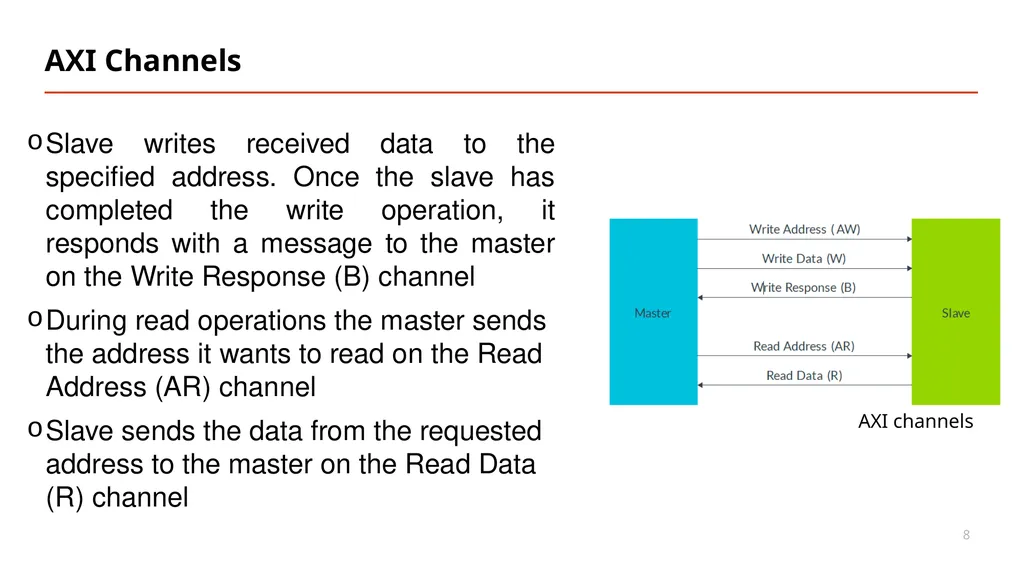
AXI Channels 8 Slave writes received data to the specified address. Once the slave has completed the write operation, it responds with a message to the master on the Write Response (B) channel
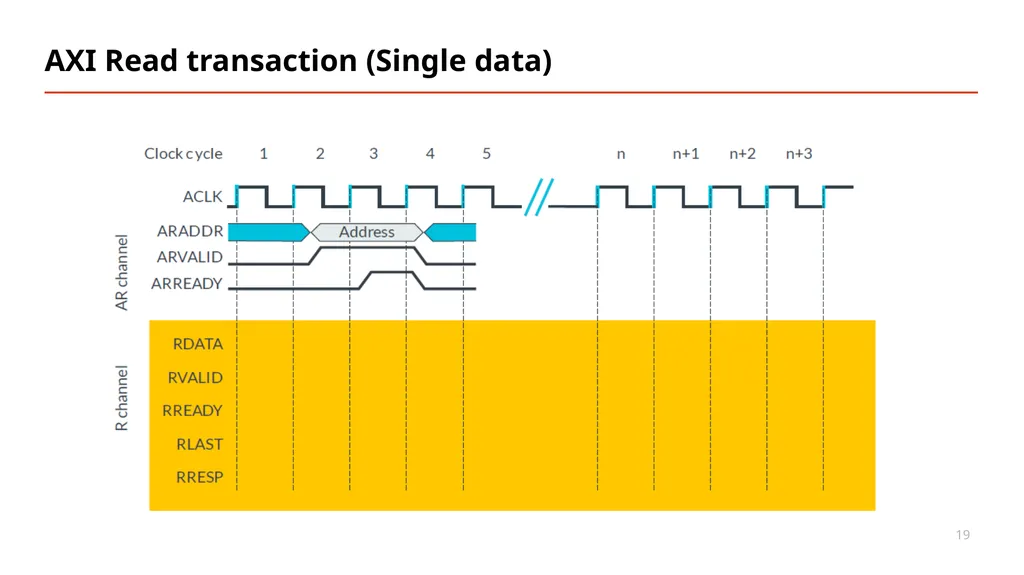
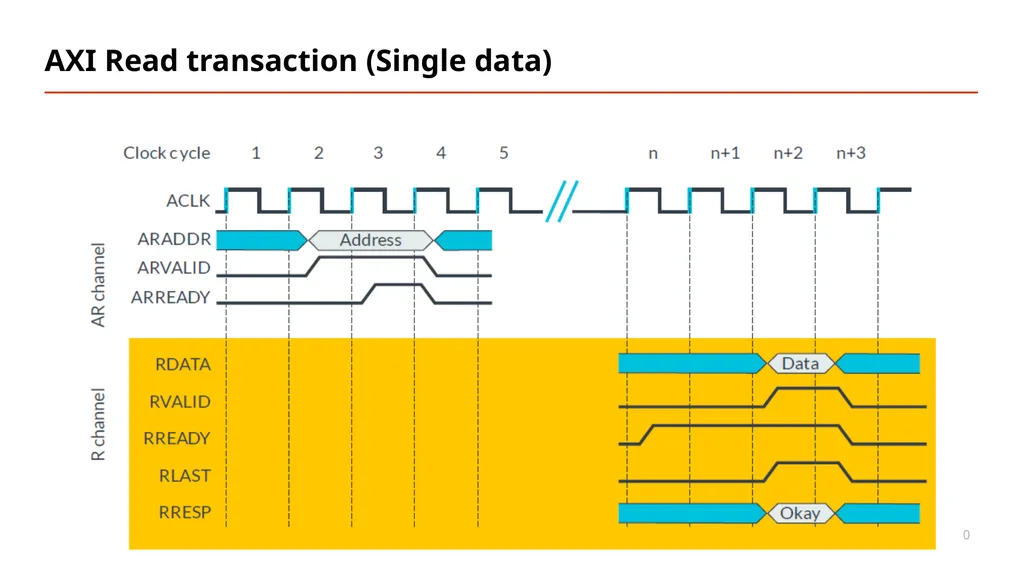
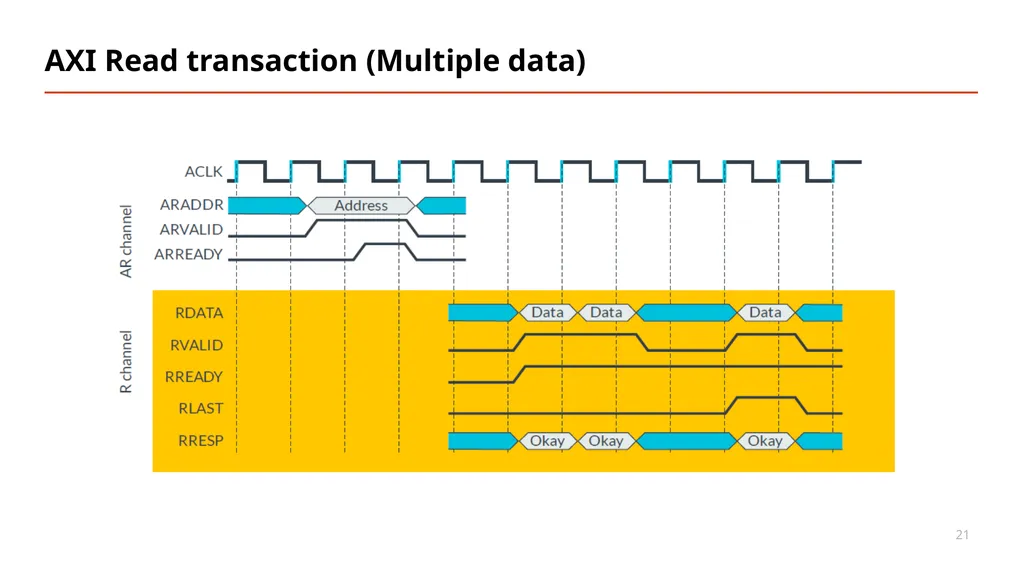
During read operations the master sends the address it wants to read on the Read Address (AR) channel
Slave sends the data from the requested address to the master on the Read Data (R) channel<br>
09
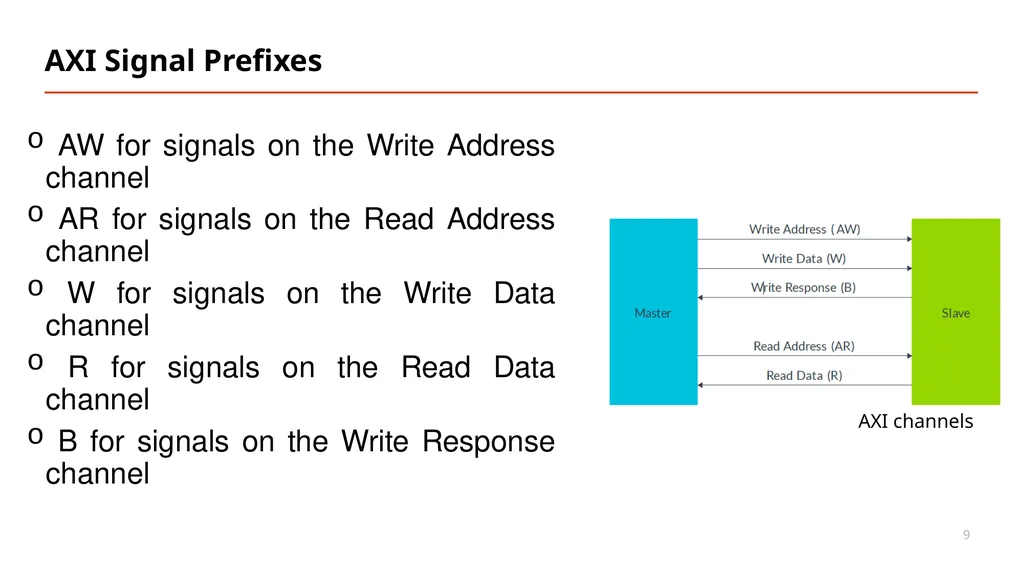
AXI Signal Prefixes 9 AW for signals on the Write Address channel
AR for signals on the Read Address channel
W for signals on the Write Data channel
R for signals on the Read Data channel
B for signals on the Write Response channel<br>
10
AXI Main features 10 Independent read and write channels
Multiple outstanding addresses
No strict timing relationship between address and data operations
Support for unaligned data transfers
Out-of-order transaction completion
Burst transactions based on start address<br>
11
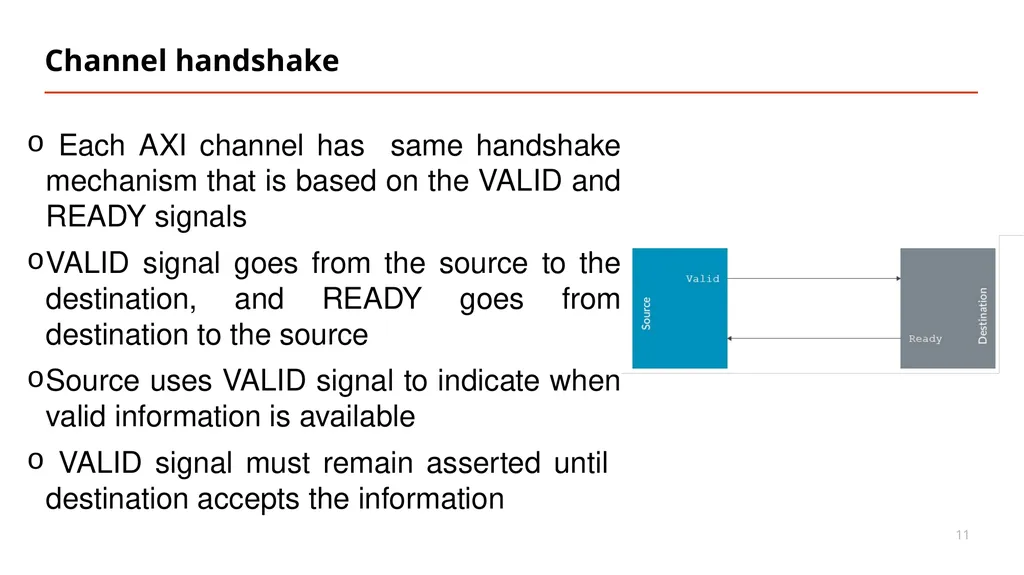
Channel handshake 11 Each AXI channel has same handshake mechanism that is based on the VALID and READY signals
VALID signal goes from the source to the destination, and READY goes from destination to the source
Source uses VALID signal to indicate when valid information is available
VALID signal must remain asserted until destination accepts the information<br>
12
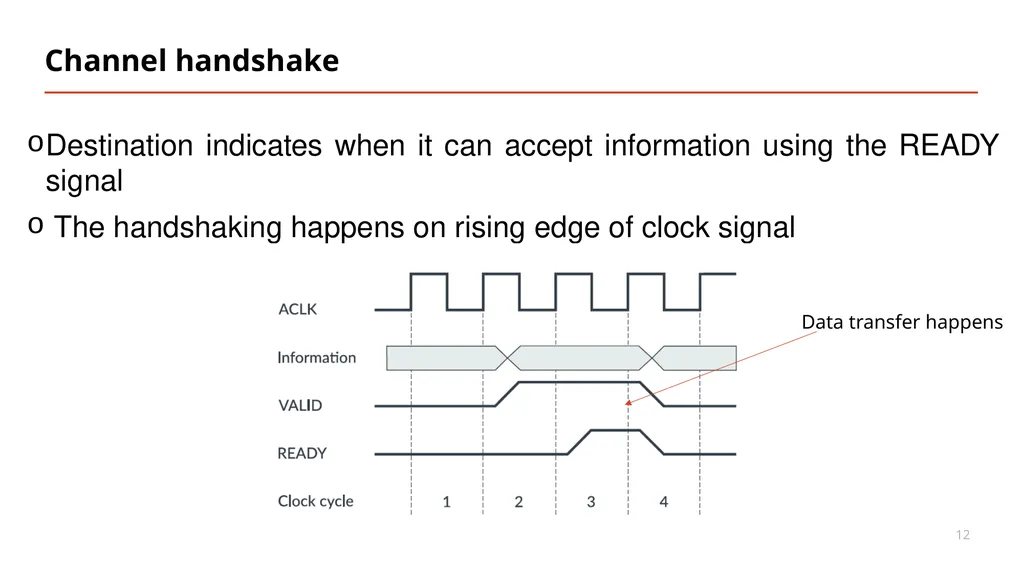
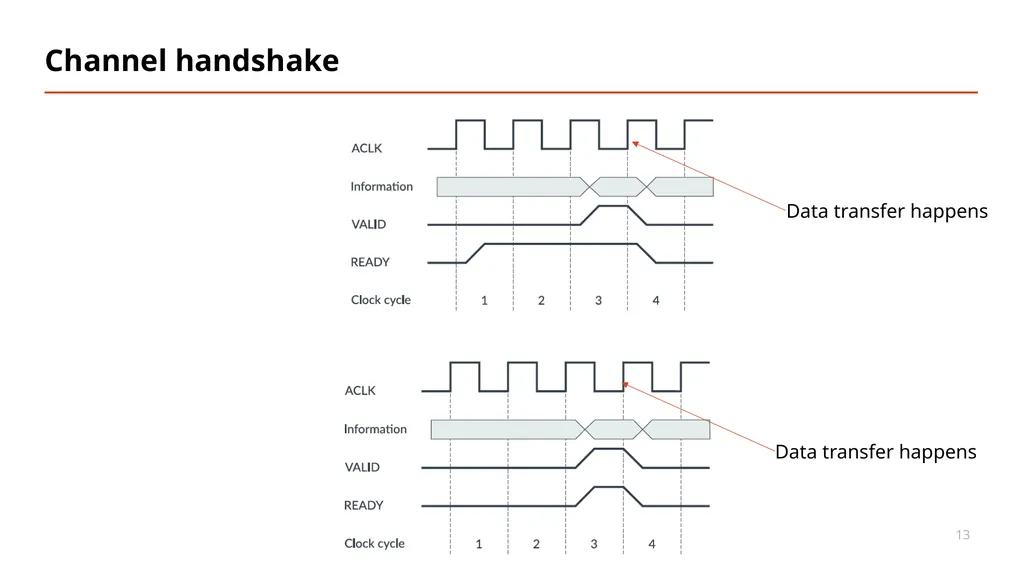
Channel handshake 12 Destination indicates when it can accept information using the READY signal
The handshaking happens on rising edge of clock signal Data transfer happens<br>