Visual arts process diary – template NSW
Description: Visual arts process diary template NSW Department of Education Body of work key dates 2 Body of work timeline (1 of 3) Use this page to set some goals each month, and update with a brief reflection on your progress. October November
Related Topics
Download Presentation
"Visual arts process diary – template NSW" is the property of its rightful owner. Permission is granted to download and print the materials on this website for personal, non-commercial use only, and to display it on your personal computer provided you do not modify the materials and that you retain all copyright notices contained in the materials. By downloading content from our website, you accept the terms of this agreement.
Presentation Transcript
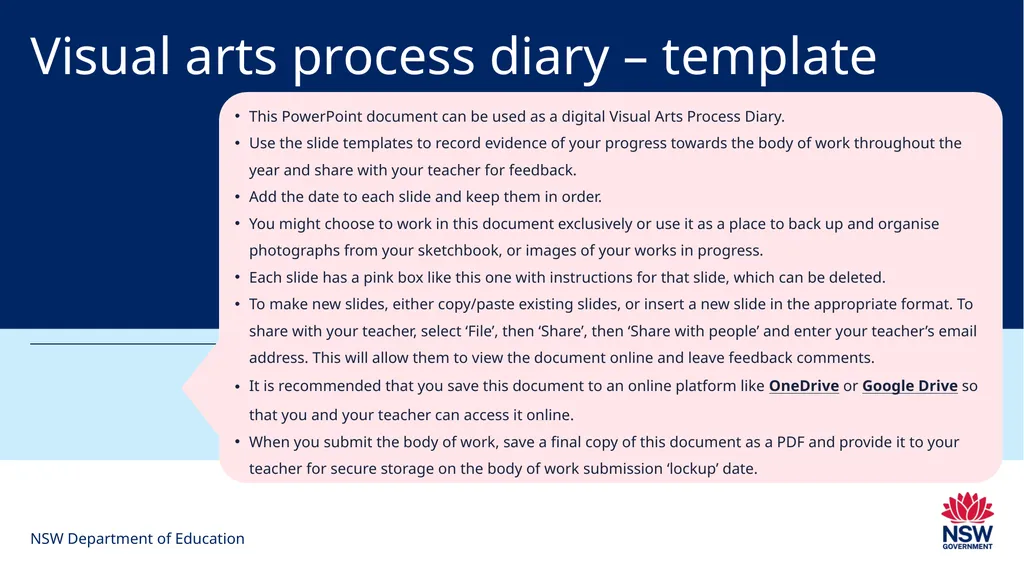
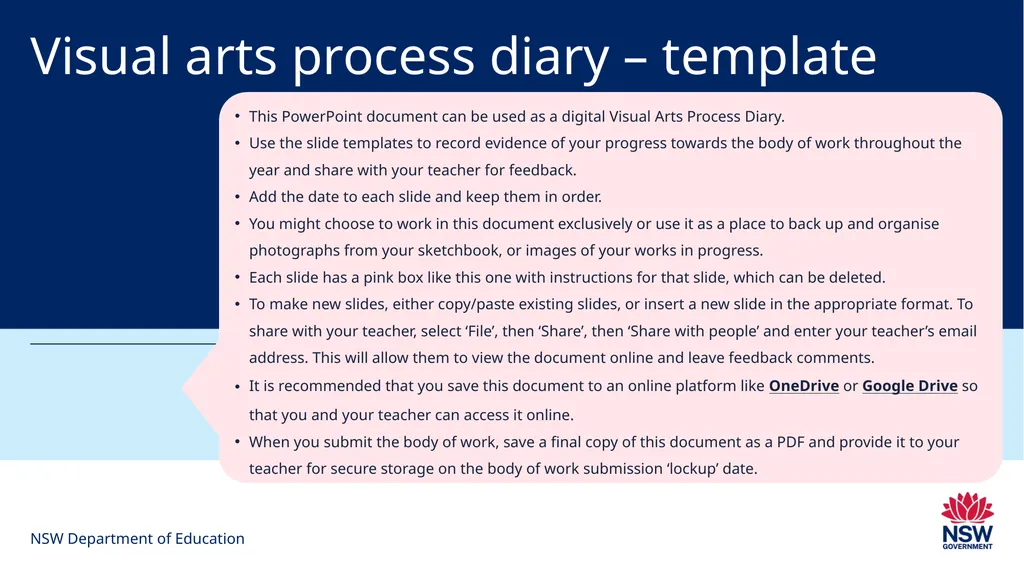
slide1. Visual arts process diary – template NSW Department of Education<br>
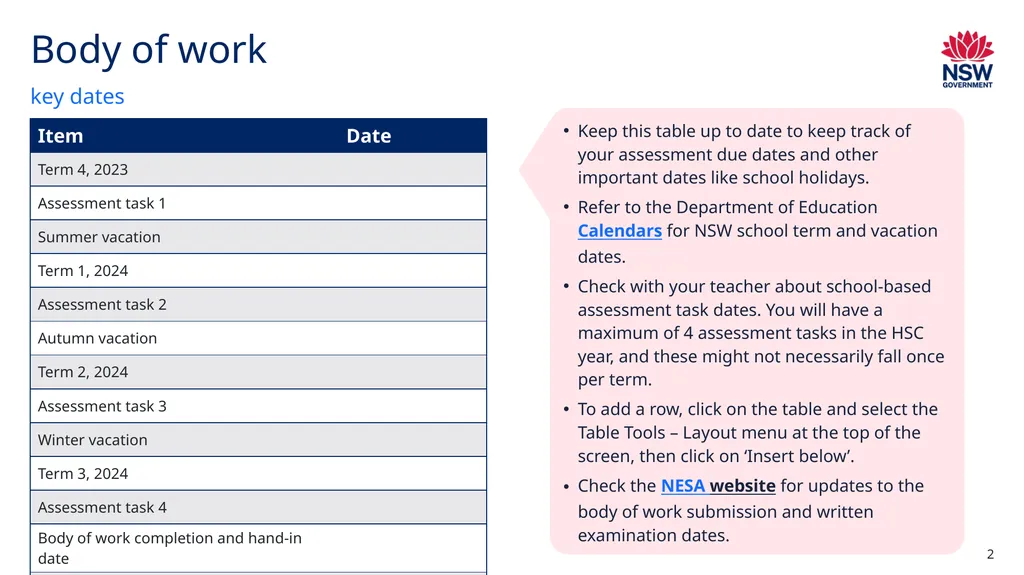
slide2. Body of work key dates 2<br>
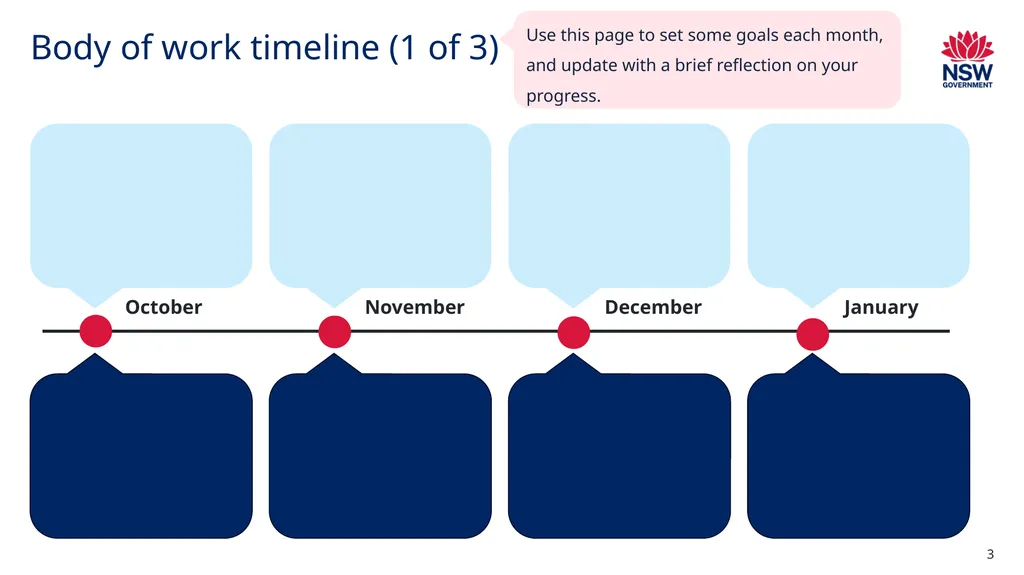
slide3. Body of work timeline (1 of 3) Use this page to set some goals each month, and update with a brief reflection on your progress. October November December January 3<br>
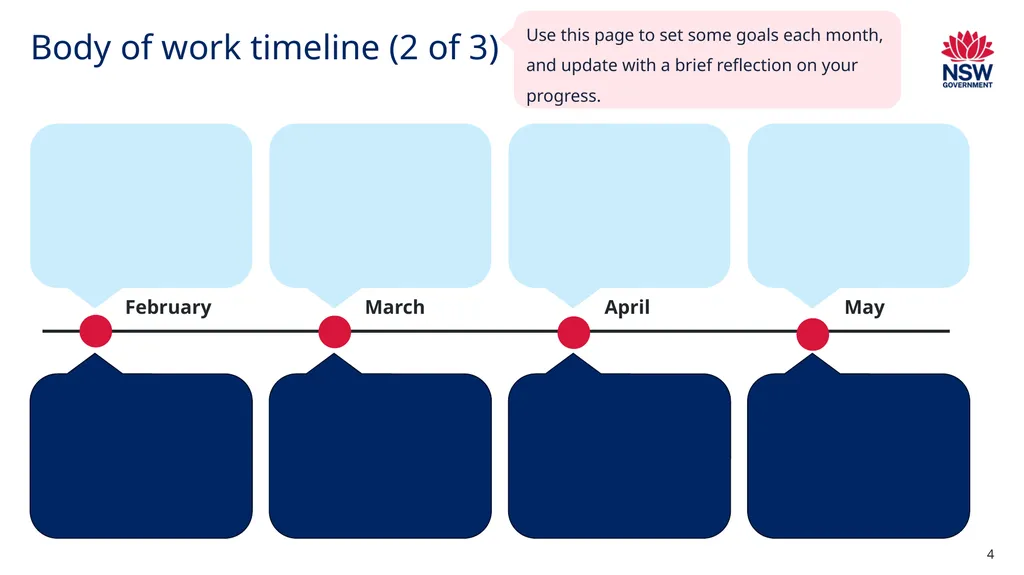
slide4. Body of work timeline (2 of 3) Use this page to set some goals each month, and update with a brief reflection on your progress. February March April May 4<br>
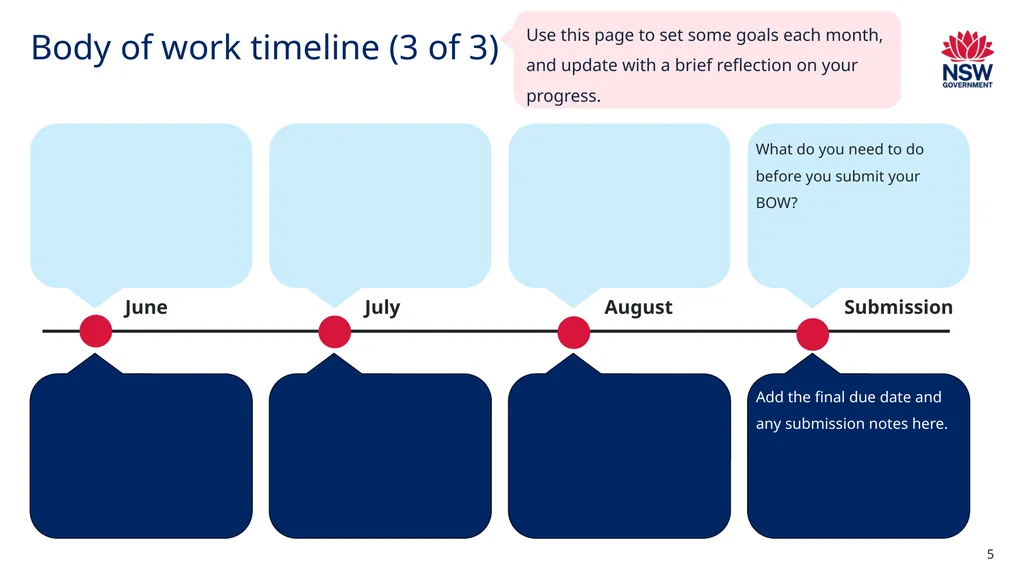
slide5. Body of work timeline (3 of 3) Use this page to set some goals each month, and update with a brief reflection on your progress. What do you need to do before you submit your BOW? June July August Submission Add the final due date and any submission notes here. 5<br>
slide6. Successful bodies of work Complete the activities on the Successful bodies of work website to help you get some ideas to get started on your body of work.
Record your completed activities on blank slides in this presentation. 6<br>
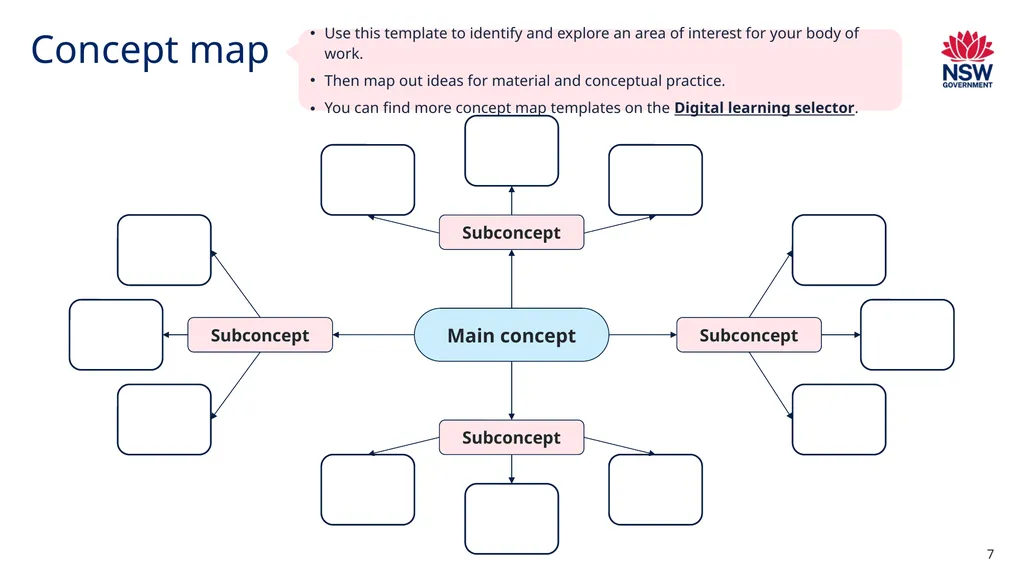
slide7. Concept map Use this template to identify and explore an area of interest for your body of work.
Then map out ideas for material and conceptual practice.
You can find more concept map templates on the Digital learning selector. 7<br>
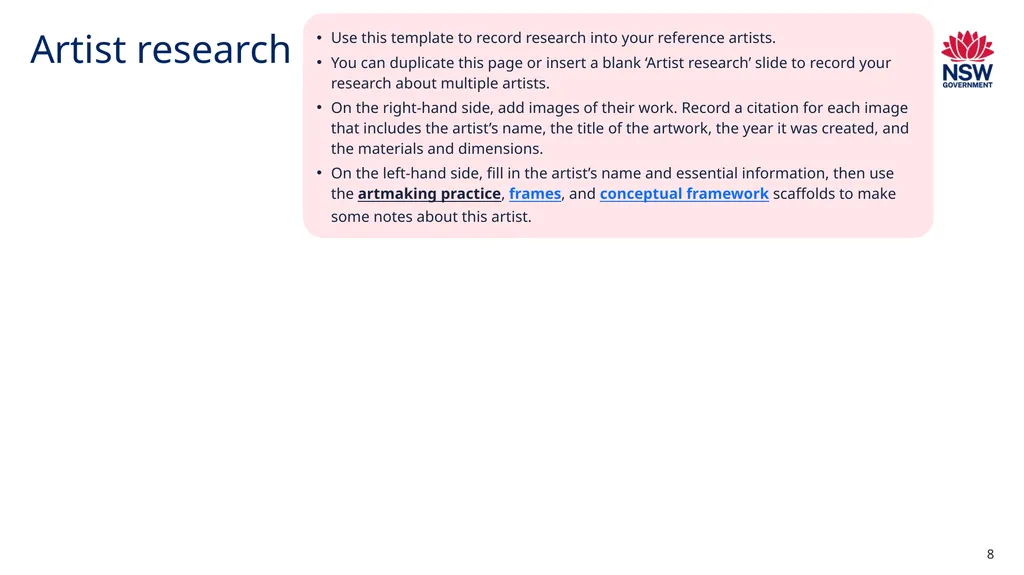
slide8. Artist research Use this template to record research into your reference artists.
You can duplicate this page or insert a blank ‘Artist research’ slide to record your research about multiple artists.
On the right-hand side, add images of their work. Record a citation for each image that includes the artist’s name, the title of the artwork, the year it was created, and the materials and dimensions.
On the left-hand side, fill in the artist’s name and essential information, then use the artmaking practice, frames, and conceptual framework scaffolds to make some notes about this artist. 8<br>
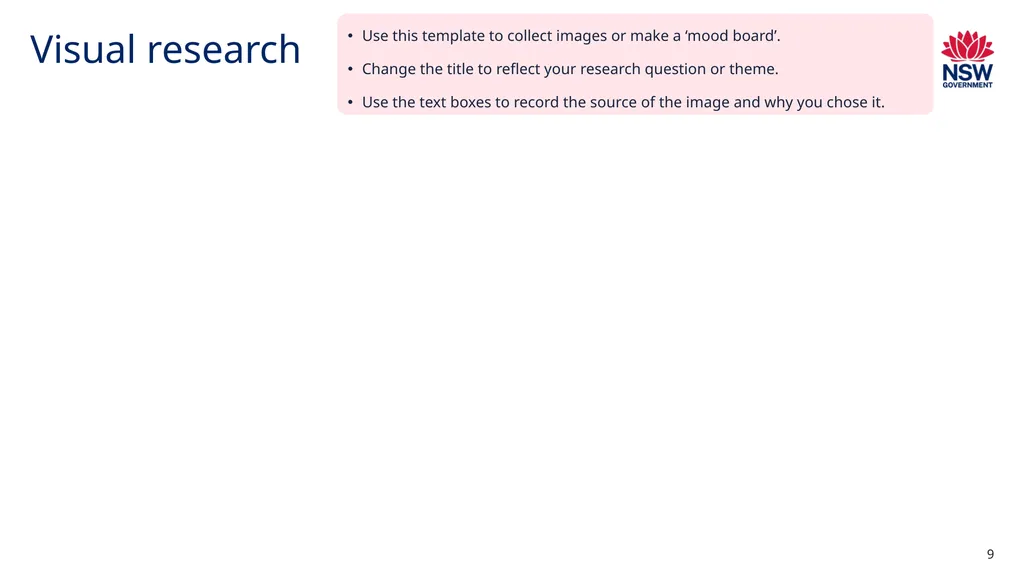
slide9. Visual research Use this template to collect images or make a ‘mood board’.
Change the title to reflect your research question or theme.
Use the text boxes to record the source of the image and why you chose it. 9<br>
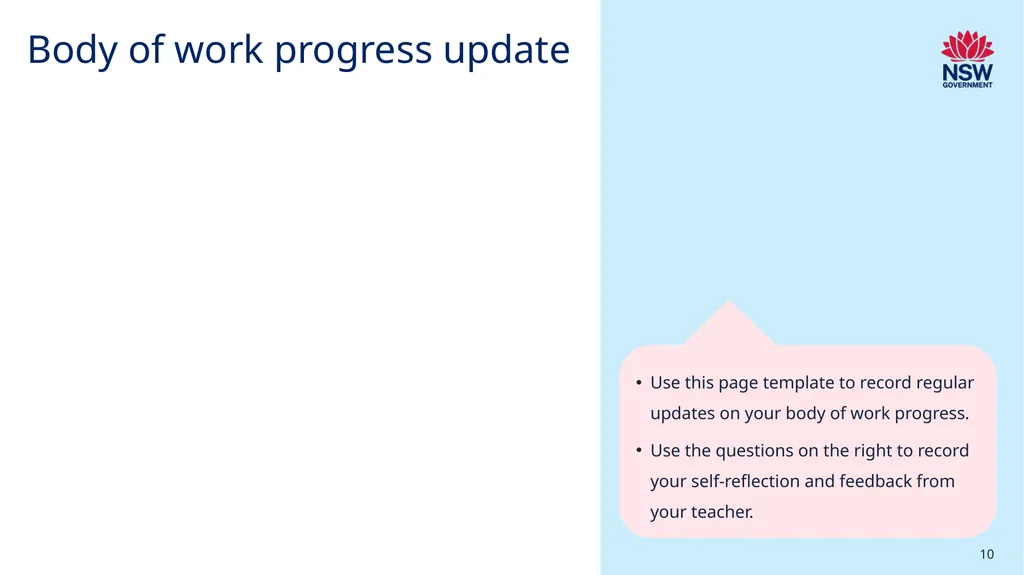
slide10. Body of work progress update Use this page template to record regular updates on your body of work progress.
Use the questions on the right to record your self-reflection and feedback from your teacher.<br>
slide11. Links and references (1 of 2) Visual Arts Stage 6 Syllabus | NSW Education Standards (accessed 24/09/2021)
Body of work marking guidelines (pdf, 234KB, accessed 24/09/2021)
Assessment and reporting in Visual Arts Stage 6 | NSW Education Standards (accessed 24/09/2021)
HSC important dates practical and performance exams | NSW Education Standards (accessed 24/09/2021)
Visual arts curriculum (NSW Department of Education) (accessed 24/09/2021)
Successful bodies of work (accessed 24/09/2021)
ARTEXPRESS (artsunit.nsw.edu.au) (accessed 24/09/2021)<br>
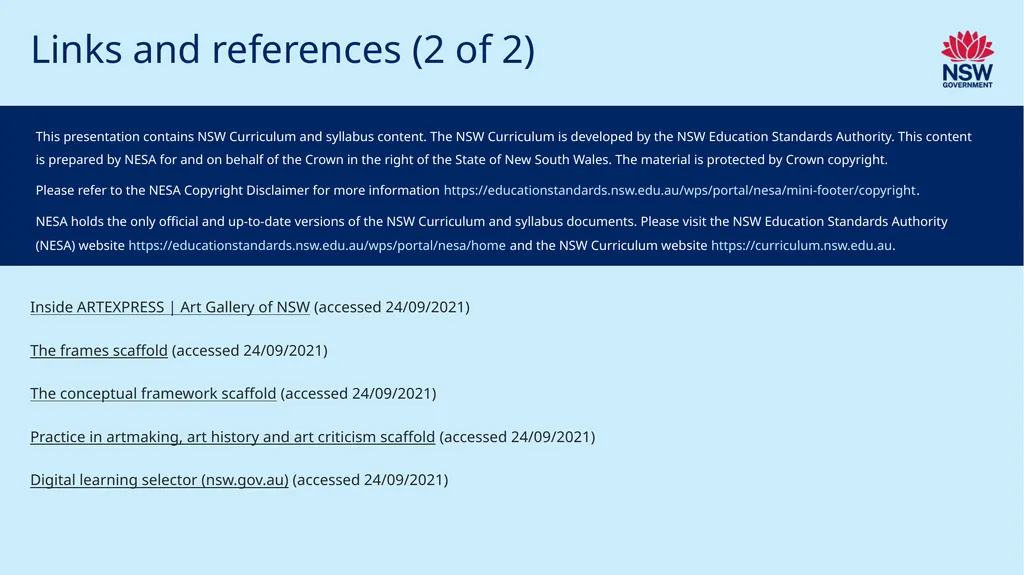
slide12. Links and references (2 of 2) Inside ARTEXPRESS | Art Gallery of NSW (accessed 24/09/2021)
The frames scaffold (accessed 24/09/2021)
The conceptual framework scaffold (accessed 24/09/2021)
Practice in artmaking, art history and art criticism scaffold (accessed 24/09/2021)
Digital learning selector (nsw.gov.au) (accessed 24/09/2021)<br>

slide13. Copyright © State of New South Wales (Department of Education), 2023 The copyright material published in this resource is subject to the Copyright Act 1968 (Cth) and is owned by the NSW Department of Education or, where indicated, by a party other than the NSW Department of Education (third-party material).
Copyright material available in this resource and owned by the NSW Department of Education is licensed under a Creative Commons Attribution 4.0 International (CC BY 4.0) licence.
This licence allows you to share and adapt the material for any purpose, even commercially.
Attribution should be given to © State of New South Wales (Department of Education), 2023.
Material in this resource not available under a Creative Commons licence:
the NSW Department of Education logo, other logos and trademark-protected material
Material owned by a third party that has been reproduced with permission. You will need to obtain permission from the third party to reuse its material.
Links to third-party material and websites
Please note that the provided (reading/viewing material/list/links/texts) are a suggestion only and implies no endorsement, by the New South Wales Department of Education, of any author, publisher, or book title. School principals and teachers are best placed to assess the suitability of resources that would complement the curriculum and reflect the needs and interests of their students.
If you use the links provided in this document to access a third party’s website, you acknowledge that the terms of use, including licence terms set out on the third-party’s website apply to the use which may be made of the materials on that third-party website or where permitted by the Copyright Act 1968 (Cth). The department accepts no responsibility for content on third-party websites.<br>
slide2. Body of work key dates 2<br>
slide3. Body of work timeline (1 of 3) Use this page to set some goals each month, and update with a brief reflection on your progress. October November December January 3<br>
slide4. Body of work timeline (2 of 3) Use this page to set some goals each month, and update with a brief reflection on your progress. February March April May 4<br>
slide5. Body of work timeline (3 of 3) Use this page to set some goals each month, and update with a brief reflection on your progress. What do you need to do before you submit your BOW? June July August Submission Add the final due date and any submission notes here. 5<br>
slide6. Successful bodies of work Complete the activities on the Successful bodies of work website to help you get some ideas to get started on your body of work.
Record your completed activities on blank slides in this presentation. 6<br>
slide7. Concept map Use this template to identify and explore an area of interest for your body of work.
Then map out ideas for material and conceptual practice.
You can find more concept map templates on the Digital learning selector. 7<br>
slide8. Artist research Use this template to record research into your reference artists.
You can duplicate this page or insert a blank ‘Artist research’ slide to record your research about multiple artists.
On the right-hand side, add images of their work. Record a citation for each image that includes the artist’s name, the title of the artwork, the year it was created, and the materials and dimensions.
On the left-hand side, fill in the artist’s name and essential information, then use the artmaking practice, frames, and conceptual framework scaffolds to make some notes about this artist. 8<br>
slide9. Visual research Use this template to collect images or make a ‘mood board’.
Change the title to reflect your research question or theme.
Use the text boxes to record the source of the image and why you chose it. 9<br>
slide10. Body of work progress update Use this page template to record regular updates on your body of work progress.
Use the questions on the right to record your self-reflection and feedback from your teacher.<br>
slide11. Links and references (1 of 2) Visual Arts Stage 6 Syllabus | NSW Education Standards (accessed 24/09/2021)
Body of work marking guidelines (pdf, 234KB, accessed 24/09/2021)
Assessment and reporting in Visual Arts Stage 6 | NSW Education Standards (accessed 24/09/2021)
HSC important dates practical and performance exams | NSW Education Standards (accessed 24/09/2021)
Visual arts curriculum (NSW Department of Education) (accessed 24/09/2021)
Successful bodies of work (accessed 24/09/2021)
ARTEXPRESS (artsunit.nsw.edu.au) (accessed 24/09/2021)<br>
slide12. Links and references (2 of 2) Inside ARTEXPRESS | Art Gallery of NSW (accessed 24/09/2021)
The frames scaffold (accessed 24/09/2021)
The conceptual framework scaffold (accessed 24/09/2021)
Practice in artmaking, art history and art criticism scaffold (accessed 24/09/2021)
Digital learning selector (nsw.gov.au) (accessed 24/09/2021)<br>
slide13. Copyright © State of New South Wales (Department of Education), 2023 The copyright material published in this resource is subject to the Copyright Act 1968 (Cth) and is owned by the NSW Department of Education or, where indicated, by a party other than the NSW Department of Education (third-party material).
Copyright material available in this resource and owned by the NSW Department of Education is licensed under a Creative Commons Attribution 4.0 International (CC BY 4.0) licence.
This licence allows you to share and adapt the material for any purpose, even commercially.
Attribution should be given to © State of New South Wales (Department of Education), 2023.
Material in this resource not available under a Creative Commons licence:
the NSW Department of Education logo, other logos and trademark-protected material
Material owned by a third party that has been reproduced with permission. You will need to obtain permission from the third party to reuse its material.
Links to third-party material and websites
Please note that the provided (reading/viewing material/list/links/texts) are a suggestion only and implies no endorsement, by the New South Wales Department of Education, of any author, publisher, or book title. School principals and teachers are best placed to assess the suitability of resources that would complement the curriculum and reflect the needs and interests of their students.
If you use the links provided in this document to access a third party’s website, you acknowledge that the terms of use, including licence terms set out on the third-party’s website apply to the use which may be made of the materials on that third-party website or where permitted by the Copyright Act 1968 (Cth). The department accepts no responsibility for content on third-party websites.<br>