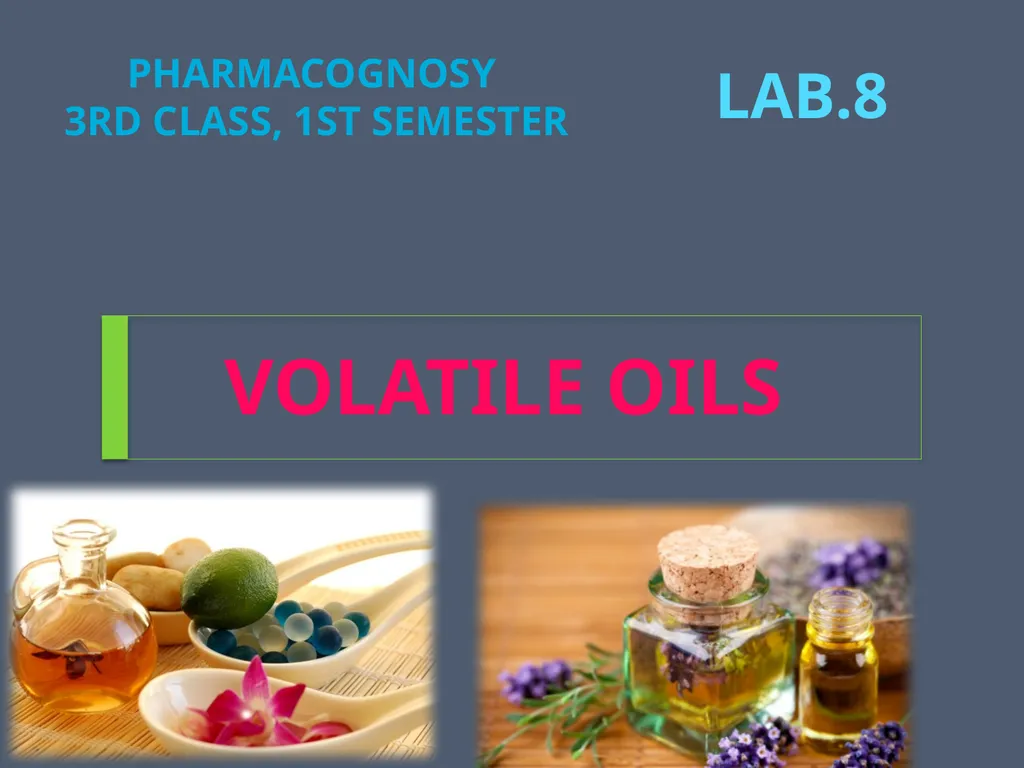
VOLATILE OILS Pharmacognosy 3rd Class, 1st Semester Lab.8 Introduction Volatile oils is a concentrated hydrophobic liquid containing volatile chemical compounds from plants. Because they evaporate when exposed to the air room temperatures,
"VOLATILE OILS Pharmacognosy 3rd Class, 1st" is the property of its rightful owner. Permission is granted to
download and print the materials on this website for personal, non-commercial use only, and to display it
on your personal computer provided you do not modify the materials and that you retain all copyright
notices contained in the materials. By downloading content from our website, you accept the terms of this
agreement.
Introduction Volatile oils is a concentrated hydrophobic liquid containing volatile chemical compounds from plants.
Because they evaporate when exposed to the air room temperatures, they are called volatile oils, they are also called essential oils or ethereal oils.
Volatile oils are colorless as a rule, particularly when they are fresh, but on long standing they are may oxidize and resinify, thus darkening in color to prevent this darkening, they should be stored in a cool, dry place in tightly stoppered, preferably full, amber glass containers.<br>
03
Cont… All official volatile oils are of vegetable origin normally pre-exist in the plant – stored in a special secretary tissue ,oil glands, oil cells, glandular hairs.
EXCEPTION: Oil of bitter almond–formed by hydrolysis of the glycosides.<br>
04
Physical and chemical properties - Evaporate when exposed to the air at ordinary temperatures, therefore they are called ethereal oil or essential oils (odour of the plants)
- Immiscible with water
- Soluble in ether and most organic solvent.
Chemically they are two class depend on biosynthetic sub units
-terpenoids biosynthesized from acetate mevalonate path way
- aromatic formed via shikimate pathway<br>
05
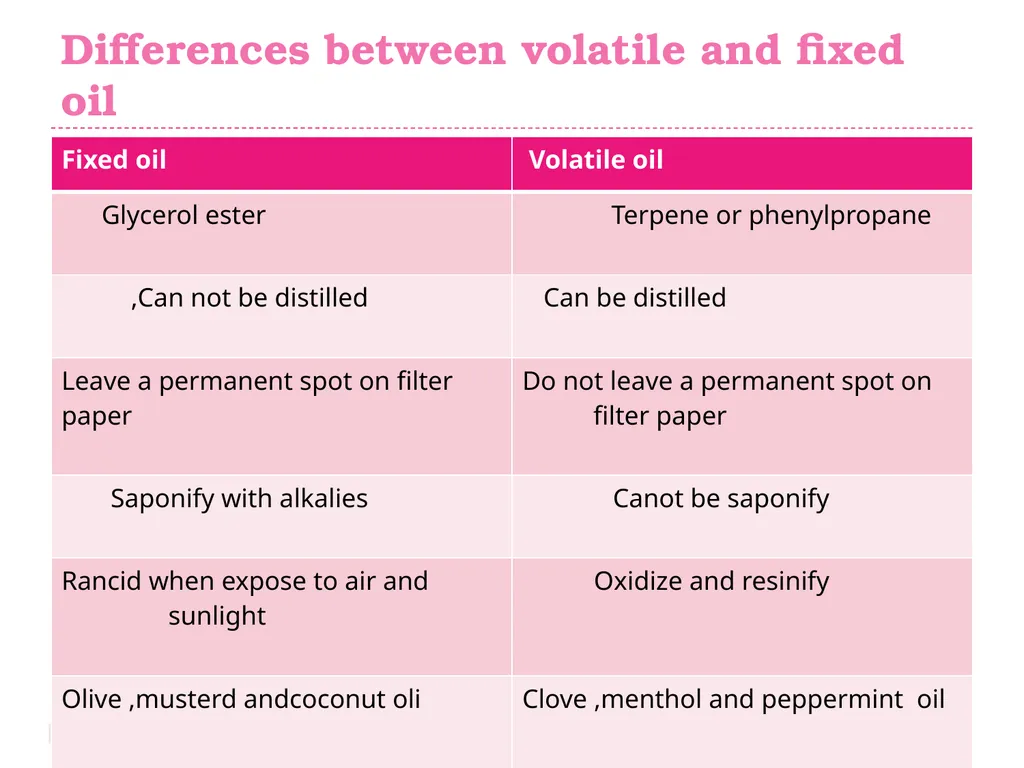
Differences between volatile and fixed oil<br>
06
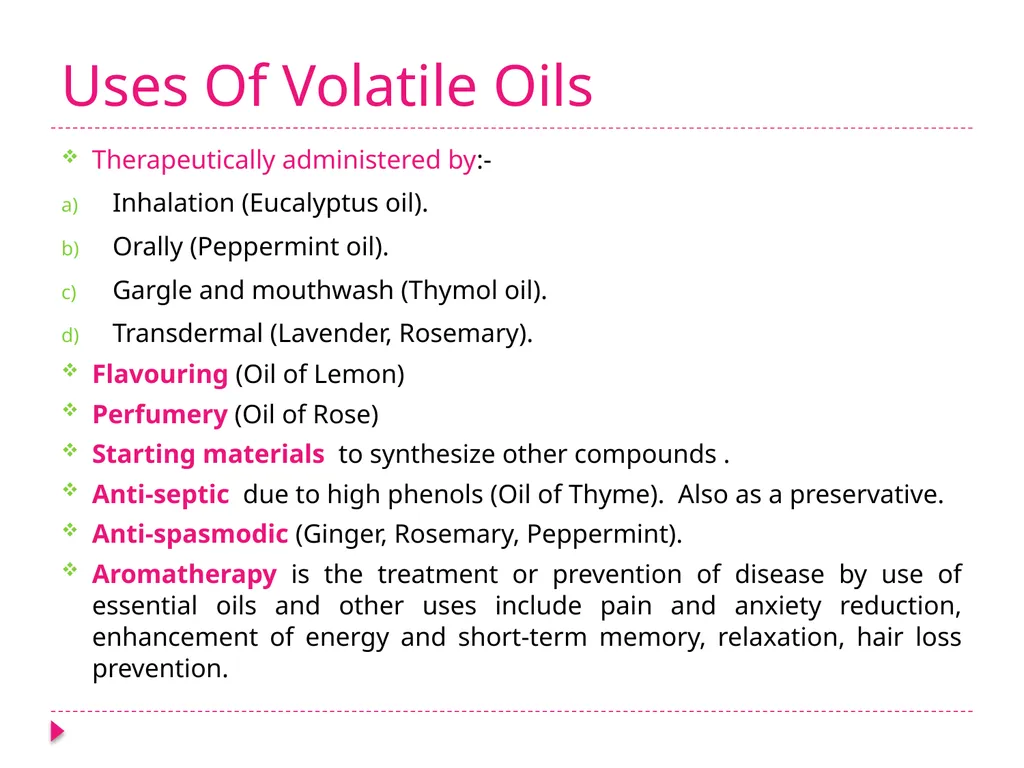
Uses Of Volatile Oils Therapeutically administered by:-
Inhalation (Eucalyptus oil).
Orally (Peppermint oil).
Gargle and mouthwash (Thymol oil).
Transdermal (Lavender, Rosemary).
Flavouring (Oil of Lemon)
Perfumery (Oil of Rose)
Starting materials to synthesize other compounds .
Anti-septic due to high phenols (Oil of Thyme). Also as a preservative.
Anti-spasmodic (Ginger, Rosemary, Peppermint).
Aromatherapy is the treatment or prevention of disease by use of essential oils and other uses include pain and anxiety reduction, enhancement of energy and short-term memory, relaxation, hair loss prevention.<br>
07
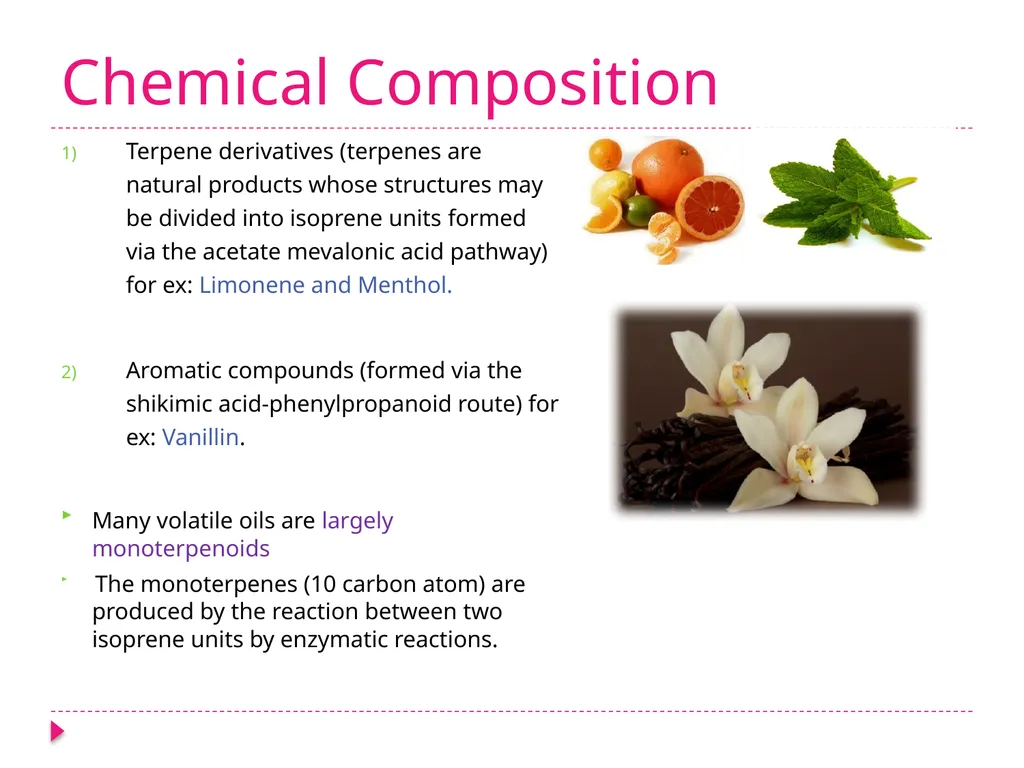
Chemical Composition Terpene derivatives (terpenes are natural products whose structures may be divided into isoprene units formed via the acetate mevalonic acid pathway) for ex: Limonene and Menthol.
Aromatic compounds (formed via the shikimic acid-phenylpropanoid route) for ex: Vanillin.
Many volatile oils are largely monoterpenoids
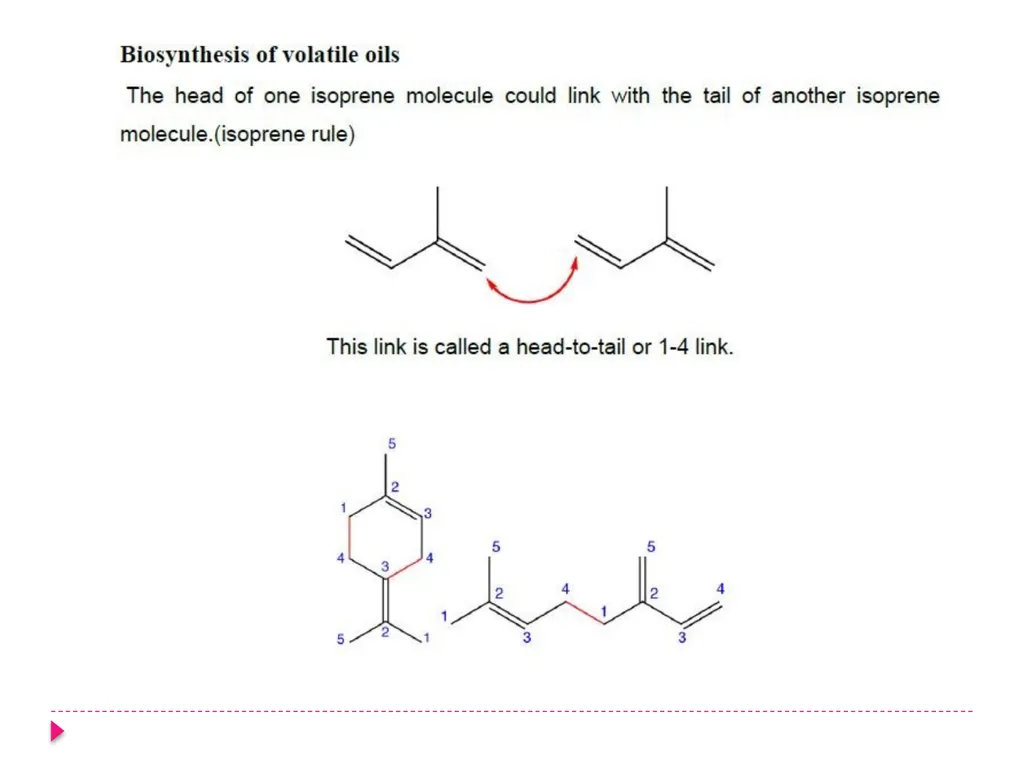
The monoterpenes (10 carbon atom) are produced by the reaction between two isoprene units by enzymatic reactions.<br>
08
Cont… Generally volatile oils containing drugs are divided into the following classes:-
Hydrocarbons
Alcohols
Aldehydes
Ketones
Phenols
Phenolic ethers
Oxides
Esters<br>
09
Methods of obtaining volatile oils 1. Steam Distillation: This method is applied to fresh plants for ex: peppermint.
2. Expression: is most commonly used for extracting essential oils from citrus fruit (orange, lemon, grapefruit, etc.).
3. Enfleurage method: is a very old technique of extracting the aromatic oils from flowers that was popularized in France during the 19th century. .
4. Enzymatic hydrolysis: Glycosidic volatile oils like bitter almond, mustard oil is obtained by enzymatic hydrolysis of glycosides.
5. Solvent extraction: This is very costly method and is mostly used in perfume industry. The parts containing volatile oil are extracted directly by one of the organic solvents and they are then separated.<br>
10
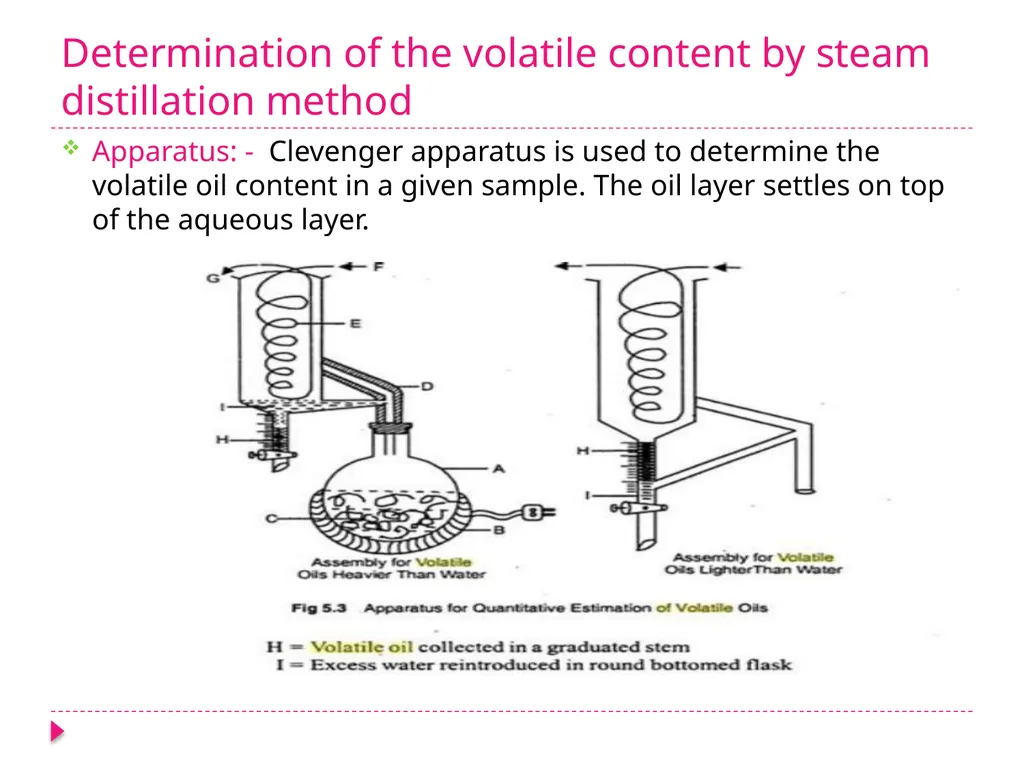
Determination of the volatile content by steam distillation method Apparatus: - Clevenger apparatus is used to determine the volatile oil content in a given sample. The oil layer settles on top of the aqueous layer.<br>