Vulnerable or Special? Understanding and Contextualizing Pregnant Women Subject Protection in China Haihong Zhang, Ph.D. Office Director of Peking University Human Research Protection Program zhanghhbjmu.edu.cn 14 WCB, India, Dec. 5, 2018
"Vulnerable or Special? Understanding and" is the property of its rightful owner. Permission is granted to
download and print the materials on this website for personal, non-commercial use only, and to display it
on your personal computer provided you do not modify the materials and that you retain all copyright
notices contained in the materials. By downloading content from our website, you accept the terms of this
agreement.
Presentation Transcript
01
Vulnerable or Special? Understanding and Contextualizing Pregnant Women Subject Protection in China Haihong Zhang, Ph.D.
Office Director of Peking University Human Research Protection Program
zhanghh@bjmu.edu.cn
14 WCB, India, Dec. 5, 2018<br>
02
No Conflict of Interest to disclose<br>
03
Outline Research Background
Research Design and Methodology
Main Typical Findings
Interpretations from Chinese Perspective
Reflections and lessons for practice
Limitations and ways forward<br>
04
Research Background Urgent need for conducting research in pregnant women group
Development of science
The welfare of this group
However, hesitation from different stakeholders
pregnant women: typical vulnerable group
Unknown risks to fetus, etc.
Literature: vulnerable population: too wide vs. too narrow<br>
05
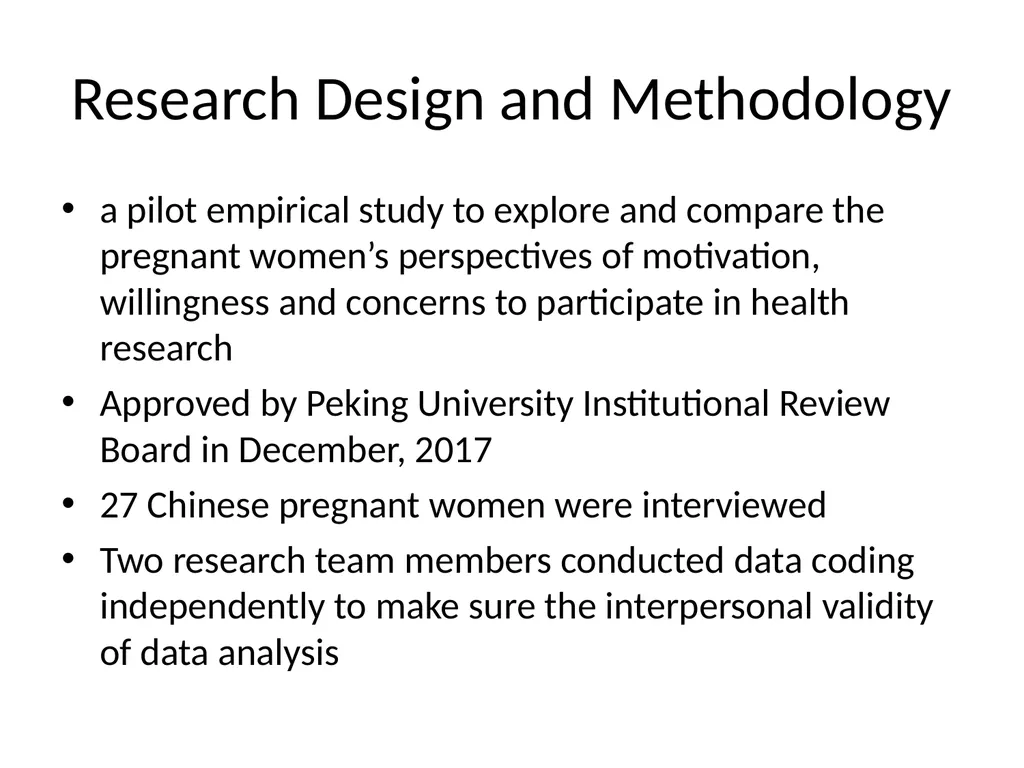
Research Design and Methodology a pilot empirical study to explore and compare the pregnant women’s perspectives of motivation, willingness and concerns to participate in health research
Approved by Peking University Institutional Review Board in December, 2017
27 Chinese pregnant women were interviewed
Two research team members conducted data coding independently to make sure the interpersonal validity of data analysis<br>
06
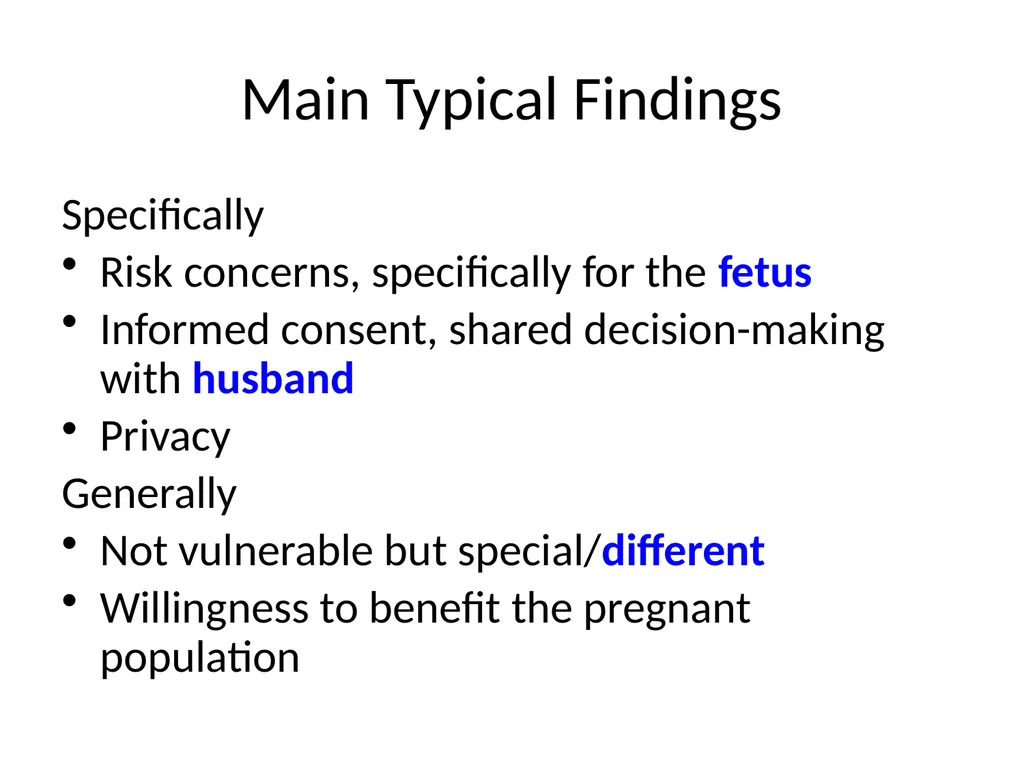
Main Typical Findings Specifically
Risk concerns, specifically for the fetus
Informed consent, shared decision-making with husband
Privacy
Generally
Not vulnerable but special/different
Willingness to benefit the pregnant population<br>
07
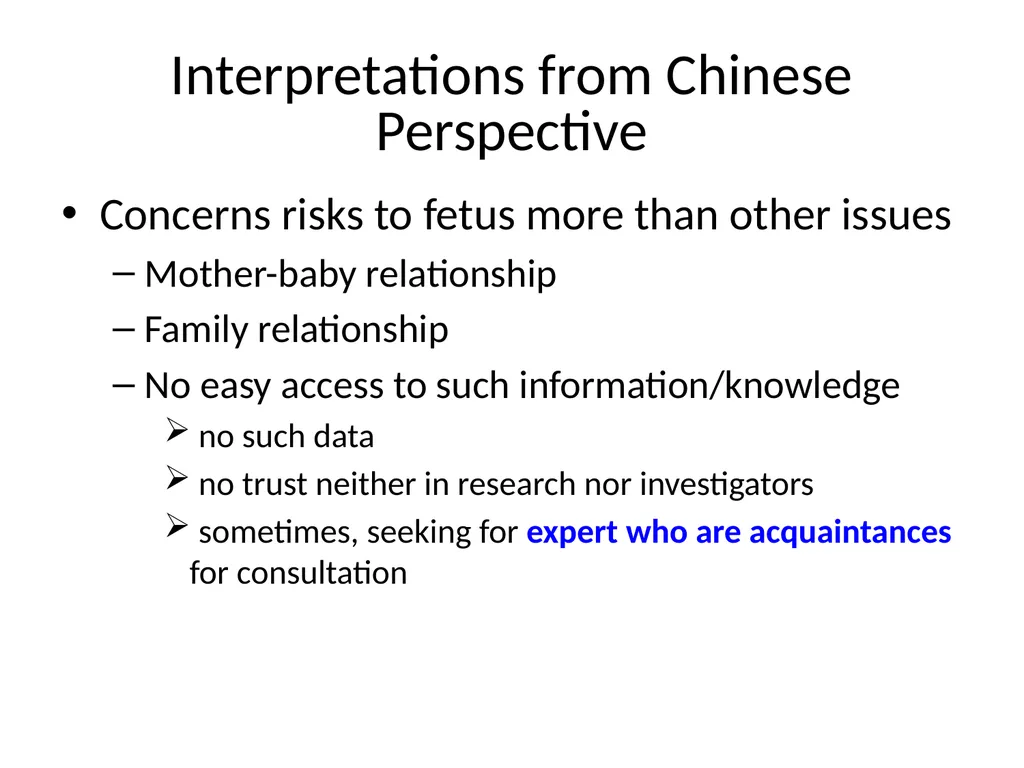
Interpretations from Chinese Perspective Concerns risks to fetus more than other issues
Mother-baby relationship
Family relationship
No easy access to such information/knowledge
no such data
no trust neither in research nor investigators
sometimes, seeking for expert who are acquaintances for consultation<br>
08
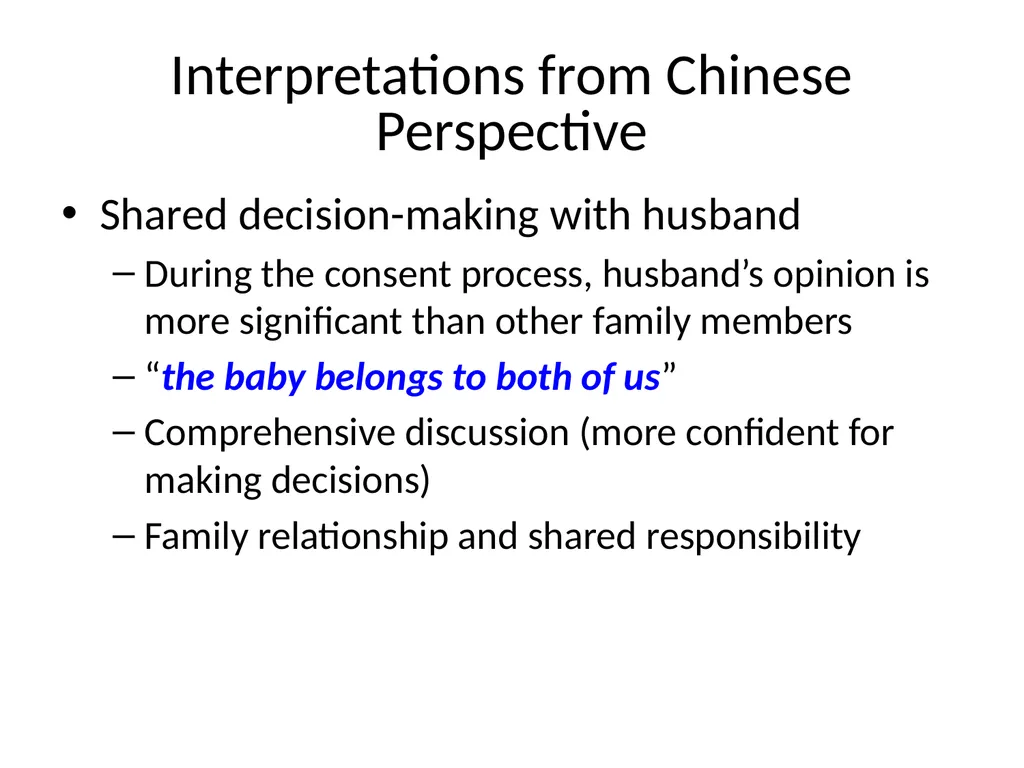
Interpretations from Chinese Perspective Shared decision-making with husband
During the consent process, husband’s opinion is more significant than other family members
“the baby belongs to both of us”
Comprehensive discussion (more confident for making decisions)
Family relationship and shared responsibility<br>
09
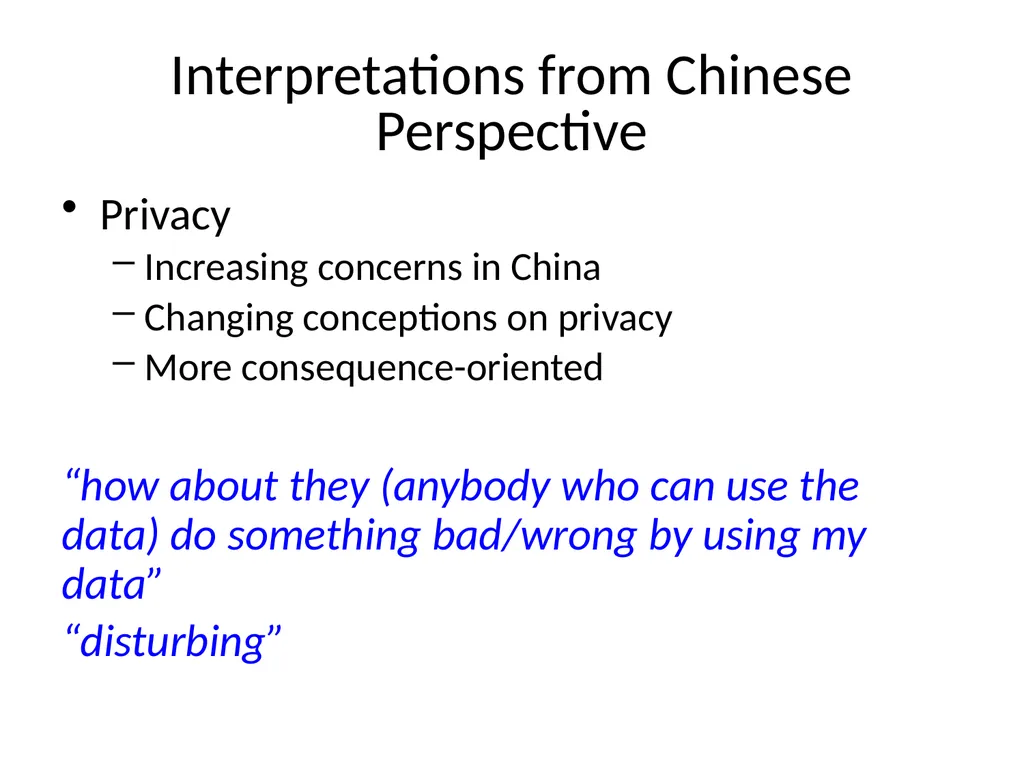
Interpretations from Chinese Perspective Privacy
Increasing concerns in China
Changing conceptions on privacy
More consequence-oriented
“how about they (anybody who can use the data) do something bad/wrong by using my data”
“disturbing”<br>
10
Reflections and lessons for practice particular protections needed, while not because they are vulnerable during pregnancy, but special conditions
Altruism willingness<br>
11
Reflections and lessons for practice A more tailored pregnant women subject protection in Chinese context is needed
taking into account of the Interpersonal relationship
Trust building
Transparency
Be responsible!<br>
12
Limitations and ways forward Interviewees:
Well-educated group
Morally sensitive
More data/information from ordinary group is needed
Draft institutional level guidance and be open to share with other peer institutions for further update<br>
13
Acknowledgement Wellcome Trust (206526/Z/17/Z), Global Forum of Bioethics in Research Fellowship Funding in 2016
Peking University Human Research Protection Program
Peking University First Hospital
Peking University Third Hospital
University of Michigan, U.S.A<br>