04
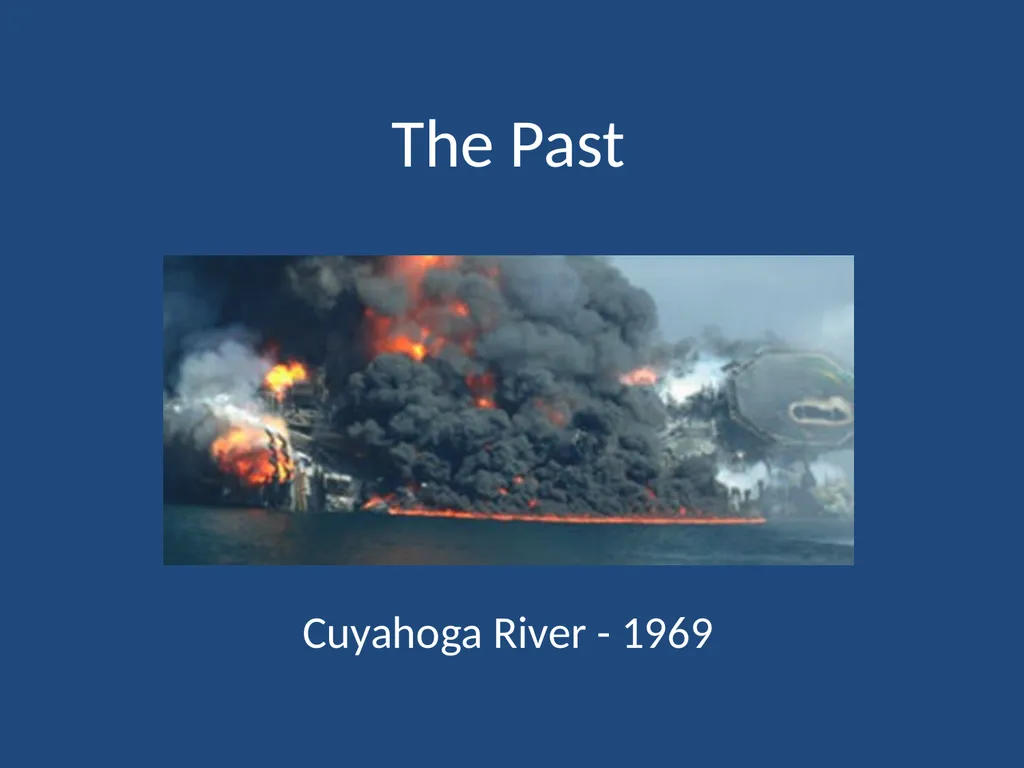
The Past Cuyahoga River - 1969<br>
05
Timeline 1883 – First large chemical fire on the Cuyahoga River
1948 – Federal Water Pollution Control Act
1955 – Air Pollution Control Act
1963 – Clean Air Act (amended 1990)
1965 – Solid Waste Disposal Act
1969 – National Environmental Policy Act enacted after a large fire on the Cuyahoga River sparks national outcry
1970 – Environmental Protection Agency established
Earth Day established
Washington Department of Ecology established
1972 – Clean Water Act
1976 – Resource Conservation and Recovery Act
1978 – Love Canal makes national news
1980 – Comprehensive Environmental Response, Compensation, and Liability Act (Superfund)(Amended and reauthorized, 1986)<br>
06
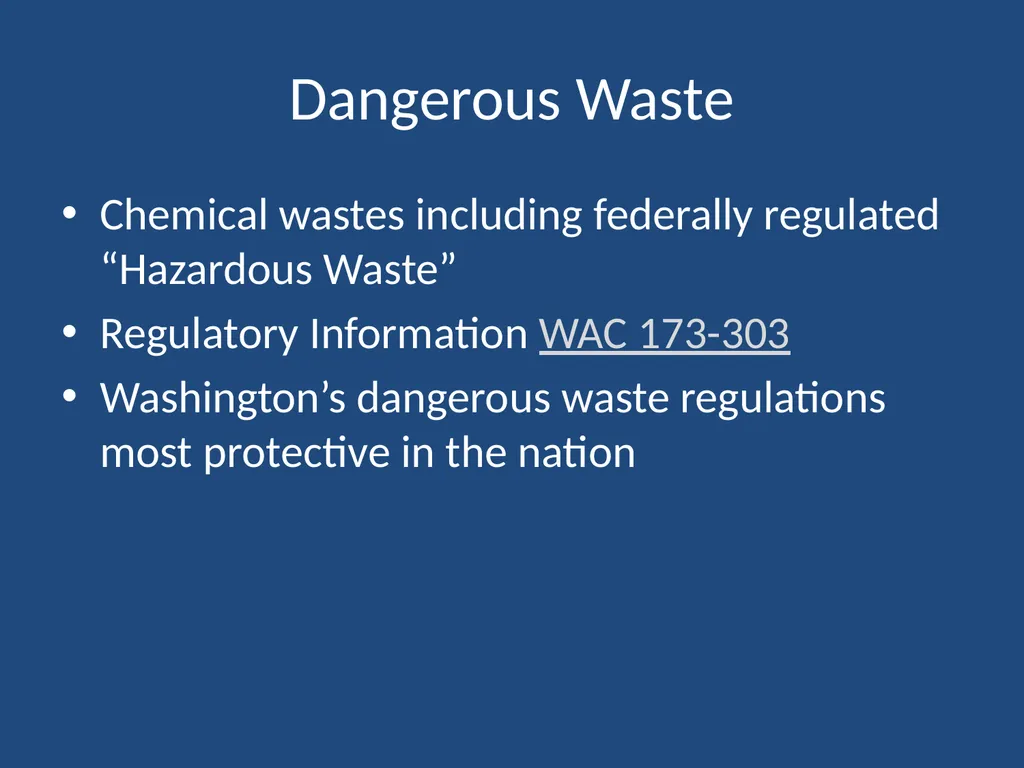
Identifying Dangerous Waste Flammable liquids, flash point <60 C/140 F
Aqueous alcohol solutions <24% ABV* exempt
Oxidizers and peroxides
Flammable solids (e.g. metal powders) and explosives
Halogenated organic solvents
Corrosive liquids and solids (pH ≤2 or 12.5≥)
Pyrophoric and water reactive materials
Compressed gasses (all)
Heavy metals (Ag, As, Cd, Cr, Hg, Pb, Se)
Toxicity
Oral rat LD:50 <5,000 mg/kg
Fish LC:50 < 10 mg/L
Inhalation rat LC:50 <200 mg/L
Dermal rabbit LD:50 <20,000 mg/kg
Any substance at or above the concentration listed at WAC 173-303-090(8)(c)
*ABV = Alcohol by volume<br>
07
Products of Concern Antiseptics and disinfectants
Herbicides, fungicides, nematicides, rodenticides and insecticides
Dyes, pigments, glazes, inks, thinners, and paints
Etching solutions
Commercial cleaners and metal polishing compounds
Pyrotechnics, including road flares
Drain and oven cleaners<br>
08
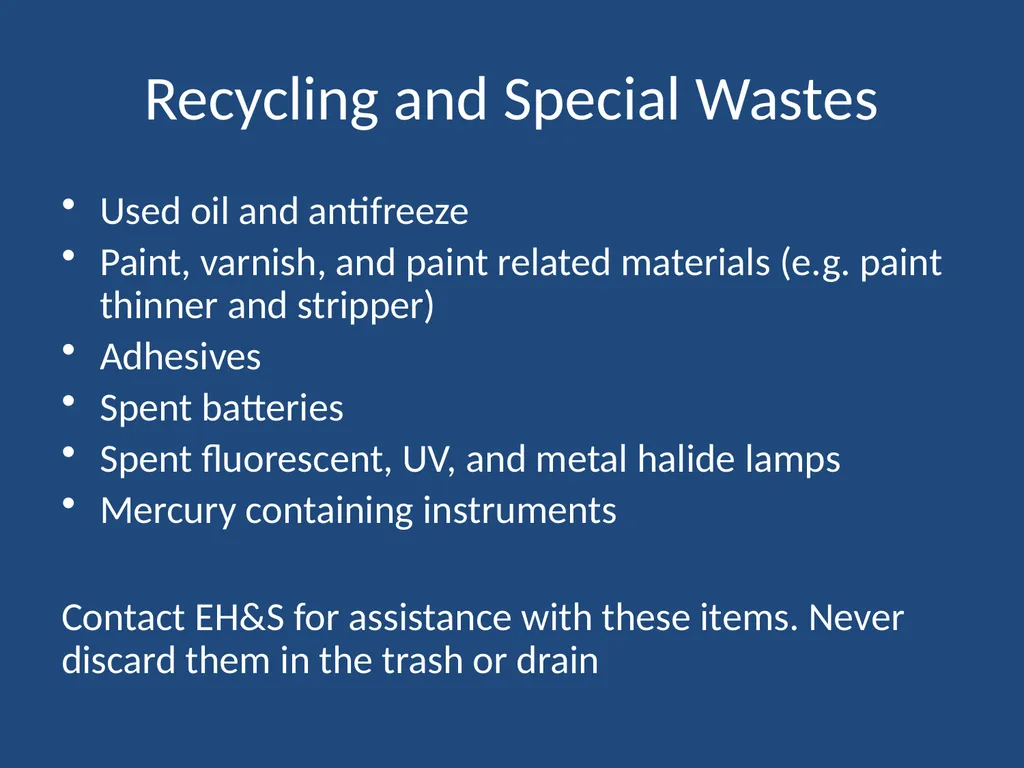
Recycling and Special Wastes Used oil and antifreeze
Paint, varnish, and paint related materials (e.g. paint thinner and stripper)
Adhesives
Spent batteries
Spent fluorescent, UV, and metal halide lamps
Mercury containing instruments
Contact EH&S for assistance with these items. Never discard them in the trash or drain<br>
09
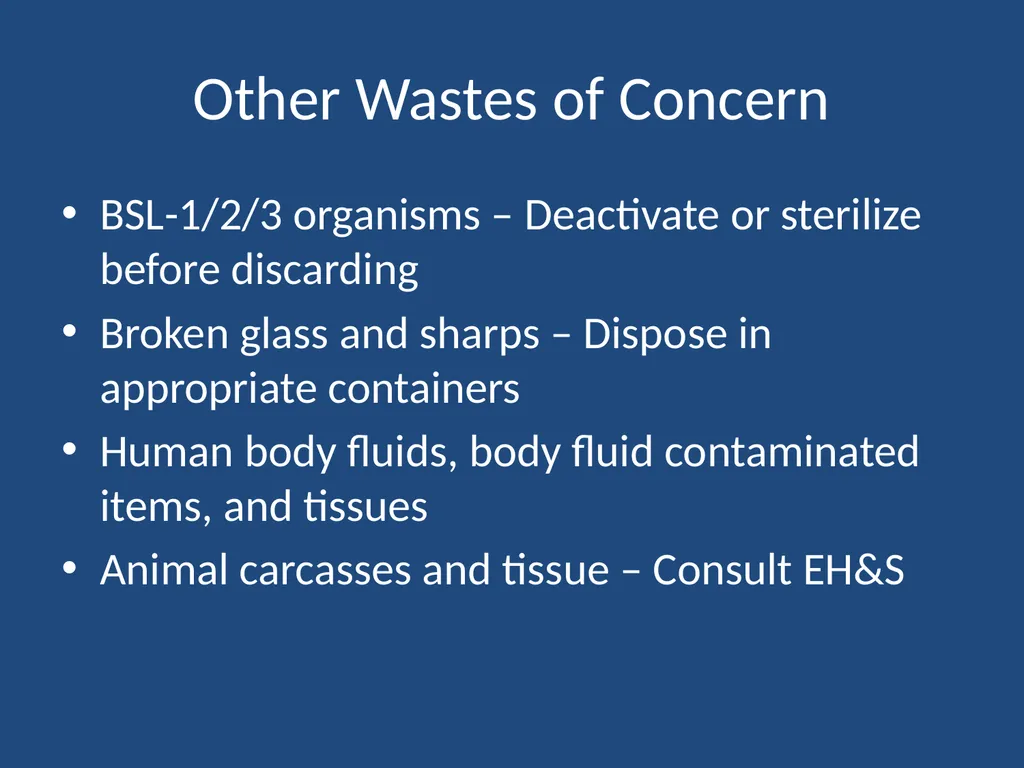
Other Wastes of Concern BSL-1/2/3 organisms – Deactivate or sterilize before discarding
Broken glass and sharps – Dispose in appropriate containers
Human body fluids, body fluid contaminated items, and tissues
Animal carcasses and tissue – Consult EH&S<br>
10
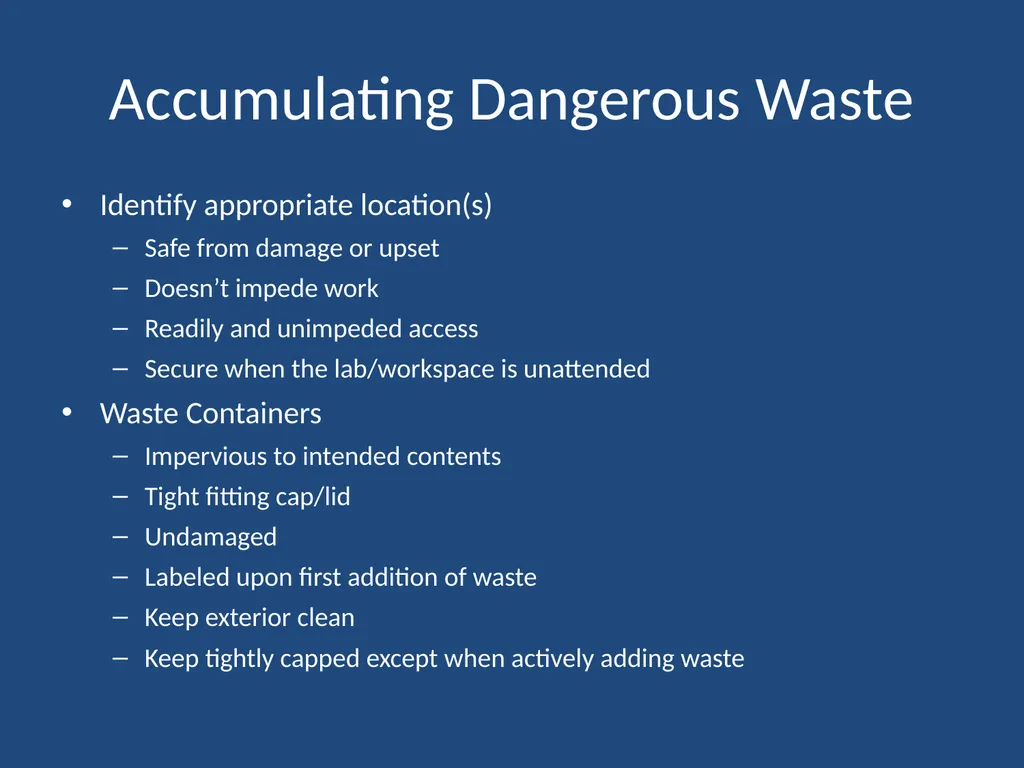
Accumulating Dangerous Waste Identify appropriate location(s)
Safe from damage or upset
Doesn’t impede work
Readily and unimpeded access
Secure when the lab/workspace is unattended
Waste Containers
Impervious to intended contents
Tight fitting cap/lid
Undamaged
Labeled upon first addition of waste
Keep exterior clean
Keep tightly capped except when actively adding waste<br>
11
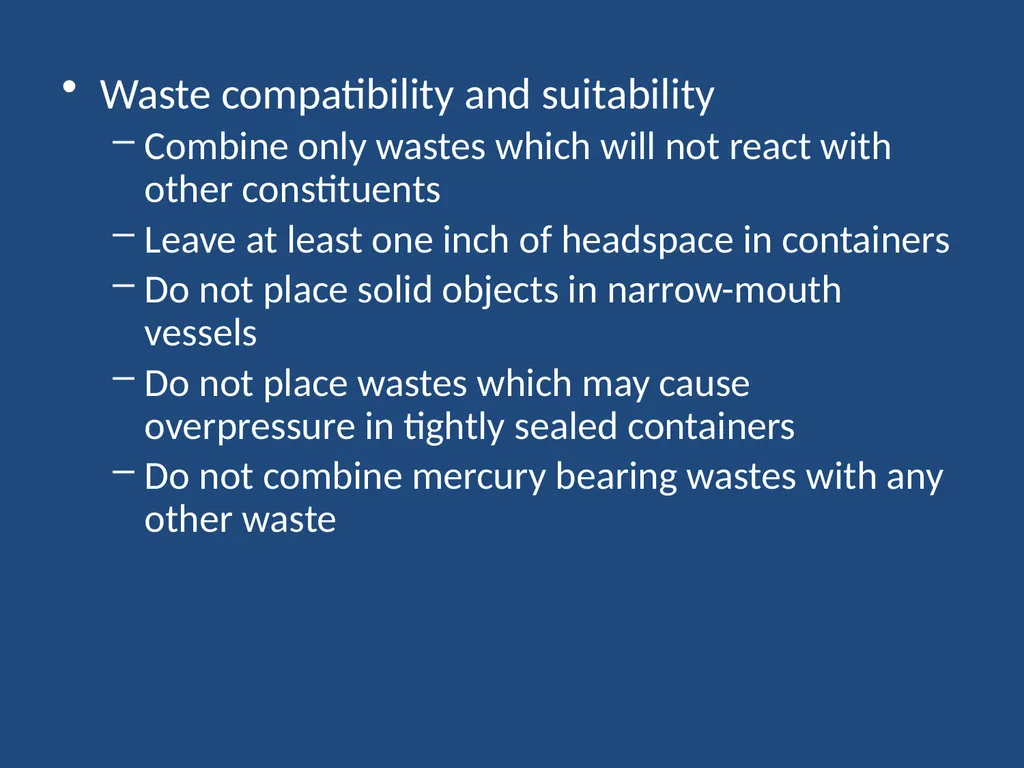
Waste compatibility and suitability
Combine only wastes which will not react with other constituents
Leave at least one inch of headspace in containers
Do not place solid objects in narrow-mouth vessels
Do not place wastes which may cause overpressure in tightly sealed containers
Do not combine mercury bearing wastes with any other waste<br>
12
Removing Waste From Your Work Area Dangerous waste must be removed within three days once the container is filled
Consult your departmental representative for instructions
Contact EH&S if your department does not have a designated representative<br>
13
Trash You may discard the following materials in the trash*
Sugars, agars, gums, amino acids, and inert solids such as talc, and dry resins and filter media
Dry wipes, bench papers and mats, empty containers, unbroken glassware, pipette tips, and weighing papers and boats , dry resins and filter media
*No free flowing liquids or items contaminated with Ag, As, Ba, Cd, Cr, Hg, or Se<br>
14
Drain Disposal You may dispose the following materials in the sink*
Aqueous solutions containing buffers and salts (less than 10% by weight)
Neutralized inorganic acids and bases (pH 5 – 9)
Blood and other body fluids
Flowable aqueous gels, nutrient broths and agars
Spent formalin solutions
Used neutral pH cleaning solutions and “dishwater” from glassware cleaning
*No Ag, As, Ba, Cd, Cr, Cu, Hg, Se, or Zn<br>
15
Support Contact Environmental Health and Safety for assistance with
Waste collection and disposal
Chemical and commercial product safety and environmental information
General and workplace safety concerns
527-5966 or ehs@whitman.edu<br>
16
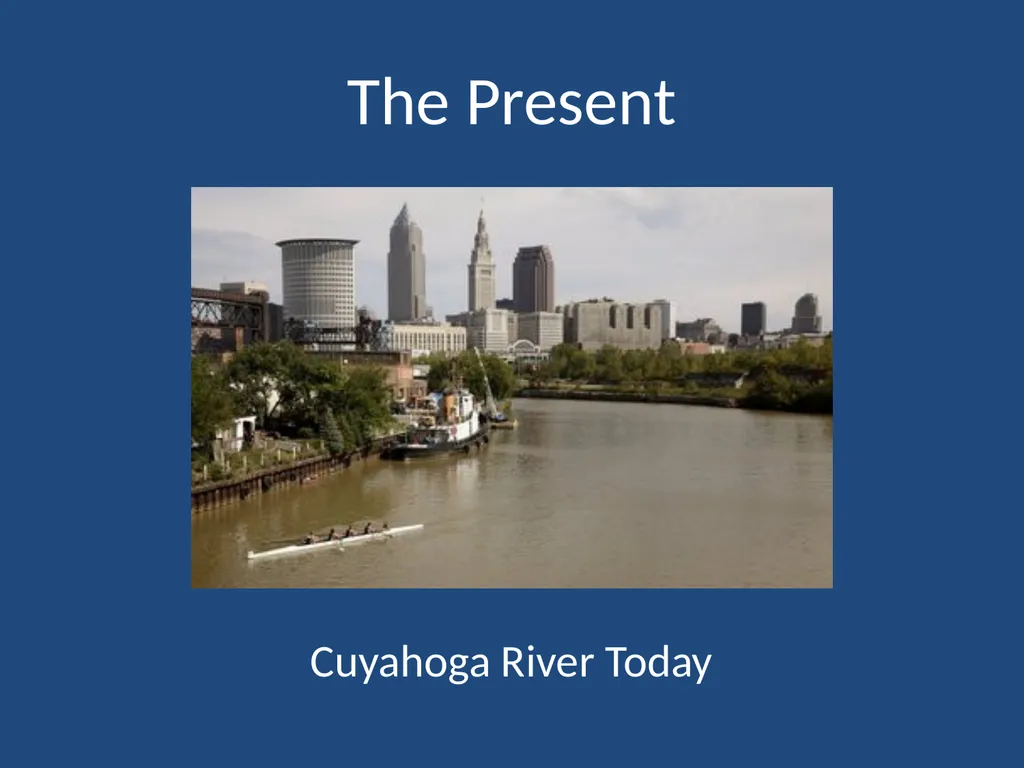
The Present Cuyahoga River Today<br>
17
You decide the future<br>