
Water Hub: Infrastructure Aspiration: Maintain
Description: Water Hub: Infrastructure Aspiration: Maintain high quality drinking water and reduce flooding potential Benchmark 13: Prohibit the installation of permanent irrigation systems that rely on potable water. Target met: Prohibition exists
Related Topics
Download Presentation
"Water Hub: Infrastructure Aspiration: Maintain" is the property of its rightful owner. Permission is granted to download and print the materials on this website for personal, non-commercial use only, and to display it on your personal computer provided you do not modify the materials and that you retain all copyright notices contained in the materials. By downloading content from our website, you accept the terms of this agreement.
Presentation Transcript
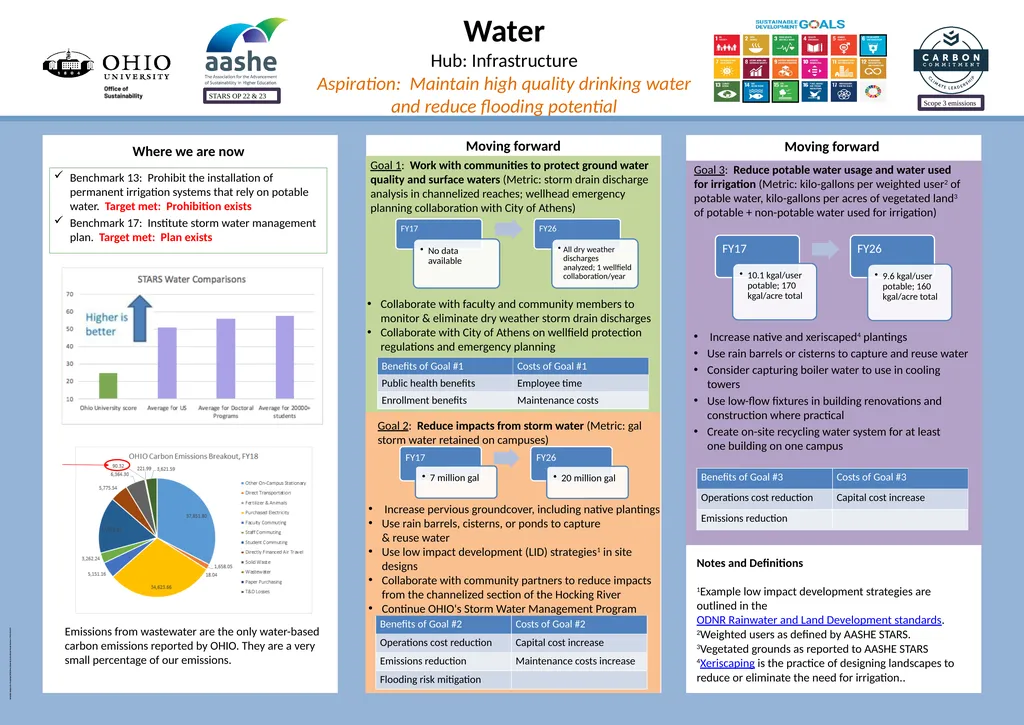
slide1. WaterHub: InfrastructureAspiration: Maintain high quality drinking water and reduce flooding potential Benchmark 13: Prohibit the installation of permanent irrigation systems that rely on potable water. Target met: Prohibition existsÂ
Benchmark 17:  Institute storm water management plan. Target met: Plan exists STARS OP 22 & 23 Scope 3 emissions Emissions from wastewater are the only water-based carbon emissions reported by OHIO. They are a very small percentage of our emissions. Where we are now Moving forward Goal 3: Reduce potable water usage and water used for irrigation (Metric: kilo-gallons per weighted user2 of potable water, kilo-gallons per acres of vegetated land3 of potable + non-potable water used for irrigation) Goal 2: Reduce impacts from storm water (Metric: gal storm water retained on campuses) Moving forward Increase pervious groundcover, including native plantings
Use rain barrels, cisterns, or ponds to capture & reuse waterÂ
Use low impact development (LID) strategies1 in site designs
Collaborate with community partners to reduce impacts from the channelized section of the Hocking River
Continue OHIO's Storm Water Management Program Notes and Definitions
1Example low impact development strategies are outlined in the ODNR Rainwater and Land Development standards.
2Weighted users as defined by AASHE STARS.
3Vegetated grounds as reported to AASHE STARS
4Xeriscaping is the practice of designing landscapes to reduce or eliminate the need for irrigation.. Goal 1: Work with communities to protect ground water quality and surface waters (Metric: storm drain discharge analysis in channelized reaches; wellhead emergency planning collaboration with City of Athens) Collaborate with faculty and community members to monitor & eliminate dry weather storm drain discharges
Collaborate with City of Athens on wellfield protection regulations and emergency planning Increase native and xeriscaped4 plantingsÂ
Use rain barrels or cisterns to capture and reuse water
Consider capturing boiler water to use in cooling towersÂ
Use low-flow fixtures in building renovations and construction where practical
Create on-site recycling water system for at least one building on one campus<br>
Benchmark 17:  Institute storm water management plan. Target met: Plan exists STARS OP 22 & 23 Scope 3 emissions Emissions from wastewater are the only water-based carbon emissions reported by OHIO. They are a very small percentage of our emissions. Where we are now Moving forward Goal 3: Reduce potable water usage and water used for irrigation (Metric: kilo-gallons per weighted user2 of potable water, kilo-gallons per acres of vegetated land3 of potable + non-potable water used for irrigation) Goal 2: Reduce impacts from storm water (Metric: gal storm water retained on campuses) Moving forward Increase pervious groundcover, including native plantings
Use rain barrels, cisterns, or ponds to capture & reuse waterÂ
Use low impact development (LID) strategies1 in site designs
Collaborate with community partners to reduce impacts from the channelized section of the Hocking River
Continue OHIO's Storm Water Management Program Notes and Definitions
1Example low impact development strategies are outlined in the ODNR Rainwater and Land Development standards.
2Weighted users as defined by AASHE STARS.
3Vegetated grounds as reported to AASHE STARS
4Xeriscaping is the practice of designing landscapes to reduce or eliminate the need for irrigation.. Goal 1: Work with communities to protect ground water quality and surface waters (Metric: storm drain discharge analysis in channelized reaches; wellhead emergency planning collaboration with City of Athens) Collaborate with faculty and community members to monitor & eliminate dry weather storm drain discharges
Collaborate with City of Athens on wellfield protection regulations and emergency planning Increase native and xeriscaped4 plantingsÂ
Use rain barrels or cisterns to capture and reuse water
Consider capturing boiler water to use in cooling towersÂ
Use low-flow fixtures in building renovations and construction where practical
Create on-site recycling water system for at least one building on one campus<br>