Weaning from the Ventilator Saadiq Moolla ICU
Description: Weaning from the Ventilator Saadiq Moolla ICU Problem Based Learning 07 August 2019 Weaning Weaning from ventilator comprises 2 separate aspects: Liberation from ventilator and mechanical support Removal of artificial airway 40 of the
Related Topics
Download Presentation
"Weaning from the Ventilator Saadiq Moolla ICU" is the property of its rightful owner. Permission is granted to download and print the materials on this website for personal, non-commercial use only, and to display it on your personal computer provided you do not modify the materials and that you retain all copyright notices contained in the materials. By downloading content from our website, you accept the terms of this agreement.
Presentation Transcript
slide1. Weaning from the Ventilator Saadiq Moolla
ICU Problem Based Learning
07 August 2019<br>
slide2. Weaning Weaning from ventilator comprises 2 separate aspects:
Liberation from ventilator and mechanical support
Removal of artificial airway
> 40% of the duration of mechanical ventilation
Successful weaning: complete liberation from mechanical ventilation for 7 consecutive days<br>
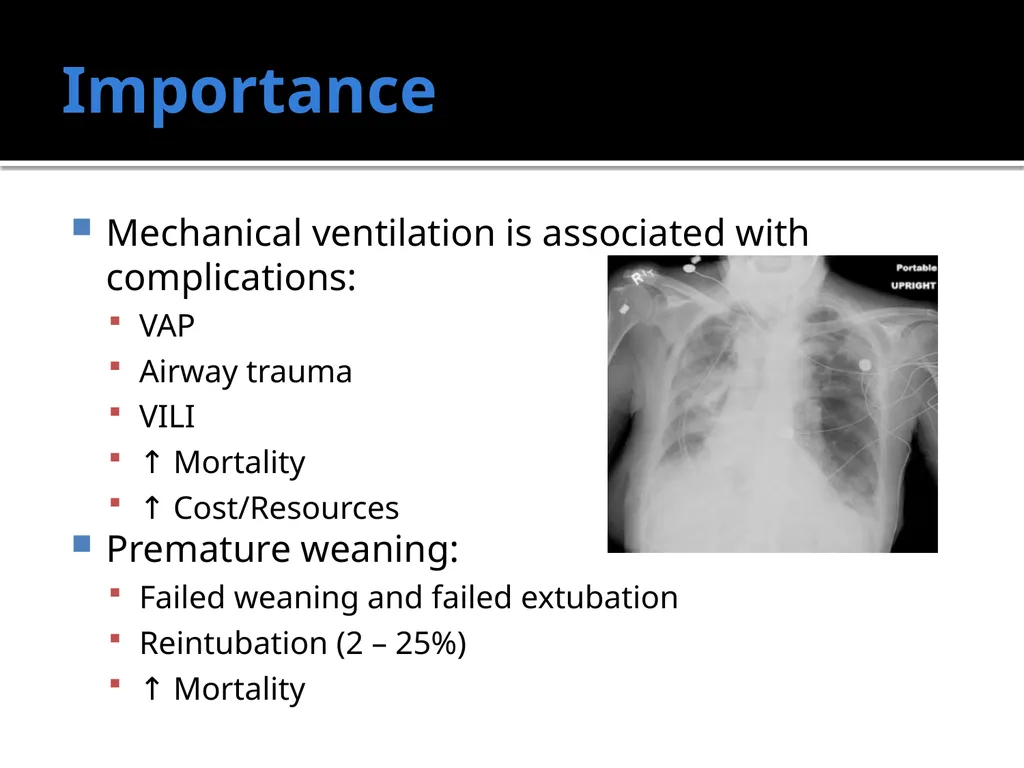
slide3. Importance Mechanical ventilation is associated with complications:
VAP
Airway trauma
VILI
↑ Mortality
↑ Cost/Resources
Premature weaning:
Failed weaning and failed extubation
Reintubation (2 – 25%)
↑ Mortality<br>
slide4. Identifying Suitable Patients Daily screening
Multiple criteria have been used
Underlying cause improving
Absence of sepsis/fever
Subjective:
overall condition, tachypnoea, work of breathing, gas exchange, diaphoresis, haemodynamic stability (no inotropes), fluid status, electrolytes, LOC, reflexes intact, muscle strength, able to cough, improving CXR<br>
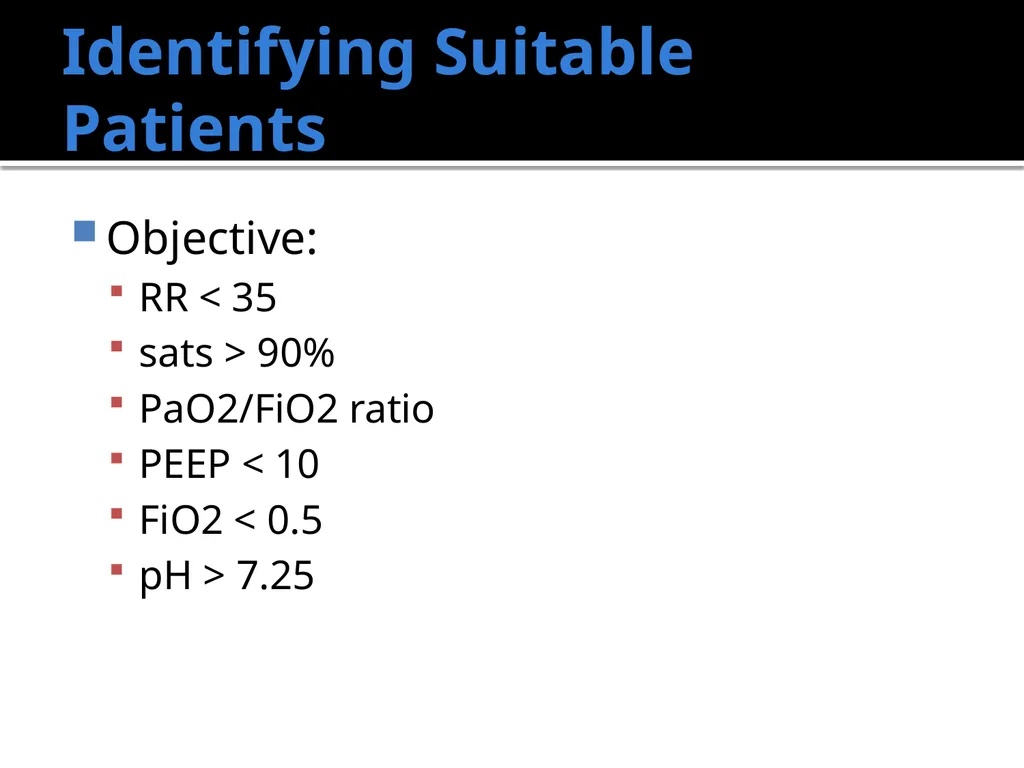
slide5. Identifying Suitable Patients Objective:
RR < 35
sats > 90%
PaO2/FiO2 ratio
PEEP < 10
FiO2 < 0.5
pH > 7.25<br>
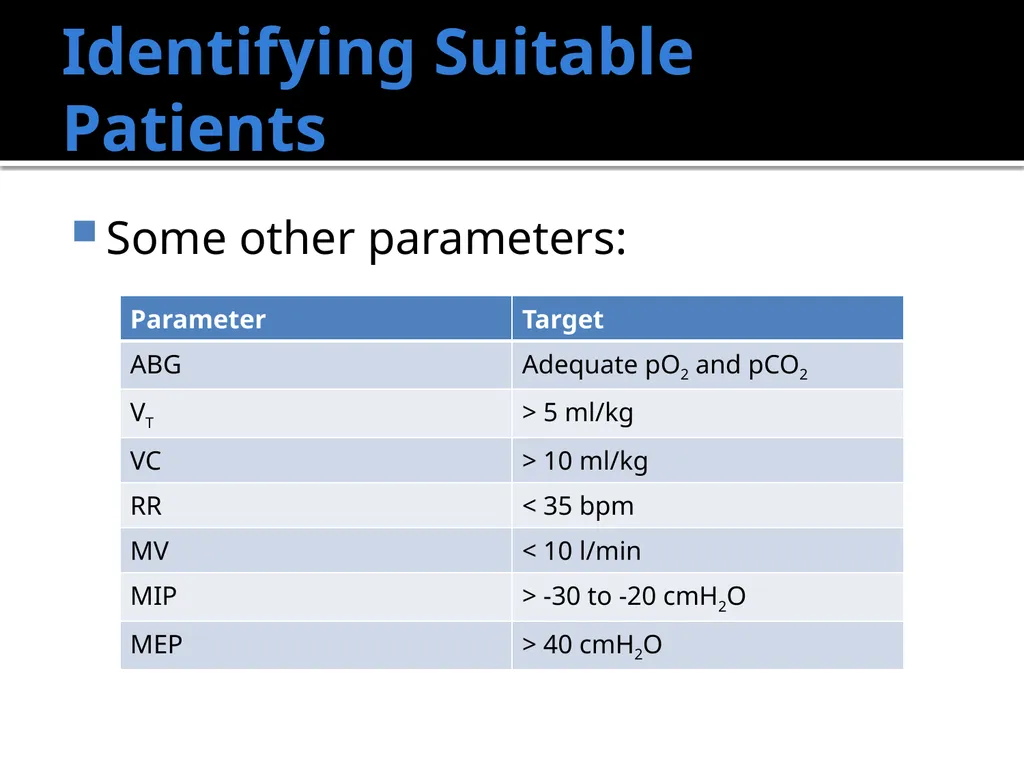
slide6. Identifying Suitable Patients Some other parameters:<br>
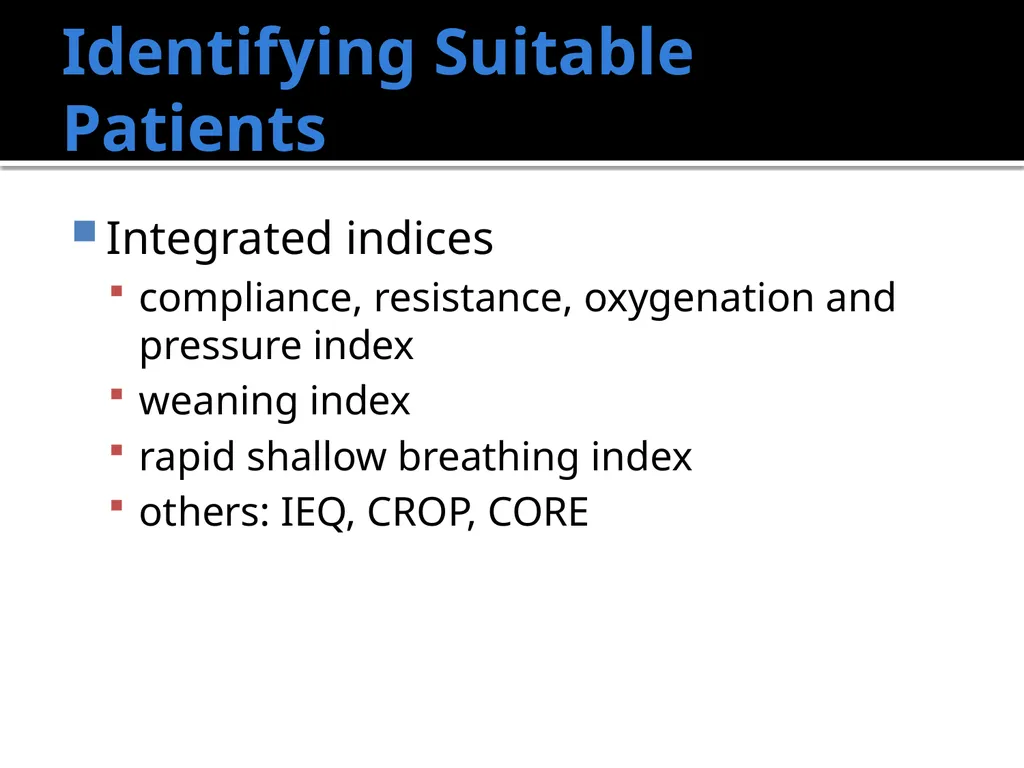
slide7. Identifying Suitable Patients Integrated indices
compliance, resistance, oxygenation and pressure index
weaning index
rapid shallow breathing index
others: IEQ, CROP, CORE<br>
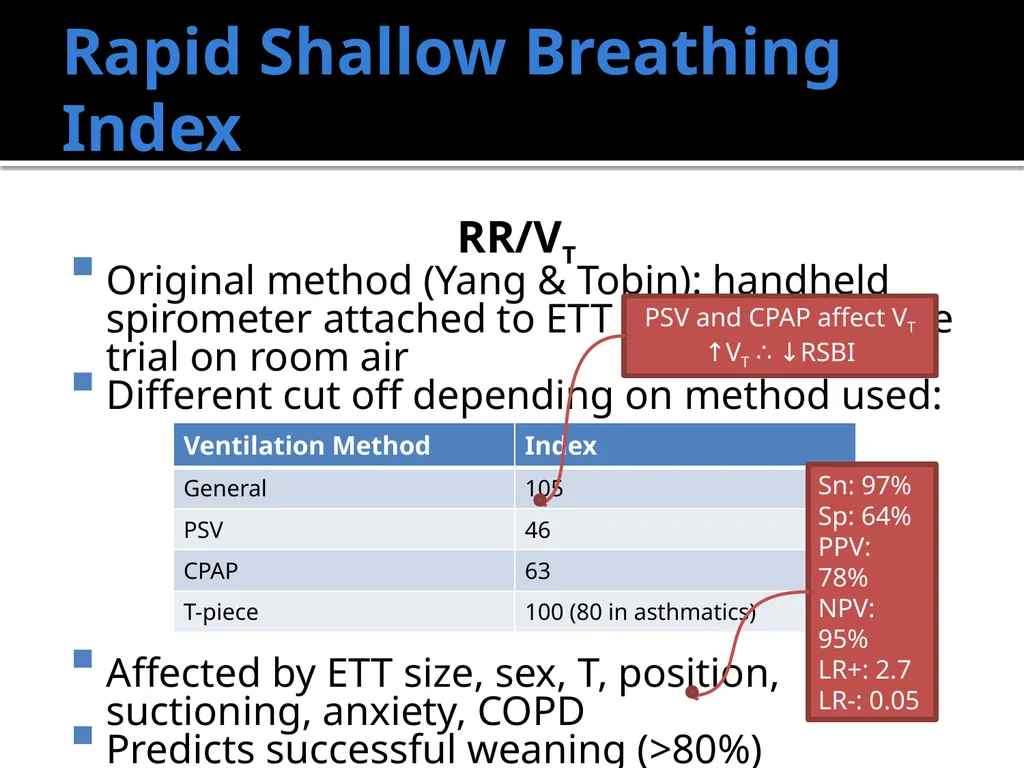
slide8. Rapid Shallow Breathing Index RR/VT
Original method (Yang & Tobin): handheld spirometer attached to ETT 1 min into T-piece trial on room air
Different cut off depending on method used:
Affected by ETT size, sex, T, position, suctioning, anxiety, COPD
Predicts successful weaning (>80%)<br>
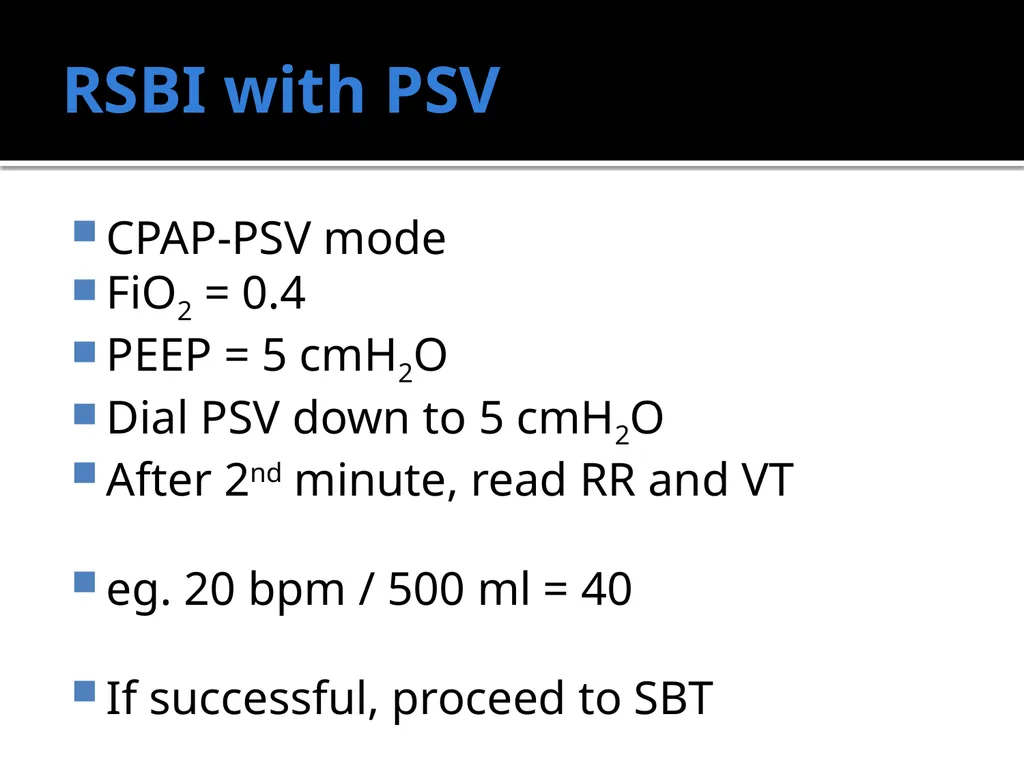
slide9. RSBI with PSV CPAP-PSV mode
FiO2 = 0.4
PEEP = 5 cmH2O
Dial PSV down to 5 cmH2O
After 2nd minute, read RR and VT
eg. 20 bpm / 500 ml = 40
If successful, proceed to SBT<br>
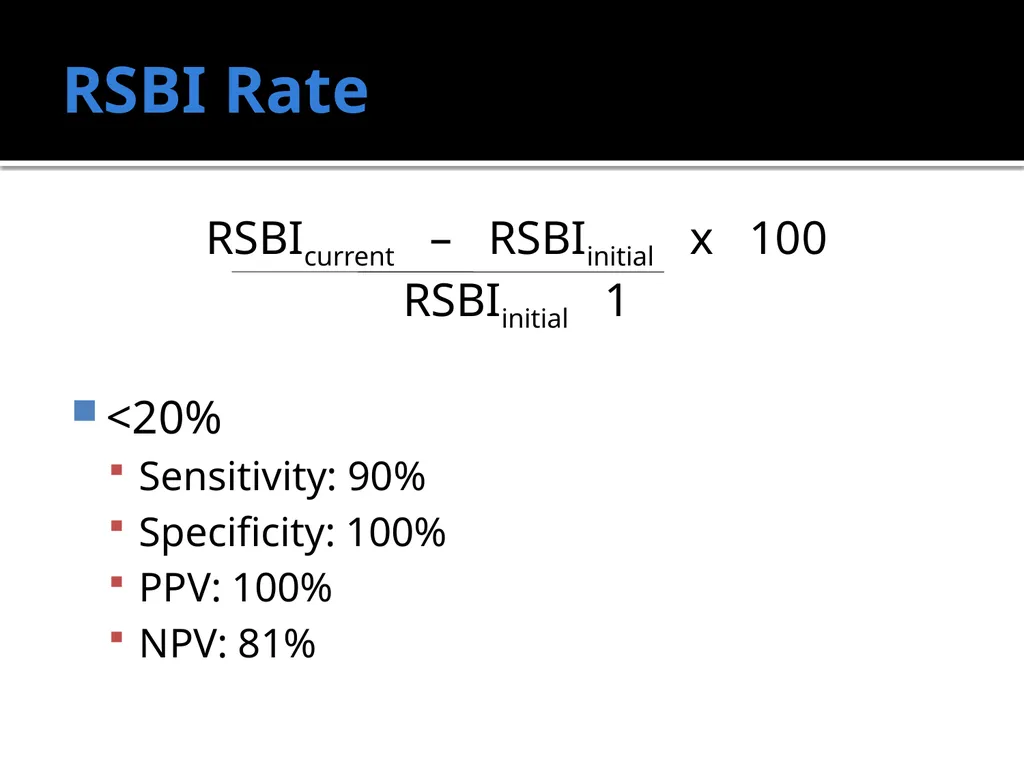
slide10. RSBI Rate RSBIcurrent – RSBIinitial x 100
RSBIinitial 1
<20%
Sensitivity: 90%
Specificity: 100%
PPV: 100%
NPV: 81%<br>
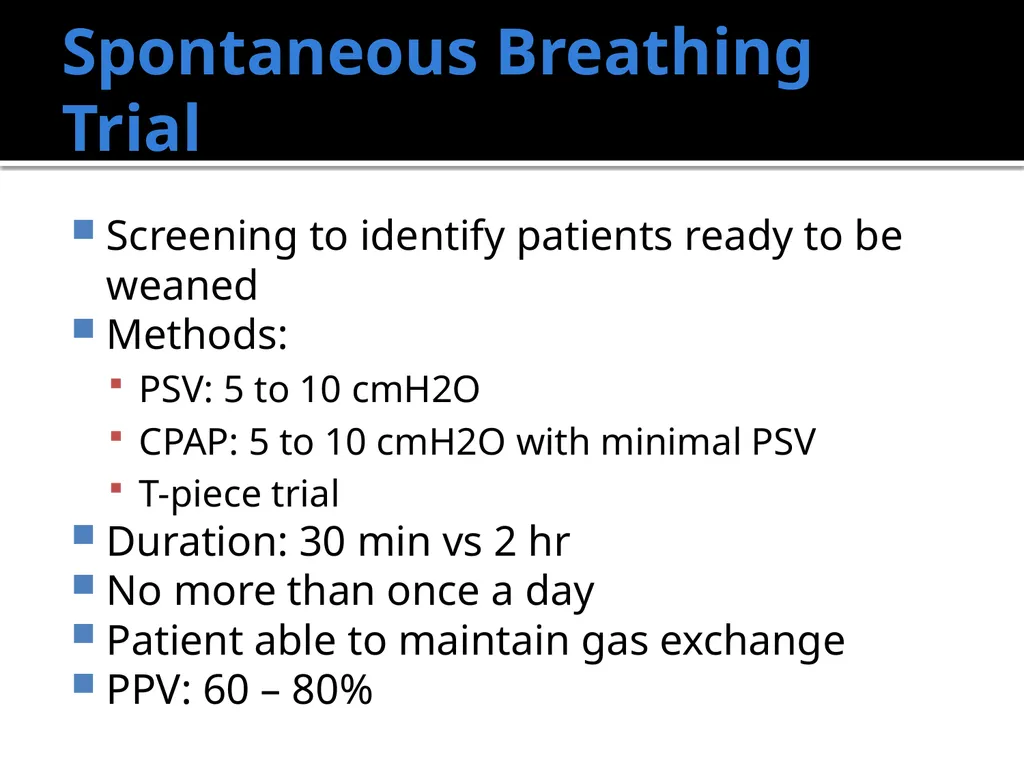
slide11. Spontaneous Breathing Trial Screening to identify patients ready to be weaned
Methods:
PSV: 5 to 10 cmH2O
CPAP: 5 to 10 cmH2O with minimal PSV
T-piece trial
Duration: 30 min vs 2 hr
No more than once a day
Patient able to maintain gas exchange
PPV: 60 – 80%<br>
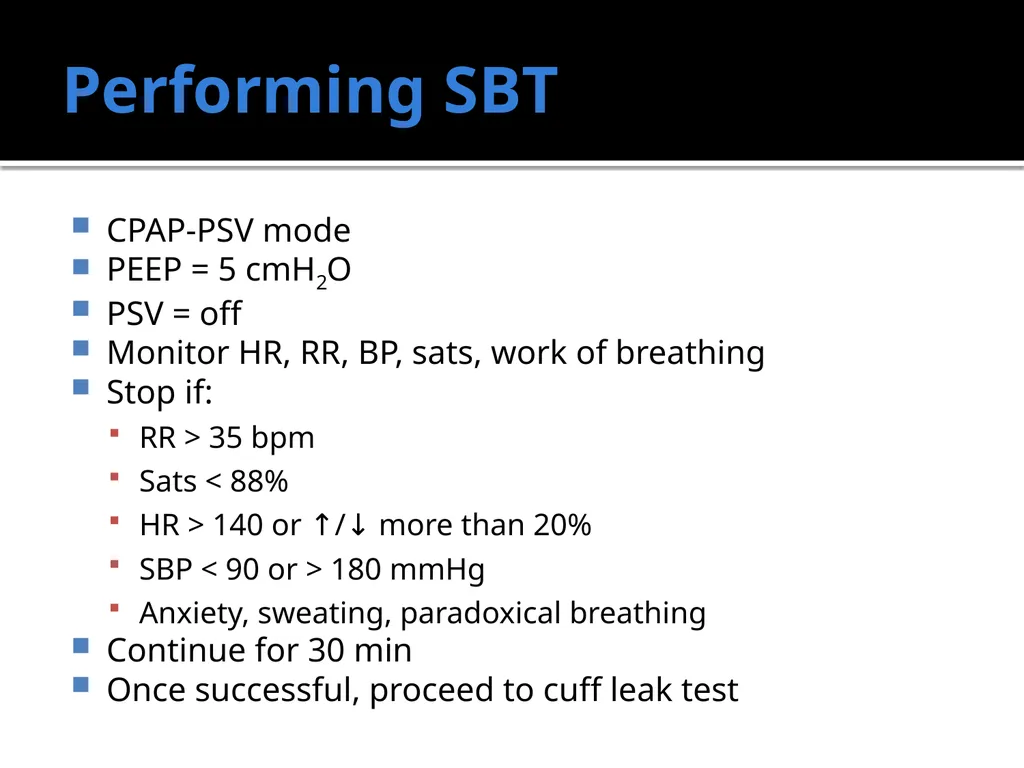
slide12. Performing SBT CPAP-PSV mode
PEEP = 5 cmH2O
PSV = off
Monitor HR, RR, BP, sats, work of breathing
Stop if:
RR > 35 bpm
Sats < 88%
HR > 140 or ↑/↓ more than 20%
SBP < 90 or > 180 mmHg
Anxiety, sweating, paradoxical breathing
Continue for 30 min
Once successful, proceed to cuff leak test<br>
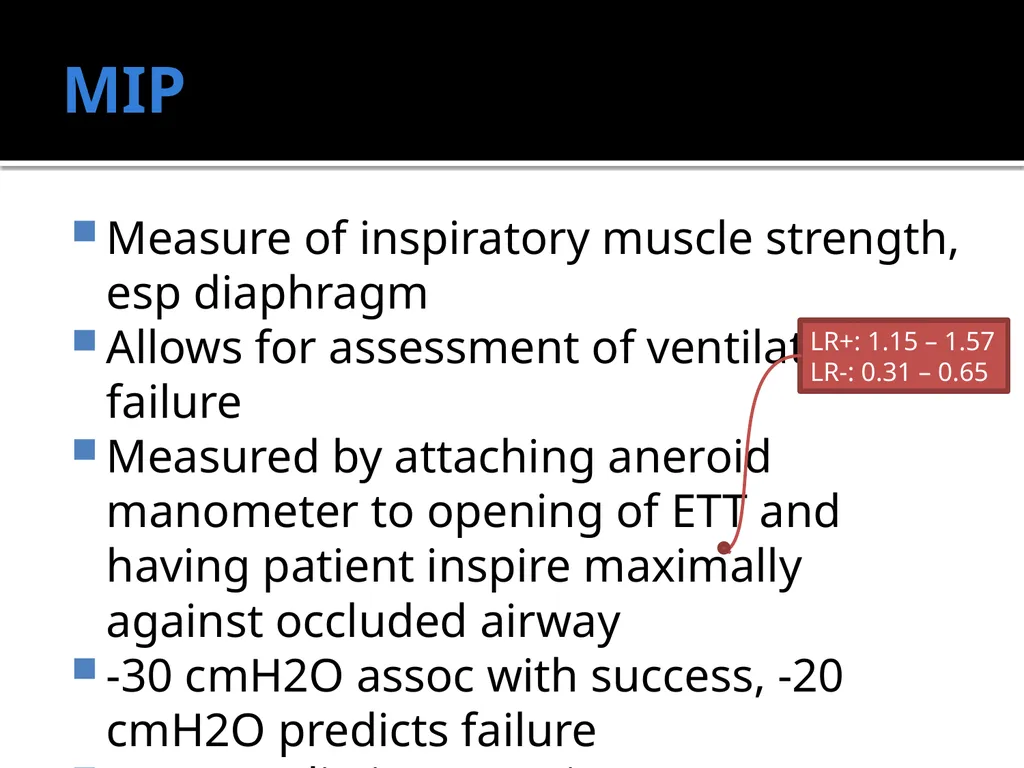
slide13. MIP Measure of inspiratory muscle strength, esp diaphragm
Allows for assessment of ventilatory failure
Measured by attaching aneroid manometer to opening of ETT and having patient inspire maximally against occluded airway
-30 cmH2O assoc with success, -20 cmH2O predicts failure
Poor predictive capacity<br>
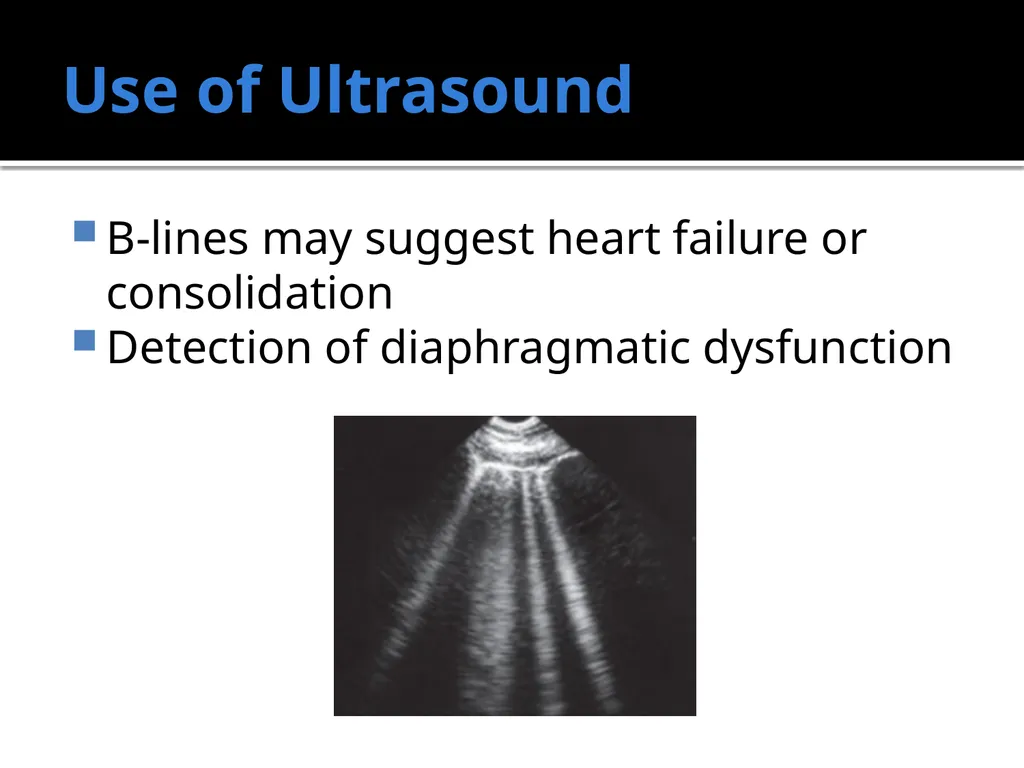
slide14. Use of Ultrasound B-lines may suggest heart failure or consolidation
Detection of diaphragmatic dysfunction<br>
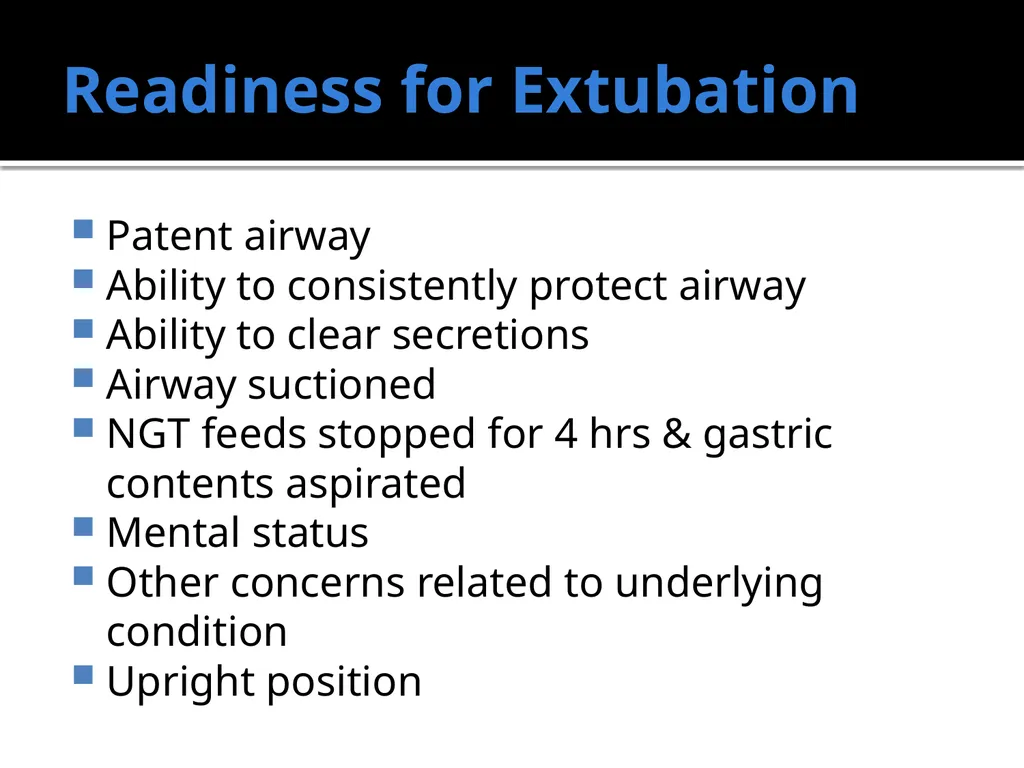
slide15. Readiness for Extubation Patent airway
Ability to consistently protect airway
Ability to clear secretions
Airway suctioned
NGT feeds stopped for 4 hrs & gastric contents aspirated
Mental status
Other concerns related to underlying condition
Upright position<br>
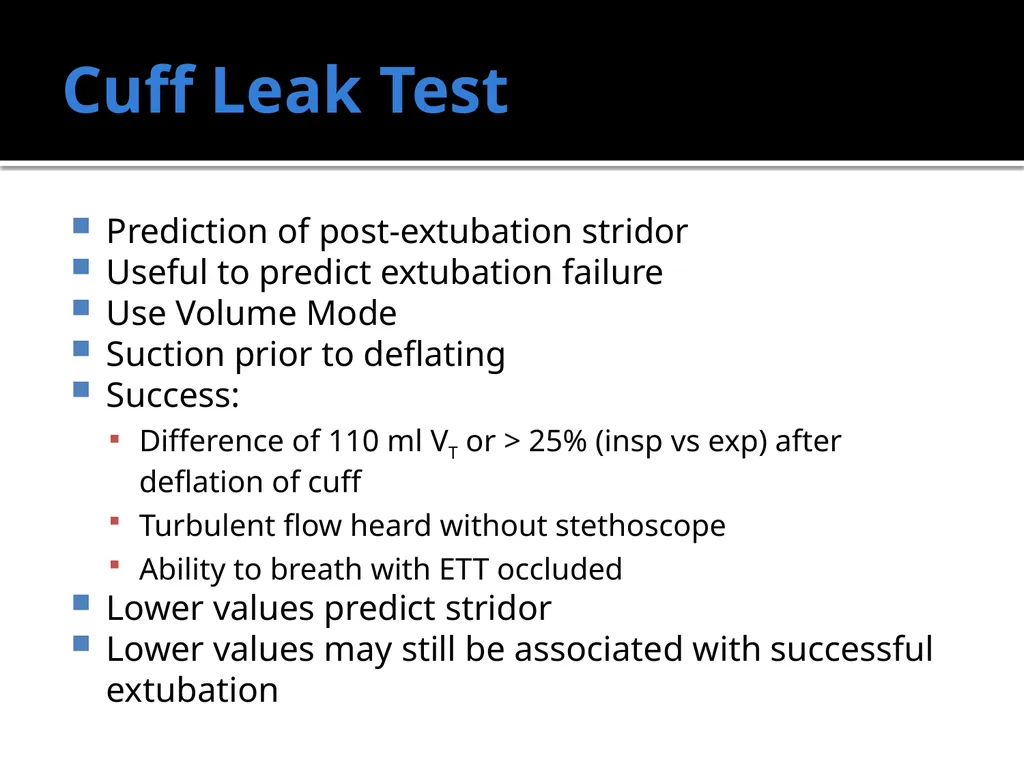
slide16. Cuff Leak Test Prediction of post-extubation stridor
Useful to predict extubation failure
Use Volume Mode
Suction prior to deflating
Success:
Difference of 110 ml VT or > 25% (insp vs exp) after deflation of cuff
Turbulent flow heard without stethoscope
Ability to breath with ETT occluded
Lower values predict stridor
Lower values may still be associated with successful extubation<br>
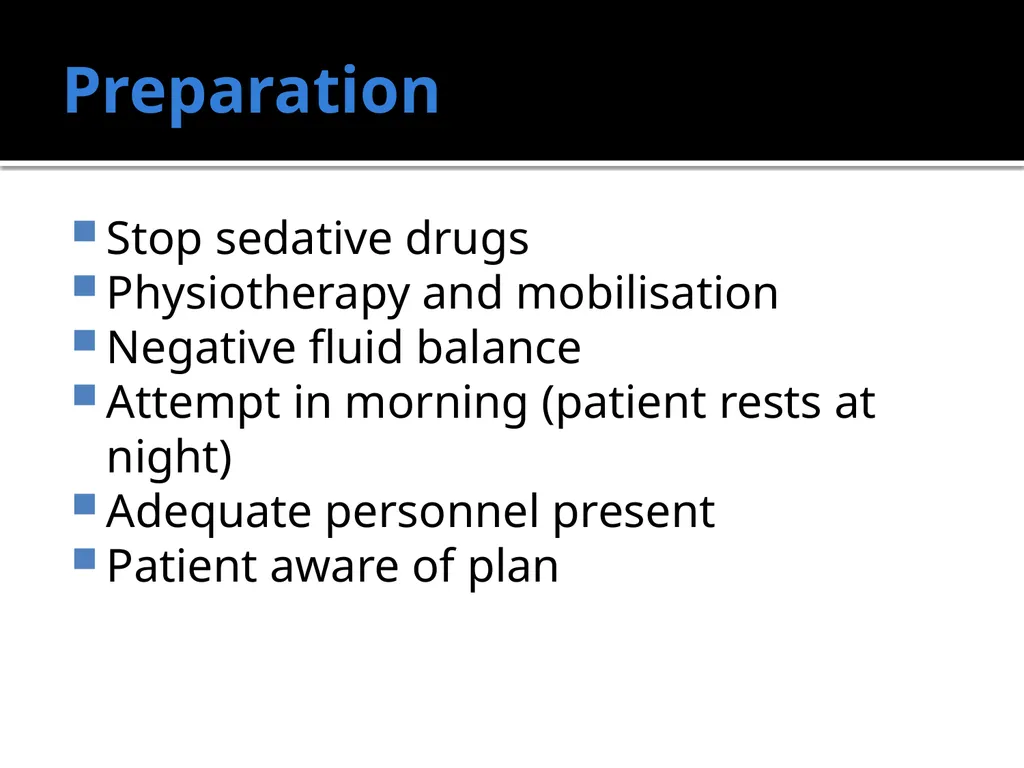
slide17. Preparation Stop sedative drugs
Physiotherapy and mobilisation
Negative fluid balance
Attempt in morning (patient rests at night)
Adequate personnel present
Patient aware of plan<br>
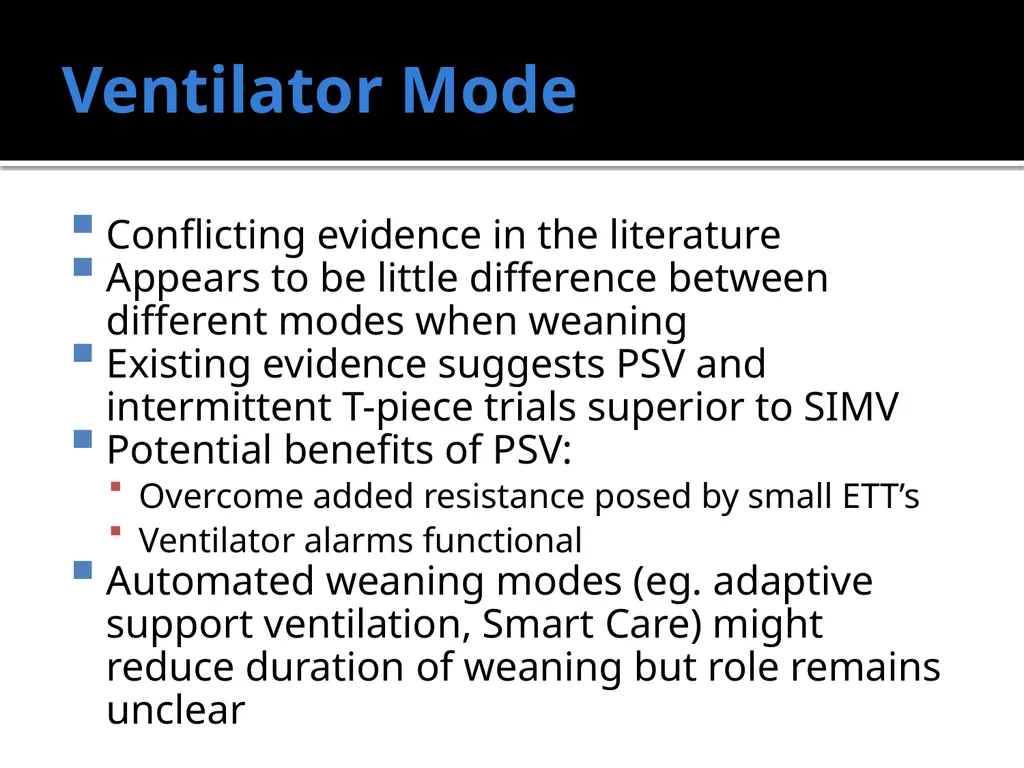
slide18. Ventilator Mode Conflicting evidence in the literature
Appears to be little difference between different modes when weaning
Existing evidence suggests PSV and intermittent T-piece trials superior to SIMV
Potential benefits of PSV:
Overcome added resistance posed by small ETT’s
Ventilator alarms functional
Automated weaning modes (eg. adaptive support ventilation, Smart Care) might reduce duration of weaning but role remains unclear<br>
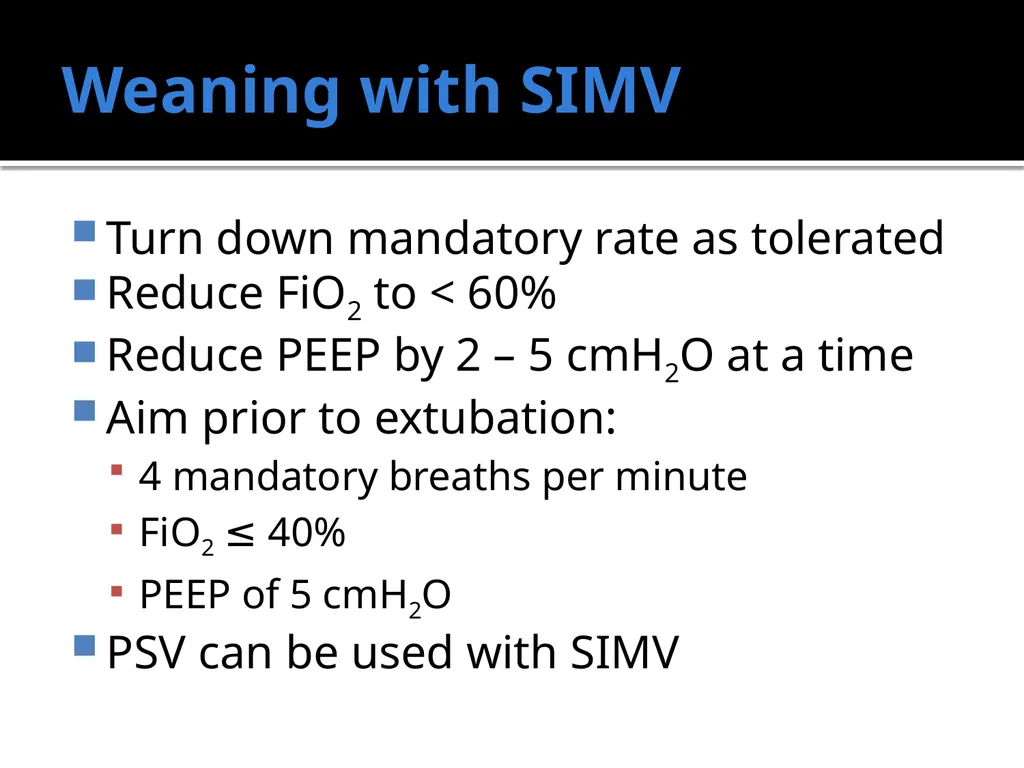
slide19. Weaning with SIMV Turn down mandatory rate as tolerated
Reduce FiO2 to < 60%
Reduce PEEP by 2 – 5 cmH2O at a time
Aim prior to extubation:
4 mandatory breaths per minute
FiO2 ≤ 40%
PEEP of 5 cmH2O
PSV can be used with SIMV<br>
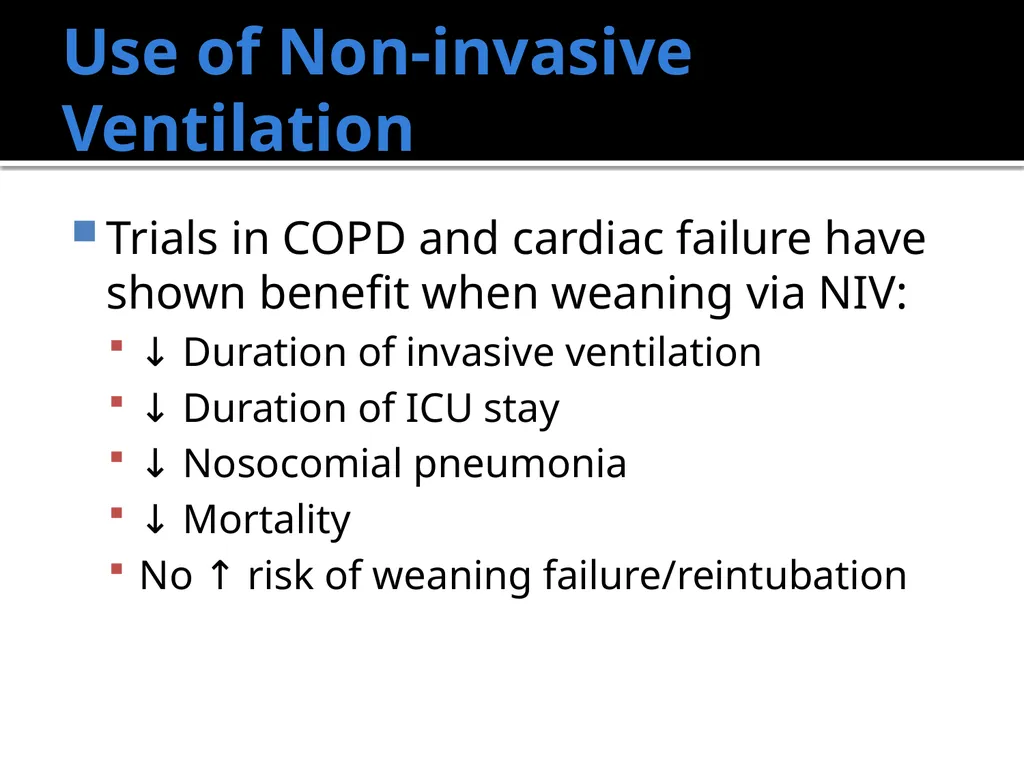
slide20. Use of Non-invasive Ventilation Trials in COPD and cardiac failure have shown benefit when weaning via NIV:
↓ Duration of invasive ventilation
↓ Duration of ICU stay
↓ Nosocomial pneumonia
↓ Mortality
No ↑ risk of weaning failure/reintubation<br>
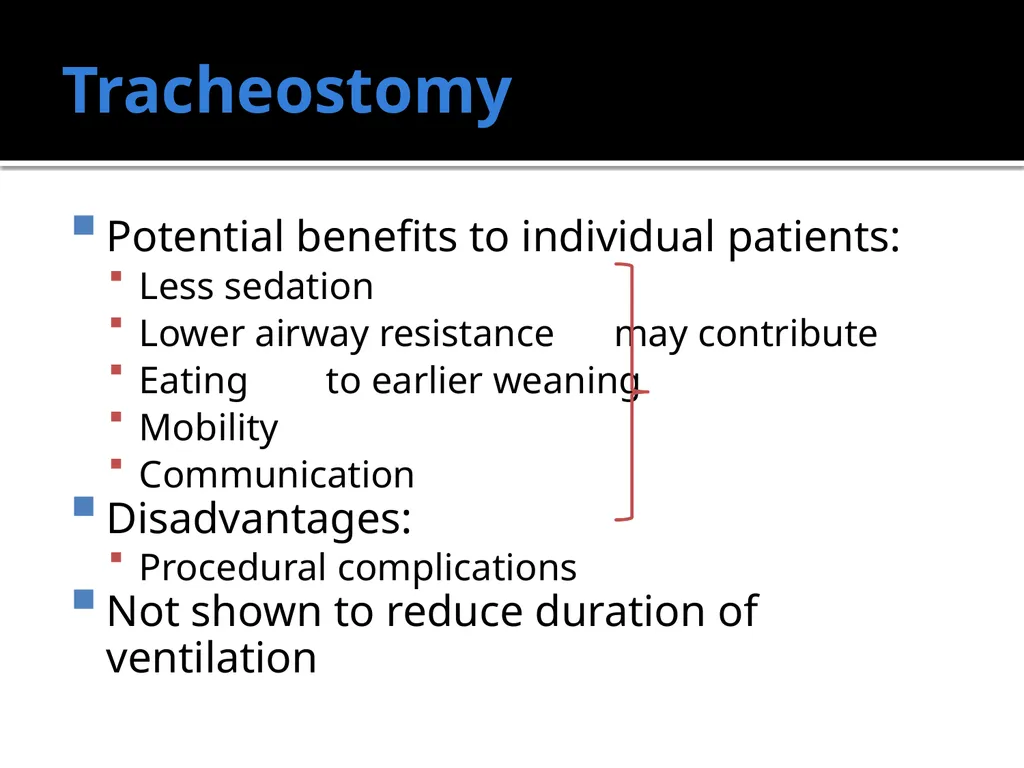
slide21. Tracheostomy Potential benefits to individual patients:
Less sedation
Lower airway resistance may contribute
Eating to earlier weaning
Mobility
Communication
Disadvantages:
Procedural complications
Not shown to reduce duration of ventilation<br>
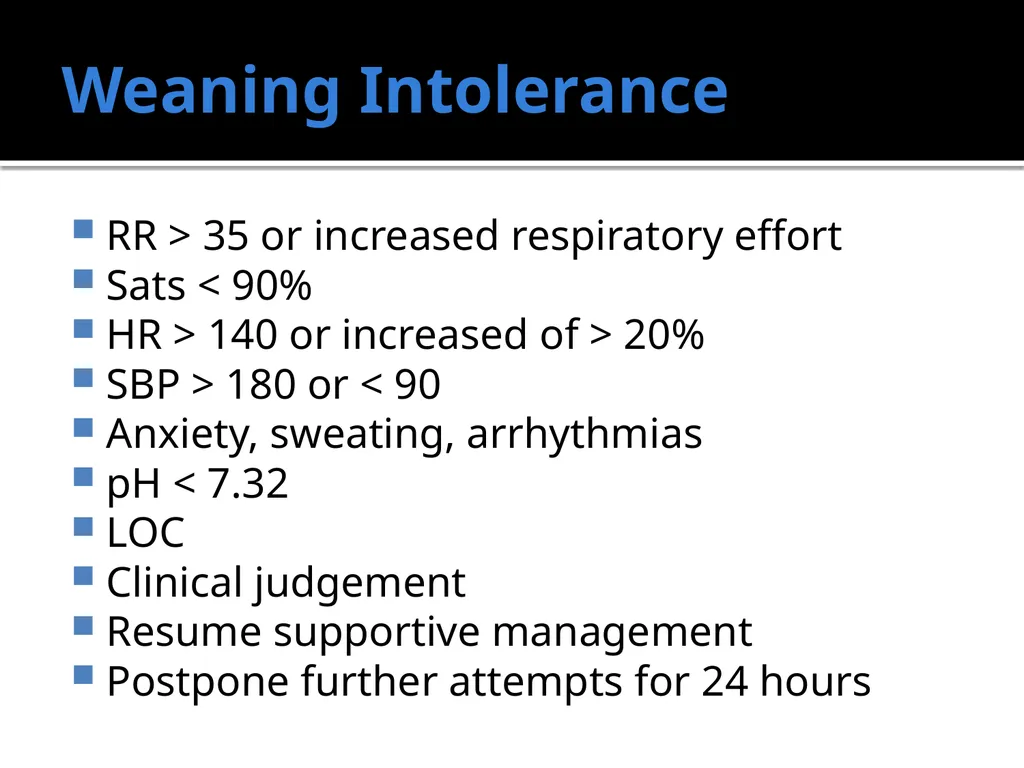
slide22. Weaning Intolerance RR > 35 or increased respiratory effort
Sats < 90%
HR > 140 or increased of > 20%
SBP > 180 or < 90
Anxiety, sweating, arrhythmias
pH < 7.32
LOC
Clinical judgement
Resume supportive management
Postpone further attempts for 24 hours<br>
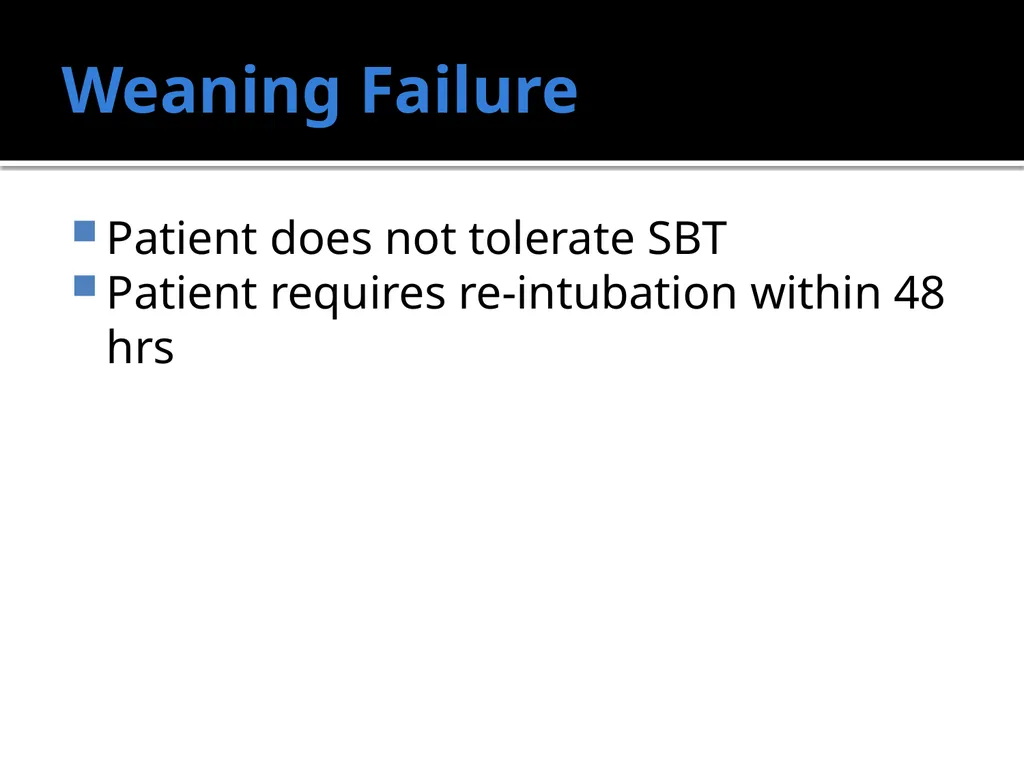
slide23. Weaning Failure Patient does not tolerate SBT
Patient requires re-intubation within 48 hrs<br>
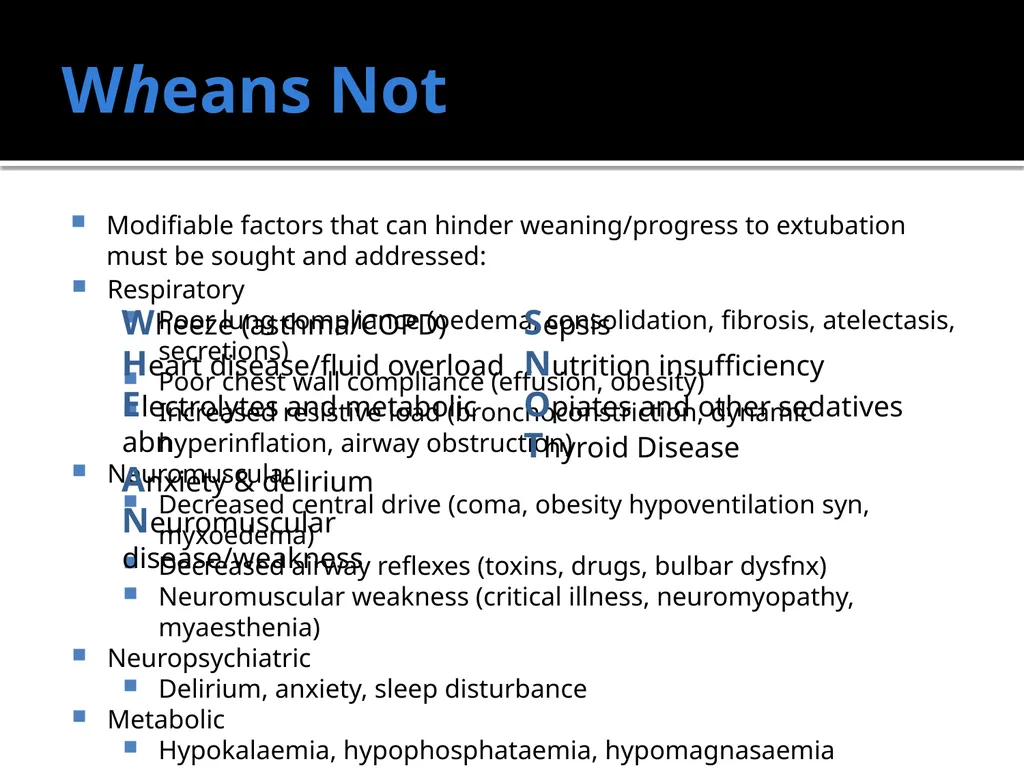
slide24. Respiratory
Poor lung compliance (oedema, consolidation, fibrosis, atelectasis, secretions)
Poor chest wall compliance (effusion, obesity)
Increased resistive load (bronchoconstriction, dynamic hyperinflation, airway obstruction)
Neuromuscular
Decreased central drive (coma, obesity hypoventilation syn, myxoedema)
Decreased airway reflexes (toxins, drugs, bulbar dysfnx)
Neuromuscular weakness (critical illness, neuromyopathy, myaesthenia)
Neuropsychiatric
Delirium, anxiety, sleep disturbance
Metabolic
Hypokalaemia, hypophosphataemia, hypomagnasaemia
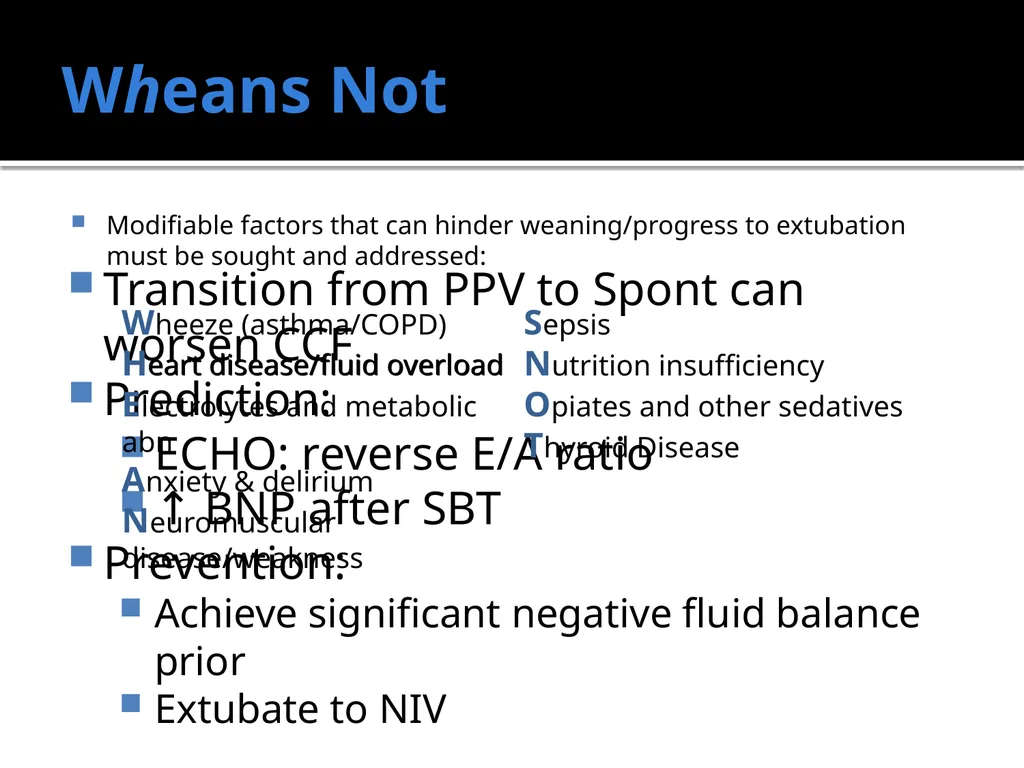
Cardiac Failure Wheans Not Modifiable factors that can hinder weaning/progress to extubation must be sought and addressed: Wheeze (asthma/COPD)
Heart disease/fluid overload
Electrolytes and metabolic abn
Anxiety & delirium
Neuromuscular disease/weakness
Sepsis
Nutrition insufficiency
Opiates and other sedatives
Thyroid Disease<br>
slide25. Transition from PPV to Spont can worsen CCF
Prediction:
ECHO: reverse E/A ratio
↑ BNP after SBT
Prevention:
Achieve significant negative fluid balance prior
Extubate to NIV Wheans Not Modifiable factors that can hinder weaning/progress to extubation must be sought and addressed: Wheeze (asthma/COPD)
Heart disease/fluid overload
Electrolytes and metabolic abn
Anxiety & delirium
Neuromuscular disease/weakness
Sepsis
Nutrition insufficiency
Opiates and other sedatives
Thyroid Disease Heart disease/fluid overload<br>
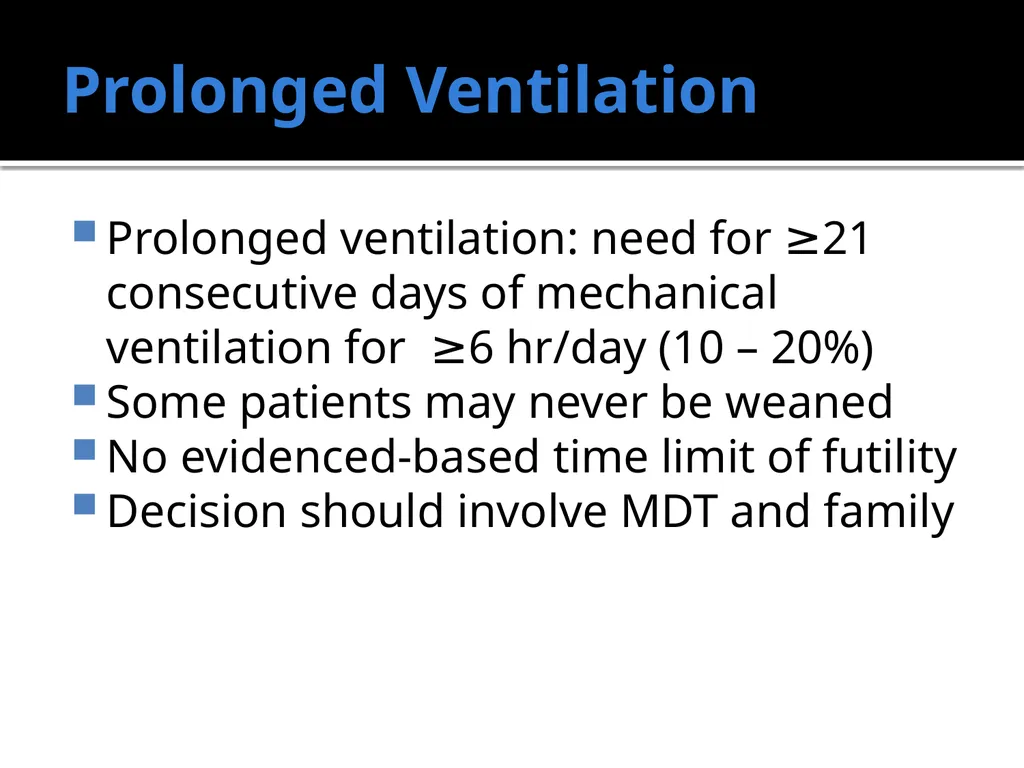
slide26. Prolonged Ventilation Prolonged ventilation: need for ≥21 consecutive days of mechanical ventilation for ≥6 hr/day (10 – 20%)
Some patients may never be weaned
No evidenced-based time limit of futility
Decision should involve MDT and family<br>
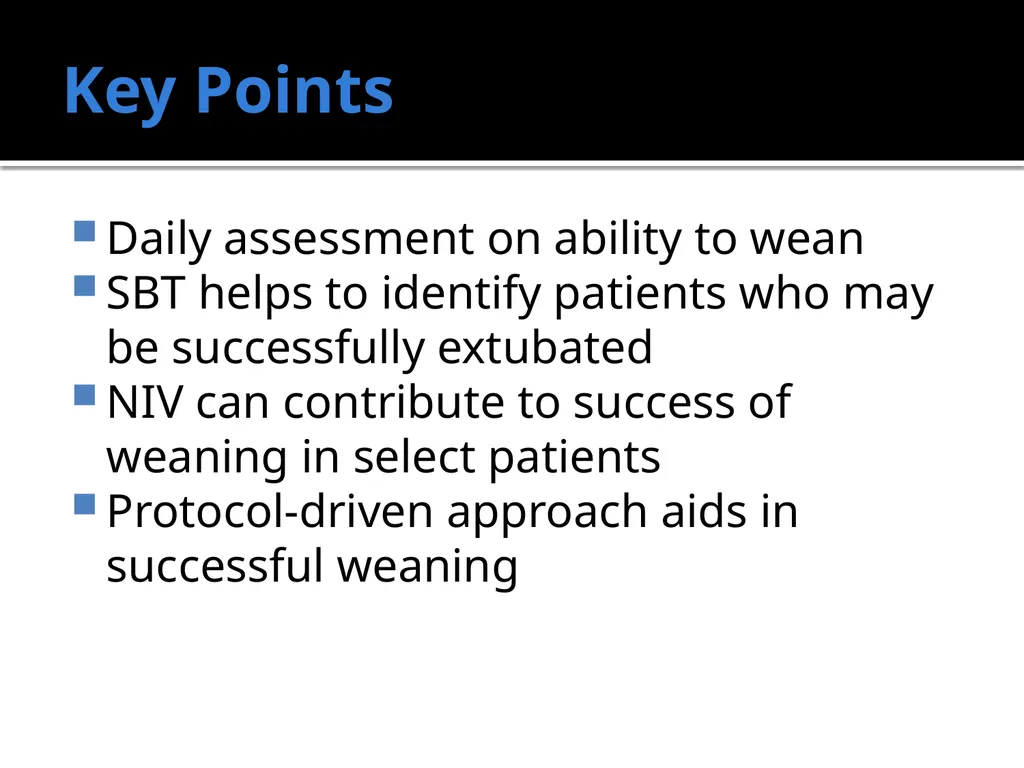
slide27. Key Points Daily assessment on ability to wean
SBT helps to identify patients who may be successfully extubated
NIV can contribute to success of weaning in select patients
Protocol-driven approach aids in successful weaning<br>
slide28. References Amri et al. Weaning the patient from the mechanical ventilator: A review article. Arch Crit Care Med. 2016; 1 (4): e8363.
Sengupta et al. Evidence-based practice of weaning from ventilator: A review. ATOTW. 2018; 372: 1 – 6.
Stawicki. Mechanical ventilation: Weaning and extubation. Int J Acad Med. 2017; 3, S1: 67-71.
UpToDate<br>

ICU Problem Based Learning
07 August 2019<br>
slide2. Weaning Weaning from ventilator comprises 2 separate aspects:
Liberation from ventilator and mechanical support
Removal of artificial airway
> 40% of the duration of mechanical ventilation
Successful weaning: complete liberation from mechanical ventilation for 7 consecutive days<br>
slide3. Importance Mechanical ventilation is associated with complications:
VAP
Airway trauma
VILI
↑ Mortality
↑ Cost/Resources
Premature weaning:
Failed weaning and failed extubation
Reintubation (2 – 25%)
↑ Mortality<br>
slide4. Identifying Suitable Patients Daily screening
Multiple criteria have been used
Underlying cause improving
Absence of sepsis/fever
Subjective:
overall condition, tachypnoea, work of breathing, gas exchange, diaphoresis, haemodynamic stability (no inotropes), fluid status, electrolytes, LOC, reflexes intact, muscle strength, able to cough, improving CXR<br>
slide5. Identifying Suitable Patients Objective:
RR < 35
sats > 90%
PaO2/FiO2 ratio
PEEP < 10
FiO2 < 0.5
pH > 7.25<br>
slide6. Identifying Suitable Patients Some other parameters:<br>
slide7. Identifying Suitable Patients Integrated indices
compliance, resistance, oxygenation and pressure index
weaning index
rapid shallow breathing index
others: IEQ, CROP, CORE<br>
slide8. Rapid Shallow Breathing Index RR/VT
Original method (Yang & Tobin): handheld spirometer attached to ETT 1 min into T-piece trial on room air
Different cut off depending on method used:
Affected by ETT size, sex, T, position, suctioning, anxiety, COPD
Predicts successful weaning (>80%)<br>
slide9. RSBI with PSV CPAP-PSV mode
FiO2 = 0.4
PEEP = 5 cmH2O
Dial PSV down to 5 cmH2O
After 2nd minute, read RR and VT
eg. 20 bpm / 500 ml = 40
If successful, proceed to SBT<br>
slide10. RSBI Rate RSBIcurrent – RSBIinitial x 100
RSBIinitial 1
<20%
Sensitivity: 90%
Specificity: 100%
PPV: 100%
NPV: 81%<br>
slide11. Spontaneous Breathing Trial Screening to identify patients ready to be weaned
Methods:
PSV: 5 to 10 cmH2O
CPAP: 5 to 10 cmH2O with minimal PSV
T-piece trial
Duration: 30 min vs 2 hr
No more than once a day
Patient able to maintain gas exchange
PPV: 60 – 80%<br>
slide12. Performing SBT CPAP-PSV mode
PEEP = 5 cmH2O
PSV = off
Monitor HR, RR, BP, sats, work of breathing
Stop if:
RR > 35 bpm
Sats < 88%
HR > 140 or ↑/↓ more than 20%
SBP < 90 or > 180 mmHg
Anxiety, sweating, paradoxical breathing
Continue for 30 min
Once successful, proceed to cuff leak test<br>
slide13. MIP Measure of inspiratory muscle strength, esp diaphragm
Allows for assessment of ventilatory failure
Measured by attaching aneroid manometer to opening of ETT and having patient inspire maximally against occluded airway
-30 cmH2O assoc with success, -20 cmH2O predicts failure
Poor predictive capacity<br>
slide14. Use of Ultrasound B-lines may suggest heart failure or consolidation
Detection of diaphragmatic dysfunction<br>
slide15. Readiness for Extubation Patent airway
Ability to consistently protect airway
Ability to clear secretions
Airway suctioned
NGT feeds stopped for 4 hrs & gastric contents aspirated
Mental status
Other concerns related to underlying condition
Upright position<br>
slide16. Cuff Leak Test Prediction of post-extubation stridor
Useful to predict extubation failure
Use Volume Mode
Suction prior to deflating
Success:
Difference of 110 ml VT or > 25% (insp vs exp) after deflation of cuff
Turbulent flow heard without stethoscope
Ability to breath with ETT occluded
Lower values predict stridor
Lower values may still be associated with successful extubation<br>
slide17. Preparation Stop sedative drugs
Physiotherapy and mobilisation
Negative fluid balance
Attempt in morning (patient rests at night)
Adequate personnel present
Patient aware of plan<br>
slide18. Ventilator Mode Conflicting evidence in the literature
Appears to be little difference between different modes when weaning
Existing evidence suggests PSV and intermittent T-piece trials superior to SIMV
Potential benefits of PSV:
Overcome added resistance posed by small ETT’s
Ventilator alarms functional
Automated weaning modes (eg. adaptive support ventilation, Smart Care) might reduce duration of weaning but role remains unclear<br>
slide19. Weaning with SIMV Turn down mandatory rate as tolerated
Reduce FiO2 to < 60%
Reduce PEEP by 2 – 5 cmH2O at a time
Aim prior to extubation:
4 mandatory breaths per minute
FiO2 ≤ 40%
PEEP of 5 cmH2O
PSV can be used with SIMV<br>
slide20. Use of Non-invasive Ventilation Trials in COPD and cardiac failure have shown benefit when weaning via NIV:
↓ Duration of invasive ventilation
↓ Duration of ICU stay
↓ Nosocomial pneumonia
↓ Mortality
No ↑ risk of weaning failure/reintubation<br>
slide21. Tracheostomy Potential benefits to individual patients:
Less sedation
Lower airway resistance may contribute
Eating to earlier weaning
Mobility
Communication
Disadvantages:
Procedural complications
Not shown to reduce duration of ventilation<br>
slide22. Weaning Intolerance RR > 35 or increased respiratory effort
Sats < 90%
HR > 140 or increased of > 20%
SBP > 180 or < 90
Anxiety, sweating, arrhythmias
pH < 7.32
LOC
Clinical judgement
Resume supportive management
Postpone further attempts for 24 hours<br>
slide23. Weaning Failure Patient does not tolerate SBT
Patient requires re-intubation within 48 hrs<br>
slide24. Respiratory
Poor lung compliance (oedema, consolidation, fibrosis, atelectasis, secretions)
Poor chest wall compliance (effusion, obesity)
Increased resistive load (bronchoconstriction, dynamic hyperinflation, airway obstruction)
Neuromuscular
Decreased central drive (coma, obesity hypoventilation syn, myxoedema)
Decreased airway reflexes (toxins, drugs, bulbar dysfnx)
Neuromuscular weakness (critical illness, neuromyopathy, myaesthenia)
Neuropsychiatric
Delirium, anxiety, sleep disturbance
Metabolic
Hypokalaemia, hypophosphataemia, hypomagnasaemia
Cardiac Failure Wheans Not Modifiable factors that can hinder weaning/progress to extubation must be sought and addressed: Wheeze (asthma/COPD)
Heart disease/fluid overload
Electrolytes and metabolic abn
Anxiety & delirium
Neuromuscular disease/weakness
Sepsis
Nutrition insufficiency
Opiates and other sedatives
Thyroid Disease<br>
slide25. Transition from PPV to Spont can worsen CCF
Prediction:
ECHO: reverse E/A ratio
↑ BNP after SBT
Prevention:
Achieve significant negative fluid balance prior
Extubate to NIV Wheans Not Modifiable factors that can hinder weaning/progress to extubation must be sought and addressed: Wheeze (asthma/COPD)
Heart disease/fluid overload
Electrolytes and metabolic abn
Anxiety & delirium
Neuromuscular disease/weakness
Sepsis
Nutrition insufficiency
Opiates and other sedatives
Thyroid Disease Heart disease/fluid overload<br>
slide26. Prolonged Ventilation Prolonged ventilation: need for ≥21 consecutive days of mechanical ventilation for ≥6 hr/day (10 – 20%)
Some patients may never be weaned
No evidenced-based time limit of futility
Decision should involve MDT and family<br>
slide27. Key Points Daily assessment on ability to wean
SBT helps to identify patients who may be successfully extubated
NIV can contribute to success of weaning in select patients
Protocol-driven approach aids in successful weaning<br>
slide28. References Amri et al. Weaning the patient from the mechanical ventilator: A review article. Arch Crit Care Med. 2016; 1 (4): e8363.
Sengupta et al. Evidence-based practice of weaning from ventilator: A review. ATOTW. 2018; 372: 1 – 6.
Stawicki. Mechanical ventilation: Weaning and extubation. Int J Acad Med. 2017; 3, S1: 67-71.
UpToDate<br>