Superior Mediastinal Syndrome Saadiq Moolla 04
Description: Superior Mediastinal Syndrome Saadiq Moolla 04 October 2023 Superior mediastinal syndrome A group of disorders characterised by infiltration, entrapment or compression of mediastinal structures Trachea Oesophagus SVCgreat vessels Zardi.
Related Topics
Download Presentation
"Superior Mediastinal Syndrome Saadiq Moolla 04" is the property of its rightful owner. Permission is granted to download and print the materials on this website for personal, non-commercial use only, and to display it on your personal computer provided you do not modify the materials and that you retain all copyright notices contained in the materials. By downloading content from our website, you accept the terms of this agreement.
Presentation Transcript
slide1. Superior Mediastinal SyndromeSaadiq Moolla04 October 2023<br>
slide2. Superior mediastinal syndrome A group of disorders characterised by infiltration, entrapment or compression of mediastinal structures
Trachea
Oesophagus
SVC/great vessels Zardi. Exp Ther Med. 2016.<br>
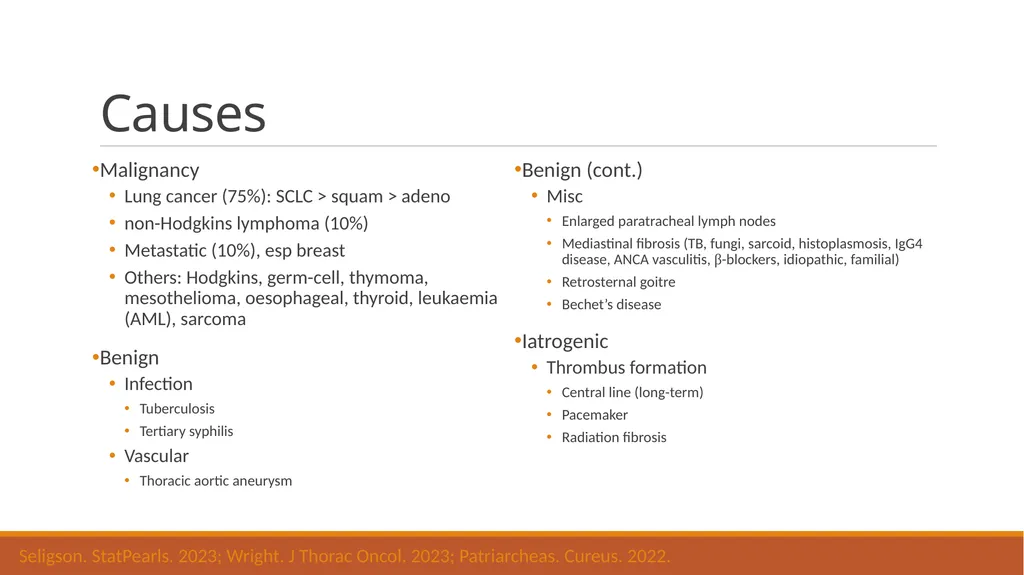
slide3. Collateral circulation 4 potential collateral pathways:
Azygos-hemiazygos pathway (via intercostal and lumbar veins)
Internal thoracic route (via epigastric and superficial thoracic veins)
Lateral thoracic route (via superficial circumflex, long saphenous and femoral veins)
Vertebral and paravertebral route
Blockages proximal to SVC: blood returns to SVC via azygos vein
Blockages at or distal to SVC: retrograde flow through azygos vein and collaterals to IVC Shah. Cureus. 2023.<br>
slide4. Causes Malignancy
Lung cancer (75%): SCLC > squam > adeno
non-Hodgkins lymphoma (10%)
Metastatic (10%), esp breast
Others: Hodgkins, germ-cell, thymoma, mesothelioma, oesophageal, thyroid, leukaemia (AML), sarcoma
Benign
Infection
Tuberculosis
Tertiary syphilis
Vascular
Thoracic aortic aneurysm
Benign (cont.)
Misc
Enlarged paratracheal lymph nodes
Mediastinal fibrosis (TB, fungi, sarcoid, histoplasmosis, IgG4 disease, ANCA vasculitis, β-blockers, idiopathic, familial)
Retrosternal goitre
Bechet’s disease
Iatrogenic
Thrombus formation
Central line (long-term)
Pacemaker
Radiation fibrosis Seligson. StatPearls. 2023; Wright. J Thorac Oncol. 2023; Patriarcheas. Cureus. 2022.<br>
slide5. Diagnostic approach Imaging:
CXR
CT/MRI
Doppler ultrasound if thrombus suspected
Venography – usually for surgical planning
Tissue for Histology<br>
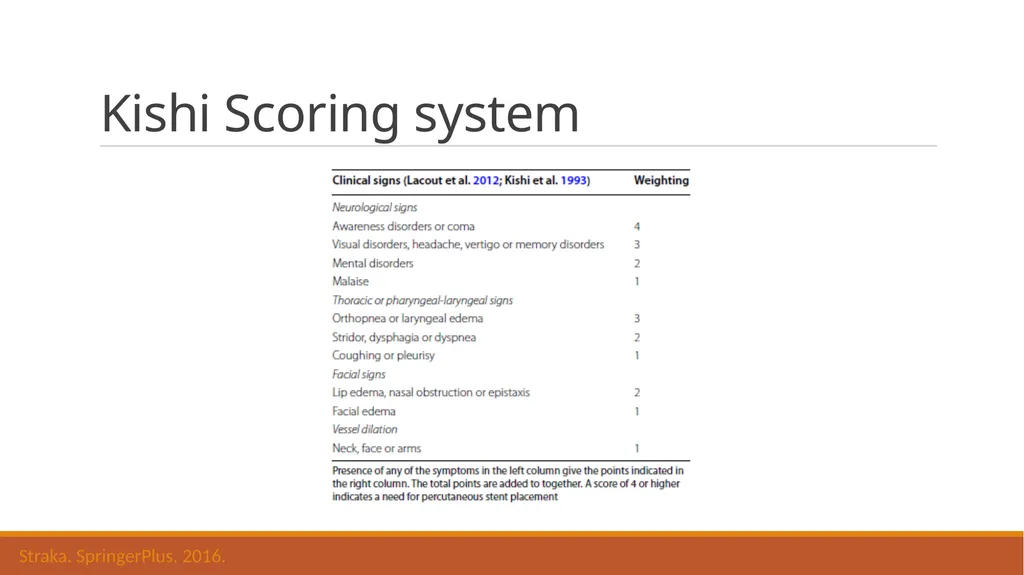
slide6. Kishi Scoring system Straka. SpringerPlus. 2016.<br>
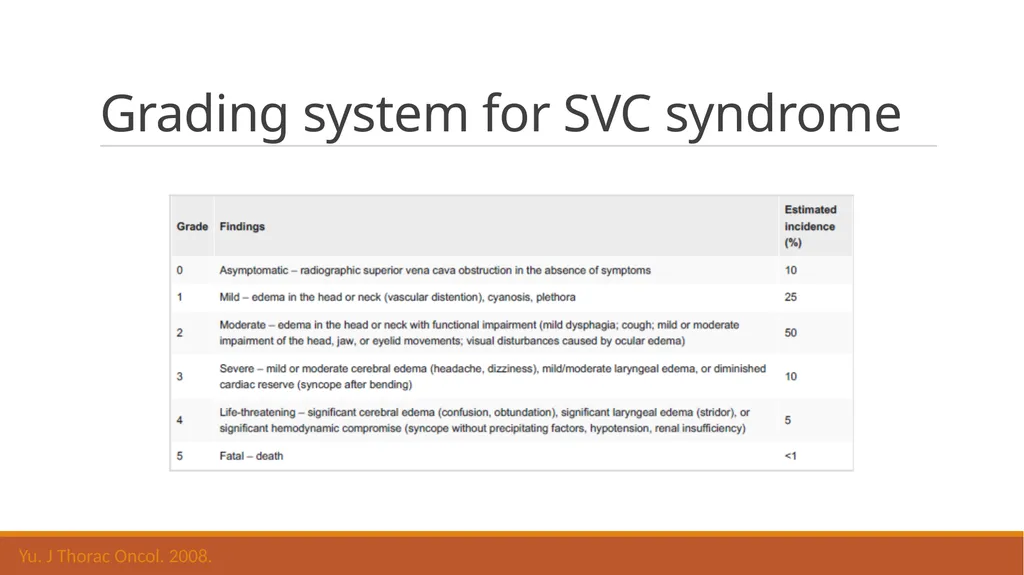
slide7. Grading system for SVC syndrome Yu. J Thorac Oncol. 2008.<br>
slide8. Treatment options General measures:
Head elevation
Glucocorticoids can be effective in 2 settings:
Steroid-sensitive malignancies such as lymphoma and thymoma
Prophylaxis for radiation-induced oedema
High dose, limited duration and not as primary therapy
Loop diuretics: no evidence of efficacy, now criticised
Radiation therapy: up to 80% efficacy in lung cancer
Chemotherapy: suitable alone for certain cancers, namely SCLC, lymphoma and germ cell tumours
Surgery: bypass graft
Endovascular therapy: over 90% efficacy
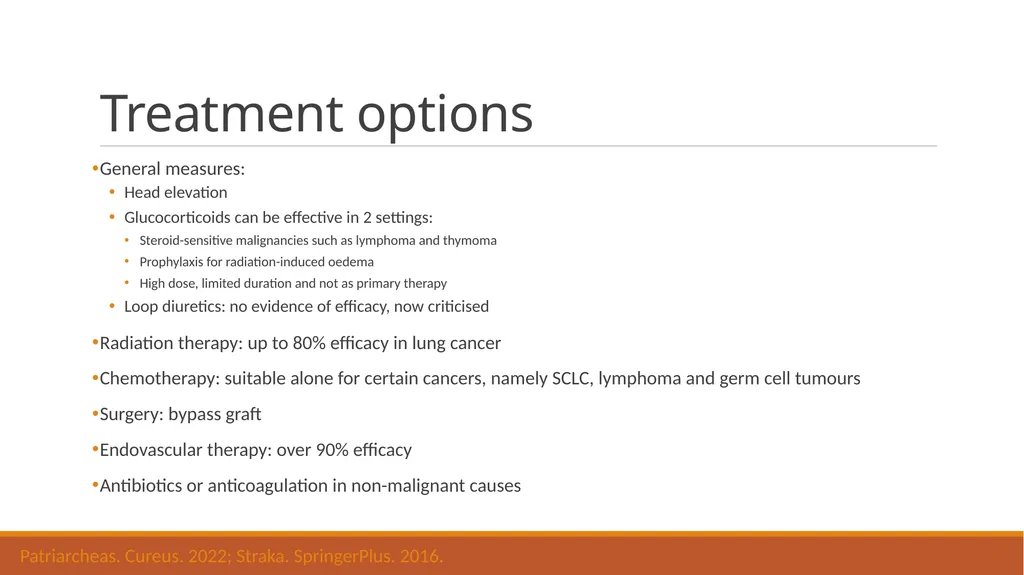
Antibiotics or anticoagulation in non-malignant causes Patriarcheas. Cureus. 2022; Straka. SpringerPlus. 2016.<br>

slide2. Superior mediastinal syndrome A group of disorders characterised by infiltration, entrapment or compression of mediastinal structures
Trachea
Oesophagus
SVC/great vessels Zardi. Exp Ther Med. 2016.<br>
slide3. Collateral circulation 4 potential collateral pathways:
Azygos-hemiazygos pathway (via intercostal and lumbar veins)
Internal thoracic route (via epigastric and superficial thoracic veins)
Lateral thoracic route (via superficial circumflex, long saphenous and femoral veins)
Vertebral and paravertebral route
Blockages proximal to SVC: blood returns to SVC via azygos vein
Blockages at or distal to SVC: retrograde flow through azygos vein and collaterals to IVC Shah. Cureus. 2023.<br>
slide4. Causes Malignancy
Lung cancer (75%): SCLC > squam > adeno
non-Hodgkins lymphoma (10%)
Metastatic (10%), esp breast
Others: Hodgkins, germ-cell, thymoma, mesothelioma, oesophageal, thyroid, leukaemia (AML), sarcoma
Benign
Infection
Tuberculosis
Tertiary syphilis
Vascular
Thoracic aortic aneurysm
Benign (cont.)
Misc
Enlarged paratracheal lymph nodes
Mediastinal fibrosis (TB, fungi, sarcoid, histoplasmosis, IgG4 disease, ANCA vasculitis, β-blockers, idiopathic, familial)
Retrosternal goitre
Bechet’s disease
Iatrogenic
Thrombus formation
Central line (long-term)
Pacemaker
Radiation fibrosis Seligson. StatPearls. 2023; Wright. J Thorac Oncol. 2023; Patriarcheas. Cureus. 2022.<br>
slide5. Diagnostic approach Imaging:
CXR
CT/MRI
Doppler ultrasound if thrombus suspected
Venography – usually for surgical planning
Tissue for Histology<br>
slide6. Kishi Scoring system Straka. SpringerPlus. 2016.<br>
slide7. Grading system for SVC syndrome Yu. J Thorac Oncol. 2008.<br>
slide8. Treatment options General measures:
Head elevation
Glucocorticoids can be effective in 2 settings:
Steroid-sensitive malignancies such as lymphoma and thymoma
Prophylaxis for radiation-induced oedema
High dose, limited duration and not as primary therapy
Loop diuretics: no evidence of efficacy, now criticised
Radiation therapy: up to 80% efficacy in lung cancer
Chemotherapy: suitable alone for certain cancers, namely SCLC, lymphoma and germ cell tumours
Surgery: bypass graft
Endovascular therapy: over 90% efficacy
Antibiotics or anticoagulation in non-malignant causes Patriarcheas. Cureus. 2022; Straka. SpringerPlus. 2016.<br>