
Week 7, Convolutional Neural Network (CNN) What
Description: Week 7, Convolutional Neural Network (CNN) What deep network can do? Computer Vision Classification Detection Segmentation Caption generation Large language models Protein folding ML-based force field, etc MLP and inductive bias In
Related Topics
Download Presentation
"Week 7, Convolutional Neural Network (CNN) What" is the property of its rightful owner. Permission is granted to download and print the materials on this website for personal, non-commercial use only, and to display it on your personal computer provided you do not modify the materials and that you retain all copyright notices contained in the materials. By downloading content from our website, you accept the terms of this agreement.
Presentation Transcript
slide1. Week 7,
Convolutional Neural Network (CNN)<br>
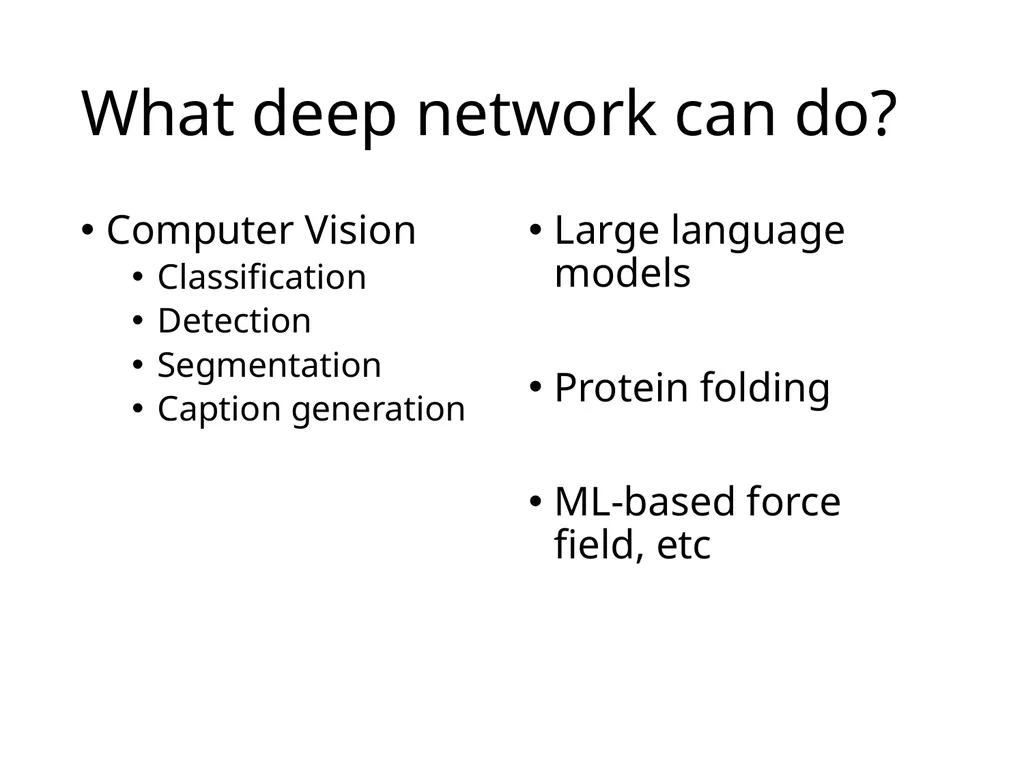
slide2. What deep network can do? Computer Vision
Classification
Detection
Segmentation
Caption generation Large language models
Protein folding
ML-based force field, etc<br>
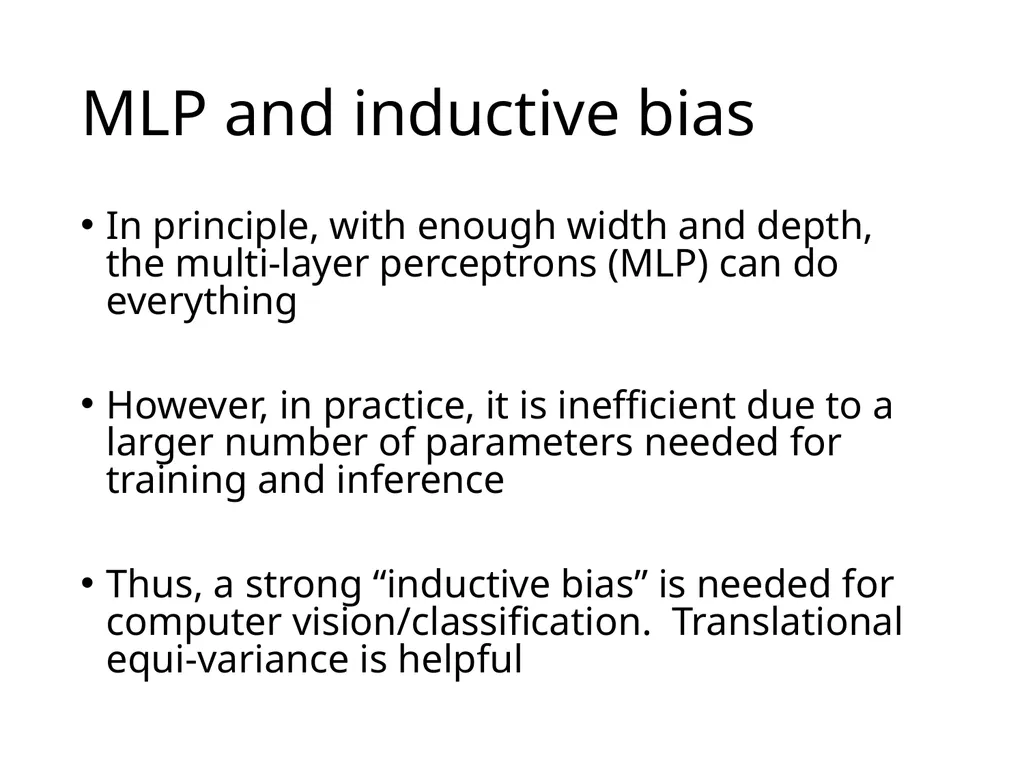
slide3. MLP and inductive bias In principle, with enough width and depth, the multi-layer perceptrons (MLP) can do everything
However, in practice, it is inefficient due to a larger number of parameters needed for training and inference
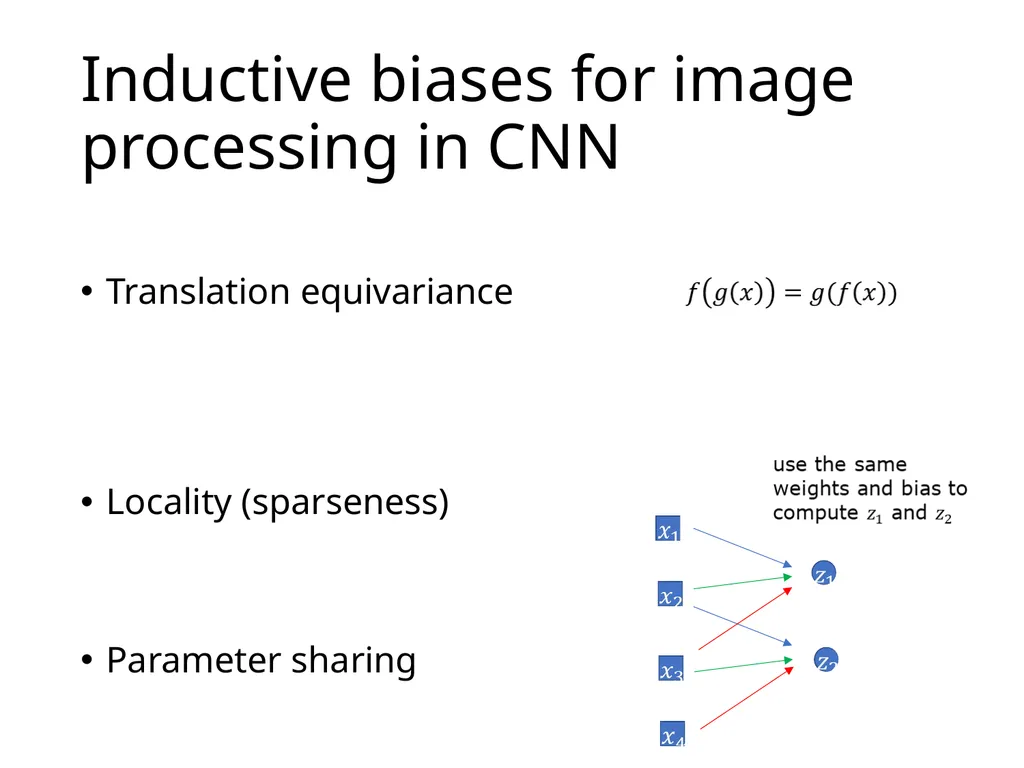
Thus, a strong “inductive bias” is needed for computer vision/classification. Translational equi-variance is helpful<br>
slide4. Inductive biases for image processing in CNN Translation equivariance
Locality (sparseness)
Parameter sharing<br>
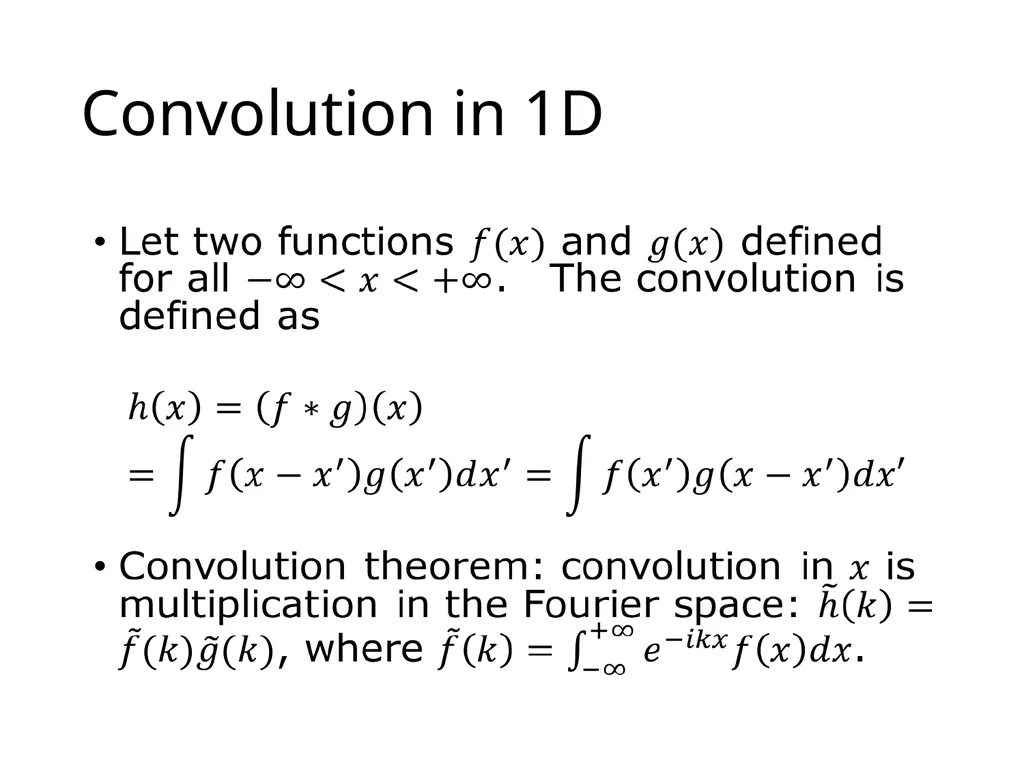
slide5. Convolution in 1D<br>
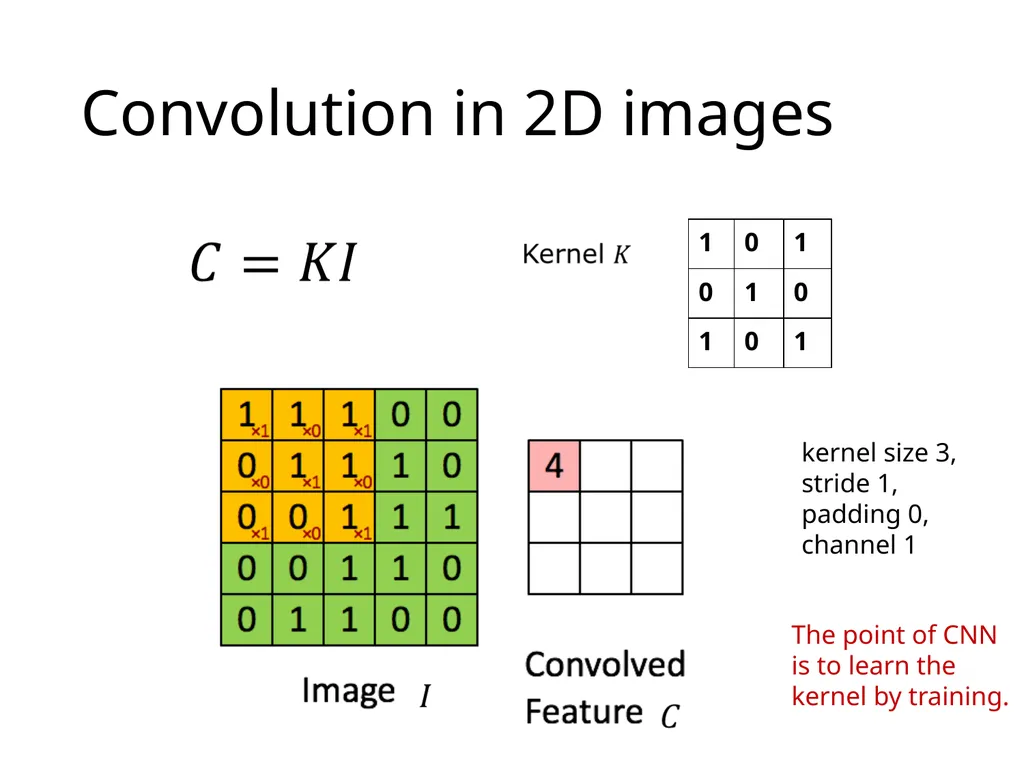
slide6. Convolution in 2D images kernel size 3, stride 1,
padding 0, channel 1 The point of CNN is to learn the kernel by training.<br>
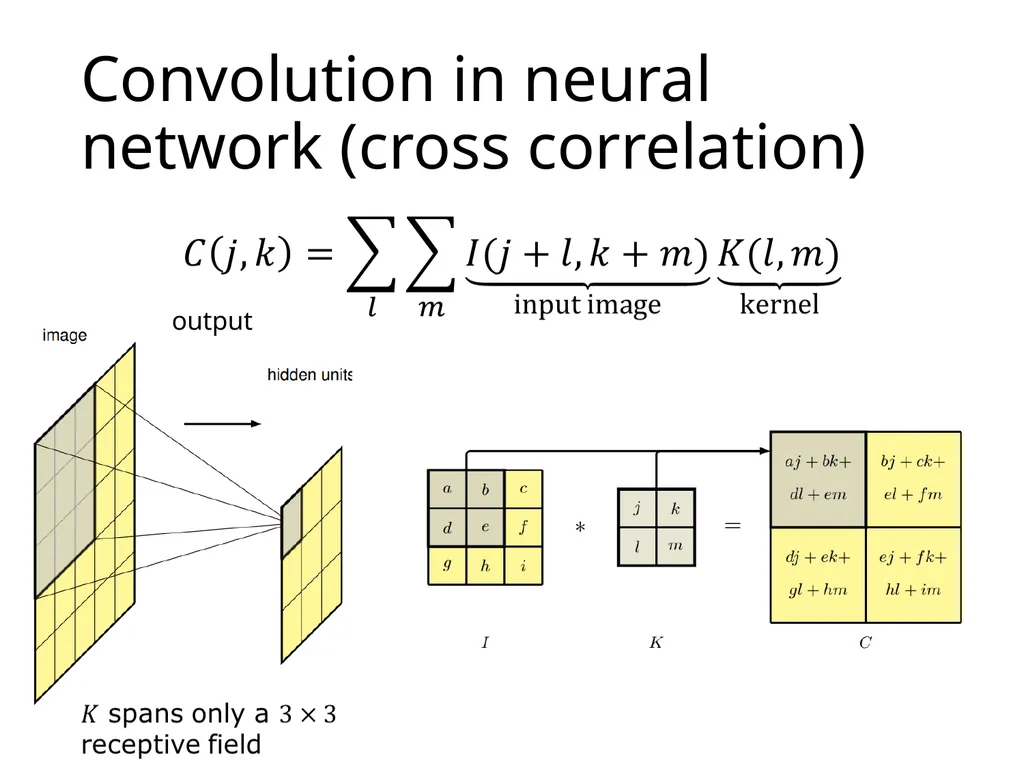
slide7. Convolution in neural network (cross correlation) output<br>
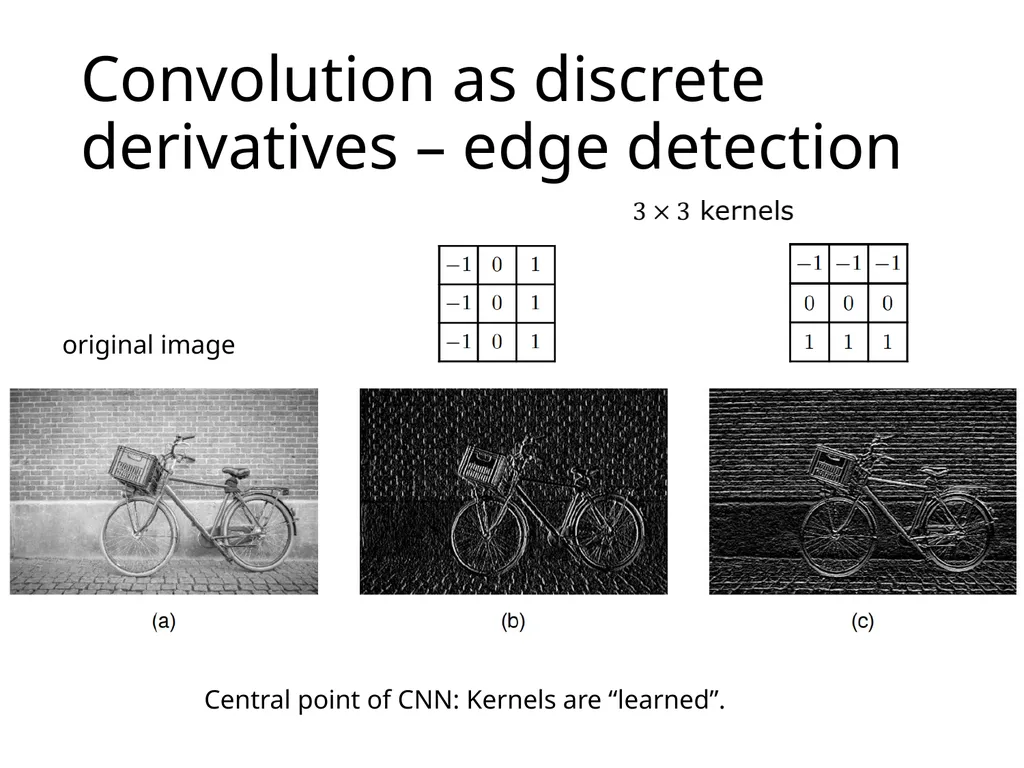
slide8. Convolution as discrete derivatives – edge detection original image Central point of CNN: Kernels are “learned”.<br>
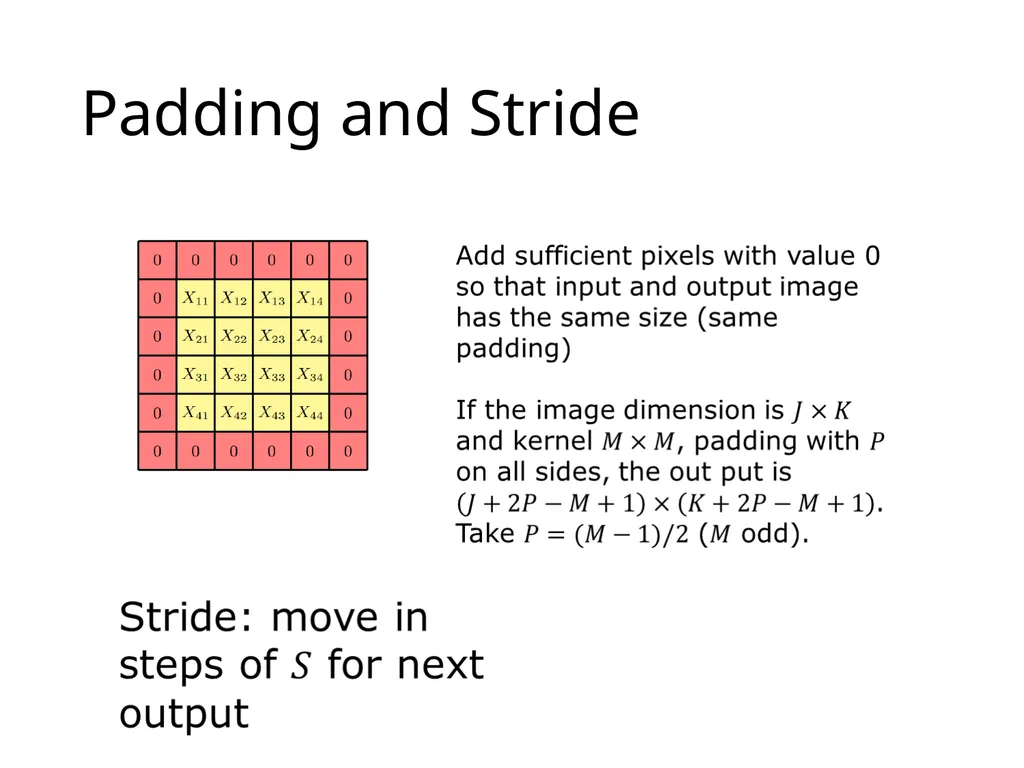
slide9. Padding and Stride<br>
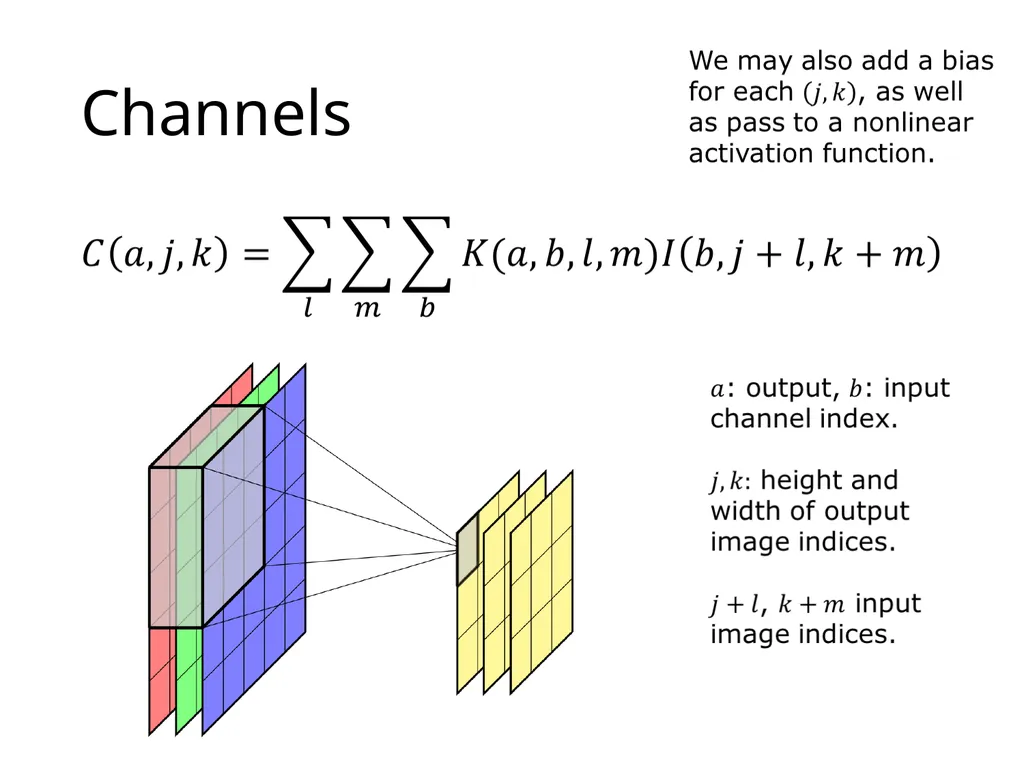
slide10. Channels<br>
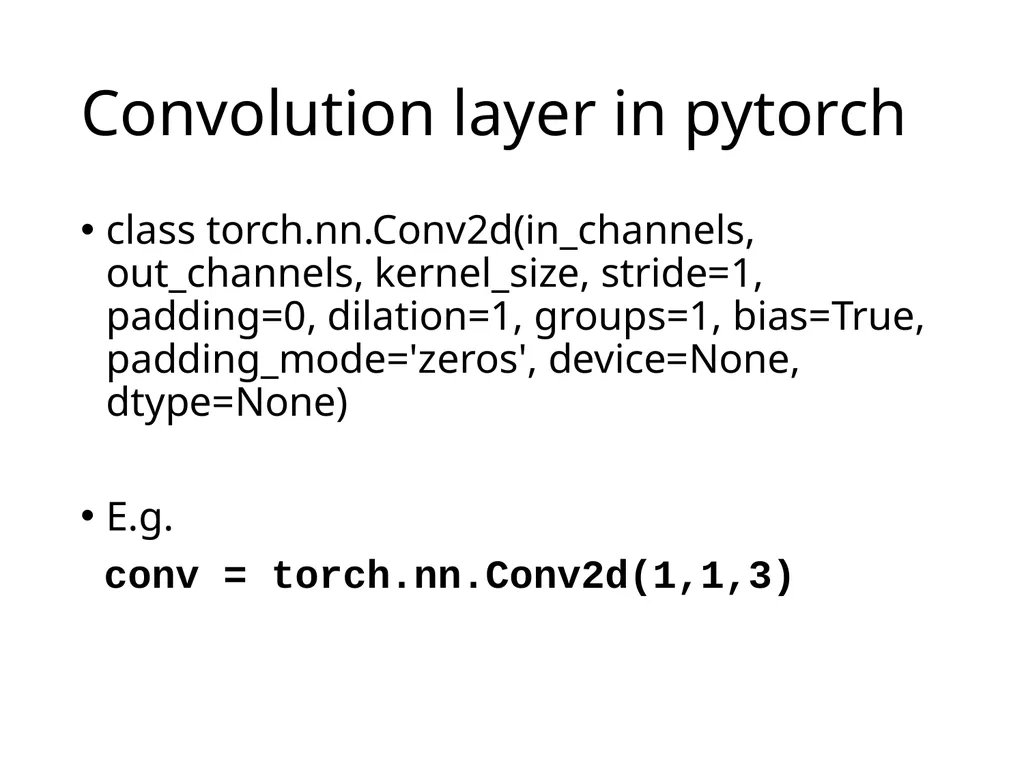
slide11. Convolution layer in pytorch class torch.nn.Conv2d(in_channels, out_channels, kernel_size, stride=1, padding=0, dilation=1, groups=1, bias=True, padding_mode='zeros', device=None, dtype=None)
E.g.
conv = torch.nn.Conv2d(1,1,3)<br>
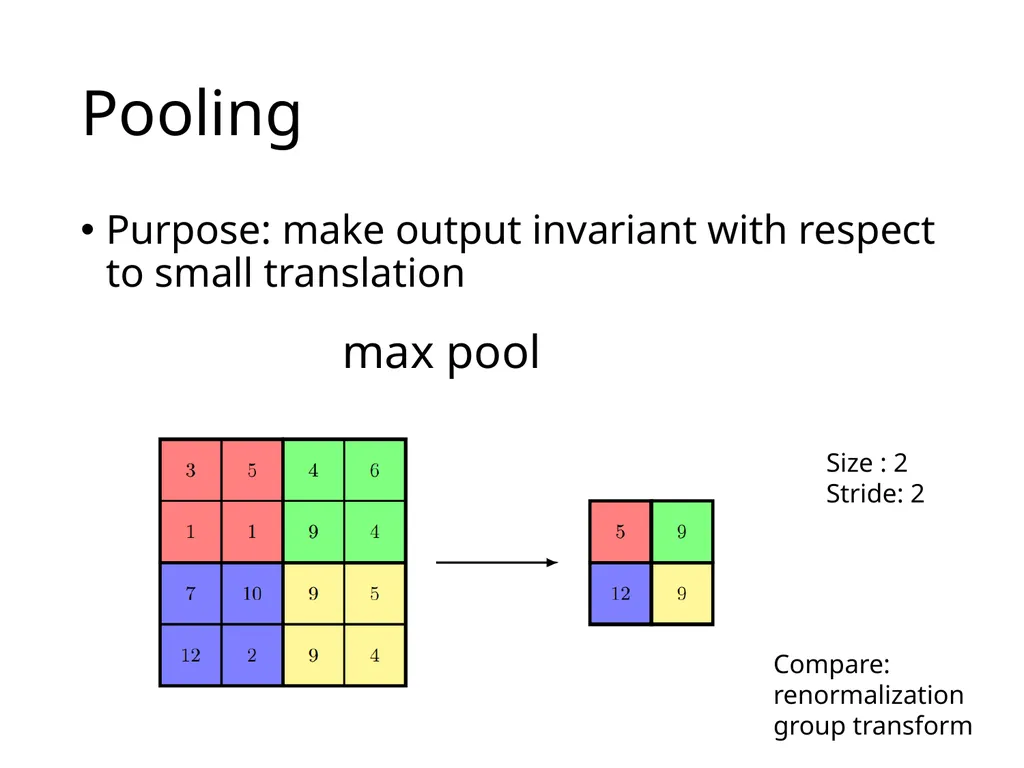
slide12. Pooling Purpose: make output invariant with respect to small translation max pool Size : 2
Stride: 2 Compare: renormalization group transform<br>
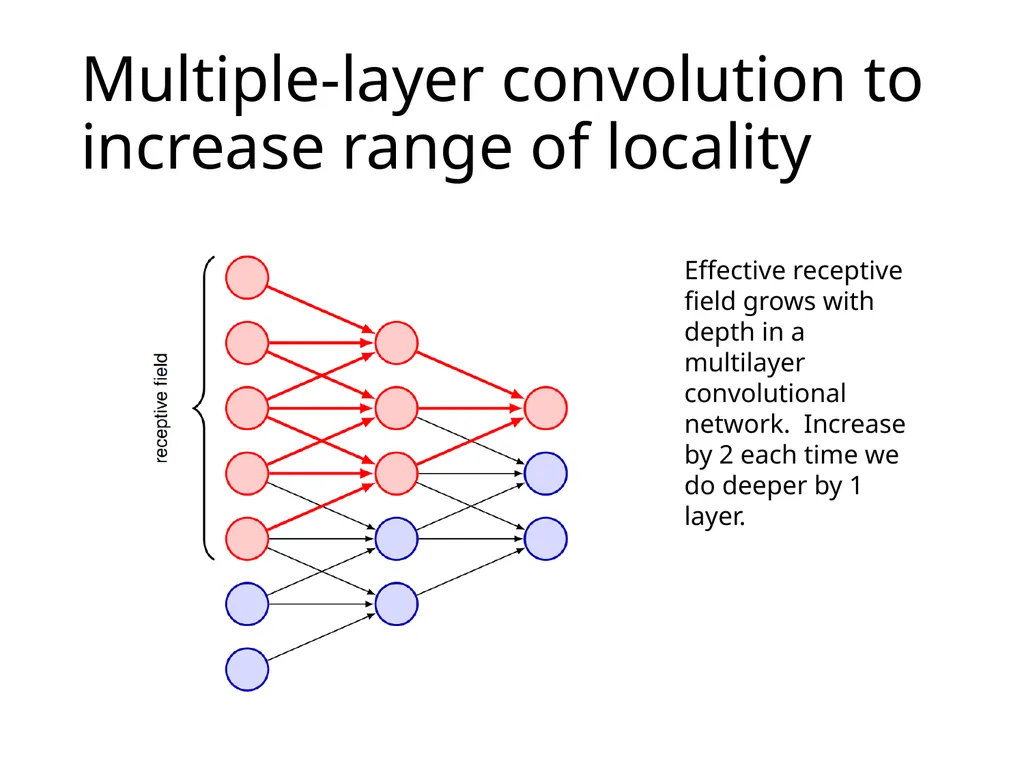
slide13. Multiple-layer convolution to increase range of locality Effective receptive field grows with depth in a multilayer convolutional network. Increase by 2 each time we do deeper by 1 layer.<br>
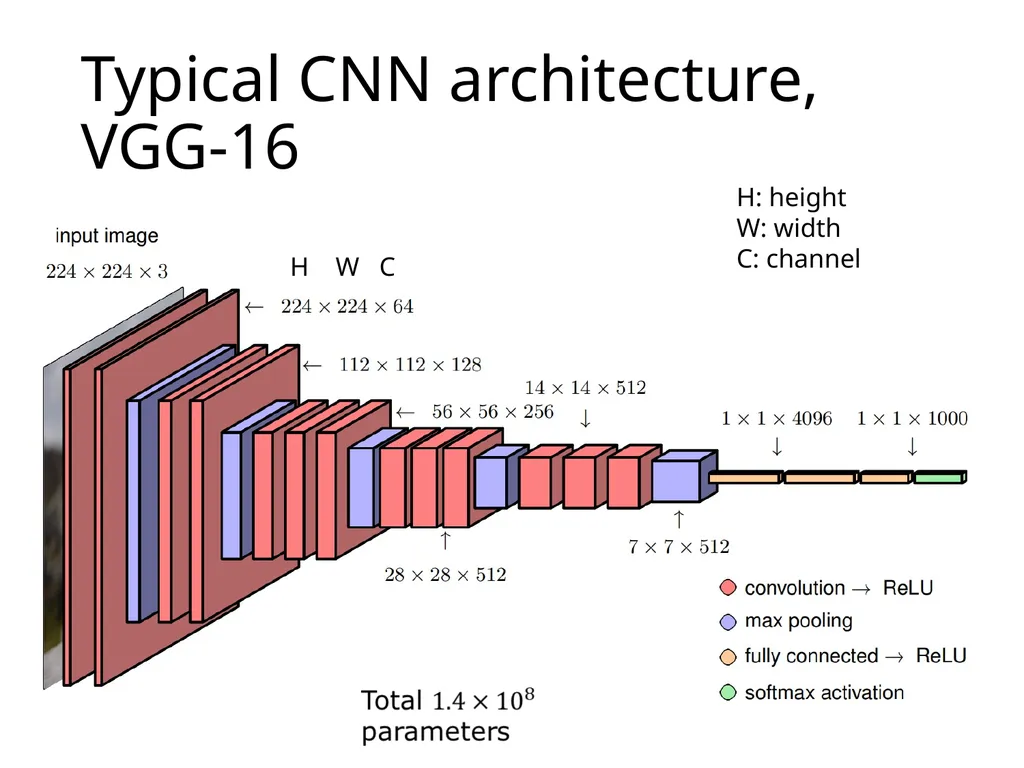
slide14. Typical CNN architecture, VGG-16 H W C H: height
W: width
C: channel<br>
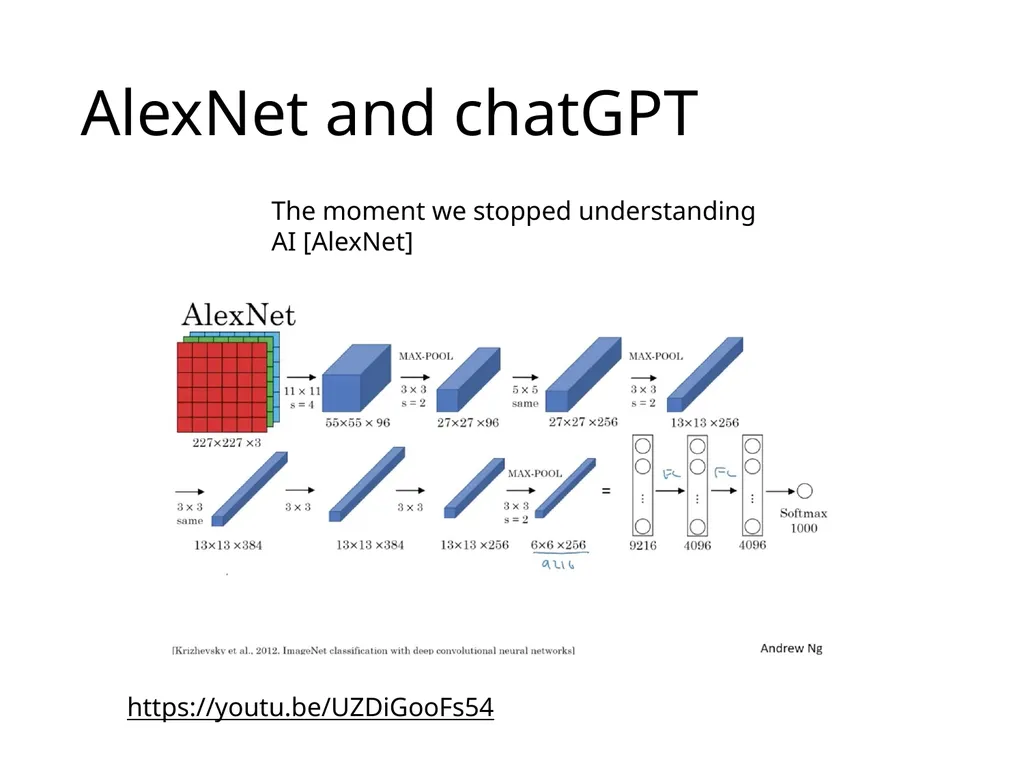
slide15. AlexNet and chatGPT https://youtu.be/UZDiGooFs54 The moment we stopped understanding AI [AlexNet]<br>
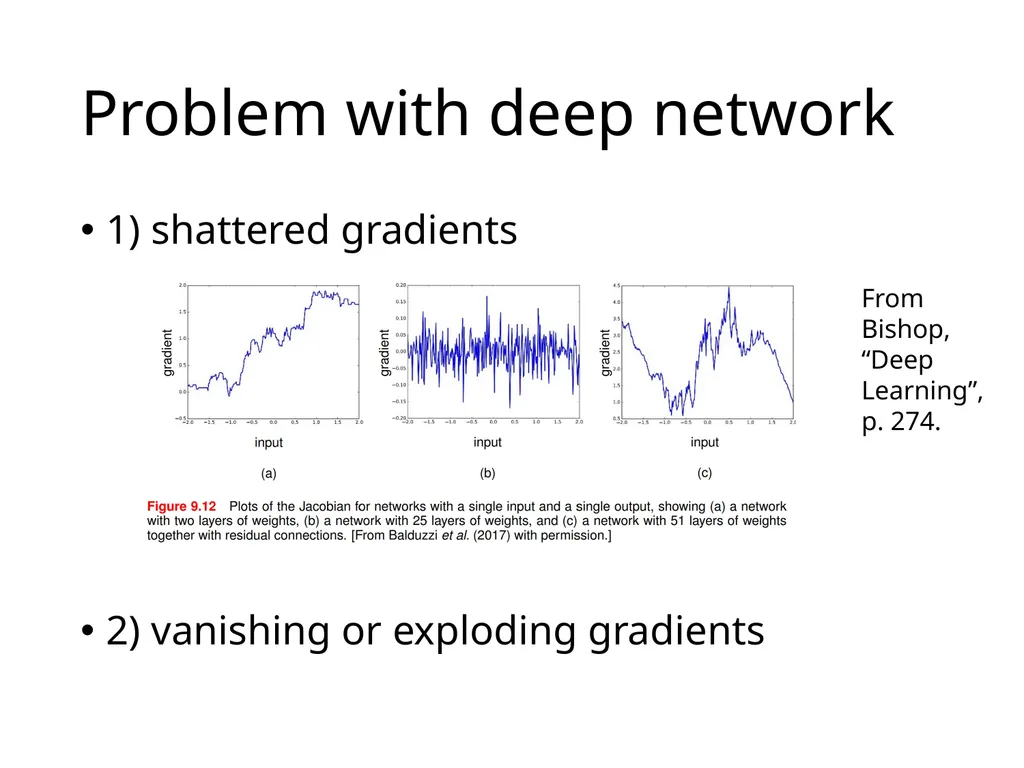
slide16. Problem with deep network 1) shattered gradients
2) vanishing or exploding gradients From Bishop, “Deep Learning”, p. 274.<br>
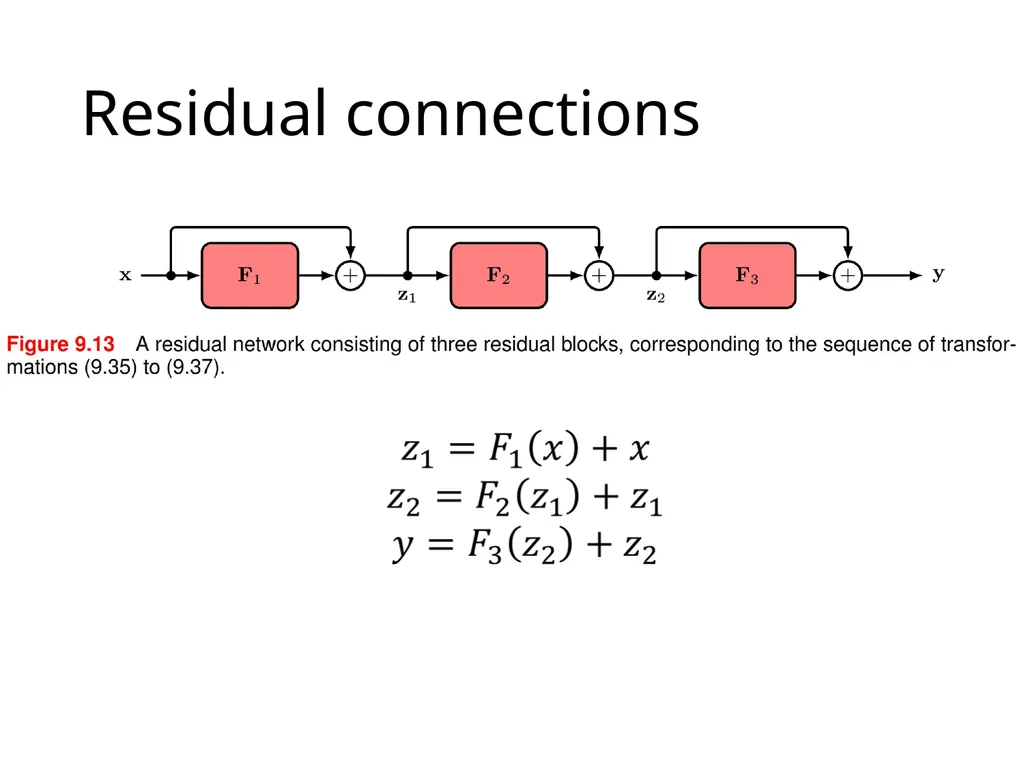
slide17. Residual connections<br>
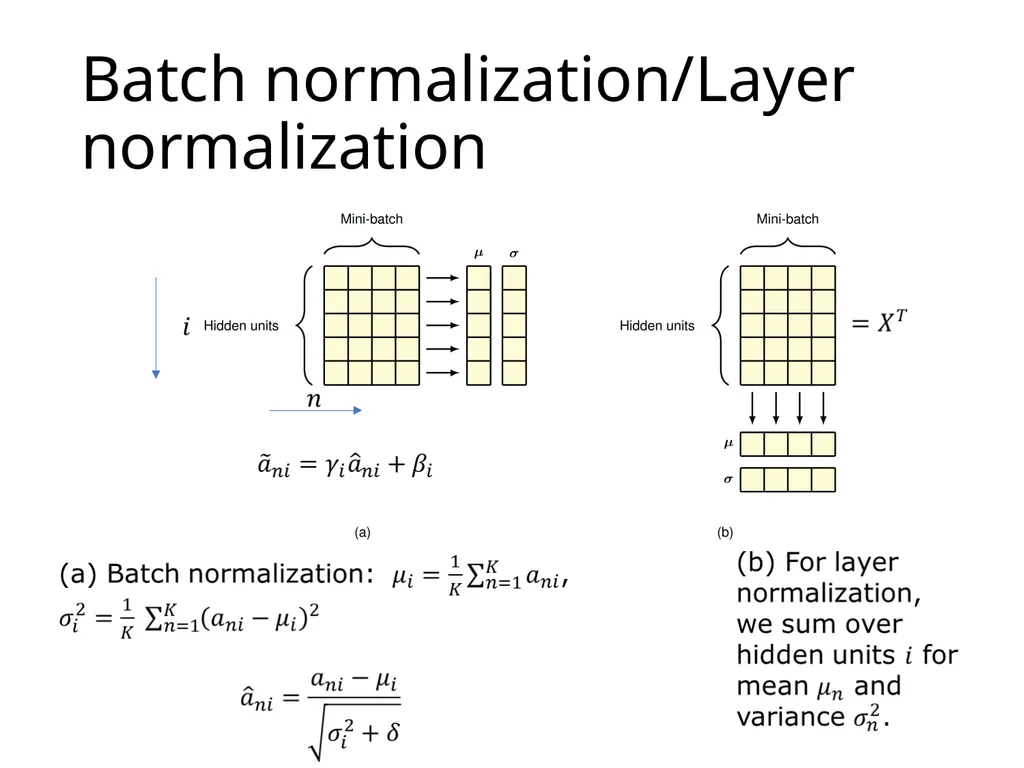
slide18. Batch normalization/Layer normalization<br>
slide2. What deep network can do? Computer Vision
Classification
Detection
Segmentation
Caption generation Large language models
Protein folding
ML-based force field, etc<br>
slide3. MLP and inductive bias In principle, with enough width and depth, the multi-layer perceptrons (MLP) can do everything
However, in practice, it is inefficient due to a larger number of parameters needed for training and inference
Thus, a strong “inductive bias” is needed for computer vision/classification. Translational equi-variance is helpful<br>
slide4. Inductive biases for image processing in CNN Translation equivariance
Locality (sparseness)
Parameter sharing<br>
slide5. Convolution in 1D<br>
slide6. Convolution in 2D images kernel size 3, stride 1,
padding 0, channel 1 The point of CNN is to learn the kernel by training.<br>
slide7. Convolution in neural network (cross correlation) output<br>
slide8. Convolution as discrete derivatives – edge detection original image Central point of CNN: Kernels are “learned”.<br>
slide9. Padding and Stride<br>
slide10. Channels<br>
slide11. Convolution layer in pytorch class torch.nn.Conv2d(in_channels, out_channels, kernel_size, stride=1, padding=0, dilation=1, groups=1, bias=True, padding_mode='zeros', device=None, dtype=None)
E.g.
conv = torch.nn.Conv2d(1,1,3)<br>
slide12. Pooling Purpose: make output invariant with respect to small translation max pool Size : 2
Stride: 2 Compare: renormalization group transform<br>
slide13. Multiple-layer convolution to increase range of locality Effective receptive field grows with depth in a multilayer convolutional network. Increase by 2 each time we do deeper by 1 layer.<br>
slide14. Typical CNN architecture, VGG-16 H W C H: height
W: width
C: channel<br>
slide15. AlexNet and chatGPT https://youtu.be/UZDiGooFs54 The moment we stopped understanding AI [AlexNet]<br>
slide16. Problem with deep network 1) shattered gradients
2) vanishing or exploding gradients From Bishop, “Deep Learning”, p. 274.<br>
slide17. Residual connections<br>
slide18. Batch normalization/Layer normalization<br>