
Weight and Obesity: Perception to Perspective When
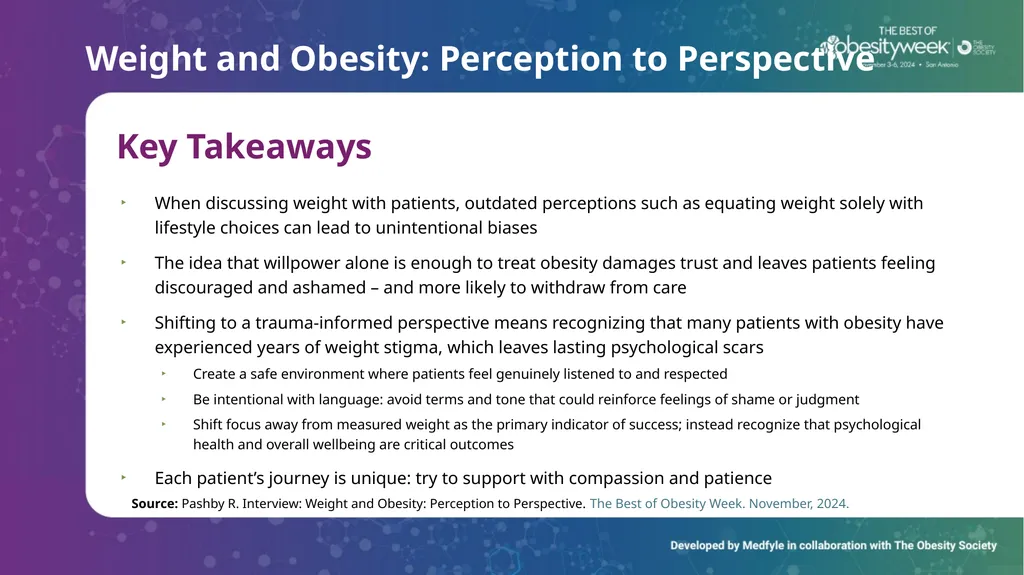
Description: Weight and Obesity: Perception to Perspective When discussing weight with patients, outdated perceptions such as equating weight solely with lifestyle choices can lead to unintentional biases The idea that willpower alone is enough to treat
Related Topics
Download Presentation
"Weight and Obesity: Perception to Perspective When" is the property of its rightful owner. Permission is granted to download and print the materials on this website for personal, non-commercial use only, and to display it on your personal computer provided you do not modify the materials and that you retain all copyright notices contained in the materials. By downloading content from our website, you accept the terms of this agreement.
Presentation Transcript
slide1. Weight and Obesity: Perception to Perspective When discussing weight with patients, outdated perceptions such as equating weight solely with lifestyle choices can lead to unintentional biases
The idea that willpower alone is enough to treat obesity damages trust and leaves patients feeling discouraged and ashamed – and more likely to withdraw from care
Shifting to a trauma-informed perspective means recognizing that many patients with obesity have experienced years of weight stigma, which leaves lasting psychological scars
Create a safe environment where patients feel genuinely listened to and respected
Be intentional with language: avoid terms and tone that could reinforce feelings of shame or judgment
Shift focus away from measured weight as the primary indicator of success; instead recognize that psychological health and overall wellbeing are critical outcomes
Each patient’s journey is unique: try to support with compassion and patience Key Takeaways Source: Pashby R. Interview: Weight and Obesity: Perception to Perspective. The Best of Obesity Week. November, 2024.<br>
The idea that willpower alone is enough to treat obesity damages trust and leaves patients feeling discouraged and ashamed – and more likely to withdraw from care
Shifting to a trauma-informed perspective means recognizing that many patients with obesity have experienced years of weight stigma, which leaves lasting psychological scars
Create a safe environment where patients feel genuinely listened to and respected
Be intentional with language: avoid terms and tone that could reinforce feelings of shame or judgment
Shift focus away from measured weight as the primary indicator of success; instead recognize that psychological health and overall wellbeing are critical outcomes
Each patient’s journey is unique: try to support with compassion and patience Key Takeaways Source: Pashby R. Interview: Weight and Obesity: Perception to Perspective. The Best of Obesity Week. November, 2024.<br>