
Welcome to 1st seminar Projective Techniques in
LO
Published · 63 slides · 0 views

1 / 1





Description
Welcome to 1st seminar Projective Techniques in Social Science Research NAVEEN KUMAR P Ph. D. Scholar PALB-4021 3 3 Short take of seminar Introduction Historical development Applications Essential features Types of projective techniques
Related Topics
Share
Embed code
Download this presentation From Below
"Welcome to 1st seminar Projective Techniques in" is the property of its rightful owner. Permission is granted to download and print the materials on this website for personal, non-commercial use only, and to display it on your personal computer provided you do not modify the materials and that you retain all copyright notices contained in the materials. By downloading content from our website, you accept the terms of this agreement.
Presentation Transcript
01
Welcome to 1st seminar<br>
02
Projective Techniques in Social Science Research NAVEEN KUMAR P
Ph. D. Scholar
PALB-4021<br>
Ph. D. Scholar
PALB-4021<br>
03
3 3 Short take of seminar Introduction
Historical development
Applications
Essential features
Types of projective techniques
Advantages and Disadvantages
Research studies
Conclusion<br>
Historical development
Applications
Essential features
Types of projective techniques
Advantages and Disadvantages
Research studies
Conclusion<br>
04
Uncover findings
Study people values, emotions and needs
Internal states to external objects
Unstructured stimuli
Psychological measuring instruments Introduction<br>
Study people values, emotions and needs
Internal states to external objects
Unstructured stimuli
Psychological measuring instruments Introduction<br>
05
Historical Development Psychoanalysis
Sigmund Freud's theory of dreams and technique of dream interpretation
World war II (1939-1945) there were comparable developments in the area of personality testing with projective techniques receiving the most prominent attention
The society for projective techniques was formed(1952)<br>
Sigmund Freud's theory of dreams and technique of dream interpretation
World war II (1939-1945) there were comparable developments in the area of personality testing with projective techniques receiving the most prominent attention
The society for projective techniques was formed(1952)<br>
06
Objectives To know the concept of Projective techniques
To know the different types projective techniques in social science Research
To review the research studies related to projective techniques.<br>
To know the different types projective techniques in social science Research
To review the research studies related to projective techniques.<br>
07
Concept of Projective Techniques<br>
08
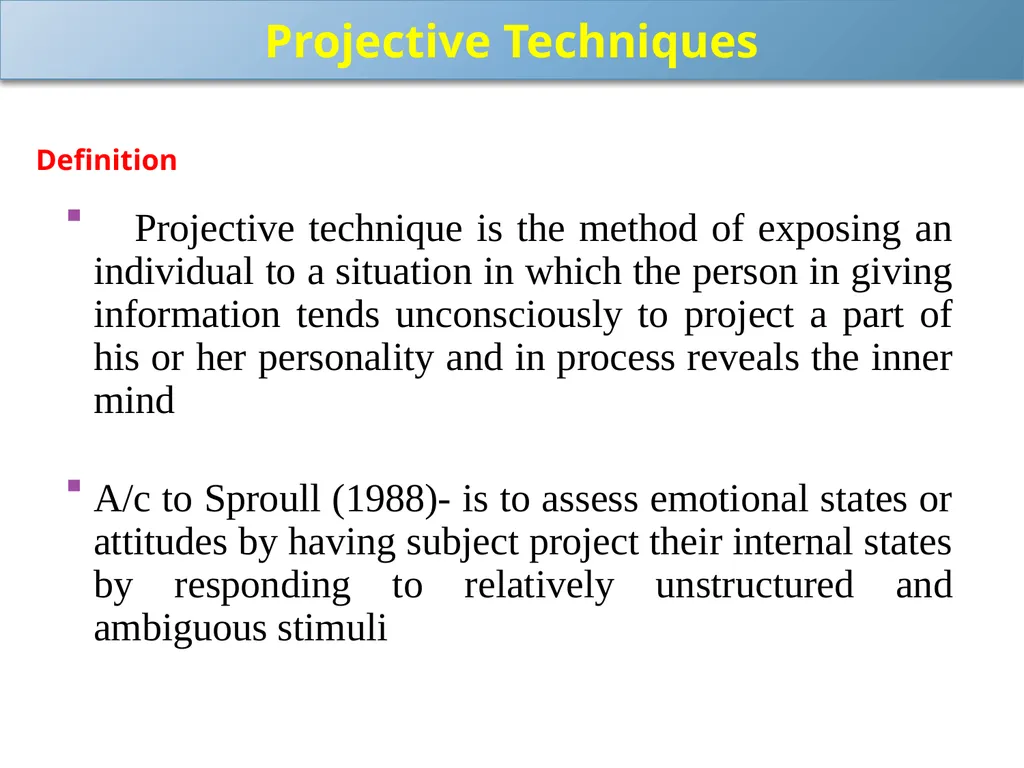
Definition Projective technique is the method of exposing an individual to a situation in which the person in giving information tends unconsciously to project a part of his or her personality and in process reveals the inner mind
A/c to Sproull (1988)- is to assess emotional states or attitudes by having subject project their internal states by responding to relatively unstructured and ambiguous stimuli Projective Techniques<br>
A/c to Sproull (1988)- is to assess emotional states or attitudes by having subject project their internal states by responding to relatively unstructured and ambiguous stimuli Projective Techniques<br>
09
These technique are based on the phenomenon of projection
Method of understanding the inner world of the individual
To yield information about some ones personality on the basis of ambiguous objects
It is impossible to obtain accurate information about what people think and feel by asking them to communicate their thoughts and feelings with direct questioning<br>
Method of understanding the inner world of the individual
To yield information about some ones personality on the basis of ambiguous objects
It is impossible to obtain accurate information about what people think and feel by asking them to communicate their thoughts and feelings with direct questioning<br>
10
Allow the subject to respond to vague stimuli with their own impressions
Assumption - subject will project his unconscious needs, motives and conflicts on to the neutral stimulus
Unstructured personality measures in which a person is shown a series of ambiguous stimuli
Pictures
Inkblots
Incomplete drawings<br>
Assumption - subject will project his unconscious needs, motives and conflicts on to the neutral stimulus
Unstructured personality measures in which a person is shown a series of ambiguous stimuli
Pictures
Inkblots
Incomplete drawings<br>
11
Psychology Study of human and animal behaviour; it includes the application of this science to human problem
The scientific study of behavior and mental processes and how they are affected by an organism’s physical state, mental state, and external environment
An individual’s personality, is his unique pattern of traits<br>
The scientific study of behavior and mental processes and how they are affected by an organism’s physical state, mental state, and external environment
An individual’s personality, is his unique pattern of traits<br>
12
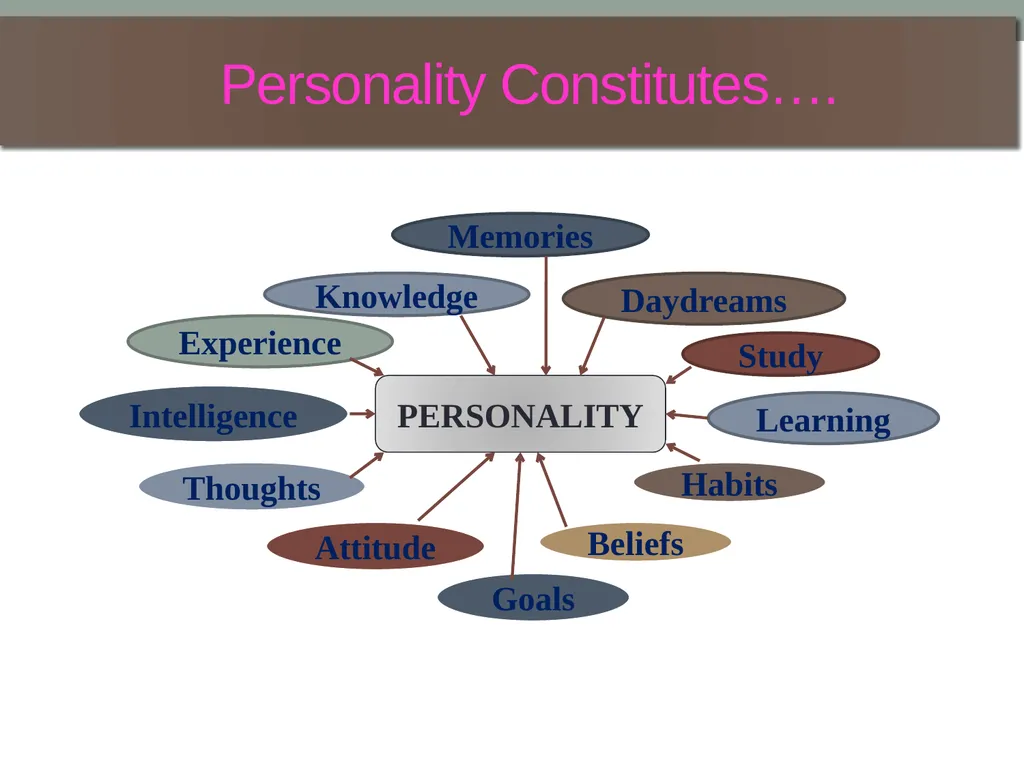
PERSONALITY Experience Knowledge Daydreams Intelligence Attitude Thoughts Study Memories Learning Habits Beliefs Goals Personality Constitutes….<br>
13
In unstructured, Ambiguous situation where do not have structured data
Unwilling or unable to answer a question or unaware of their own thoughts, opinions or feelings
Undesirable to ask a direct question on sensitive topic When to use?<br>
Unwilling or unable to answer a question or unaware of their own thoughts, opinions or feelings
Undesirable to ask a direct question on sensitive topic When to use?<br>
14
Essential Features Stimulus material is unstructured
Indirect (disguised) method
Freedom of response
Interpretation is broad and complex<br>
Indirect (disguised) method
Freedom of response
Interpretation is broad and complex<br>
15
Types of Projective Techniques<br>
16
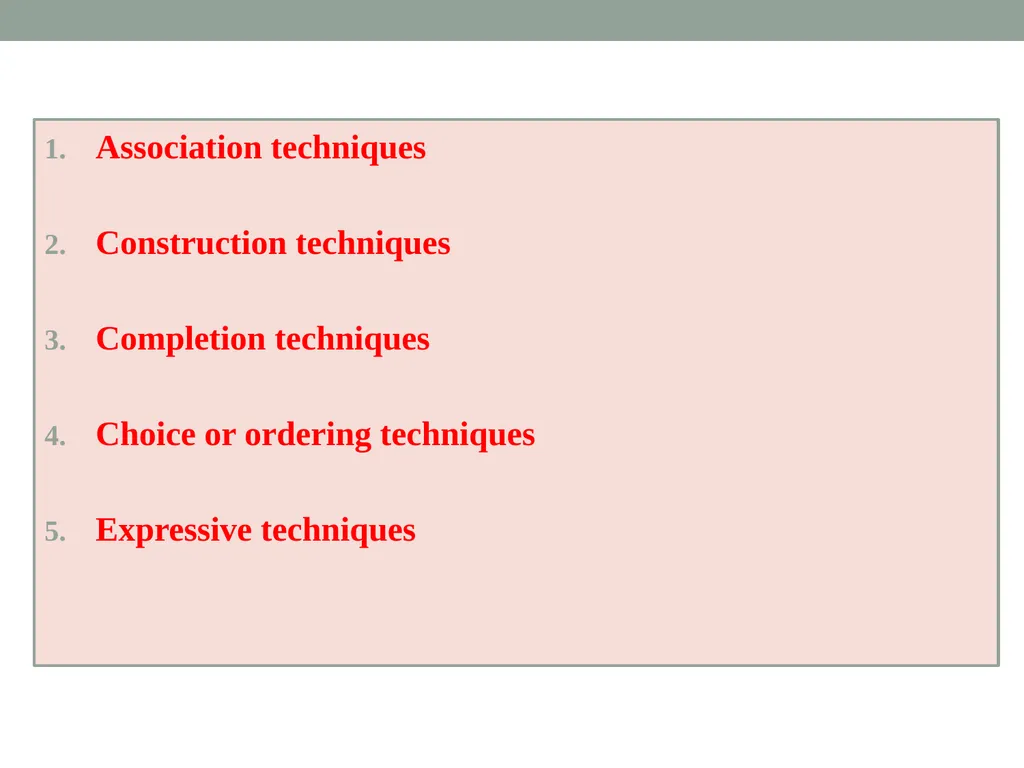
Association techniques
Construction techniques
Completion techniques
Choice or ordering techniques
Expressive techniques<br>
Construction techniques
Completion techniques
Choice or ordering techniques
Expressive techniques<br>
17
Association techniques Respondents are asked to respond to a stimulus with the first thing that comes to mind
Two types
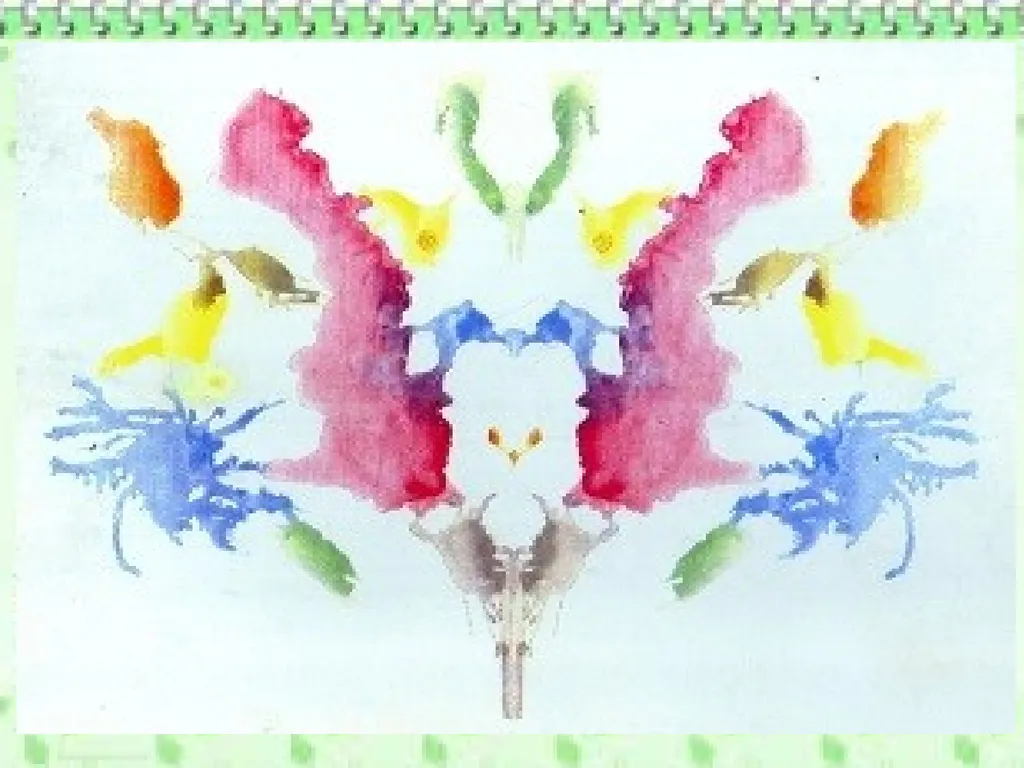
Rorschach Inkblot test
word association test<br>
Two types
Rorschach Inkblot test
word association test<br>
18
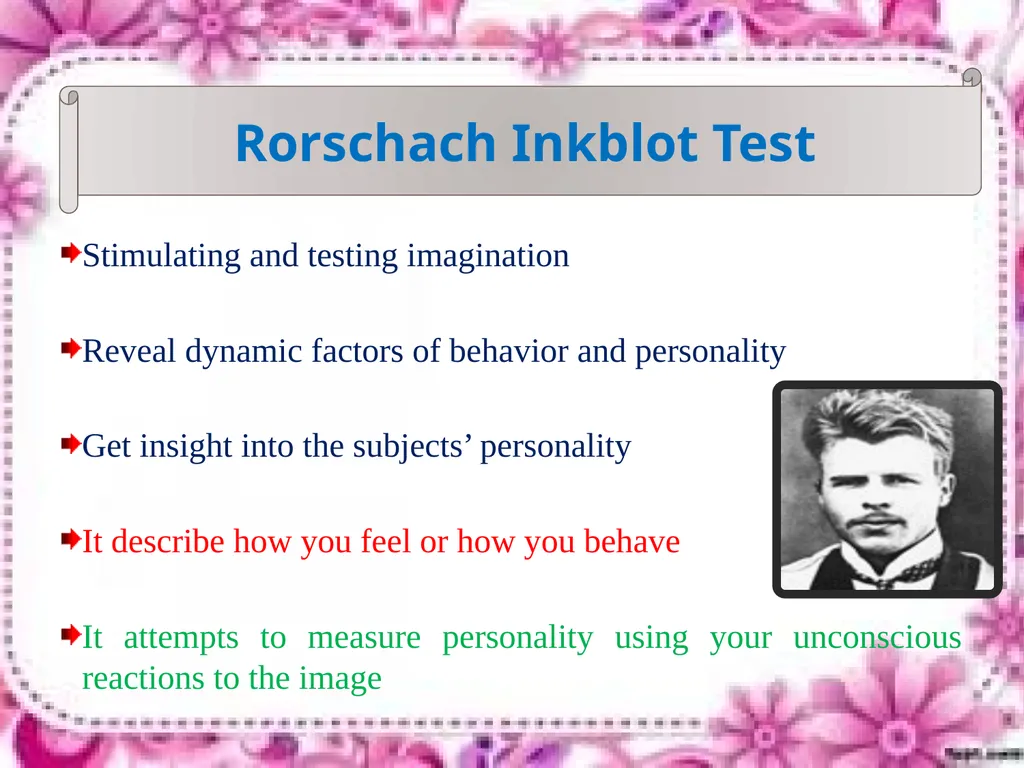
Stimulating and testing imagination
Reveal dynamic factors of behavior and personality
Get insight into the subjects’ personality
It describe how you feel or how you behave
It attempts to measure personality using your unconscious reactions to the image Rorschach Inkblot Test<br>
Reveal dynamic factors of behavior and personality
Get insight into the subjects’ personality
It describe how you feel or how you behave
It attempts to measure personality using your unconscious reactions to the image Rorschach Inkblot Test<br>
19
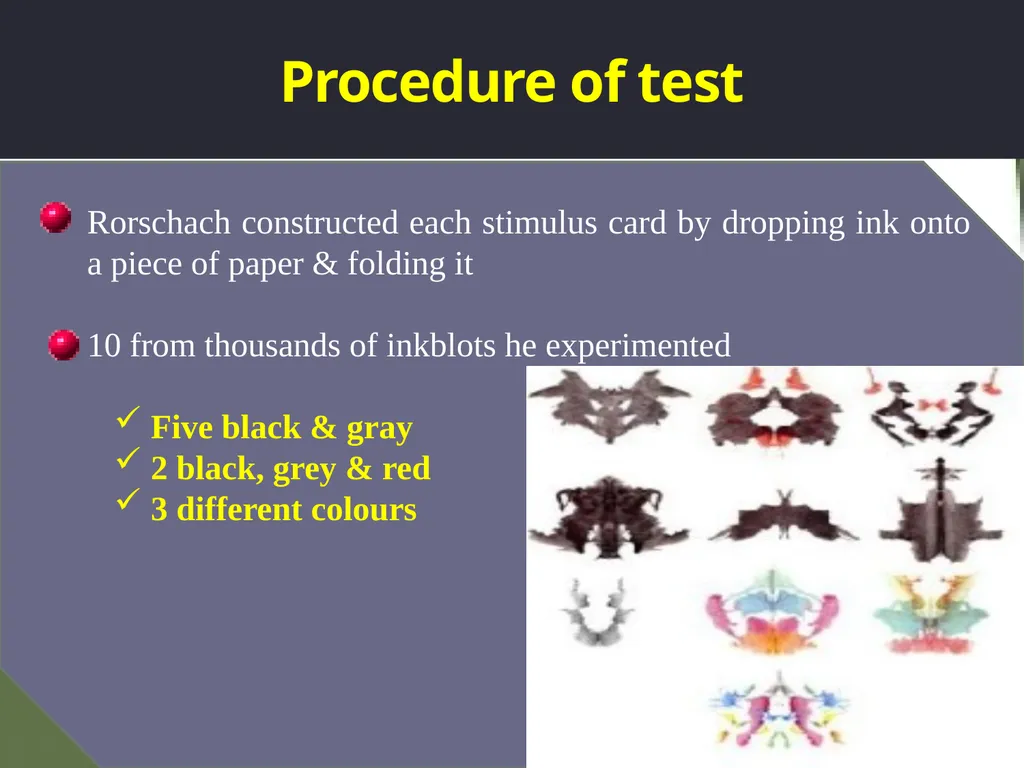
Procedure of test Rorschach constructed each stimulus card by dropping ink onto a piece of paper & folding it
10 from thousands of inkblots he experimented
Five black & gray
2 black, grey & red
3 different colours<br>
10 from thousands of inkblots he experimented
Five black & gray
2 black, grey & red
3 different colours<br>
20
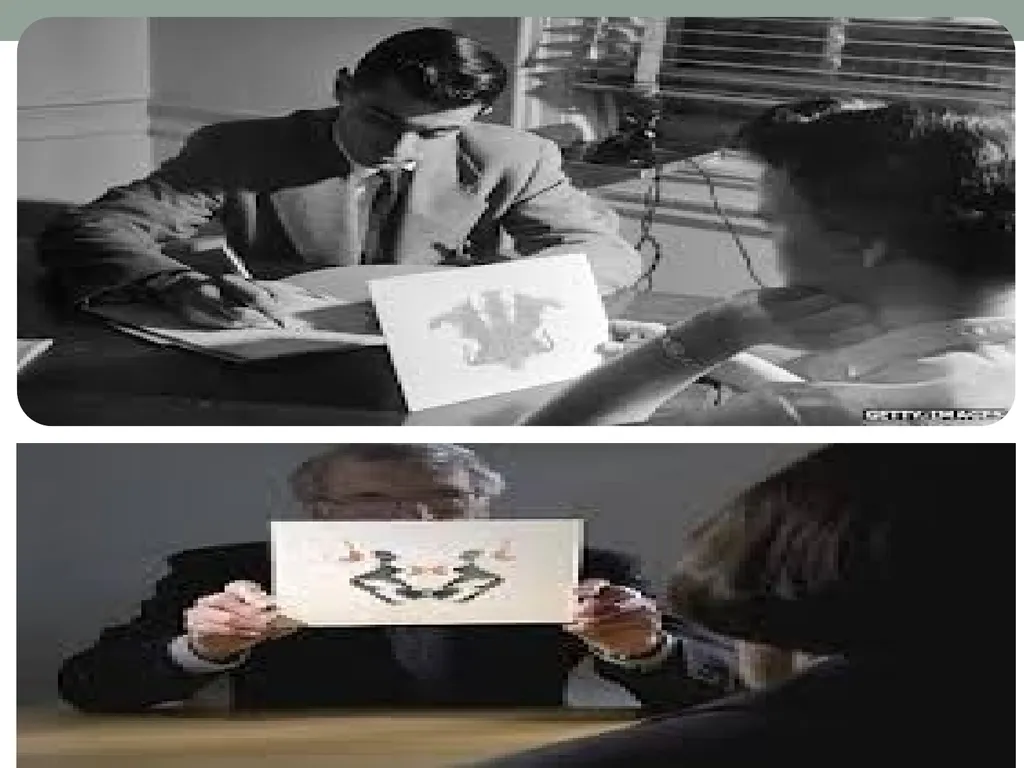
Cont… The individual is asked by a highly skilled examiner to respond to different inkblots varying shapes and colours
Relatively unstructured
Inkblots are vague & ambiguous and allows full play of the subjects reacts and responses
More useful for clinical than research because of the high skill required<br>
Relatively unstructured
Inkblots are vague & ambiguous and allows full play of the subjects reacts and responses
More useful for clinical than research because of the high skill required<br>
21
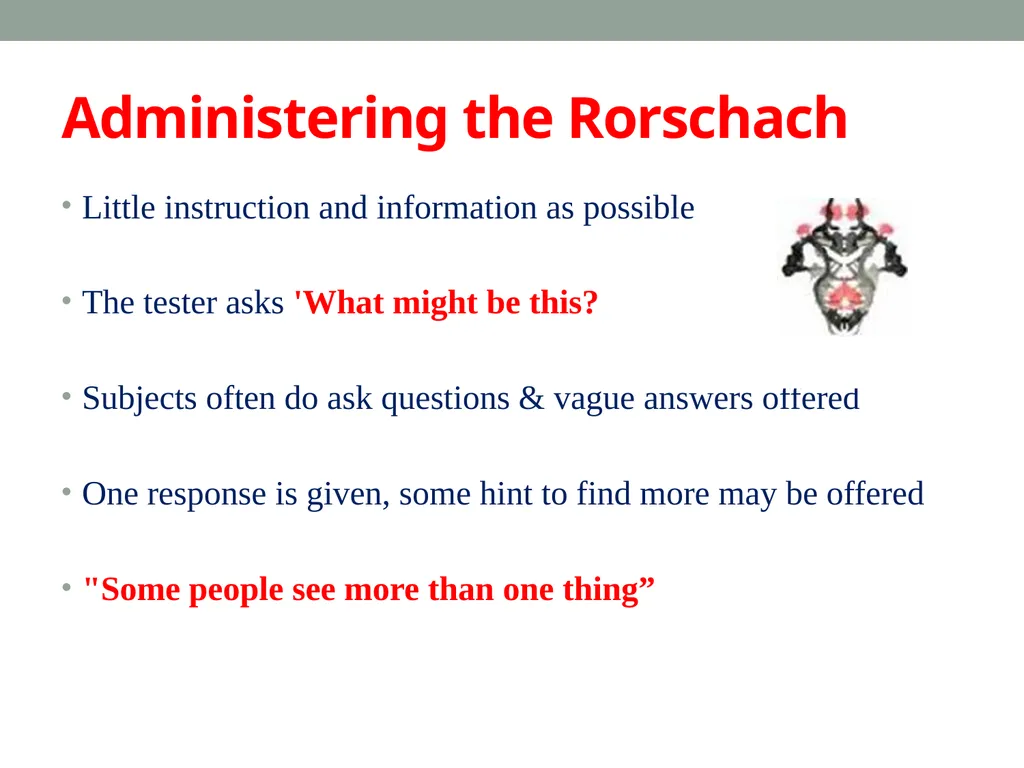
Administering the Rorschach Little instruction and information as possible
The tester asks 'What might be this?
Subjects often do ask questions & vague answers offered
One response is given, some hint to find more may be offered
"Some people see more than one thing”<br>
The tester asks 'What might be this?
Subjects often do ask questions & vague answers offered
One response is given, some hint to find more may be offered
"Some people see more than one thing”<br>
22
Examiner keeps a strict record of responses to each card
Reaction time
Duration of responses
Position in which cards are held
Spontaneous remarks
Emotional expressions Contd….<br>
Reaction time
Duration of responses
Position in which cards are held
Spontaneous remarks
Emotional expressions Contd….<br>
23
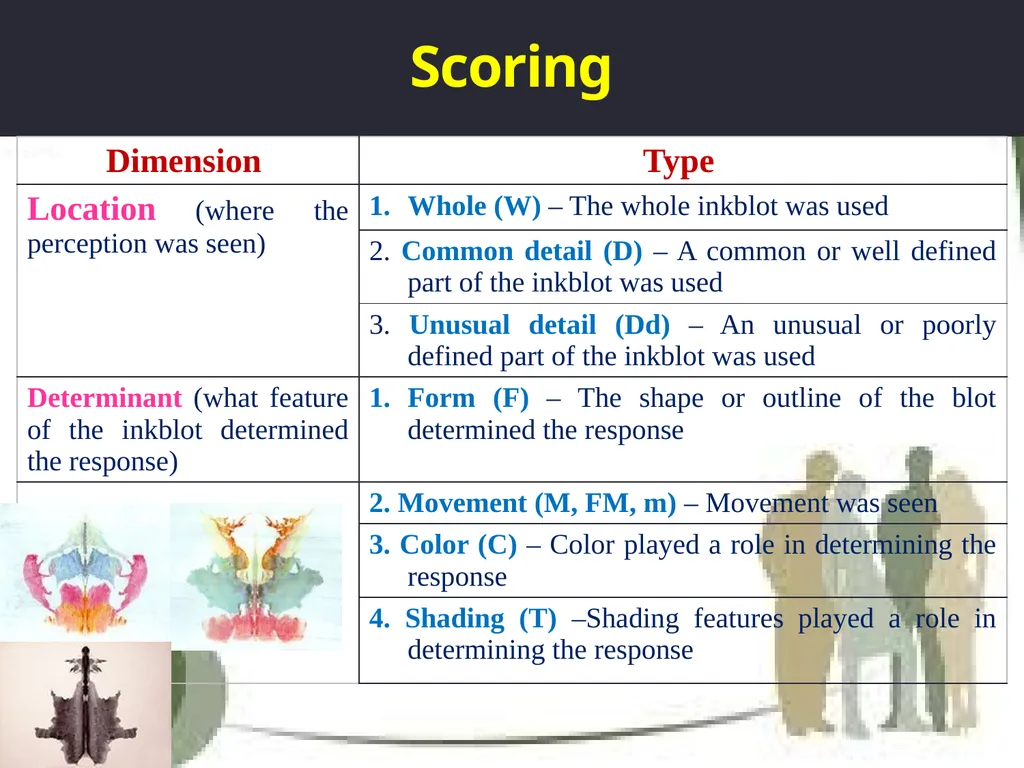
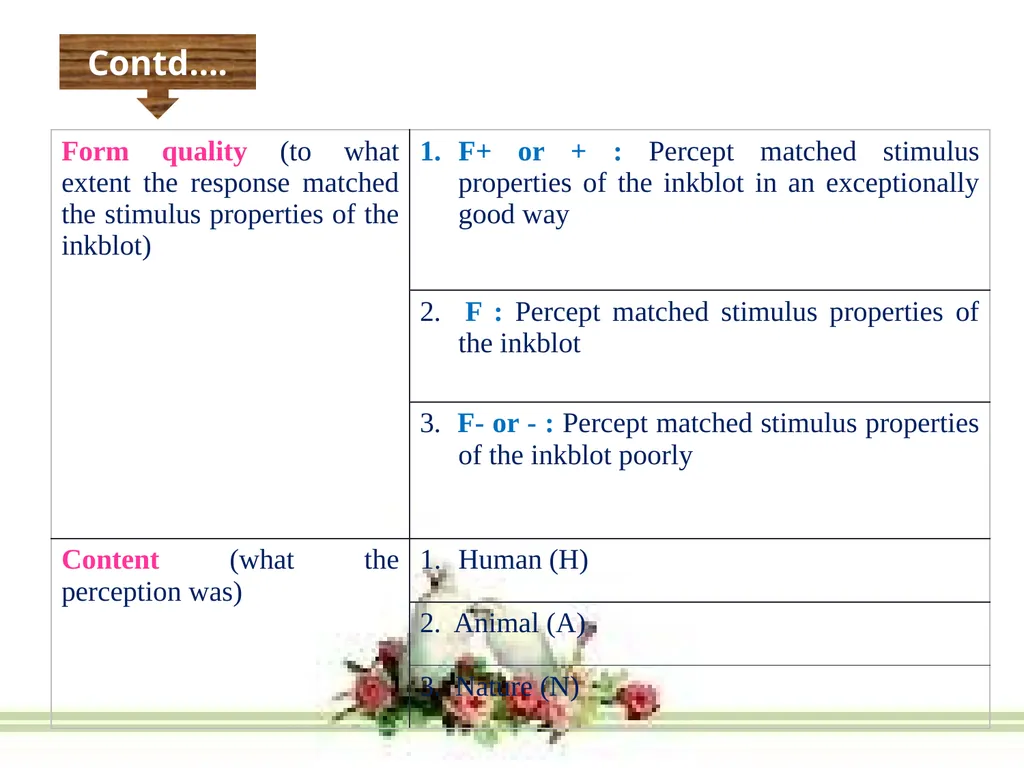
Scoring<br>
24
Contd….<br>
25
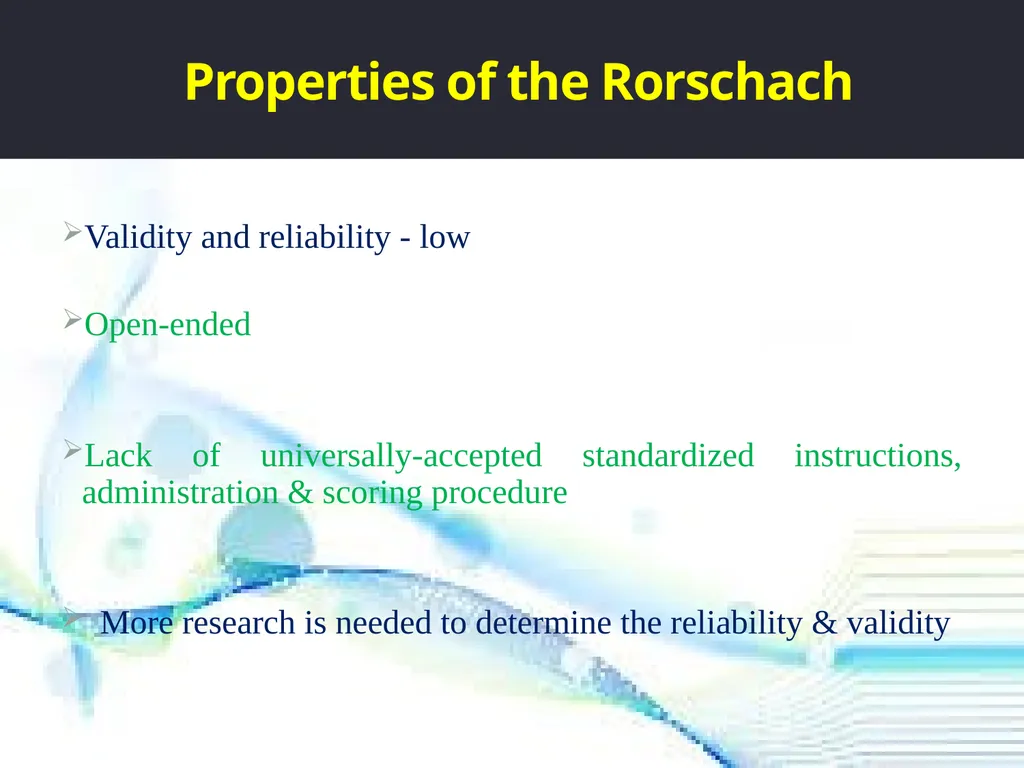
Properties of the Rorschach Validity and reliability - low
Open-ended
Lack of universally-accepted standardized instructions, administration & scoring procedure
More research is needed to determine the reliability & validity<br>
Open-ended
Lack of universally-accepted standardized instructions, administration & scoring procedure
More research is needed to determine the reliability & validity<br>
26
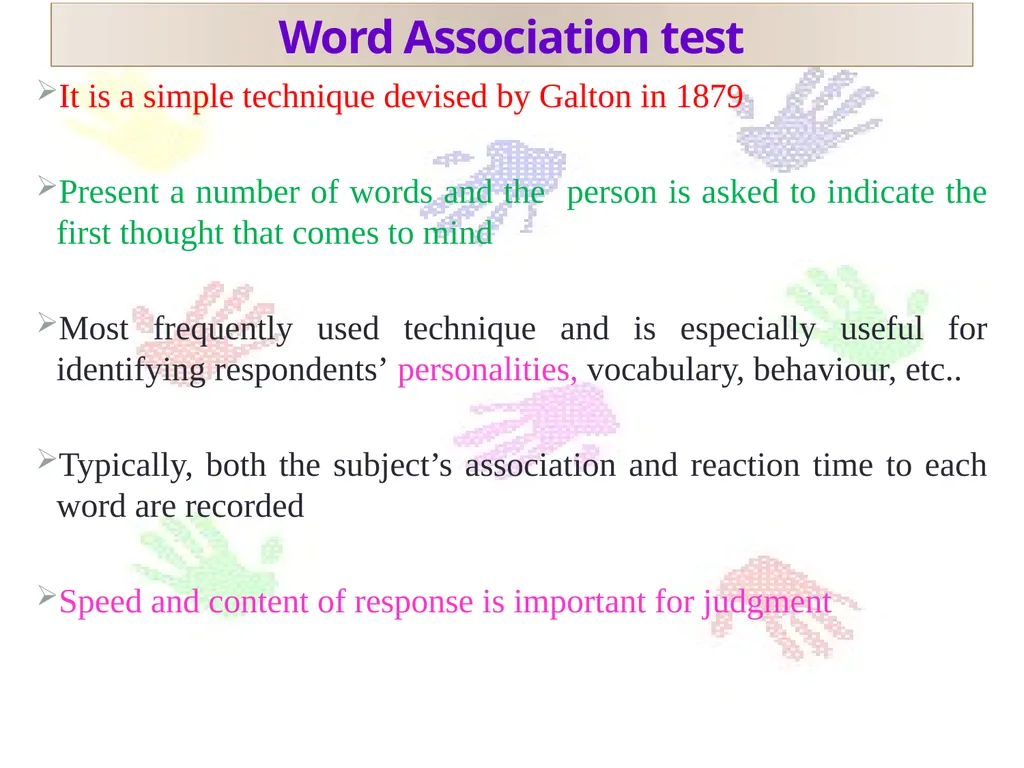
Word Association test It is a simple technique devised by Galton in 1879
Present a number of words and the person is asked to indicate the first thought that comes to mind
Most frequently used technique and is especially useful for identifying respondents’ personalities, vocabulary, behaviour, etc..
Typically, both the subject’s association and reaction time to each word are recorded
Speed and content of response is important for judgment<br>
Present a number of words and the person is asked to indicate the first thought that comes to mind
Most frequently used technique and is especially useful for identifying respondents’ personalities, vocabulary, behaviour, etc..
Typically, both the subject’s association and reaction time to each word are recorded
Speed and content of response is important for judgment<br>
27
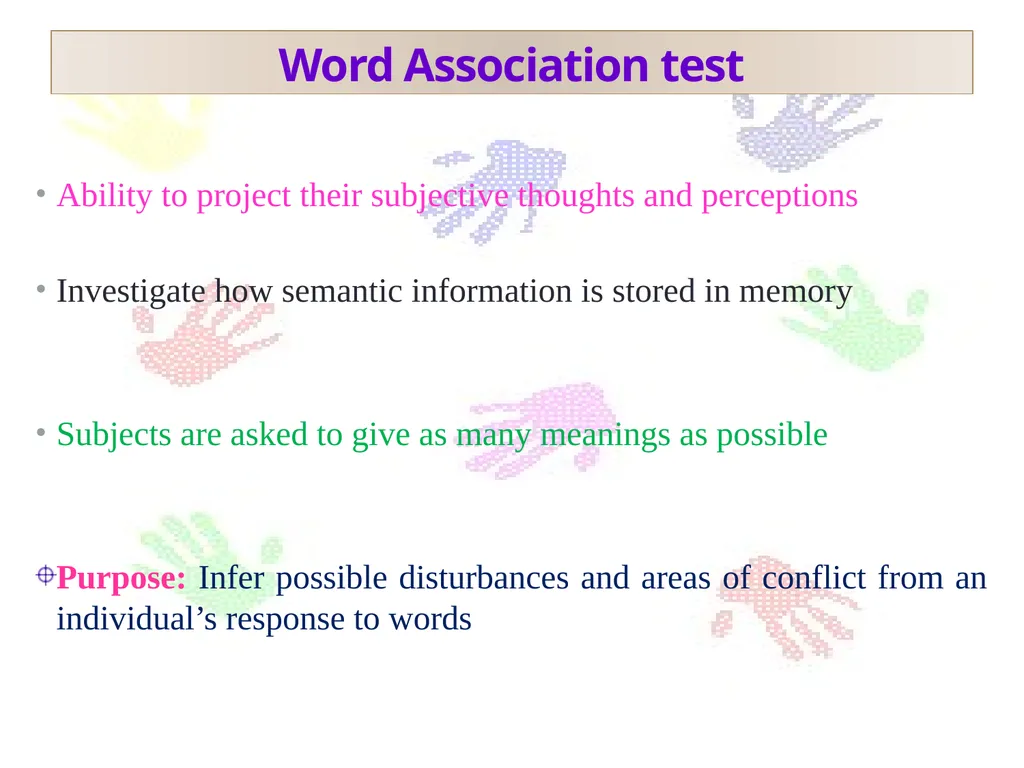
Word Association test Ability to project their subjective thoughts and perceptions
Investigate how semantic information is stored in memory
Subjects are asked to give as many meanings as possible
Purpose: Infer possible disturbances and areas of conflict from an individual’s response to words<br>
Investigate how semantic information is stored in memory
Subjects are asked to give as many meanings as possible
Purpose: Infer possible disturbances and areas of conflict from an individual’s response to words<br>
28
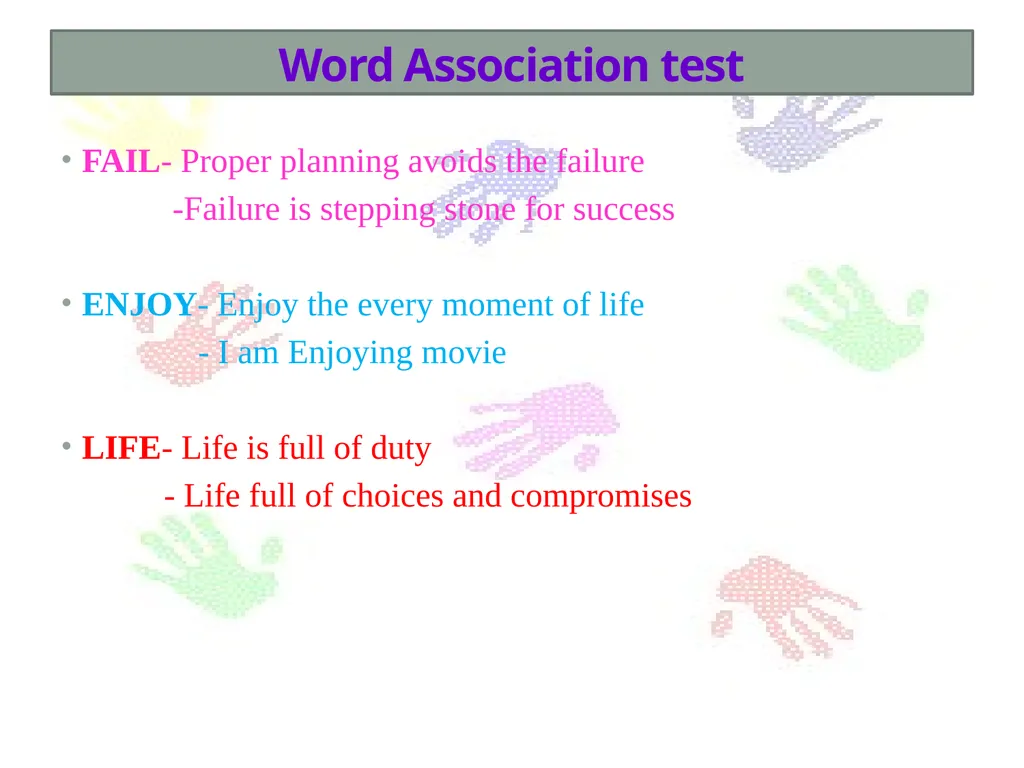
Word Association test FAIL- Proper planning avoids the failure
-Failure is stepping stone for success
ENJOY- Enjoy the every moment of life
- I am Enjoying movie
LIFE- Life is full of duty
- Life full of choices and compromises<br>
-Failure is stepping stone for success
ENJOY- Enjoy the every moment of life
- I am Enjoying movie
LIFE- Life is full of duty
- Life full of choices and compromises<br>
29
Construct or create a more elaborate and complete story based on series of pictures
The main focus is on product of subject
Thematic Apperception Test Construction technique<br>
The main focus is on product of subject
Thematic Apperception Test Construction technique<br>
30
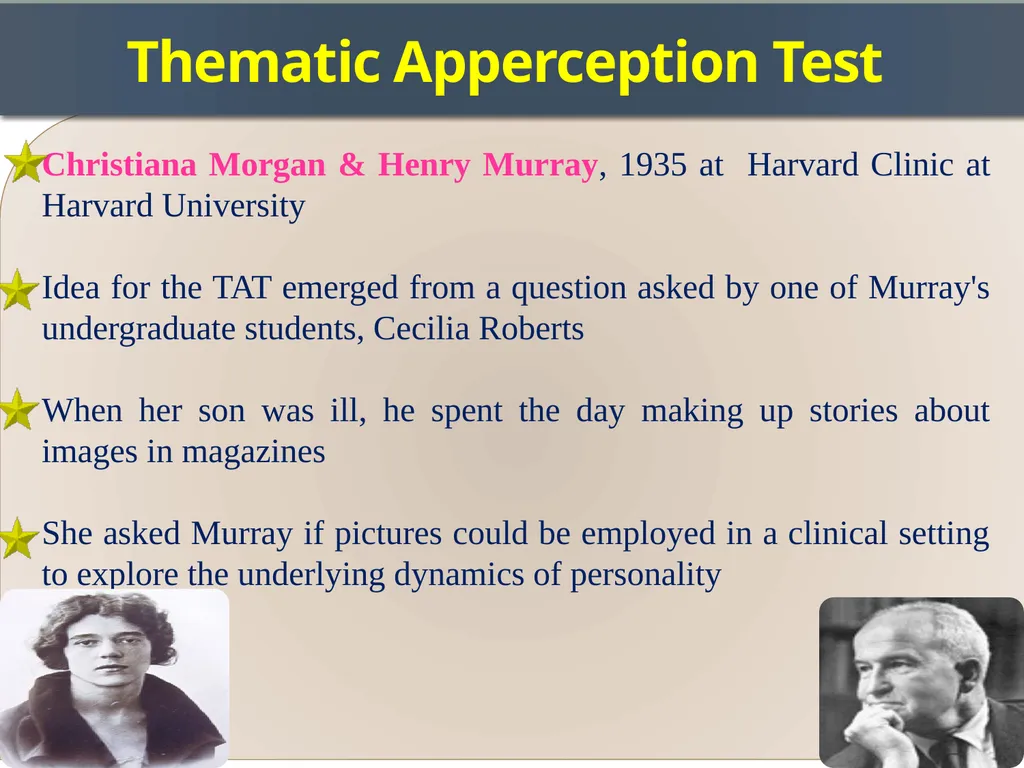
Christiana Morgan & Henry Murray, 1935 at Harvard Clinic at Harvard University
Idea for the TAT emerged from a question asked by one of Murray's undergraduate students, Cecilia Roberts
When her son was ill, he spent the day making up stories about images in magazines
She asked Murray if pictures could be employed in a clinical setting to explore the underlying dynamics of personality Thematic Apperception Test<br>
Idea for the TAT emerged from a question asked by one of Murray's undergraduate students, Cecilia Roberts
When her son was ill, he spent the day making up stories about images in magazines
She asked Murray if pictures could be employed in a clinical setting to explore the underlying dynamics of personality Thematic Apperception Test<br>
31
Thematic Apperception Test Apperception – refer to the process of projecting fantasy imaginary onto an objective stimuli
Test consisting of a series of pictures in which the examinee is requested to create a story about the picture
Projective measure intended to evaluate a person's patterns of thought, attitudes, observational capacity and emotional responses to ambiguous test materials<br>
Test consisting of a series of pictures in which the examinee is requested to create a story about the picture
Projective measure intended to evaluate a person's patterns of thought, attitudes, observational capacity and emotional responses to ambiguous test materials<br>
32
Thematic Apperception Test Murray's theory of social needs - power, affiliation, achievement, dominance, attitudes
Stimuli - pictures depict a variety of scenes
Test material administered to any one subject consists of 10 or 12 cards, chosen from 21 cards (1 blank)
50minutes for 10 pictures<br>
Stimuli - pictures depict a variety of scenes
Test material administered to any one subject consists of 10 or 12 cards, chosen from 21 cards (1 blank)
50minutes for 10 pictures<br>
33
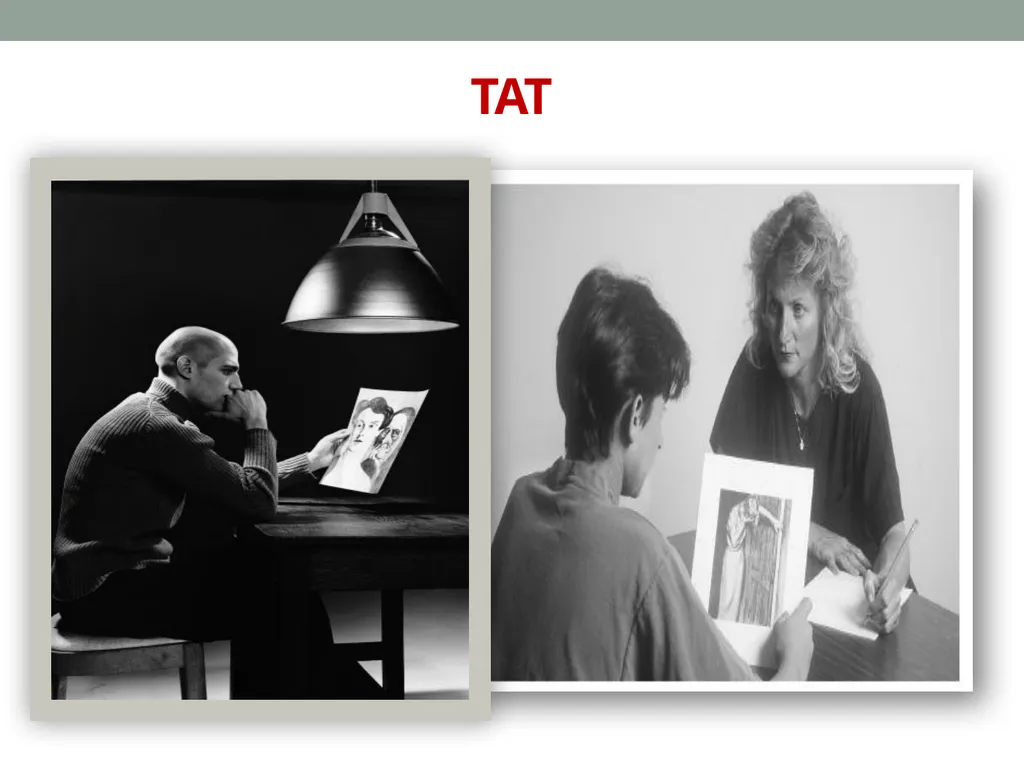
Administration Procedure I am going to show you some pictures & I want you to tell me a story about each picture
Tell me what led up to the story
What is happening
What the characters are thinking and feeling
What the outcome will be<br>
Tell me what led up to the story
What is happening
What the characters are thinking and feeling
What the outcome will be<br>
34
TAT<br>
35
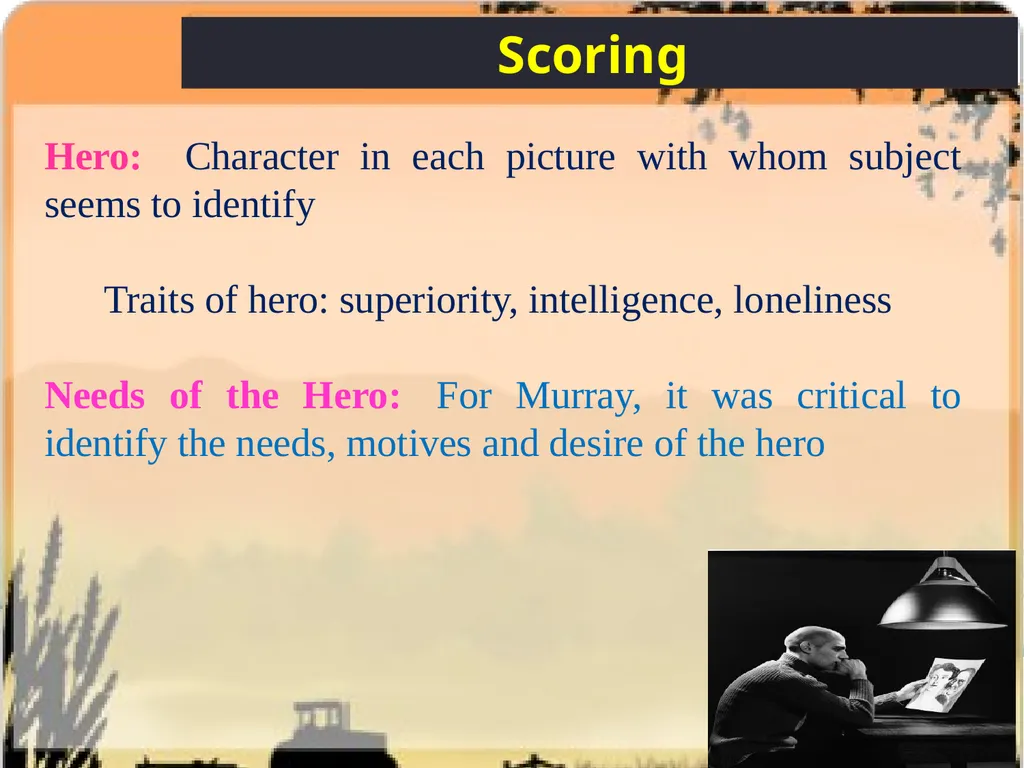
Hero: Character in each picture with whom subject seems to identify
Traits of hero: superiority, intelligence, loneliness
Needs of the Hero: For Murray, it was critical to identify the needs, motives and desire of the hero Scoring<br>
Traits of hero: superiority, intelligence, loneliness
Needs of the Hero: For Murray, it was critical to identify the needs, motives and desire of the hero Scoring<br>
36
Press: Any important environmental factor that may influence on need of the hero
Aggression
Dominance, where hero is exposed to commands
Rejection, where hero is rejected, ignored Contd….<br>
Aggression
Dominance, where hero is exposed to commands
Rejection, where hero is rejected, ignored Contd….<br>
37
Themes: noting the nature of the interplay and conflict between the needs and presses
Types of emotion elicited by Scoring for this conflict
The way the conflict is resolved Contd….<br>
Types of emotion elicited by Scoring for this conflict
The way the conflict is resolved Contd….<br>
38
Outcome: Analyzing how the stories end
Noting a happy versus unhappy ending
Usually inferred from the way in which respondents end up their stories Contd….<br>
Noting a happy versus unhappy ending
Usually inferred from the way in which respondents end up their stories Contd….<br>
39
Results of TAT Difficult to generalize
Subjective and do not use any formal type of scoring system
Close analysis of the stories told by the subject(respondents) normally gives the tester a decent idea of the traits
Personality
Emotional control
Attitudes towards aspects of everyday life<br>
Subjective and do not use any formal type of scoring system
Close analysis of the stories told by the subject(respondents) normally gives the tester a decent idea of the traits
Personality
Emotional control
Attitudes towards aspects of everyday life<br>
40
Similarities between TAT and Rorschach Individual projective tests for measuring human functioning and personality characteristics
Poorly standardized for administration, scoring and interpretation
Reliability coefficients for both tests vary widely
`
Provide a rich source of information about a single individual<br>
Poorly standardized for administration, scoring and interpretation
Reliability coefficients for both tests vary widely
`
Provide a rich source of information about a single individual<br>
41
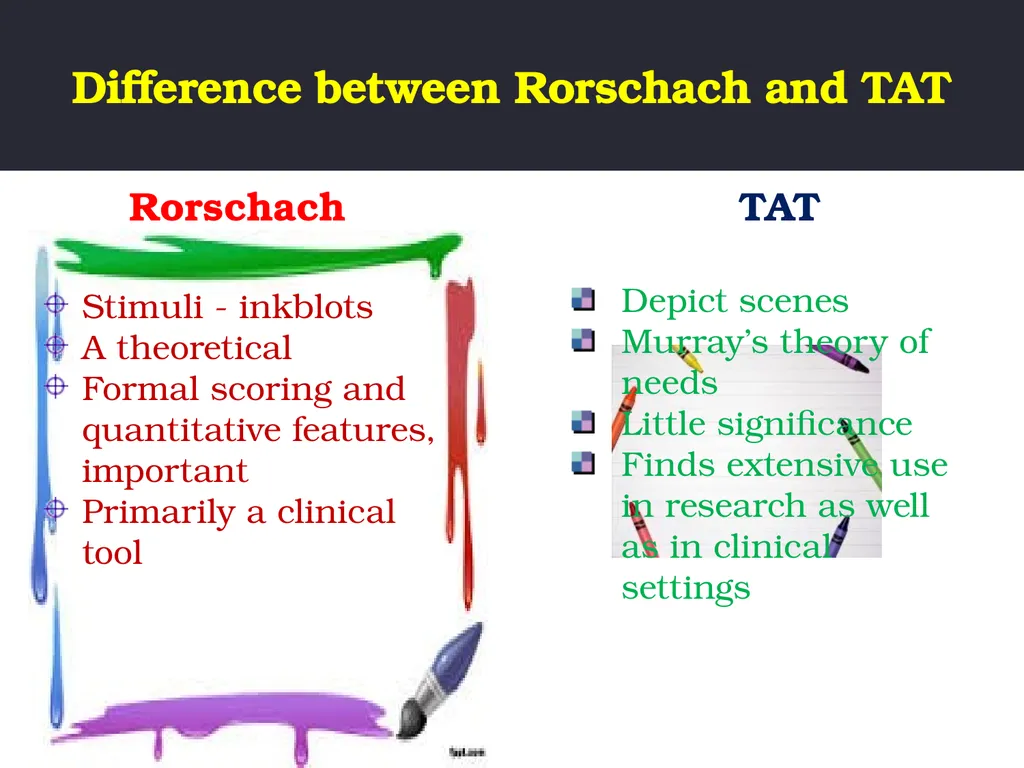
Difference between Rorschach and TAT Rorschach TAT Stimuli - inkblots
A theoretical
Formal scoring and quantitative features, important
Primarily a clinical tool Depict scenes
Murray’s theory of needs
Little significance
Finds extensive use in research as well as in clinical settings<br>
A theoretical
Formal scoring and quantitative features, important
Primarily a clinical tool Depict scenes
Murray’s theory of needs
Little significance
Finds extensive use in research as well as in clinical settings<br>
42
Herman – 1st SCT, 1897, used as part of an intelligence test
A person is presented with a series of incomplete sentences on a particular topic and then asked to complete it as he wishes
For projecting ideas and attitudes people Sentence Completion Test<br>
A person is presented with a series of incomplete sentences on a particular topic and then asked to complete it as he wishes
For projecting ideas and attitudes people Sentence Completion Test<br>
43
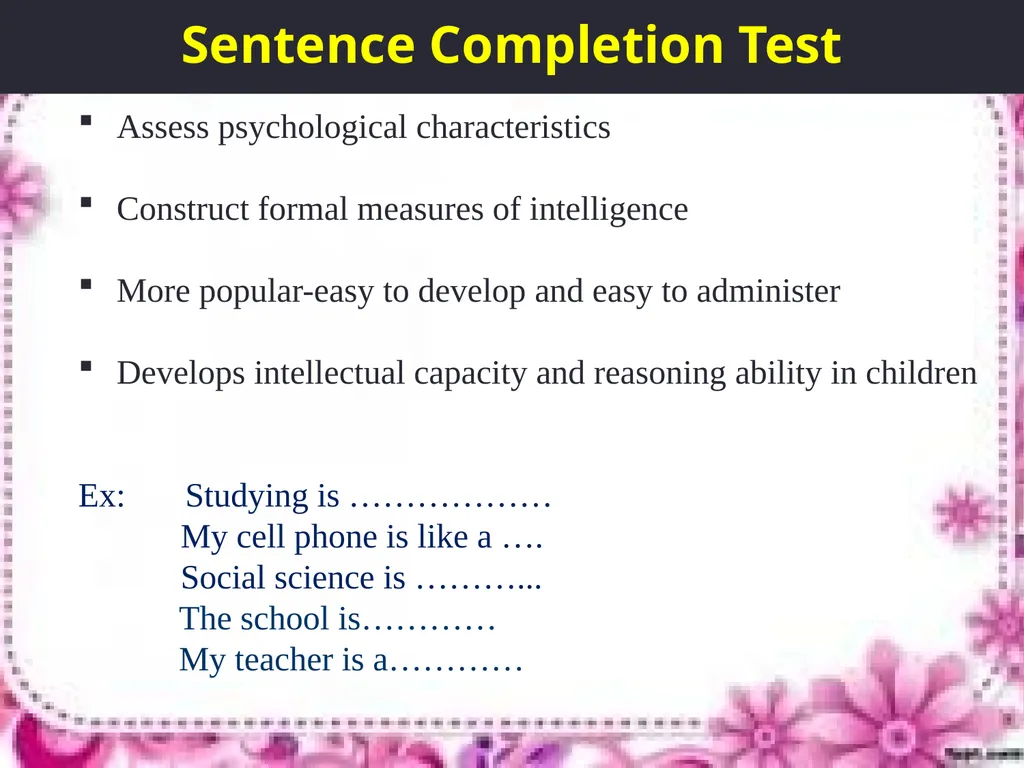
Assess psychological characteristics
Construct formal measures of intelligence
More popular-easy to develop and easy to administer
Develops intellectual capacity and reasoning ability in children
Ex: Studying is ………………
My cell phone is like a ….
Social science is ………...
The school is…………
My teacher is a………… Sentence Completion Test<br>
Construct formal measures of intelligence
More popular-easy to develop and easy to administer
Develops intellectual capacity and reasoning ability in children
Ex: Studying is ………………
My cell phone is like a ….
Social science is ………...
The school is…………
My teacher is a………… Sentence Completion Test<br>
44
Choice or ordering techniques Requires simple responses the subject chooses from among several alternatives as in a multiple choice item test
The subjects have to explain why certain things are most important¨ or least important¨, or to "rank" or order¨ or “categorize” certain factors associated with a product, brand or service
The item or choice that appears more relevant, correct, attractive<br>
The subjects have to explain why certain things are most important¨ or least important¨, or to "rank" or order¨ or “categorize” certain factors associated with a product, brand or service
The item or choice that appears more relevant, correct, attractive<br>
45
Expressive techniques The subject expresses his/her needs, desires, emotions and motives through working with, manipulating and interacting with materials including other people in a manner or style that uniquely expresses the personality
Drawing, finger painting and role playing
Role –plays are best undertaken when respondents know and are comfortable with each other and the researcher<br>
Drawing, finger painting and role playing
Role –plays are best undertaken when respondents know and are comfortable with each other and the researcher<br>
46
Uses Treatment for abused and neglected children
Projective technique in consumer research
In counseling the patient
For selection of participants/ recruitment
For personality development
For emotional therapy
Projective techniques in marketing and management research<br>
Projective technique in consumer research
In counseling the patient
For selection of participants/ recruitment
For personality development
For emotional therapy
Projective techniques in marketing and management research<br>
47
Advantages Amount, richness and accuracy of information that is collected
Used in the context of individual interviews
Help to open discussions around socially sensitive issues, where the client may be embarrassed or feel a lack of knowledge
Where the people hesitate to express their opinion directly<br>
Used in the context of individual interviews
Help to open discussions around socially sensitive issues, where the client may be embarrassed or feel a lack of knowledge
Where the people hesitate to express their opinion directly<br>
48
Disadvantages Complexity of data
Corresponding skills required of the researcher
Interpreters need to be very trained and skilled
Expensive to administer because highly trained staff is needed to be employed
Less reliability and validity<br>
Corresponding skills required of the researcher
Interpreters need to be very trained and skilled
Expensive to administer because highly trained staff is needed to be employed
Less reliability and validity<br>
49
Research evidences<br>
50
Sentence Completion Tests, A
Review of the Literature and
Results of a Survey of Members of the Society for Personality Assessment (Holaday et al., 2000)<br>
Review of the Literature and
Results of a Survey of Members of the Society for Personality Assessment (Holaday et al., 2000)<br>
51
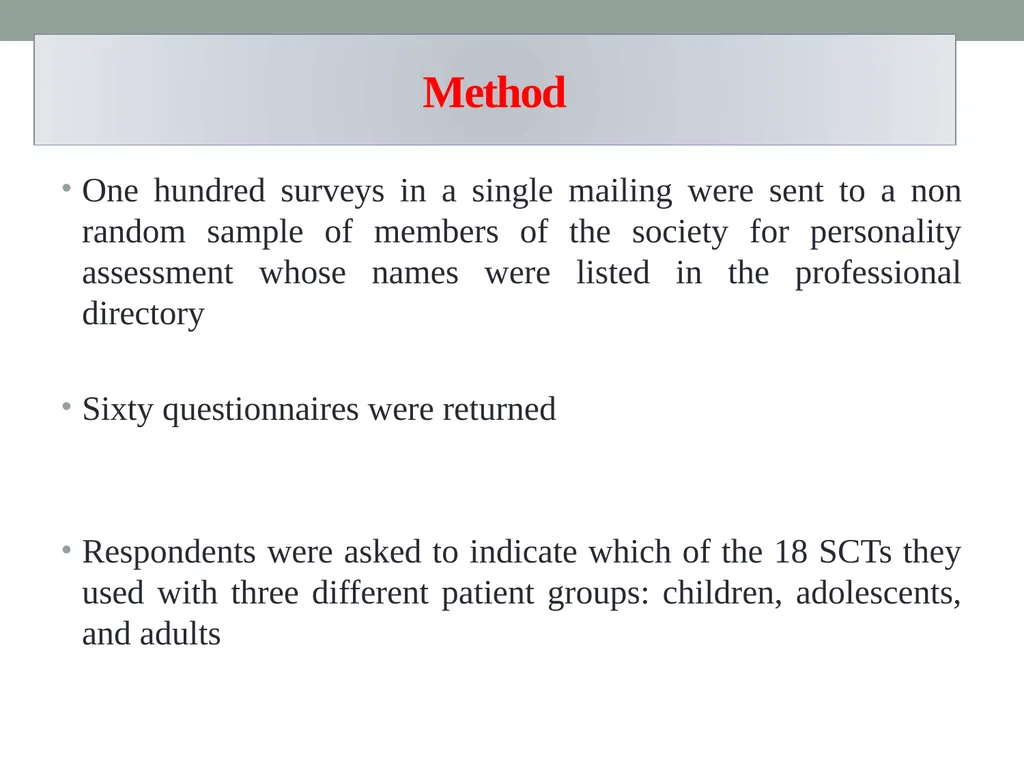
Method One hundred surveys in a single mailing were sent to a non random sample of members of the society for personality assessment whose names were listed in the professional directory
Sixty questionnaires were returned
Respondents were asked to indicate which of the 18 SCTs they used with three different patient groups: children, adolescents, and adults<br>
Sixty questionnaires were returned
Respondents were asked to indicate which of the 18 SCTs they used with three different patient groups: children, adolescents, and adults<br>
52
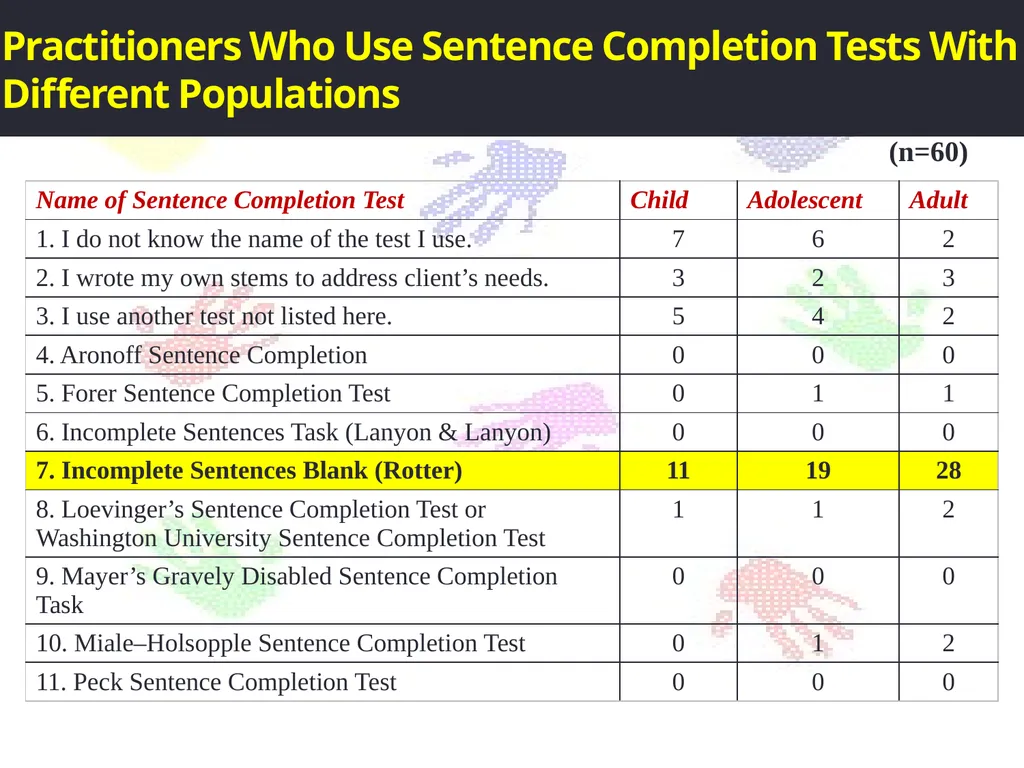
Practitioners Who Use Sentence Completion Tests With Different Populations (n=60)<br>
53
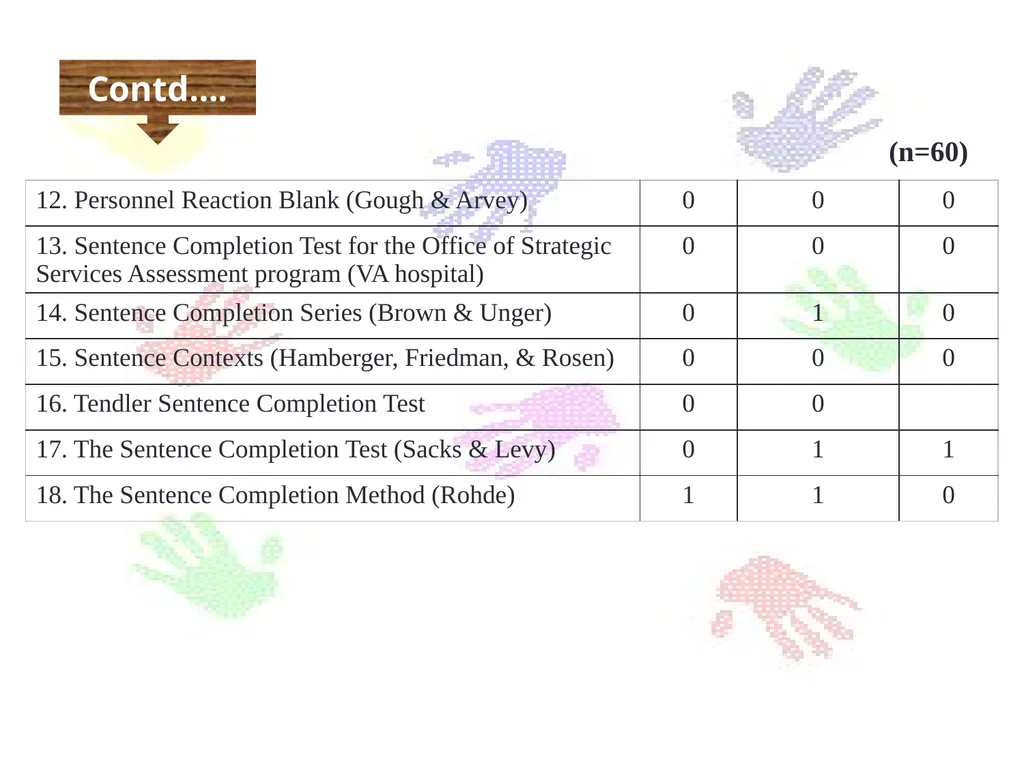
Contd…. (n=60)<br>
54
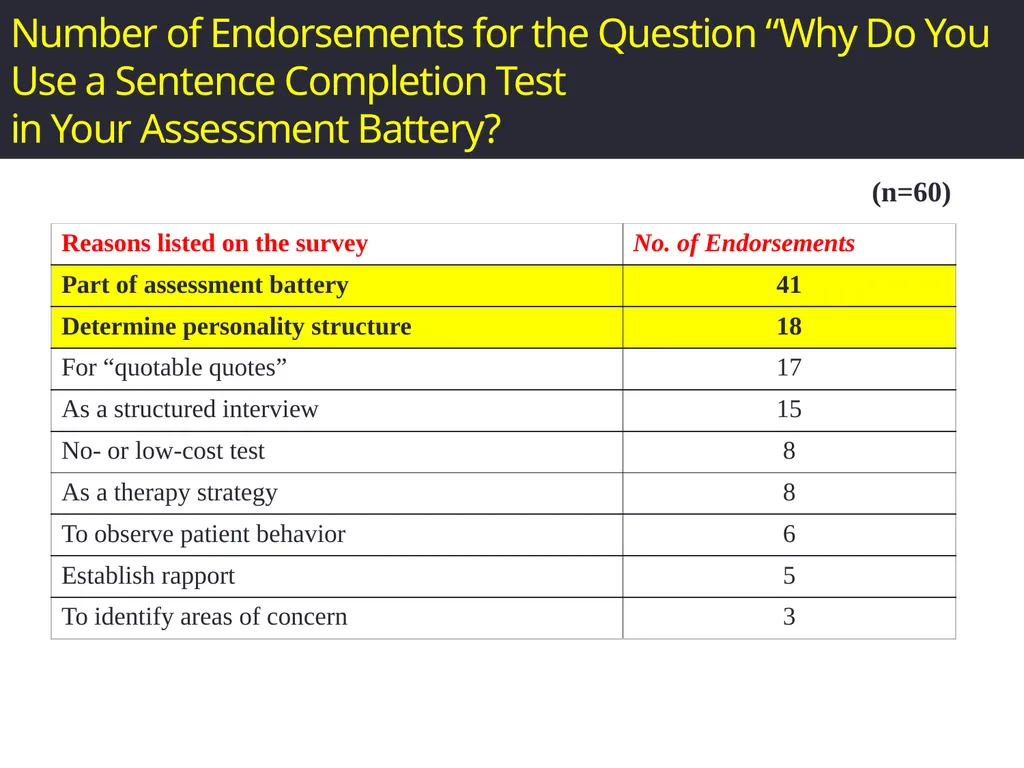
Number of Endorsements for the Question “Why Do You Use a Sentence Completion Test
in Your Assessment Battery? (n=60)<br>
55
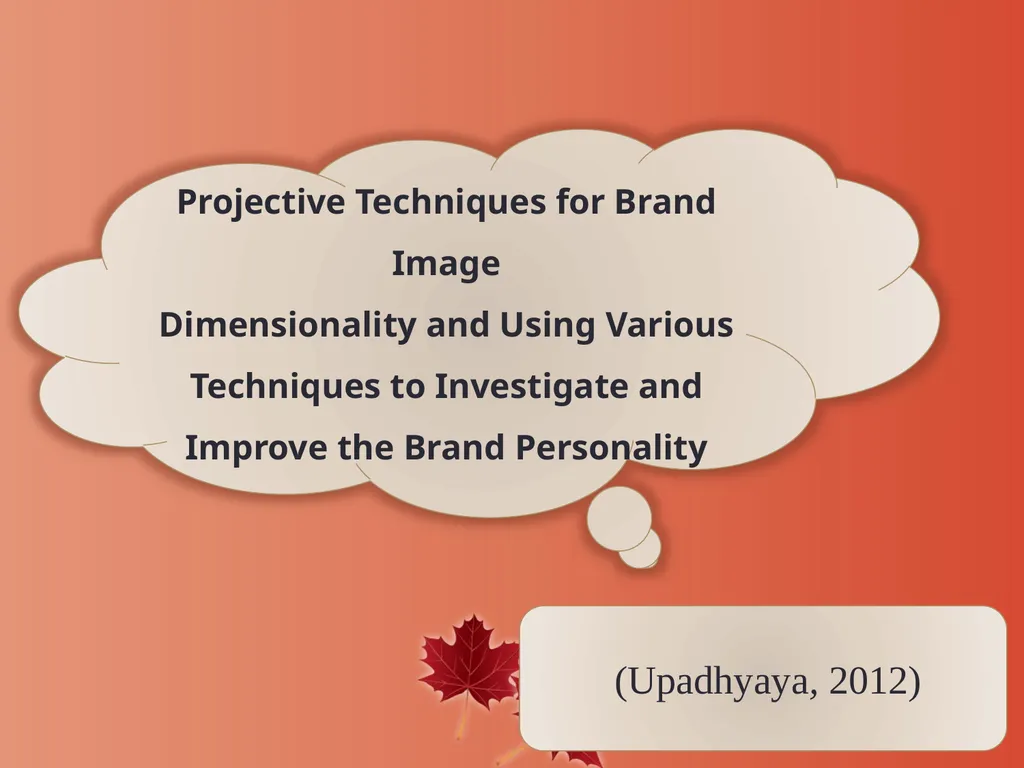
Projective Techniques for Brand Image
Dimensionality and Using Various Techniques to Investigate and Improve the Brand Personality (Upadhyaya, 2012)<br>
Dimensionality and Using Various Techniques to Investigate and Improve the Brand Personality (Upadhyaya, 2012)<br>
56
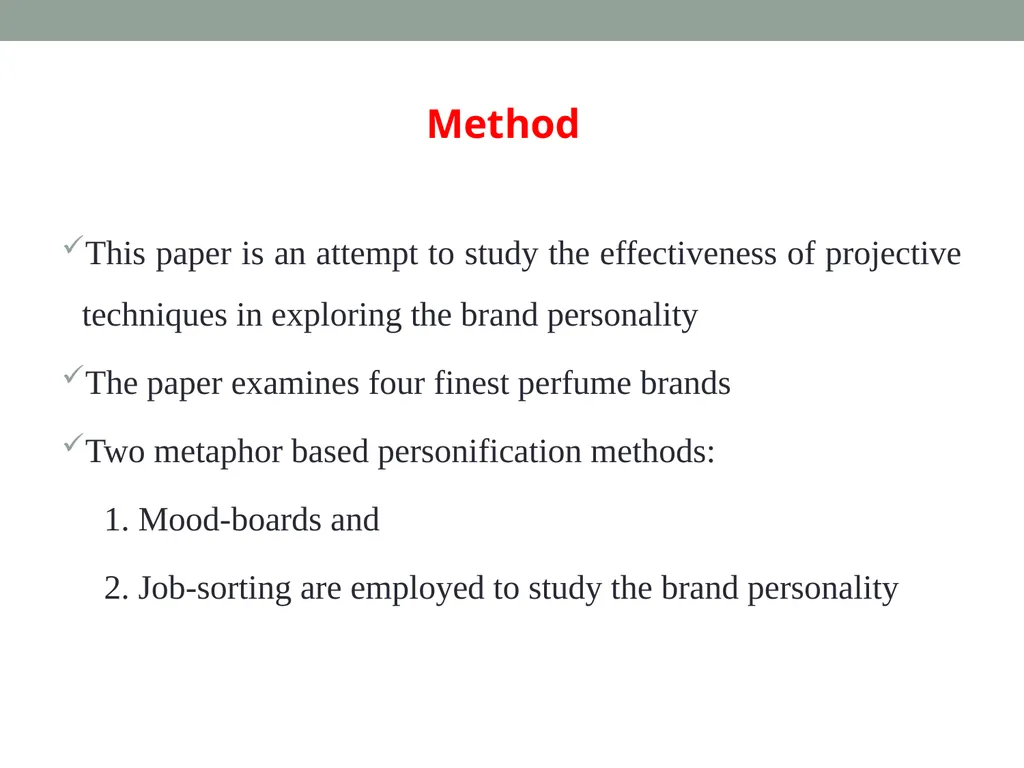
This paper is an attempt to study the effectiveness of projective techniques in exploring the brand personality
The paper examines four finest perfume brands
Two metaphor based personification methods:
1. Mood-boards and
2. Job-sorting are employed to study the brand personality Method<br>
The paper examines four finest perfume brands
Two metaphor based personification methods:
1. Mood-boards and
2. Job-sorting are employed to study the brand personality Method<br>
57
Mood-boards
Mood-boards are posters design that may consist of images, text, clippings of objects in a composition of the choice of the mood-board creator.
It is an open ended assignment to how participants think or feel about the research object in question
16 participants belonging to the age group of 20-35, who are all potential buyers of finest deu brands
Job-sorting Assignment
Eight jobs were selected based on a 3D grid (physical effort, intellectual effort and salary drawn). Cards were used to represent various jobs
The number of participants for this job sorting session was 100 potential buyers of finest deu brands<br>
Mood-boards are posters design that may consist of images, text, clippings of objects in a composition of the choice of the mood-board creator.
It is an open ended assignment to how participants think or feel about the research object in question
16 participants belonging to the age group of 20-35, who are all potential buyers of finest deu brands
Job-sorting Assignment
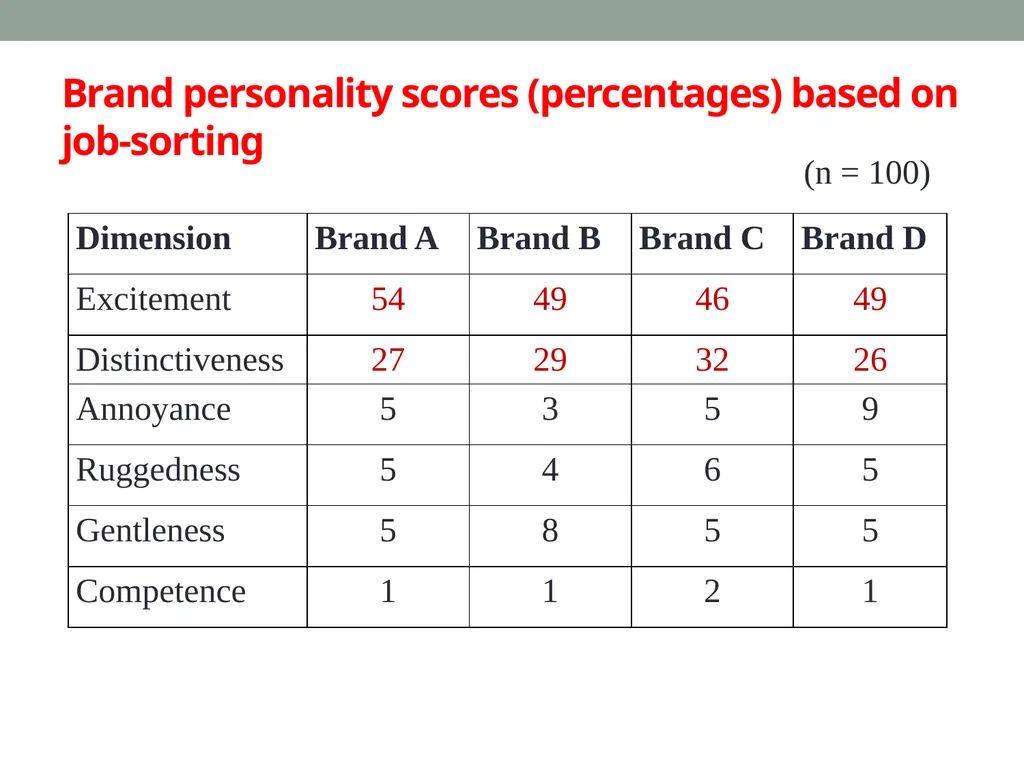
Eight jobs were selected based on a 3D grid (physical effort, intellectual effort and salary drawn). Cards were used to represent various jobs
The number of participants for this job sorting session was 100 potential buyers of finest deu brands<br>
58
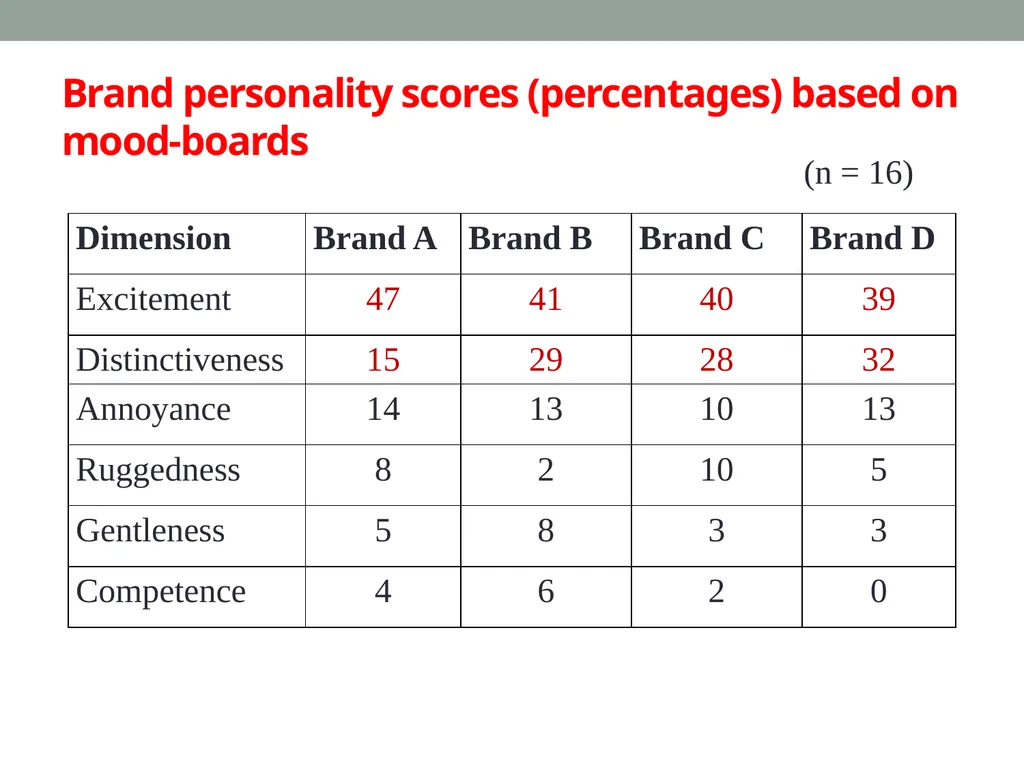
Brand personality scores (percentages) based on mood-boards (n = 16)<br>
59
Brand personality scores (percentages) based on job-sorting (n = 100)<br>
60
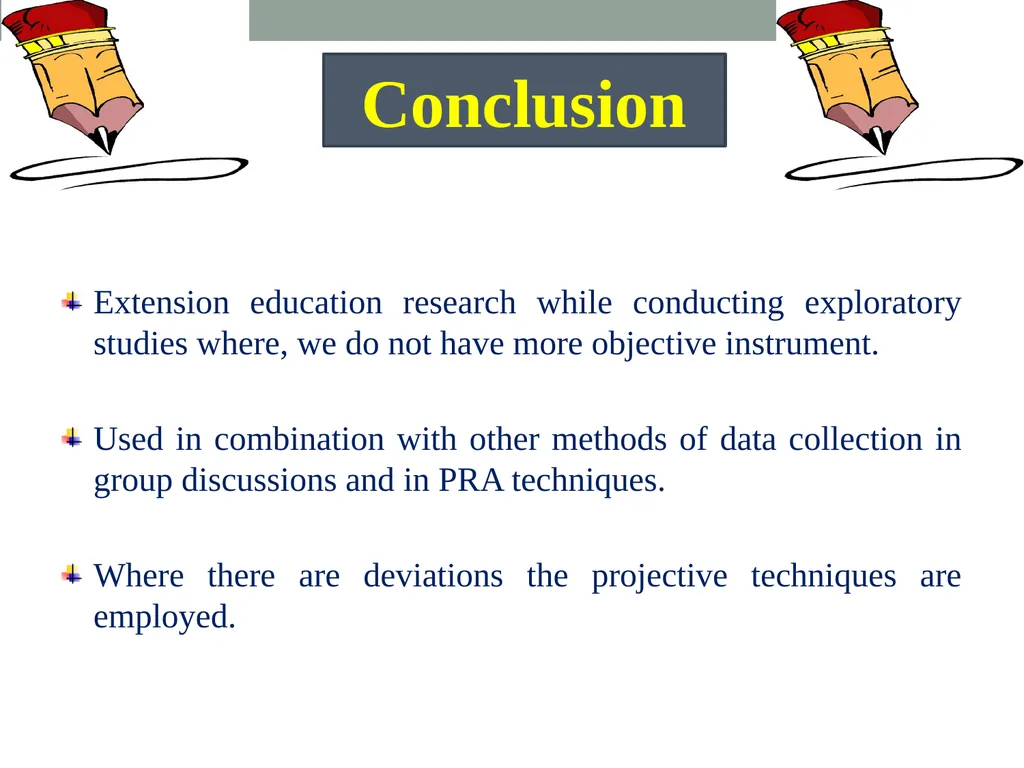
Extension education research while conducting exploratory studies where, we do not have more objective instrument.
Used in combination with other methods of data collection in group discussions and in PRA techniques.
Where there are deviations the projective techniques are employed. Conclusion<br>
Used in combination with other methods of data collection in group discussions and in PRA techniques.
Where there are deviations the projective techniques are employed. Conclusion<br>
61
Thank you<br>