Welcome to 8th Grade ELA Unit 1 Lesson 1 Discover Our Topic Summer of the mariposas I can infer the topic of this module from the resources. (Key Ideas Details LTa) inference What do you think infer means? When we make an inference, we
"Welcome to 8th Grade ELA Unit 1 Lesson 1 –" is the property of its rightful owner. Permission is granted to
download and print the materials on this website for personal, non-commercial use only, and to display it
on your personal computer provided you do not modify the materials and that you retain all copyright
notices contained in the materials. By downloading content from our website, you accept the terms of this
agreement.
Presentation Transcript
01
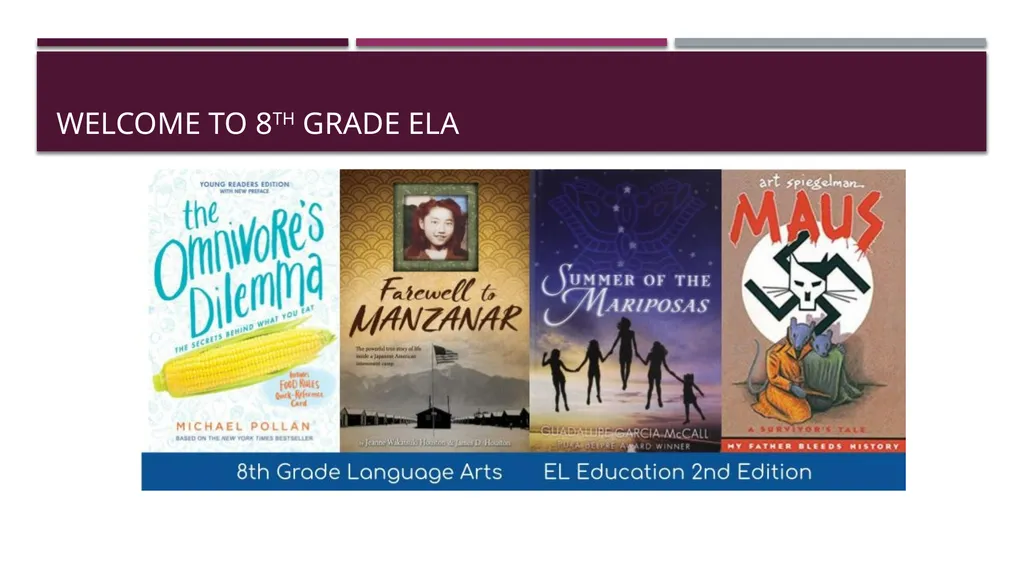
Welcome to 8th Grade ELA<br>
02
Unit 1 Lesson 1 – Discover Our Topic Summer of the mariposas<br>
03
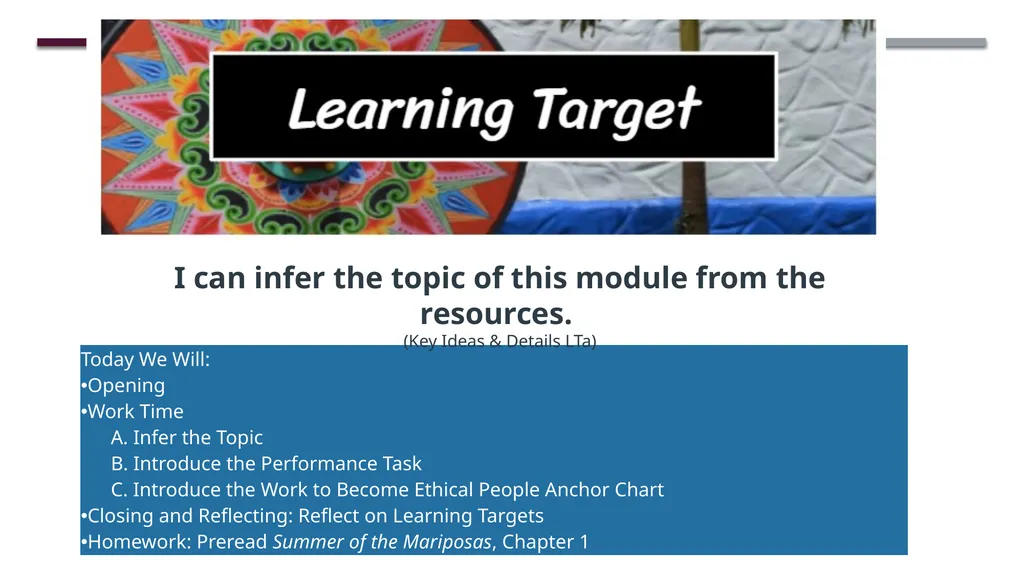
I can infer the topic of this module from the resources.
(Key Ideas & Details LTa)<br>
04
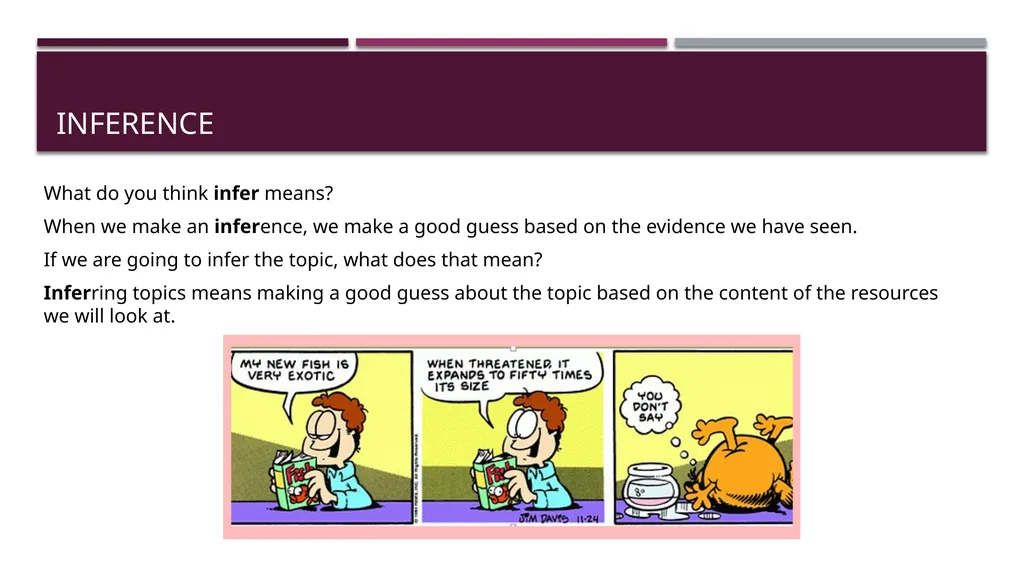
inference What do you think infer means?
When we make an inference, we make a good guess based on the evidence we have seen.
If we are going to infer the topic, what does that mean?
Inferring topics means making a good guess about the topic based on the content of the resources we will look at.<br>
05
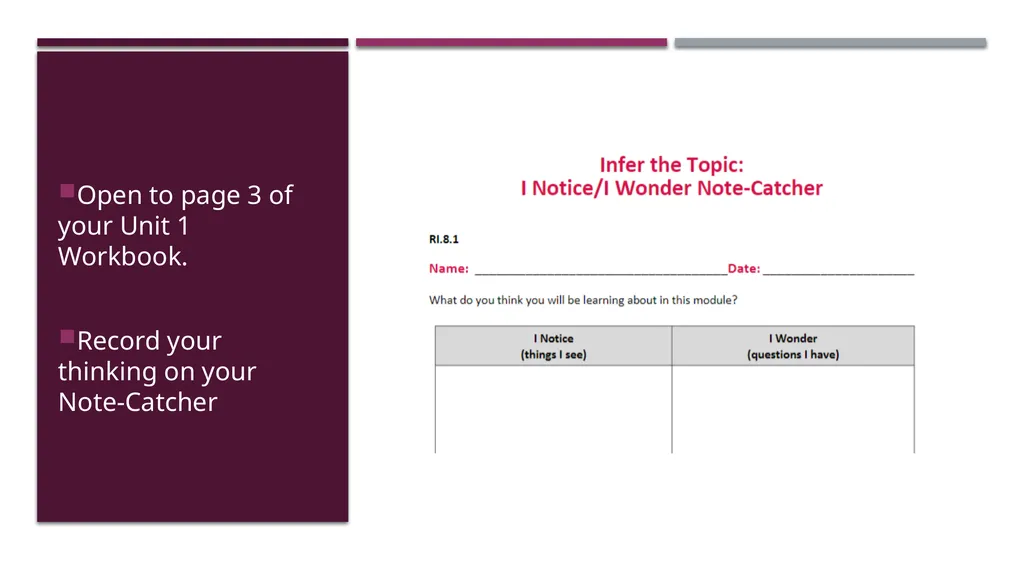
Open to page 3 of your Unit 1 Workbook.
Record your thinking on your Note-Catcher<br>
06
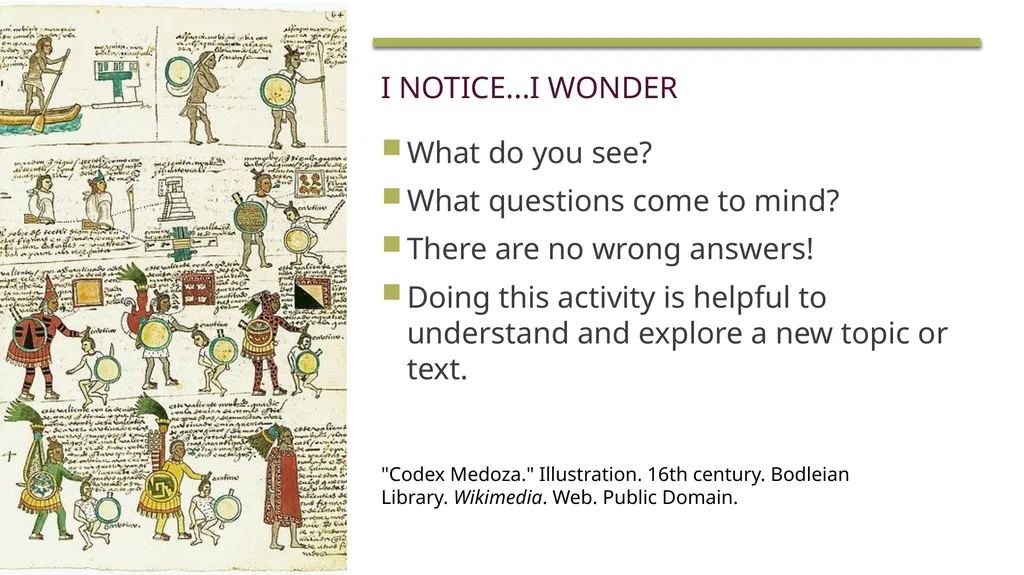
I Notice...I Wonder What do you see?
What questions come to mind?
There are no wrong answers!
Doing this activity is helpful to understand and explore a new topic or text.
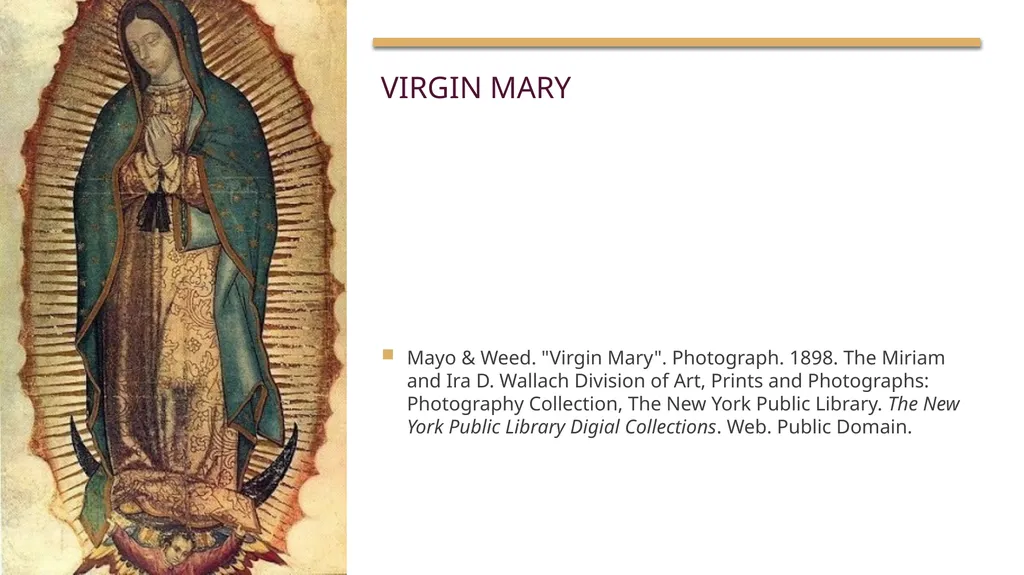
Virgin Mary Mayo & Weed. "Virgin Mary". Photograph. 1898. The Miriam and Ira D. Wallach Division of Art, Prints and Photographs: Photography Collection, The New York Public Library. The New York Public Library Digial Collections. Web. Public Domain.<br>
08
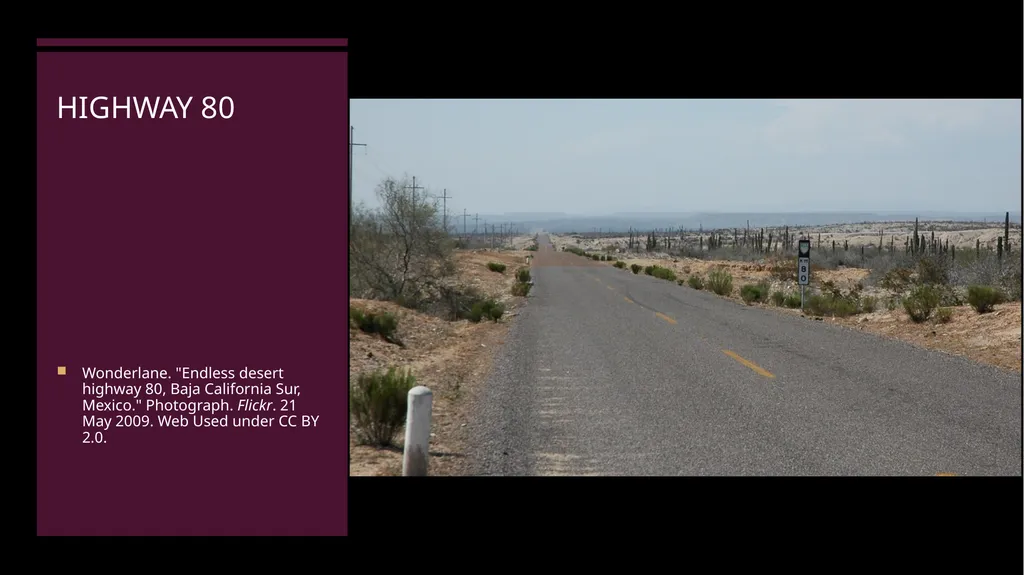
Highway 80 Wonderlane. "Endless desert highway 80, Baja California Sur, Mexico." Photograph. Flickr. 21 May 2009. Web Used under CC BY 2.0.<br>
09
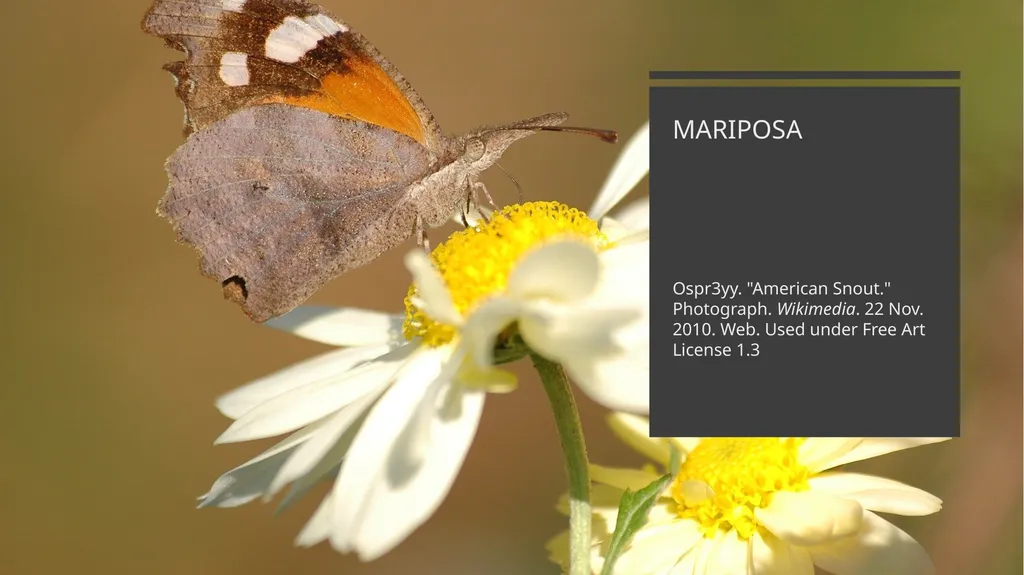
Mariposa Ospr3yy. "American Snout." Photograph. Wikimedia. 22 Nov. 2010. Web. Used under Free Art License 1.3<br>
10
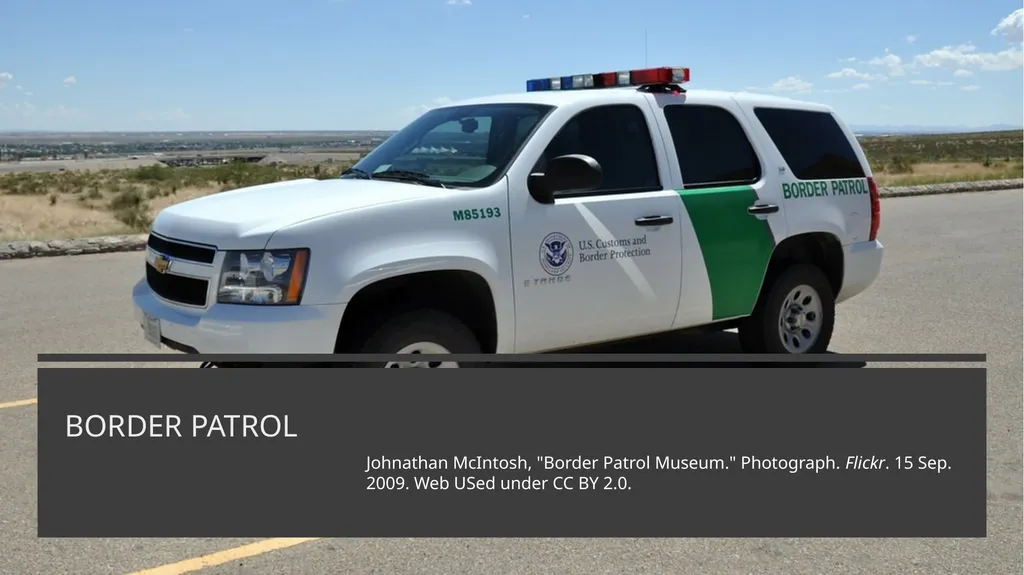
Border Patrol Johnathan McIntosh, "Border Patrol Museum." Photograph. Flickr. 15 Sep. 2009. Web USed under CC BY 2.0.<br>
11
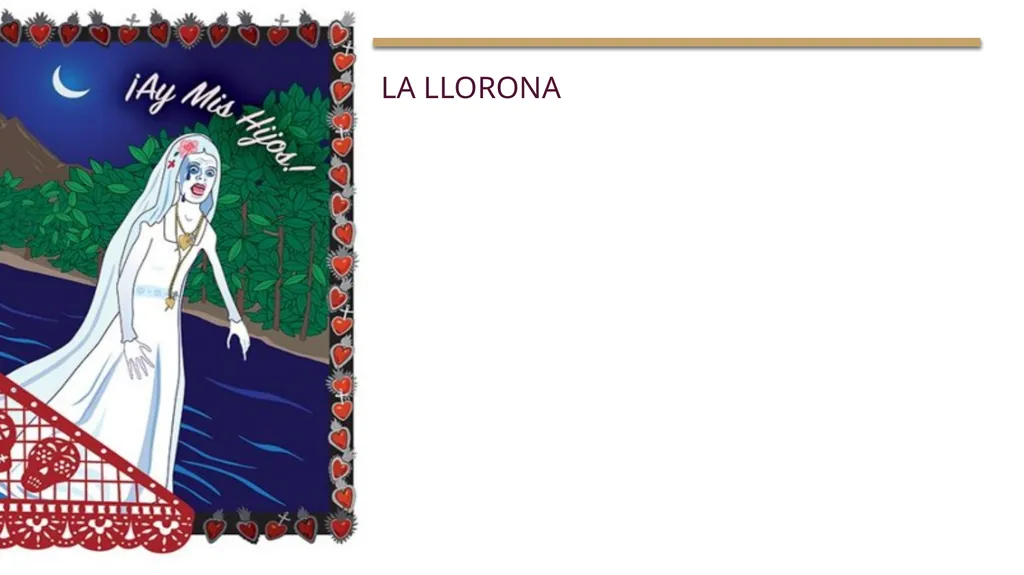
La Llorona<br>
12
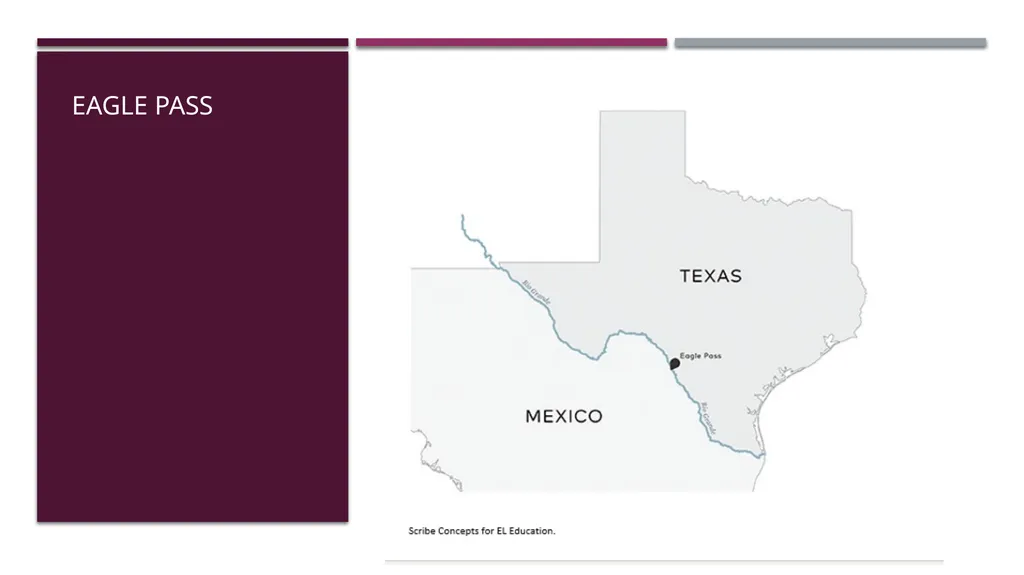
Eagle Pass<br>
13
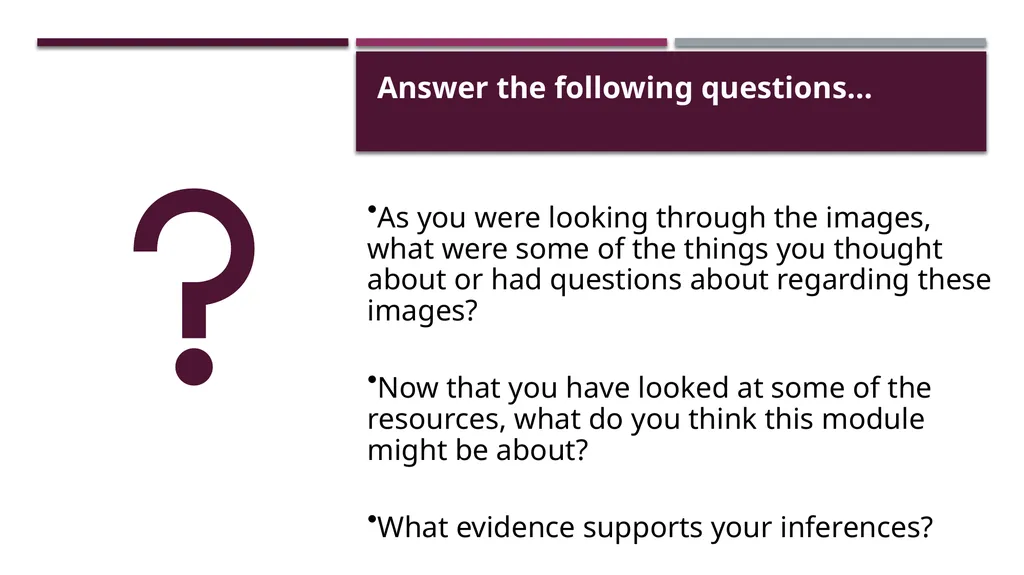
Answer the following questions… As you were looking through the images, what were some of the things you thought about or had questions about regarding these images?
Now that you have looked at some of the resources, what do you think this module might be about?
What evidence supports your inferences?<br>
14
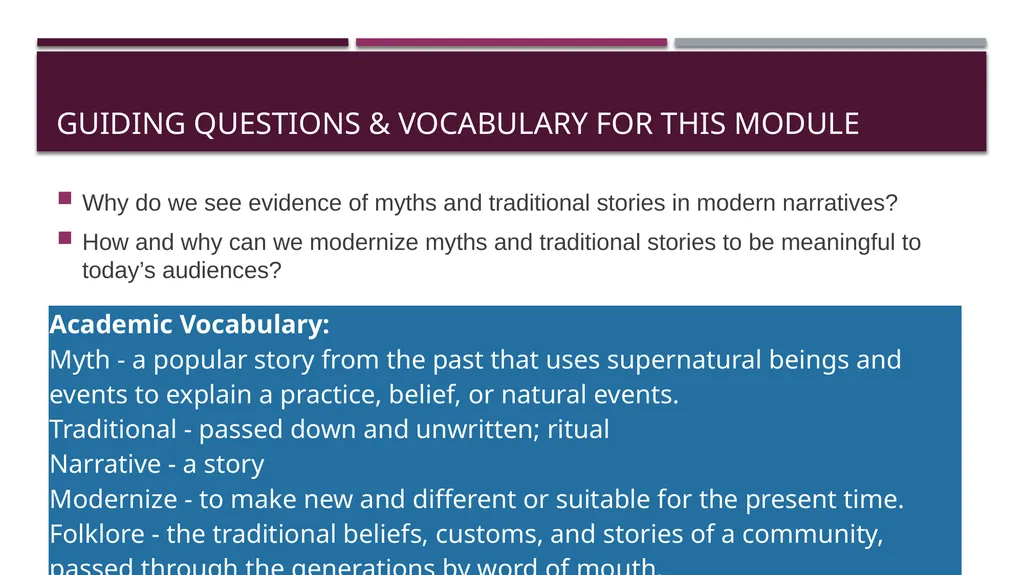
Guiding Questions & Vocabulary for this Module Why do we see evidence of myths and traditional stories in modern narratives?
How and why can we modernize myths and traditional stories to be meaningful to today’s audiences?<br>
15
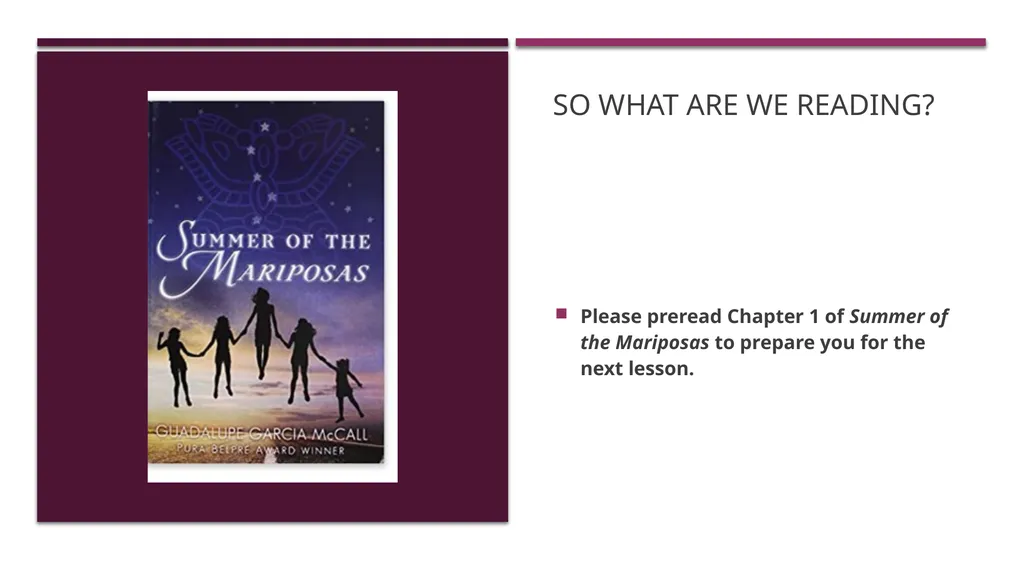
So what are we reading? Please preread Chapter 1 of Summer of the Mariposas to prepare you for the next lesson.<br>
16
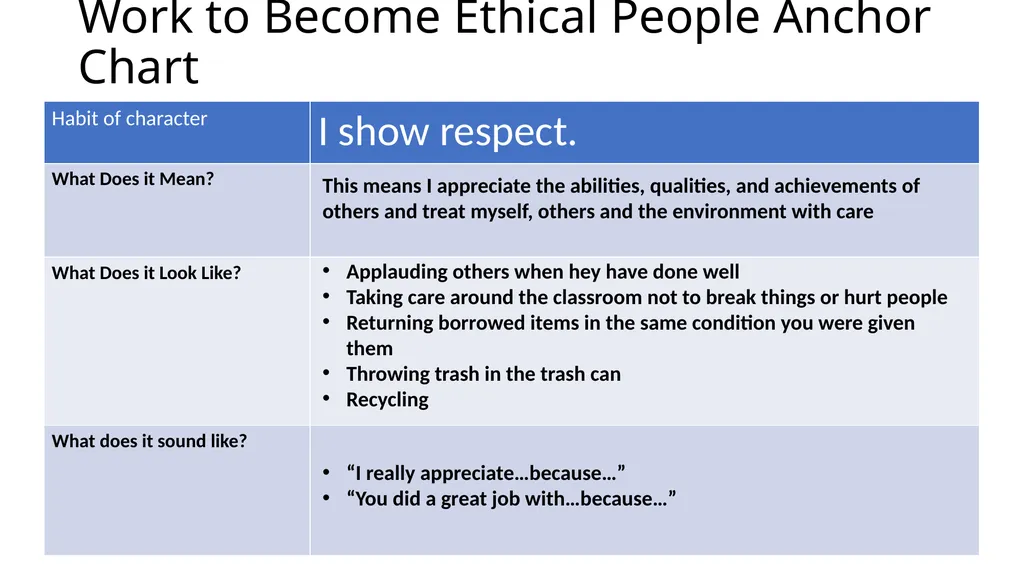
Work to Become Ethical People Anchor Chart This means I appreciate the abilities, qualities, and achievements of others and treat myself, others and the environment with care Applauding others when hey have done well
Taking care around the classroom not to break things or hurt people
Returning borrowed items in the same condition you were given them
Throwing trash in the trash can
Recycling “I really appreciate…because…”
“You did a great job with…because…”<br>
17
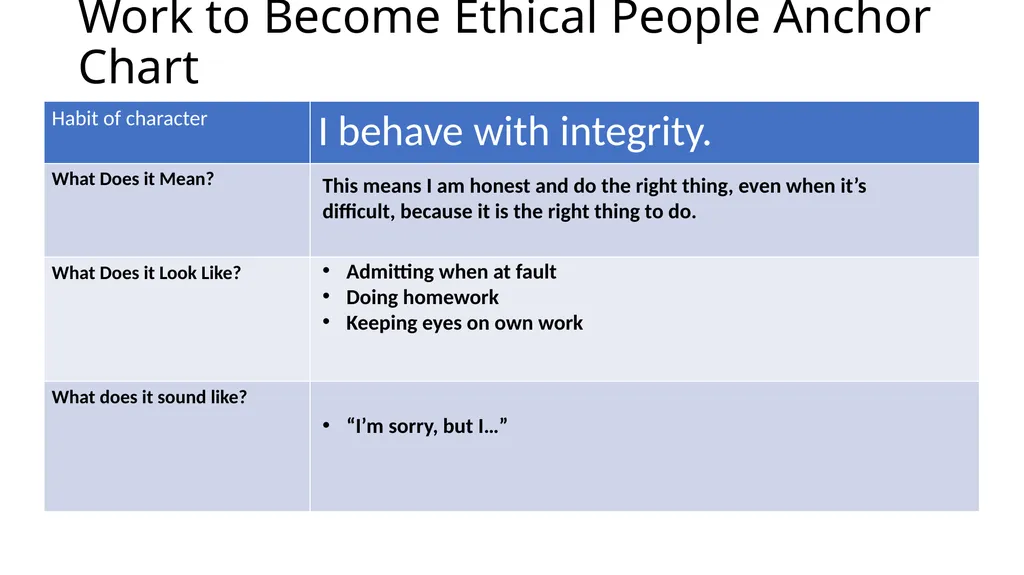
Work to Become Ethical People Anchor Chart This means I am honest and do the right thing, even when it’s difficult, because it is the right thing to do. Admitting when at fault
Doing homework
Keeping eyes on own work “I’m sorry, but I…”<br>
18
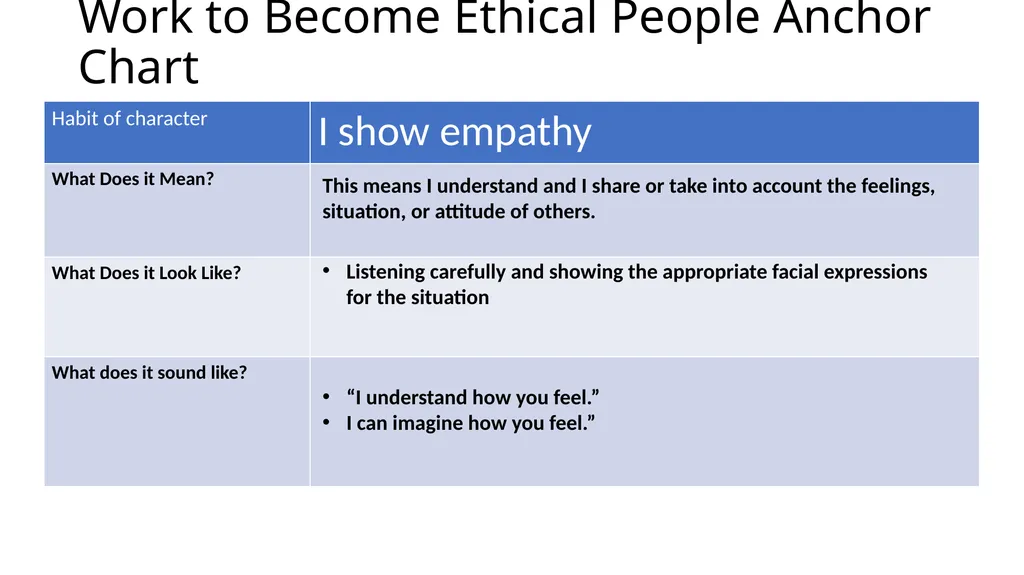
Work to Become Ethical People Anchor Chart This means I understand and I share or take into account the feelings, situation, or attitude of others. Listening carefully and showing the appropriate facial expressions for the situation “I understand how you feel.”
I can imagine how you feel.”<br>
19
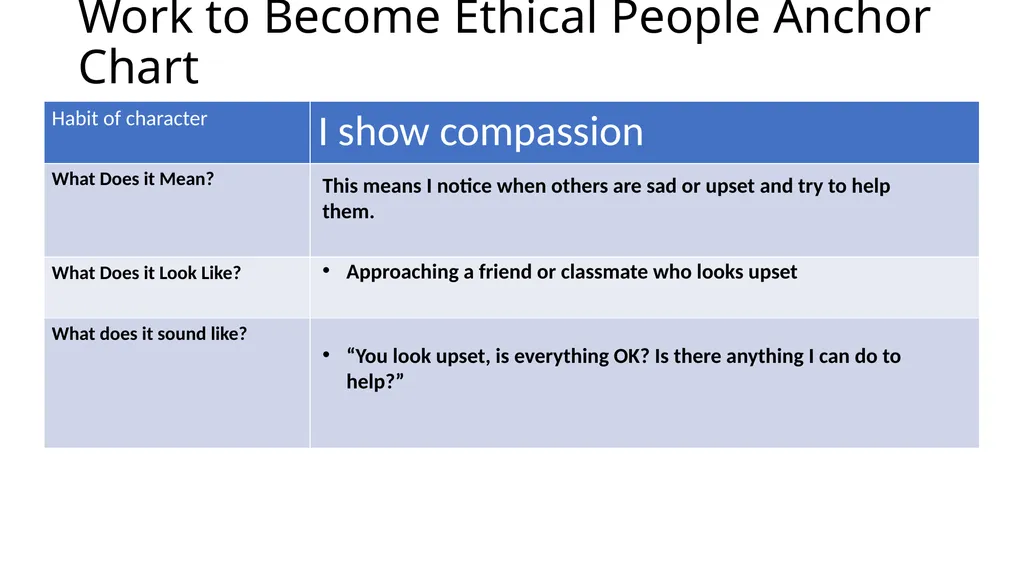
Work to Become Ethical People Anchor Chart This means I notice when others are sad or upset and try to help them. Approaching a friend or classmate who looks upset “You look upset, is everything OK? Is there anything I can do to help?”<br>