What Key Personnel Need To Know GLUCAGON ADMINISTRATION Diabetes Care Tasks at School Timely glucagon administration, when indicated, is a vital piece of the Diabetes Medical Management Plan (DMMP). Optimal Student Health and Learning GOAL:
"What Key Personnel Need To Know GLUCAGON" is the property of its rightful owner. Permission is granted to
download and print the materials on this website for personal, non-commercial use only, and to display it
on your personal computer provided you do not modify the materials and that you retain all copyright
notices contained in the materials. By downloading content from our website, you accept the terms of this
agreement.
Presentation Transcript
01
What Key Personnel Need To Know GLUCAGON ADMINISTRATION Diabetes Care Tasks at School<br>
02
Timely glucagon administration, when indicated, is a vital piece of the Diabetes Medical Management Plan (DMMP). Optimal Student Health and Learning GOAL:<br>
03
PARTICIPANTS WILL BE ABLE TO UNDERSTAND: Learning Objectives What glucagon is
How glucagon should be stored
When glucagon is used
How to administer glucagon<br>
04
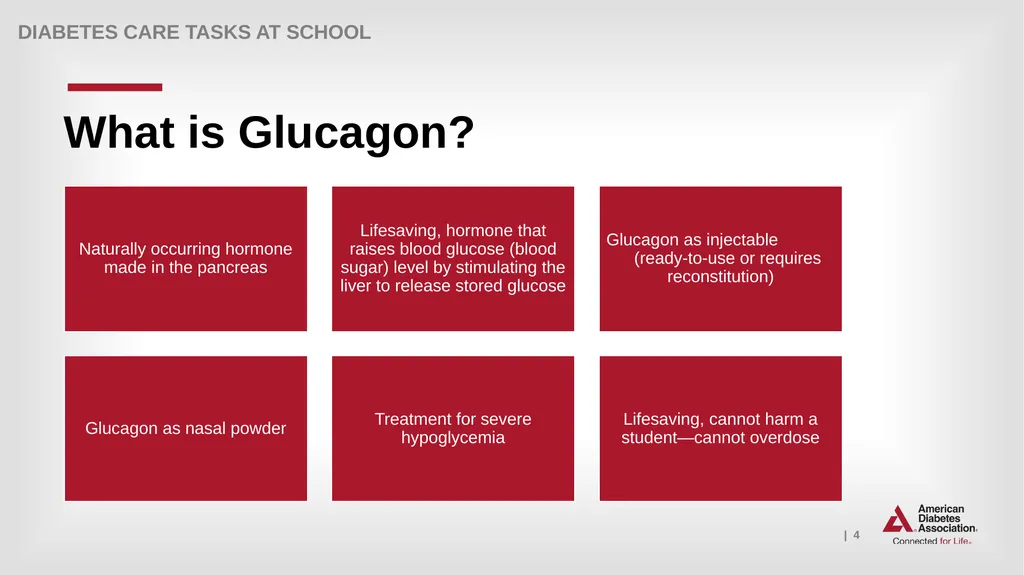
What is Glucagon?<br>
05
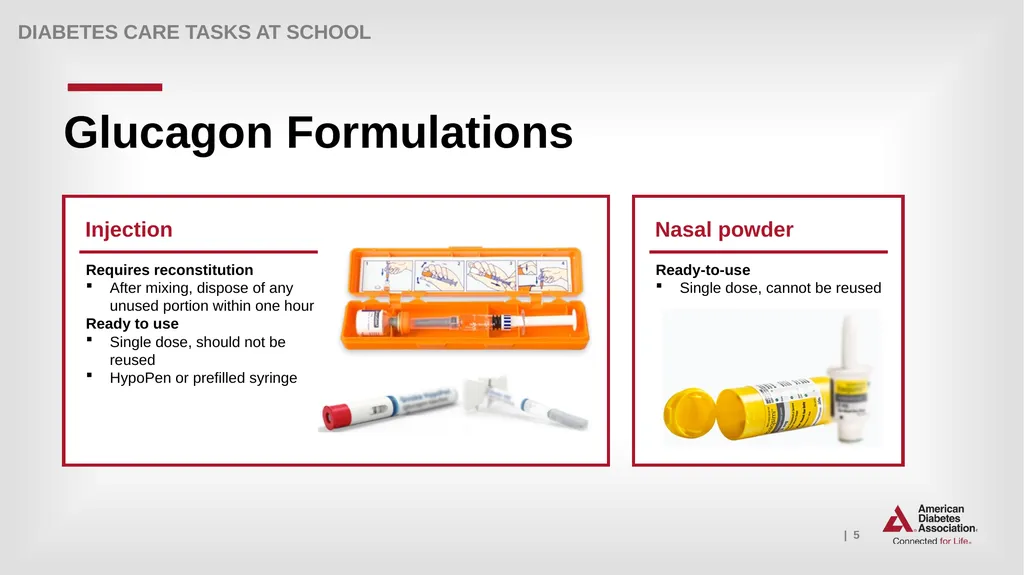
Glucagon Formulations Injection Nasal powder Ready-to-use
Single dose, cannot be reused Requires reconstitution
After mixing, dispose of any unused portion within one hour
Ready to use
Single dose, should not be reused
HypoPen or prefilled syringe<br>
06
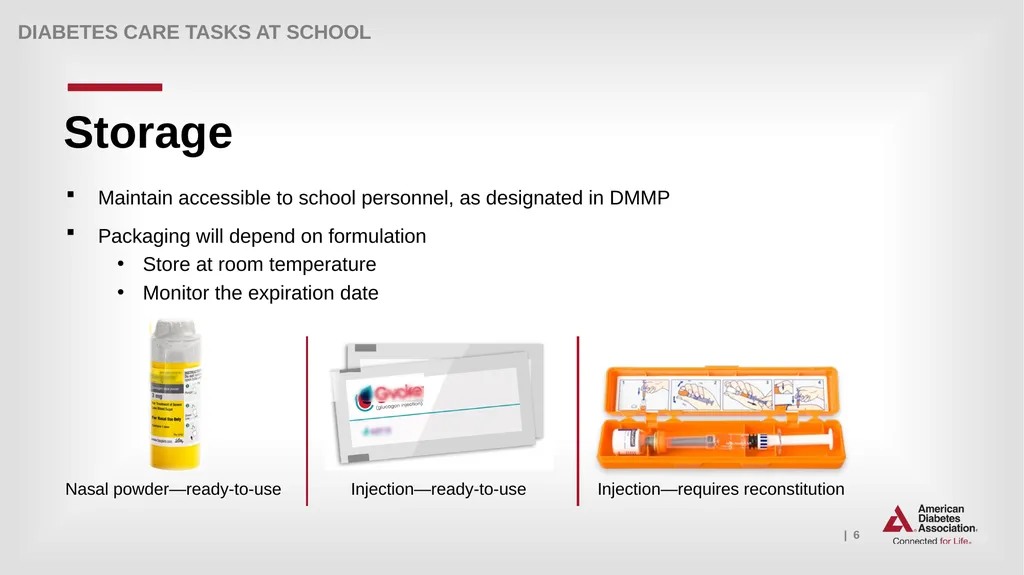
Maintain accessible to school personnel, as designated in DMMP
Packaging will depend on formulation
Store at room temperature
Monitor the expiration date Storage Injection—requires reconstitution Injection—ready-to-use Nasal powder—ready-to-use<br>
07
When to Give Glucagon/Glucagen UNCONSCIOUSNESS, UNRESPONSIVENESS CONVULSIONS (SEIZURES) INABILITY TO SAFELY EAT OR DRINK If authorized by the student’s DMMP and if student exhibits:<br>
08
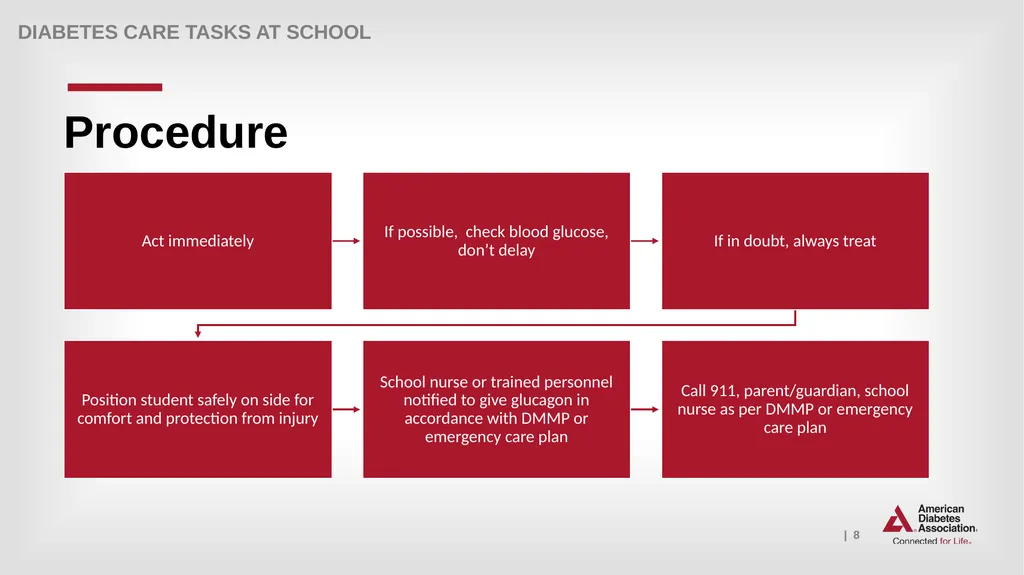
Procedure<br>
09
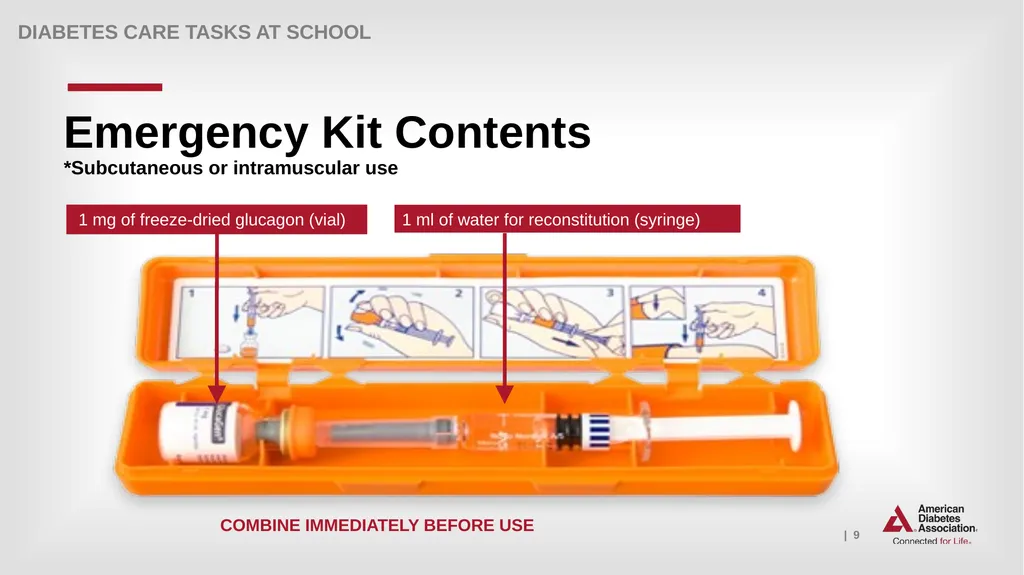
Emergency Kit Contents *Subcutaneous or intramuscular use 1 mg of freeze-dried glucagon (vial) COMBINE IMMEDIATELY BEFORE USE 1 ml of water for reconstitution (syringe)<br>
10
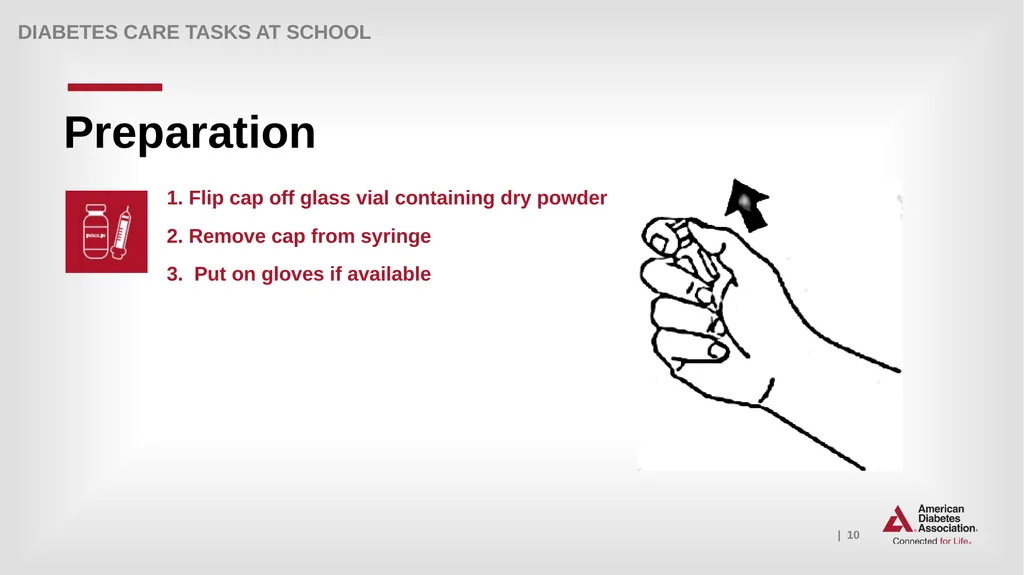
1. Flip cap off glass vial containing dry powder
2. Remove cap from syringe
3. Put on gloves if available Preparation<br>
11
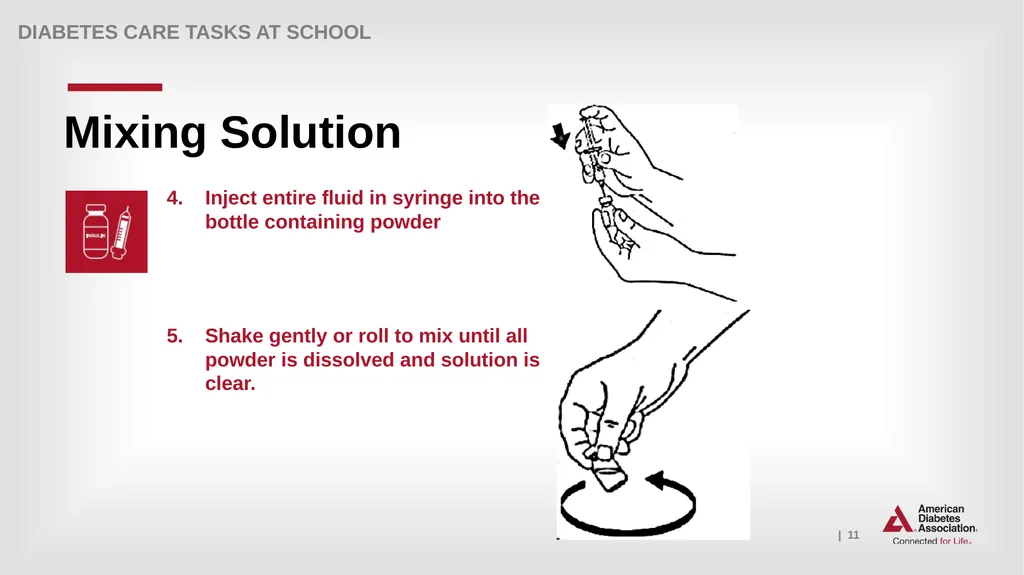
Inject entire fluid in syringe into the bottle containing powder
Shake gently or roll to mix until all powder is dissolved and solution is clear. Mixing Solution<br>
12
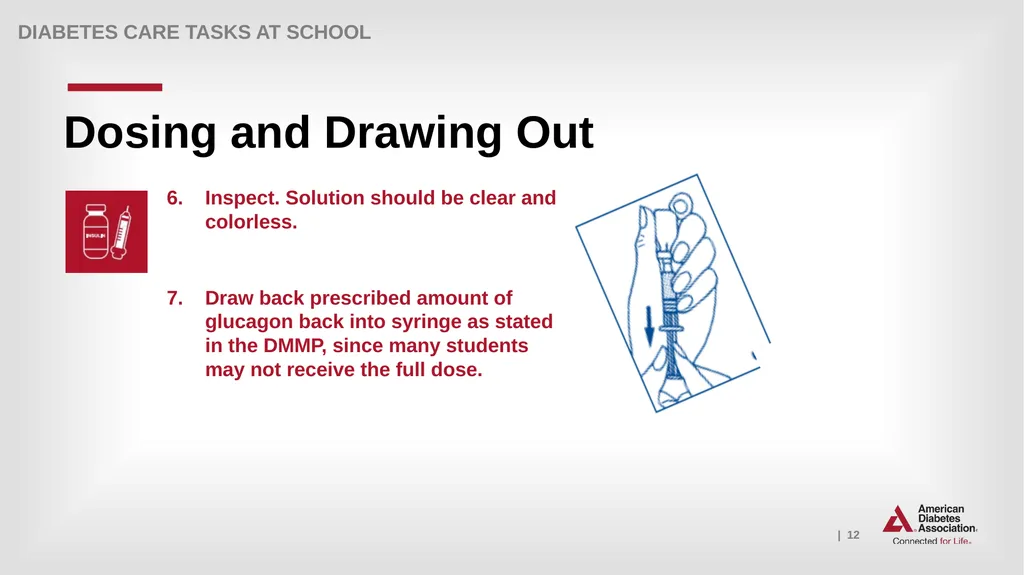
Inspect. Solution should be clear and colorless.
Draw back prescribed amount of glucagon back into syringe as stated in the DMMP, since many students may not receive the full dose. Dosing and Drawing Out<br>
13
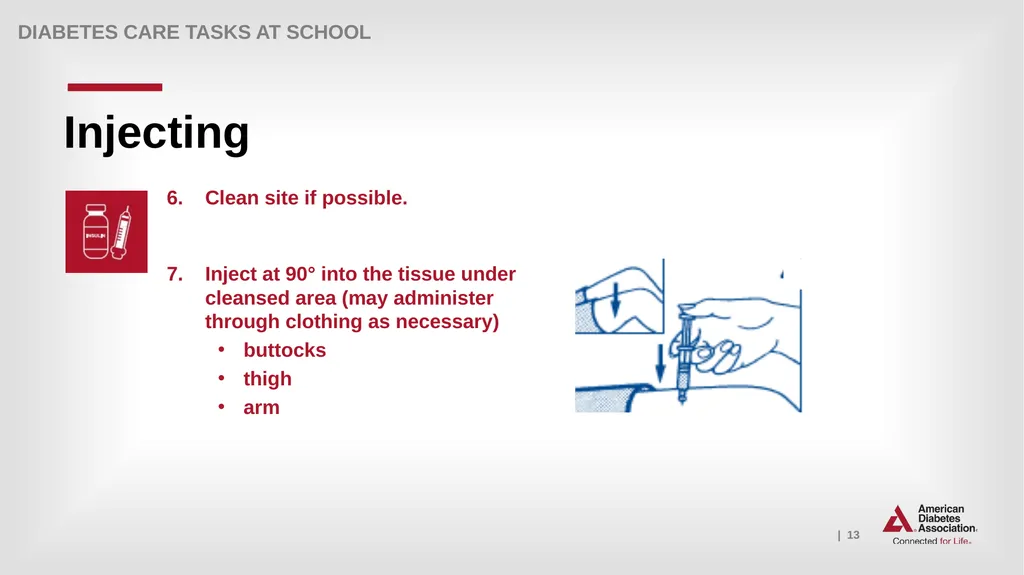
Clean site if possible.
Inject at 90° into the tissue under cleansed area (may administer through clothing as necessary)
buttocks
thigh
arm Injecting<br>
14
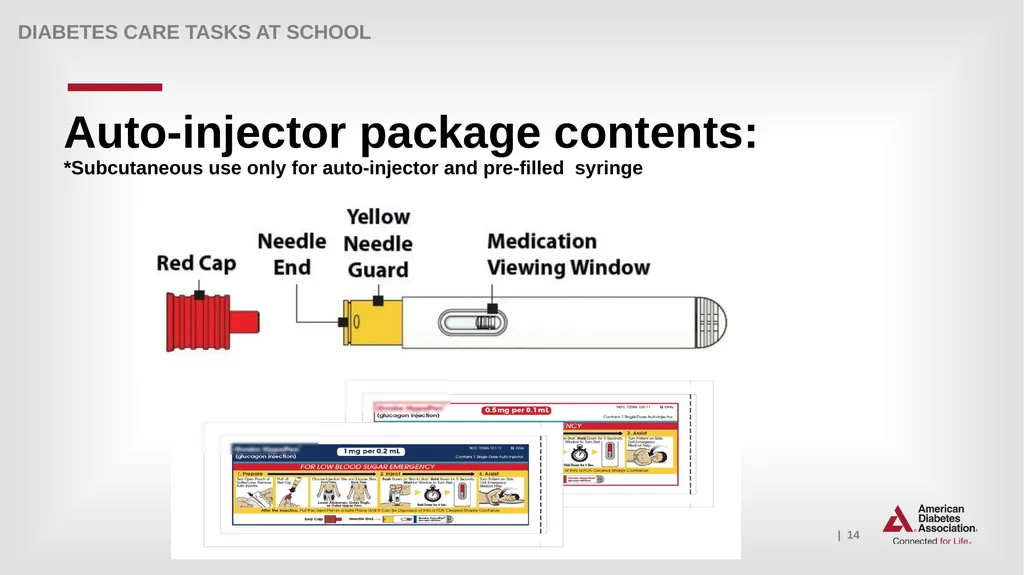
Auto-injector package contents: *Subcutaneous use only for auto-injector and pre-filled syringe<br>
15
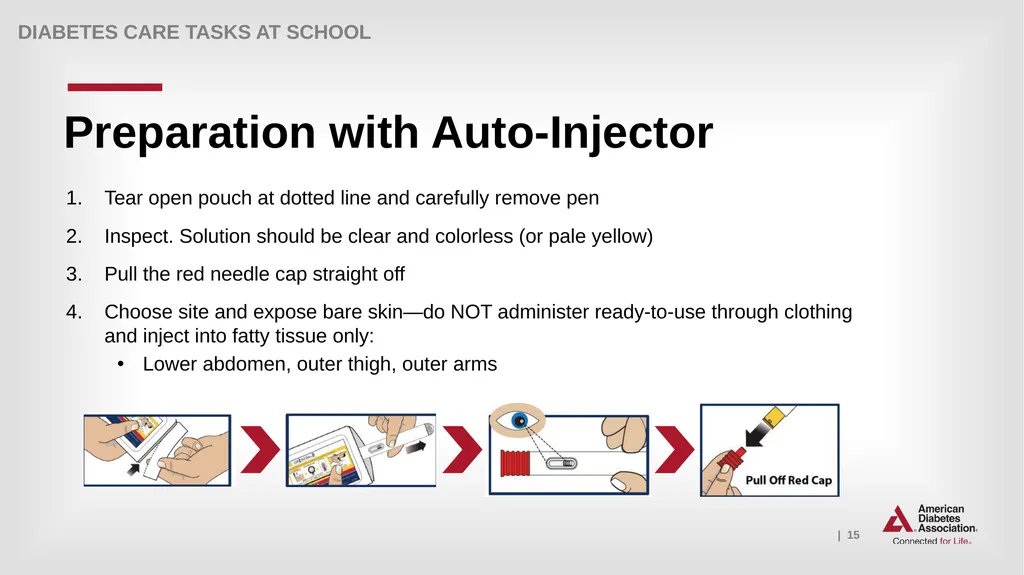
Tear open pouch at dotted line and carefully remove pen
Inspect. Solution should be clear and colorless (or pale yellow)
Pull the red needle cap straight off
Choose site and expose bare skin—do NOT administer ready-to-use through clothing and inject into fatty tissue only:
Lower abdomen, outer thigh, outer arms Preparation with Auto-Injector<br>
16
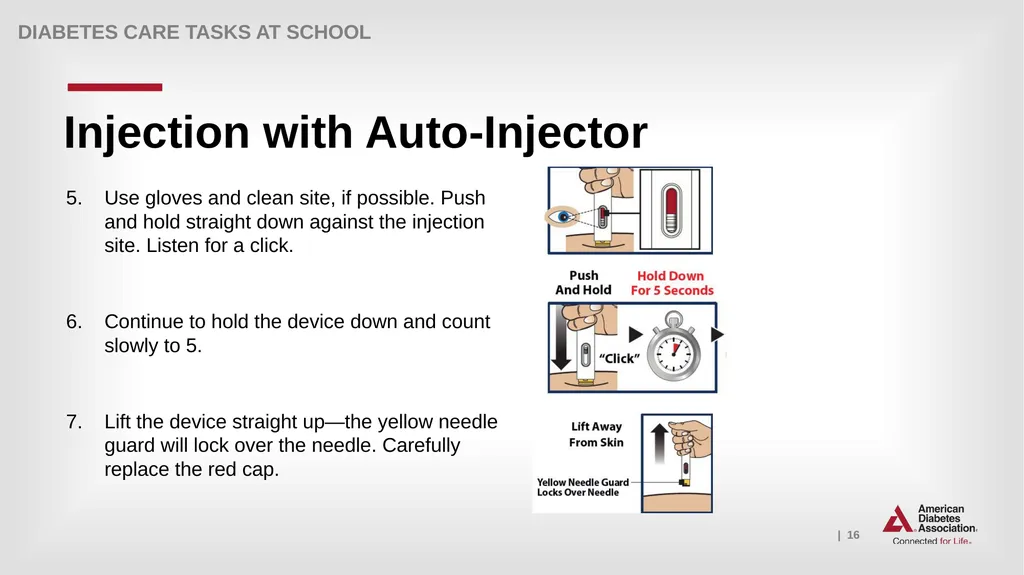
Use gloves and clean site, if possible. Push and hold straight down against the injection site. Listen for a click.
Continue to hold the device down and count slowly to 5.
Lift the device straight up—the yellow needle guard will lock over the needle. Carefully replace the red cap. Injection with Auto-Injector<br>
17
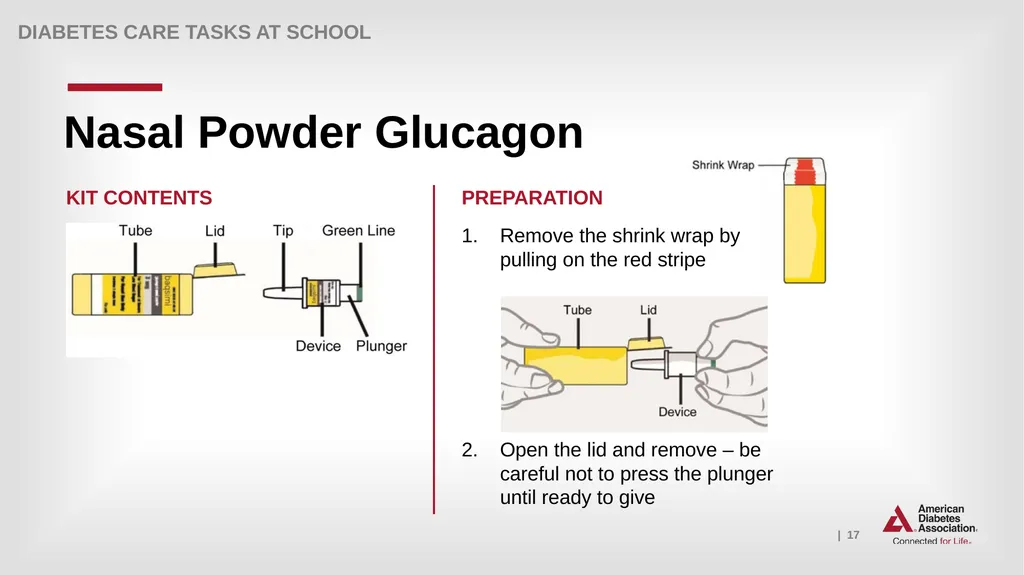
KIT CONTENTS Nasal Powder Glucagon PREPARATION
Remove the shrink wrap by pulling on the red stripe
Open the lid and remove – be careful not to press the plunger until ready to give<br>
18
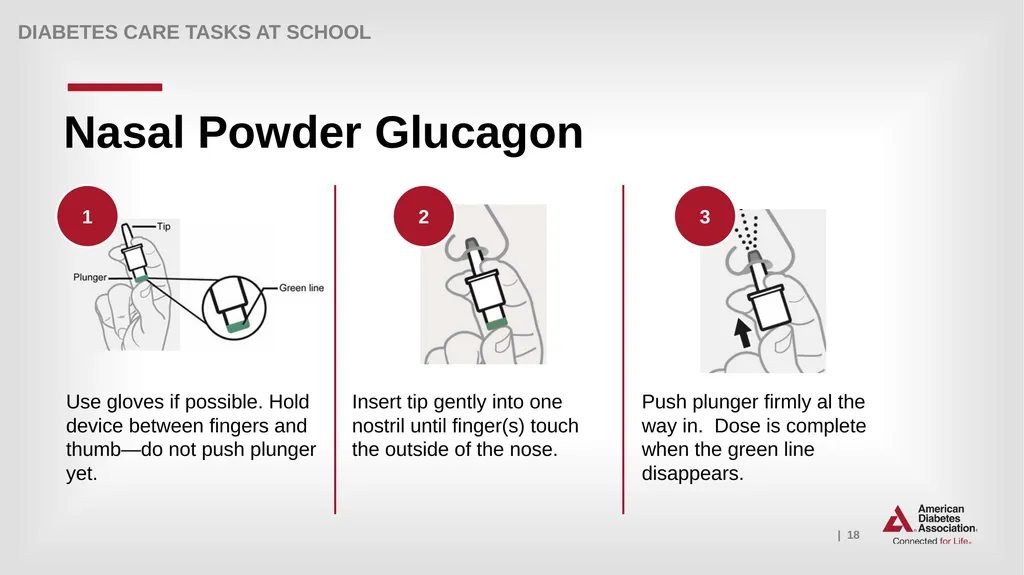
Nasal Powder Glucagon Use gloves if possible. Hold device between fingers and thumb—do not push plunger yet. Insert tip gently into one nostril until finger(s) touch the outside of the nose. Push plunger firmly al the way in. Dose is complete when the green line disappears. 1 2 3<br>
19
May take 10–20 minutes for student to regain consciousness
Check blood glucose
Give sips of fruit juice or regular soda, once student is awake and able to drink
Advance diet as tolerated
Document as per DMMP
If injection, do not recap syringe. Discard sharp in appropriate container After Injection or Nasal Dose<br>
20
The time to complete recovery from a severe hypoglycemic (low blood glucose) episode varies according to how low the blood glucose level was and for how long prior to treatment
Some signs and symptoms, such as headache, may persist for several hours, although the blood glucose level is satisfactory
Continued monitoring is important
Student may need to be transported via EMS or go home with parent/guardian Considerations<br>
21
Student does not remember being unconscious, incoherent, or has a headache
Blood glucose becomes high (over 200 mg/dl)
Nausea or vomiting may occur Don’t Be Surprised If…<br>
22
Module 10 Pre- and Post-Tests: GLUCAGON ADMINISTRATION This tool may be freely duplicated and distributed for training purposes<br>
23
Glucagon is used to treat:
Hyperglycemia
Hypoglycemia
Glucagon is a naturally occurring hormone made by the pancreas.
True
False
Glucagon is given when:
Unconsciousness/unresponsiveness
Convulsion/seizure
Inability to safety eat or drink
All the above Glucagon is administered through a:
Mouth
Injection
Nasal powder
Pen or auto-injector
b, c, d
All the above
The student should be positioned on his or her side before glucagon is administered:
True
False<br>
24
Disclaimer This presentation is not intended to provide legal or health care advice. Please consult with a legal or health care professional regarding your specific questions or needs.<br>
25
Where to Get More Information AMERICAN DIABETES ASSOCIATION
1-800-DIABETES (342-2383)
DIABETES.ORG/SAFEATSCHOOL<br>