Why Emotional Literacy is important for both teachers and Black Boys Historically, Black boys are more likely to be excluded or drop out of school when compared to other groups. This bleak situation has not changed over the years but has
"Why Emotional Literacy is important for both" is the property of its rightful owner. Permission is granted to
download and print the materials on this website for personal, non-commercial use only, and to display it
on your personal computer provided you do not modify the materials and that you retain all copyright
notices contained in the materials. By downloading content from our website, you accept the terms of this
agreement.
Presentation Transcript
01
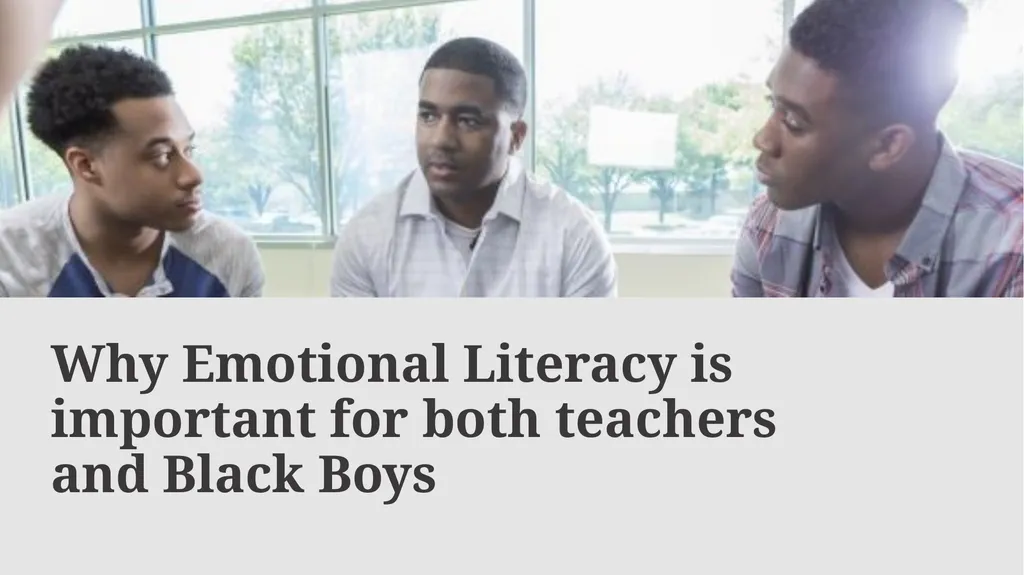
Why Emotional Literacy is important for both teachers and Black Boys<br>
02
Historically, Black boys are more likely to be excluded or drop out of school when compared to other groups. This bleak situation has not changed over the years but has become worse. The number one determinant in a child's/student success and outcomes over a lifetime is his relationship with his teachers.<br>
03
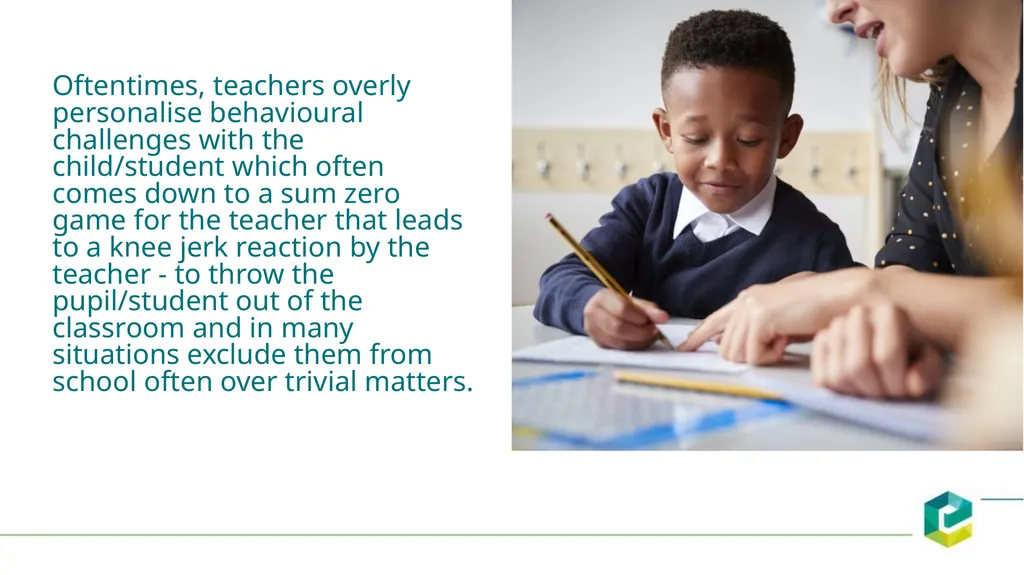
Oftentimes, teachers overly personalise behavioural challenges with the child/student which often comes down to a sum zero game for the teacher that leads to a knee jerk reaction by the teacher - to throw the pupil/student out of the classroom and in many situations exclude them from school often over trivial matters.<br>
04
Emotional Literacy helps the teacher engage a young person, to know what to say, when to say it and how to say it, develop effective relationships strategies and helps teachers to de-personalise and forgive pupils/students for incidents in the classroom (more often than not have nothing to do with the teacher at all but rather things at home) for the purpose of reducing exclusions/drop outs that lead to the school to prison pipeline.<br>
05
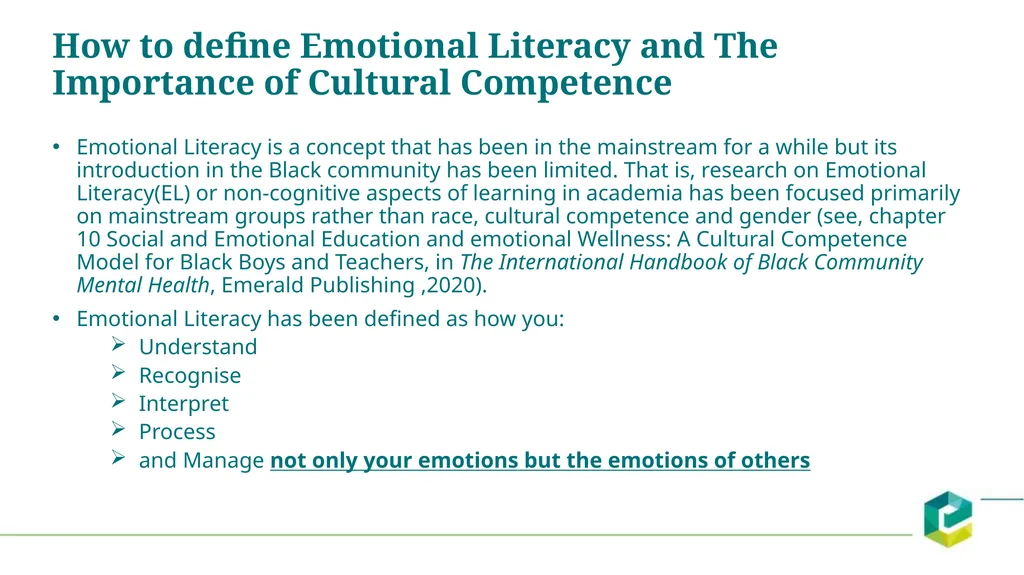
How to define Emotional Literacy and The Importance of Cultural Competence Emotional Literacy is a concept that has been in the mainstream for a while but its introduction in the Black community has been limited. That is, research on Emotional Literacy(EL) or non-cognitive aspects of learning in academia has been focused primarily on mainstream groups rather than race, cultural competence and gender (see, chapter 10 Social and Emotional Education and emotional Wellness: A Cultural Competence Model for Black Boys and Teachers, in The International Handbook of Black Community Mental Health, Emerald Publishing ,2020).
Emotional Literacy has been defined as how you:
Understand
Recognise
Interpret
Process
and Manage not only your emotions but the emotions of others<br>
06
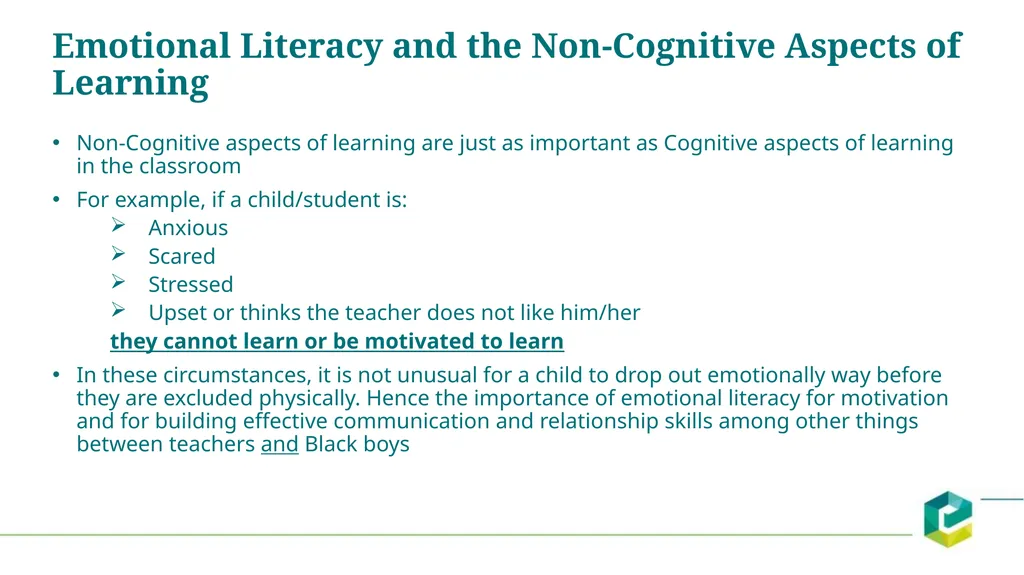
Emotional Literacy and the Non-Cognitive Aspects of Learning Non-Cognitive aspects of learning are just as important as Cognitive aspects of learning in the classroom
For example, if a child/student is:
Anxious
Scared
Stressed
Upset or thinks the teacher does not like him/her
they cannot learn or be motivated to learn
In these circumstances, it is not unusual for a child to drop out emotionally way before they are excluded physically. Hence the importance of emotional literacy for motivation and for building effective communication and relationship skills among other things between teachers and Black boys<br>
07
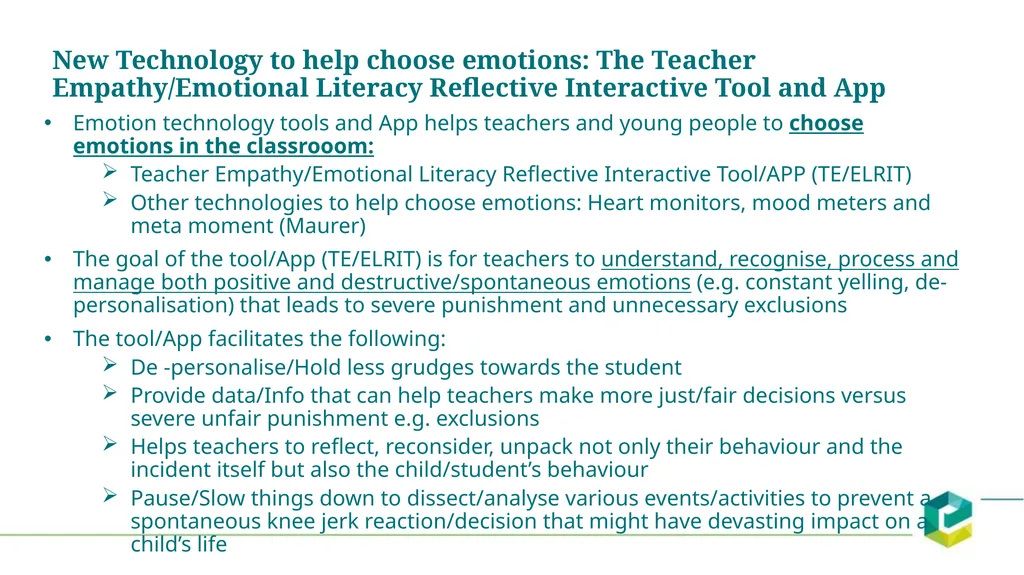
New Technology to help choose emotions: The Teacher Empathy/Emotional Literacy Reflective Interactive Tool and App Emotion technology tools and App helps teachers and young people to choose emotions in the classrooom:
Teacher Empathy/Emotional Literacy Reflective Interactive Tool/APP (TE/ELRIT)
Other technologies to help choose emotions: Heart monitors, mood meters and meta moment (Maurer)
The goal of the tool/App (TE/ELRIT) is for teachers to understand, recognise, process and manage both positive and destructive/spontaneous emotions (e.g. constant yelling, de-personalisation) that leads to severe punishment and unnecessary exclusions
The tool/App facilitates the following:
De -personalise/Hold less grudges towards the student
Provide data/Info that can help teachers make more just/fair decisions versus severe unfair punishment e.g. exclusions
Helps teachers to reflect, reconsider, unpack not only their behaviour and the incident itself but also the child/student’s behaviour
Pause/Slow things down to dissect/analyse various events/activities to prevent a spontaneous knee jerk reaction/decision that might have devasting impact on a child’s life<br>