Wilfred Owen Dulce et Decorum Est Photos courtesy of Martin LaBar (flickr.com) and Welcome Library (via creative commons) - granted under creative commons licence attribution (Edited) To know five key techniques used in Owens poetry.
"Wilfred Owen ‘Dulce et Decorum Est’ Photos" is the property of its rightful owner. Permission is granted to
download and print the materials on this website for personal, non-commercial use only, and to display it
on your personal computer provided you do not modify the materials and that you retain all copyright
notices contained in the materials. By downloading content from our website, you accept the terms of this
agreement.
Presentation Transcript
01
Wilfred Owen
‘Dulce et Decorum Est’ Photos courtesy of Martin LaBar (@flickr.com) and Welcome Library (via creative commons) - granted under creative commons licence – attribution (Edited)<br>
02
To know five key techniques used in Owen’s poetry.
To identify specific examples of poetic techniques in Owen’s work.
To express ideas about the effect of these poetic techniques in Owen’s work. To identify key poetic techniques and the effect of these in Wilfred Owen’s poetry. Learning Objective Success Criteria<br>
03
To Begin This lesson will focus on one of the most recognisable poems of World War. This poem is by Wilfred Owen. The poem’s name is ‘Dulce et Decorum Est’. What do you know about Wilfred Owen’s life? What do you already know about his experiences of war? What ideas and images of war do you think will be present in this poem? Discuss your ideas together.<br>
04
Poetic Techniques Wilfred Owen, like all poets, uses a variety of techniques in his poetry to create effects.
What poetic techniques do you already know? Make a list and try to think why a poet might use a particular effect.
Did you think of the following techniques?
Alliteration
Metaphor
Simile
Rhyme
Onomatopoeia<br>
05
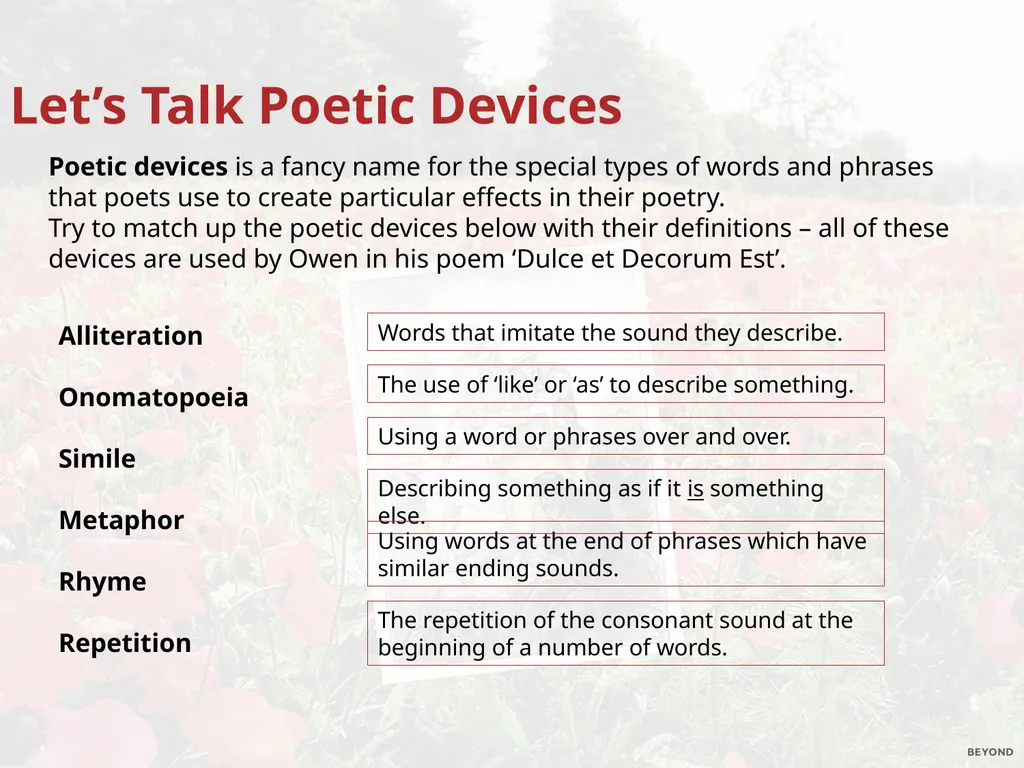
Let’s Talk Poetic Devices Poetic devices is a fancy name for the special types of words and phrases that poets use to create particular effects in their poetry.
Try to match up the poetic devices below with their definitions – all of these devices are used by Owen in his poem ‘Dulce et Decorum Est’. Alliteration
Onomatopoeia
Simile
Metaphor
Rhyme
Repetition Words that imitate the sound they describe. The use of ‘like’ or ‘as’ to describe something. Using a word or phrases over and over. Describing something as if it is something else. Using words at the end of phrases which have similar ending sounds. The repetition of the consonant sound at the beginning of a number of words.<br>
06
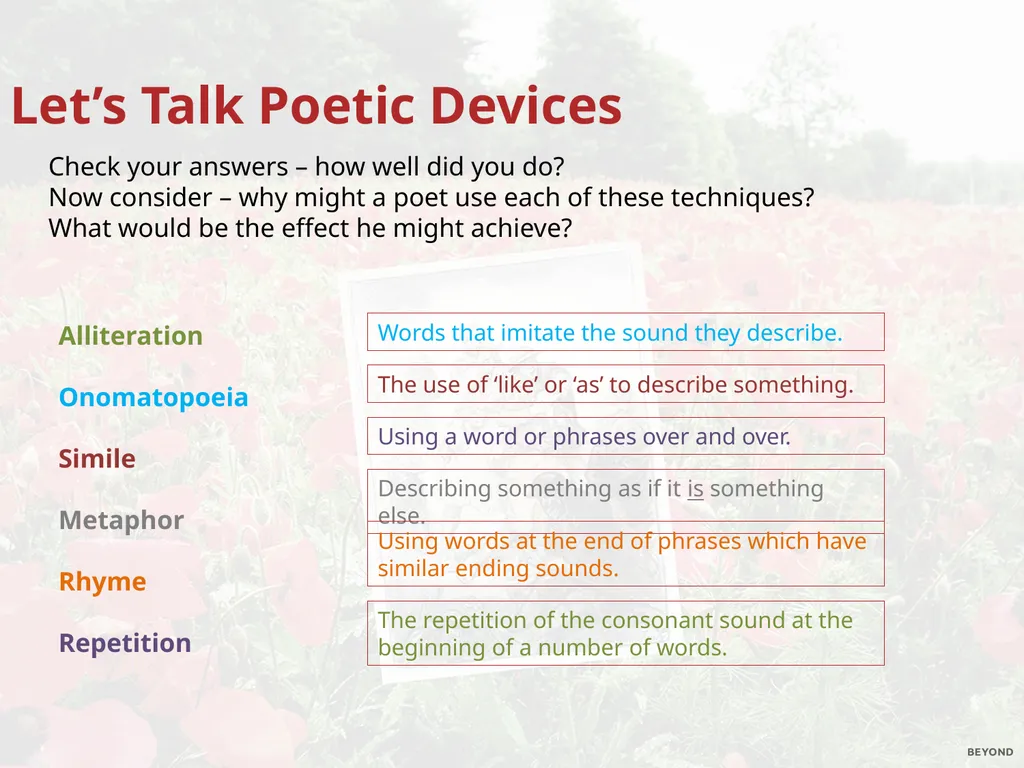
Let’s Talk Poetic Devices Check your answers – how well did you do? Now consider – why might a poet use each of these techniques? What would be the effect he might achieve? Alliteration
Onomatopoeia
Simile
Metaphor
Rhyme
Repetition Words that imitate the sound they describe. The use of ‘like’ or ‘as’ to describe something. Using a word or phrases over and over. Describing something as if it is something else. Using words at the end of phrases which have similar ending sounds. The repetition of the consonant sound at the beginning of a number of words.<br>
07
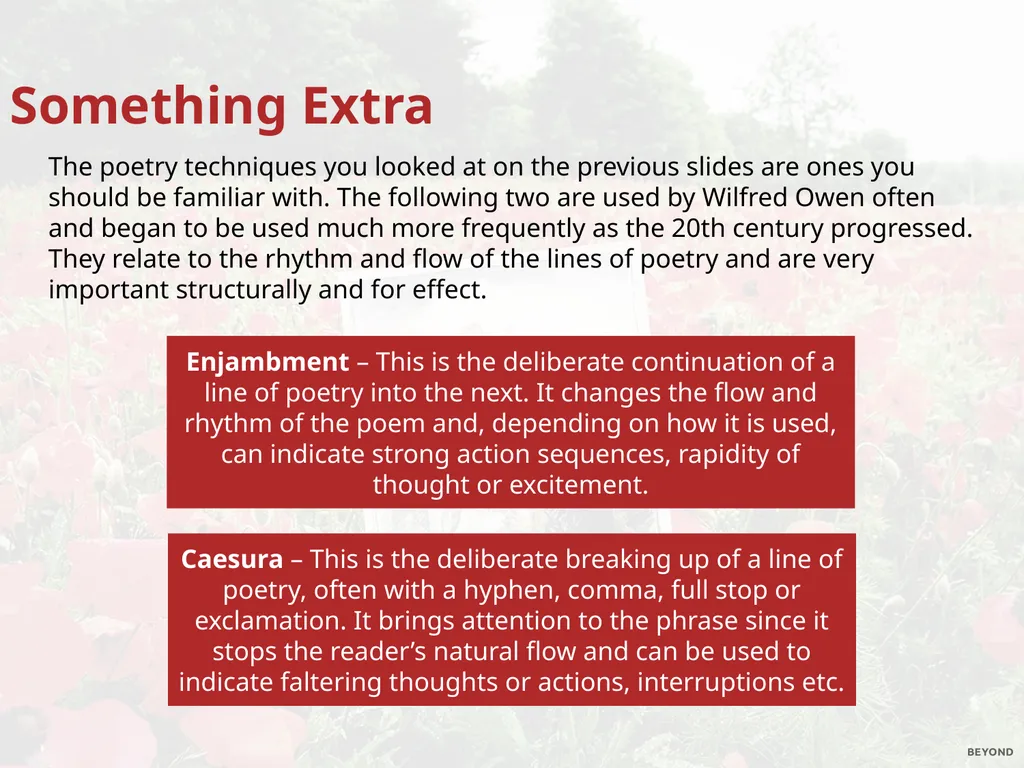
Something Extra The poetry techniques you looked at on the previous slides are ones you should be familiar with. The following two are used by Wilfred Owen often and began to be used much more frequently as the 20th century progressed. They relate to the rhythm and flow of the lines of poetry and are very important structurally and for effect. Enjambment – This is the deliberate continuation of a line of poetry into the next. It changes the flow and rhythm of the poem and, depending on how it is used, can indicate strong action sequences, rapidity of thought or excitement. Caesura – This is the deliberate breaking up of a line of poetry, often with a hyphen, comma, full stop or exclamation. It brings attention to the phrase since it stops the reader’s natural flow and can be used to indicate faltering thoughts or actions, interruptions etc.<br>
08
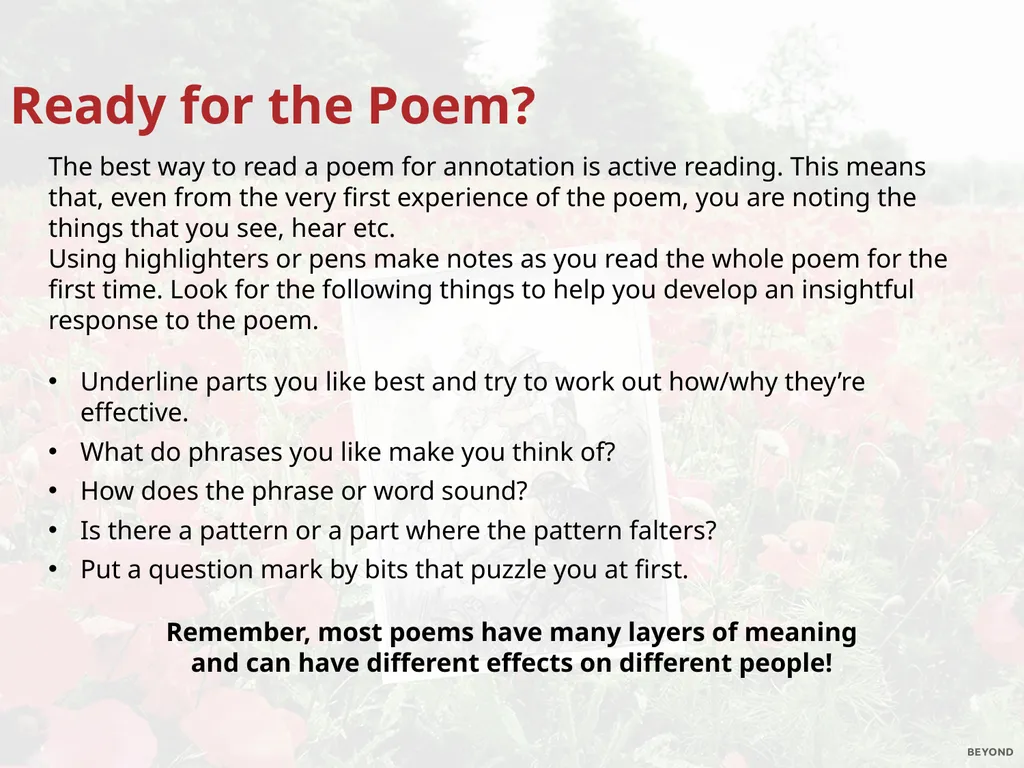
Ready for the Poem? The best way to read a poem for annotation is active reading. This means that, even from the very first experience of the poem, you are noting the things that you see, hear etc.
Using highlighters or pens make notes as you read the whole poem for the first time. Look for the following things to help you develop an insightful response to the poem.
Underline parts you like best and try to work out how/why they’re effective.
What do phrases you like make you think of?
How does the phrase or word sound?
Is there a pattern or a part where the pattern falters?
Put a question mark by bits that puzzle you at first. Remember, most poems have many layers of meaning and can have different effects on different people!<br>
09
Now – Let’s Look at the Poem Bent double, like old beggars under sacks, Knock-kneed, coughing like hags, we cursed through sludge, Till on the haunting flares we turned our backs, And towards our distant rest began to trudge. Men marched asleep. Many had lost their boots, But limped on, blood-shod. All went lame, all blind; Drunk with fatigue; deaf even to the hoots Of gas-shells dropping softly behind. This is the first full stanza – What do you notice?
Can you find any alliteration?
What is the effect of the similes you can see?
What is happening when the poem opens? Where are the soldiers?
Are the men really asleep? What is this device called? What effect does it have?
Can you see the rhyme scheme emerging? Why might Owen have used such a standardised rhythm and rhyme at this point in the poem? What does it remind you of?<br>
10
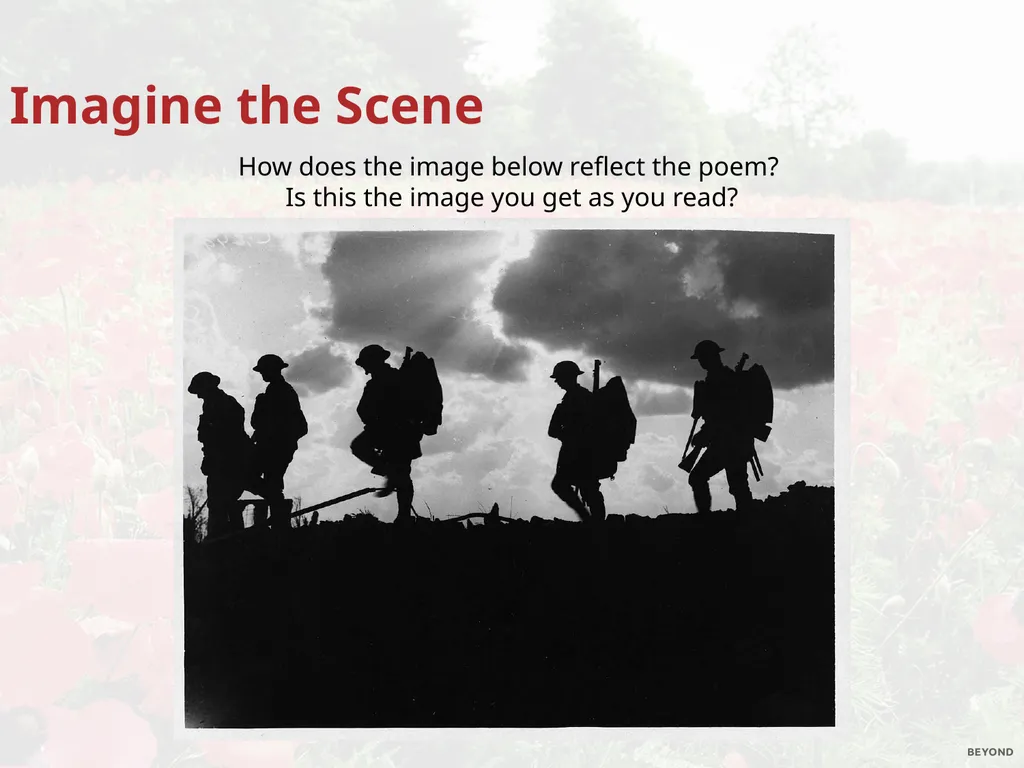
Imagine the Scene How does the image below reflect the poem?
Is this the image you get as you read?<br>
11
Now – Let’s Look at the Poem Gas! GAS! Quick, boys!--An ecstasy of fumbling Fitting the clumsy helmets just in time, But someone still was yelling out and stumbling And flound'ring like a man in fire or lime.-- Dim through the misty panes and thick green light, As under a green sea, I saw him drowning. In all my dreams before my helpless sight He plunges at me, guttering, choking, drowning. These are the second and third full stanzas of the poem – What do you notice?
What is the first line? What effect does it have?
What is the effect of the metaphors and similes you can see?
What is now happening to the men? Was it expected? How does Owen show us this?
Look at the use of verbs throughout this section of the poem. What is the effect on the reader?
Where do we see caesura and enjambment? How are they used?<br>
12
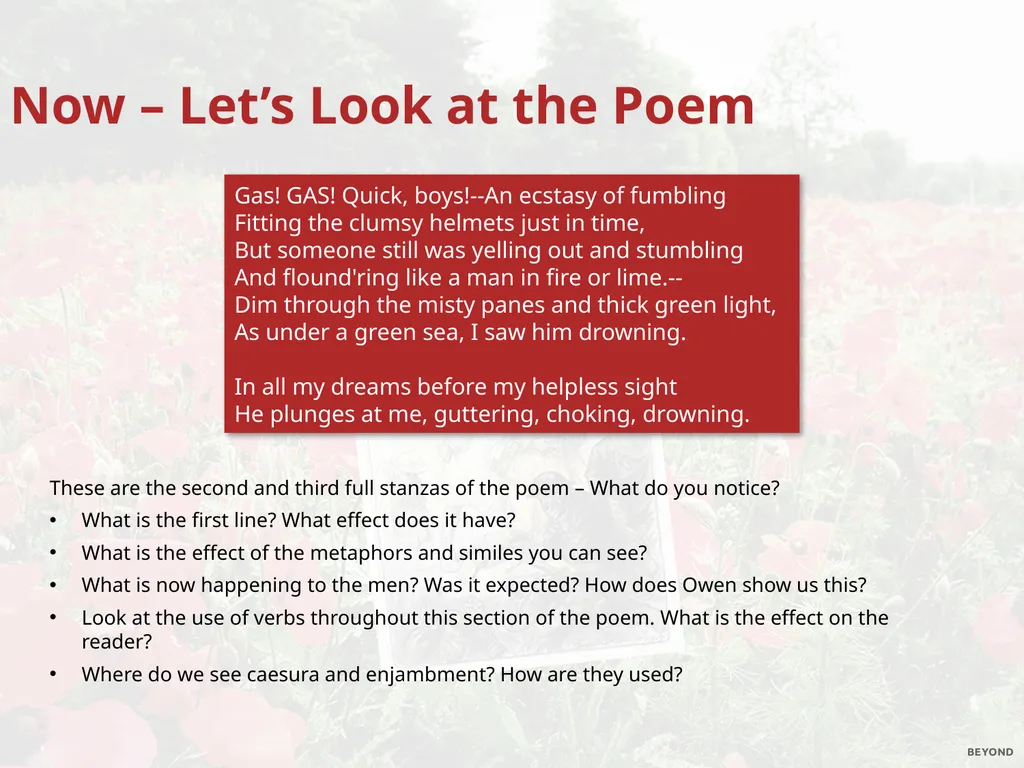
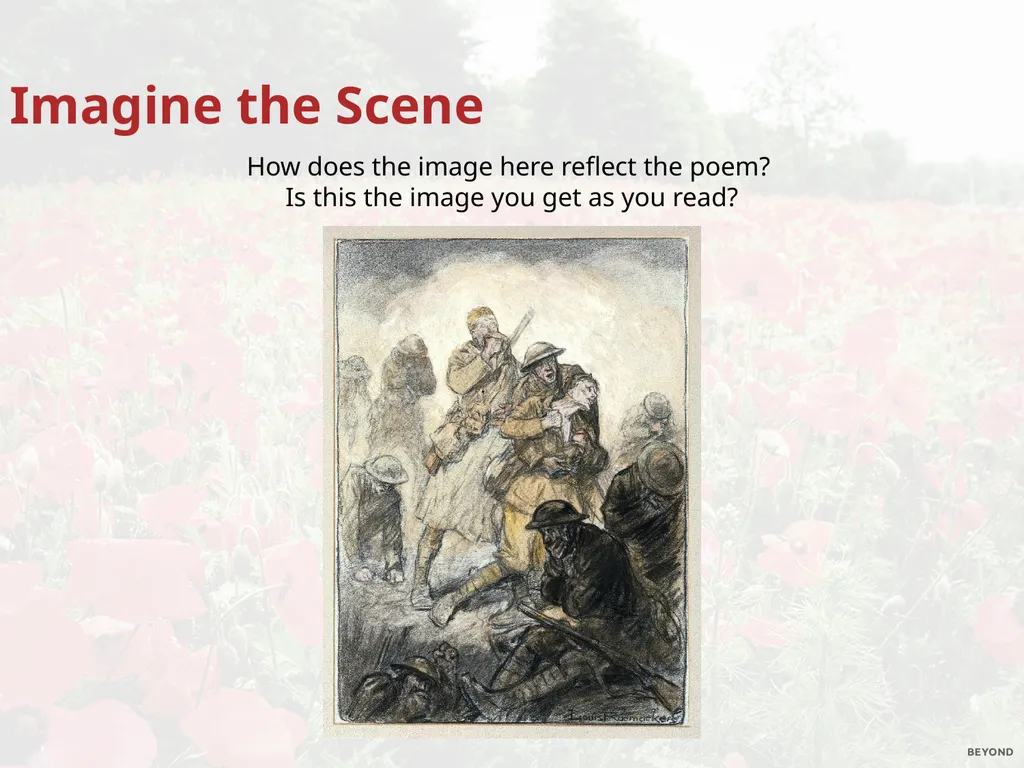
Imagine the Scene How does the image here reflect the poem?
Is this the image you get as you read?<br>
13
Now – Let’s Look at the Poem If in some smothering dreams, you too could pace Behind the wagon that we flung him in, And watch the white eyes writhing in his face, His hanging face, like a devil's sick of sin, If you could hear, at every jolt, the blood Come gargling from the froth-corrupted lungs Obscene as cancer, bitter as the cud Of vile, incurable sores on innocent tongues,-- My friend, you would not tell with such high zest To children ardent for some desperate glory, The old Lie: Dulce et decorum est Pro patria mori. This is the last full stanza of the poem – What do you notice?
Who do you think the poet is talking to?
Why do you think Owen compares the man’s face to a ‘devil’s sick of sin’?
What happens to the soldier in the end?
Why has Owen called soldiers ‘boys’ and ‘children’ all the way through the poem?
‘Dulce et decorum est pro patria mori’ means ‘It is sweet and right to die for your country. Does Owen agree with this idea? Who might have been saying this to young men?<br>
14
Imagine the Scene How does the image here reflect the poem?
Is this the image you get as you read?<br>
15
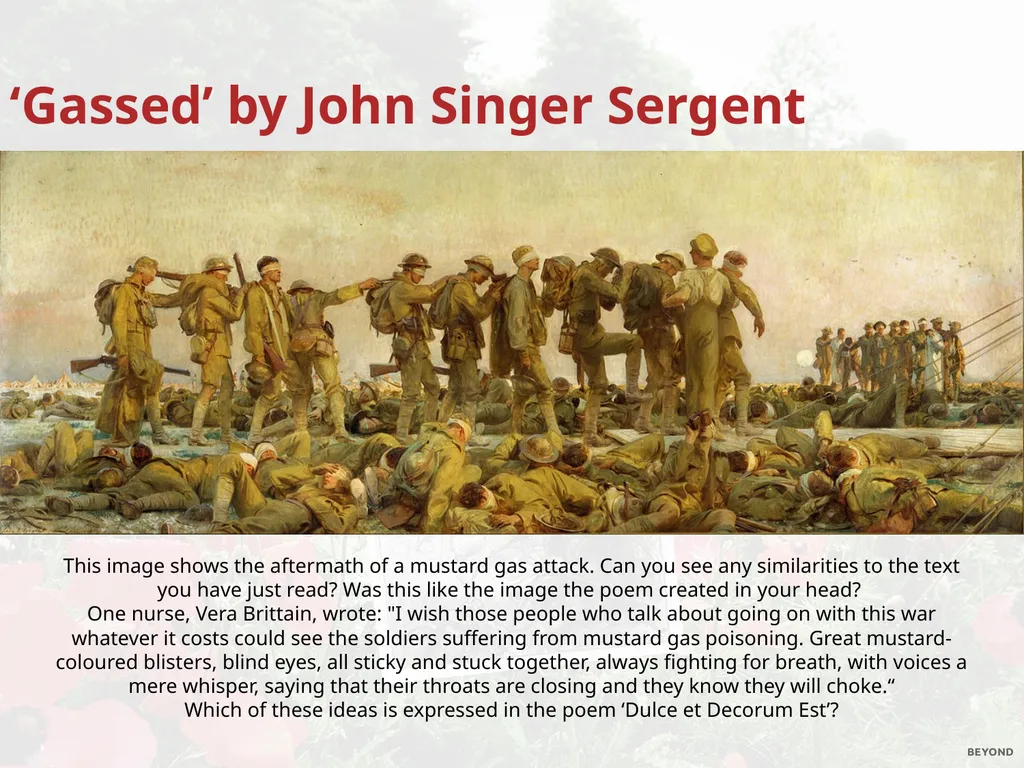
‘Gassed’ by John Singer Sergent This image shows the aftermath of a mustard gas attack. Can you see any similarities to the text you have just read? Was this like the image the poem created in your head?
One nurse, Vera Brittain, wrote: "I wish those people who talk about going on with this war whatever it costs could see the soldiers suffering from mustard gas poisoning. Great mustard-coloured blisters, blind eyes, all sticky and stuck together, always fighting for breath, with voices a mere whisper, saying that their throats are closing and they know they will choke.“
Which of these ideas is expressed in the poem ‘Dulce et Decorum Est’?<br>
16
Looking Back at the Poem You have now read and annotated the poem ‘Dulce et Decorum Est’.
What do you think Owen’s main purpose was in writing the poem?
Discuss. Does it help if you learn that the poem was originally titled ‘To Jessie Pope’? Jessie Pope was a female poet and journalist who wrote pro-war recruitment poetry for the Daily Mail.<br>