01
William the Conqueror by David Bates
‘A system of communications develop after 1066 which kept William in touch with what was happening throughout his lands and allowed his will to be known throughout his dominions [England]) From Anglo-Saxon England and the Norman Conquest by H. R. Lyon
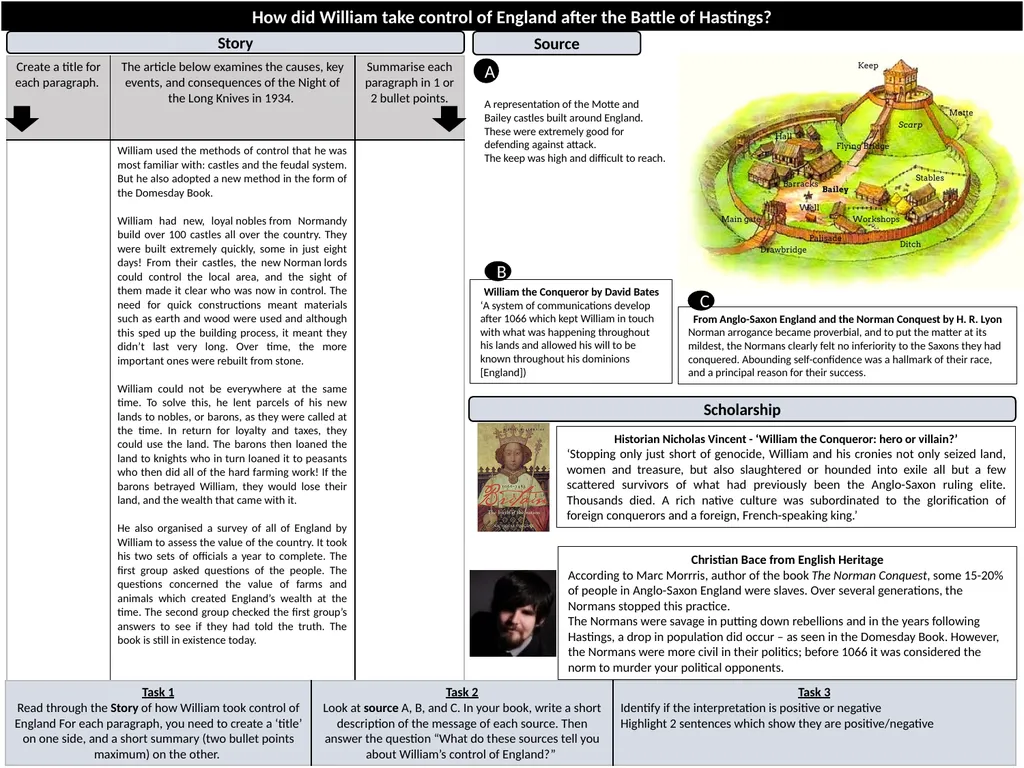
Norman arrogance became proverbial, and to put the matter at its mildest, the Normans clearly felt no inferiority to the Saxons they had conquered. Abounding self-confidence was a hallmark of their race, and a principal reason for their success. How did William take control of England after the Battle of Hastings? Story Source Scholarship A B A representation of the Motte and Bailey castles built around England.
These were extremely good for defending against attack.
The keep was high and difficult to reach. C Historian Nicholas Vincent - ‘William the Conqueror: hero or villain?’
‘Stopping only just short of genocide, William and his cronies not only seized land, women and treasure, but also slaughtered or hounded into exile all but a few scattered survivors of what had previously been the Anglo-Saxon ruling elite. Thousands died. A rich native culture was subordinated to the glorification of foreign conquerors and a foreign, French-speaking king.’ Christian Bace from English Heritage
According to Marc Morrris, author of the book The Norman Conquest, some 15-20% of people in Anglo-Saxon England were slaves. Over several generations, the Normans stopped this practice.
The Normans were savage in putting down rebellions and in the years following Hastings, a drop in population did occur – as seen in the Domesday Book. However, the Normans were more civil in their politics; before 1066 it was considered the norm to murder your political opponents.<br>