Workshop 2: Seacole Gender, War, and Nursing: Florence Nightingale and Mary Seacole Who was Mary Seacole? Born in 1805 in Jamaica Mary was British-Jamaican: her mother was Jamaican, but her father was a Scottish army officer. Mary was born
"Workshop 2: Seacole Gender, War, and Nursing:" is the property of its rightful owner. Permission is granted to
download and print the materials on this website for personal, non-commercial use only, and to display it
on your personal computer provided you do not modify the materials and that you retain all copyright
notices contained in the materials. By downloading content from our website, you accept the terms of this
agreement.
Presentation Transcript
01
Workshop 2: Seacole Gender, War, and Nursing: Florence Nightingale and Mary Seacole<br>
02
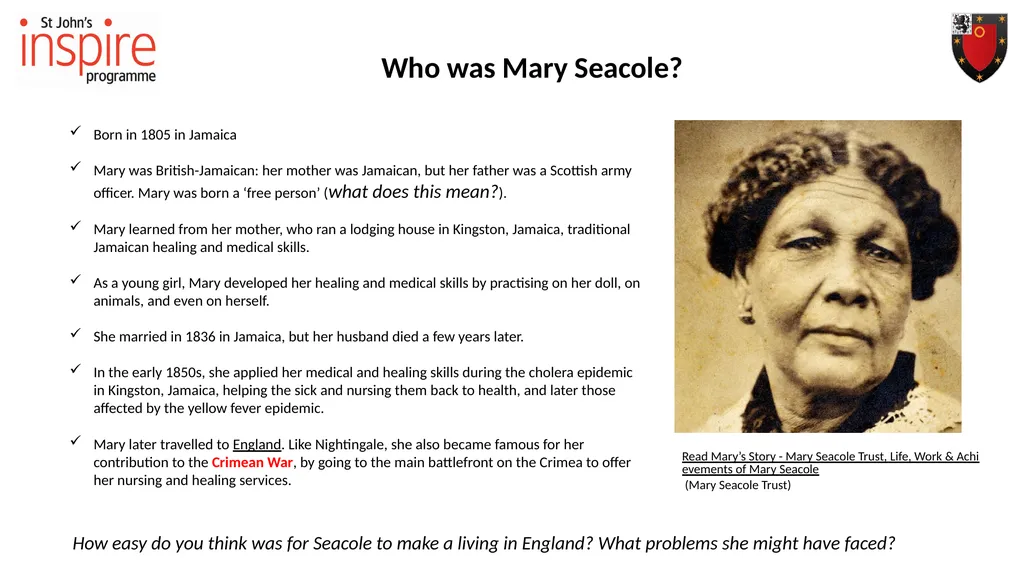
Who was Mary Seacole? Born in 1805 in Jamaica
Mary was British-Jamaican: her mother was Jamaican, but her father was a Scottish army officer. Mary was born a ‘free person’ (what does this mean?).
Mary learned from her mother, who ran a lodging house in Kingston, Jamaica, traditional Jamaican healing and medical skills.
As a young girl, Mary developed her healing and medical skills by practising on her doll, on animals, and even on herself.
She married in 1836 in Jamaica, but her husband died a few years later.
In the early 1850s, she applied her medical and healing skills during the cholera epidemic in Kingston, Jamaica, helping the sick and nursing them back to health, and later those affected by the yellow fever epidemic.
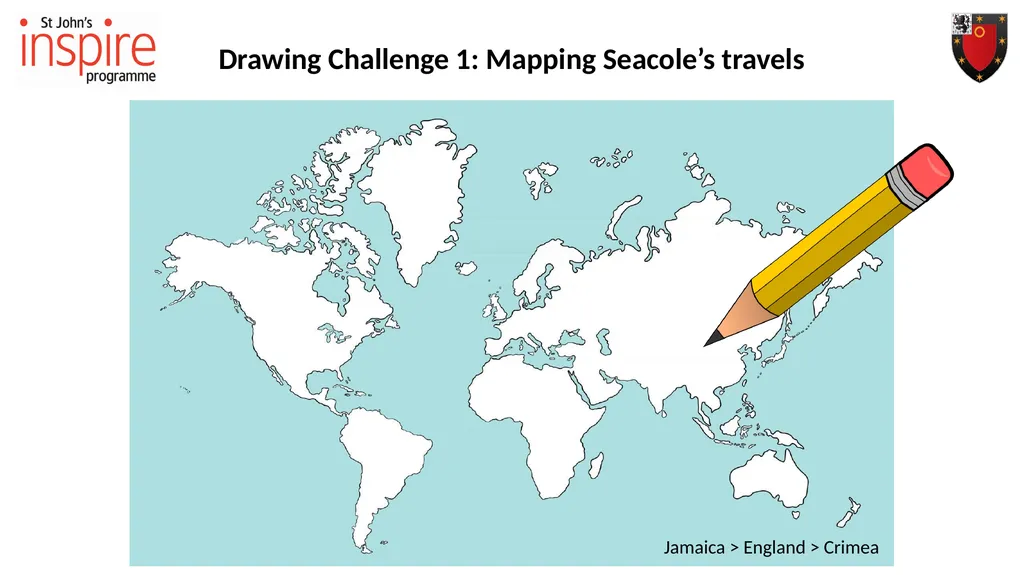
Mary later travelled to England. Like Nightingale, she also became famous for her contribution to the Crimean War, by going to the main battlefront on the Crimea to offer her nursing and healing services. Read Mary’s Story - Mary Seacole Trust, Life, Work & Achievements of Mary Seacole (Mary Seacole Trust) How easy do you think was for Seacole to make a living in England? What problems she might have faced?<br>
Consolidating your knowledge When and where was Mary Seacole born?
In what ways did Mary’s mother influence her?
How did Mary apply her medical and healing skills in the 1850s? Can you identify any similarities or differences between Florence
Nightingale and Mary Seacole? Bonus question<br>
05
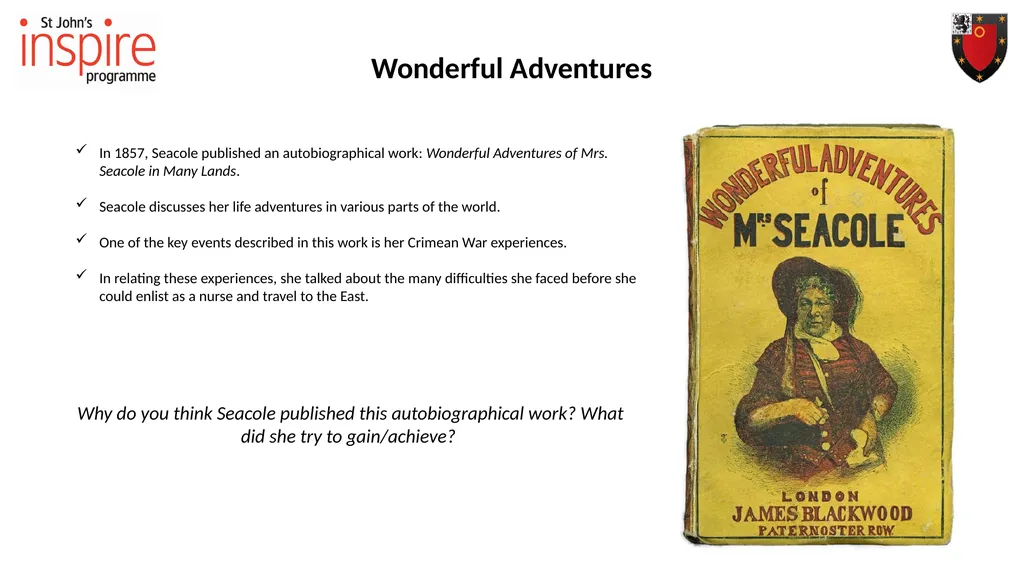
Wonderful Adventures In 1857, Seacole published an autobiographical work: Wonderful Adventures of Mrs. Seacole in Many Lands.
Seacole discusses her life adventures in various parts of the world.
One of the key events described in this work is her Crimean War experiences.
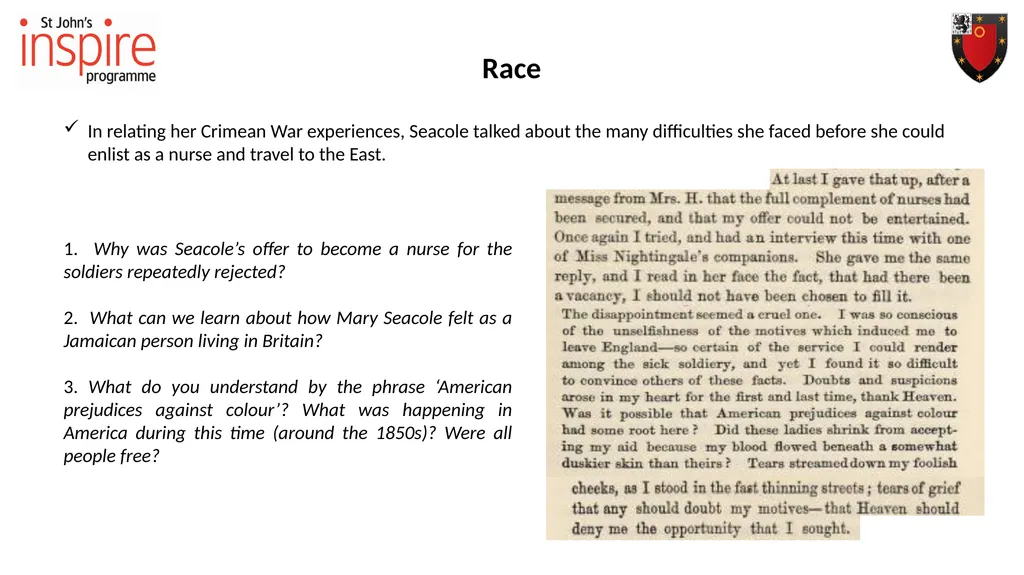
In relating these experiences, she talked about the many difficulties she faced before she could enlist as a nurse and travel to the East. Why do you think Seacole published this autobiographical work? What did she try to gain/achieve?<br>
06
1. Why was Seacole’s offer to become a nurse for the soldiers repeatedly rejected?
2. What can we learn about how Mary Seacole felt as a Jamaican person living in Britain?
3. What do you understand by the phrase ‘American prejudices against colour’? What was happening in America during this time (around the 1850s)? Were all people free? Race In relating her Crimean War experiences, Seacole talked about the many difficulties she faced before she could enlist as a nurse and travel to the East.<br>
07
Going to the Crimea Refreshing your memory: from information you learned about the Crimean War in Workshop 1, let’s see who remembers:
When was the Crimean War fought?
Which countries fought the war? Hearing about the suffering of the British soldiers in the Crimea, Mary decided to travel to the battlefront to offer her medical knowledge
and healing services.
Despite being repeatedly refused, she managed to fund on her own her travel to the Crimea.<br>
08
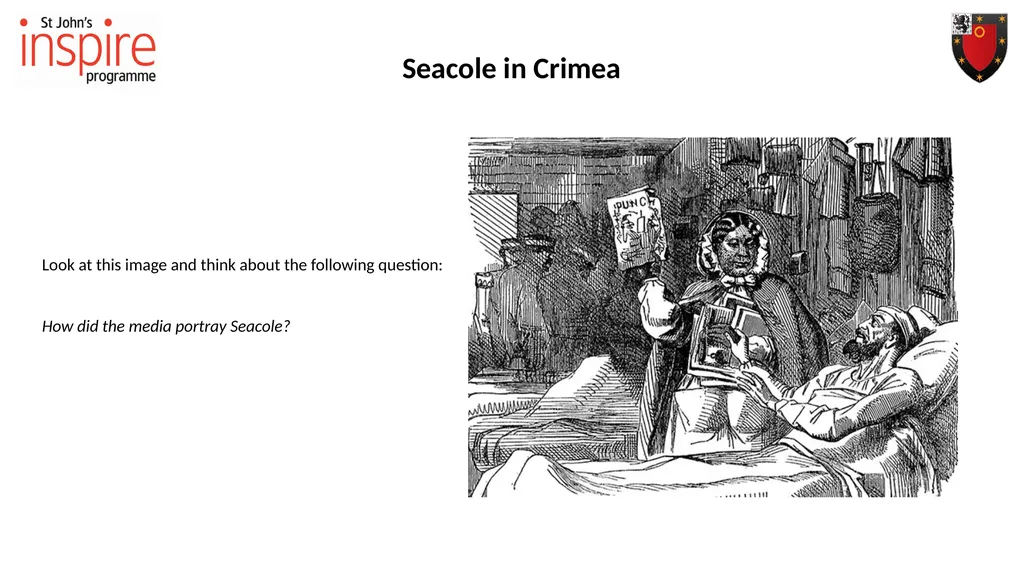
Seacole in Crimea Look at this image and think about the following question:
How did the media portray Seacole?<br>
09
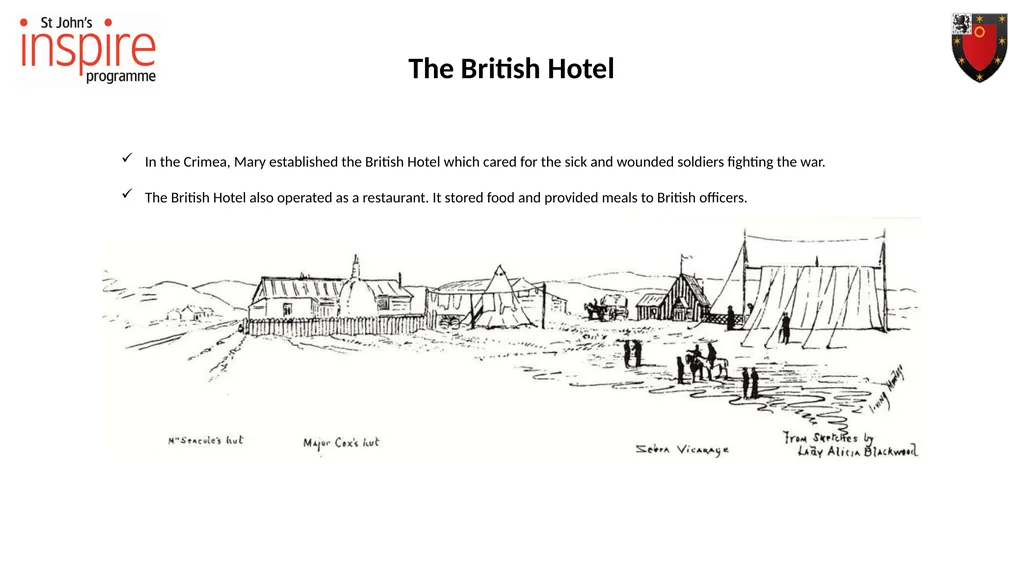
The British Hotel In the Crimea, Mary established the British Hotel which cared for the sick and wounded soldiers fighting the war.
The British Hotel also operated as a restaurant. It stored food and provided meals to British officers.<br>
10
Drawing Challenge 2: The British Hotel How do you imagine the interior of the British Hotel looked like?
(use the space provided in your worksheet to complete your drawing)<br>
11
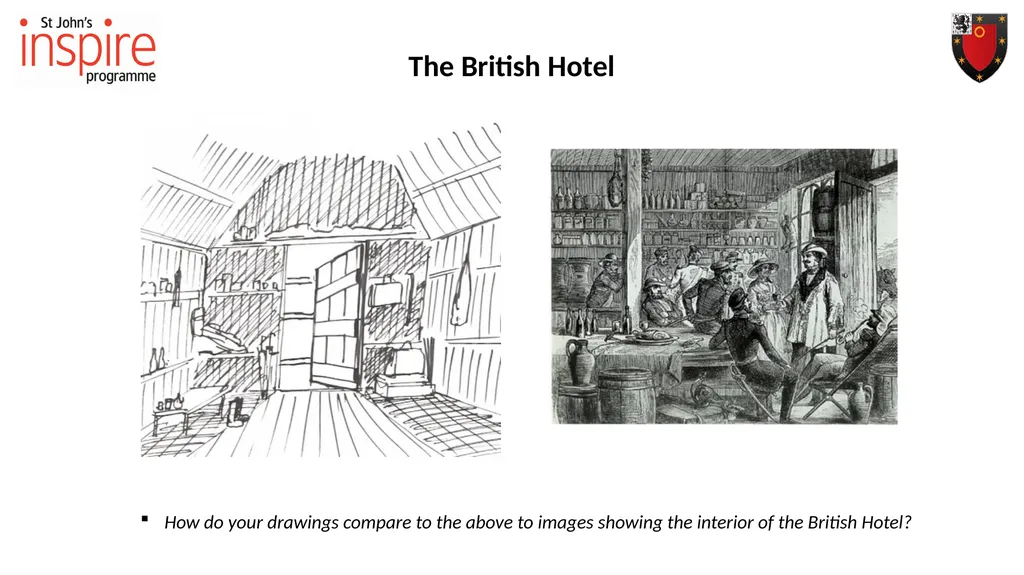
The British Hotel How do your drawings compare to the above to images showing the interior of the British Hotel?<br>
12
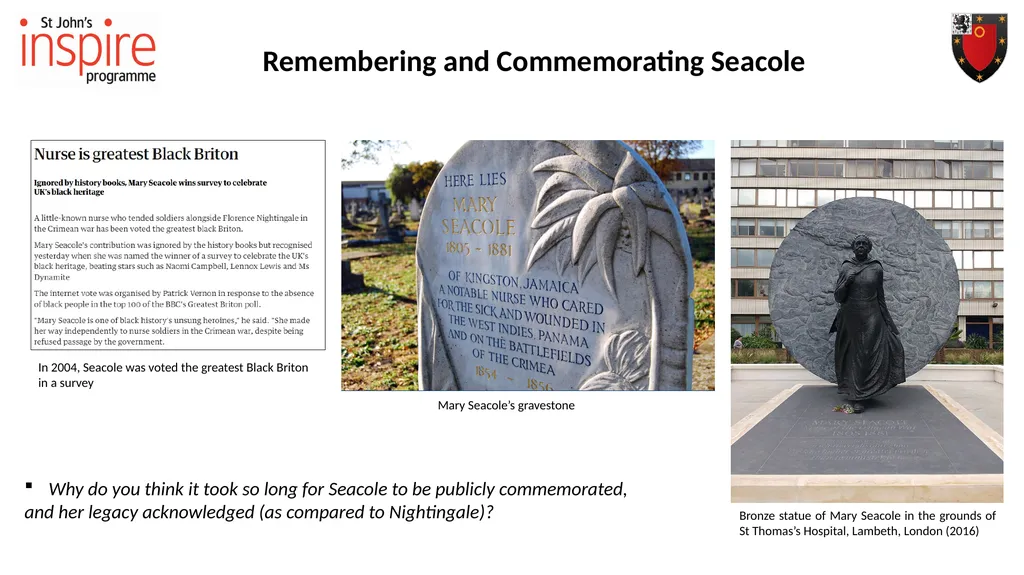
Mary Seacole’s gravestone Remembering and Commemorating Seacole Why do you think it took so long for Seacole to be publicly commemorated,
and her legacy acknowledged (as compared to Nightingale)? Bronze statue of Mary Seacole in the grounds of St Thomas’s Hospital, Lambeth, London (2016) In 2004, Seacole was voted the greatest Black Briton in a survey<br>
13
Optional Activity
(Mary Seacole’s activities & her involvement in the Crimean War) Watch the video and summarise the key points in the space provided in your handbook https://youtu.be/uavk4N2Nk9s?si=UnHE42J2jG6Puk-p<br>