Writing Recommendation Letters Maya Schuldiner Weizmann Institute of Science George Adams, Philosopher There is no such thing as a self-made man. We are made up of thousands of others. Everyone who has ever done a kind deed for us, or
"Writing Recommendation Letters Maya Schuldiner" is the property of its rightful owner. Permission is granted to
download and print the materials on this website for personal, non-commercial use only, and to display it
on your personal computer provided you do not modify the materials and that you retain all copyright
notices contained in the materials. By downloading content from our website, you accept the terms of this
agreement.
Presentation Transcript
01
Writing Recommendation Letters Maya Schuldiner
Weizmann Institute of Science<br>
02
George Adams, Philosopher “There is no such thing as a ‘self-made’ man. We are made up of thousands of others. Everyone who has ever done a kind deed for us, or spoken one word of encouragement to us, has entered into the make-up of our character and of our thoughts, as well as our success.”<br>
03
Letters of Recommendation are Important It is a letter that makes a statement of support for a candidate.
It should present a well-documented evaluation, providing sufficient evidence and information to help a selection committee in making its decision.
Typically the letters are given a lot of weight in the decision and can be as important or more important than other components of the application
Allows the reader to get a clear idea of what the person is “really” like<br>
04
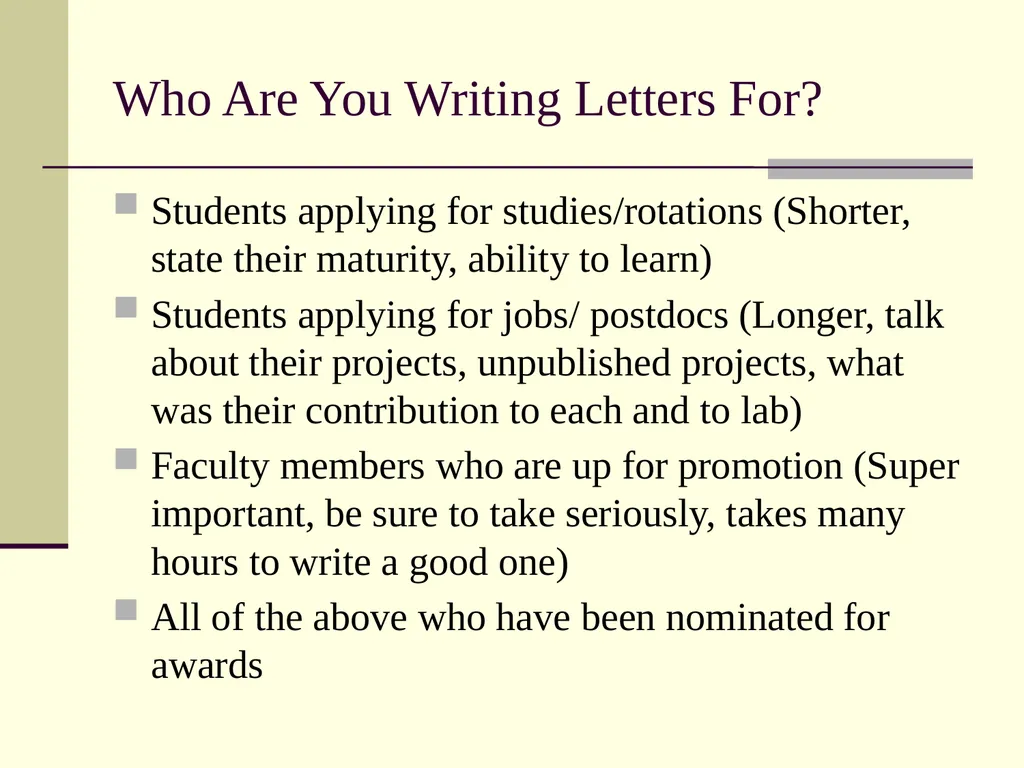
Who Are You Writing Letters For? Students applying for studies/rotations (Shorter, state their maturity, ability to learn)
Students applying for jobs/ postdocs (Longer, talk about their projects, unpublished projects, what was their contribution to each and to lab)
Faculty members who are up for promotion (Super important, be sure to take seriously, takes many hours to write a good one)
All of the above who have been nominated for awards<br>
05
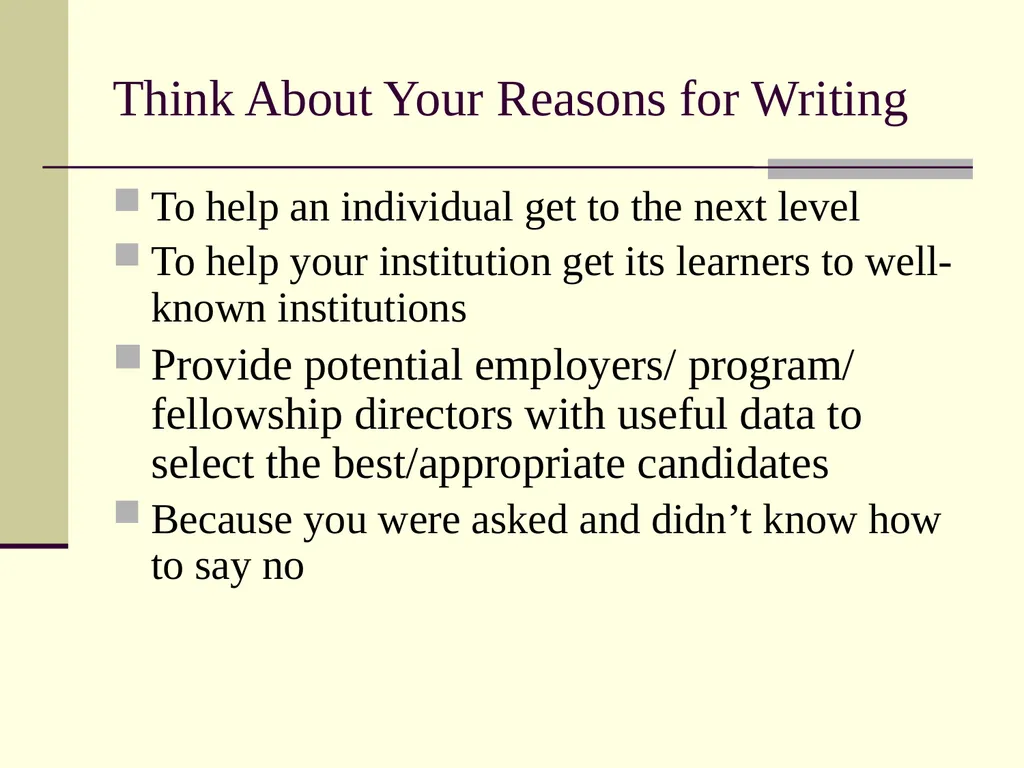
Think About Your Reasons for Writing To help an individual get to the next level
To help your institution get its learners to well-known institutions
Provide potential employers/ program/ fellowship directors with useful data to select the best/appropriate candidates
Because you were asked and didn’t know how to say no<br>
06
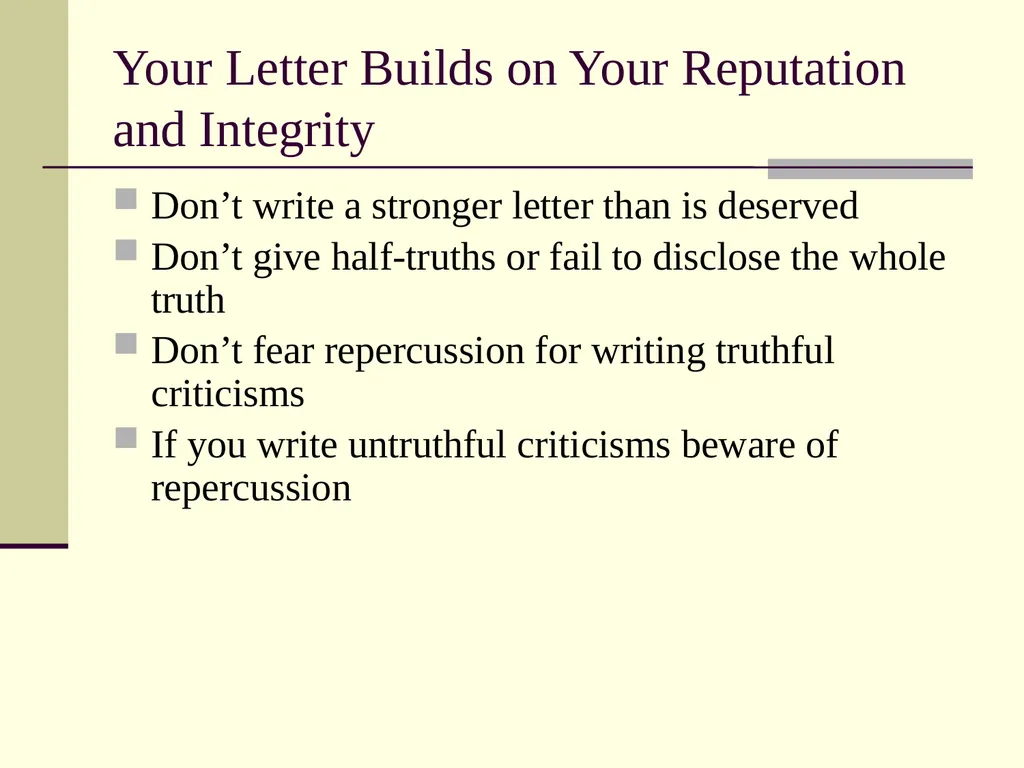
Your Letter Builds on Your Reputation and Integrity Don’t write a stronger letter than is deserved
Don’t give half-truths or fail to disclose the whole truth
Don’t fear repercussion for writing truthful criticisms
If you write untruthful criticisms beware of repercussion<br>
07
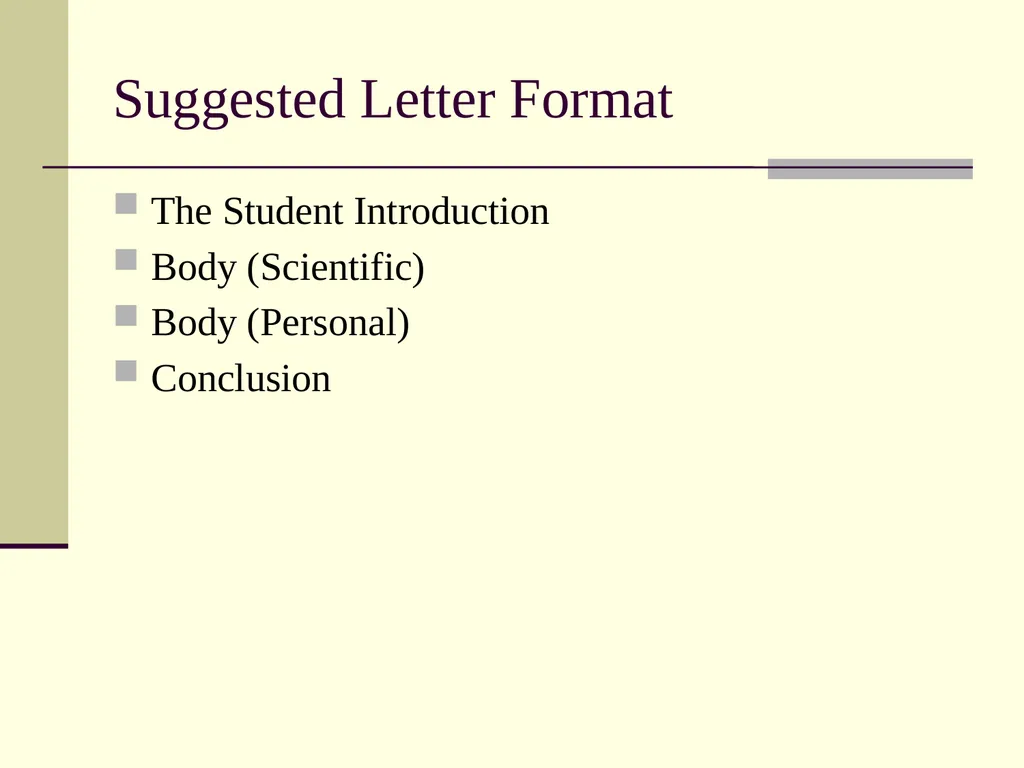
Suggested Letter Format The Student Introduction
Body (Scientific)
Body (Personal)
Conclusion<br>
08
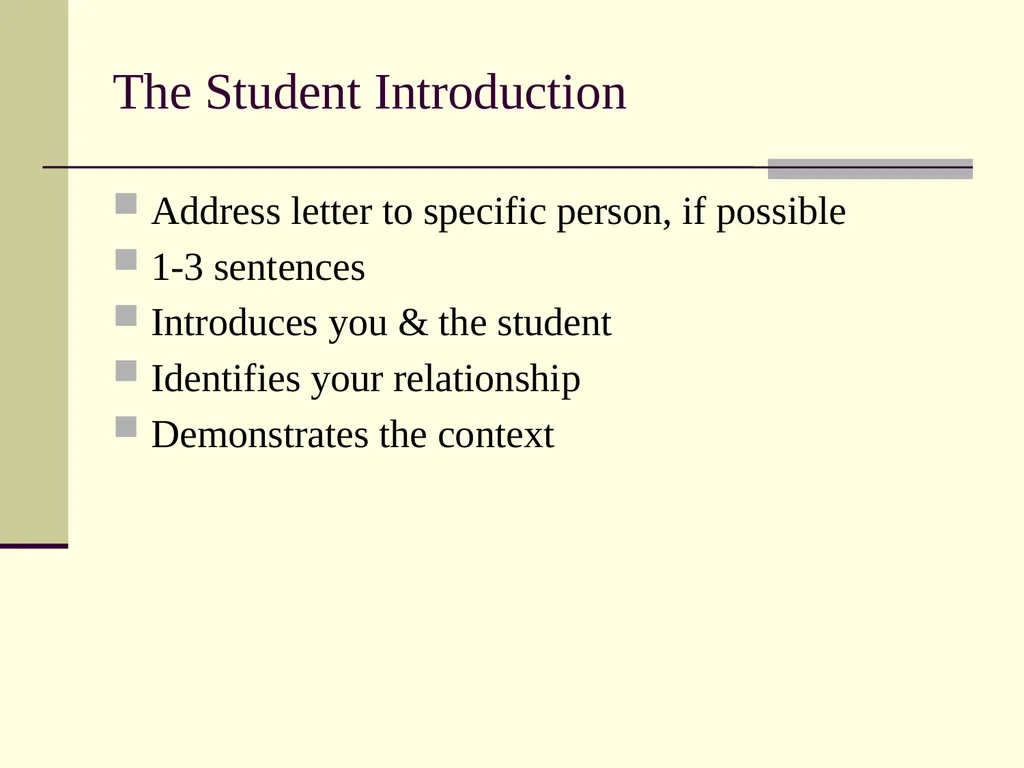
The Student Introduction Address letter to specific person, if possible
1-3 sentences
Introduces you & the student
Identifies your relationship
Demonstrates the context<br>
09
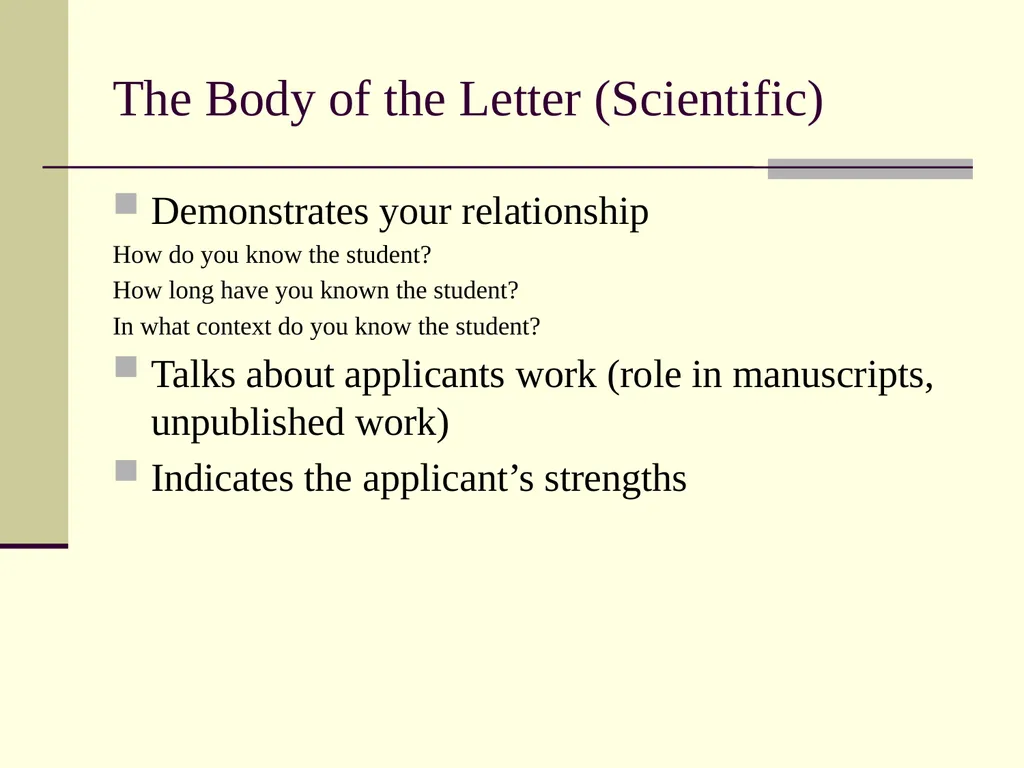
The Body of the Letter (Scientific) Demonstrates your relationship
How do you know the student?
How long have you known the student?
In what context do you know the student?
Talks about applicants work (role in manuscripts, unpublished work)
Indicates the applicant’s strengths<br>
10
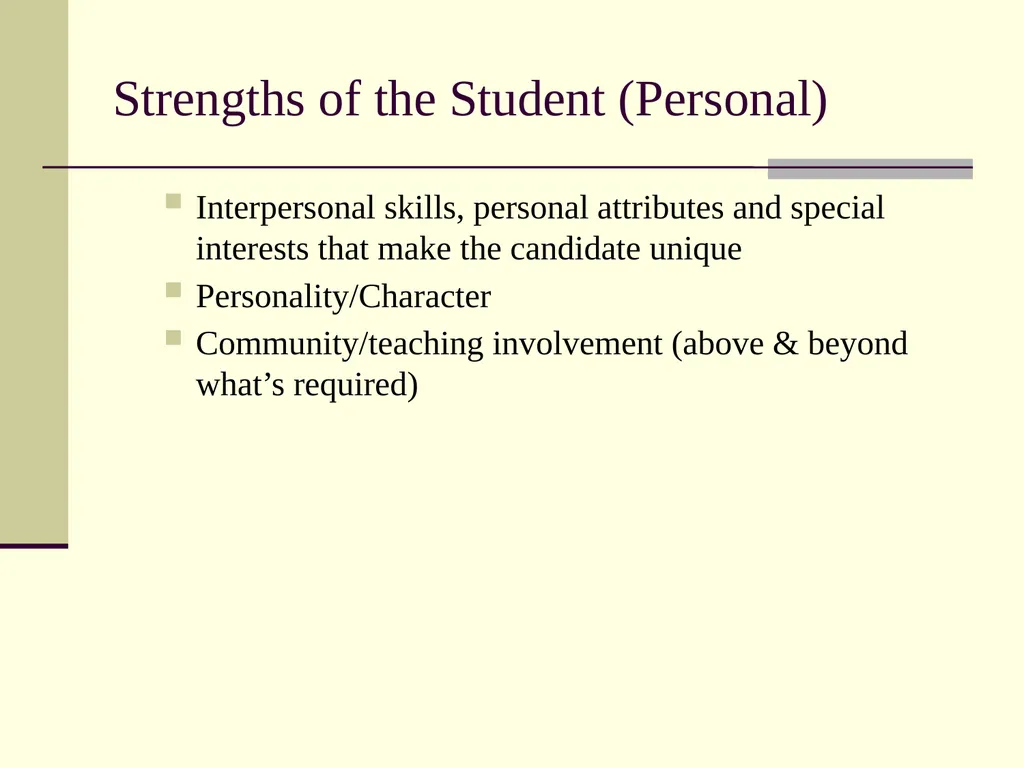
Strengths of the Student (Personal) Interpersonal skills, personal attributes and special interests that make the candidate unique
Personality/Character
Community/teaching involvement (above & beyond what’s required)<br>
11
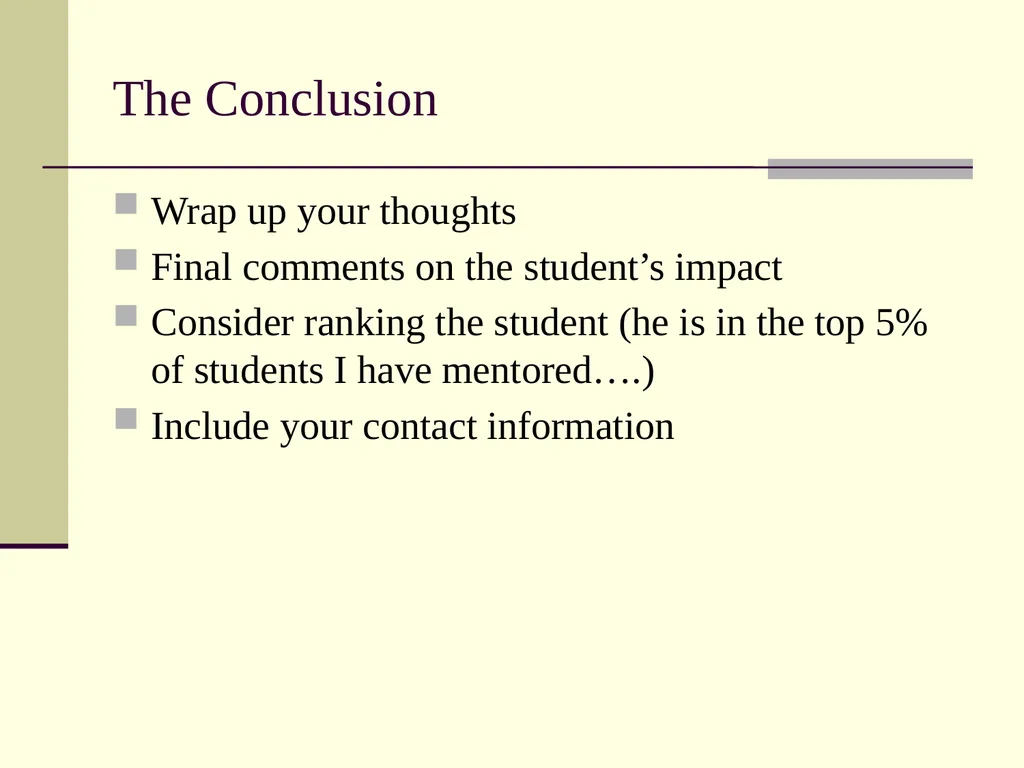
The Conclusion Wrap up your thoughts
Final comments on the student’s impact
Consider ranking the student (he is in the top 5% of students I have mentored….)
Include your contact information<br>
12
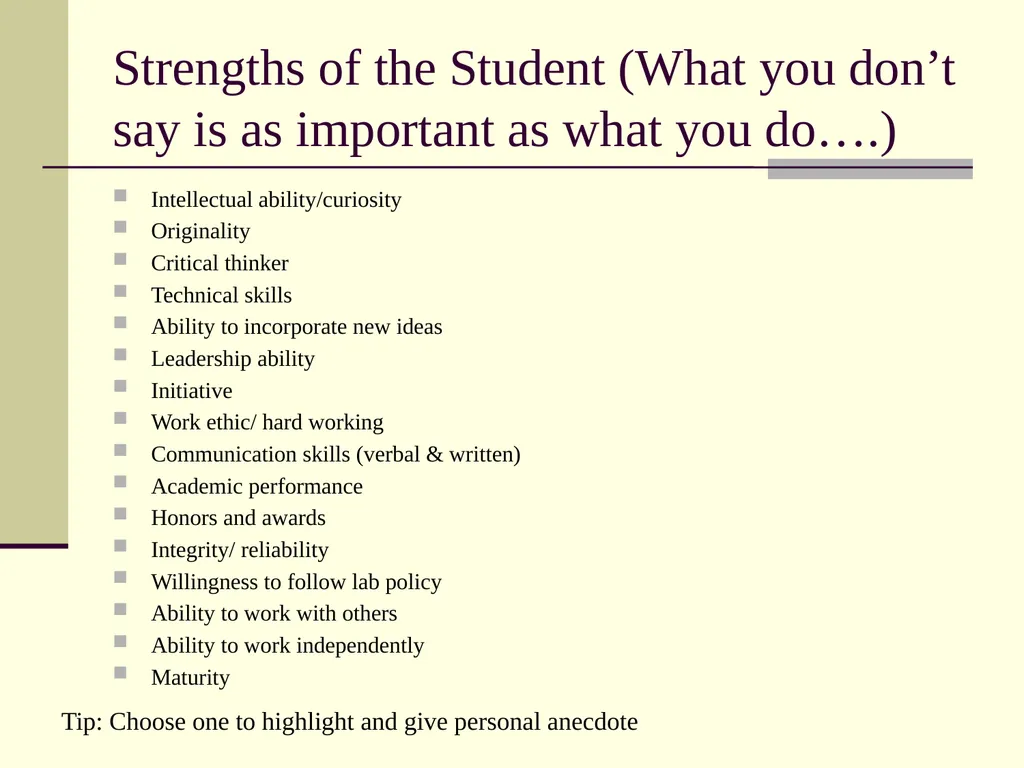
Strengths of the Student (What you don’t say is as important as what you do….) Intellectual ability/curiosity
Originality
Critical thinker
Technical skills
Ability to incorporate new ideas
Leadership ability
Initiative
Work ethic/ hard working
Communication skills (verbal & written)
Academic performance
Honors and awards
Integrity/ reliability
Willingness to follow lab policy
Ability to work with others
Ability to work independently
Maturity Tip: Choose one to highlight and give personal anecdote<br>
13
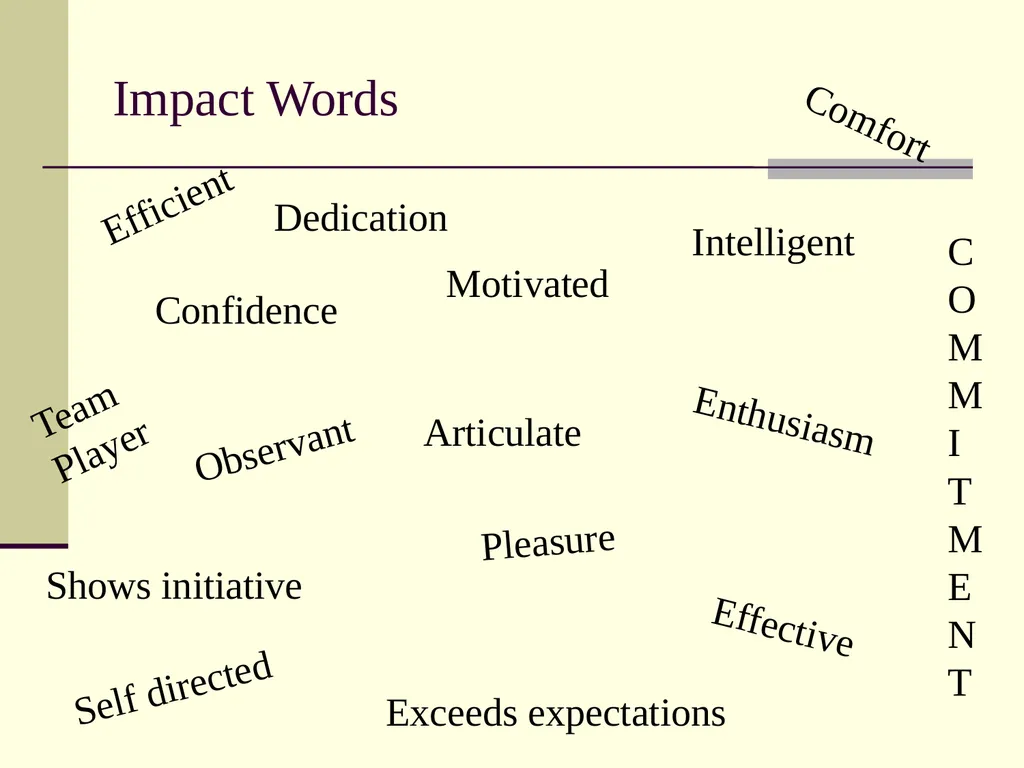
Impact Words Enthusiasm Confidence Pleasure Comfort Articulate Effective Intelligent Observant Efficient Shows initiative Self directed Motivated Exceeds expectations Dedication C
O
M
M
I
T
M
E
N
T Team
Player<br>
14
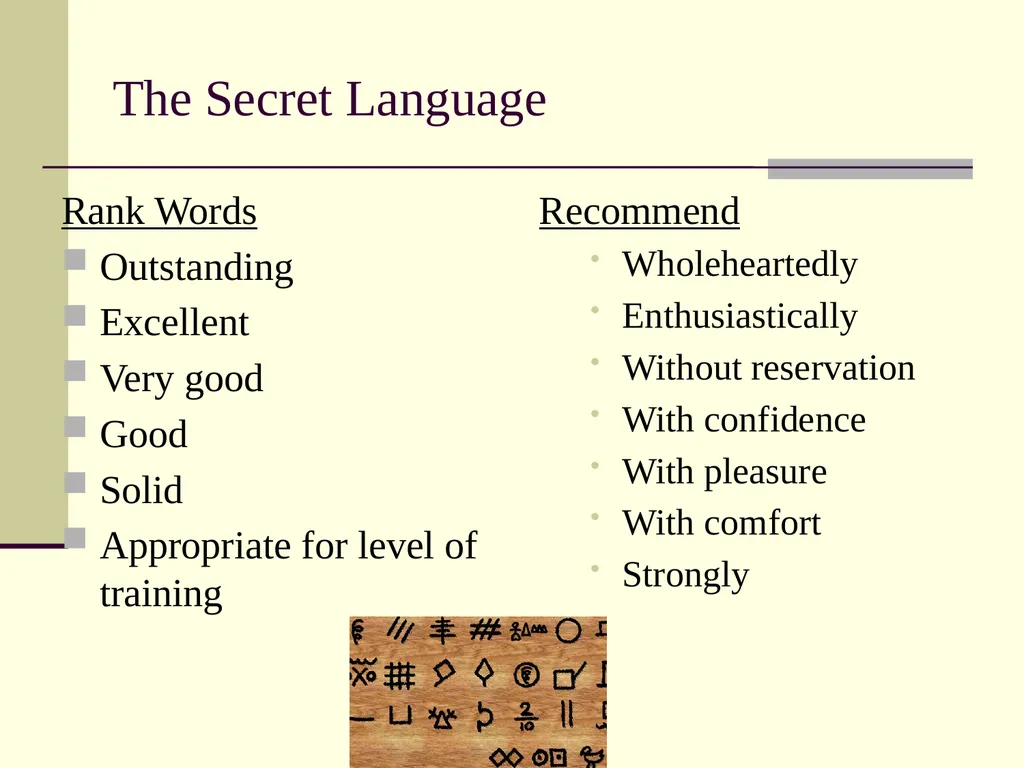
The Secret Language Rank Words
Outstanding
Excellent
Very good
Good
Solid
Appropriate for level of training Recommend
Wholeheartedly
Enthusiastically
Without reservation
With confidence
With pleasure
With comfort
Strongly<br>
15
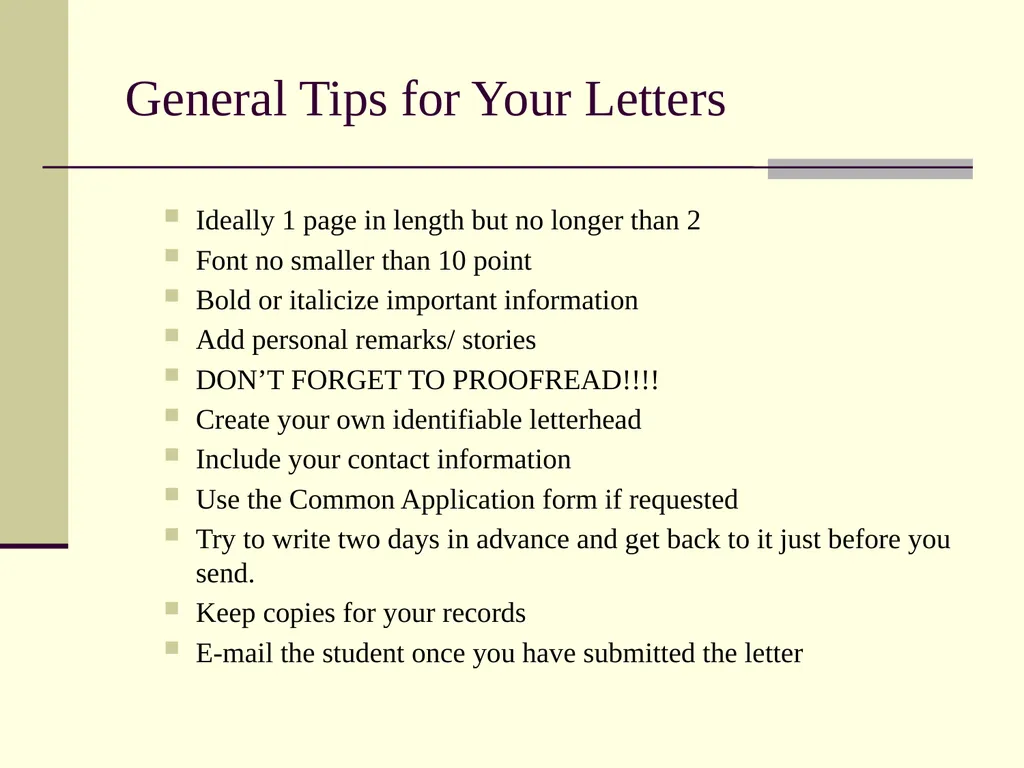
General Tips for Your Letters Ideally 1 page in length but no longer than 2
Font no smaller than 10 point
Bold or italicize important information
Add personal remarks/ stories
DON’T FORGET TO PROOFREAD!!!!
Create your own identifiable letterhead
Include your contact information
Use the Common Application form if requested
Try to write two days in advance and get back to it just before you send.
Keep copies for your records
E-mail the student once you have submitted the letter<br>
16
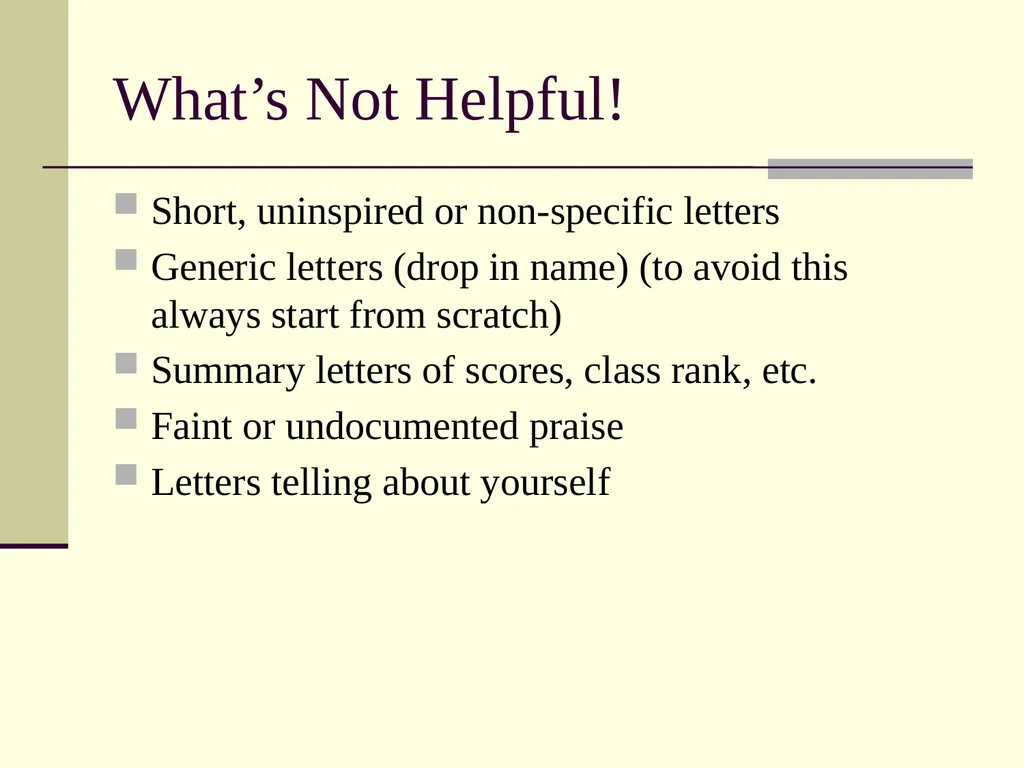
What’s Not Helpful! Short, uninspired or non-specific letters
Generic letters (drop in name) (to avoid this always start from scratch)
Summary letters of scores, class rank, etc.
Faint or undocumented praise
Letters telling about yourself<br>
17
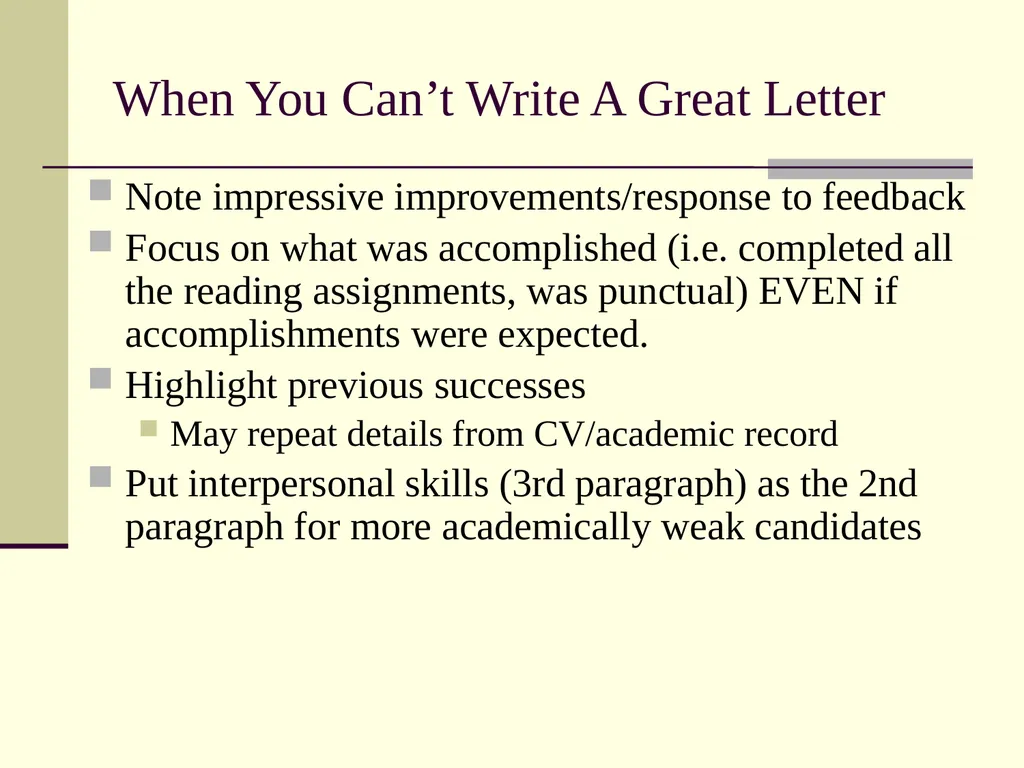
When You Can’t Write A Great Letter Note impressive improvements/response to feedback
Focus on what was accomplished (i.e. completed all the reading assignments, was punctual) EVEN if accomplishments were expected.
Highlight previous successes
May repeat details from CV/academic record
Put interpersonal skills (3rd paragraph) as the 2nd paragraph for more academically weak candidates<br>
18
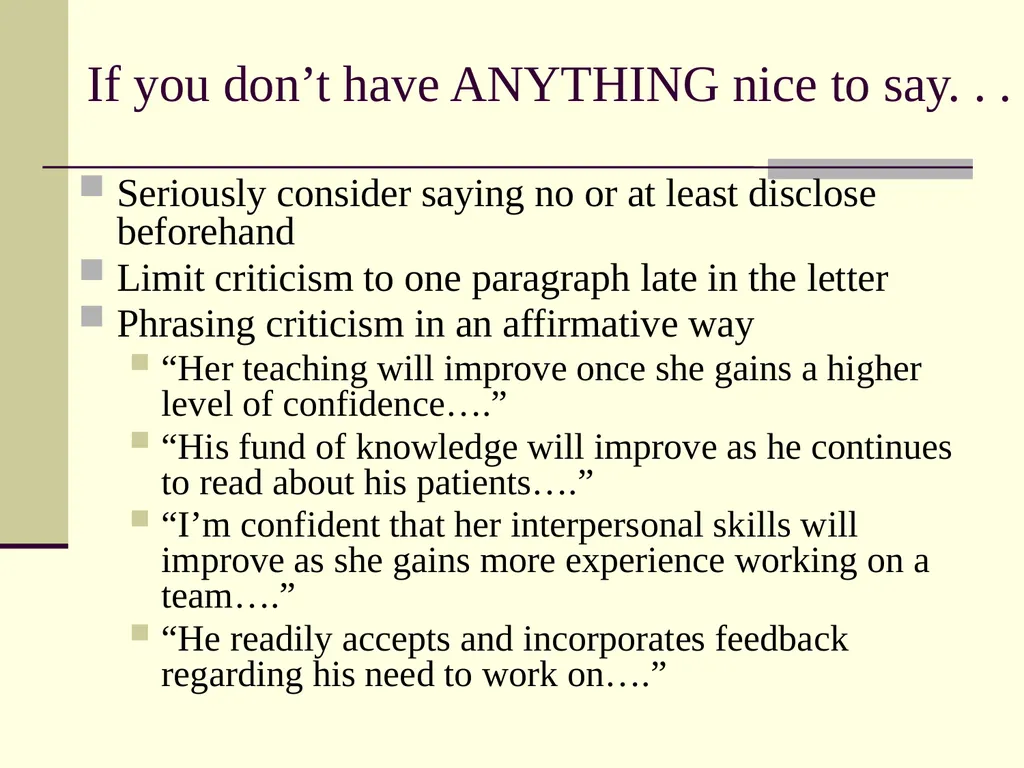
If you don’t have ANYTHING nice to say. . . Seriously consider saying no or at least disclose beforehand
Limit criticism to one paragraph late in the letter
Phrasing criticism in an affirmative way
“Her teaching will improve once she gains a higher level of confidence….”
“His fund of knowledge will improve as he continues to read about his patients….”
“I’m confident that her interpersonal skills will improve as she gains more experience working on a team….”
“He readily accepts and incorporates feedback regarding his need to work on….”<br>
19
Sir Winston Churchhill “We make a living by what we get. We make a life by what we give.”<br>
20
This Presentation was Enabled Thanks to: Helpful Discussions with Prof. Benny Shilo, Weizmann Institute of Science.
Information downloaded from various websites including material taken from
Jennifer L. Bloom, Ed.D University of Illinois College of Medicine
Diane Kanney, Lake Forest College
Lori Greene, Loyola University Chicago
Shannon Kennedy, Northwestern University
Jennifer Motzer, Lake Forest College
Jennifer Kogan MD
Ilene Rosen MD
Barbara Wagner<br>