www.studymafia.org Submitted To: Submitted By: www.studymafia.org www.studymafia.org Seminar On IGNEOUS ROCKS Content Introduction 3 Ways Magma Can Form Characteristics of Igneous Rocks Classification of igneous rocks Examples Conclusion
"www.studymafia.org Submitted To: Submitted By:" is the property of its rightful owner. Permission is granted to
download and print the materials on this website for personal, non-commercial use only, and to display it
on your personal computer provided you do not modify the materials and that you retain all copyright
notices contained in the materials. By downloading content from our website, you accept the terms of this
agreement.
Presentation Transcript
01
www.studymafia.org Submitted To: Submitted By:
www.studymafia.org www.studymafia.org Seminar
On
IGNEOUS ROCKS<br>
02
Content Introduction
3 Ways Magma Can Form
Characteristics of Igneous Rocks
Classification of igneous rocks
Examples
Conclusion<br>
03
IGNEOUS ROCKS Lava is molten rock found at or near Earth’s surface.
Magma is molten rock found beneath Earth’s surface.
Igneous Rocks form from both lava and magma.<br>
04
3 Ways Magma Can Form Pressure – The high pressure inside Earth causes Hot rocks and minerals to remain solid. When those hot rocks rise and the pressure lowers, the minerals melt.
Temperature – High temperatures melt minerals. Each mineral has a different melting point – so some minerals melt when others remain solid.
Composition – If fluids, such as water, combine with the rock, the composition of the rock changes which lowers the melting point enough for it to melt and lower temperatures.<br>
05
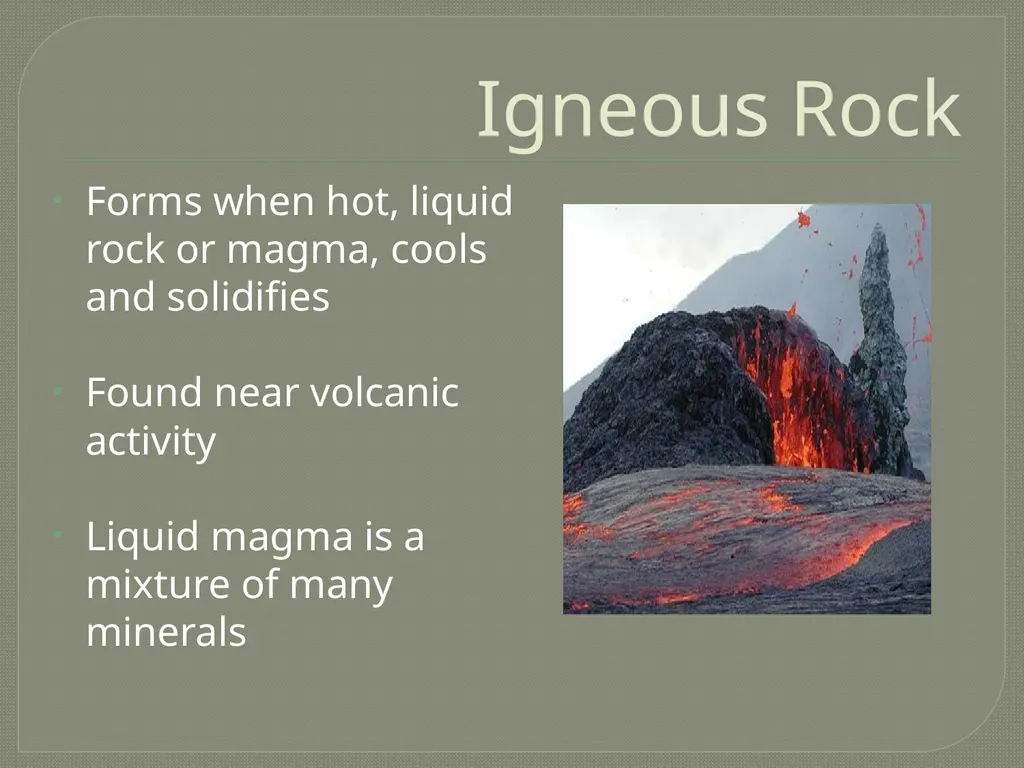
Igneous Rock Forms when hot, liquid rock or magma, cools and solidifies
Found near volcanic activity
Liquid magma is a mixture of many minerals<br>
06
Characteristics of Igneous Rocks The igneous form of rocks does not include any fossil deposits. If there are any chances of fossil deep inside the crust, it erupts out of the Earth’s surface and gets destroyed due to the sheer heat these rocks produce.
Most igneous forms include more than one mineral deposit.
They can be either glassy or coarse.
These usually do not react with acids.
The mineral deposits are available in the form of patches with different sizes.<br>
07
Intrusive & Extrusive Those igneous rocks that form from magma are referred to as INTRUSIVE.
INTRUSIVE = Inside
Those igneous rocks that form from lava are referred to as EXTRUSIVE.
EXTRUSIVE = Outside<br>
08
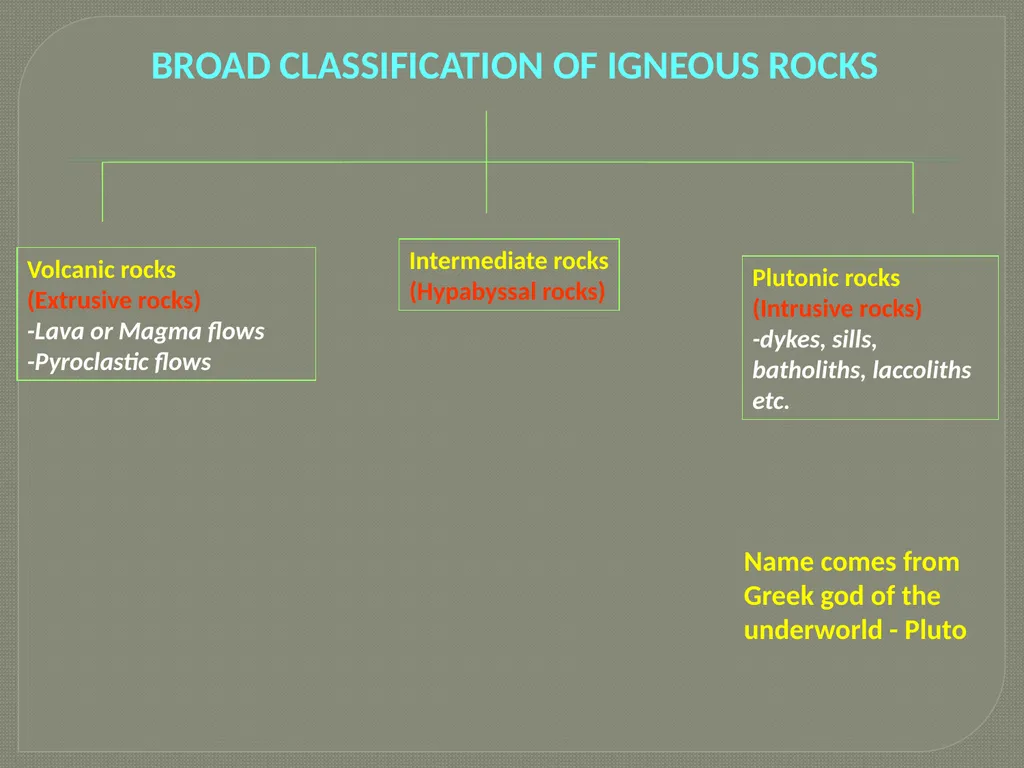
BROAD CLASSIFICATION OF IGNEOUS ROCKS Volcanic rocks
(Extrusive rocks)
-Lava or Magma flows
-Pyroclastic flows Intermediate rocks
(Hypabyssal rocks) Plutonic rocks
(Intrusive rocks)
-dykes, sills, batholiths, laccoliths etc. Name comes from Greek god of the underworld - Pluto<br>
09
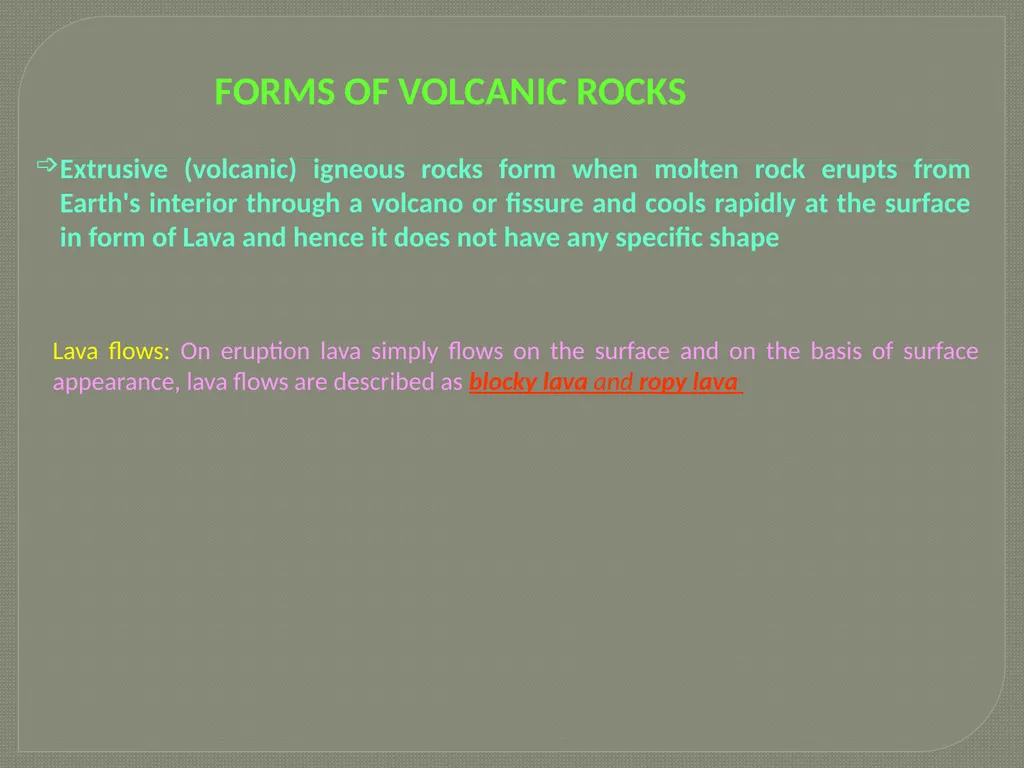
FORMS OF VOLCANIC ROCKS Extrusive (volcanic) igneous rocks form when molten rock erupts from Earth's interior through a volcano or fissure and cools rapidly at the surface in form of Lava and hence it does not have any specific shape Lava flows: On eruption lava simply flows on the surface and on the basis of surface appearance, lava flows are described as blocky lava and ropy lava<br>
10
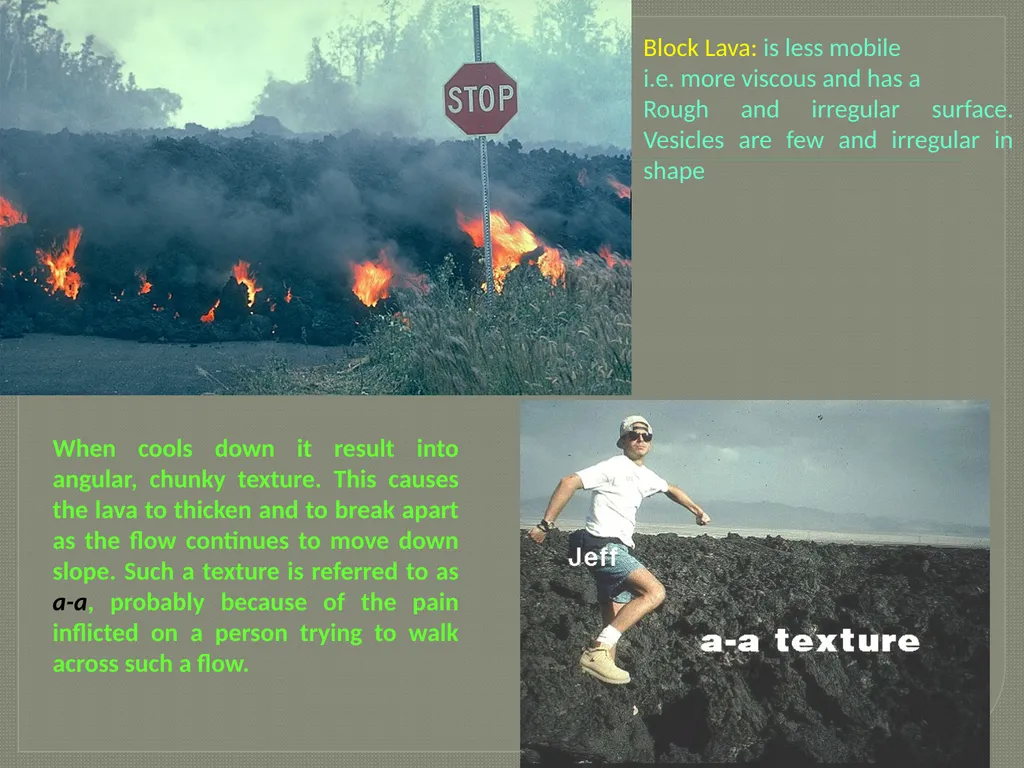
Block Lava: is less mobile
i.e. more viscous and has a
Rough and irregular surface. Vesicles are few and irregular in shape When cools down it result into angular, chunky texture. This causes the lava to thicken and to break apart as the flow continues to move down slope. Such a texture is referred to as a-a, probably because of the pain inflicted on a person trying to walk across such a flow.<br>
11
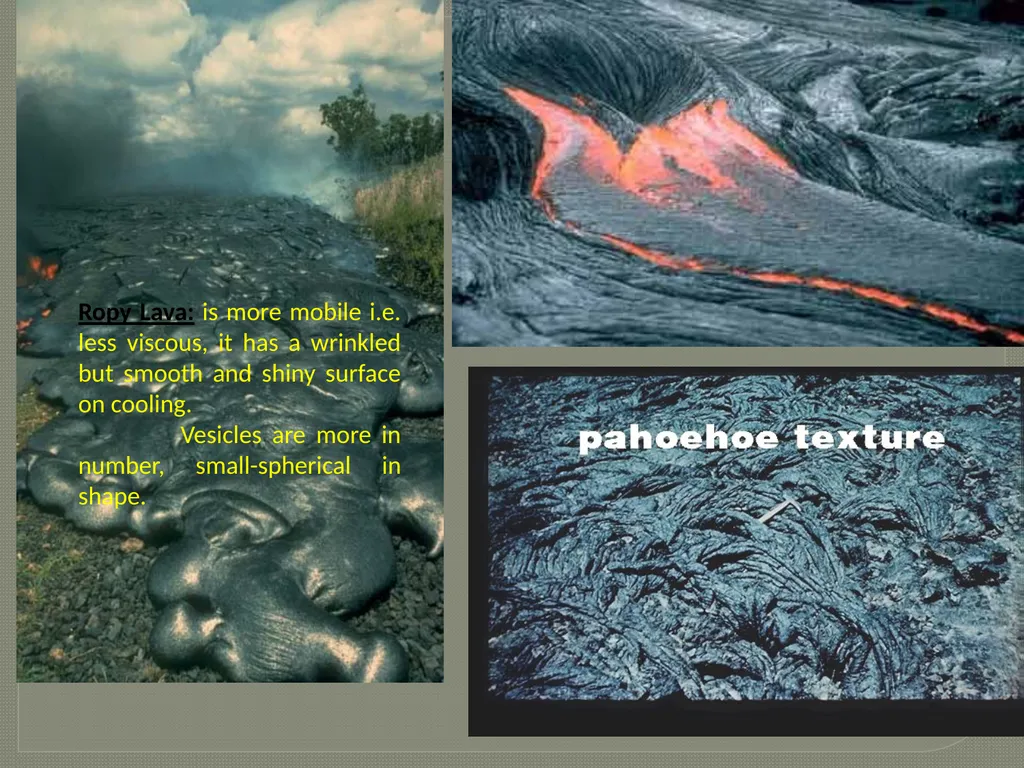
Ropy Lava: is more mobile i.e. less viscous, it has a wrinkled but smooth and shiny surface on cooling.
Vesicles are more in number, small-spherical in shape.<br>
12
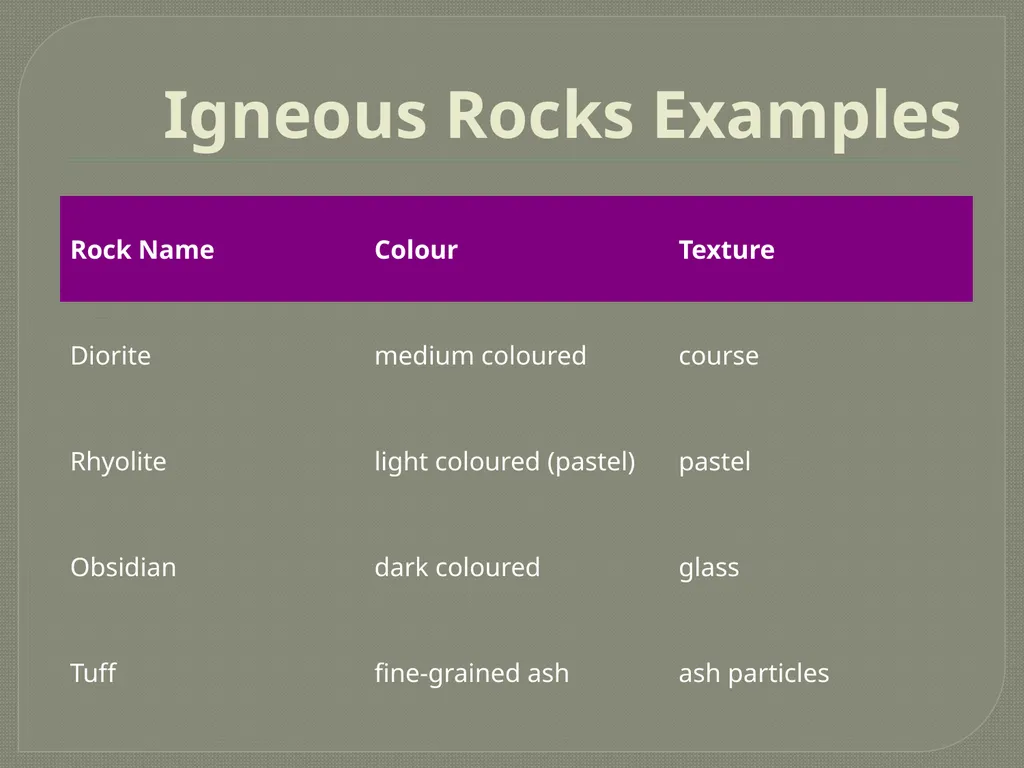
Igneous Rocks Examples<br>
13
Conclusion In summary, igneous rocks play a crucial role in Earth's geological processes and provide valuable information about the planet's history and composition.
Studying these rocks enhances our understanding of geology, mineralogy, and the dynamic processes shaping the Earth's surface and interior.<br>