Year 9 Revision Understanding the Modern world: Conflict and Cooperation Year 9 - Understanding the Modern world: Conflict and Cooperation Britain and the First World War Weimar Germany 1919-1933 The New Democratic Government was
"Year 9 Revision Understanding the Modern world:" is the property of its rightful owner. Permission is granted to
download and print the materials on this website for personal, non-commercial use only, and to display it
on your personal computer provided you do not modify the materials and that you retain all copyright
notices contained in the materials. By downloading content from our website, you accept the terms of this
agreement.
Presentation Transcript
01
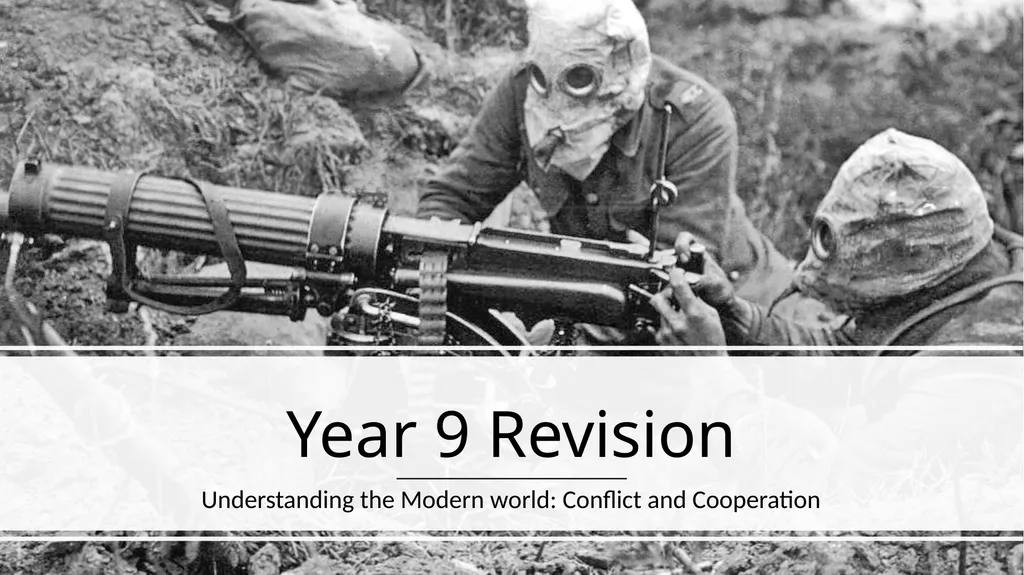
Year 9 Revision Understanding the Modern world: Conflict and Cooperation<br>
02
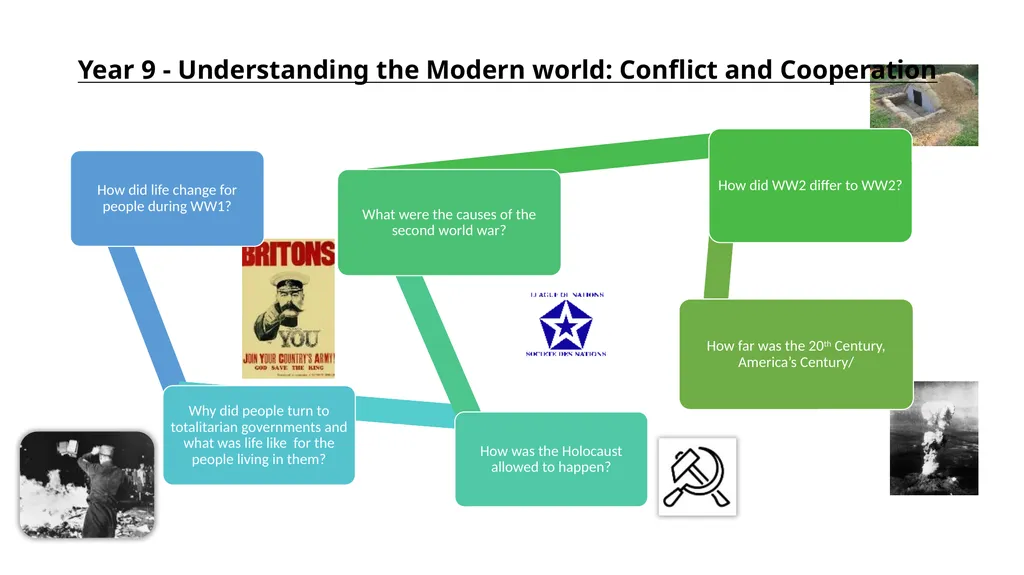
Year 9 - Understanding the Modern world: Conflict and Cooperation<br>
03
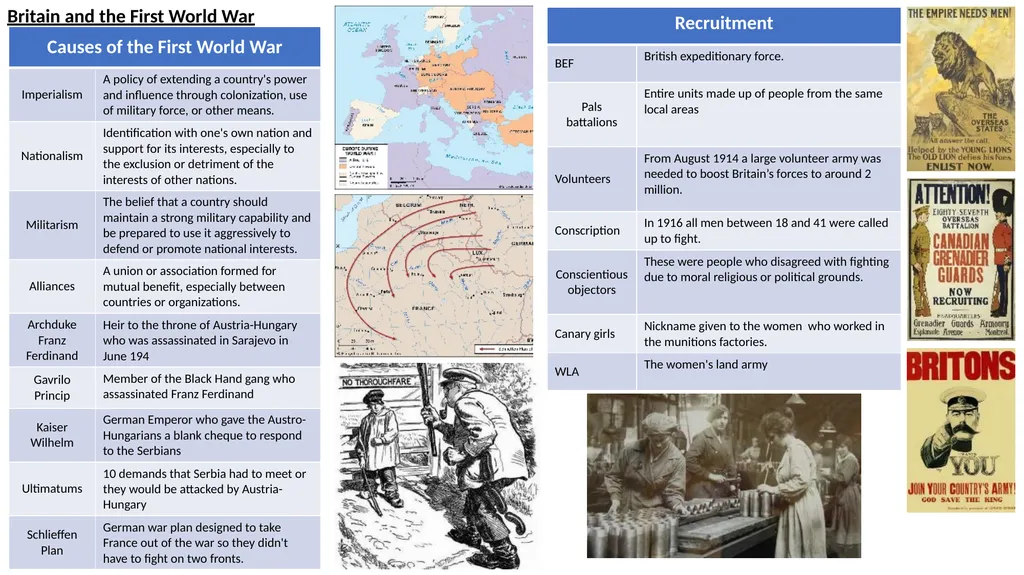
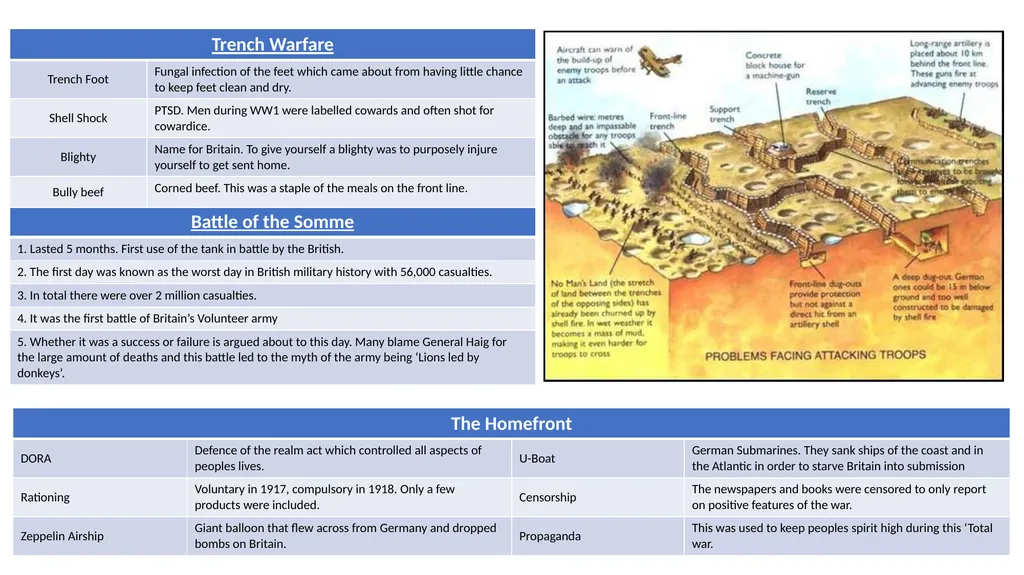
Britain and the First World War<br>
04
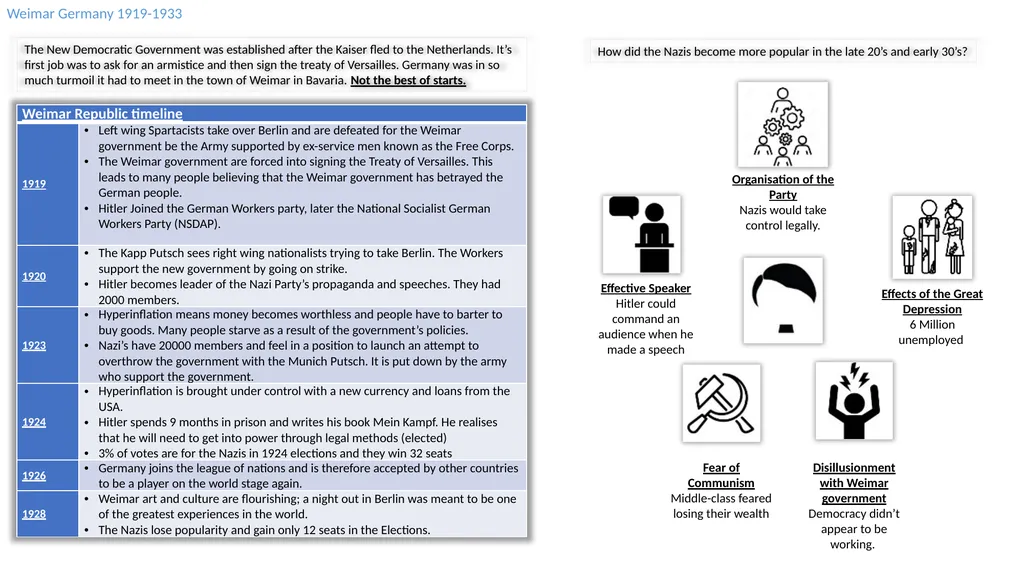
Weimar Germany 1919-1933 The New Democratic Government was established after the Kaiser fled to the Netherlands. It’s first job was to ask for an armistice and then sign the treaty of Versailles. Germany was in so much turmoil it had to meet in the town of Weimar in Bavaria. Not the best of starts. Effects of the Great Depression
6 Million unemployed Disillusionment with Weimar government
Democracy didn’t appear to be working. Fear of Communism
Middle-class feared losing their wealth Effective Speaker
Hitler could command an audience when he made a speech Organisation of the Party
Nazis would take control legally. How did the Nazis become more popular in the late 20’s and early 30’s?<br>
05
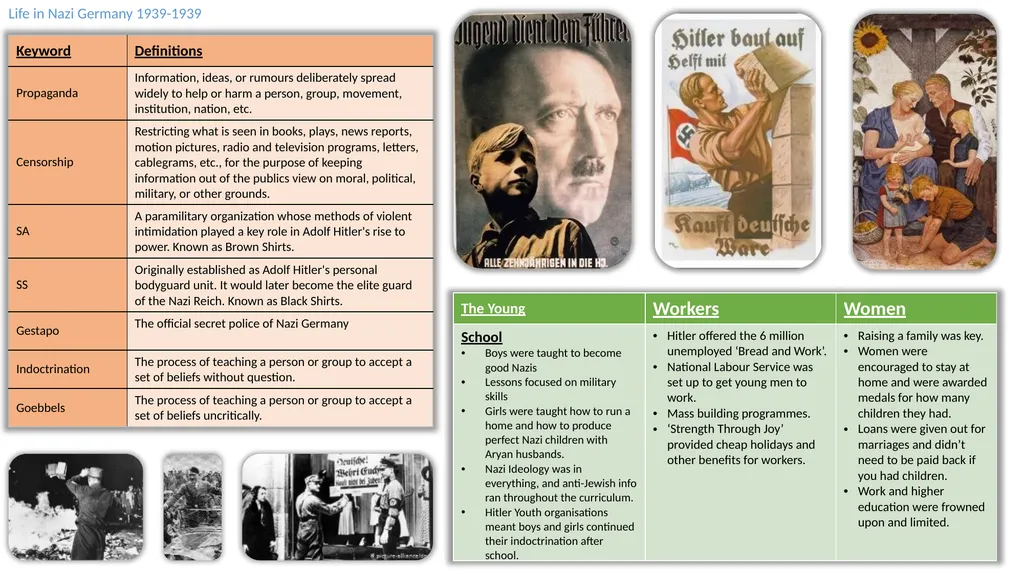
Life in Nazi Germany 1939-1939<br>
06
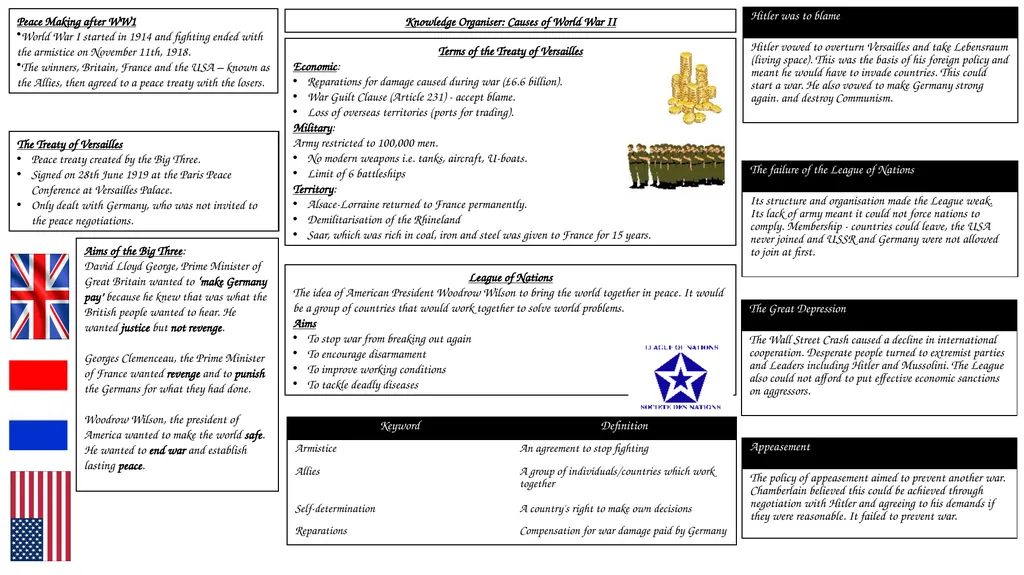
Knowledge Organiser: Causes of World War II Aims of the Big Three:
David Lloyd George, Prime Minister of Great Britain wanted to ‘make Germany pay’ because he knew that was what the British people wanted to hear. He wanted justice but not revenge.
Georges Clemenceau, the Prime Minister of France wanted revenge and to punish the Germans for what they had done.
Woodrow Wilson, the president of America wanted to make the world safe. He wanted to end war and establish lasting peace. Peace Making after WW1
World War I started in 1914 and fighting ended with the armistice on November 11th, 1918.
The winners, Britain, France and the USA – known as the Allies, then agreed to a peace treaty with the losers. The Treaty of Versailles
Peace treaty created by the Big Three.
Signed on 28th June 1919 at the Paris Peace Conference at Versailles Palace.
Only dealt with Germany, who was not invited to the peace negotiations. Terms of the Treaty of Versailles
Economic:
Reparations for damage caused during war (£6.6 billion).
War Guilt Clause (Article 231) - accept blame.
Loss of overseas territories (ports for trading).
Military:
Army restricted to 100,000 men.
No modern weapons i.e. tanks, aircraft, U-boats.
Limit of 6 battleships
Territory:
Alsace-Lorraine returned to France permanently.
Demilitarisation of the Rhineland
Saar, which was rich in coal, iron and steel was given to France for 15 years. League of Nations
The idea of American President Woodrow Wilson to bring the world together in peace. It would be a group of countries that would work together to solve world problems.
Aims
To stop war from breaking out again
To encourage disarmament
To improve working conditions
To tackle deadly diseases<br>
07
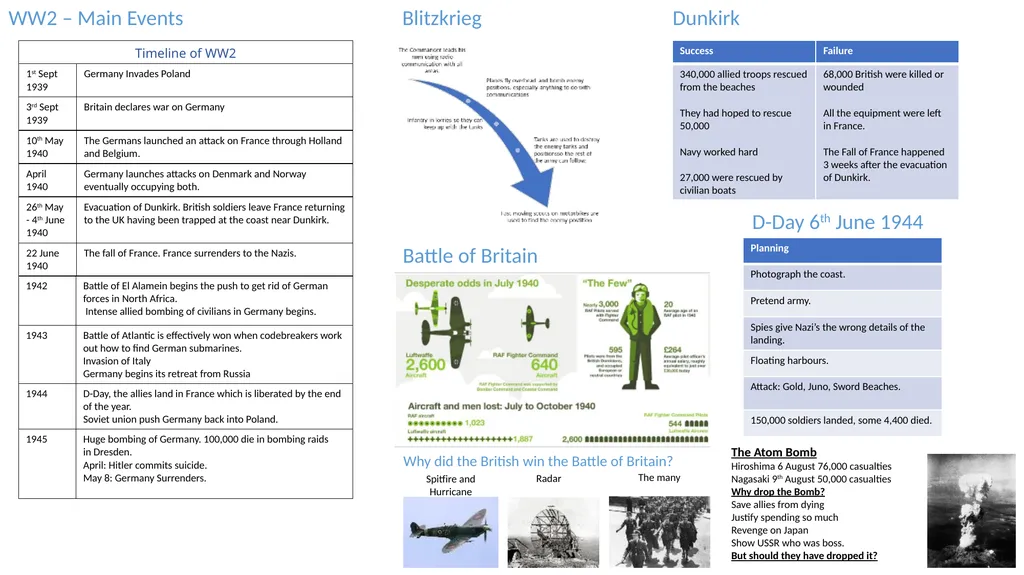
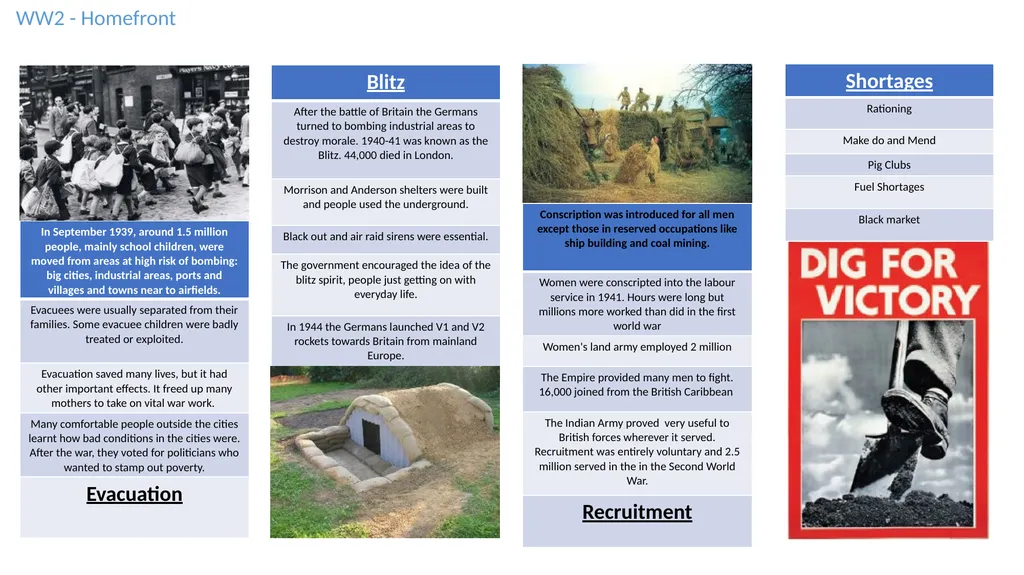
WW2 – Main Events Blitzkrieg Dunkirk Battle of Britain Why did the British win the Battle of Britain? Spitfire and Hurricane Radar The many D-Day 6th June 1944 The Atom Bomb
Hiroshima 6 August 76,000 casualties Nagasaki 9th August 50,000 casualties
Why drop the Bomb?
Save allies from dying
Justify spending so much
Revenge on Japan
Show USSR who was boss.
But should they have dropped it?<br>