Zero budget natural farming Exploratory Fieldwork in Maharashtra and Anantapur Fieldwork locations THE 4 WHEELS OF ZBNF 1. Beejamruth Seed treatment with a) 20L water b) 5kg cowdung c) 5L cowurine d) 50g lime Seeds mixed overnight and sown
"Zero budget natural farming Exploratory Fieldwork" is the property of its rightful owner. Permission is granted to
download and print the materials on this website for personal, non-commercial use only, and to display it
on your personal computer provided you do not modify the materials and that you retain all copyright
notices contained in the materials. By downloading content from our website, you accept the terms of this
agreement.
Presentation Transcript
01
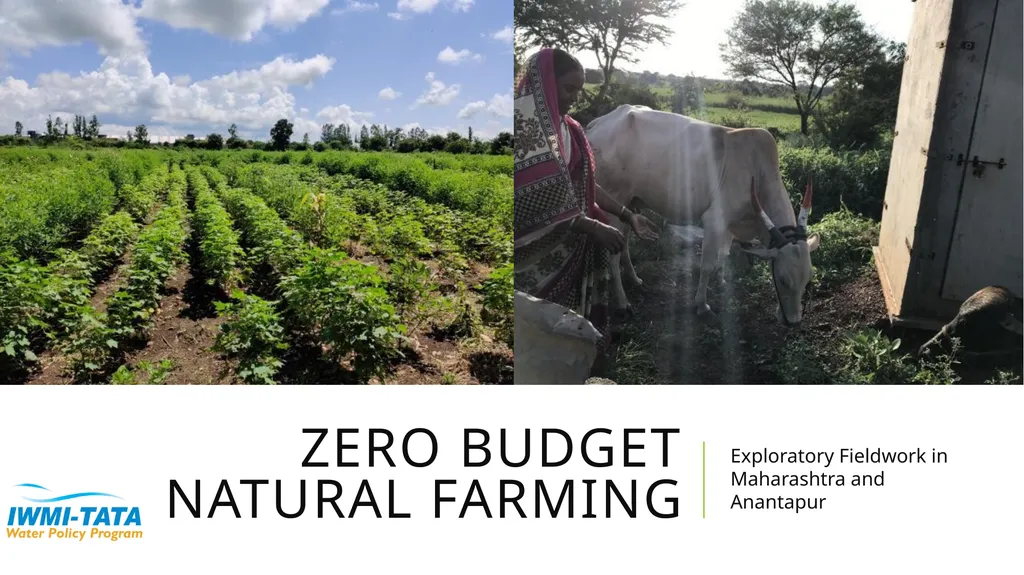
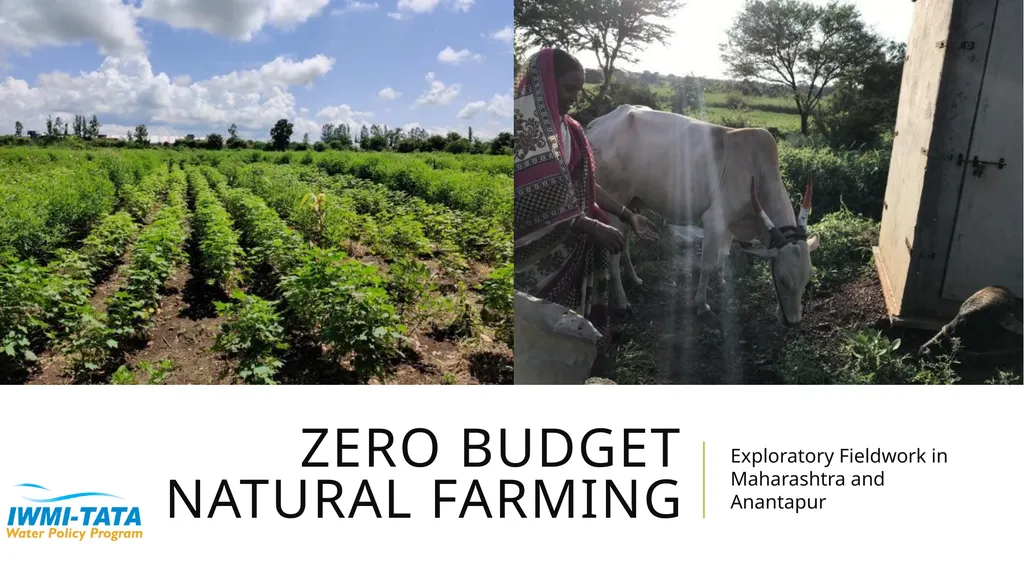
Zero budget natural farming Exploratory Fieldwork in Maharashtra and Anantapur<br>
02
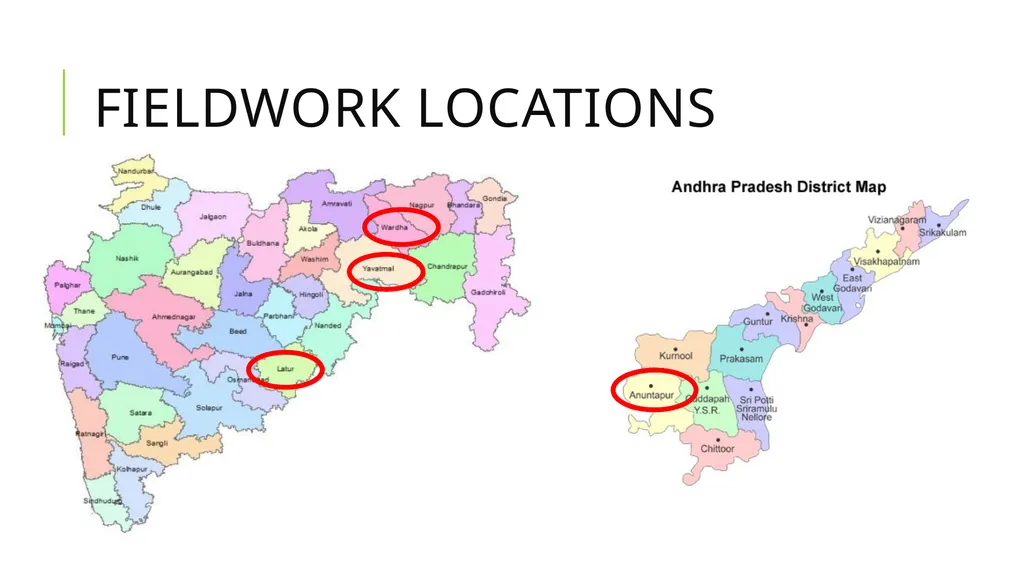
Fieldwork locations<br>
03
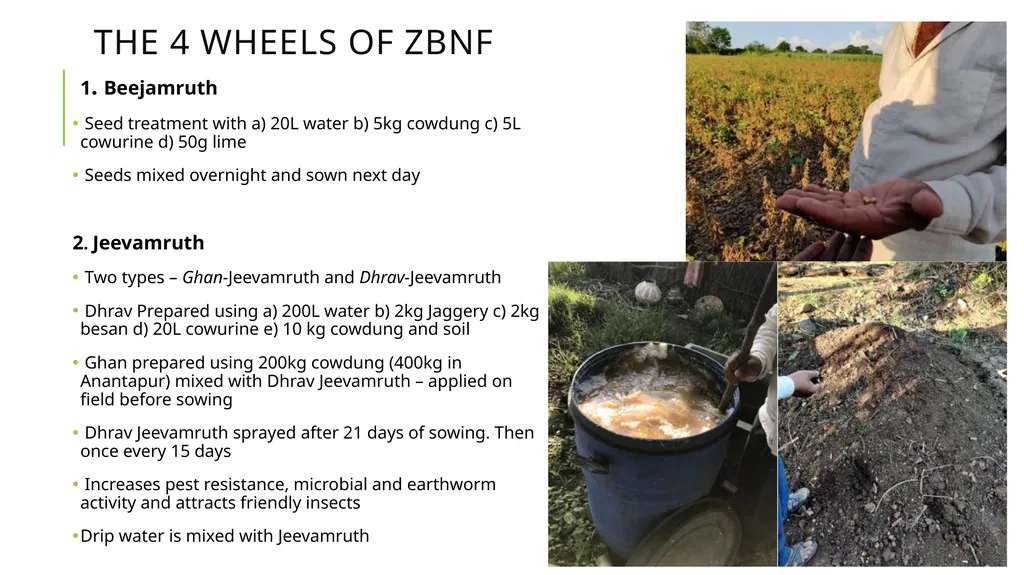
THE 4 WHEELS OF ZBNF 1. Beejamruth
Seed treatment with a) 20L water b) 5kg cowdung c) 5L cowurine d) 50g lime
Seeds mixed overnight and sown next day
2. Jeevamruth
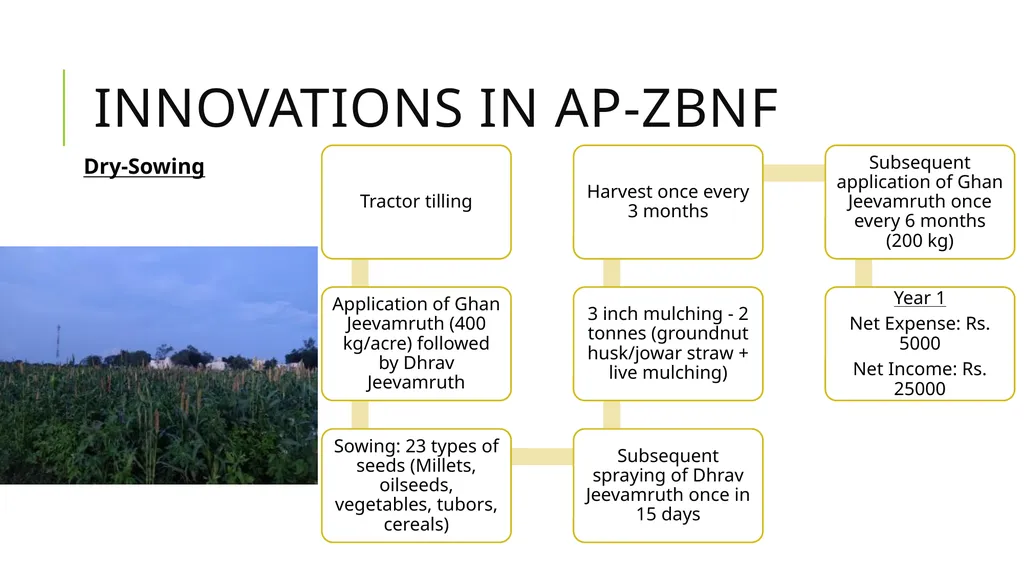
Two types – Ghan-Jeevamruth and Dhrav-Jeevamruth
Dhrav Prepared using a) 200L water b) 2kg Jaggery c) 2kg besan d) 20L cowurine e) 10 kg cowdung and soil
Ghan prepared using 200kg cowdung (400kg in Anantapur) mixed with Dhrav Jeevamruth – applied on field before sowing
Dhrav Jeevamruth sprayed after 21 days of sowing. Then once every 15 days
Increases pest resistance, microbial and earthworm activity and attracts friendly insects
Drip water is mixed with Jeevamruth<br>
04
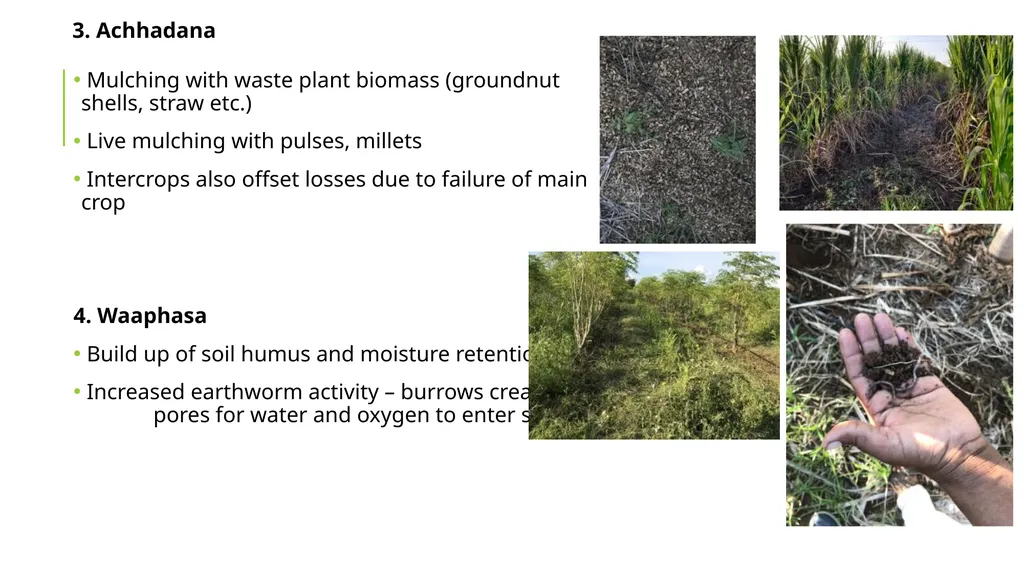
3. Achhadana Mulching with waste plant biomass (groundnut shells, straw etc.)
Live mulching with pulses, millets
Intercrops also offset losses due to failure of main crop
4. Waaphasa
Build up of soil humus and moisture retention
Increased earthworm activity – burrows create pores for water and oxygen to enter soil<br>
05
Other components Astras
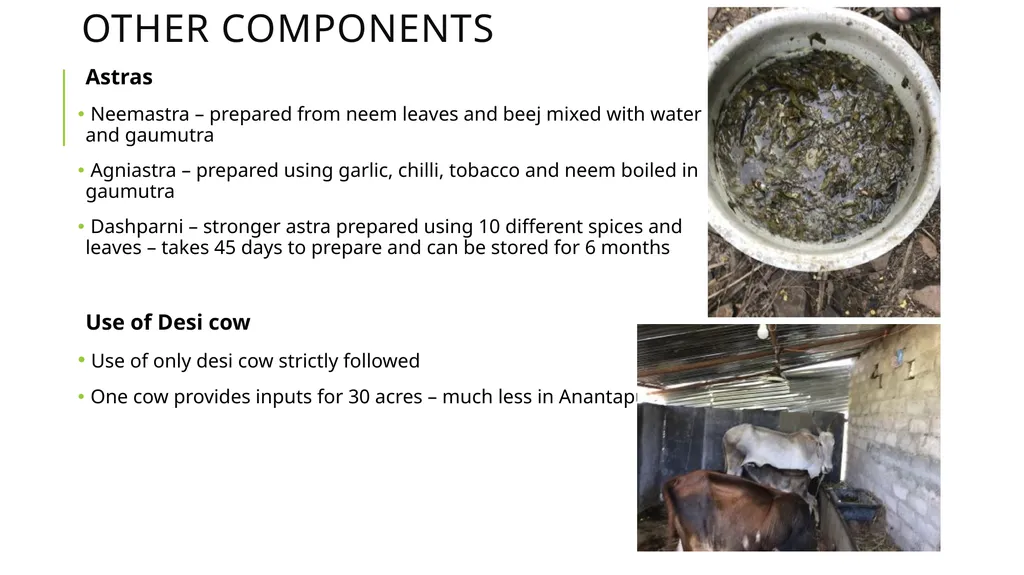
Neemastra – prepared from neem leaves and beej mixed with water and gaumutra
Agniastra – prepared using garlic, chilli, tobacco and neem boiled in gaumutra
Dashparni – stronger astra prepared using 10 different spices and leaves – takes 45 days to prepare and can be stored for 6 months
Use of Desi cow
Use of only desi cow strictly followed
One cow provides inputs for 30 acres – much less in Anantapur<br>
06
VISIT TO Yavatmal, WARDHA AND LATUR ZBNF and other natural farming techniques taken up by mostly large farmers
ZBNF groups are present in villages – organize inputs, processing and marketing
Few purely ZBNF farmers. They also follow other farming techniques such as Beljibhai method, Avdut Baba Shivanand Swami’s Shivyog method, Agnihotra, Shendrishithi etc.
NGOs like Bajaj Foundation organize ZBNF training and Grain Festivals
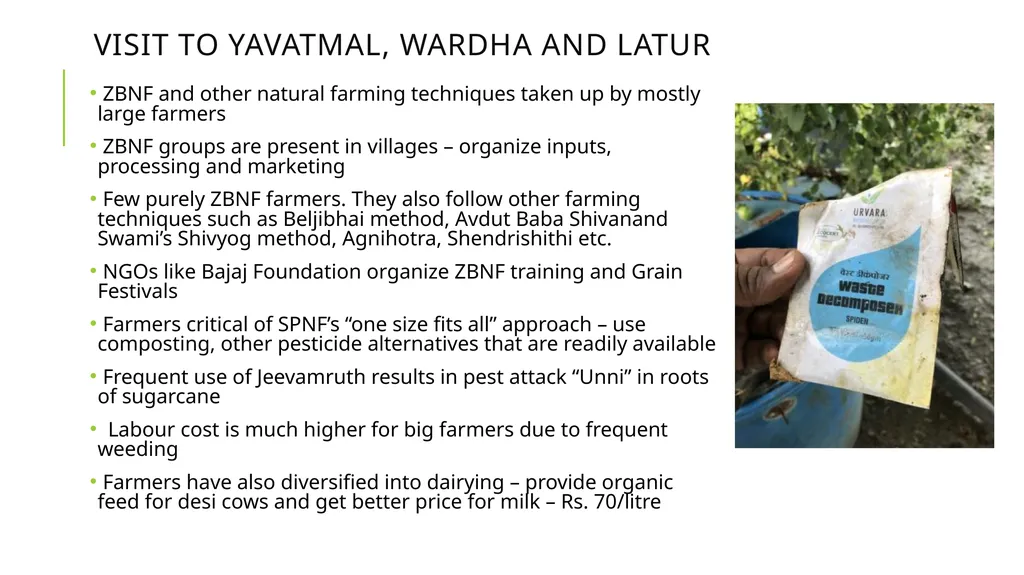
Farmers critical of SPNF’s “one size fits all” approach – use composting, other pesticide alternatives that are readily available
Frequent use of Jeevamruth results in pest attack “Unni” in roots of sugarcane
Labour cost is much higher for big farmers due to frequent weeding
Farmers have also diversified into dairying – provide organic feed for desi cows and get better price for milk – Rs. 70/litre<br>
07
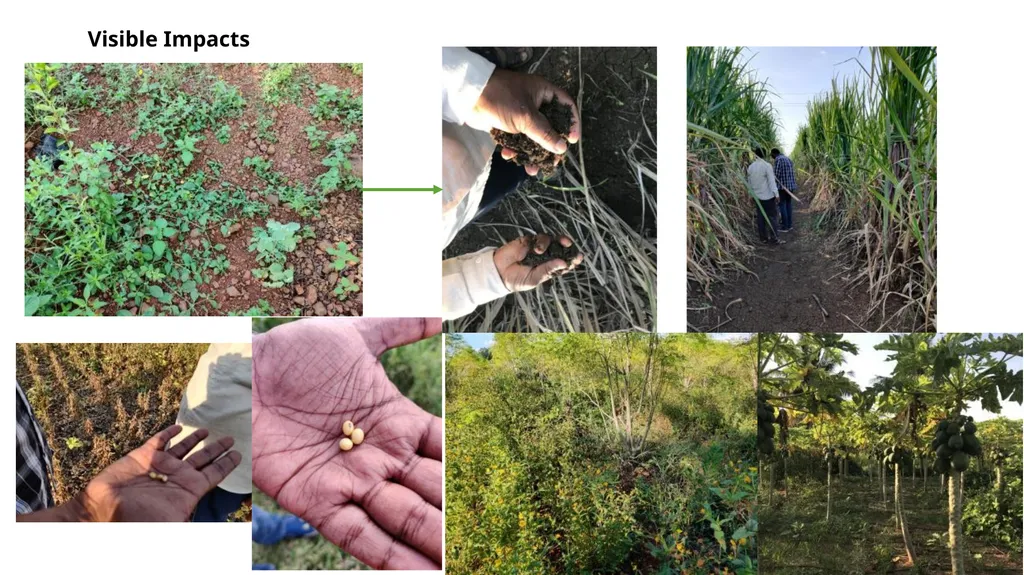
Visible Impacts<br>
08
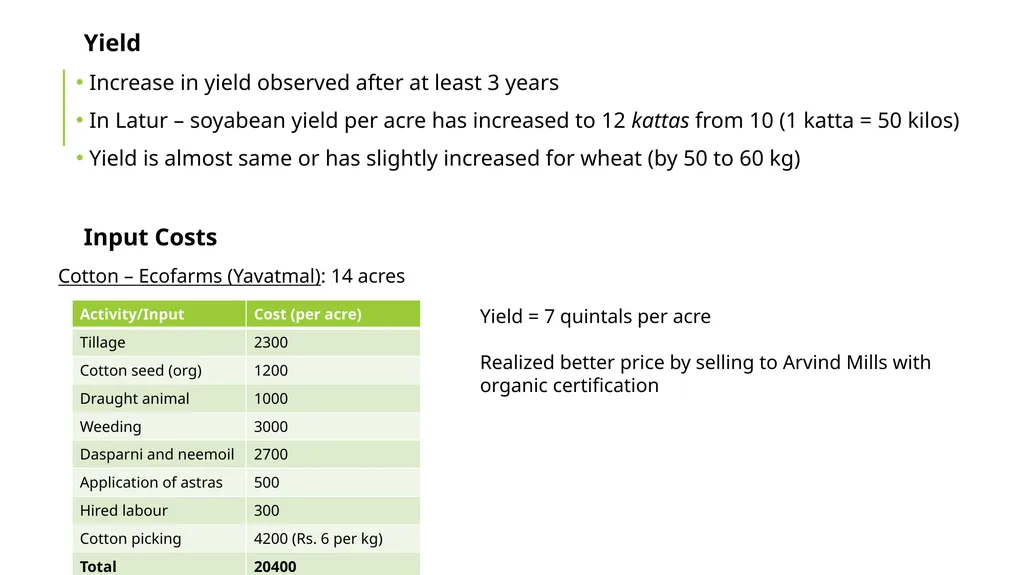
Yield
Increase in yield observed after at least 3 years
In Latur – soyabean yield per acre has increased to 12 kattas from 10 (1 katta = 50 kilos)
Yield is almost same or has slightly increased for wheat (by 50 to 60 kg)
Realized better price by selling to Arvind Mills with organic certification<br>
09
Water use
Change in water use not very significant
In Latur – now 4 irrigations are given instead of 5 in the case of wheat
Water use in sugarcane remains the same
Marketing ZBNF Produce
No particular large scale marketing efforts in place
Large farmers aggregate produce among their groups and sell directly to firms like Arvind Mills, Amravati National etc.<br>
10
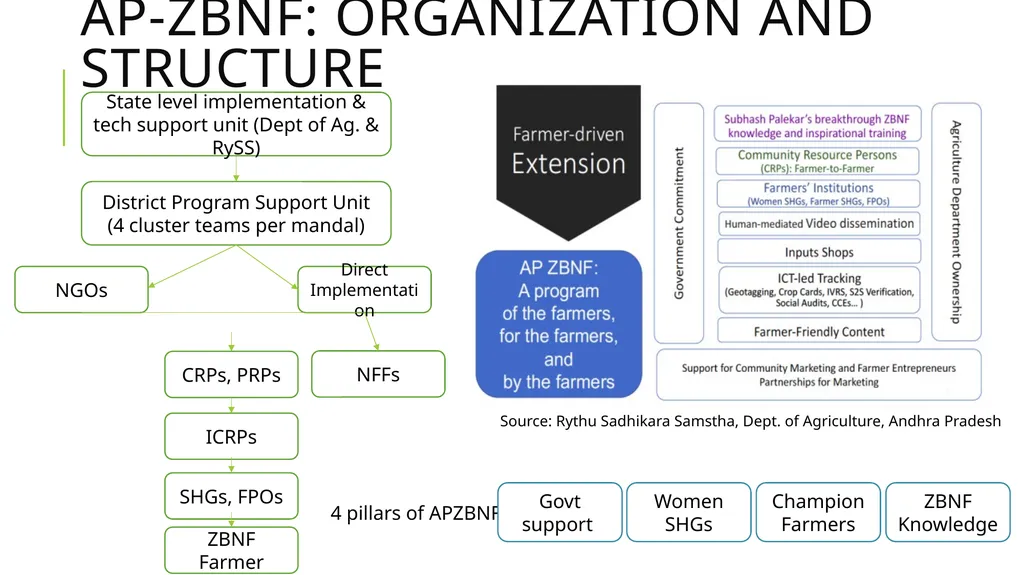
AP-ZBNF: ORGANIZATION AND STRUCTURE Source: Rythu Sadhikara Samstha, Dept. of Agriculture, Andhra Pradesh State level implementation & tech support unit (Dept of Ag. & RySS) District Program Support Unit (4 cluster teams per mandal) NGOs Direct Implementation CRPs, PRPs ICRPs SHGs, FPOs ZBNF Farmer NFFs 4 pillars of APZBNF: Govt support Women SHGs Champion Farmers ZBNF Knowledge<br>
11
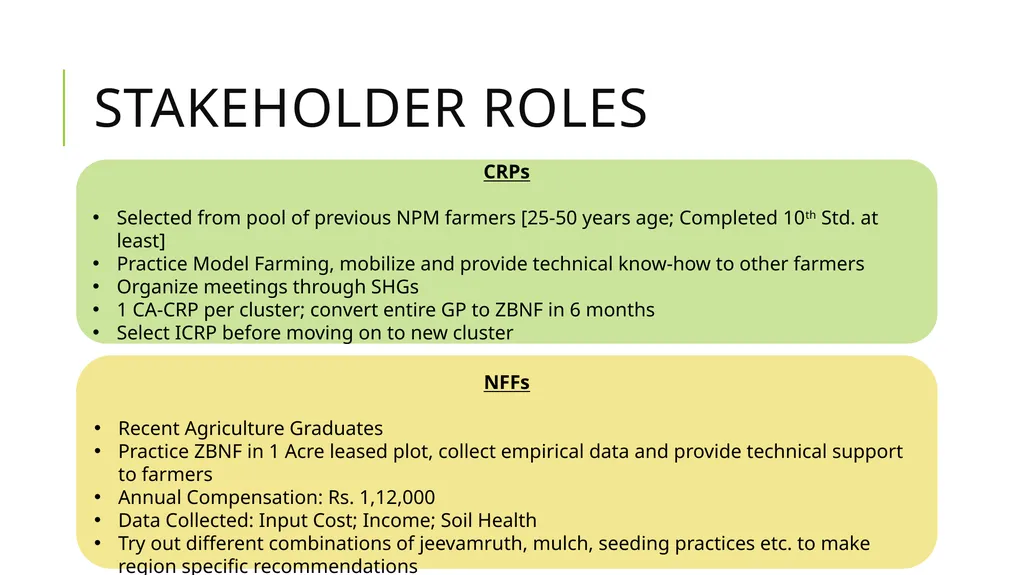
STAKEHOLDER ROLES CRPs
Selected from pool of previous NPM farmers [25-50 years age; Completed 10th Std. at least]
Practice Model Farming, mobilize and provide technical know-how to other farmers
Organize meetings through SHGs
1 CA-CRP per cluster; convert entire GP to ZBNF in 6 months
Select ICRP before moving on to new cluster NFFs
Recent Agriculture Graduates
Practice ZBNF in 1 Acre leased plot, collect empirical data and provide technical support to farmers
Annual Compensation: Rs. 1,12,000
Data Collected: Input Cost; Income; Soil Health
Try out different combinations of jeevamruth, mulch, seeding practices etc. to make region specific recommendations<br>
12
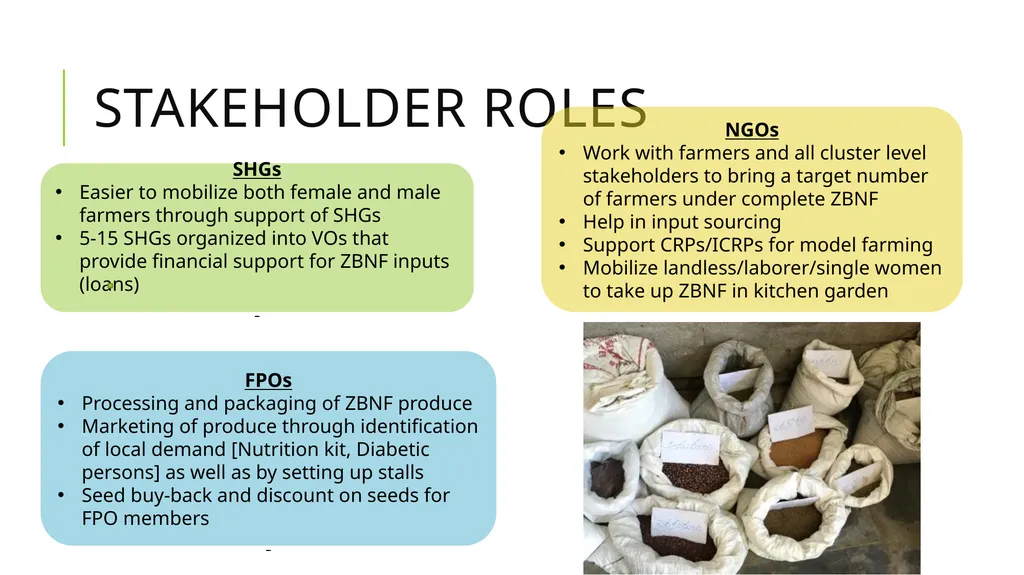
Stakeholder roles NGOs
Work with farmers and all cluster level stakeholders to bring a target number of farmers under complete ZBNF
Help in input sourcing
Support CRPs/ICRPs for model farming
Mobilize landless/laborer/single women to take up ZBNF in kitchen garden SHGs
Easier to mobilize both female and male farmers through support of SHGs
5-15 SHGs organized into VOs that provide financial support for ZBNF inputs (loans) FPOs
Processing and packaging of ZBNF produce
Marketing of produce through identification of local demand [Nutrition kit, Diabetic persons] as well as by setting up stalls
Seed buy-back and discount on seeds for FPO members<br>
13
Yield
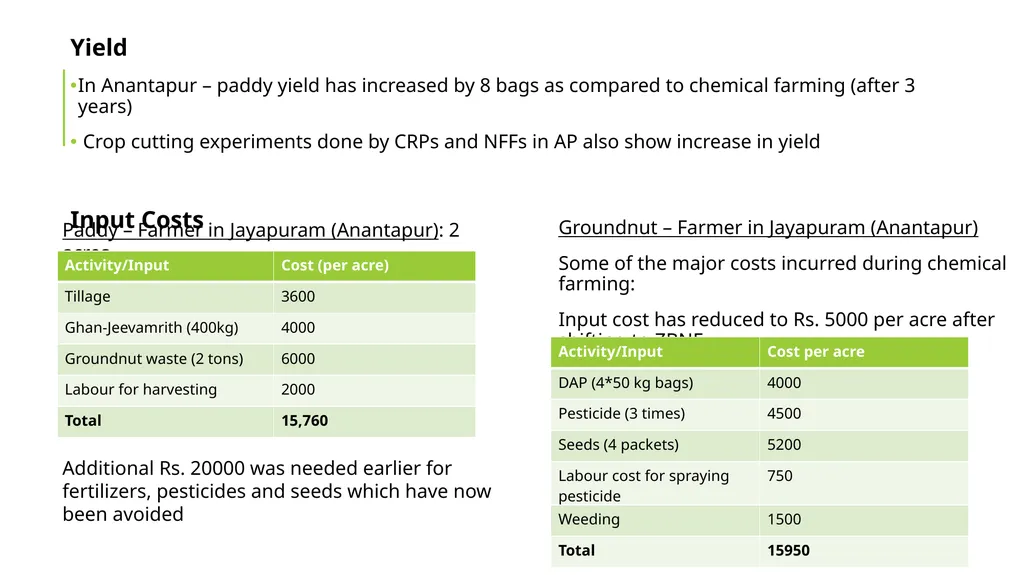
In Anantapur – paddy yield has increased by 8 bags as compared to chemical farming (after 3 years)
Crop cutting experiments done by CRPs and NFFs in AP also show increase in yield
Input Costs Paddy – Farmer in Jayapuram (Anantapur): 2 acres Additional Rs. 20000 was needed earlier for fertilizers, pesticides and seeds which have now been avoided Groundnut – Farmer in Jayapuram (Anantapur)
Some of the major costs incurred during chemical farming:
Input cost has reduced to Rs. 5000 per acre after shifting to ZBNF<br>
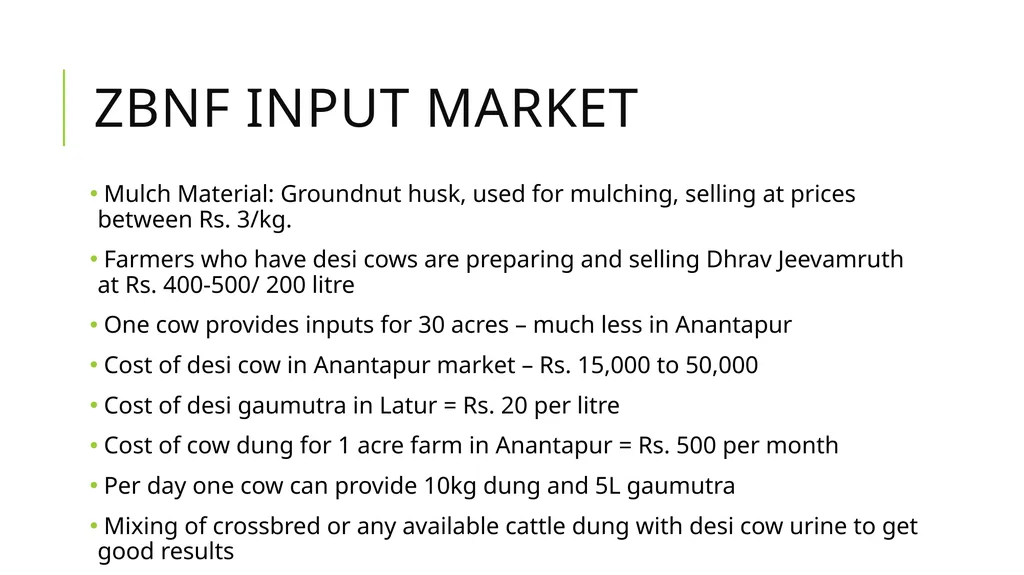
Zbnf input market Mulch Material: Groundnut husk, used for mulching, selling at prices between Rs. 3/kg.
Farmers who have desi cows are preparing and selling Dhrav Jeevamruth at Rs. 400-500/ 200 litre
One cow provides inputs for 30 acres – much less in Anantapur
Cost of desi cow in Anantapur market – Rs. 15,000 to 50,000
Cost of desi gaumutra in Latur = Rs. 20 per litre
Cost of cow dung for 1 acre farm in Anantapur = Rs. 500 per month
Per day one cow can provide 10kg dung and 5L gaumutra
Mixing of crossbred or any available cattle dung with desi cow urine to get good results<br>
17
CONSTRAINTS FOR SCALe-UP Government support to chemical farming in the form of input subsidies deterrent for switching to ZBNF
Sourcing of ZBNF Inputs: Can NPM shops be utilized to stock inputs like Jeevamrutham, Astras, Mulching materials?
Need for premium for ZBNF produce
Support required for making a centralised cow-shed and assigning people to take care of the cattle for every village<br>