
1 Hazard identification and Risk assessment Upon




Description: 1 Hazard identification and Risk assessment Upon completion of this unit you will understand how to identify hazards and assess risks for your dairy operation. 2 Learning Objective Understand that behind each fatality or serious injury
Related Topics
Download Presentation
"1 Hazard identification and Risk assessment Upon" is the property of its rightful owner. Permission is granted to download and print the materials on this website for personal, non-commercial use only, and to display it on your personal computer provided you do not modify the materials and that you retain all copyright notices contained in the materials. By downloading content from our website, you accept the terms of this agreement.
Presentation Transcript
slide1. 1 Hazard identification and Risk assessment<br>
slide2. Upon completion of this unit you will understand how to identify hazards and assess risks for your dairy operation. 2 Learning Objective<br>
slide3. Understand that behind each fatality or serious injury there are thousands of at-risk behaviors and unidentified hazards that contributed to the incident.
State the definition of a hazard and explain how to identify hazards in the workplace. 3 Learner Outcomes<br>
slide4. Determine methods for controlling hazards in the workplace.
Complete a job hazard analysis for a typical dairy farm task. 4 Learner Outcomes<br>
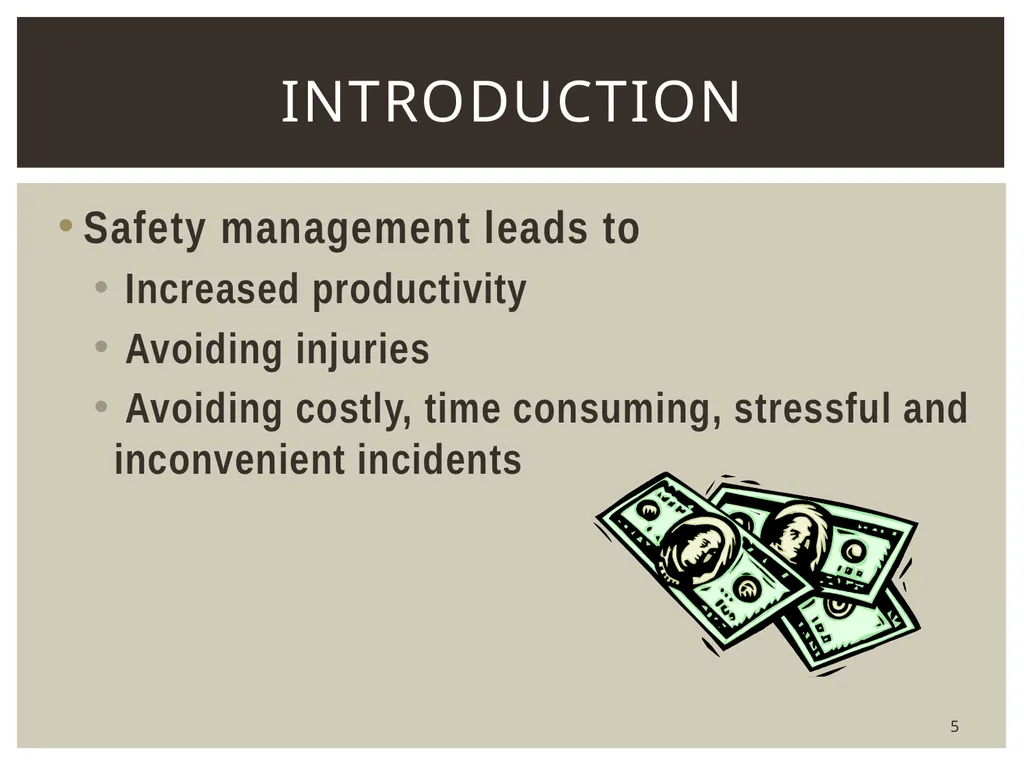
slide5. Safety management leads to
Increased productivity
Avoiding injuries
Avoiding costly, time consuming, stressful and inconvenient incidents 5 Introduction<br>
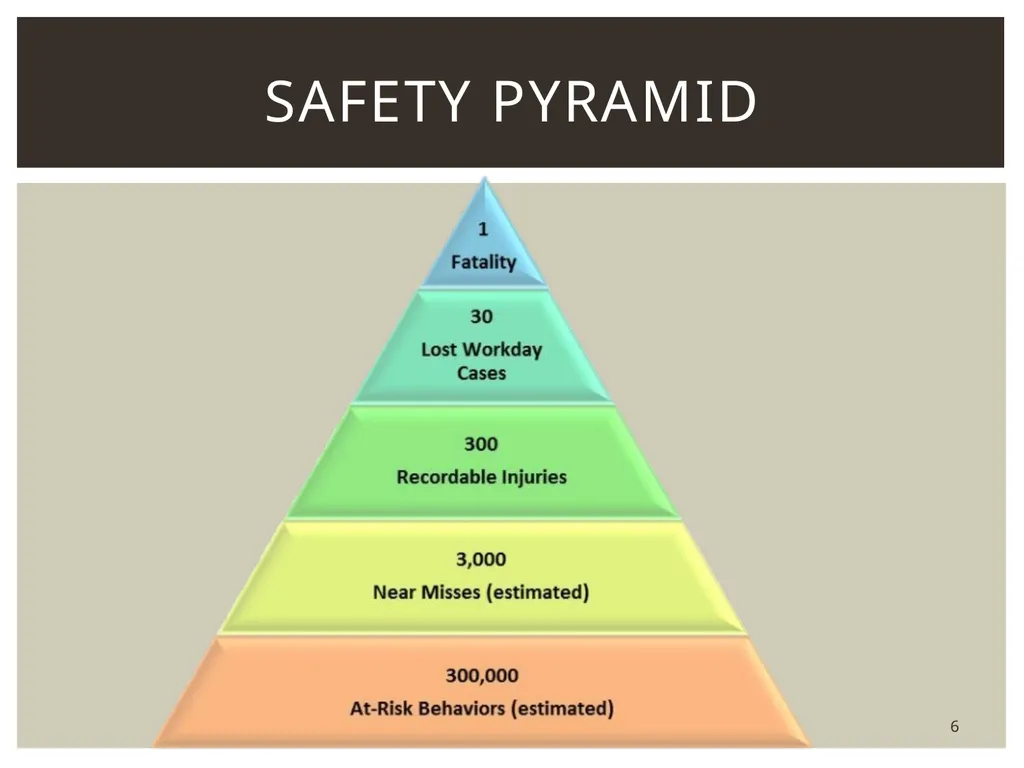
slide6. 6 Safety Pyramid<br>
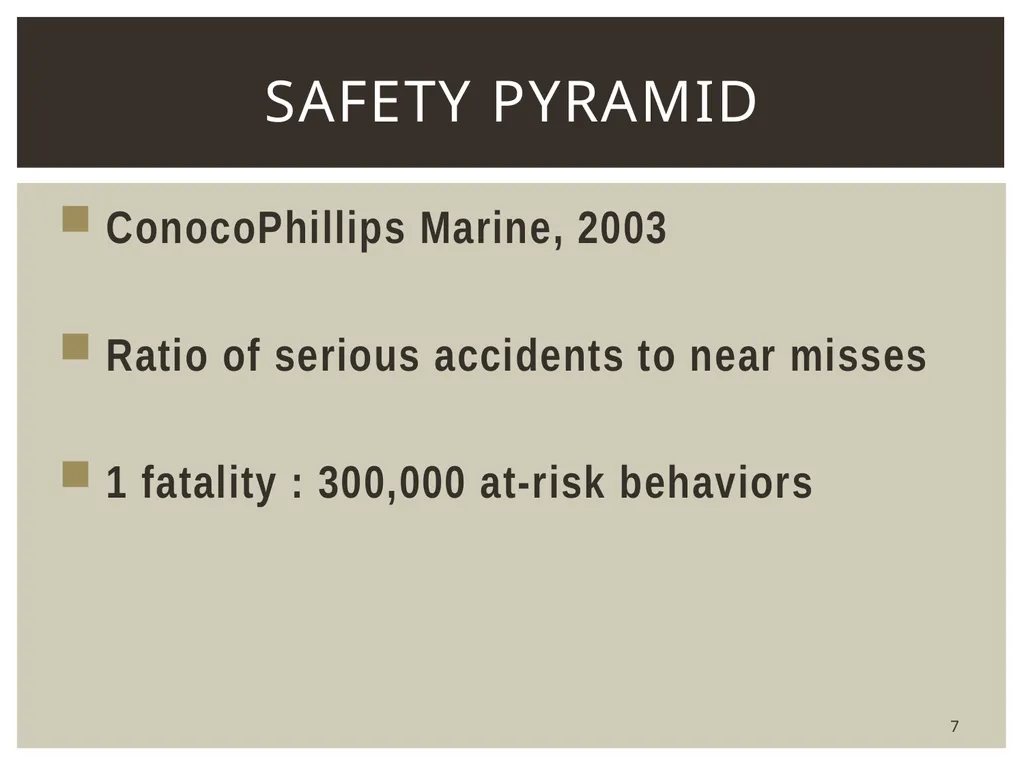
slide7. ConocoPhillips Marine, 2003
Ratio of serious accidents to near misses
1 fatality : 300,000 at-risk behaviors 7 Safety Pyramid<br>
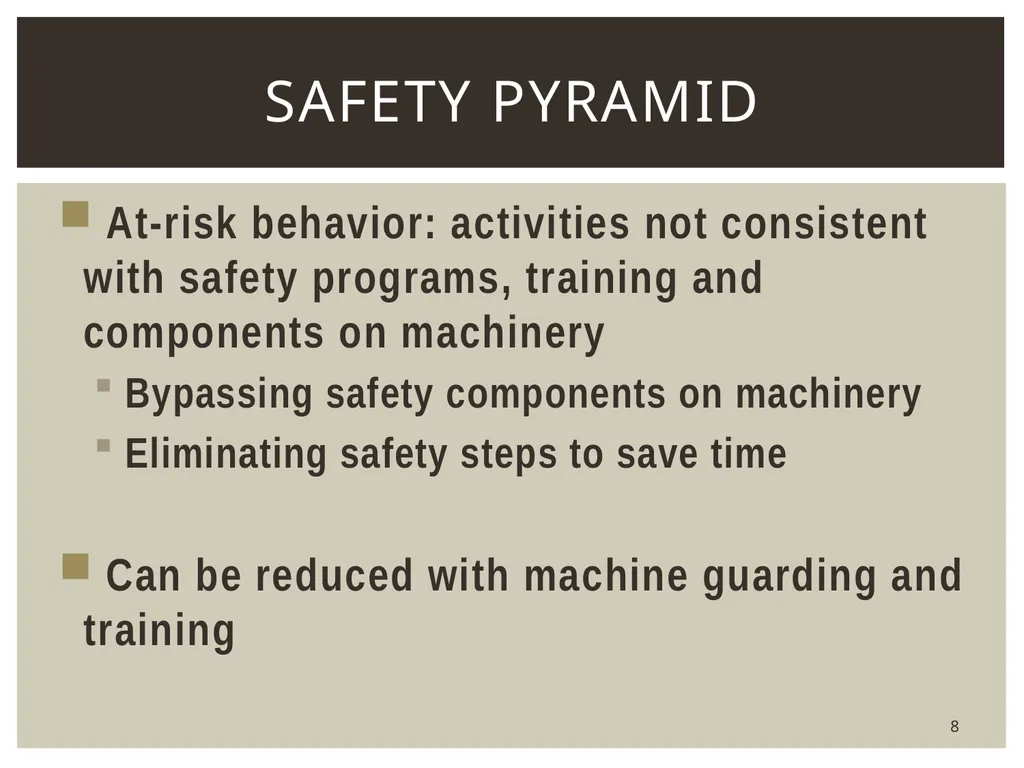
slide8. At-risk behavior: activities not consistent with safety programs, training and components on machinery
Bypassing safety components on machinery
Eliminating safety steps to save time
Can be reduced with machine guarding and training 8 Safety Pyramid<br>
slide9. Hazard: condition or set of circumstances that present a potential for harm
Two categories 9 Hazards<br>
slide10. Health hazards: occupational illnesses
Safety hazards: physical harm, injuries 10 Hazards<br>
slide11. Process of identifying all hazards in the workplace
May be grouped by Dairy LEP 11 Hazard Identification<br>
slide12. Manure storage facilities and collections structures
Dairy bull and cow behavior/worker positioning
Electrical systems 12 Dairy LEP<br>
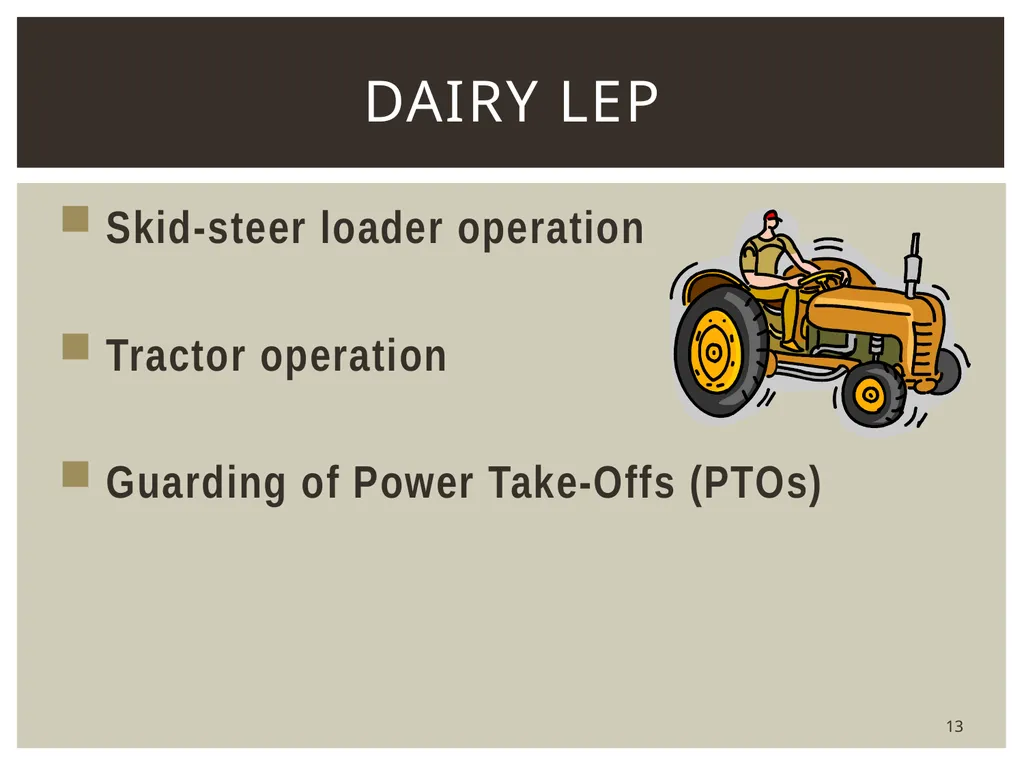
slide13. Skid-steer loader operation
Tractor operation
Guarding of Power Take-Offs (PTOs) 13 Dairy LEP<br>
slide14. Guarding of other power transmission and functional components
Hazardous energy control while performing servicing and maintenance on equipment
Hazard communication 14 Dairy LEP<br>
slide15. Confined spaces
Horizontal bunker silos
Noise 15 Dairy LEP<br>
slide16. Main cause of occupational health and safety problems
Eliminating hazards or controlling risks is the best way to reduce workplace injury and illness 16 Hazard Identification<br>
slide17. Check your farm for:
Regular hazard assessment surveys of operations, equipment, substances and tasks
A system of recording injuries, near misses and identified hazards
Safe procedures for dairy farm tasks 17 How to Start<br>
slide18. Safety training and supervision for new and young employees
Protective clothing and equipment
Safety training and practice for each new piece of equipment 18 How to start<br>
slide19. Safety discussions between employers, contractors and employees
Safety information readily available for hazardous substances
Copies of the regulations 19 How to start<br>
slide20. Written plan
Store with other safety information 20 Develop a plan<br>
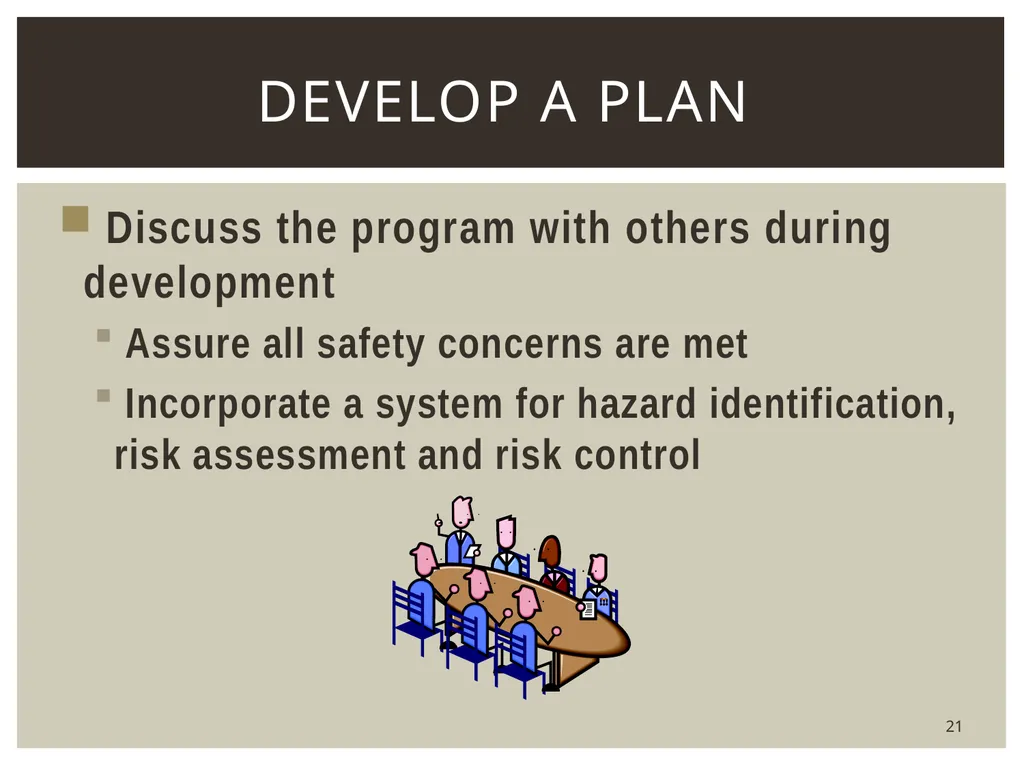
slide21. Discuss the program with others during development
Assure all safety concerns are met
Incorporate a system for hazard identification, risk assessment and risk control 21 Develop a plan<br>
slide22. Ensure employees are familiar with:
the plan
safe work procedures
current legal safety and health requirements 22 Develop a Plan<br>
slide23. Other components
Providing farm workers with safety information
Orientation for new employees
Safety training for new procedures
Special safeguards for young employees
Record of injuries, near misses and potential hazards 23 Develop a plan<br>
slide24. 24 hour approach
Environments
Substances
Workplace layout 24 Identify the Hazard<br>
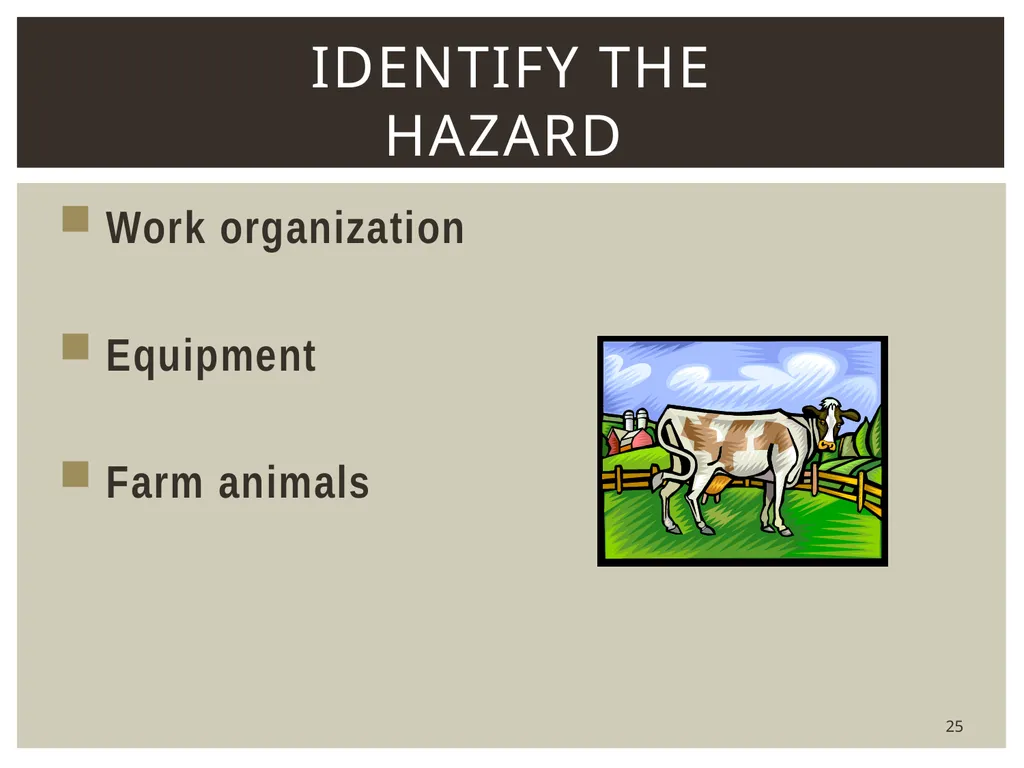
slide25. Work organization
Equipment
Farm animals 25 Identify the hazard<br>
slide26. Heights
Electricity 26 Identify the hazard<br>
slide27. Observation
Material Safety Data Sheets (MSDSs)
Hazard and risk surveys
Children and visitor considerations 27 Hazard Identification<br>
slide28. Record analysis
Discussion groups
Safety audits 28 Hazard Identification<br>
slide29. Information updates
Consumer information
Regulations and best practices 29 Hazard Identification<br>
slide30. Assess likelihood and possible severity of injury
Determine how to best minimize risk
Address high risk hazards first 30 Assess the Risk<br>
slide31. The same hazard could lead to several outcomes
Consider likelihood of each possibility
Prioritize 31 Assess the Risk<br>
slide32. Potential control measures include:
Remove the hazard
Substitute
Isolate 32 Make the Changes<br>
slide33. Add engineering controls
Safe work practices
Provide PPE
Implement and monitor controls 33 Make the changes<br>
slide34. Controls should be agreed upon
Make changes as soon as possible
May require more than one risk control measure 34 Make the changes<br>
slide35. May need to be tested
Ensure that risk is minimized
No new hazard created
Consultation
New procedures 35 Checking the Changes<br>
slide36. Focus on job tasks
Prevention
Relationship between
worker
task
tools
environment 36 Job Hazard Analysis (JHA)<br>
slide37. Highest injury or illness rates
Potential for severe injuries or illness
Possibility of incident with simple human error 37 JHA Priorities<br>
slide38. New or changed
Complex 38 JHA Priorities<br>
slide39. 1. Involve employees 39 Where do I begin?<br>
slide40. 2. Review accident history 40 Where do I begin?<br>
slide41. 3. Conduct preliminary job review 41 Where do I begin?<br>
slide42. 4. List, rank, and set priorities for hazardous jobs 42 Where do I begin?<br>
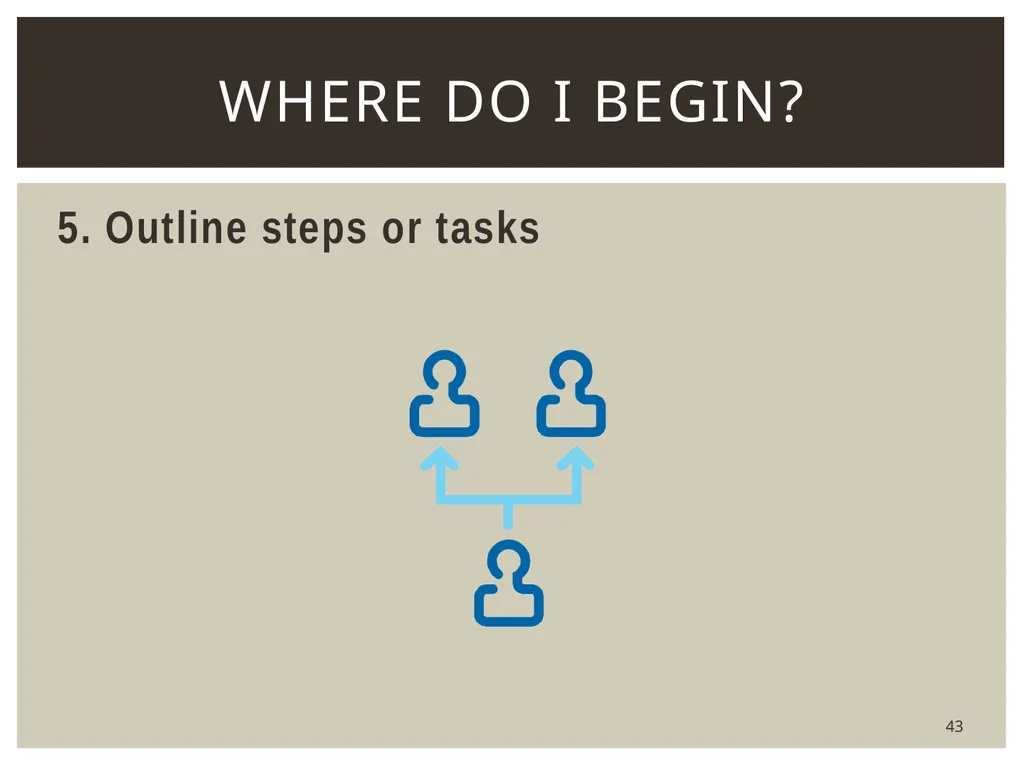
slide43. 5. Outline steps or tasks 43 Where do I begin?<br>
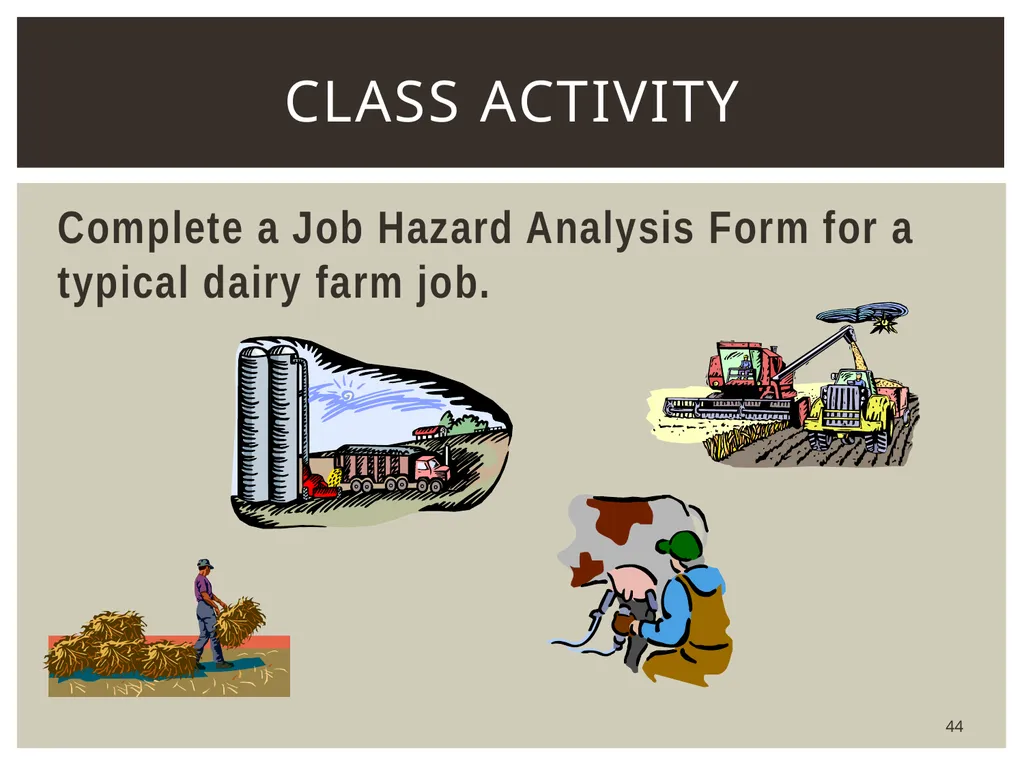
slide44. Complete a Job Hazard Analysis Form for a typical dairy farm job. 44 Class Activity<br>
slide45. Free
Professional advice and assistance
On-site
Defer OSHA inspections
Create safety routine 45 OSHA consultation Program<br>
slide46. Help employers recognize hazards
System development
Problem solving
Additional resources
Written summary
Safety and health training 46 Consultants’ Role<br>
slide47. Consultants will not:
Issue citations during consultation
Guarantee a workplace will “pass” 47 Consultants’ role<br>
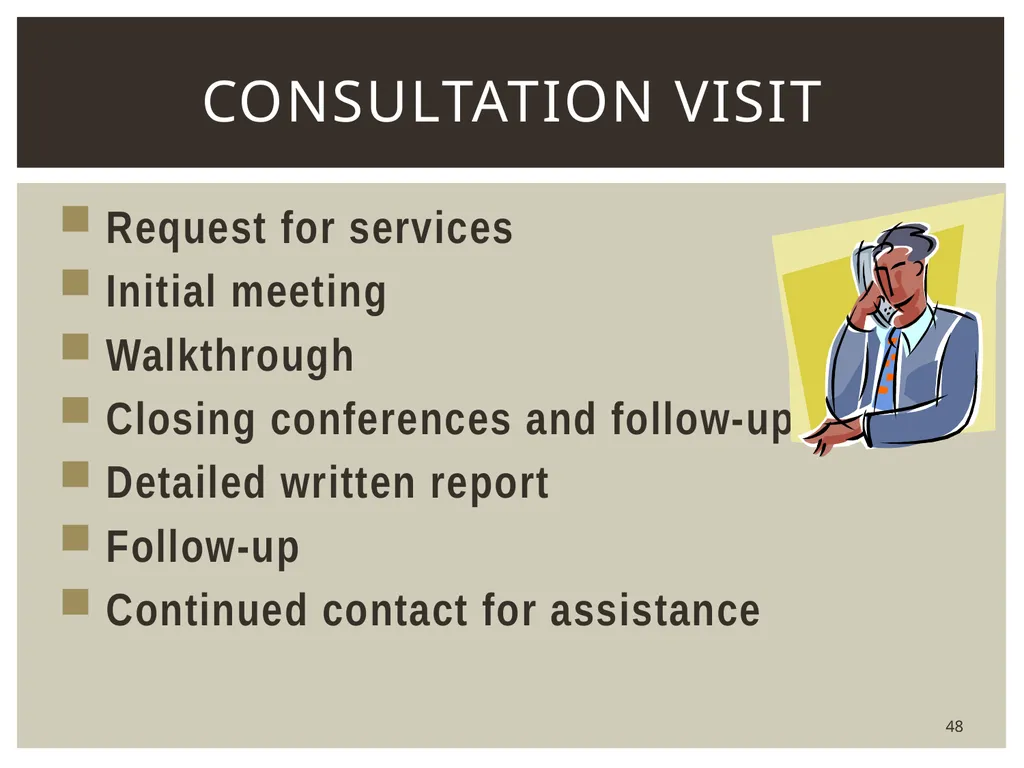
slide48. Request for services
Initial meeting
Walkthrough
Closing conferences and follow-up
Detailed written report
Follow-up
Continued contact for assistance 48 Consultation visit<br>
slide49. Imminent danger
Serious violation
Failure to eliminate or control hazards 49 Correcting Hazards<br>
slide50. Identify a hazard from each section of the Dairy LEP that may be found on your farm: 50 Review Manure storage
Animals
Electrical
Skid-steer
Tractor
PTO guarding
Power transmission guarding
Hazardous energy control
Hazard communication
Confined spaces
Horizontal bunker silos
Noise<br>
slide51. List the steps necessary to conduct a Job Hazard Analysis on your farm 51 Review<br>
slide52. 52 This material was produced under grant number SH-22318-11 from the Occupational Safety and Health Administration, U.S. Department of Labor. It does not necessarily reflect the views or policies of the U.S. Department of Labor, nor does mention of trade names, commercial products, or organizations imply endorsement by the U.S. Government.<br>
slide2. Upon completion of this unit you will understand how to identify hazards and assess risks for your dairy operation. 2 Learning Objective<br>
slide3. Understand that behind each fatality or serious injury there are thousands of at-risk behaviors and unidentified hazards that contributed to the incident.
State the definition of a hazard and explain how to identify hazards in the workplace. 3 Learner Outcomes<br>
slide4. Determine methods for controlling hazards in the workplace.
Complete a job hazard analysis for a typical dairy farm task. 4 Learner Outcomes<br>
slide5. Safety management leads to
Increased productivity
Avoiding injuries
Avoiding costly, time consuming, stressful and inconvenient incidents 5 Introduction<br>
slide6. 6 Safety Pyramid<br>
slide7. ConocoPhillips Marine, 2003
Ratio of serious accidents to near misses
1 fatality : 300,000 at-risk behaviors 7 Safety Pyramid<br>
slide8. At-risk behavior: activities not consistent with safety programs, training and components on machinery
Bypassing safety components on machinery
Eliminating safety steps to save time
Can be reduced with machine guarding and training 8 Safety Pyramid<br>
slide9. Hazard: condition or set of circumstances that present a potential for harm
Two categories 9 Hazards<br>
slide10. Health hazards: occupational illnesses
Safety hazards: physical harm, injuries 10 Hazards<br>
slide11. Process of identifying all hazards in the workplace
May be grouped by Dairy LEP 11 Hazard Identification<br>
slide12. Manure storage facilities and collections structures
Dairy bull and cow behavior/worker positioning
Electrical systems 12 Dairy LEP<br>
slide13. Skid-steer loader operation
Tractor operation
Guarding of Power Take-Offs (PTOs) 13 Dairy LEP<br>
slide14. Guarding of other power transmission and functional components
Hazardous energy control while performing servicing and maintenance on equipment
Hazard communication 14 Dairy LEP<br>
slide15. Confined spaces
Horizontal bunker silos
Noise 15 Dairy LEP<br>
slide16. Main cause of occupational health and safety problems
Eliminating hazards or controlling risks is the best way to reduce workplace injury and illness 16 Hazard Identification<br>
slide17. Check your farm for:
Regular hazard assessment surveys of operations, equipment, substances and tasks
A system of recording injuries, near misses and identified hazards
Safe procedures for dairy farm tasks 17 How to Start<br>
slide18. Safety training and supervision for new and young employees
Protective clothing and equipment
Safety training and practice for each new piece of equipment 18 How to start<br>
slide19. Safety discussions between employers, contractors and employees
Safety information readily available for hazardous substances
Copies of the regulations 19 How to start<br>
slide20. Written plan
Store with other safety information 20 Develop a plan<br>
slide21. Discuss the program with others during development
Assure all safety concerns are met
Incorporate a system for hazard identification, risk assessment and risk control 21 Develop a plan<br>
slide22. Ensure employees are familiar with:
the plan
safe work procedures
current legal safety and health requirements 22 Develop a Plan<br>
slide23. Other components
Providing farm workers with safety information
Orientation for new employees
Safety training for new procedures
Special safeguards for young employees
Record of injuries, near misses and potential hazards 23 Develop a plan<br>
slide24. 24 hour approach
Environments
Substances
Workplace layout 24 Identify the Hazard<br>
slide25. Work organization
Equipment
Farm animals 25 Identify the hazard<br>
slide26. Heights
Electricity 26 Identify the hazard<br>
slide27. Observation
Material Safety Data Sheets (MSDSs)
Hazard and risk surveys
Children and visitor considerations 27 Hazard Identification<br>
slide28. Record analysis
Discussion groups
Safety audits 28 Hazard Identification<br>
slide29. Information updates
Consumer information
Regulations and best practices 29 Hazard Identification<br>
slide30. Assess likelihood and possible severity of injury
Determine how to best minimize risk
Address high risk hazards first 30 Assess the Risk<br>
slide31. The same hazard could lead to several outcomes
Consider likelihood of each possibility
Prioritize 31 Assess the Risk<br>
slide32. Potential control measures include:
Remove the hazard
Substitute
Isolate 32 Make the Changes<br>
slide33. Add engineering controls
Safe work practices
Provide PPE
Implement and monitor controls 33 Make the changes<br>
slide34. Controls should be agreed upon
Make changes as soon as possible
May require more than one risk control measure 34 Make the changes<br>
slide35. May need to be tested
Ensure that risk is minimized
No new hazard created
Consultation
New procedures 35 Checking the Changes<br>
slide36. Focus on job tasks
Prevention
Relationship between
worker
task
tools
environment 36 Job Hazard Analysis (JHA)<br>
slide37. Highest injury or illness rates
Potential for severe injuries or illness
Possibility of incident with simple human error 37 JHA Priorities<br>
slide38. New or changed
Complex 38 JHA Priorities<br>
slide39. 1. Involve employees 39 Where do I begin?<br>
slide40. 2. Review accident history 40 Where do I begin?<br>
slide41. 3. Conduct preliminary job review 41 Where do I begin?<br>
slide42. 4. List, rank, and set priorities for hazardous jobs 42 Where do I begin?<br>
slide43. 5. Outline steps or tasks 43 Where do I begin?<br>
slide44. Complete a Job Hazard Analysis Form for a typical dairy farm job. 44 Class Activity<br>
slide45. Free
Professional advice and assistance
On-site
Defer OSHA inspections
Create safety routine 45 OSHA consultation Program<br>
slide46. Help employers recognize hazards
System development
Problem solving
Additional resources
Written summary
Safety and health training 46 Consultants’ Role<br>
slide47. Consultants will not:
Issue citations during consultation
Guarantee a workplace will “pass” 47 Consultants’ role<br>
slide48. Request for services
Initial meeting
Walkthrough
Closing conferences and follow-up
Detailed written report
Follow-up
Continued contact for assistance 48 Consultation visit<br>
slide49. Imminent danger
Serious violation
Failure to eliminate or control hazards 49 Correcting Hazards<br>
slide50. Identify a hazard from each section of the Dairy LEP that may be found on your farm: 50 Review Manure storage
Animals
Electrical
Skid-steer
Tractor
PTO guarding
Power transmission guarding
Hazardous energy control
Hazard communication
Confined spaces
Horizontal bunker silos
Noise<br>
slide51. List the steps necessary to conduct a Job Hazard Analysis on your farm 51 Review<br>
slide52. 52 This material was produced under grant number SH-22318-11 from the Occupational Safety and Health Administration, U.S. Department of Labor. It does not necessarily reflect the views or policies of the U.S. Department of Labor, nor does mention of trade names, commercial products, or organizations imply endorsement by the U.S. Government.<br>