
1. Inductive Effect Electronic displacement along
Description: 1. Inductive Effect Electronic displacement along sigma bond due to difference in electronegativity Permanent effect in saturated carbon chain compounds. Group attached to carbon chain should have tendency to release or withdraw electrons.
Related Topics
Download Presentation
"1. Inductive Effect Electronic displacement along" is the property of its rightful owner. Permission is granted to download and print the materials on this website for personal, non-commercial use only, and to display it on your personal computer provided you do not modify the materials and that you retain all copyright notices contained in the materials. By downloading content from our website, you accept the terms of this agreement.
Presentation Transcript
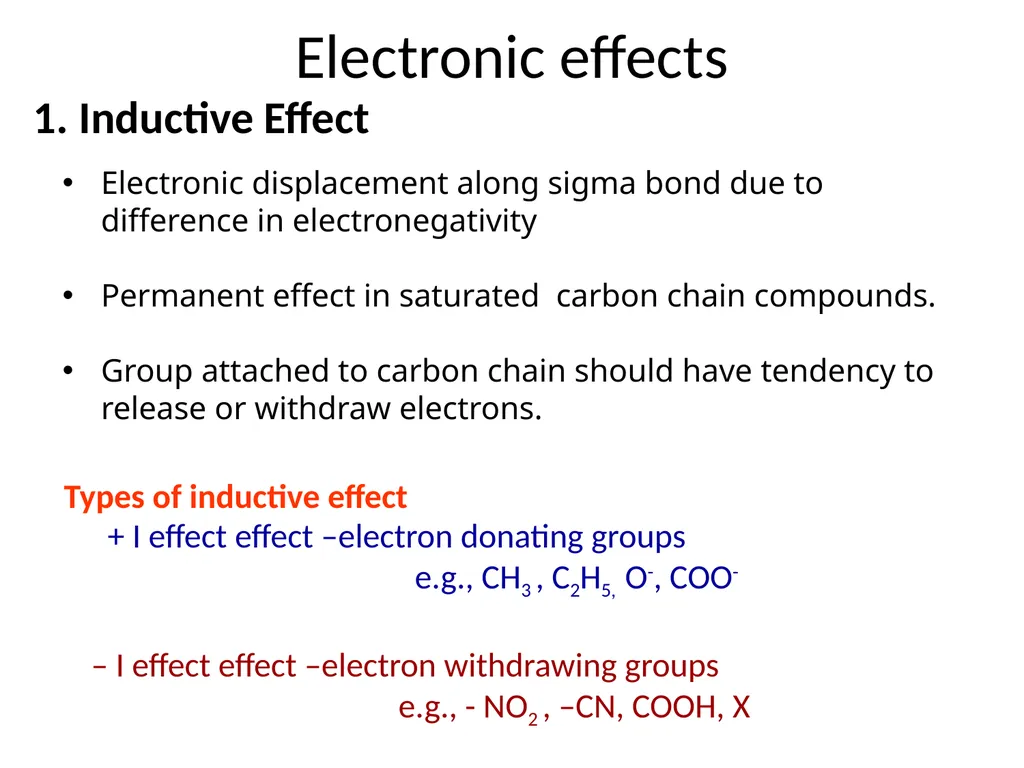
slide1. 1. Inductive Effect Electronic displacement along sigma bond due to difference in electronegativity
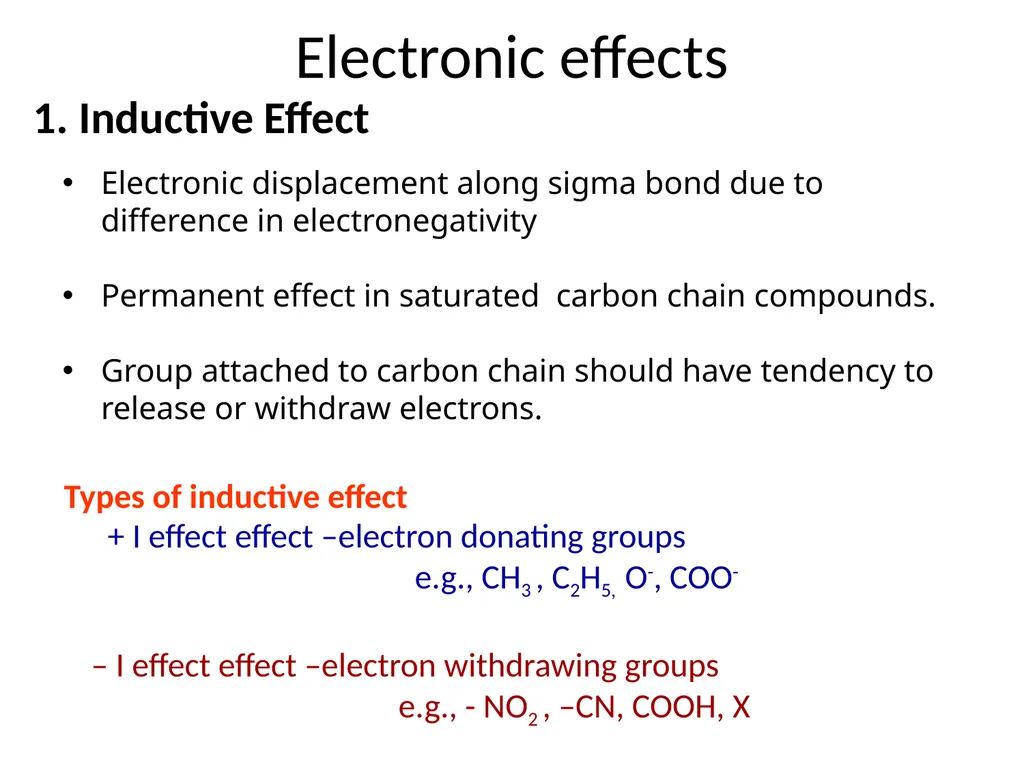
Permanent effect in saturated carbon chain compounds.
Group attached to carbon chain should have tendency to release or withdraw electrons. Types of inductive effect + I effect effect –electron donating groups
e.g., CH3 , C2H5, O-, COO- – I effect effect –electron withdrawing groups
e.g., - NO2 , –CN, COOH, X Electronic effects<br>
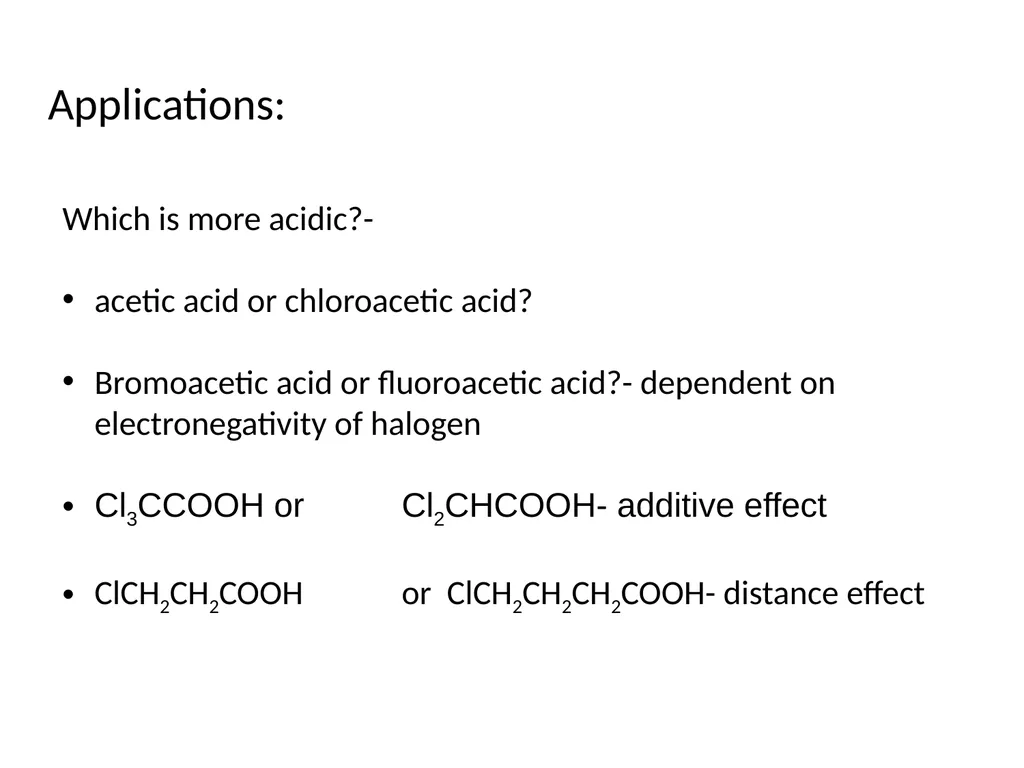
slide2. Applications: Which is more acidic?-
acetic acid or chloroacetic acid?
Bromoacetic acid or fluoroacetic acid?- dependent on electronegativity of halogen
Cl3CCOOH or Cl2CHCOOH- additive effect
ClCH2CH2COOH or ClCH2CH2CH2COOH- distance effect<br>
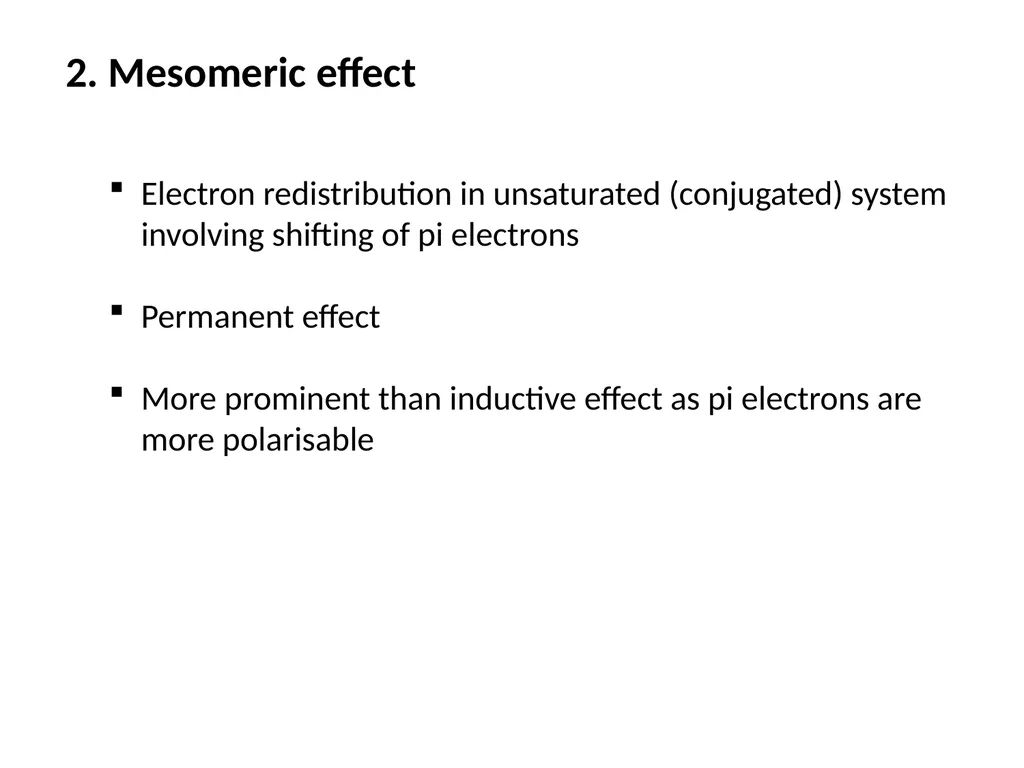
slide3. 2. Mesomeric effect Electron redistribution in unsaturated (conjugated) system involving shifting of pi electrons
Permanent effect
More prominent than inductive effect as pi electrons are more polarisable<br>
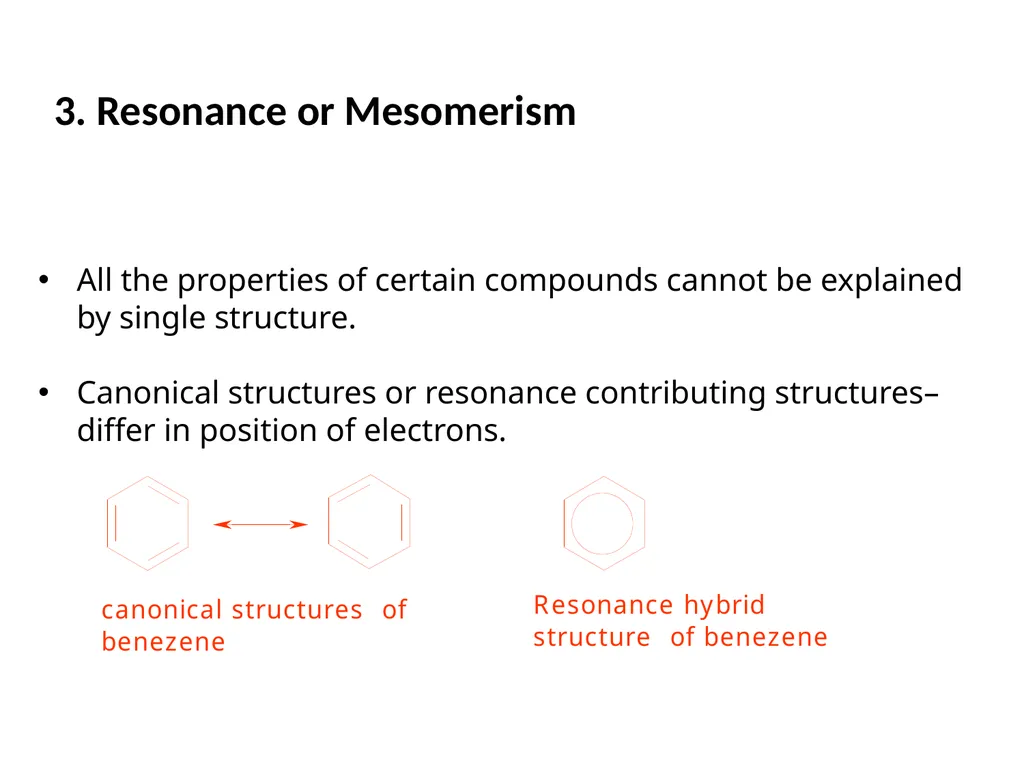
slide4. 3. Resonance or Mesomerism All the properties of certain compounds cannot be explained by single structure.
Canonical structures or resonance contributing structures–differ in position of electrons.<br>
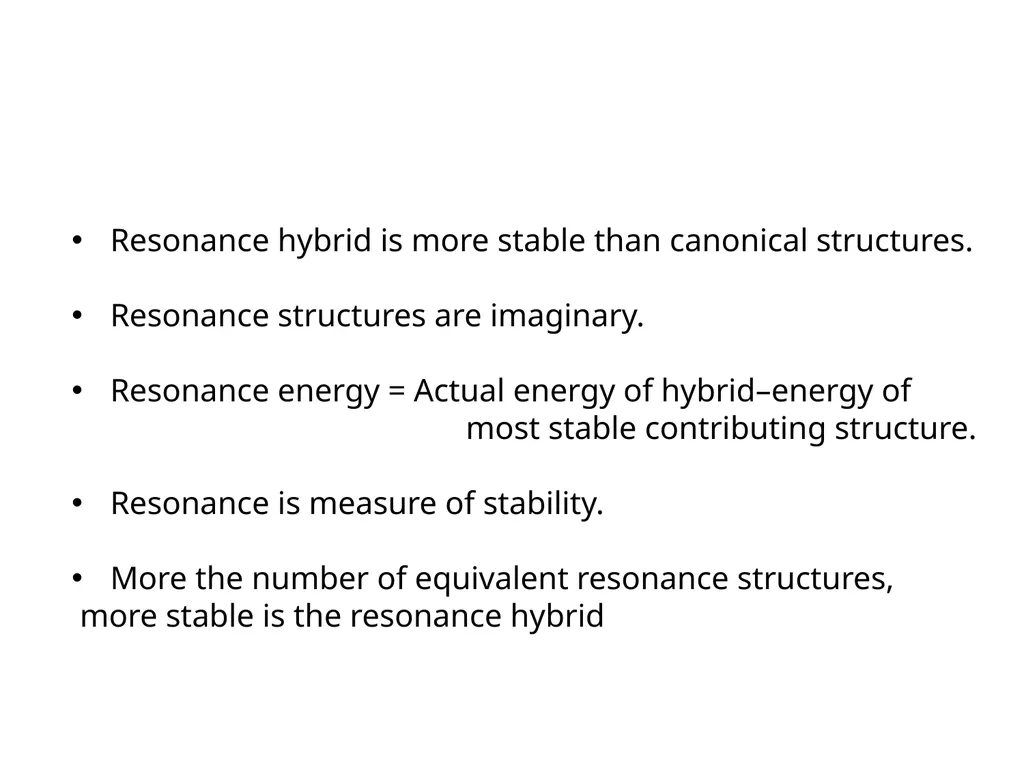
slide5. Resonance hybrid is more stable than canonical structures.
Resonance structures are imaginary.
Resonance energy = Actual energy of hybrid–energy of most stable contributing structure.
Resonance is measure of stability.
More the number of equivalent resonance structures,
more stable is the resonance hybrid<br>
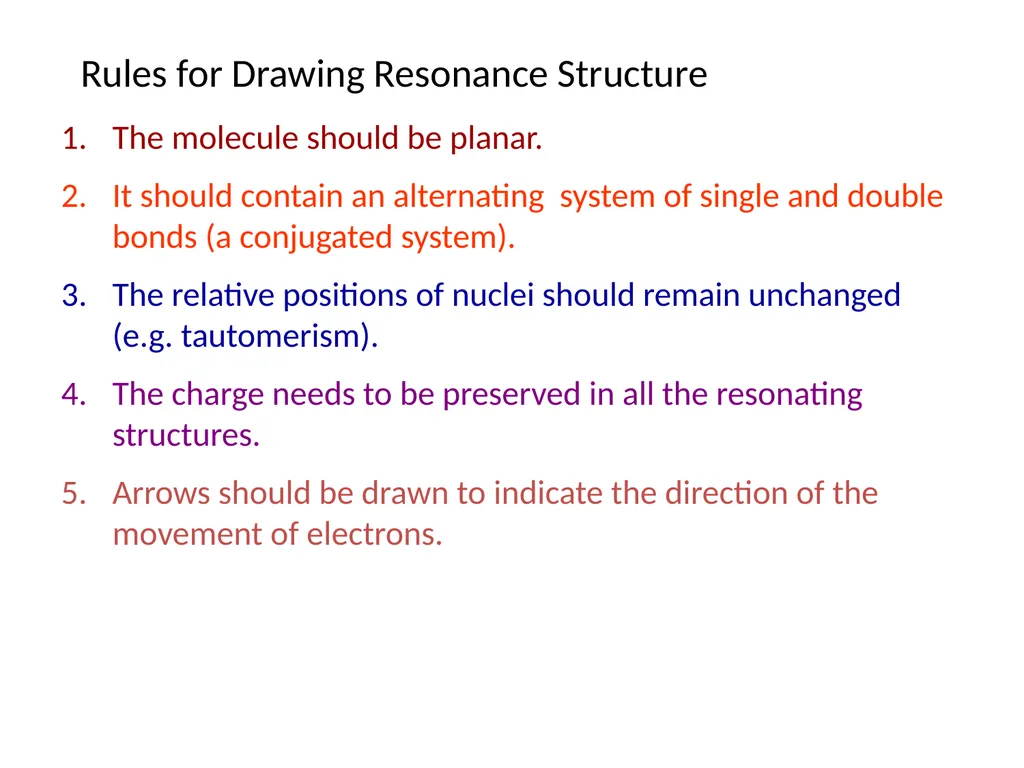
slide6. The molecule should be planar.
It should contain an alternating system of single and double bonds (a conjugated system).
The relative positions of nuclei should remain unchanged (e.g. tautomerism).
The charge needs to be preserved in all the resonating structures.
Arrows should be drawn to indicate the direction of the movement of electrons. Rules for Drawing Resonance Structure<br>
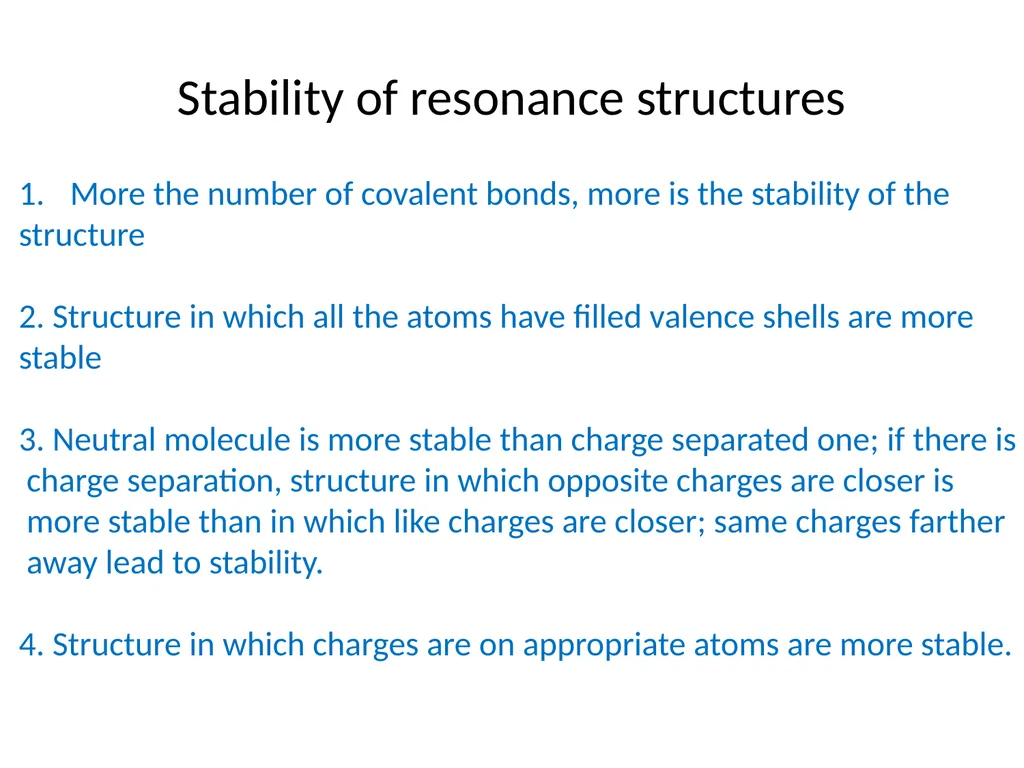
slide7. Stability of resonance structures More the number of covalent bonds, more is the stability of the
structure
2. Structure in which all the atoms have filled valence shells are more
stable
3. Neutral molecule is more stable than charge separated one; if there is
charge separation, structure in which opposite charges are closer is
more stable than in which like charges are closer; same charges farther
away lead to stability.
4. Structure in which charges are on appropriate atoms are more stable.<br>
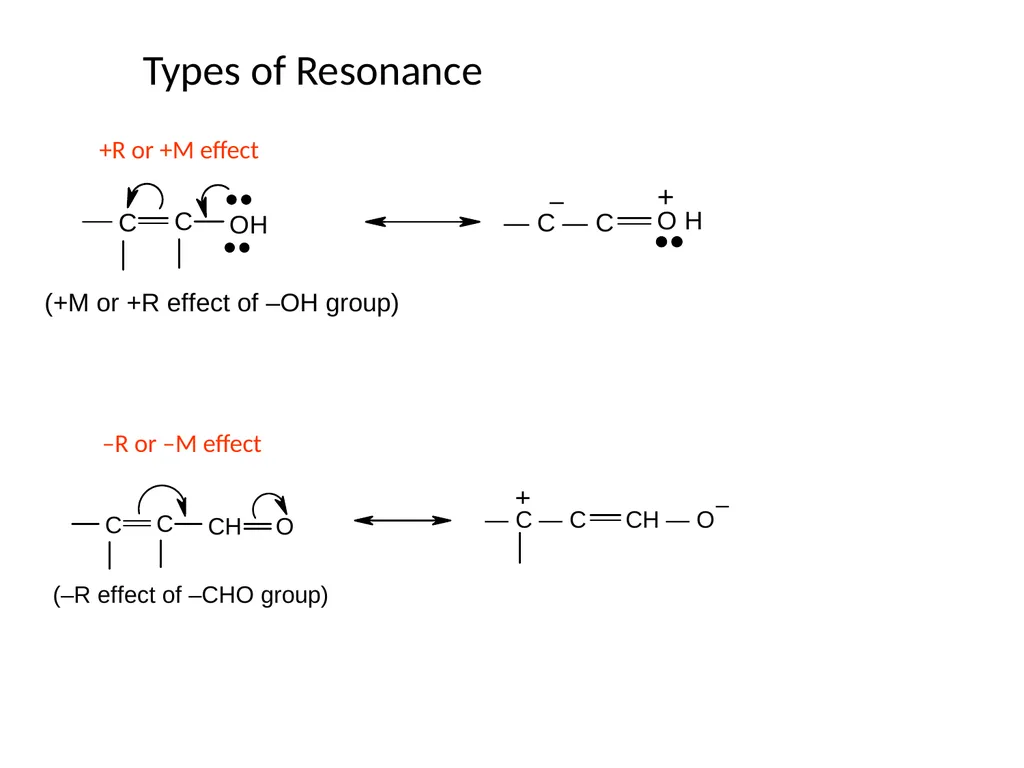
slide8. Types of Resonance<br>
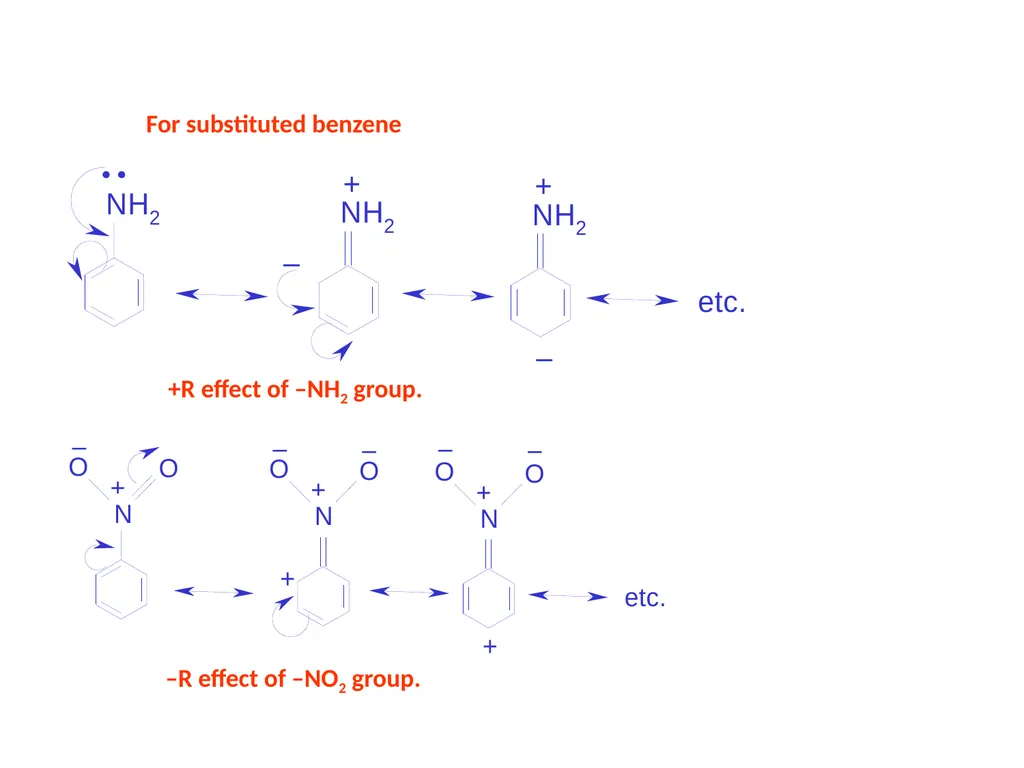
slide9. For substituted benzene +R effect of –NH2 group. –R effect of –NO2 group.<br>
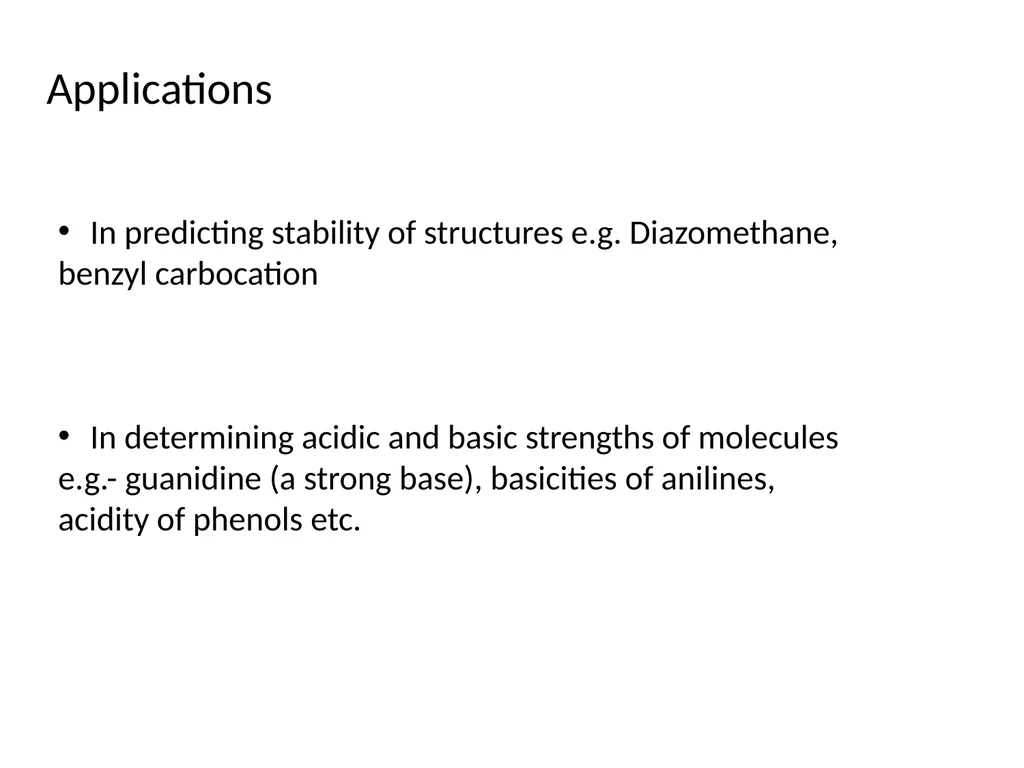
slide10. Applications In predicting stability of structures e.g. Diazomethane,
benzyl carbocation
In determining acidic and basic strengths of molecules
e.g.- guanidine (a strong base), basicities of anilines,
acidity of phenols etc.<br>
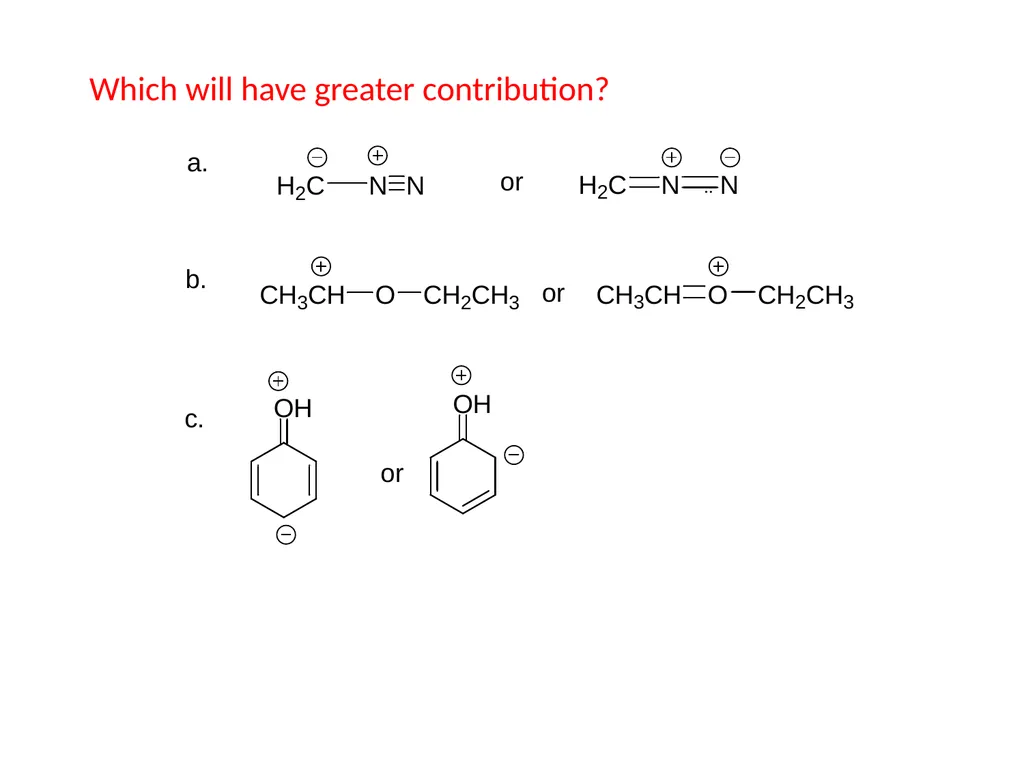
slide11. Which will have greater contribution?<br>
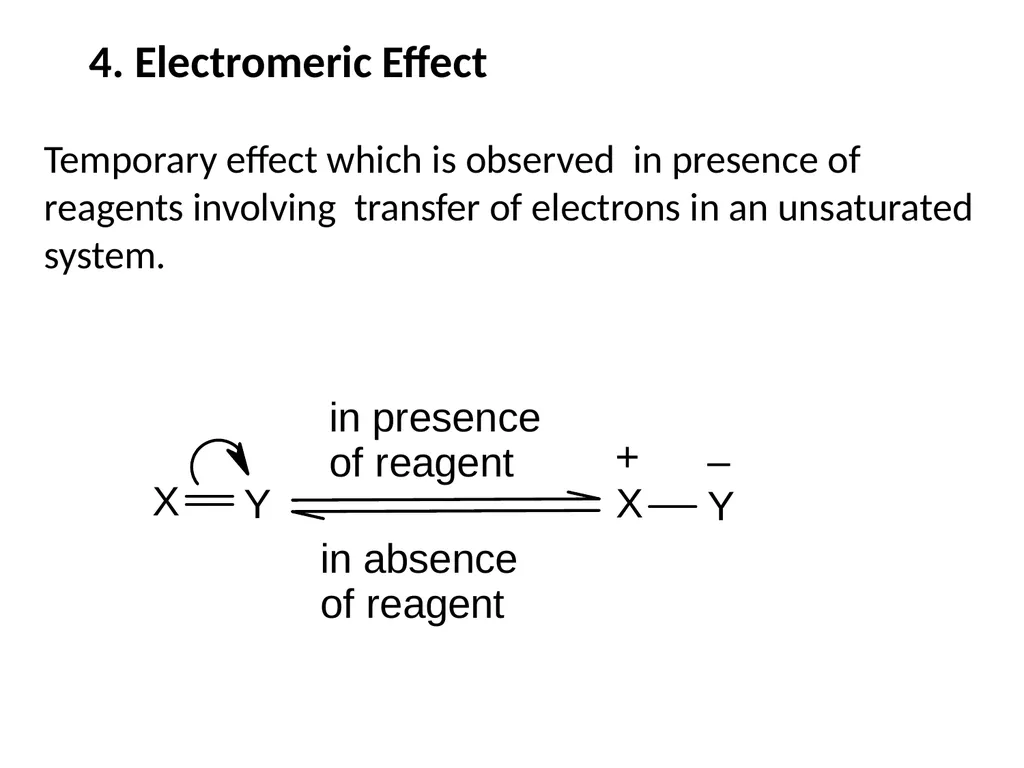
slide12. 4. Electromeric Effect Temporary effect which is observed in presence of reagents involving transfer of electrons in an unsaturated system.<br>
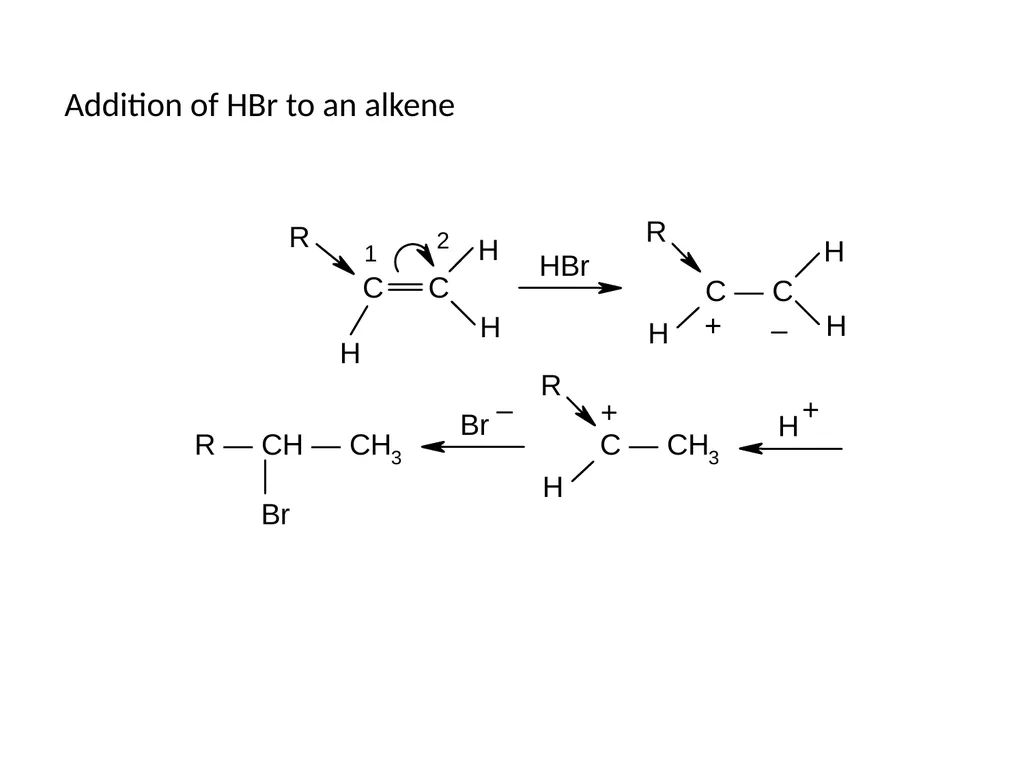
slide13. Addition of HBr to an alkene<br>
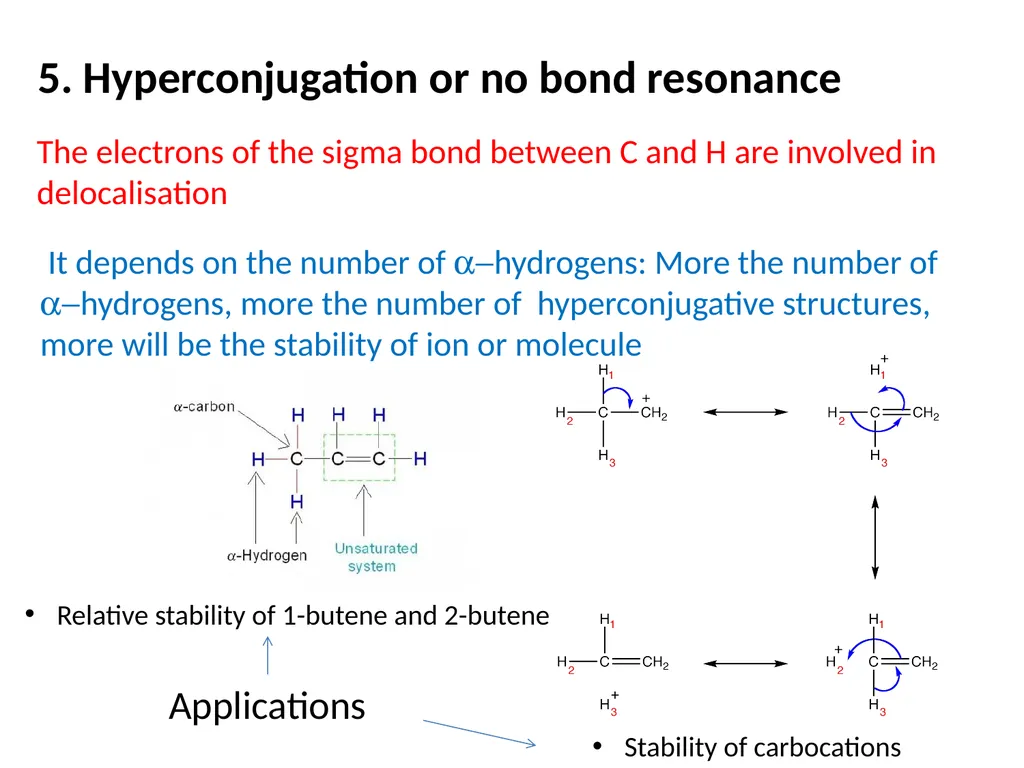
slide14. 5. Hyperconjugation or no bond resonance It depends on the number of a-hydrogens: More the number of a-hydrogens, more the number of hyperconjugative structures, more will be the stability of ion or molecule Stability of carbocations The electrons of the sigma bond between C and H are involved in
delocalisation Relative stability of 1-butene and 2-butene Applications<br>
Permanent effect in saturated carbon chain compounds.
Group attached to carbon chain should have tendency to release or withdraw electrons. Types of inductive effect + I effect effect –electron donating groups
e.g., CH3 , C2H5, O-, COO- – I effect effect –electron withdrawing groups
e.g., - NO2 , –CN, COOH, X Electronic effects<br>
slide2. Applications: Which is more acidic?-
acetic acid or chloroacetic acid?
Bromoacetic acid or fluoroacetic acid?- dependent on electronegativity of halogen
Cl3CCOOH or Cl2CHCOOH- additive effect
ClCH2CH2COOH or ClCH2CH2CH2COOH- distance effect<br>
slide3. 2. Mesomeric effect Electron redistribution in unsaturated (conjugated) system involving shifting of pi electrons
Permanent effect
More prominent than inductive effect as pi electrons are more polarisable<br>
slide4. 3. Resonance or Mesomerism All the properties of certain compounds cannot be explained by single structure.
Canonical structures or resonance contributing structures–differ in position of electrons.<br>
slide5. Resonance hybrid is more stable than canonical structures.
Resonance structures are imaginary.
Resonance energy = Actual energy of hybrid–energy of most stable contributing structure.
Resonance is measure of stability.
More the number of equivalent resonance structures,
more stable is the resonance hybrid<br>
slide6. The molecule should be planar.
It should contain an alternating system of single and double bonds (a conjugated system).
The relative positions of nuclei should remain unchanged (e.g. tautomerism).
The charge needs to be preserved in all the resonating structures.
Arrows should be drawn to indicate the direction of the movement of electrons. Rules for Drawing Resonance Structure<br>
slide7. Stability of resonance structures More the number of covalent bonds, more is the stability of the
structure
2. Structure in which all the atoms have filled valence shells are more
stable
3. Neutral molecule is more stable than charge separated one; if there is
charge separation, structure in which opposite charges are closer is
more stable than in which like charges are closer; same charges farther
away lead to stability.
4. Structure in which charges are on appropriate atoms are more stable.<br>
slide8. Types of Resonance<br>
slide9. For substituted benzene +R effect of –NH2 group. –R effect of –NO2 group.<br>
slide10. Applications In predicting stability of structures e.g. Diazomethane,
benzyl carbocation
In determining acidic and basic strengths of molecules
e.g.- guanidine (a strong base), basicities of anilines,
acidity of phenols etc.<br>
slide11. Which will have greater contribution?<br>
slide12. 4. Electromeric Effect Temporary effect which is observed in presence of reagents involving transfer of electrons in an unsaturated system.<br>
slide13. Addition of HBr to an alkene<br>
slide14. 5. Hyperconjugation or no bond resonance It depends on the number of a-hydrogens: More the number of a-hydrogens, more the number of hyperconjugative structures, more will be the stability of ion or molecule Stability of carbocations The electrons of the sigma bond between C and H are involved in
delocalisation Relative stability of 1-butene and 2-butene Applications<br>