1 Motor ELECTRICAL ENERGY Mechanical Energy 2 Synchronous Motor Synchronous Motor-Intro Synchronous Motor-principle Changing the Load Starting Torque Improvement of starting torque Synchronous Machine Construction V curves Torque versus
"1 Motor ELECTRICAL ENERGY Mechanical Energy 2" is the property of its rightful owner. Permission is granted to
download and print the materials on this website for personal, non-commercial use only, and to display it
on your personal computer provided you do not modify the materials and that you retain all copyright
notices contained in the materials. By downloading content from our website, you accept the terms of this
agreement.
Presentation Transcript
01
1 Motor ELECTRICAL ENERGY Mechanical Energy<br>
02
2 Synchronous Motor Synchronous Motor-Intro
Synchronous Motor-principle
Changing the Load
Starting Torque
Improvement of starting torque
Synchronous Machine Construction
V curves
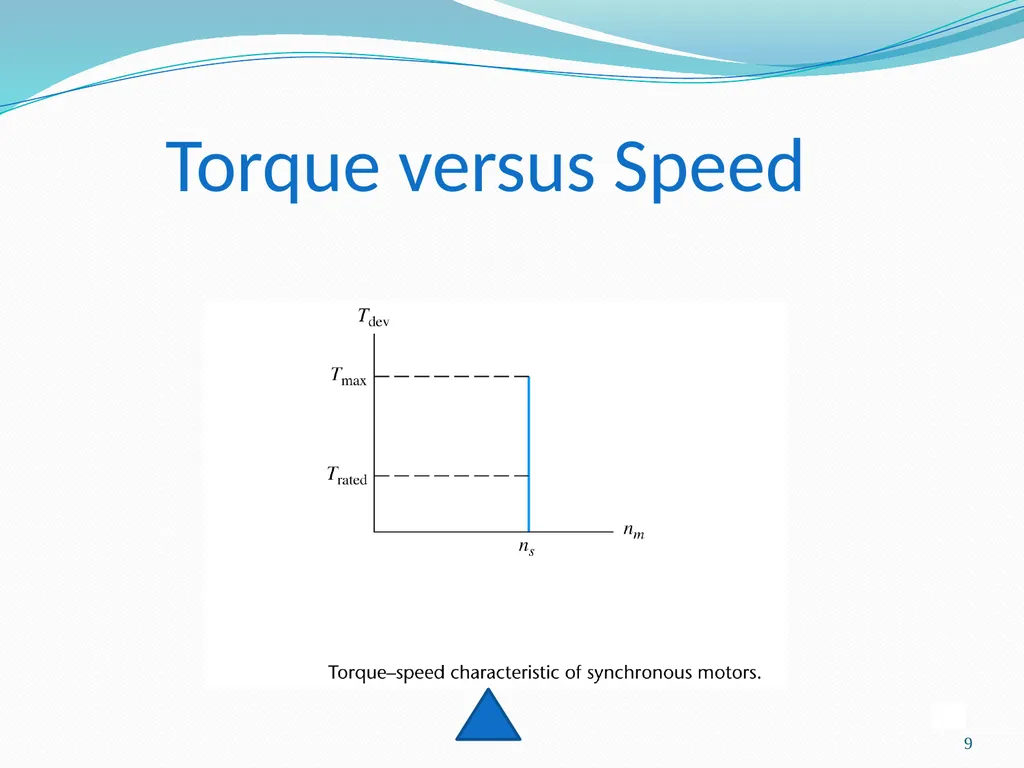
Torque versus Speed
Summary<br>
03
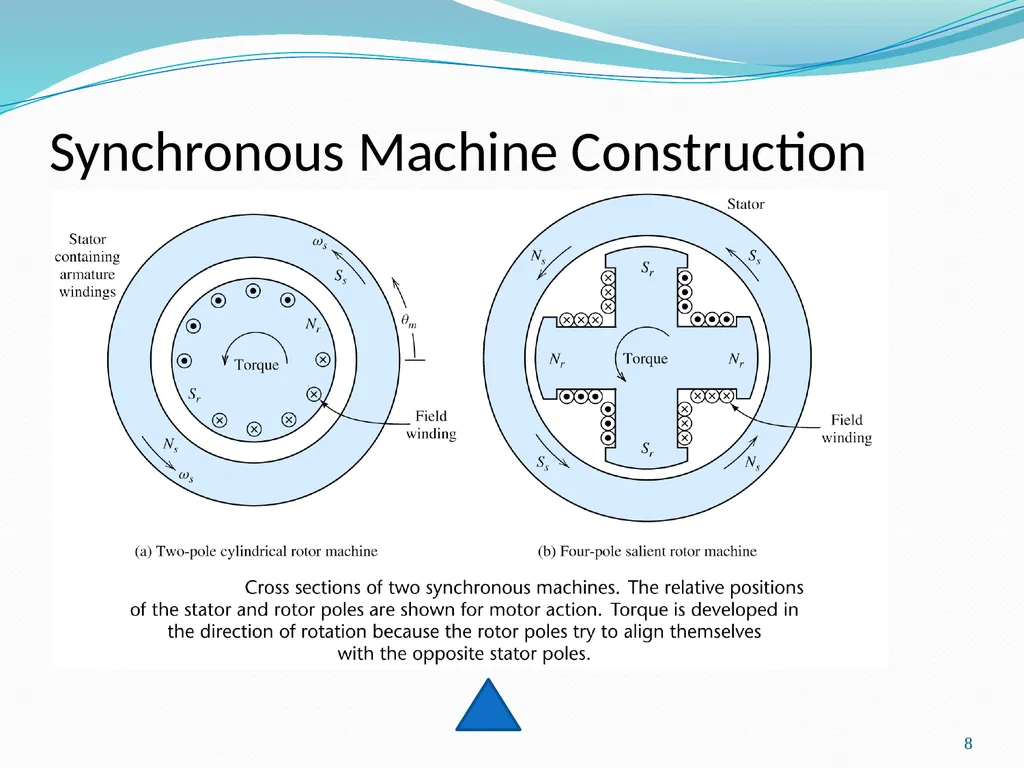
3 Synchronous Motor- Intro The synchronous motor rotates at the synchronous speed i.e. the speed of the RMF.
Stator is similar in construction to that of an induction motor, so same principle is applied to the synchronous motor rotor.
Field excitation is provided on the rotor by either permanent or electromagnets with number of poles equal to the poles of the RMF caused by stator<br>
04
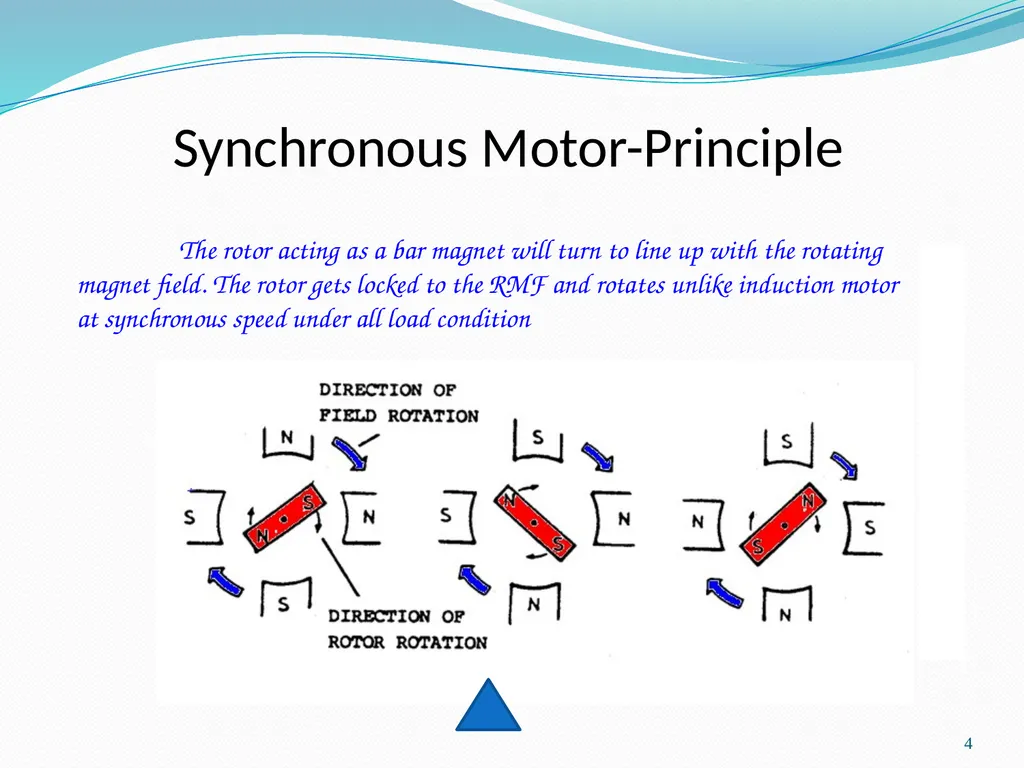
4 Synchronous Motor-Principle The rotor acting as a bar magnet will turn to line up with the rotating magnet field. The rotor gets locked to the RMF and rotates unlike induction motor at synchronous speed under all load condition<br>
05
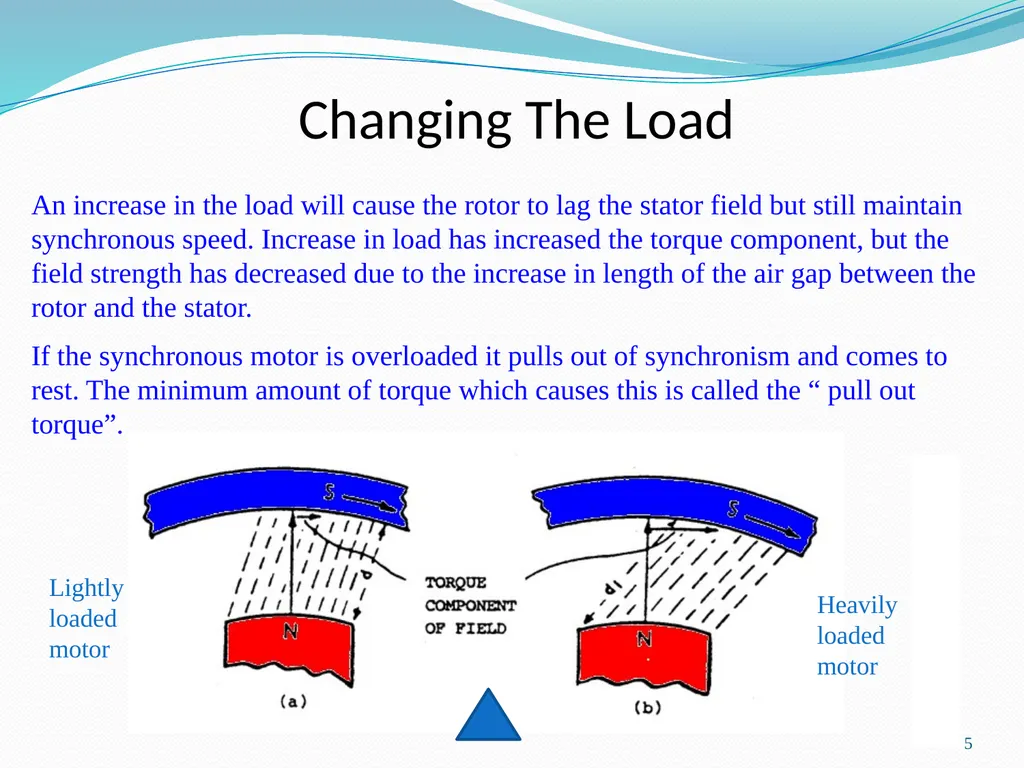
5 An increase in the load will cause the rotor to lag the stator field but still maintain synchronous speed. Increase in load has increased the torque component, but the field strength has decreased due to the increase in length of the air gap between the rotor and the stator.
If the synchronous motor is overloaded it pulls out of synchronism and comes to rest. The minimum amount of torque which causes this is called the “ pull out torque”. Lightly loaded motor Heavily loaded motor Changing The Load<br>
06
6 Starting Torque It cannot be started from a standstill by applying ac to the stator. When ac is applied to the stator a high speed RMF appears around the stator. This RMF rushes past the rotor poles so quickly that the rotor is unable to get started. It is attracted first in one direction and then in the other and hence no starting torque.<br>
07
7 Improvement of starting torque It is started by using a squirrel cage within a rotor construction and therefore starts as an induction motor.
At synchronous speed the squirrel cage has no part to play.<br>
08
8 Synchronous Machine Construction<br>
09
9 Torque versus Speed<br>
10
10 Summary The synchronous motor:
requires to be started by an external prime mover.
Runs only at synchronous speed, this is an advantage where continuous speed is required but a disadvantage where a variable speed is required.
Can be used to adjust the power factor of a system at the same time it is driving a mechanical load.<br>
11
11 Maintenance Practices-A.C. Motors Clean, but don’t forget to inspect before and after cleaning
Check electrical connections for security, the insulation to be in satisfactory condition.
Examine for signs of over heating
Check that the motor is secure
Do an audible check
Ensure that the motor is not over heating when operating, a rule of thumb is that if it is too hot for the hand, it is too high.
When replacing a motor always ensure that the load, valve has not seized.
Also ensure that the motor operates in the correct direction