
5 Biodiversity, Species Interactions, and



Description: 5 Biodiversity, Species Interactions, and Population Control Live in giant kelp forests By the early 1900s they had been hunted almost to extinction Partial recovery since 1977 Why care about sea otters? Ethics Tourism dollars Keystone
Related Topics
Download Presentation
"5 Biodiversity, Species Interactions, and" is the property of its rightful owner. Permission is granted to download and print the materials on this website for personal, non-commercial use only, and to display it on your personal computer provided you do not modify the materials and that you retain all copyright notices contained in the materials. By downloading content from our website, you accept the terms of this agreement.
Presentation Transcript
slide1. 5 Biodiversity, Species Interactions, and Population Control<br>
slide2. Live in giant kelp forests
By the early 1900s they had been hunted almost to extinction
Partial recovery since 1977
Why care about sea otters?
Ethics
Tourism dollars
Keystone species Core Case Study: Southern Sea Otters - A Species in Recovery<br>
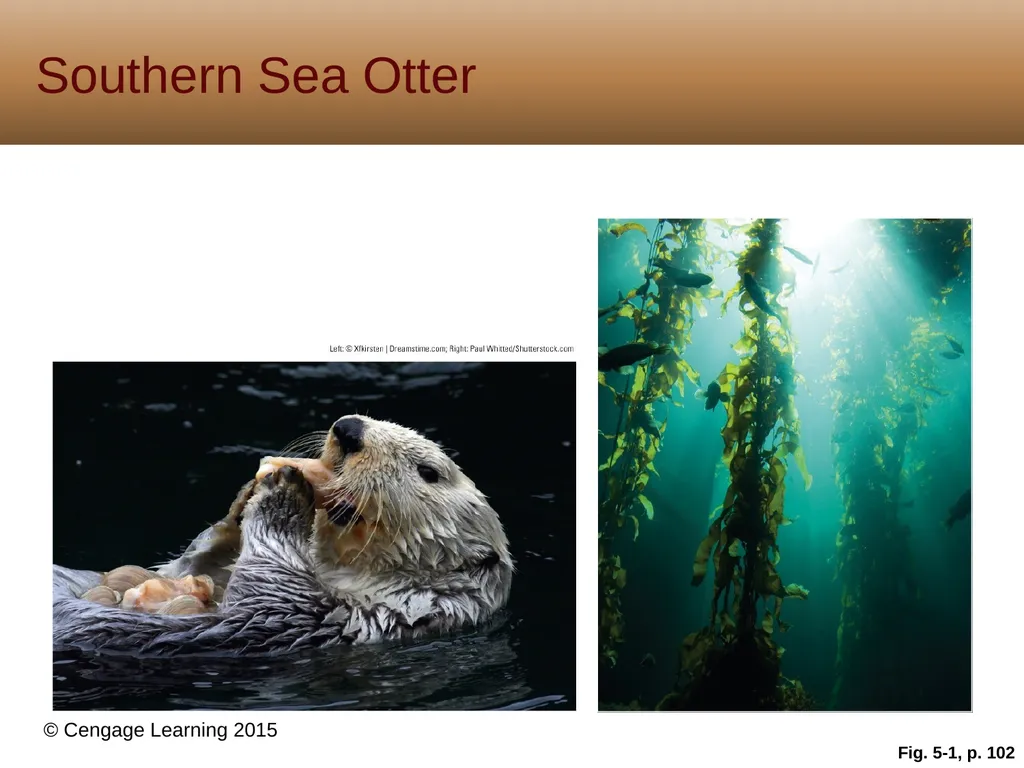
slide3. Southern Sea Otter Fig. 5-1, p. 102<br>
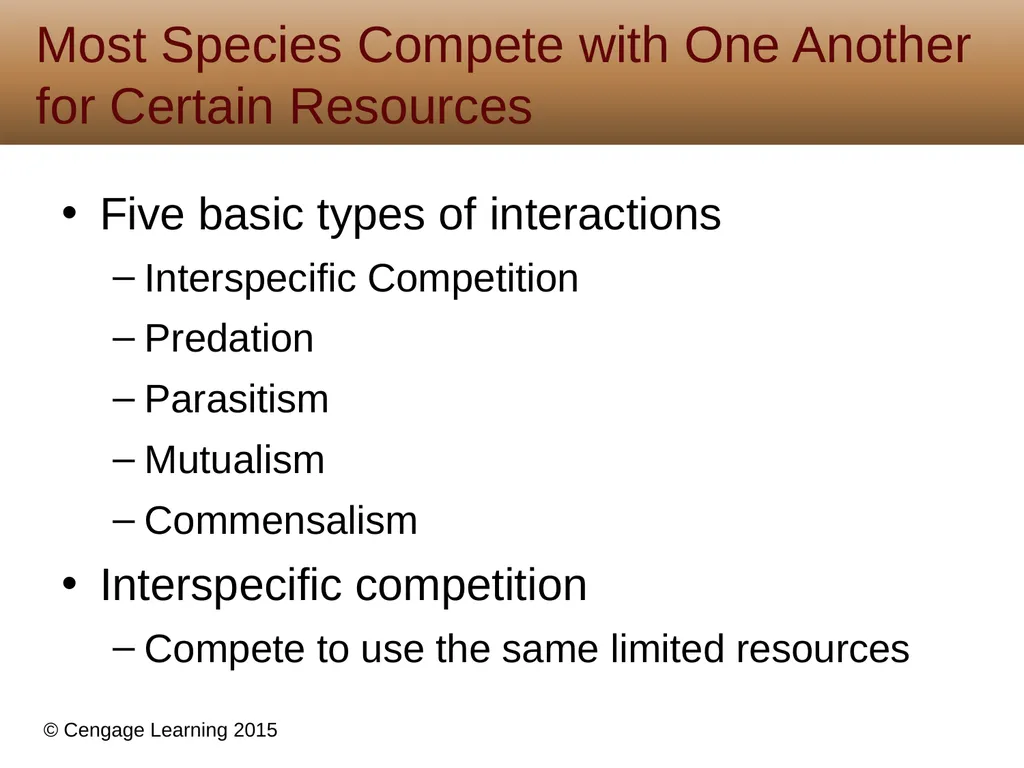
slide4. Five types of species interactions—competition, predation, parasitism, mutualism, and commensalism—affect the resource use and population sizes of the species in an ecosystem 5-1 How Do Species Interact?<br>
slide5. Five basic types of interactions
Interspecific Competition
Predation
Parasitism
Mutualism
Commensalism
Interspecific competition
Compete to use the same limited resources Most Species Compete with One Another for Certain Resources<br>
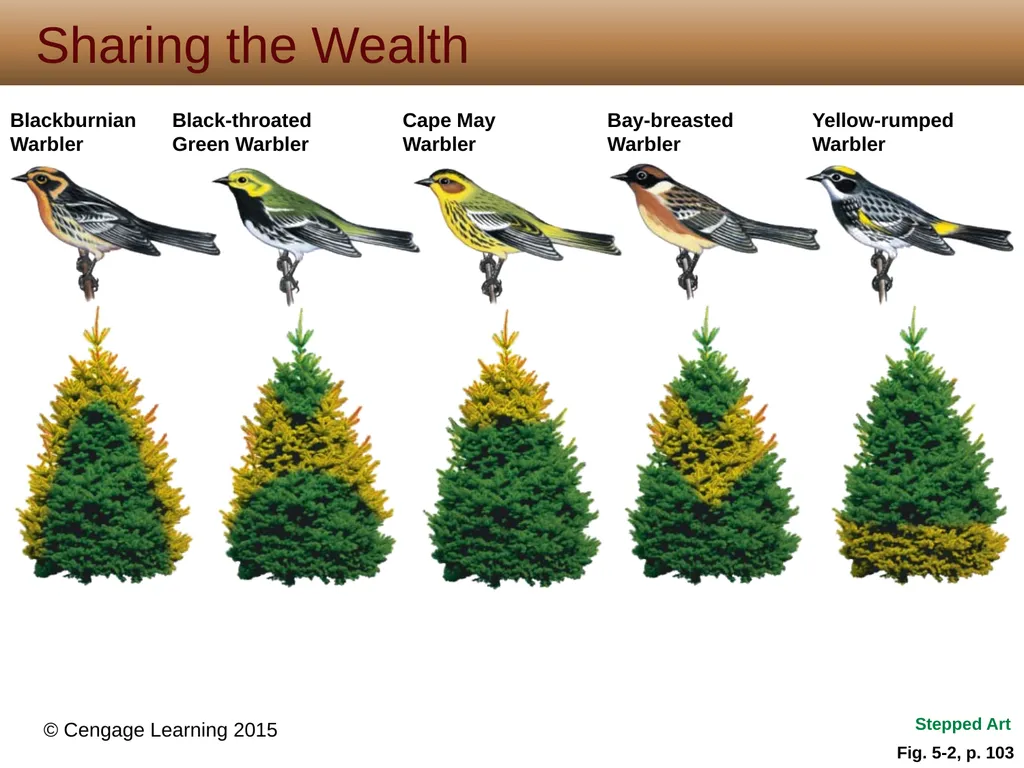
slide6. Resource partitioning
Species may use only parts of resource
At different times
In different ways Some Species Evolve Ways to Share Resources<br>
slide7. Stepped Art Fig. 5-2, p. 103 Sharing the Wealth<br>
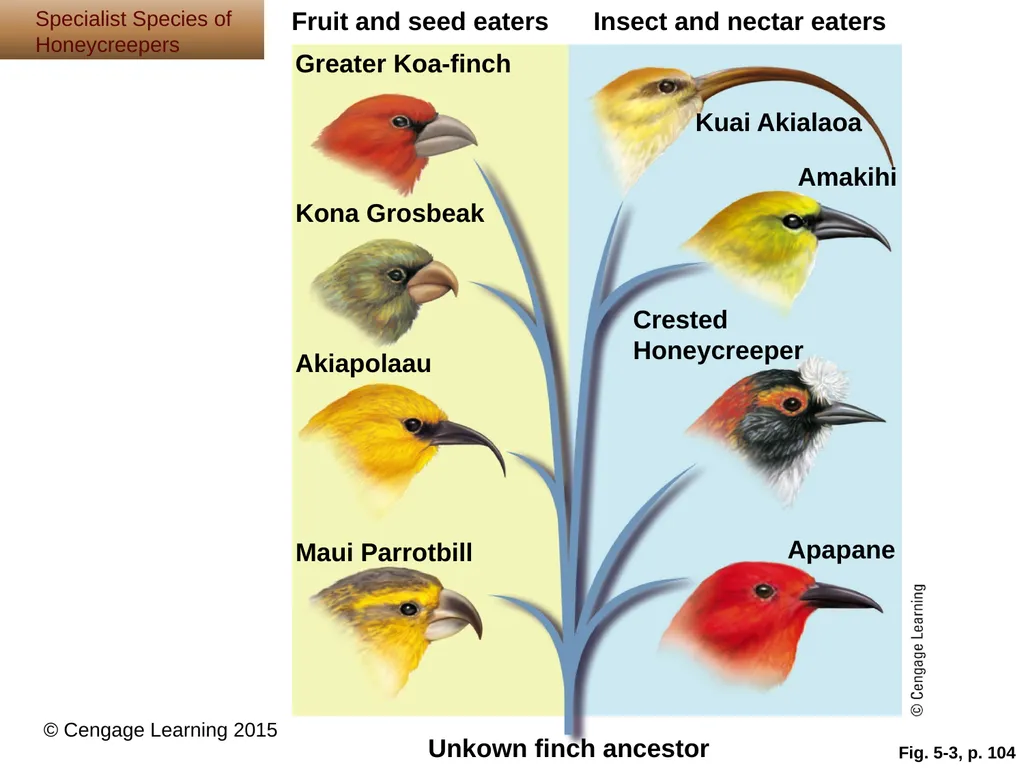
slide8. Fig. 5-3, p. 104 Fruit and seed eaters Insect and nectar eaters Greater Koa-finch Kuai Akialaoa Amakihi Kona Grosbeak Crested Honeycreeper Akiapolaau Maui Parrotbill Apapane Unkown finch ancestor Specialist Species of Honeycreepers<br>
slide9. Predator – feeds directly on all or part of a living organism
Carnivores
Pursuit and ambush
Camouflage
Chemical warfare Consumer Species Feed on Other Species<br>
slide10. Prey can avoid predation
Camouflage
Chemical warfare
Warning coloration
Mimicry
Behavioral strategies Consumer Species Feed on Other Species (cont’d.)<br>
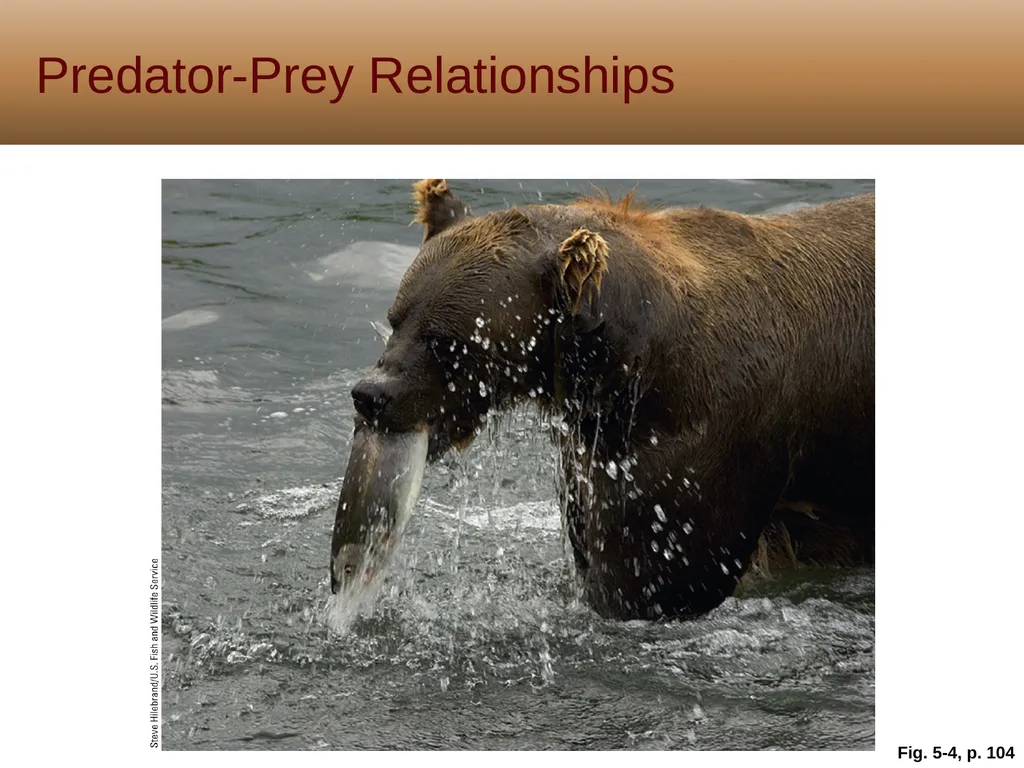
slide11. Predator-Prey Relationships Fig. 5-4, p. 104<br>
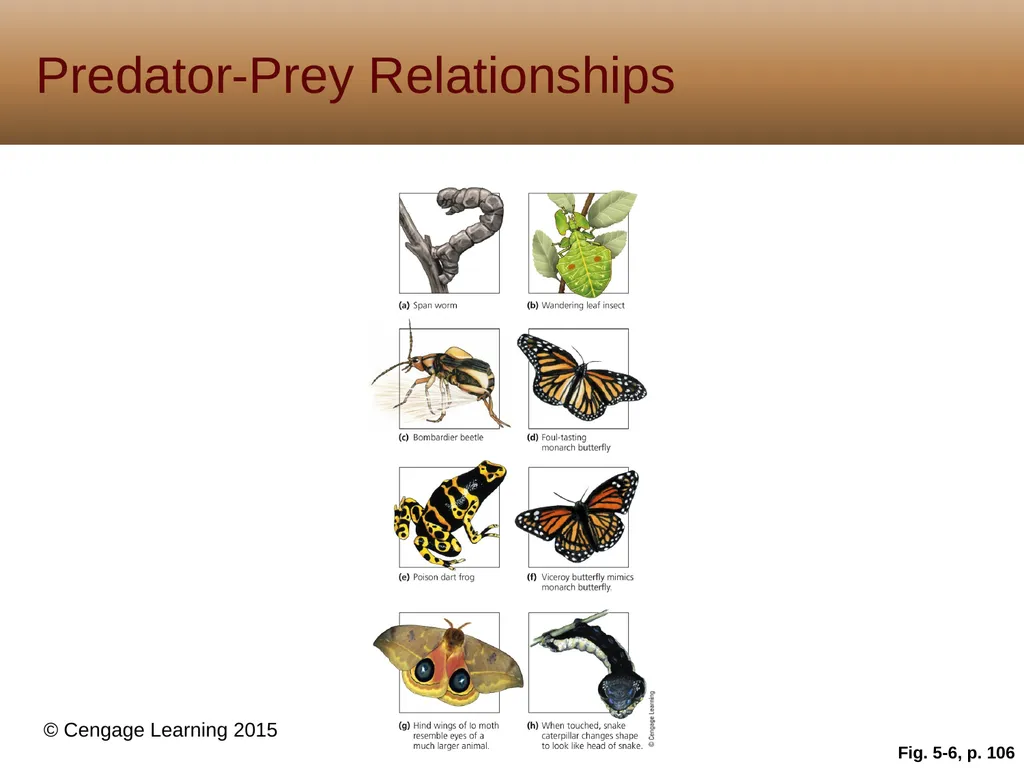
slide12. Predator-Prey Relationships Fig. 5-6, p. 106<br>
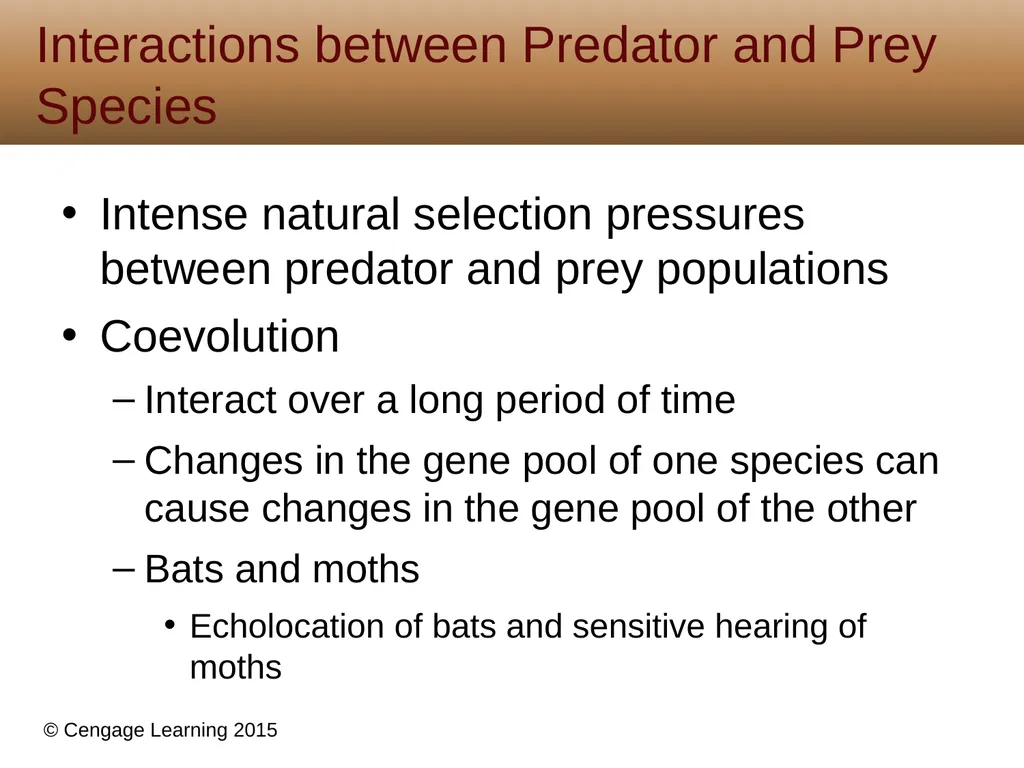
slide13. Intense natural selection pressures between predator and prey populations
Coevolution
Interact over a long period of time
Changes in the gene pool of one species can cause changes in the gene pool of the other
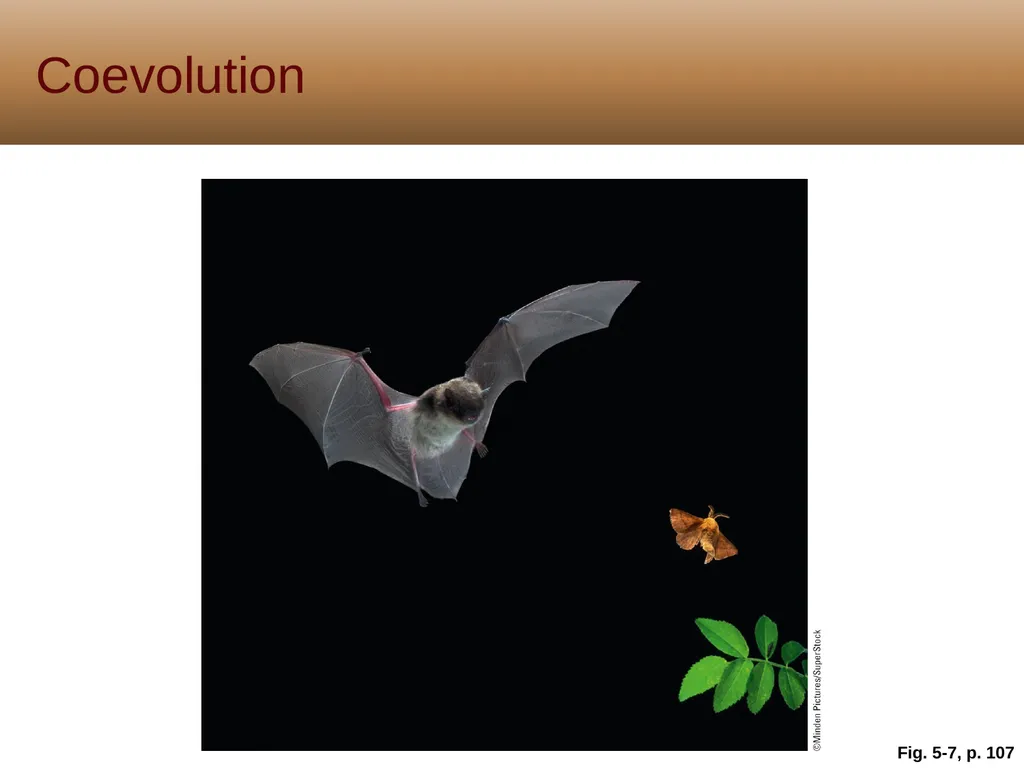
Bats and moths
Echolocation of bats and sensitive hearing of moths Interactions between Predator and Prey Species<br>
slide14. Coevolution Fig. 5-7, p. 107<br>
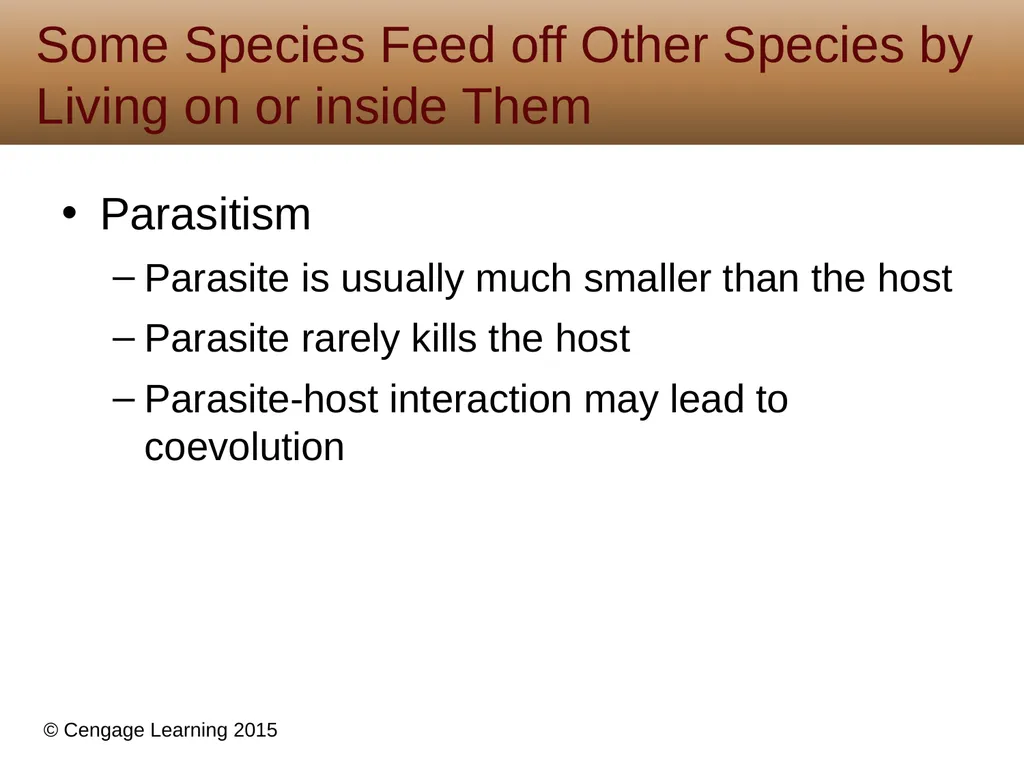
slide15. Parasitism
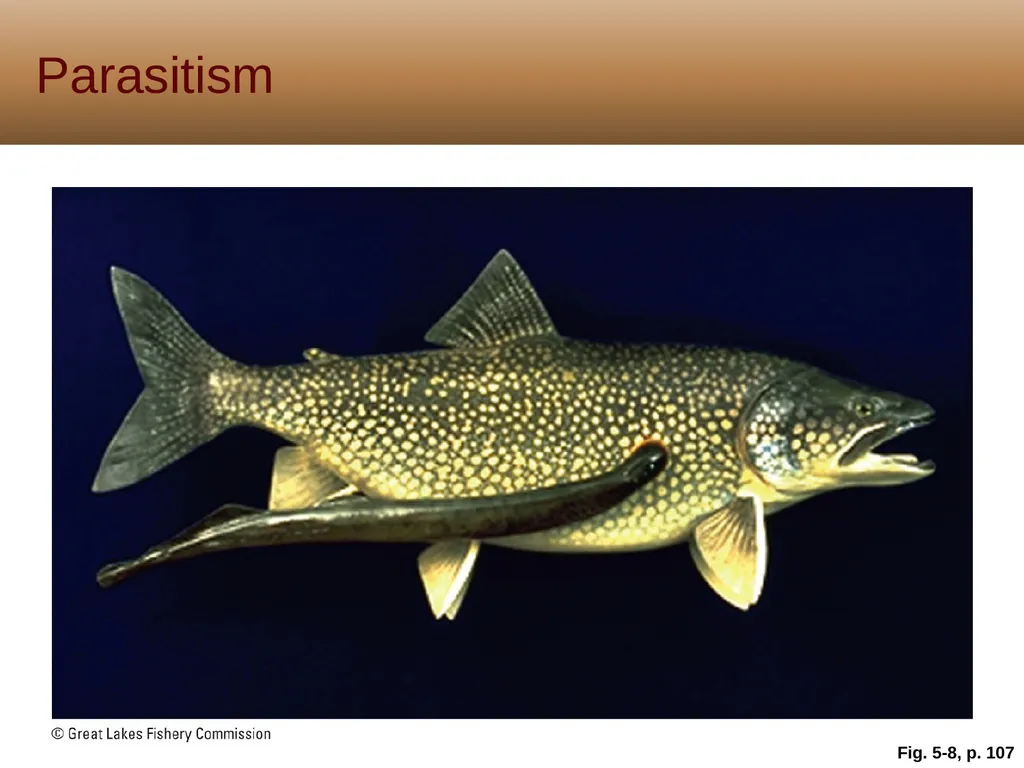
Parasite is usually much smaller than the host
Parasite rarely kills the host
Parasite-host interaction may lead to coevolution Some Species Feed off Other Species by Living on or inside Them<br>
slide16. Parasitism Fig. 5-8, p. 107<br>
slide17. Mutualism
Nutrition and protective relationship
Gut inhabitant mutualism
Not cooperation – mutual exploitation In Some Interactions, Both Species Benefit<br>
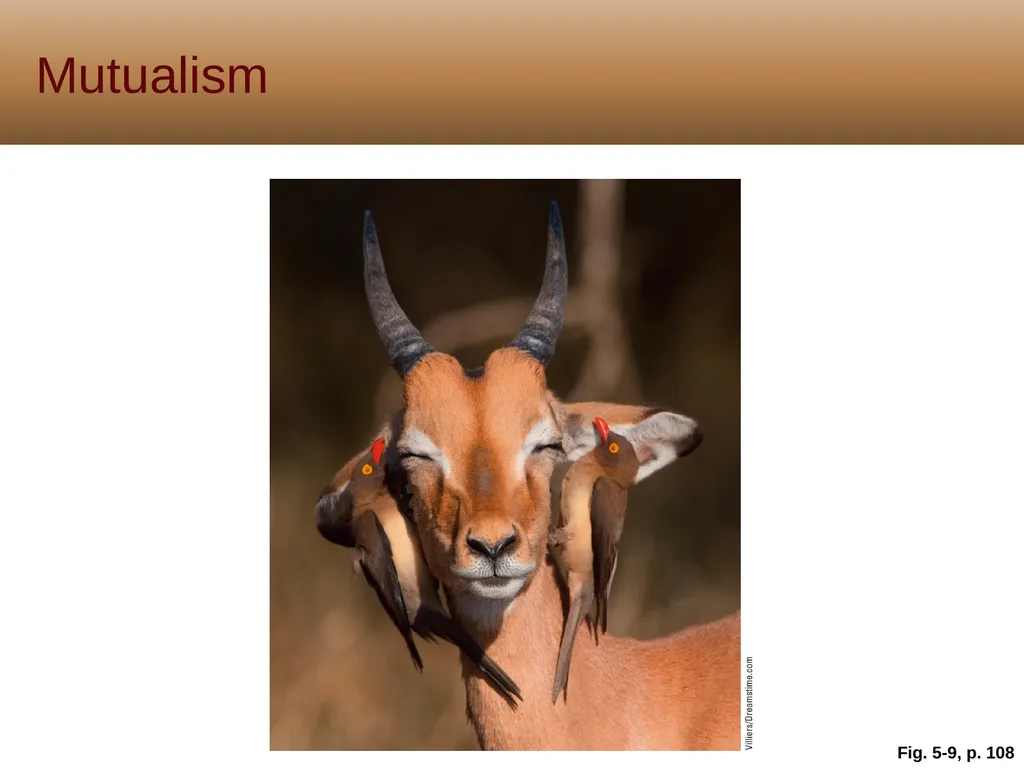
slide18. Mutualism Fig. 5-9, p. 108<br>
slide19. Commensalism
Benefits one species and has little effect on the other
Epiphytes
Birds nesting in trees In Some Interactions, One Species Benefits and the Other Is Not Harmed<br>
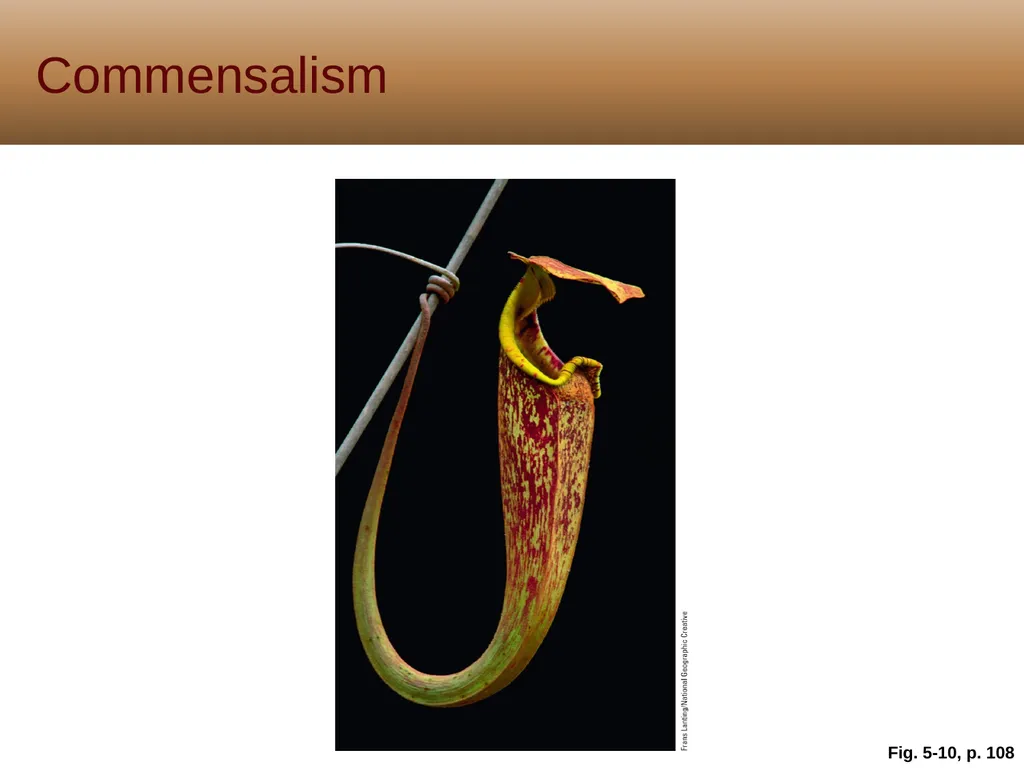
slide20. Commensalism Fig. 5-10, p. 108<br>
slide21. How do communities and ecosystems respond to changing environmental conditions?
The structure and species composition of communities and ecosystems change in response to changing environmental conditions through a process called ecological succession 5-2 Responding to Changing Environmental Conditions<br>
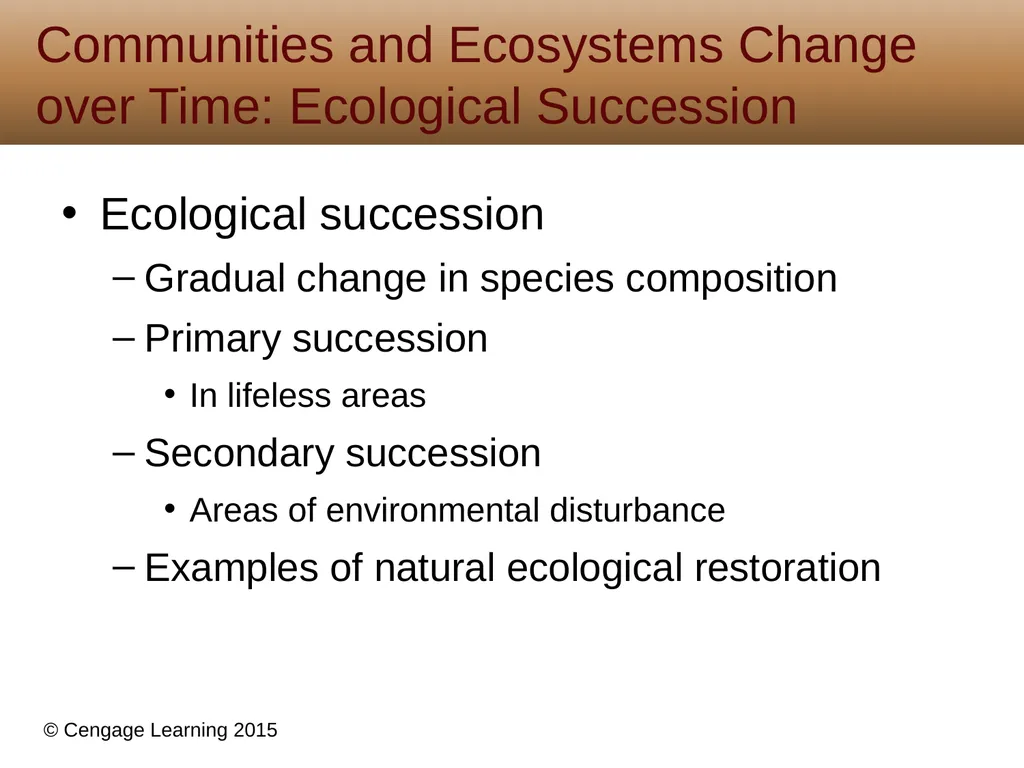
slide22. Ecological succession
Gradual change in species composition
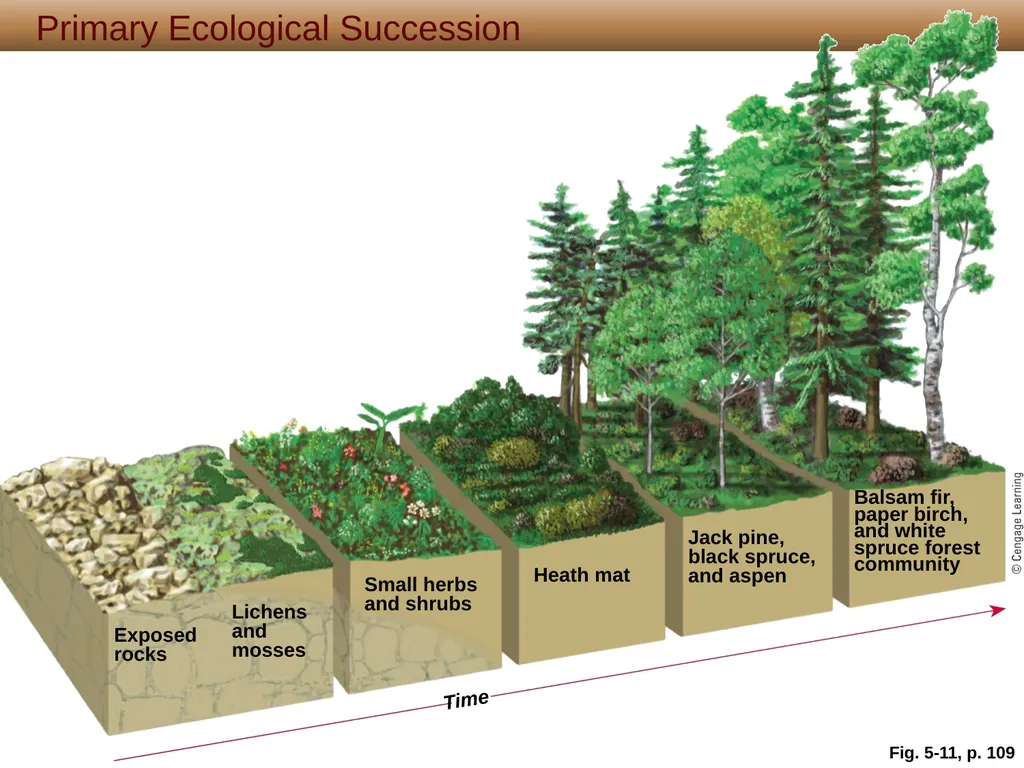
Primary succession
In lifeless areas
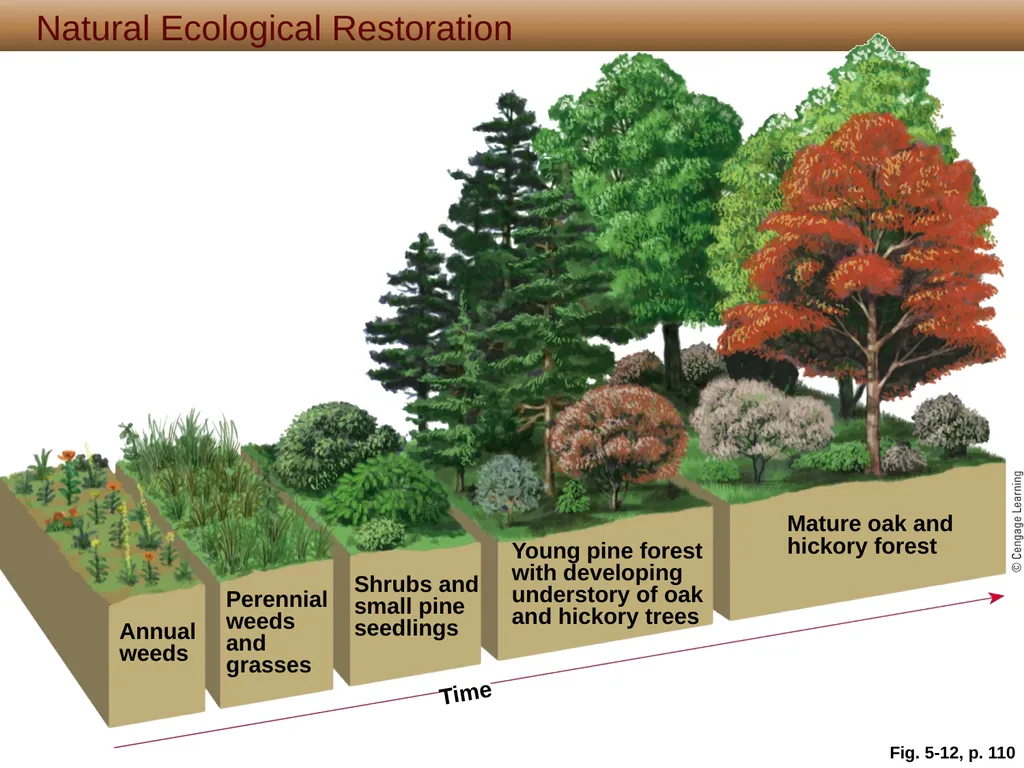
Secondary succession
Areas of environmental disturbance
Examples of natural ecological restoration Communities and Ecosystems Change over Time: Ecological Succession<br>
slide23. Primary Ecological Succession Balsam fir, paper birch, and white spruce forest community Jack pine, black spruce, and aspen Heath mat Small herbs and shrubs Lichens and mosses Exposed rocks Time Fig. 5-11, p. 109<br>
slide24. Natural Ecological Restoration Mature oak and hickory forest Shrubs and small pine seedlings Young pine forest with developing understory of oak and hickory trees Perennial weeds and grasses Annual weeds Time Fig. 5-12, p. 110<br>
slide25. Traditional view
Balance of nature and climax communities
Current view
Ever-changing mosaic of patches of vegetation in different stages of succession Ecological Succession Does Not Follow a Predictable Path<br>
slide26. Inertia
Ability of a living system to survive moderate disturbances
Resilience
Ability of a living system to be restored through secondary succession after a moderate disturbance Living Systems Are Sustained through Constant Change<br>
slide27. No population can grow indefinitely because of limitations on resources and because of competition among species for those resources 5-3 What Limits the Growth of Populations?<br>
slide28. Population
Group of interbreeding individuals of the same species
Population distribution
Clumping
Species cluster for resources
Protection from predators
Ability to hunt in packs Most Populations Live in Clumps<br>
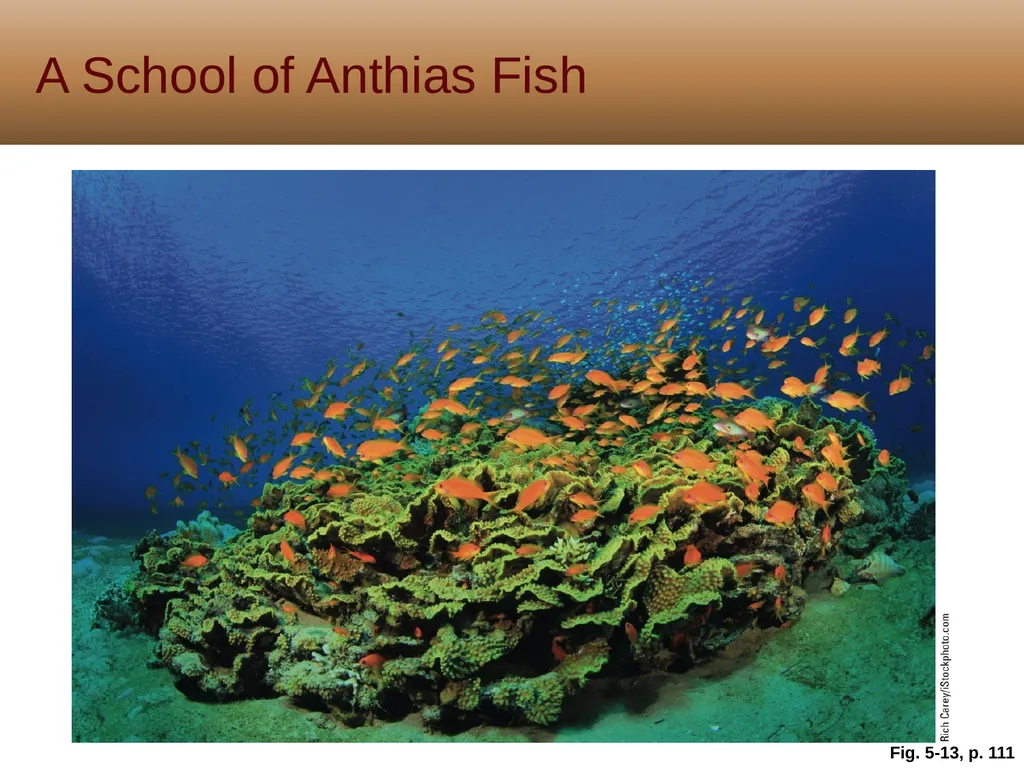
slide29. A School of Anthias Fish Fig. 5-13, p. 111<br>
slide30. Population size governed by:
Births and deaths; immigration and emigration
Population change = (births + immigration) – (deaths + emigration)
Age structure
Pre-reproductive age
Reproductive age
Post-reproductive age Populations Can Grow, Shrink, or Remain Stable<br>
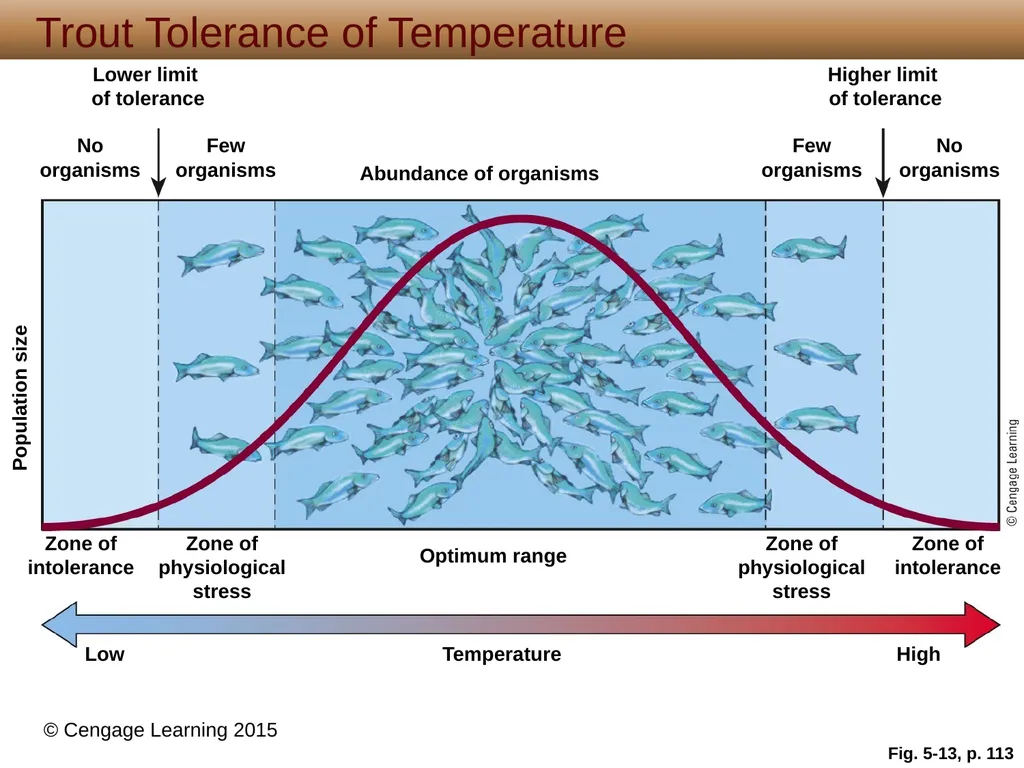
slide31. Range of tolerance
Variations in physical and chemical environment
Individuals may have different tolerance ranges Some Factors Can Limit Population Size<br>
slide32. Limiting factor principle
Too much or too little of any physical or chemical factor can limit or prevent growth of a population, even if all other factors are at or near the optimal range of tolerance
Precipitation, nutrients, sunlight
Populations density
Number of individuals in a given area Some Factors Can Limit Population Size<br>
slide33. Fig. 5-13, p. 113 Lower limit
of tolerance Higher limit
of tolerance No organisms Few organisms Abundance of organisms Few organisms No organisms Population size Zone of physiological stress Optimum range Zone of physiological stress Zone of intolerance Low Temperature High Zone of intolerance Trout Tolerance of Temperature<br>
slide34. Some species:
Have many small offspring
Little parental involvement
Other species:
Reproduce later in life
Have small number of offspring Different Species Have Different Reproductive Patterns<br>
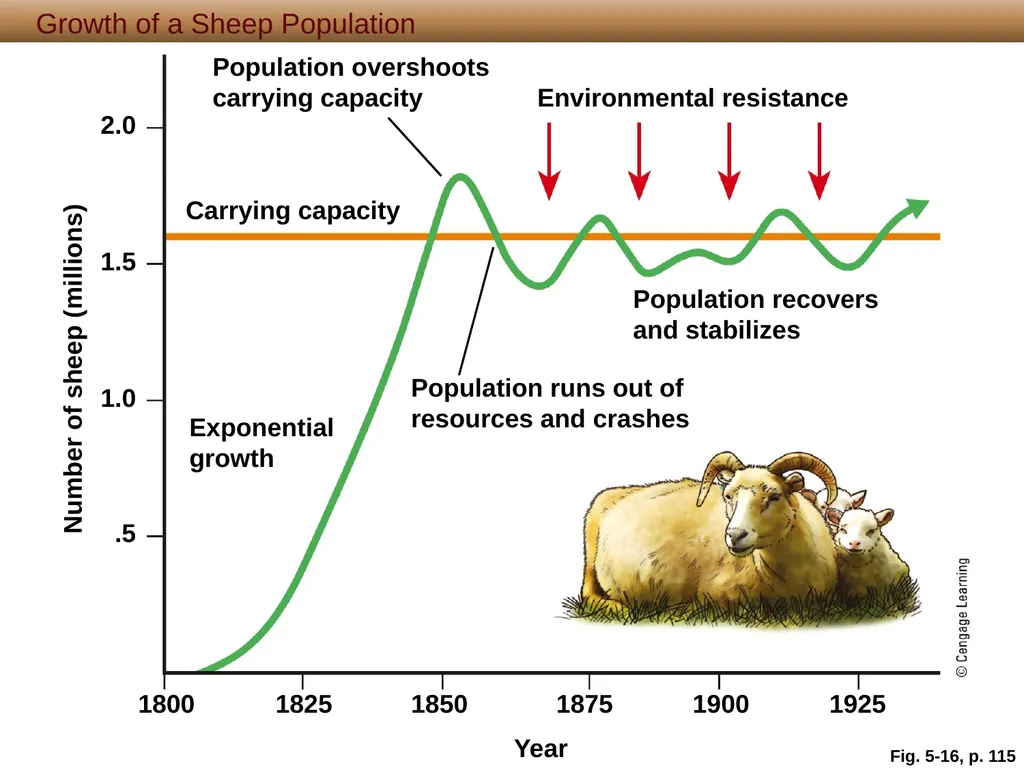
slide35. There are always limits to population growth in nature
Environmental resistance – factors that limit population growth
Carrying capacity
Maximum population of a given species that a particular habitat can sustain indefinitely No Population Can Grow Indefinitely: J-Curves and S-Curves<br>
slide36. Exponential growth
At a fixed percentage per year
Logistic growth
Population faces environmental resistance No Population Can Grow Indefinitely: J-Curves and S-Curves (cont’d.)<br>
slide37. Fig. 5-16, p. 115 2.0 Population overshoots carrying capacity Carrying capacity 1.5 Population recovers and stabilizes Number of sheep (millions) .5 Exponential growth Population runs out of resources and crashes 1.0 1800 1825 1850 1875 1900 1925 Year Environmental resistance Growth of a Sheep Population<br>
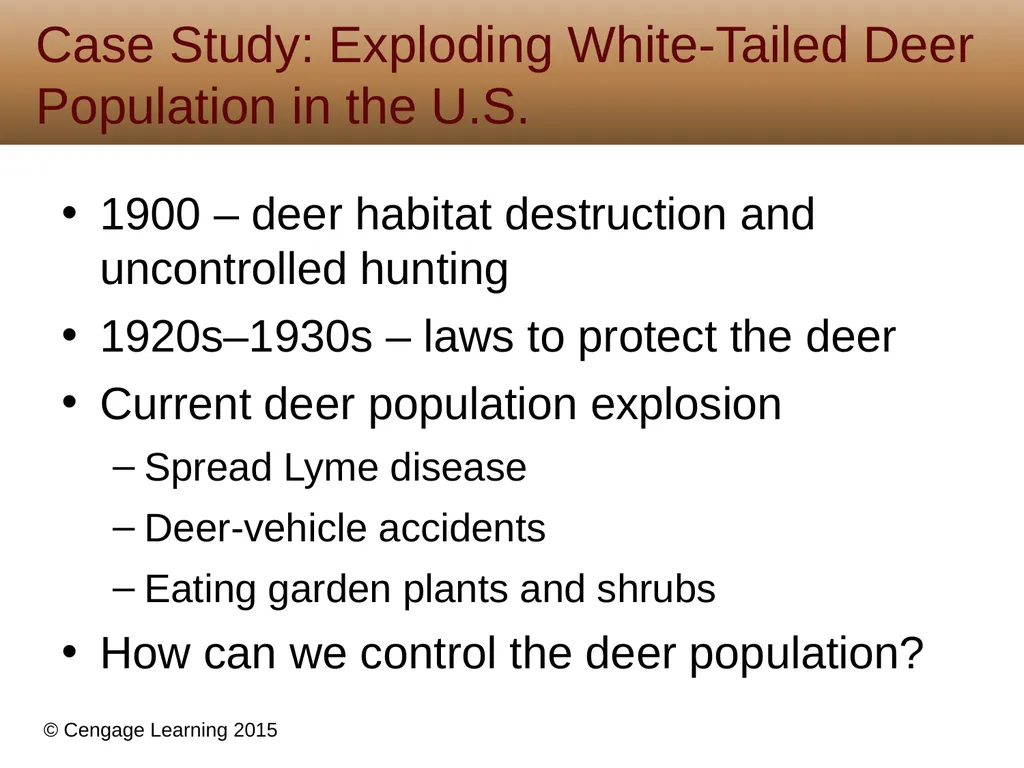
slide38. 1900 – deer habitat destruction and uncontrolled hunting
1920s–1930s – laws to protect the deer
Current deer population explosion
Spread Lyme disease
Deer-vehicle accidents
Eating garden plants and shrubs
How can we control the deer population? Case Study: Exploding White-Tailed Deer Population in the U.S.<br>
slide39. White-Tailed Deer Populations Fig. 5-17, p. 115<br>
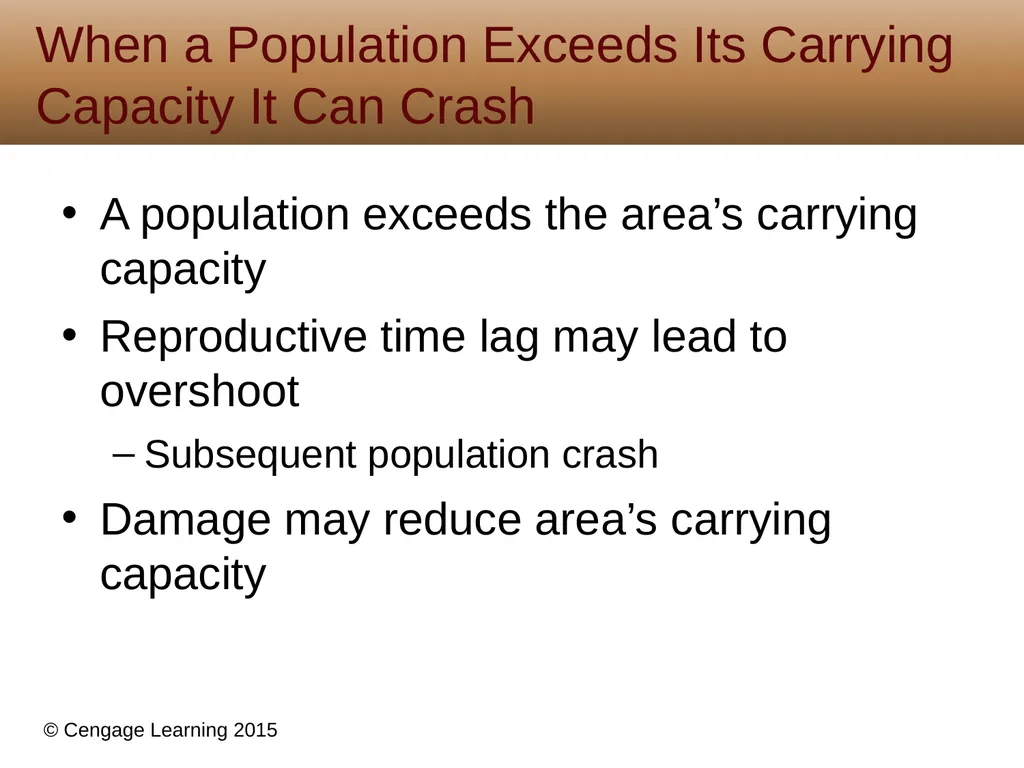
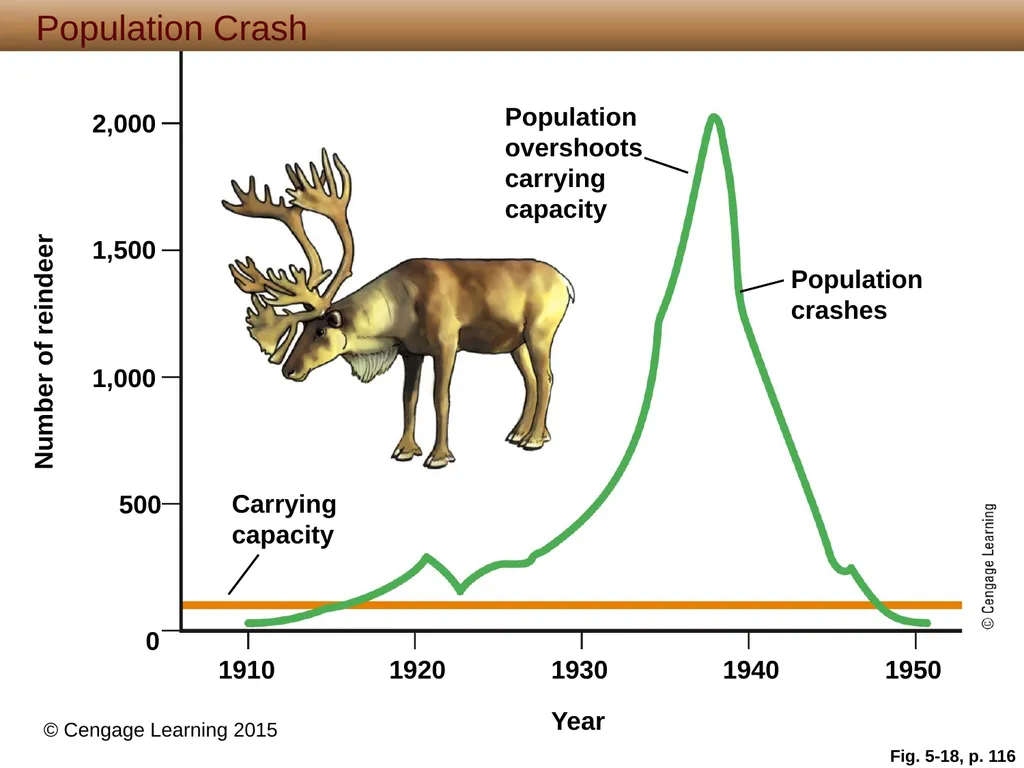
slide40. A population exceeds the area’s carrying capacity
Reproductive time lag may lead to overshoot
Subsequent population crash
Damage may reduce area’s carrying capacity When a Population Exceeds Its Carrying Capacity It Can Crash<br>
slide41. Fig. 5-18, p. 116 2,000 Population overshoots carrying capacity 1,500 Population crashes 1,000 500 Carrying capacity Number of reindeer 1910 1920 1930 1940 1950 0 Year Population Crash<br>
slide42. Ireland
Potato crop in 1845
Bubonic plague
Fourteenth century
AIDS
Current global epidemic Humans Are Not Exempt from Nature’s Population Controls<br>
slide43. Certain interactions among species
Affect their use of resources and their population sizes
Changes in environmental conditions
Cause communities and ecosystems to gradually alter their species composition and population sizes (ecological succession)
There are always limits to population growth in nature Three Big Ideas<br>
slide44. Before European settlers in the U.S., the sea otter ecosystem was complex
Settlers began hunting otters
Disturbed the balance of the ecosystem
Populations depend on solar energy and nutrient cycling
When these are disrupted biodiversity is threatened Tying It All Together – Southern Sea Otters and Sustainability<br>
slide2. Live in giant kelp forests
By the early 1900s they had been hunted almost to extinction
Partial recovery since 1977
Why care about sea otters?
Ethics
Tourism dollars
Keystone species Core Case Study: Southern Sea Otters - A Species in Recovery<br>
slide3. Southern Sea Otter Fig. 5-1, p. 102<br>
slide4. Five types of species interactions—competition, predation, parasitism, mutualism, and commensalism—affect the resource use and population sizes of the species in an ecosystem 5-1 How Do Species Interact?<br>
slide5. Five basic types of interactions
Interspecific Competition
Predation
Parasitism
Mutualism
Commensalism
Interspecific competition
Compete to use the same limited resources Most Species Compete with One Another for Certain Resources<br>
slide6. Resource partitioning
Species may use only parts of resource
At different times
In different ways Some Species Evolve Ways to Share Resources<br>
slide7. Stepped Art Fig. 5-2, p. 103 Sharing the Wealth<br>
slide8. Fig. 5-3, p. 104 Fruit and seed eaters Insect and nectar eaters Greater Koa-finch Kuai Akialaoa Amakihi Kona Grosbeak Crested Honeycreeper Akiapolaau Maui Parrotbill Apapane Unkown finch ancestor Specialist Species of Honeycreepers<br>
slide9. Predator – feeds directly on all or part of a living organism
Carnivores
Pursuit and ambush
Camouflage
Chemical warfare Consumer Species Feed on Other Species<br>
slide10. Prey can avoid predation
Camouflage
Chemical warfare
Warning coloration
Mimicry
Behavioral strategies Consumer Species Feed on Other Species (cont’d.)<br>
slide11. Predator-Prey Relationships Fig. 5-4, p. 104<br>
slide12. Predator-Prey Relationships Fig. 5-6, p. 106<br>
slide13. Intense natural selection pressures between predator and prey populations
Coevolution
Interact over a long period of time
Changes in the gene pool of one species can cause changes in the gene pool of the other
Bats and moths
Echolocation of bats and sensitive hearing of moths Interactions between Predator and Prey Species<br>
slide14. Coevolution Fig. 5-7, p. 107<br>
slide15. Parasitism
Parasite is usually much smaller than the host
Parasite rarely kills the host
Parasite-host interaction may lead to coevolution Some Species Feed off Other Species by Living on or inside Them<br>
slide16. Parasitism Fig. 5-8, p. 107<br>
slide17. Mutualism
Nutrition and protective relationship
Gut inhabitant mutualism
Not cooperation – mutual exploitation In Some Interactions, Both Species Benefit<br>
slide18. Mutualism Fig. 5-9, p. 108<br>
slide19. Commensalism
Benefits one species and has little effect on the other
Epiphytes
Birds nesting in trees In Some Interactions, One Species Benefits and the Other Is Not Harmed<br>
slide20. Commensalism Fig. 5-10, p. 108<br>
slide21. How do communities and ecosystems respond to changing environmental conditions?
The structure and species composition of communities and ecosystems change in response to changing environmental conditions through a process called ecological succession 5-2 Responding to Changing Environmental Conditions<br>
slide22. Ecological succession
Gradual change in species composition
Primary succession
In lifeless areas
Secondary succession
Areas of environmental disturbance
Examples of natural ecological restoration Communities and Ecosystems Change over Time: Ecological Succession<br>
slide23. Primary Ecological Succession Balsam fir, paper birch, and white spruce forest community Jack pine, black spruce, and aspen Heath mat Small herbs and shrubs Lichens and mosses Exposed rocks Time Fig. 5-11, p. 109<br>
slide24. Natural Ecological Restoration Mature oak and hickory forest Shrubs and small pine seedlings Young pine forest with developing understory of oak and hickory trees Perennial weeds and grasses Annual weeds Time Fig. 5-12, p. 110<br>
slide25. Traditional view
Balance of nature and climax communities
Current view
Ever-changing mosaic of patches of vegetation in different stages of succession Ecological Succession Does Not Follow a Predictable Path<br>
slide26. Inertia
Ability of a living system to survive moderate disturbances
Resilience
Ability of a living system to be restored through secondary succession after a moderate disturbance Living Systems Are Sustained through Constant Change<br>
slide27. No population can grow indefinitely because of limitations on resources and because of competition among species for those resources 5-3 What Limits the Growth of Populations?<br>
slide28. Population
Group of interbreeding individuals of the same species
Population distribution
Clumping
Species cluster for resources
Protection from predators
Ability to hunt in packs Most Populations Live in Clumps<br>
slide29. A School of Anthias Fish Fig. 5-13, p. 111<br>
slide30. Population size governed by:
Births and deaths; immigration and emigration
Population change = (births + immigration) – (deaths + emigration)
Age structure
Pre-reproductive age
Reproductive age
Post-reproductive age Populations Can Grow, Shrink, or Remain Stable<br>
slide31. Range of tolerance
Variations in physical and chemical environment
Individuals may have different tolerance ranges Some Factors Can Limit Population Size<br>
slide32. Limiting factor principle
Too much or too little of any physical or chemical factor can limit or prevent growth of a population, even if all other factors are at or near the optimal range of tolerance
Precipitation, nutrients, sunlight
Populations density
Number of individuals in a given area Some Factors Can Limit Population Size<br>
slide33. Fig. 5-13, p. 113 Lower limit
of tolerance Higher limit
of tolerance No organisms Few organisms Abundance of organisms Few organisms No organisms Population size Zone of physiological stress Optimum range Zone of physiological stress Zone of intolerance Low Temperature High Zone of intolerance Trout Tolerance of Temperature<br>
slide34. Some species:
Have many small offspring
Little parental involvement
Other species:
Reproduce later in life
Have small number of offspring Different Species Have Different Reproductive Patterns<br>
slide35. There are always limits to population growth in nature
Environmental resistance – factors that limit population growth
Carrying capacity
Maximum population of a given species that a particular habitat can sustain indefinitely No Population Can Grow Indefinitely: J-Curves and S-Curves<br>
slide36. Exponential growth
At a fixed percentage per year
Logistic growth
Population faces environmental resistance No Population Can Grow Indefinitely: J-Curves and S-Curves (cont’d.)<br>
slide37. Fig. 5-16, p. 115 2.0 Population overshoots carrying capacity Carrying capacity 1.5 Population recovers and stabilizes Number of sheep (millions) .5 Exponential growth Population runs out of resources and crashes 1.0 1800 1825 1850 1875 1900 1925 Year Environmental resistance Growth of a Sheep Population<br>
slide38. 1900 – deer habitat destruction and uncontrolled hunting
1920s–1930s – laws to protect the deer
Current deer population explosion
Spread Lyme disease
Deer-vehicle accidents
Eating garden plants and shrubs
How can we control the deer population? Case Study: Exploding White-Tailed Deer Population in the U.S.<br>
slide39. White-Tailed Deer Populations Fig. 5-17, p. 115<br>
slide40. A population exceeds the area’s carrying capacity
Reproductive time lag may lead to overshoot
Subsequent population crash
Damage may reduce area’s carrying capacity When a Population Exceeds Its Carrying Capacity It Can Crash<br>
slide41. Fig. 5-18, p. 116 2,000 Population overshoots carrying capacity 1,500 Population crashes 1,000 500 Carrying capacity Number of reindeer 1910 1920 1930 1940 1950 0 Year Population Crash<br>
slide42. Ireland
Potato crop in 1845
Bubonic plague
Fourteenth century
AIDS
Current global epidemic Humans Are Not Exempt from Nature’s Population Controls<br>
slide43. Certain interactions among species
Affect their use of resources and their population sizes
Changes in environmental conditions
Cause communities and ecosystems to gradually alter their species composition and population sizes (ecological succession)
There are always limits to population growth in nature Three Big Ideas<br>
slide44. Before European settlers in the U.S., the sea otter ecosystem was complex
Settlers began hunting otters
Disturbed the balance of the ecosystem
Populations depend on solar energy and nutrient cycling
When these are disrupted biodiversity is threatened Tying It All Together – Southern Sea Otters and Sustainability<br>