
6.2 Writing Formulas for Ionic Compounds Ionic

6.2 Writing Formulas for Ionic Compounds Ionic
1 / 1
6.2 Writing Formulas for Ionic Compounds Ionic - slide 1 of 10 6.2 Writing Formulas for Ionic Compounds Ionic - slide 2 of 10 6.2 Writing Formulas for Ionic Compounds Ionic - slide 3 of 10 6.2 Writing Formulas for Ionic Compounds Ionic - slide 4 of 10 6.2 Writing Formulas for Ionic Compounds Ionic - slide 5 of 10 6.2 Writing Formulas for Ionic Compounds Ionic - slide 6 of 10 6.2 Writing Formulas for Ionic Compounds Ionic - slide 7 of 10 6.2 Writing Formulas for Ionic Compounds Ionic - slide 8 of 10 6.2 Writing Formulas for Ionic Compounds Ionic - slide 9 of 10 6.2 Writing Formulas for Ionic Compounds Ionic - slide 10 of 10
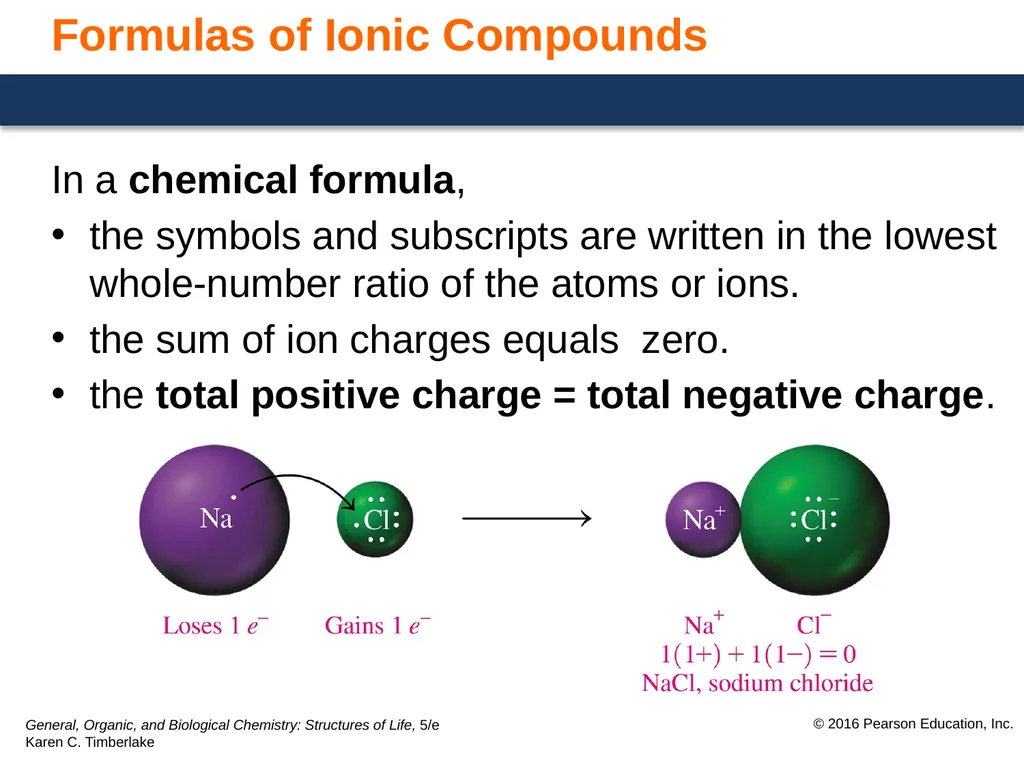
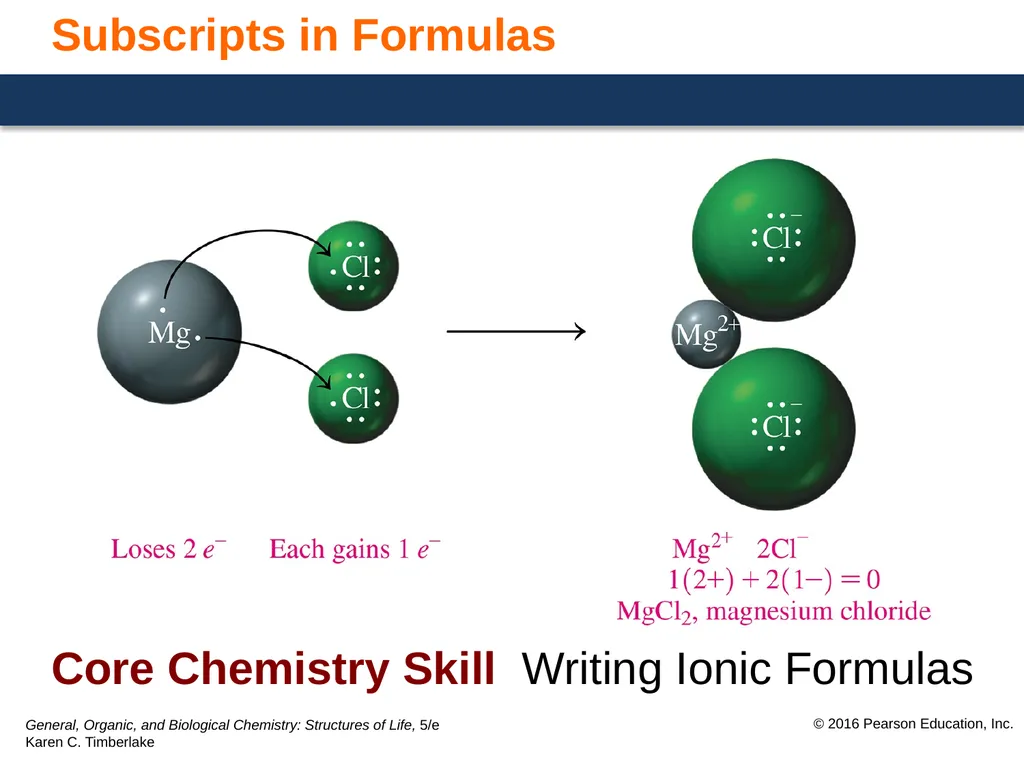
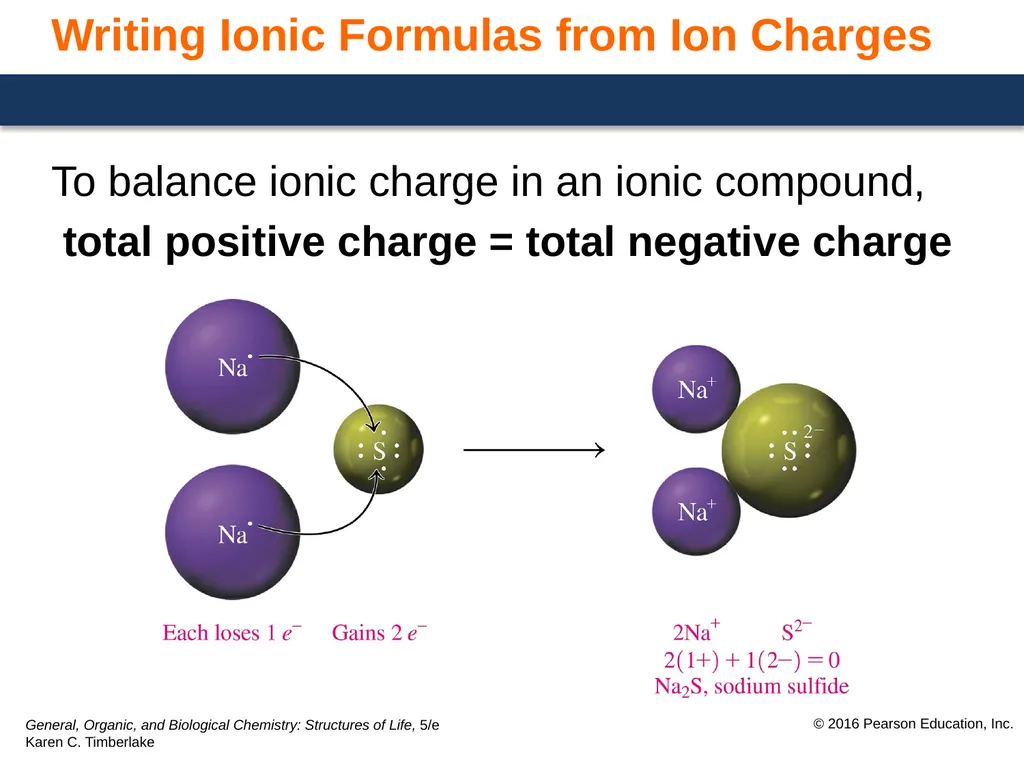
6.2 Writing Formulas for Ionic Compounds Ionic compounds consist of positive and negative charges held together by the strong electrical attractions between oppositely charged ions. Learning Goal Using charge balance, write the correct

Related Topics

Download this presentation From Below

"6.2 Writing Formulas for Ionic Compounds Ionic" is the property of its rightful owner. Permission is granted to download and print the materials on this website for personal, non-commercial use only, and to display it on your personal computer provided you do not modify the materials and that you retain all copyright notices contained in the materials. By downloading content from our website, you accept the terms of this agreement.

Presentation Transcript

01
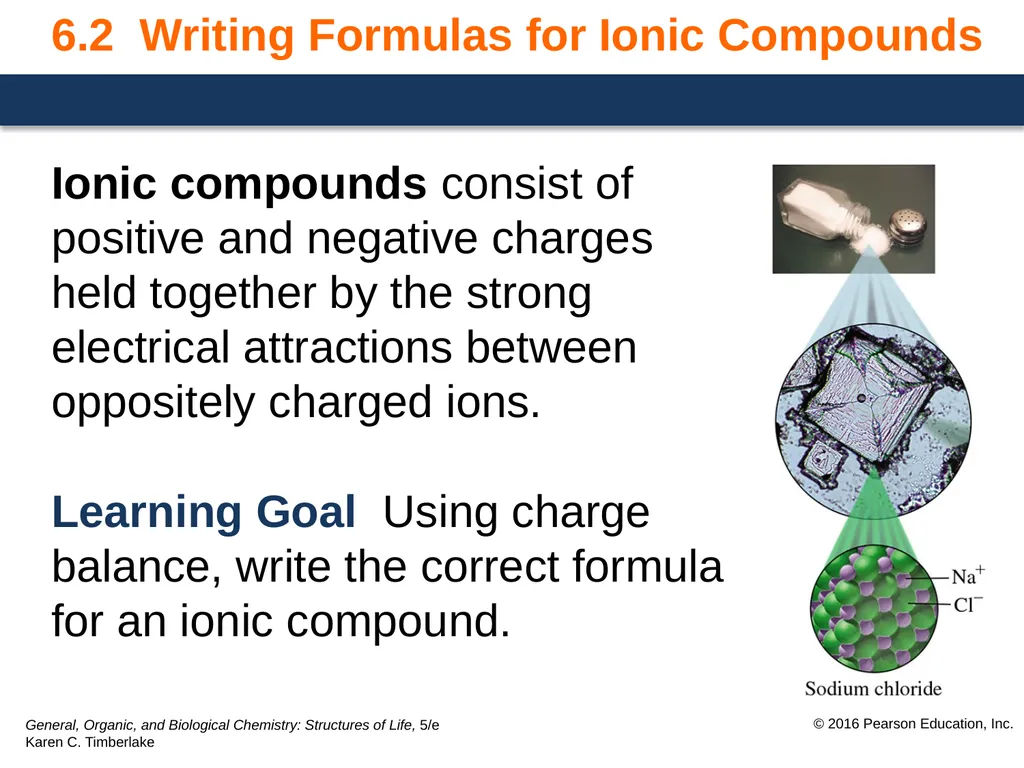
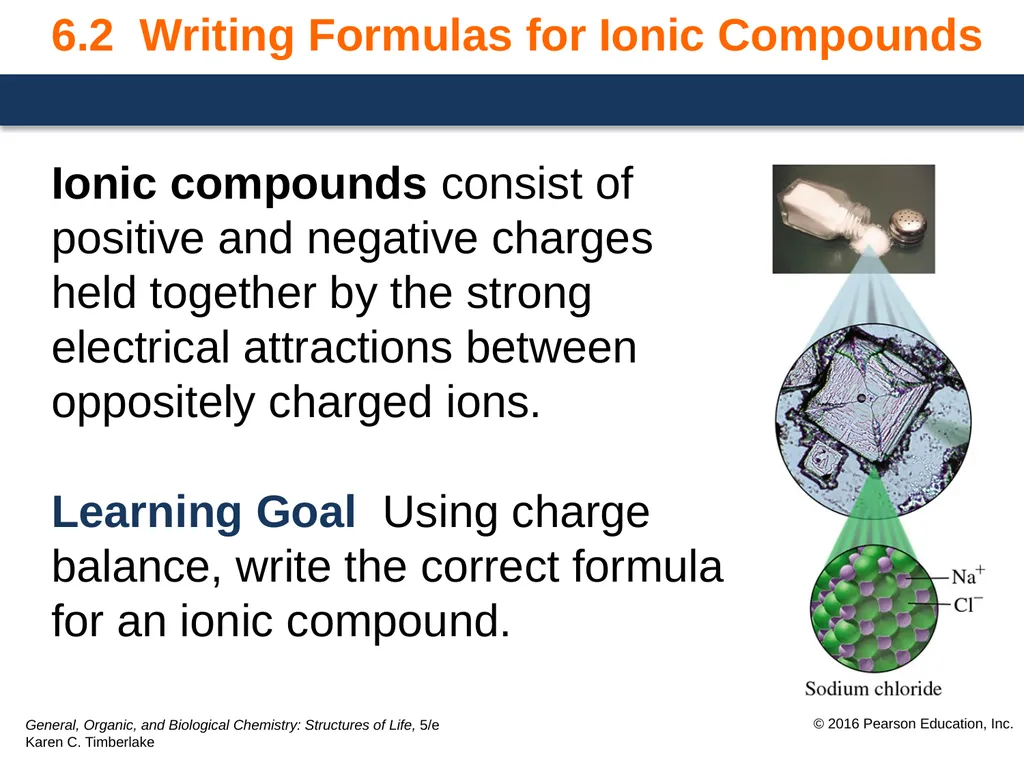
6.2 Writing Formulas for Ionic Compounds Ionic compounds consist of positive and negative charges held together by the strong electrical attractions between oppositely charged ions.

Learning Goal Using charge balance, write the correct formula for an ionic compound.<br>
02
Properties of Ionic Compounds Ionic compounds
consist of positive and negative ions.
have attractions called ionic bonds between positively and negatively charged ions.
have high melting points.
are solids at room temperature.<br>
03
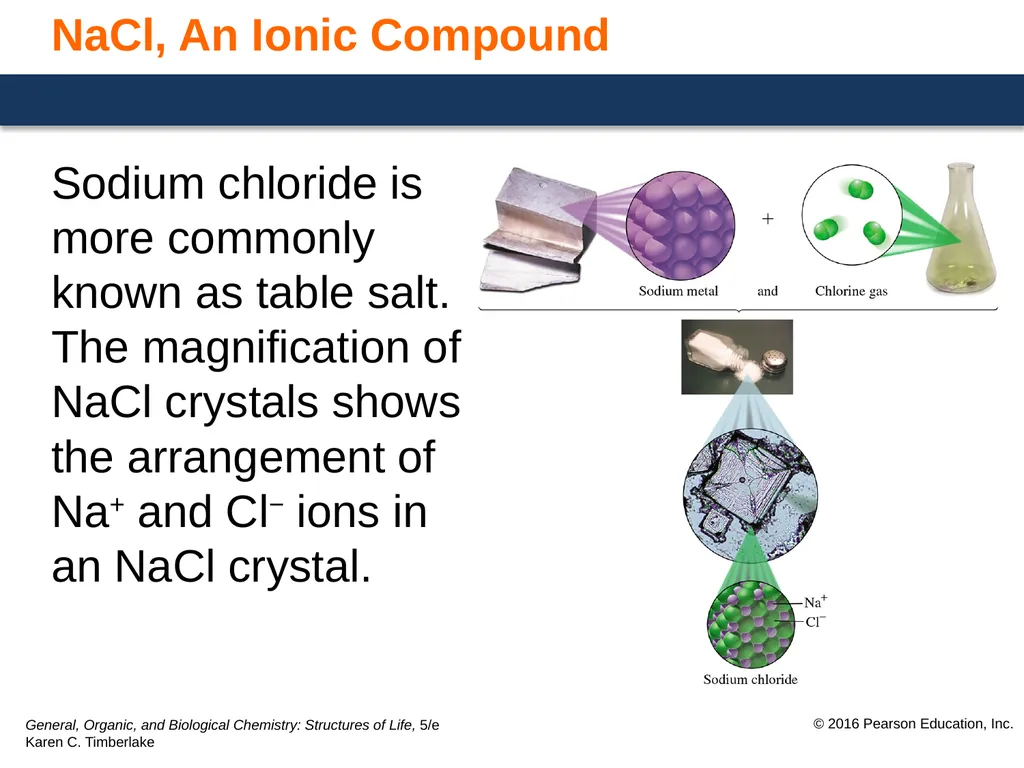
NaCl, An Ionic Compound Sodium chloride is more commonly known as table salt. The magnification of NaCl crystals shows the arrangement of Na+ and Cl− ions in an NaCl crystal.<br>