6A Aligning Tier 3 with the Characteristically Individualized Approach of Alternative Juvenile Justice Settings Presenters: Michael Turner, Texas State University; Tom Hanicak, Ohio Department of Education; Chris Davis, Pennsylvania
"6A – “Aligning Tier 3 with the Characteristically" is the property of its rightful owner. Permission is granted to
download and print the materials on this website for personal, non-commercial use only, and to display it
on your personal computer provided you do not modify the materials and that you retain all copyright
notices contained in the materials. By downloading content from our website, you accept the terms of this
agreement.
Presentation Transcript
01
6A – “Aligning Tier 3 with the Characteristically Individualized Approach of Alternative & Juvenile Justice Settings” Presenters: Michael Turner, Texas State University; Tom Hanicak, Ohio Department of Education; Chris Davis, Pennsylvania Training & Technical Assistance Network; Meagan Dwyer, Gavin School District (IL) Topic: Juvenile Justice
Keywords: Residential; Tier 3; Systems Alignment<br>
02
Find Mentimeter Survey Here<br>
03
Learning Objectives Identify areas of intersection between individual youth plans, foundational systems, and key practices
Identify existing systems, data, and practices that align with Tier 3 practices and systems
Share ideas for addressing common challenges (e.g., resources, need for specialized skills, progress monitoring)<br>
04
Key Principle: Work Smarter, Not Harder Efficiency is needed for Tier 3, which can become top heavy.
Seek alignment between behavior supports and individualized youth plans.
Ensure conditions for fidelity of implementation.
Integrate similar initiatives.
Use “quick wins” to help build momentum with staff.<br>
05
Tier 2/3 Team & Treatment Team Alignment/Integration Both teams need to understand data-based patterns of behavior.
Both teams need to understand equity & disproportionality patterns.
Both teams rely on broad cross-functional input and data from diverse contexts.
Both teams may seek family involvement.
Both teams rely on evidence-based practices.
Both teams are closely involved with progress monitoring.
Both teams are invested in fidelity of implementation. Alignment<br>
06
(Handout available) Develop supports across tiers in response to patterns of identified youth needs.
Design specific strategies that reinforce facility behavioral expectations.
If T1 & T2 supports are not meeting a youth’s needs, consider intensifying those supports, as needed. (Tier 3 youth still receive T1/2 supports.) Individual Youth Plans (IYPs) Align w/ Facility Values & Expectations Alignment<br>
07
Before Introducing New Practices, Can T1/2 Be Intensified? Can frequency of current reinforcement strategies be increased?
Can frequency of re-teaching skills be modified?
Can the duration of interventions (e.g., CICO) be lengthened?
Can adult/staff presence & availability be increased in key areas and times?
Can the peer mentoring/support be tapped? Alignment<br>
08
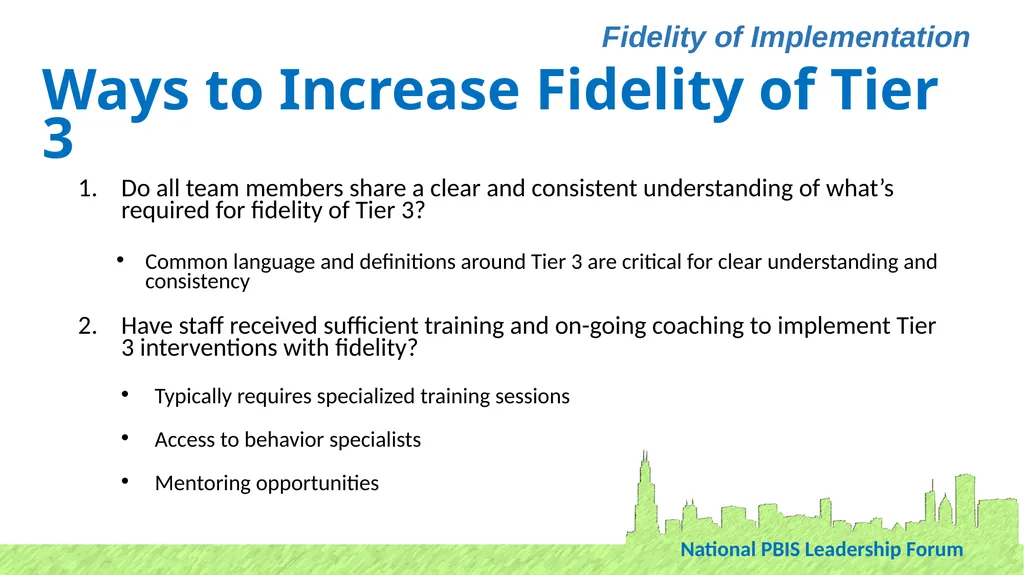
Ways to Increase Fidelity of Tier 3 Do all team members share a clear and consistent understanding of what’s required for fidelity of Tier 3?
Common language and definitions around Tier 3 are critical for clear understanding and consistency
Have staff received sufficient training and on-going coaching to implement Tier 3 interventions with fidelity?
Typically requires specialized training sessions
Access to behavior specialists
Mentoring opportunities Fidelity of Implementation<br>
09
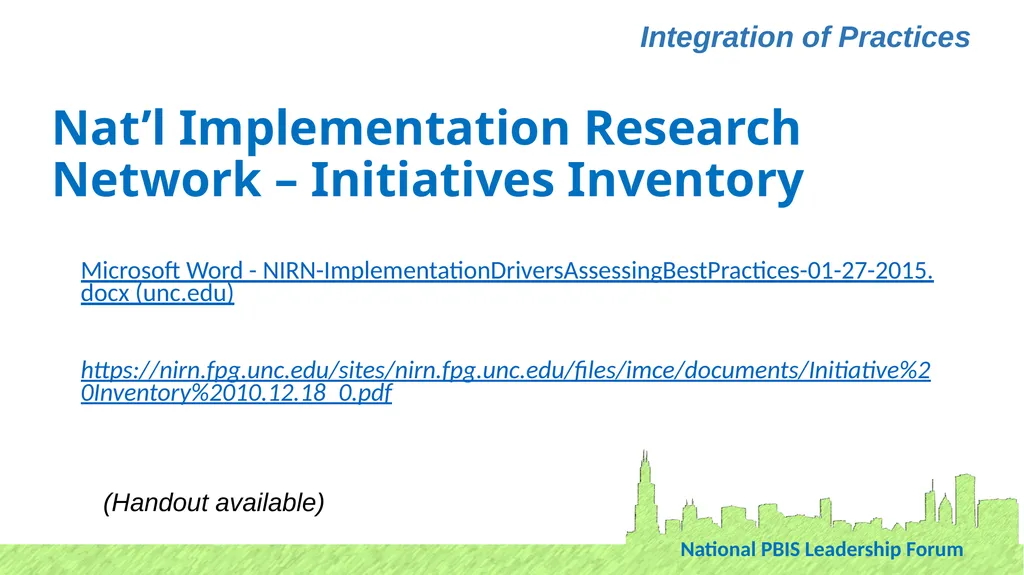
Nat’l Implementation Research Network – Initiatives Inventory Microsoft Word - NIRN-ImplementationDriversAssessingBestPractices-01-27-2015.docx (unc.edu)
https://nirn.fpg.unc.edu/sites/nirn.fpg.unc.edu/files/imce/documents/Initiative%20Inventory%2010.12.18_0.pdf (Handout available) Integration of Practices<br>
10
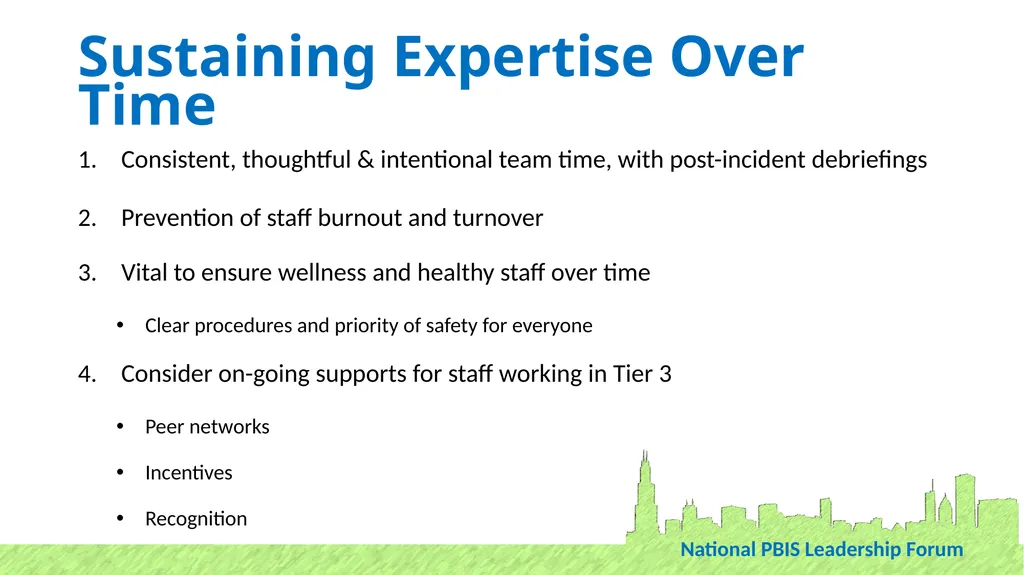
Sustaining Expertise Over Time Consistent, thoughtful & intentional team time, with post-incident debriefings
Prevention of staff burnout and turnover
Vital to ensure wellness and healthy staff over time
Clear procedures and priority of safety for everyone
Consider on-going supports for staff working in Tier 3
Peer networks
Incentives
Recognition<br>
11
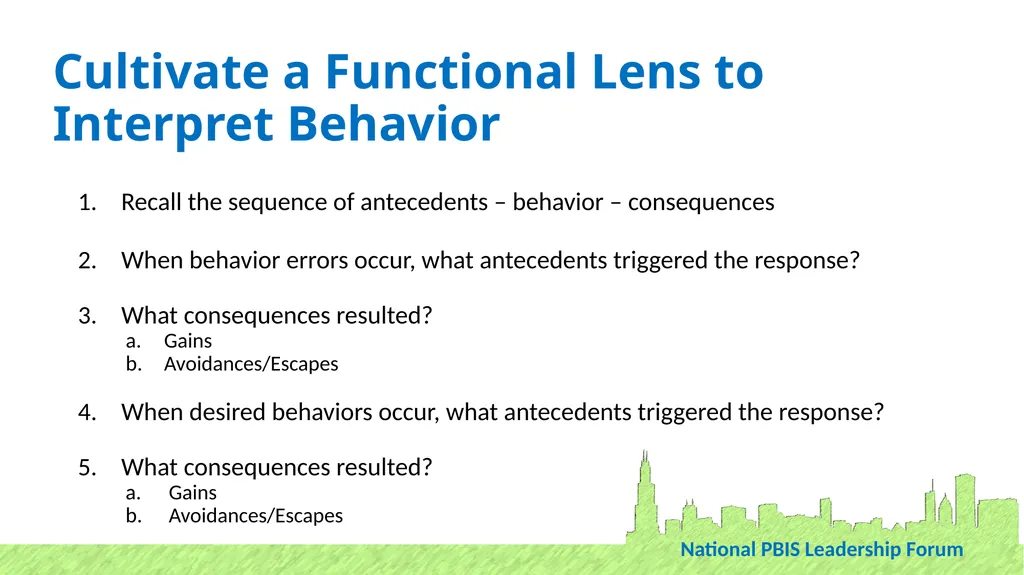
Cultivate a Functional Lens to Interpret Behavior Recall the sequence of antecedents – behavior – consequences
When behavior errors occur, what antecedents triggered the response?
What consequences resulted?
Gains
Avoidances/Escapes
When desired behaviors occur, what antecedents triggered the response?
What consequences resulted?
Gains
Avoidances/Escapes<br>
12
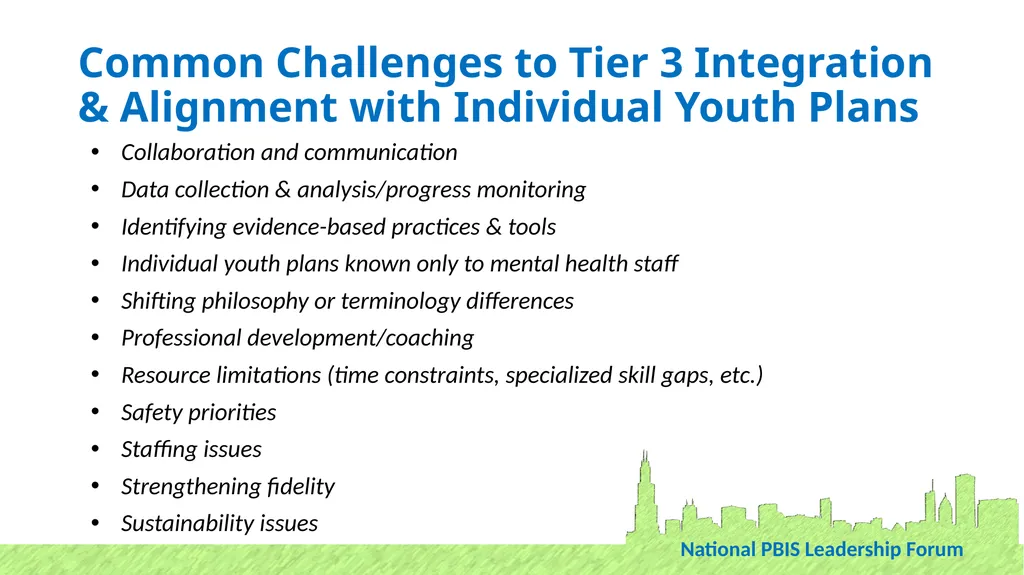
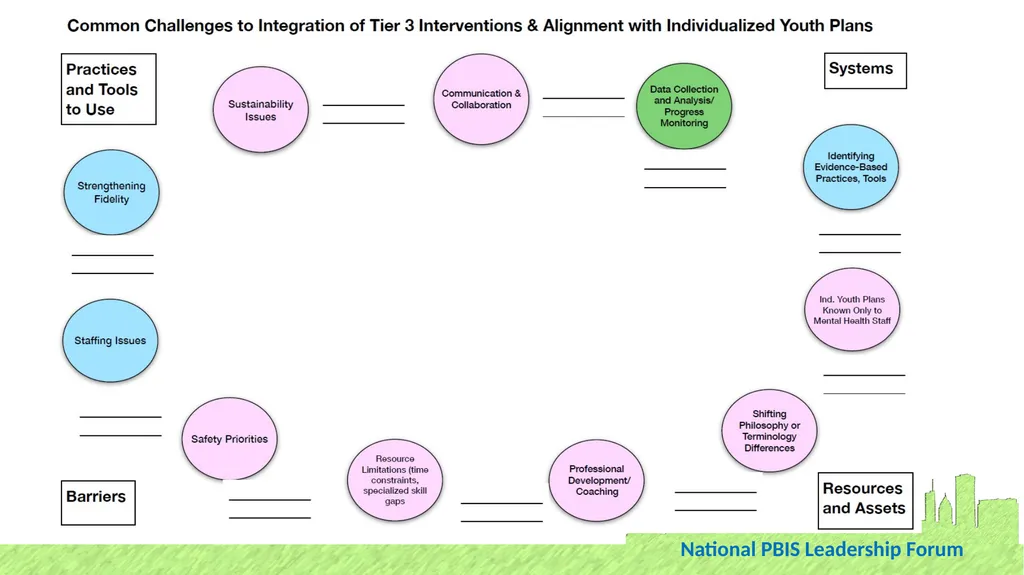
Common Challenges to Tier 3 Integration & Alignment with Individual Youth Plans Collaboration and communication
Data collection & analysis/progress monitoring
Identifying evidence-based practices & tools
Individual youth plans known only to mental health staff
Shifting philosophy or terminology differences
Professional development/coaching
Resource limitations (time constraints, specialized skill gaps, etc.)
Safety priorities
Staffing issues
Strengthening fidelity
Sustainability issues<br>
13
Evaluations are anonymous! We send reminder emails to all participants. After you submit each session evaluation, click the link to enter the gift card raffle! 4. Direct Link Click the link provided in the email reminder you receive after your session ends. 3. Online Click on the link located next to the downloadable session materials posted online at:
www.pbis.org/conference-and-presentations/pbis-leadership-forum SAMPLE 2. QR Code Scan the code on this slide. 1. Mobile App Click “Take Survey" under the session description. Four options, pick one! 6A - Aligning Tier 3 with the Characteristically Individualized Approach of Alternative & Juvenile Justice Settings Please Complete this Session’s Evaluation<br>