05
When We Started “Although risk appetite is a relatively new concept, it is already a key part of the enterprise risk management approach for firms in all industry sectors, not just insurance.”<br>
06
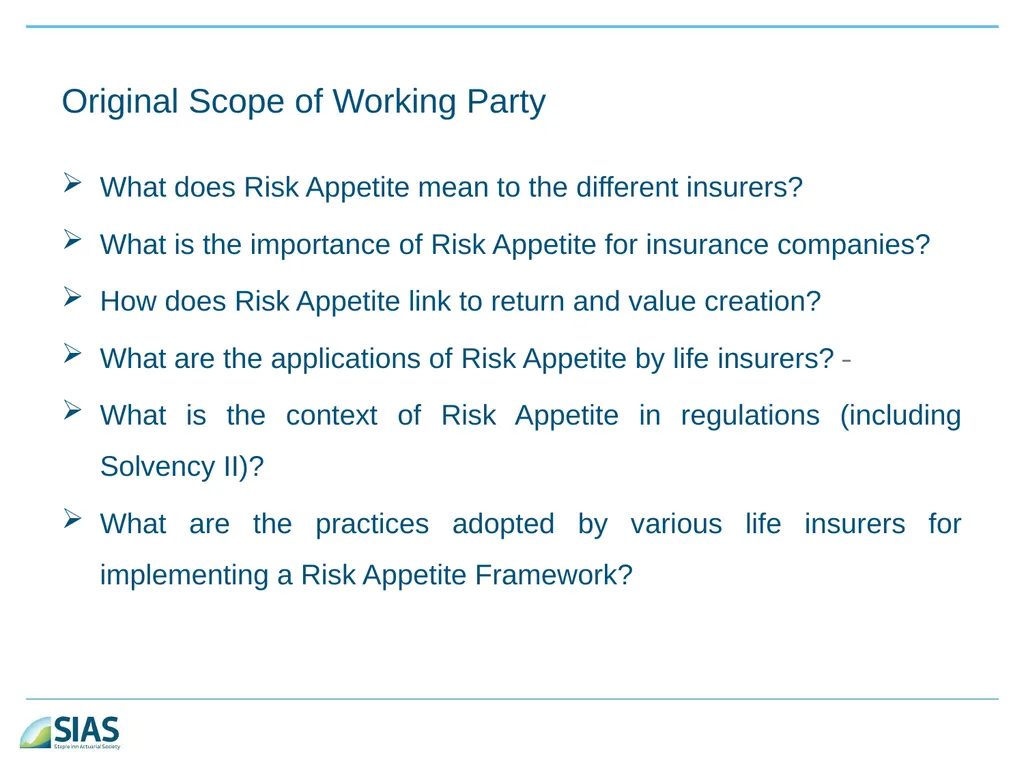
Original Scope of Working Party What does Risk Appetite mean to the different insurers?
What is the importance of Risk Appetite for insurance companies?
How does Risk Appetite link to return and value creation?
What are the applications of Risk Appetite by life insurers?
What is the context of Risk Appetite in regulations (including Solvency II)?
What are the practices adopted by various life insurers for implementing a Risk Appetite Framework?<br>
07
The Work Undertaken by the Working Party Performed a literature review
Reviewed publicly disclosed risk appetite statements
Conducted a questionnaire of UK insurance groups and companies<br>
09
Themes Covered by the Literature Review Definition for Risk Appetite
Other key definitions
Risk Appetite in the context of Risk Governance
Benefits of having a Risk Appetite Framework
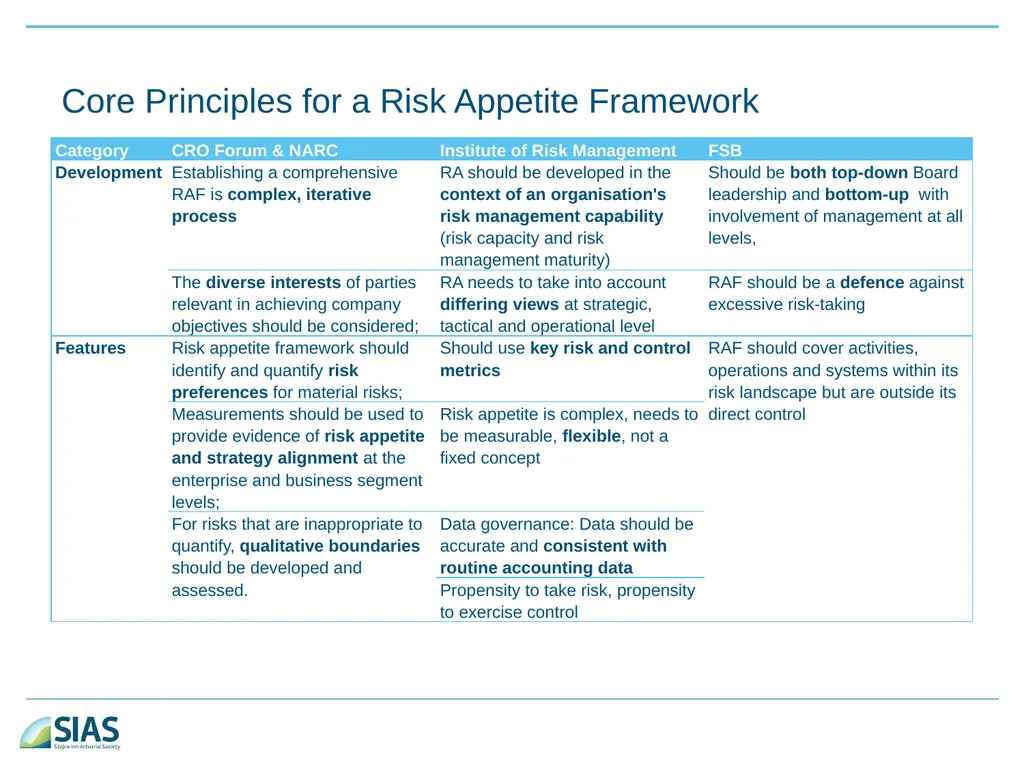
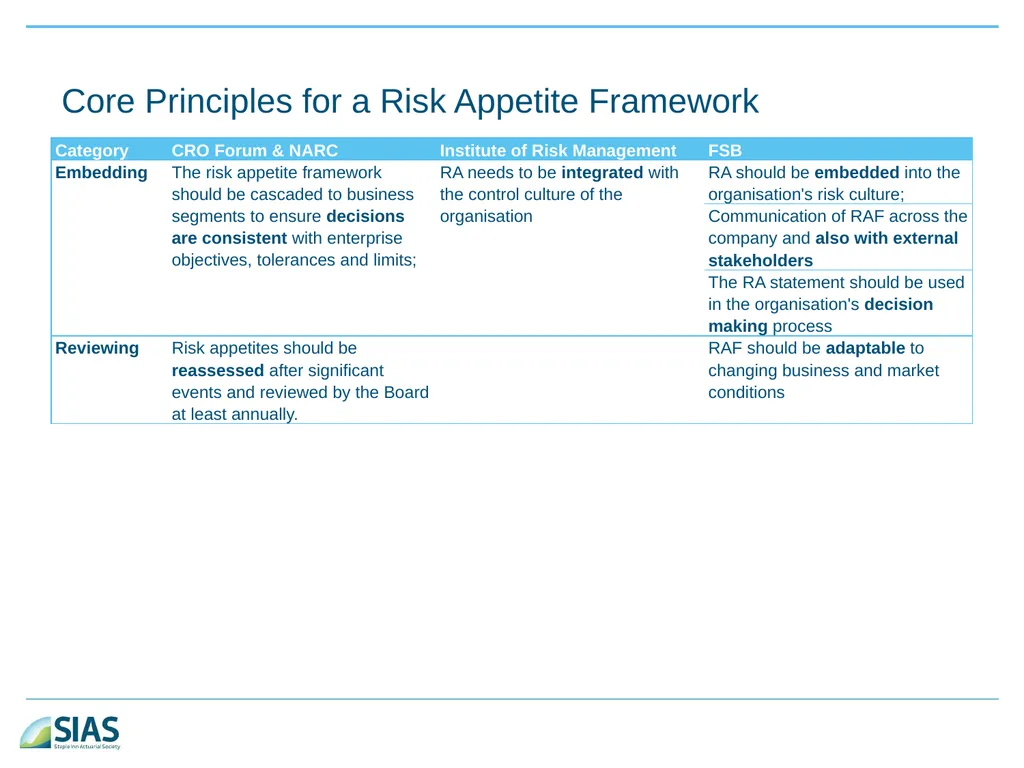
Core principles of a Risk Appetite Framework
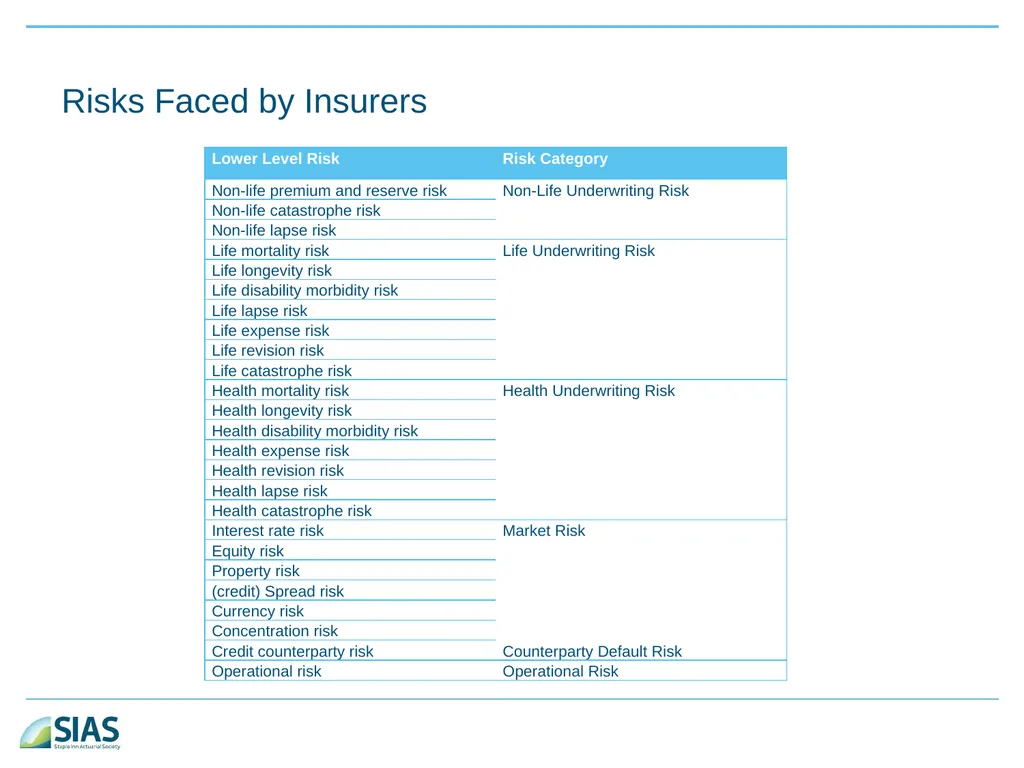
Potential risks faced by Life Insurers
Best practice and potential pitfalls when implementing a Risk Appetite Framework<br>
10
05 September 2018 Definition of Risk Appetite “A series of boundaries, appropriately authorised by management, which give each level of the organisation clear guidance on the limits of risk which they can take, whether their consideration is of a threat and the cost of control, or of an opportunity and the costs of trying to exploit it.”<br>
11
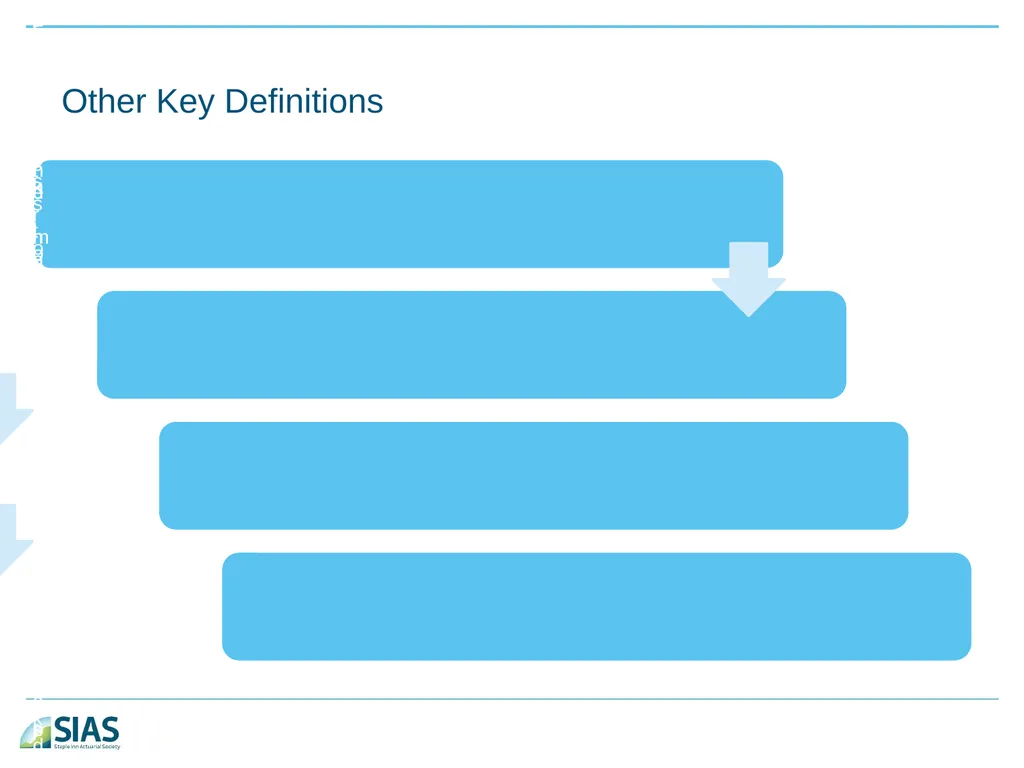
Other Key Definitions<br>
12
Risk Appetite in the context of Risk Governance The board of directors and the company’s governance structures should be involved in establishing, maintaining and embedding the Risk Appetite Framework in the business
The FSB noted “Boards that approve the risk appetite statement, however, tend to have a higher level of understanding of the financial institution’s risk appetite than when it is ‘received’ or ‘noted’.”<br>
13
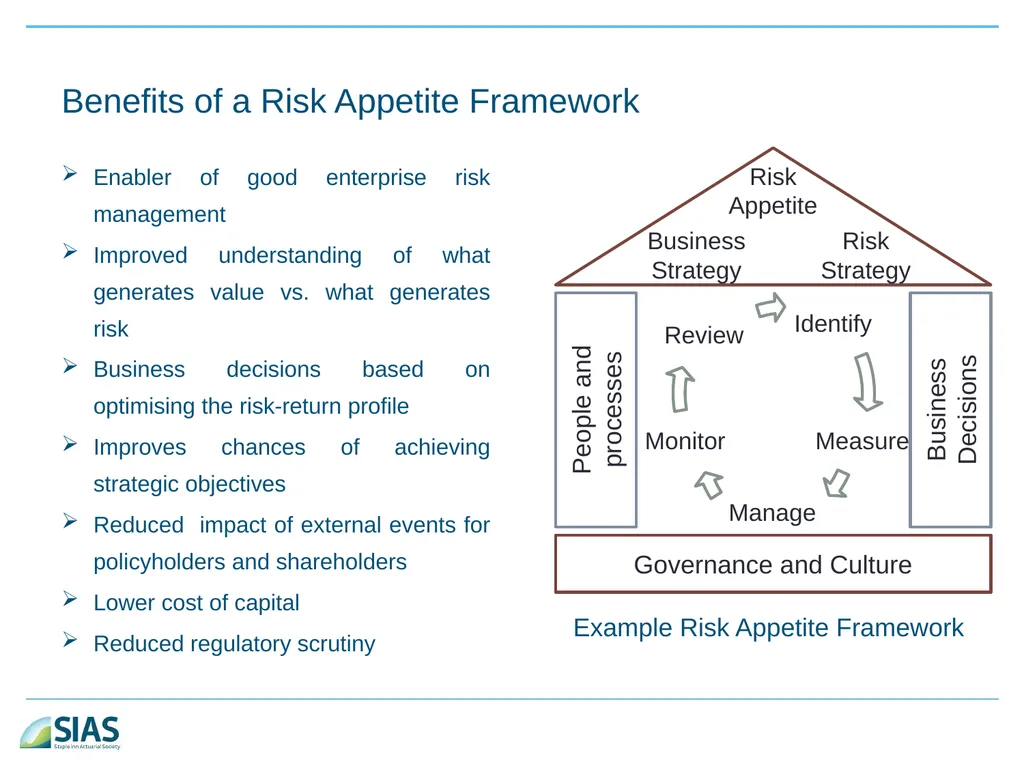
Benefits of a Risk Appetite Framework Enabler of good enterprise risk management
Improved understanding of what generates value vs. what generates risk
Business decisions based on optimising the risk-return profile
Improves chances of achieving strategic objectives
Reduced impact of external events for policyholders and shareholders
Lower cost of capital
Reduced regulatory scrutiny Example Risk Appetite Framework<br>
14
Core Principles for a Risk Appetite Framework<br>
15
Core Principles for a Risk Appetite Framework<br>
16
Risks Faced by Insurers<br>
17
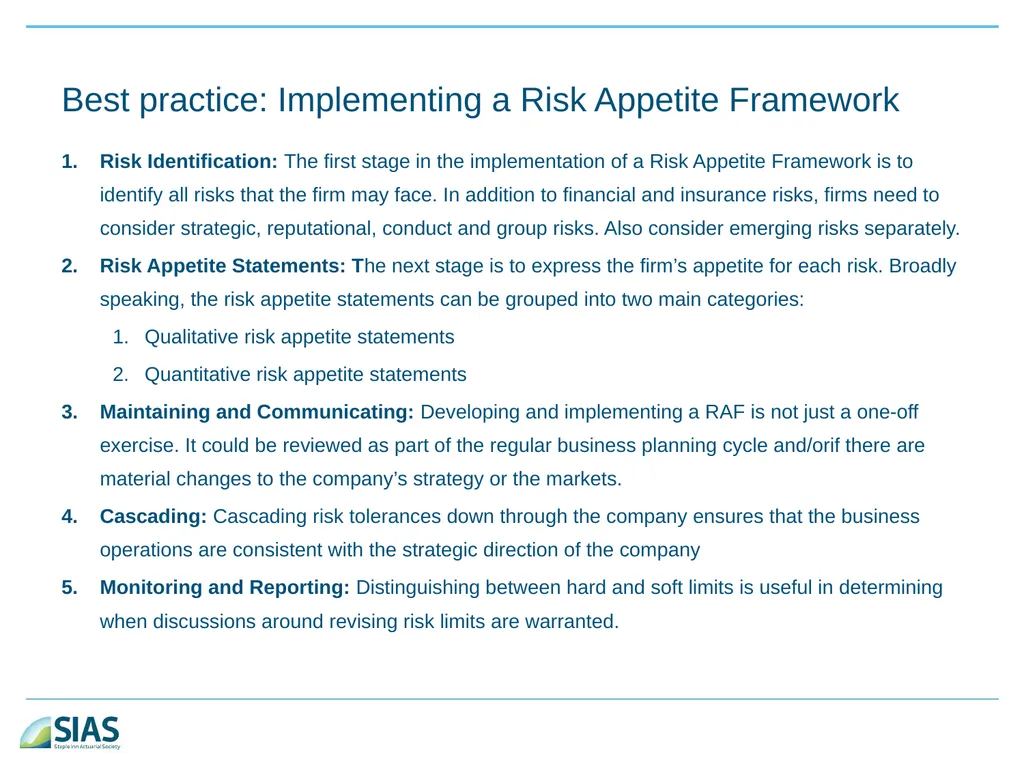
Best practice: Implementing a Risk Appetite Framework Risk Identification: The first stage in the implementation of a Risk Appetite Framework is to identify all risks that the firm may face. In addition to financial and insurance risks, firms need to consider strategic, reputational, conduct and group risks. Also consider emerging risks separately.
Risk Appetite Statements: The next stage is to express the firm’s appetite for each risk. Broadly speaking, the risk appetite statements can be grouped into two main categories:
Qualitative risk appetite statements
Quantitative risk appetite statements
Maintaining and Communicating: Developing and implementing a RAF is not just a one-off exercise. It could be reviewed as part of the regular business planning cycle and/orif there are material changes to the company’s strategy or the markets.
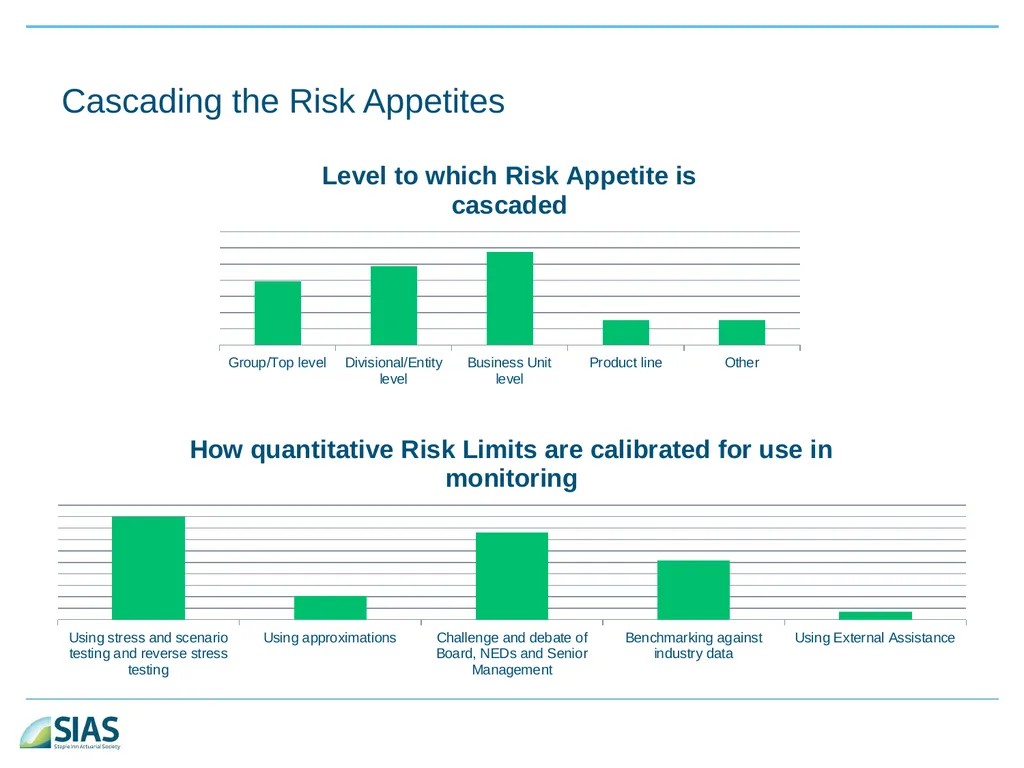
Cascading: Cascading risk tolerances down through the company ensures that the business operations are consistent with the strategic direction of the company
Monitoring and Reporting: Distinguishing between hard and soft limits is useful in determining when discussions around revising risk limits are warranted.<br>
18
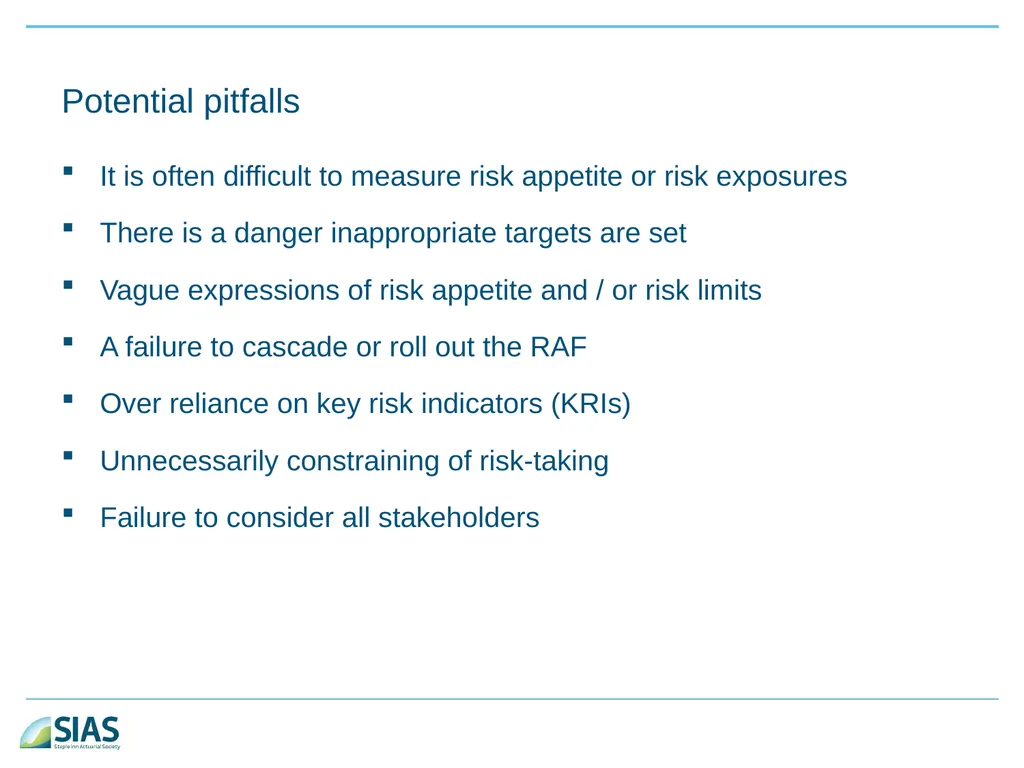
Potential pitfalls It is often difficult to measure risk appetite or risk exposures
There is a danger inappropriate targets are set
Vague expressions of risk appetite and / or risk limits
A failure to cascade or roll out the RAF
Over reliance on key risk indicators (KRIs)
Unnecessarily constraining of risk-taking
Failure to consider all stakeholders<br>
19
Findings from Public �Risk Appetite Statements<br>
20
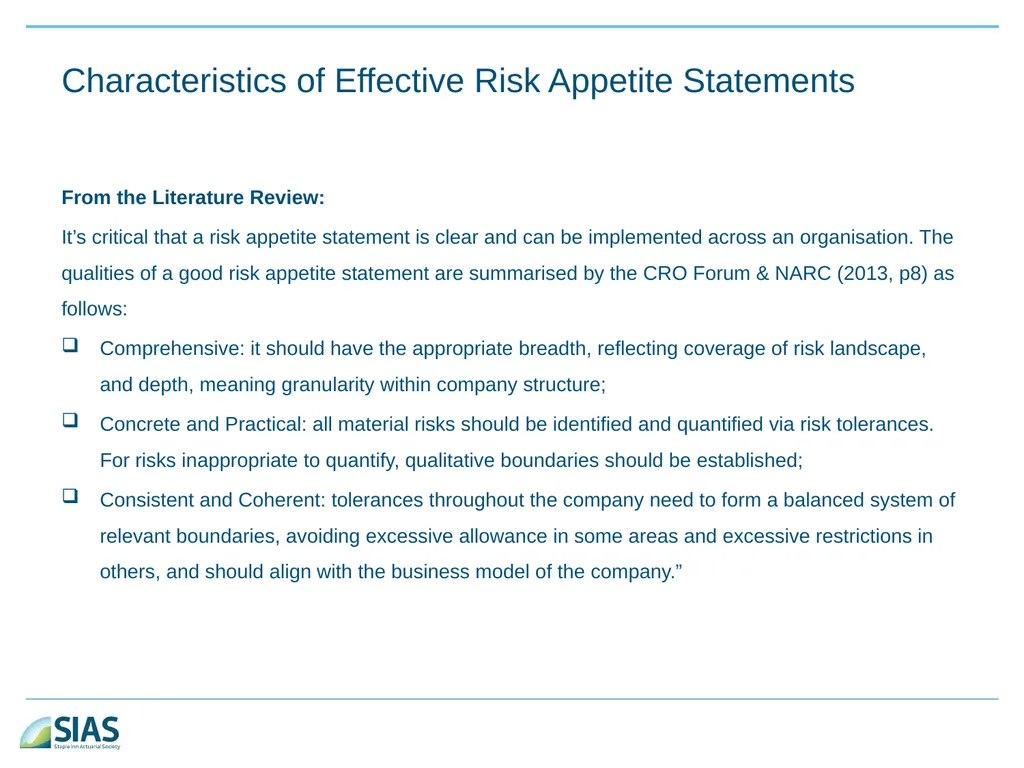
Characteristics of Effective Risk Appetite Statements From the Literature Review:
It’s critical that a risk appetite statement is clear and can be implemented across an organisation. The qualities of a good risk appetite statement are summarised by the CRO Forum & NARC (2013, p8) as follows:
Comprehensive: it should have the appropriate breadth, reflecting coverage of risk landscape, and depth, meaning granularity within company structure;
Concrete and Practical: all material risks should be identified and quantified via risk tolerances. For risks inappropriate to quantify, qualitative boundaries should be established;
Consistent and Coherent: tolerances throughout the company need to form a balanced system of relevant boundaries, avoiding excessive allowance in some areas and excessive restrictions in others, and should align with the business model of the company.”<br>
21
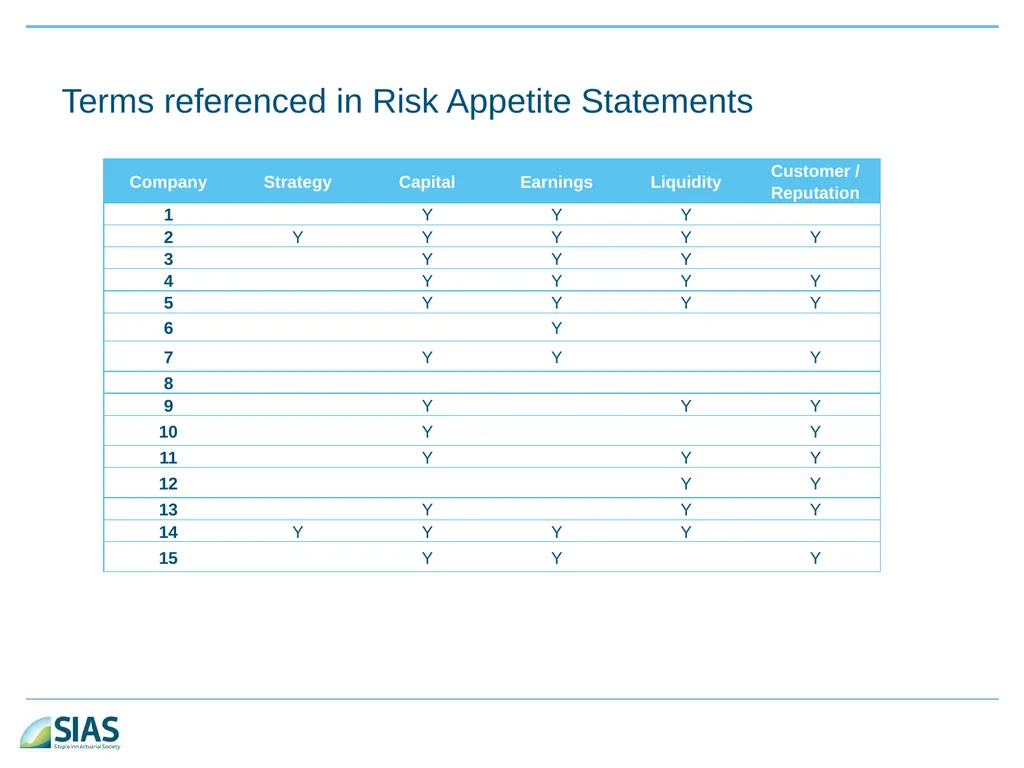
Terms referenced in Risk Appetite Statements<br>
22
Observations from our Questionnaire<br>
23
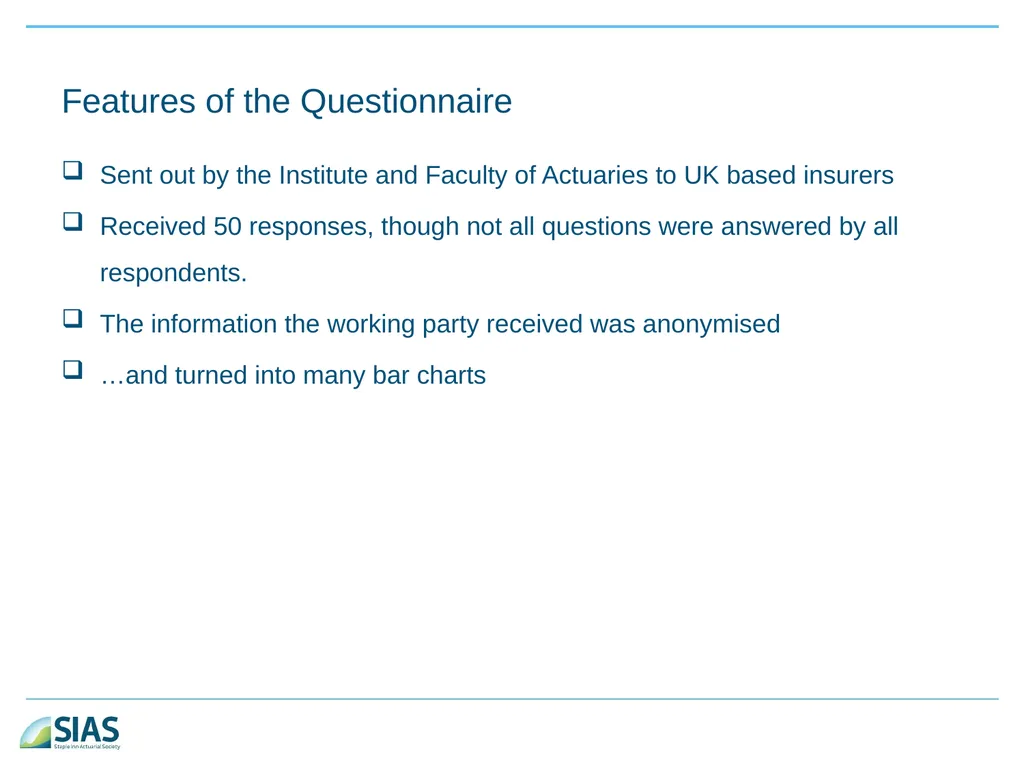
Features of the Questionnaire Sent out by the Institute and Faculty of Actuaries to UK based insurers
Received 50 responses, though not all questions were answered by all respondents.
The information the working party received was anonymised
…and turned into many bar charts<br>
24
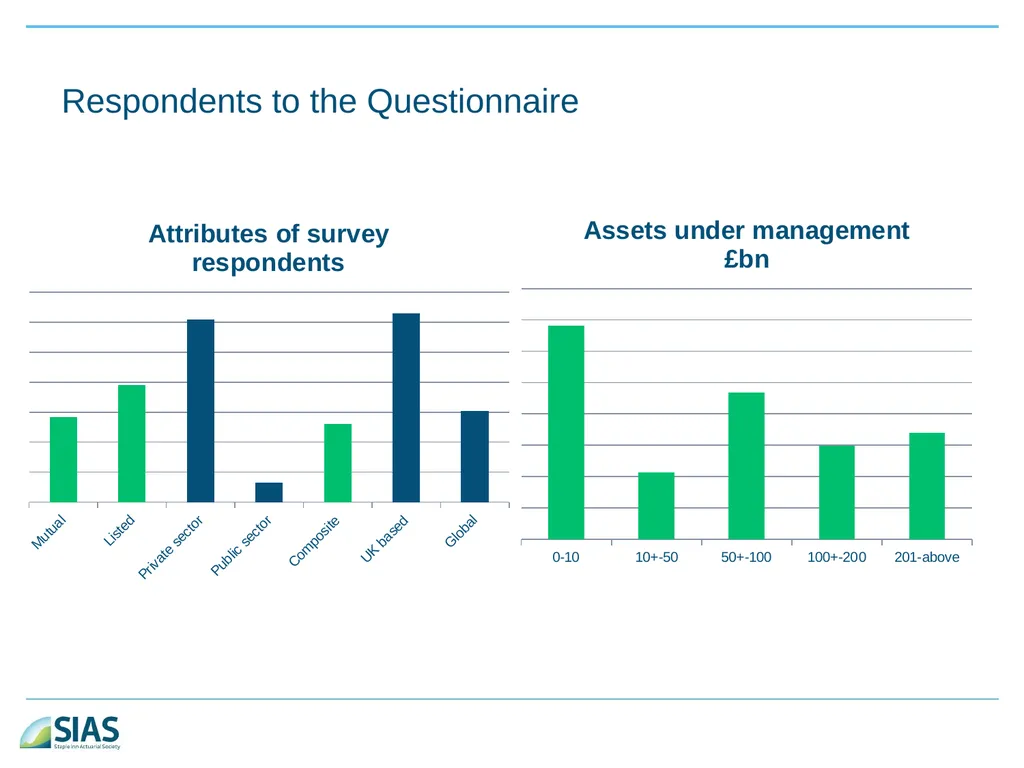
Respondents to the Questionnaire<br>
25
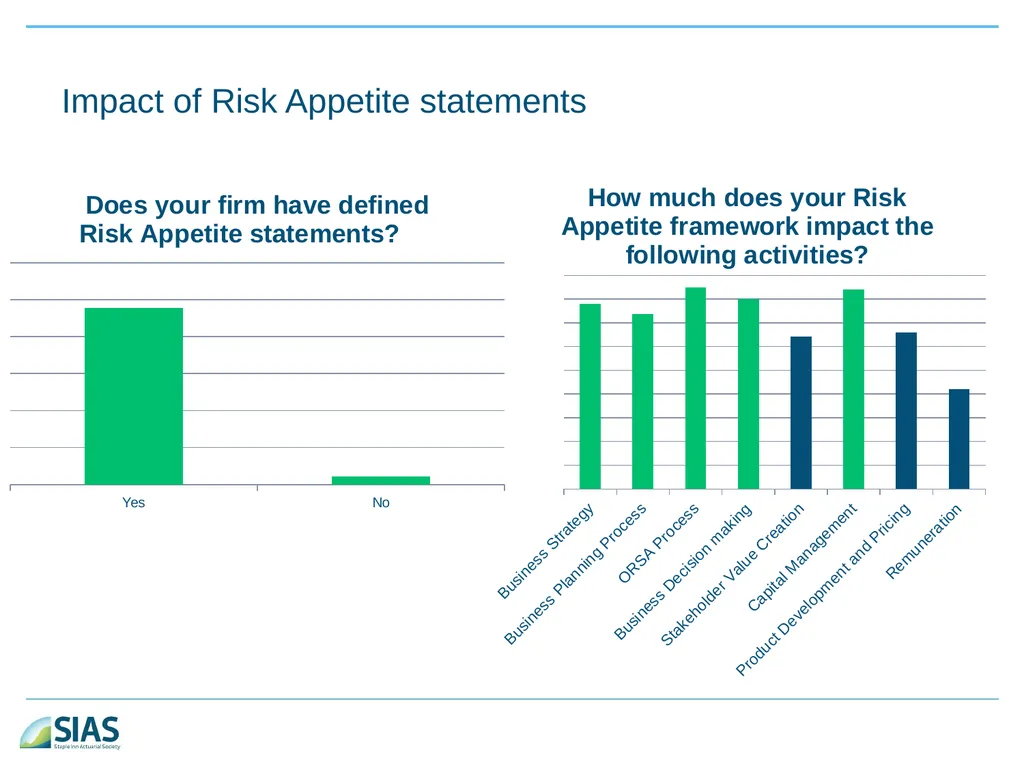
Impact of Risk Appetite statements<br>
26
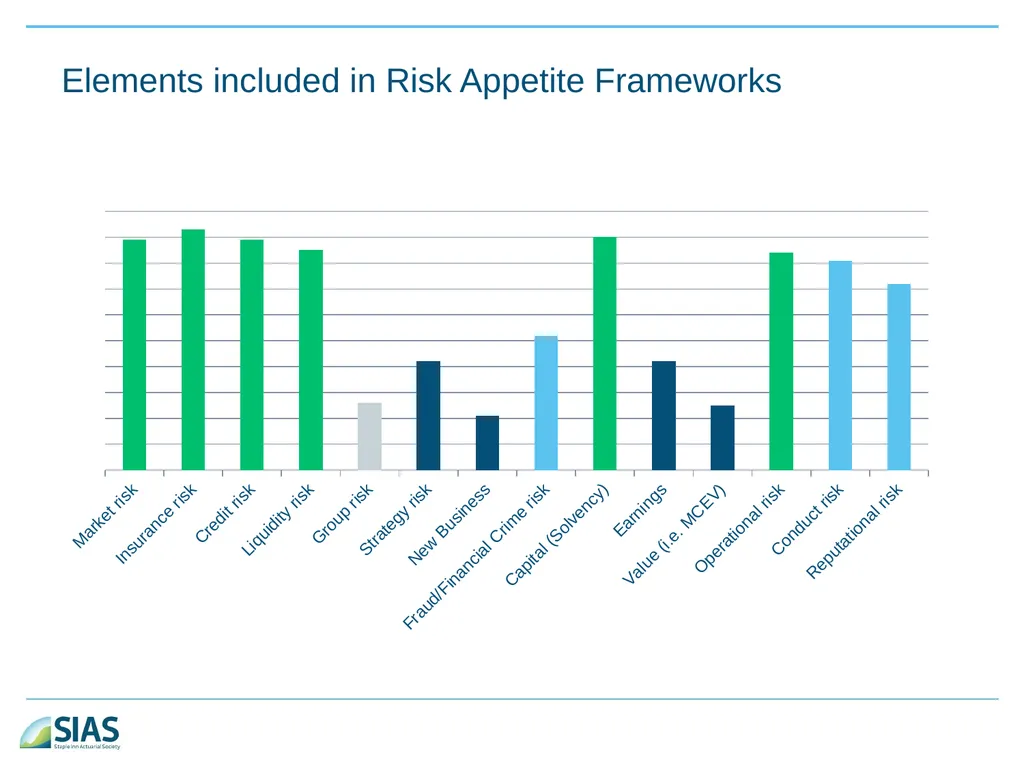
Elements included in Risk Appetite Frameworks<br>
27
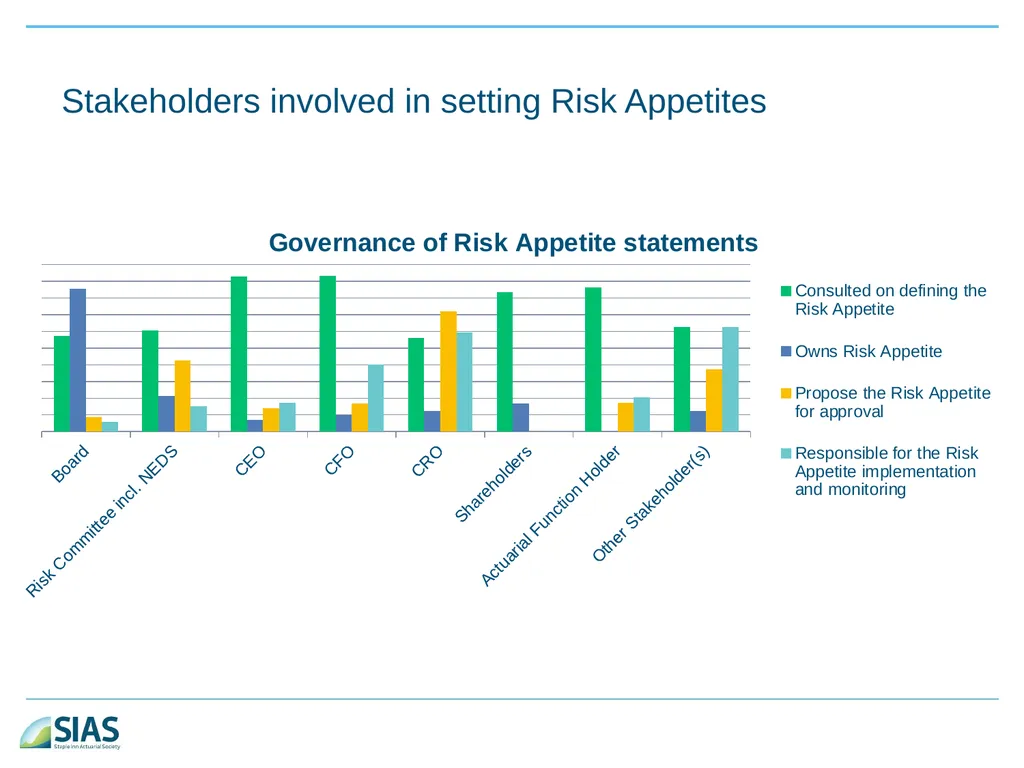
Stakeholders involved in setting Risk Appetites<br>
28
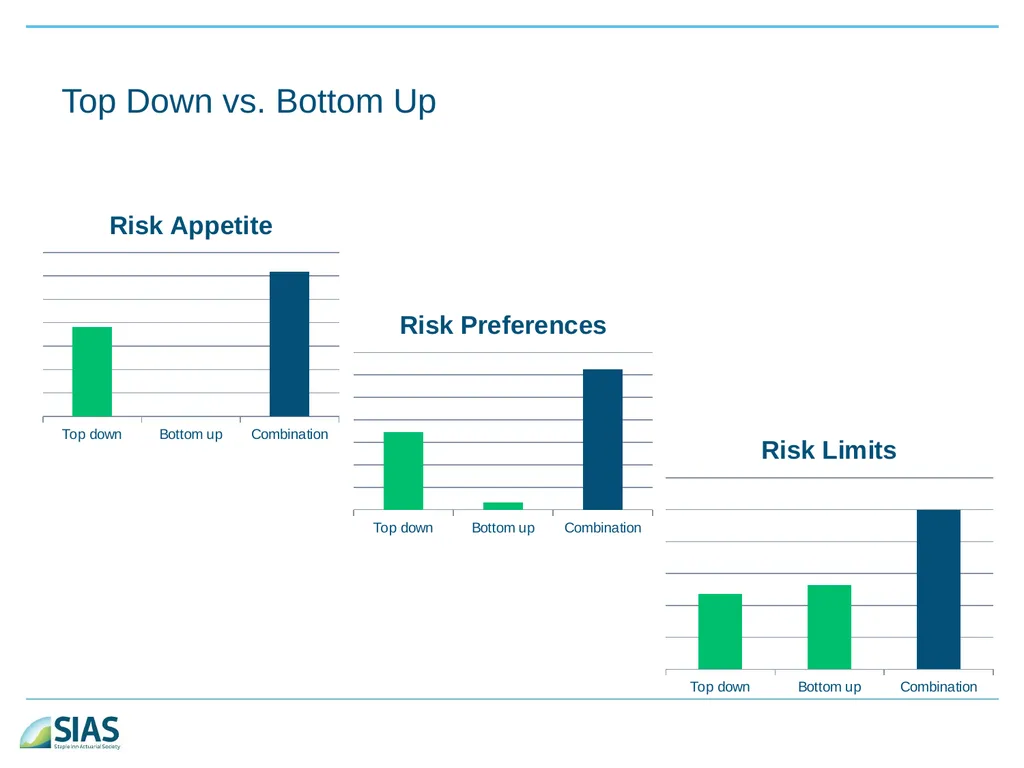
Top Down vs. Bottom Up<br>
29
Cascading the Risk Appetites<br>
30
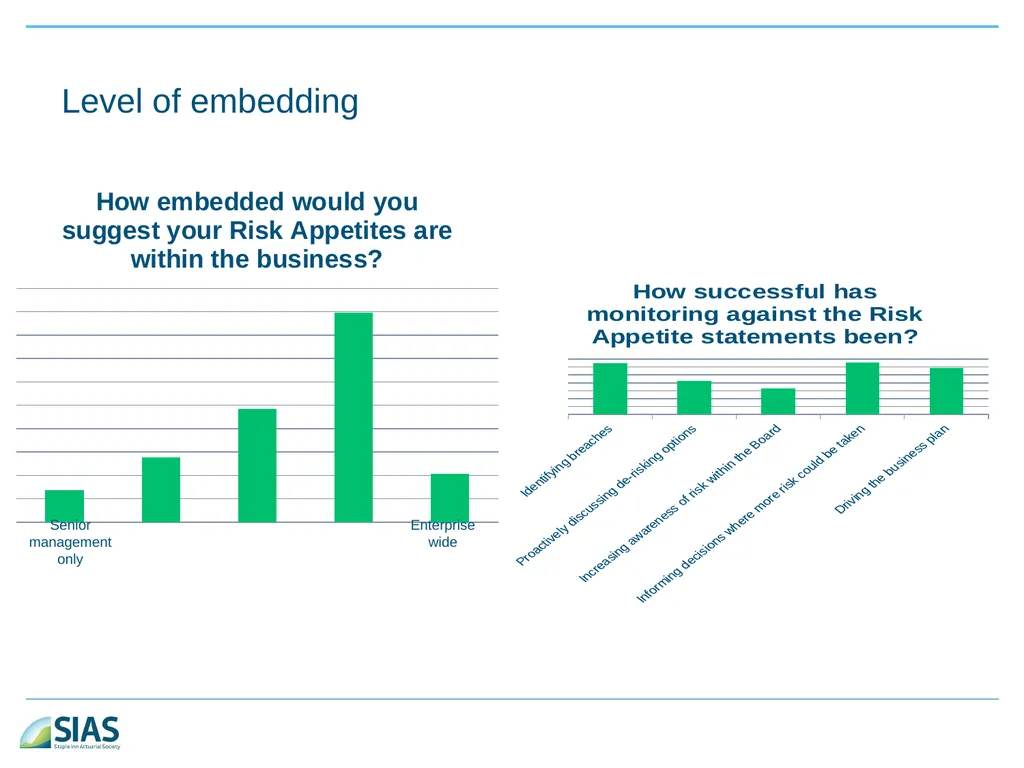
Level of embedding Senior management only Enterprise wide<br>
31
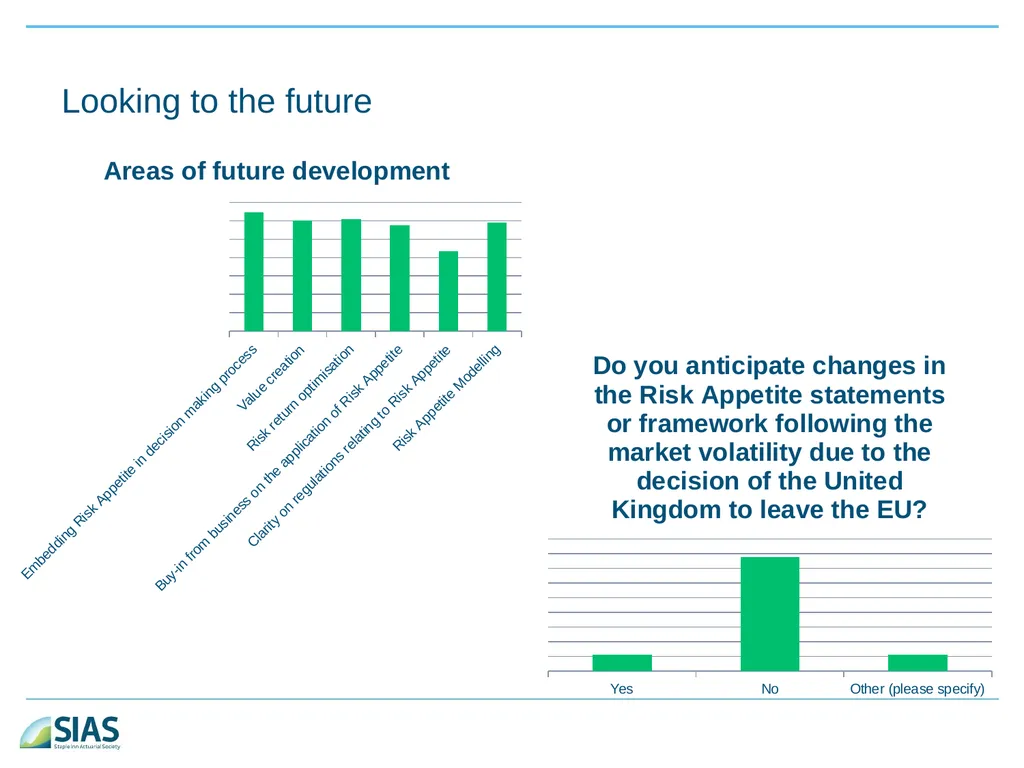
Looking to the future<br>
32
Questions? Roelof.Coertze@gmail.com<br>
33
BIG thank you to �the working party members and�those who completed the questionnaire<br>
34
A Ramble Through �Risk Appetite Risk Appetite Working Party
Presented by Roelof Coertze<br>