بسم الله الرحمن الرحيم Advance Polymer Scinces Dr.Widad .Saleh.Hanoosh Introduction Properties of Polymers - Type of monomers - The chemical bond between the repeating unitsfor example, ether vs amide bonds - Degree of polymerization -
"بسم الله الرحمن الرحيم Advance Polymer Scinces" is the property of its rightful owner. Permission is granted to
download and print the materials on this website for personal, non-commercial use only, and to display it
on your personal computer provided you do not modify the materials and that you retain all copyright
notices contained in the materials. By downloading content from our website, you accept the terms of this
agreement.
Presentation Transcript
01
بسم الله الرحمن الرحيم
Advance Polymer Scinces
Dr.Widad .Saleh.Hanoosh<br>
02
Introduction Properties of Polymers - Type of monomers
- The chemical bond between the repeating units—for example, ether vs amide bonds
- Degree of polymerization
- Architecture of the chain—for example, linear or cross-linked
- Incorporation of chemically different monomers along the polymer chains
(copolymerization)
- Sequence of monomers in a copolymerization—for example, alternately or in long
sequences which consist of only one type of monomer .
- Specific interactions between the components of the polymer chain, e.g., hydrogen
bonding or dipole–dipole interactions<br>
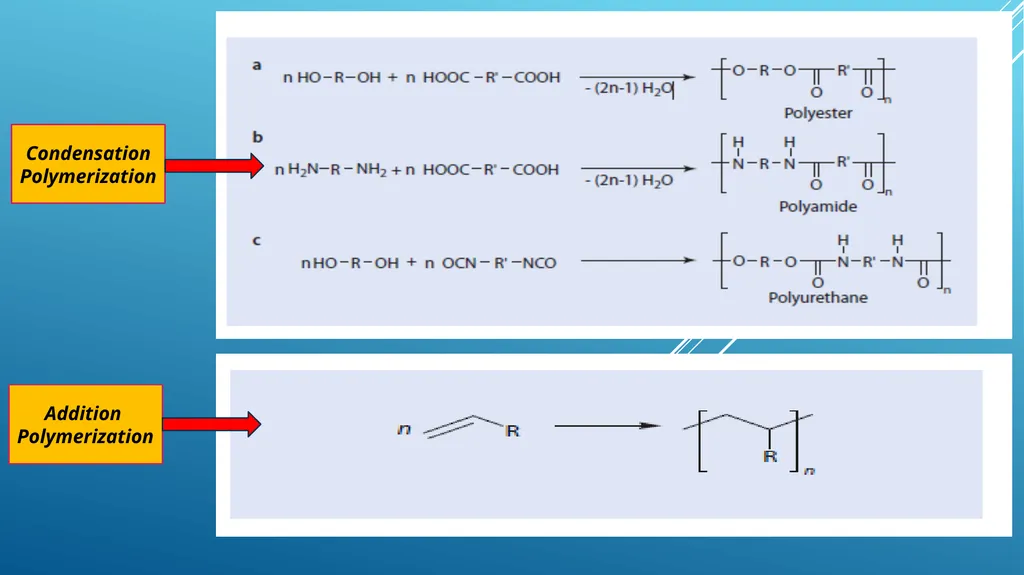
Ring-Opining
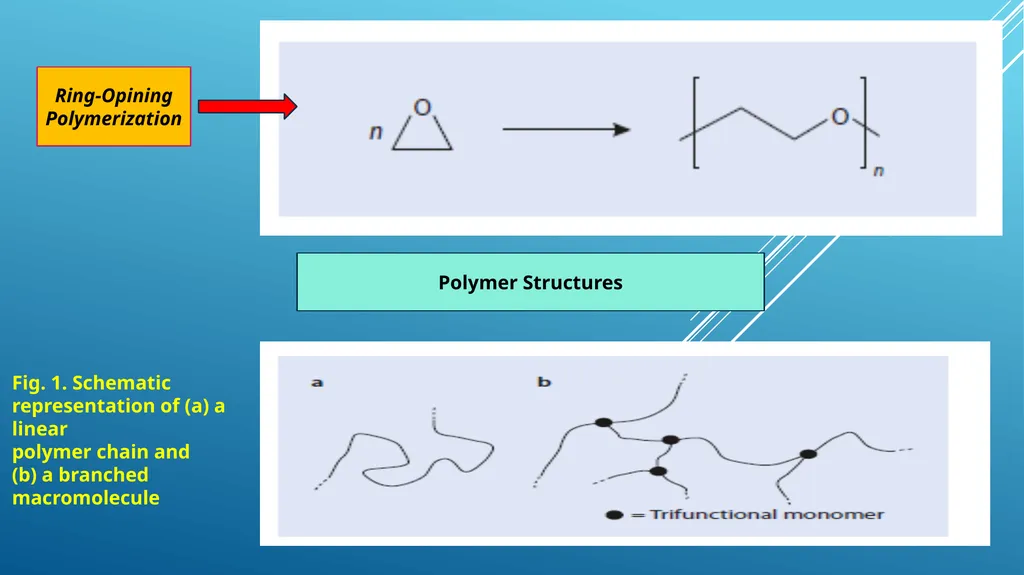
Polymerization Polymer Structures Fig. 1. Schematic
representation of (a) a linear
polymer chain and
(b) a branched macromolecule<br>
05
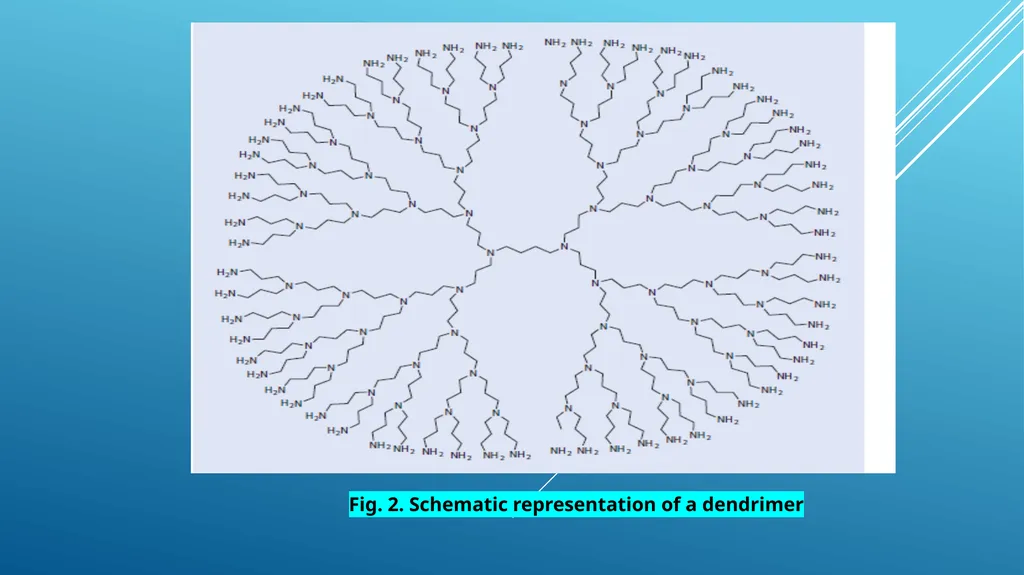
Fig. 2. Schematic representation of a dendrimer<br>
06
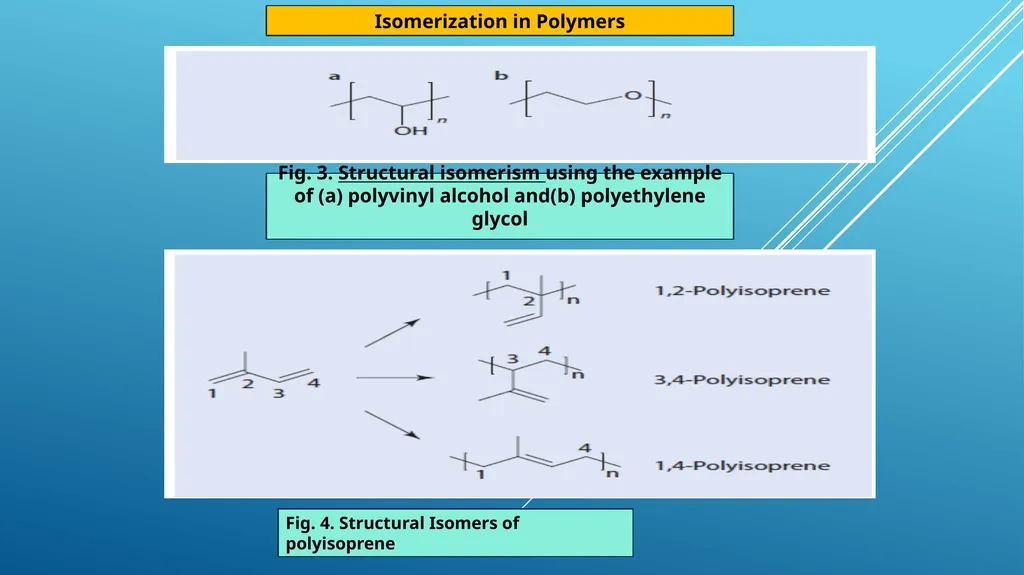
Isomerization in Polymers Fig. 3. Structural isomerism using the example
of (a) polyvinyl alcohol and(b) polyethylene glycol Fig. 4. Structural Isomers of polyisoprene<br>
07
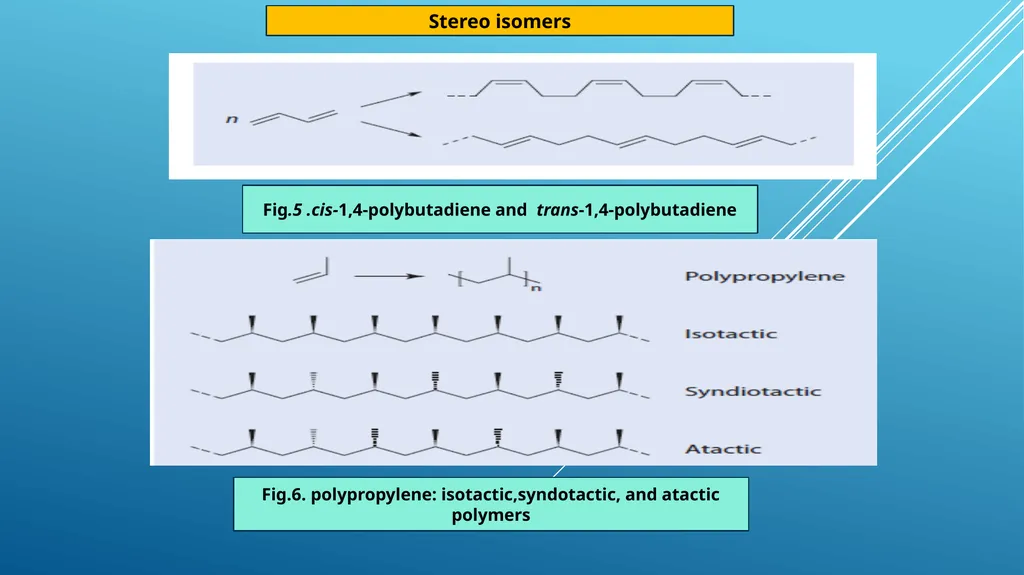
Stereo isomers Fig.5 .cis-1,4-polybutadiene and trans-1,4-polybutadiene Fig.6. polypropylene: isotactic,syndotactic, and atactic polymers<br>
08
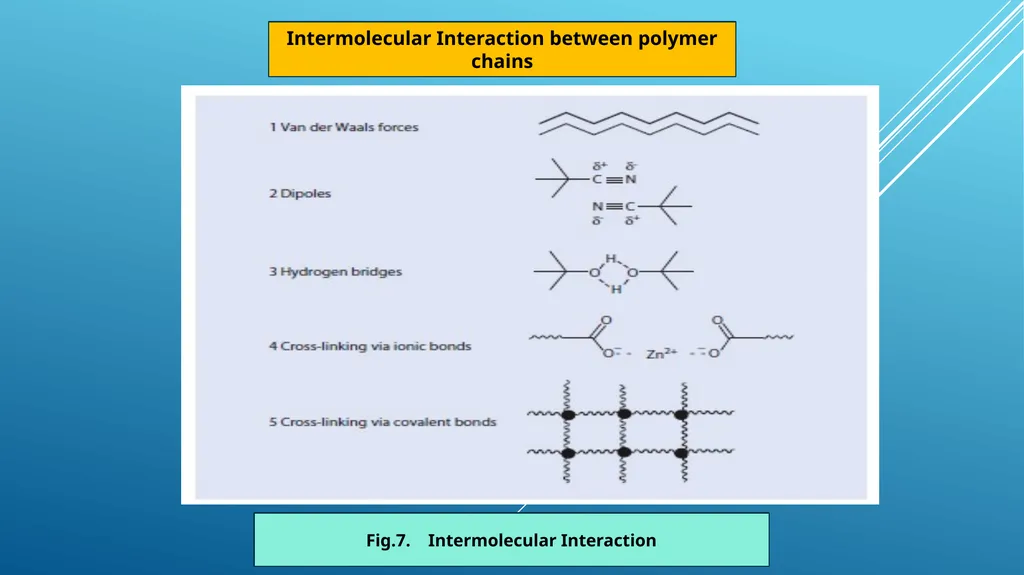
Intermolecular Interaction between polymer chains Fig.7. Intermolecular Interaction<br>
09
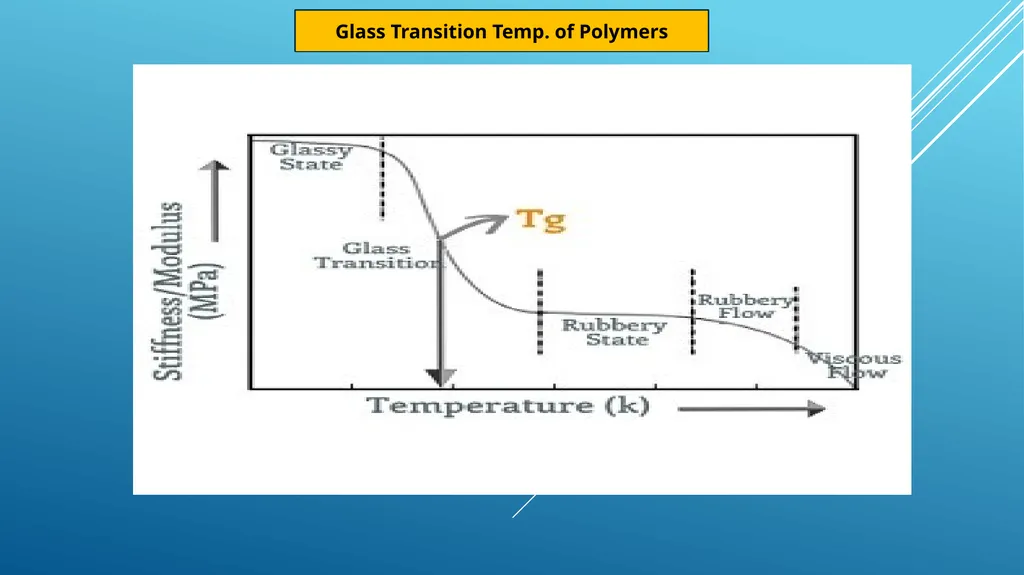
Glass Transition Temp. of Polymers<br>
10
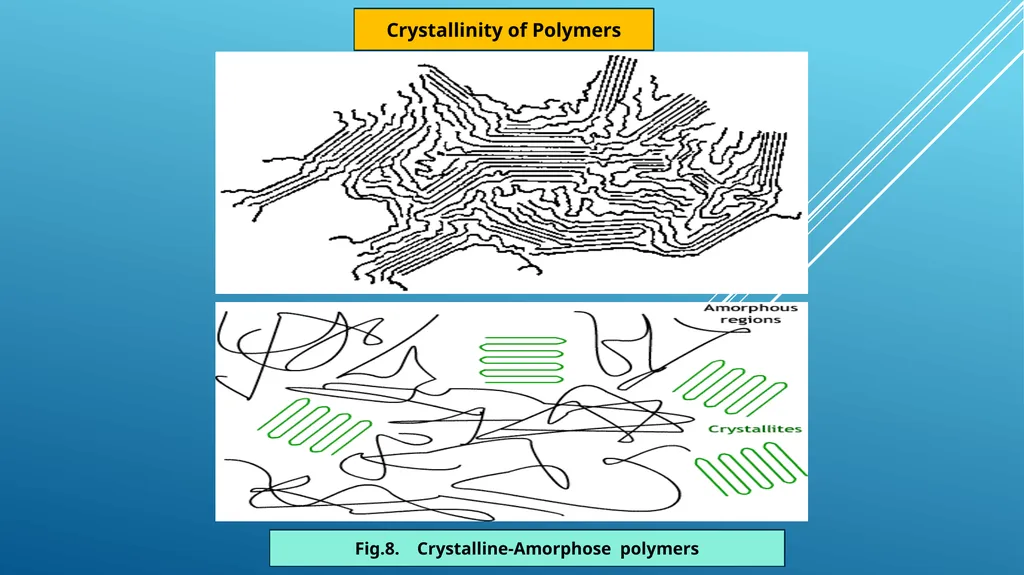
Crystallinity of Polymers Fig.8. Crystalline-Amorphose polymers<br>
11
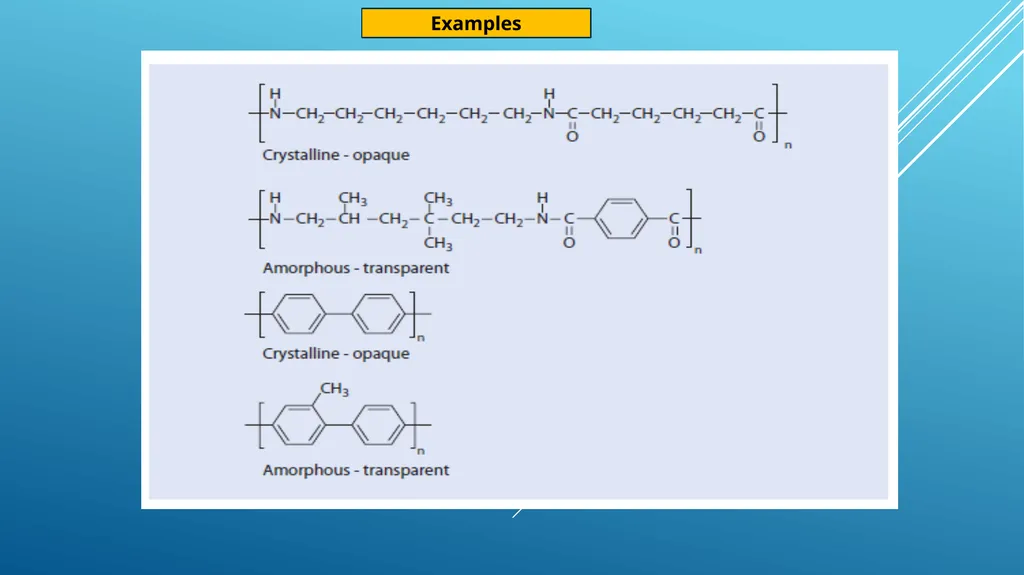
Examples<br>
12
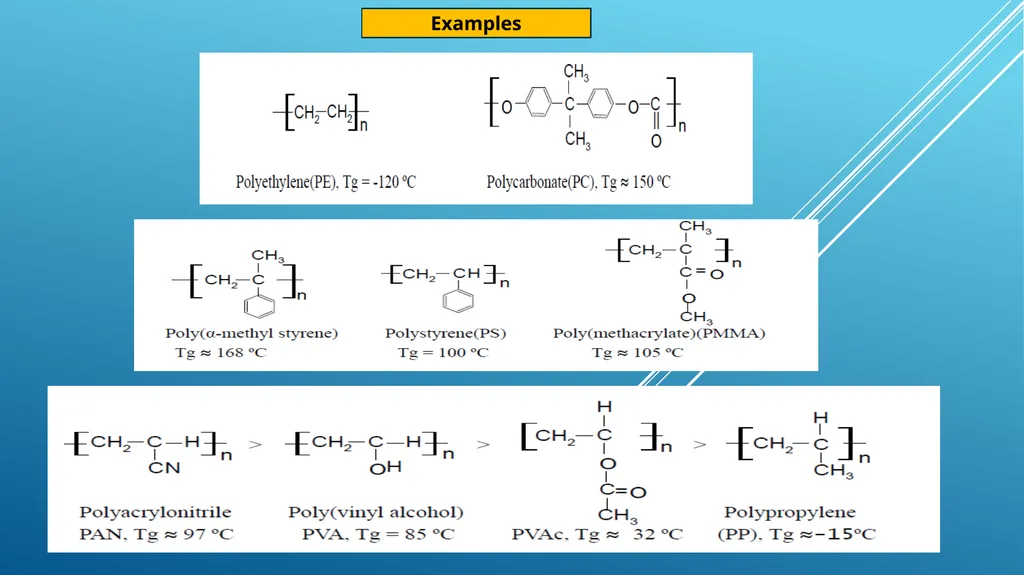
Examples<br>
13
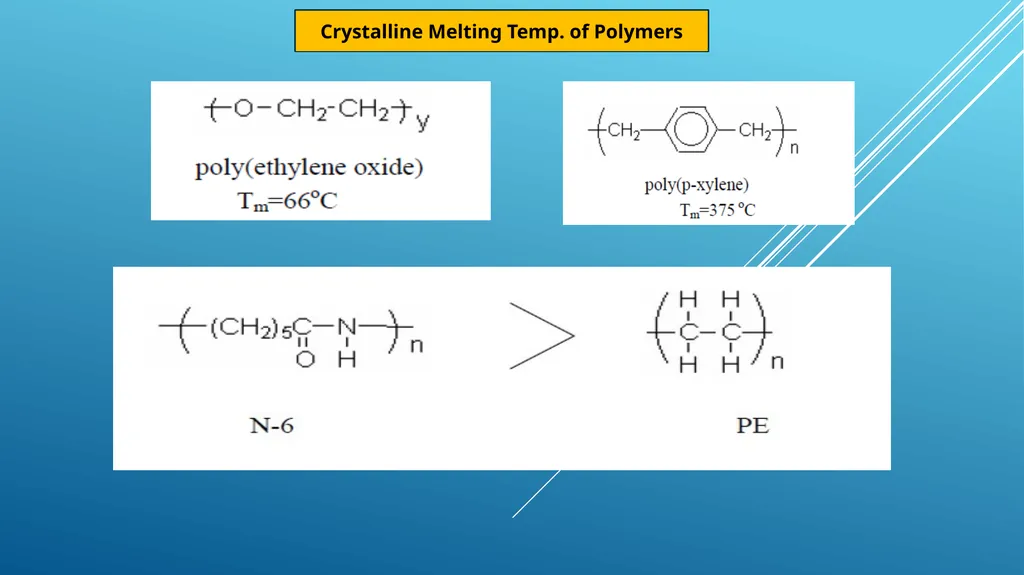
Crystalline Melting Temp. of Polymers<br>
14
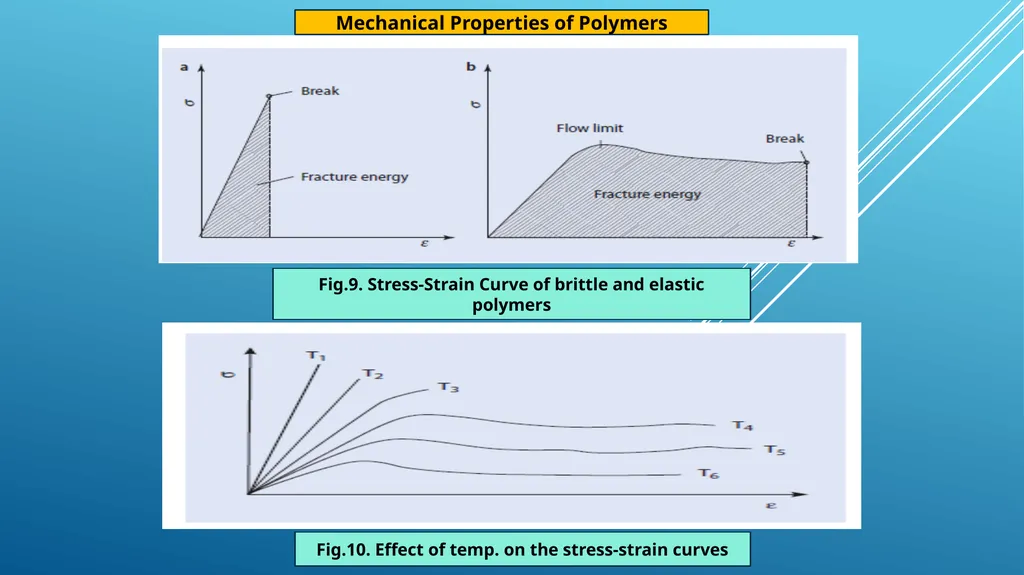
Mechanical Properties of Polymers Fig.9. Stress-Strain Curve of brittle and elastic polymers Fig.10. Effect of temp. on the stress-strain curves<br>
15
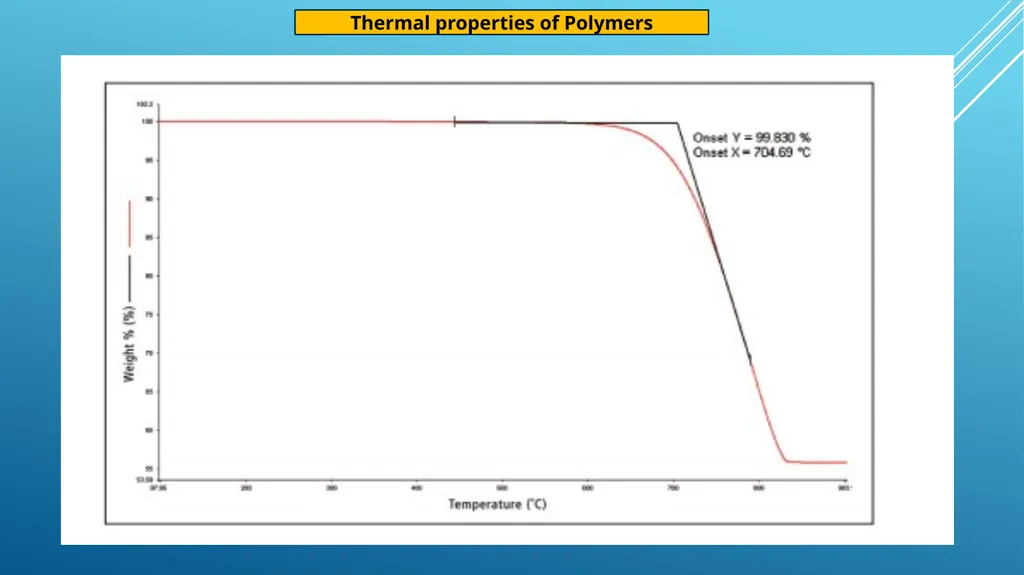
Thermal properties of Polymers<br>
16
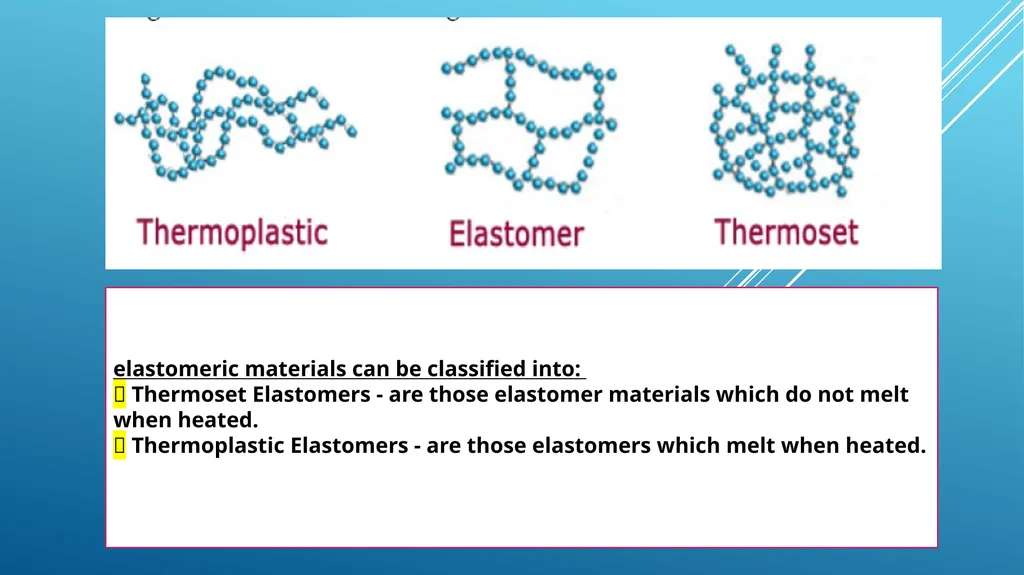
elastomeric materials can be classified into:
Thermoset Elastomers - are those elastomer materials which do not melt when heated.
Thermoplastic Elastomers - are those elastomers which melt when heated.<br>
17
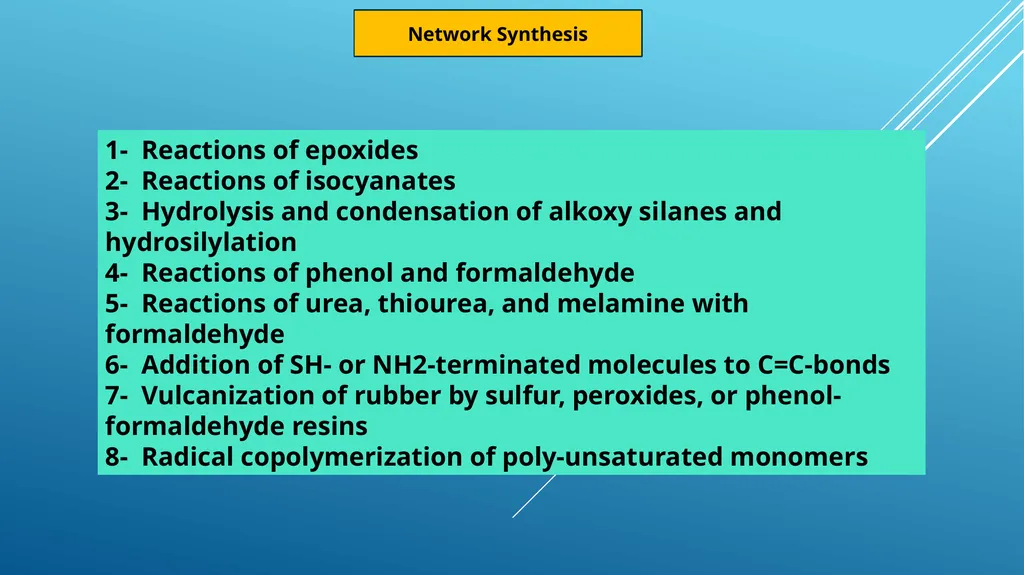
1- Reactions of epoxides
2- Reactions of isocyanates
3- Hydrolysis and condensation of alkoxy silanes and hydrosilylation
4- Reactions of phenol and formaldehyde
5- Reactions of urea, thiourea, and melamine with formaldehyde
6- Addition of SH- or NH2-terminated molecules to C=C-bonds
7- Vulcanization of rubber by sulfur, peroxides, or phenol-formaldehyde resins
8- Radical copolymerization of poly-unsaturated monomers Network Synthesis<br>
18
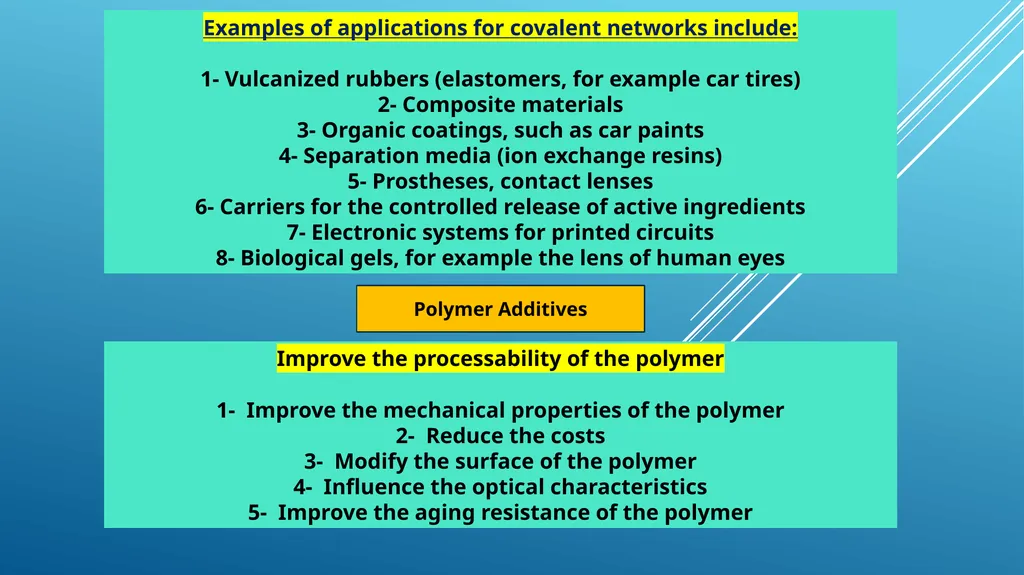
Examples of applications for covalent networks include:
1- Vulcanized rubbers (elastomers, for example car tires)
2- Composite materials
3- Organic coatings, such as car paints
4- Separation media (ion exchange resins)
5- Prostheses, contact lenses
6- Carriers for the controlled release of active ingredients
7- Electronic systems for printed circuits
8- Biological gels, for example the lens of human eyes Improve the processability of the polymer
1- Improve the mechanical properties of the polymer
2- Reduce the costs
3- Modify the surface of the polymer
4- Influence the optical characteristics
5- Improve the aging resistance of the polymer Polymer Additives<br>
19
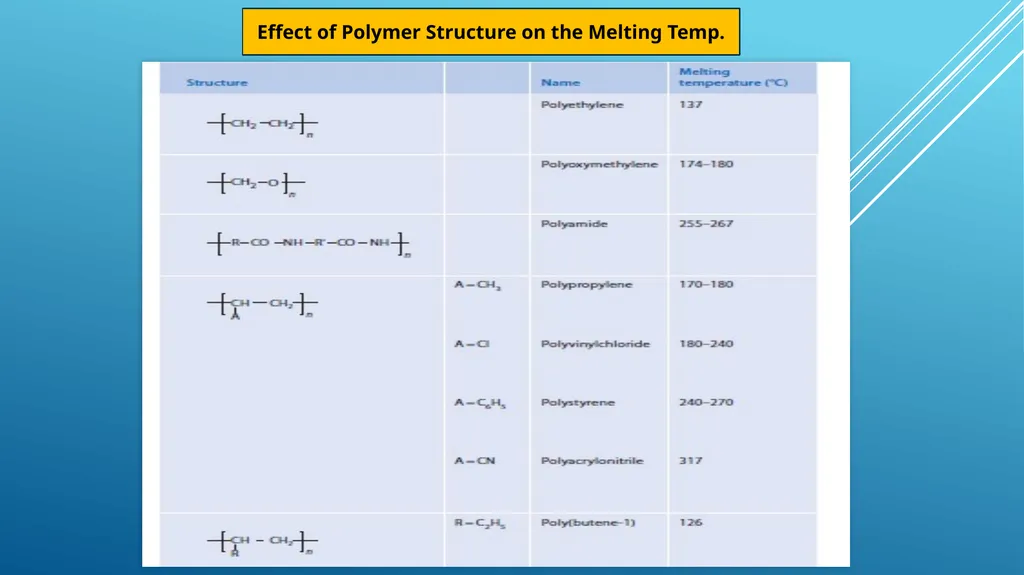
Effect of Polymer Structure on the Melting Temp.<br>
20
Thank you for your attention Dr.Widad.Saleh.Hanoosh<br>