
Africa’s pension landscape: The current situation,
GB
Published · 25 slides · 0 views

1 / 1






Description
Africas pension landscape: The current situation, opportunities, and challenges Owen Nyangoro University of Nairobi APSA Annual Conference, 25th 26th July 2024, Livingstone, Zambia Outline Introduction Pension funds and resource
Related Topics
Share
Embed code
Download this presentation From Below
"Africa’s pension landscape: The current situation," is the property of its rightful owner. Permission is granted to download and print the materials on this website for personal, non-commercial use only, and to display it on your personal computer provided you do not modify the materials and that you retain all copyright notices contained in the materials. By downloading content from our website, you accept the terms of this agreement.
Presentation Transcript
01
Africa’s pension landscape: The current situation, opportunities, and challenges Owen Nyang`oro
University of Nairobi APSA Annual Conference, 25th – 26th July 2024, Livingstone, Zambia<br>
University of Nairobi APSA Annual Conference, 25th – 26th July 2024, Livingstone, Zambia<br>
02
Outline Introduction
Pension funds and resource mobilization
Status and performance of pensions
Opportunities
Challenges to pensions development<br>
Pension funds and resource mobilization
Status and performance of pensions
Opportunities
Challenges to pensions development<br>
03
1. Introduction Social pension provides social protection for the elderly, ensures some level of basic income, redistributes income among generations and provide insurance (Juergens and Galvani, 2020).
Pensions for the elderly is the most common form of social protection in the world; 77.5% of people above retirement age receive some form of old-age pension (ILO, 2021).
Old-age social pension provides an alternative source of income for elderly people not covered by contributory schemes (World Bank, 2018).
Only 32.5% of the working-age population contribute to a pension scheme globally (SSA - 6.1%); labour force contribution is at 53.7%, compared to only 8.9% in SSA (ILO, 2021).
Less than 10% of the older population in SSA has a contributory pension since most labour is in the informal sector (ILO, 2010; Dorfman, 2015).<br>
Pensions for the elderly is the most common form of social protection in the world; 77.5% of people above retirement age receive some form of old-age pension (ILO, 2021).
Old-age social pension provides an alternative source of income for elderly people not covered by contributory schemes (World Bank, 2018).
Only 32.5% of the working-age population contribute to a pension scheme globally (SSA - 6.1%); labour force contribution is at 53.7%, compared to only 8.9% in SSA (ILO, 2021).
Less than 10% of the older population in SSA has a contributory pension since most labour is in the informal sector (ILO, 2010; Dorfman, 2015).<br>
04
Why pension funds? The main source of livelihood for the elderly;
Provide Income security in old age, that is; consumption smoothing, insurance (or risk sharing), poverty relief, and redistribution (Sojo, 2014).
Address social inequality (Stewart and Yermo, 2009; ILO, 2017; Juergens and Galvani, 2020) and reduce poverty gap ratio among the elderly (Kakwani and Subbarao, 2005).
Protects against socioeconomic risks and vulnerabilities associated with older age (Juergens and Galvani, 2020).
Support resource mobilization for long-term investment (AfDB, 2021).<br>
Provide Income security in old age, that is; consumption smoothing, insurance (or risk sharing), poverty relief, and redistribution (Sojo, 2014).
Address social inequality (Stewart and Yermo, 2009; ILO, 2017; Juergens and Galvani, 2020) and reduce poverty gap ratio among the elderly (Kakwani and Subbarao, 2005).
Protects against socioeconomic risks and vulnerabilities associated with older age (Juergens and Galvani, 2020).
Support resource mobilization for long-term investment (AfDB, 2021).<br>
05
2. Pension funds and resource mobilization SSA countries are characterised by low levels of development and many socio-economic challenges. => face a challenge in mobilization of resources and capacity constraints on lending to infrastructure projects.
The annual infrastructure funding gap in Africa is estimated at between $68 billion to $108 billion (AfDB, 2018), and is expected to widen over the medium term (Juvonen et al., 2019).
The need for resource mobilization to meet the funding gap provides an opportunity for pension funds in SSA (Juvonen et al., 2019).
Infrastructure investment provides avenue for diversification and protects institutional investors against inflation and interest rate (Suzuki et al., 2016).<br>
The annual infrastructure funding gap in Africa is estimated at between $68 billion to $108 billion (AfDB, 2018), and is expected to widen over the medium term (Juvonen et al., 2019).
The need for resource mobilization to meet the funding gap provides an opportunity for pension funds in SSA (Juvonen et al., 2019).
Infrastructure investment provides avenue for diversification and protects institutional investors against inflation and interest rate (Suzuki et al., 2016).<br>
06
Pension coverage in Africa is low in comparison to other regions Source: ILO, World Social Protection Database 3. Status and performance of pensions sector<br>
07
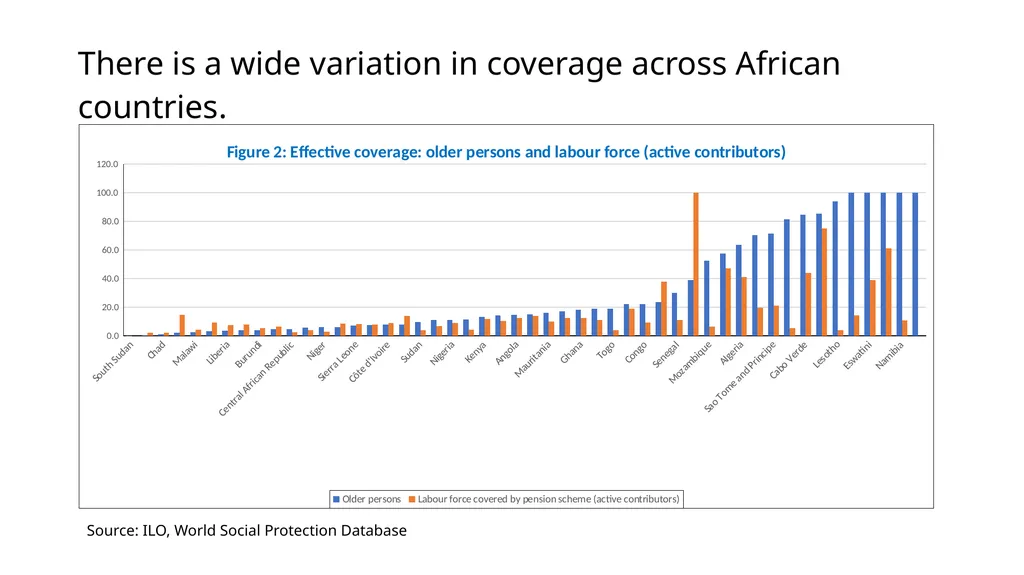
There is a wide variation in coverage across African countries. Source: ILO, World Social Protection Database<br>
08
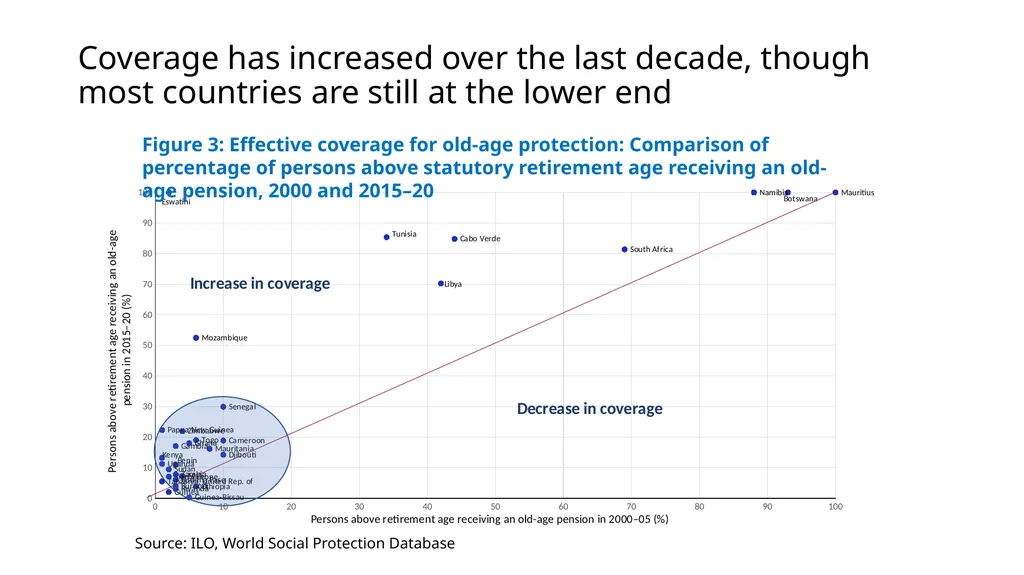
Coverage has increased over the last decade, though most countries are still at the lower end Figure 3: Effective coverage for old-age protection: Comparison of percentage of persons above statutory retirement age receiving an old-age pension, 2000 and 2015–20 Source: ILO, World Social Protection Database<br>
09
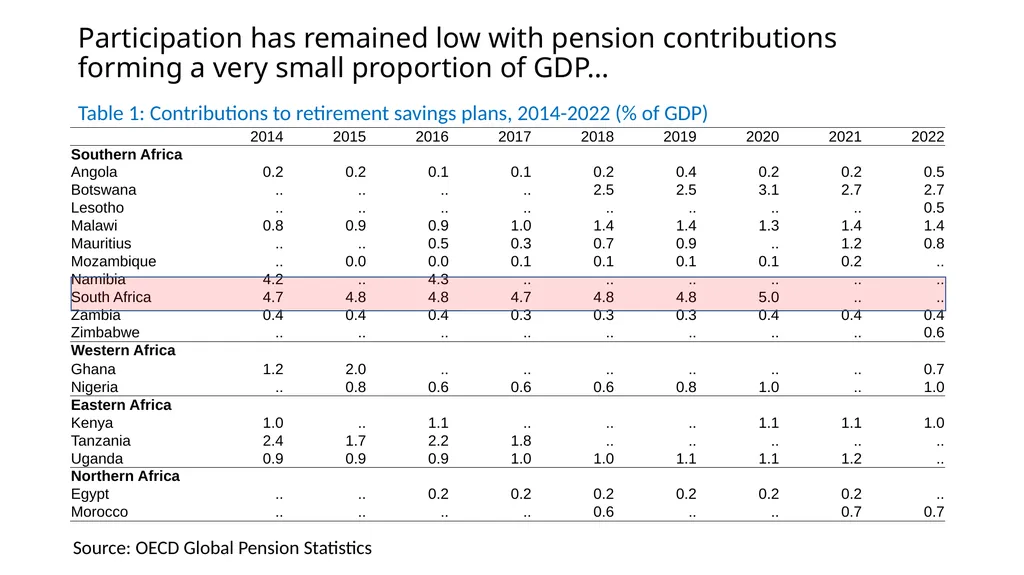
Participation has remained low with pension contributions forming a very small proportion of GDP… Table 1: Contributions to retirement savings plans, 2014-2022 (% of GDP) Source: OECD Global Pension Statistics<br>
10
SSA has the lowest ratio of population above statutory pensionable age that are receiving pension, but with high variation across regions. Source: International Labour Organisation (ILO) SDG 1.3.1, SDG Indicators website Table 2: Population above statutory pensionable age receiving a pension (%) Low participation rates has led to a very small proportion of the population above statutory pension age receiving a pension<br>
11
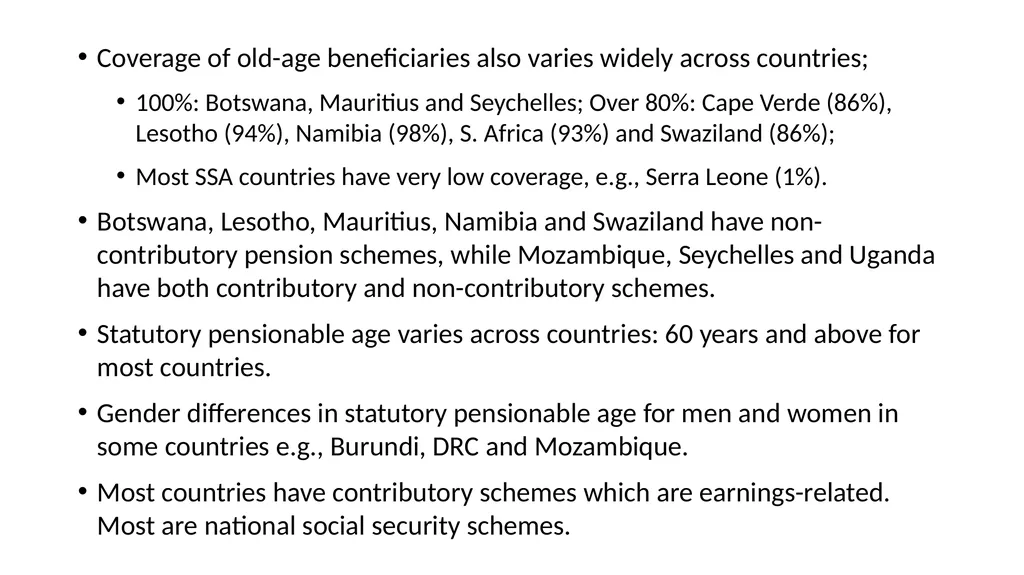
Coverage of old-age beneficiaries also varies widely across countries;
100%: Botswana, Mauritius and Seychelles; Over 80%: Cape Verde (86%), Lesotho (94%), Namibia (98%), S. Africa (93%) and Swaziland (86%);
Most SSA countries have very low coverage, e.g., Serra Leone (1%).
Botswana, Lesotho, Mauritius, Namibia and Swaziland have non-contributory pension schemes, while Mozambique, Seychelles and Uganda have both contributory and non-contributory schemes.
Statutory pensionable age varies across countries: 60 years and above for most countries.
Gender differences in statutory pensionable age for men and women in some countries e.g., Burundi, DRC and Mozambique.
Most countries have contributory schemes which are earnings-related. Most are national social security schemes.<br>
100%: Botswana, Mauritius and Seychelles; Over 80%: Cape Verde (86%), Lesotho (94%), Namibia (98%), S. Africa (93%) and Swaziland (86%);
Most SSA countries have very low coverage, e.g., Serra Leone (1%).
Botswana, Lesotho, Mauritius, Namibia and Swaziland have non-contributory pension schemes, while Mozambique, Seychelles and Uganda have both contributory and non-contributory schemes.
Statutory pensionable age varies across countries: 60 years and above for most countries.
Gender differences in statutory pensionable age for men and women in some countries e.g., Burundi, DRC and Mozambique.
Most countries have contributory schemes which are earnings-related. Most are national social security schemes.<br>
12
Low participation rates are mainly driven by high levels of informal employment, high unemployment rates and low financial literacy rates A number of countries have come up with policies to include the informal sector workers in the pension system through micro pensions e.g. Kenya and Rwanda.
Kenya - Mbao Pension Plan, a mobile phone-based contributory pension plan for the informal workers.
Rwanda – Ejo Heza, a government sponsored voluntary DC scheme open to all citizens.<br>
Kenya - Mbao Pension Plan, a mobile phone-based contributory pension plan for the informal workers.
Rwanda – Ejo Heza, a government sponsored voluntary DC scheme open to all citizens.<br>
13
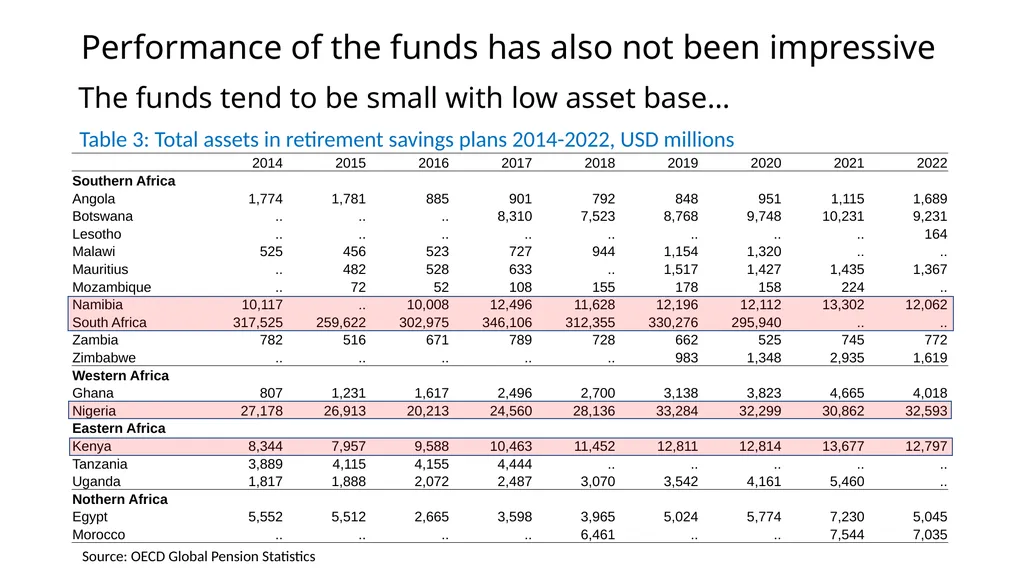
Table 3: Total assets in retirement savings plans 2014-2022, USD millions Source: OECD Global Pension Statistics Performance of the funds has also not been impressive The funds tend to be small with low asset base…<br>
14
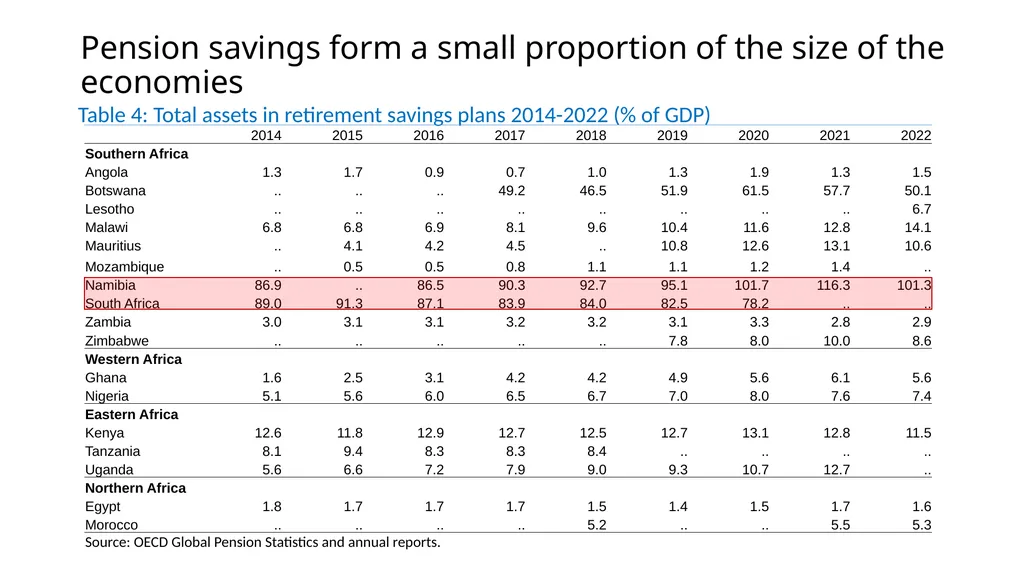
Table 4: Total assets in retirement savings plans 2014-2022 (% of GDP) Pension savings form a small proportion of the size of the economies<br>
15
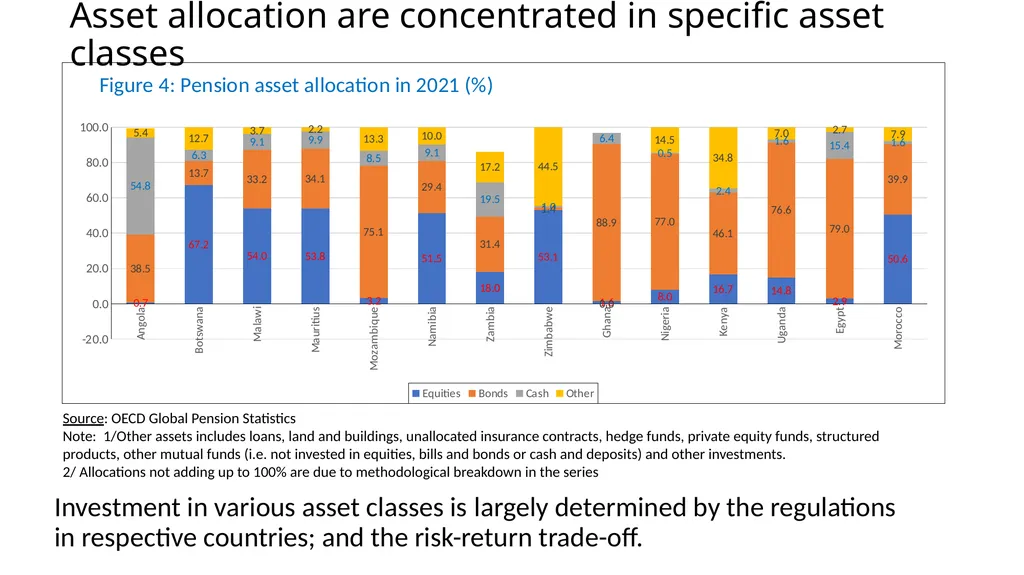
Asset allocation are concentrated in specific asset classes Investment in various asset classes is largely determined by the regulations in respective countries; and the risk-return trade-off. Source: OECD Global Pension Statistics
Note: 1/Other assets includes loans, land and buildings, unallocated insurance contracts, hedge funds, private equity funds, structured products, other mutual funds (i.e. not invested in equities, bills and bonds or cash and deposits) and other investments.
2/ Allocations not adding up to 100% are due to methodological breakdown in the series<br>
Note: 1/Other assets includes loans, land and buildings, unallocated insurance contracts, hedge funds, private equity funds, structured products, other mutual funds (i.e. not invested in equities, bills and bonds or cash and deposits) and other investments.
2/ Allocations not adding up to 100% are due to methodological breakdown in the series<br>
16
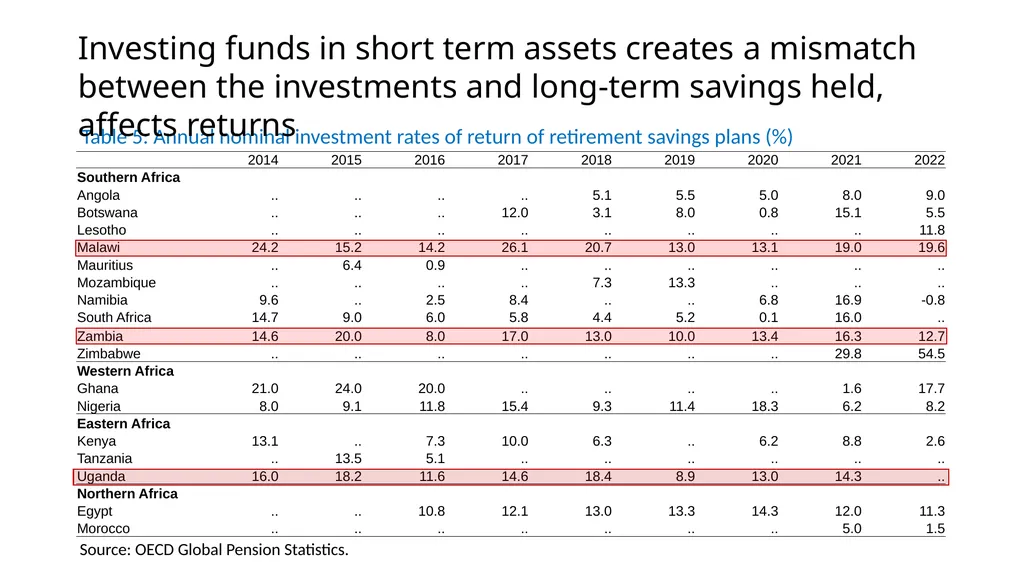
Table 5: Annual nominal investment rates of return of retirement savings plans (%) Source: OECD Global Pension Statistics. Investing funds in short term assets creates a mismatch between the investments and long-term savings held, affects returns<br>
17
Returns made worse by high inflation rates in most African countries leading to negative real returns Source: OECD Global Pension Statistics<br>
18
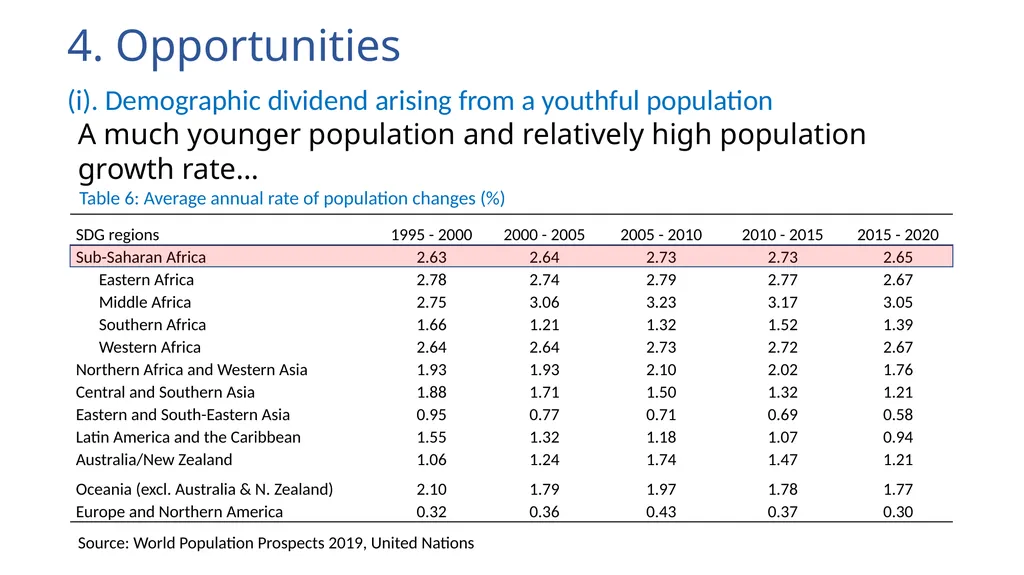
A much younger population and relatively high population growth rate… Source: World Population Prospects 2019, United Nations Table 6: Average annual rate of population changes (%) (i). Demographic dividend arising from a youthful population 4. Opportunities<br>
19
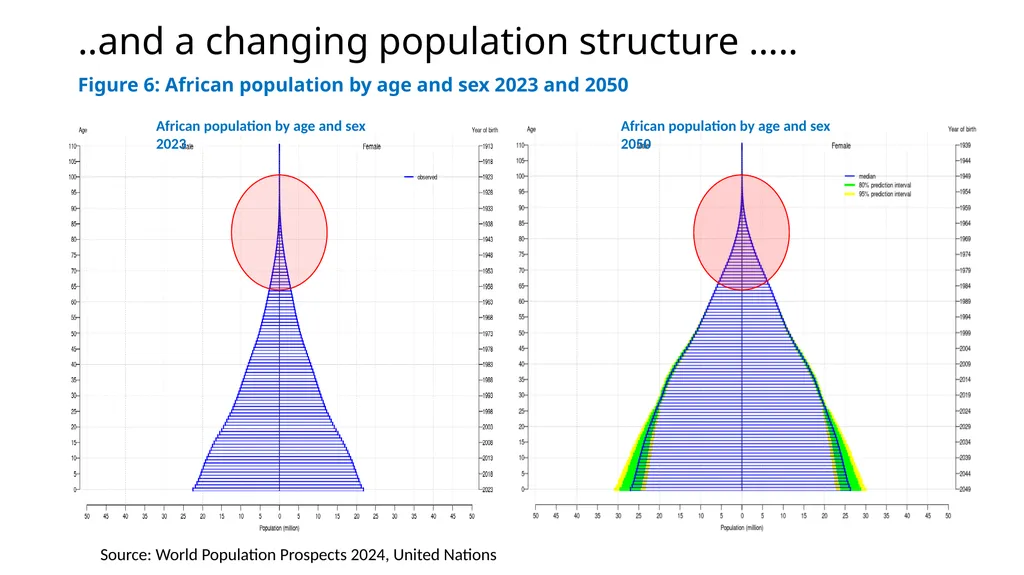
..and a changing population structure ….. Source: World Population Prospects 2024, United Nations Figure 6: African population by age and sex 2023 and 2050<br>
20
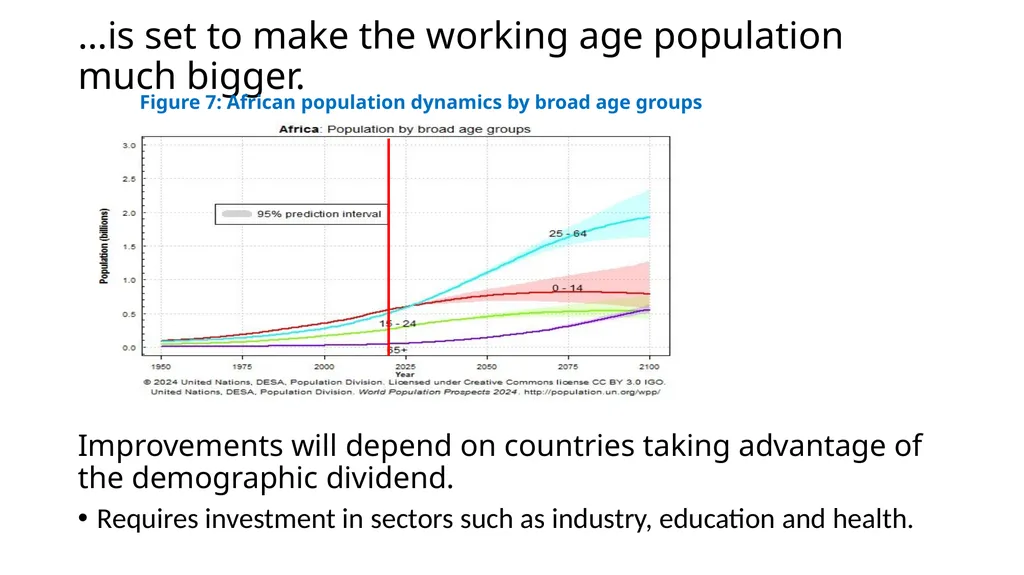
…is set to make the working age population much bigger. Requires investment in sectors such as industry, education and health. Improvements will depend on countries taking advantage of the demographic dividend. Figure 7: African population dynamics by broad age groups<br>
21
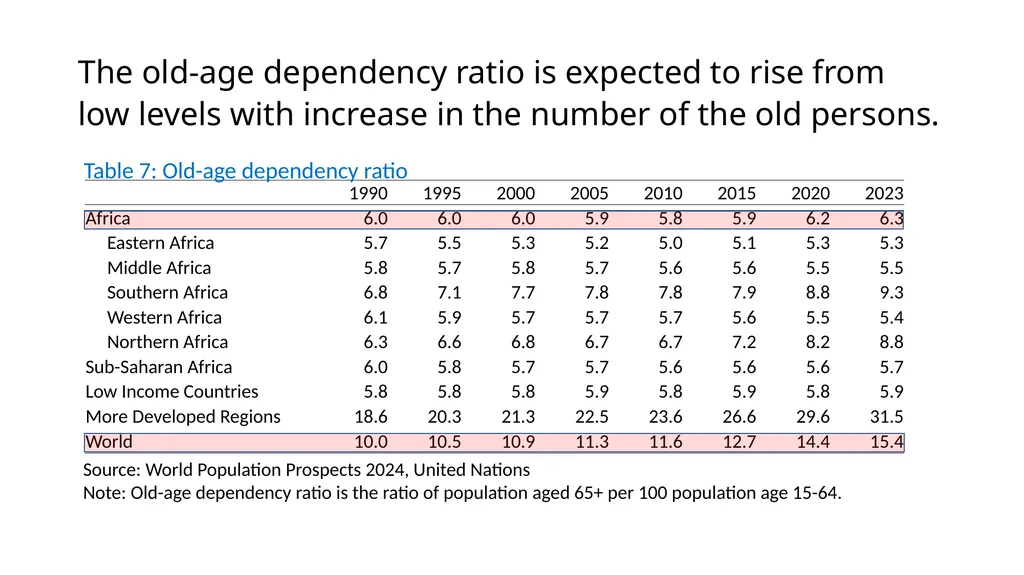
The old-age dependency ratio is expected to rise from low levels with increase in the number of the old persons. Source: World Population Prospects 2024, United Nations
Note: Old-age dependency ratio is the ratio of population aged 65+ per 100 population age 15-64. Table 7: Old-age dependency ratio<br>
Note: Old-age dependency ratio is the ratio of population aged 65+ per 100 population age 15-64. Table 7: Old-age dependency ratio<br>
22
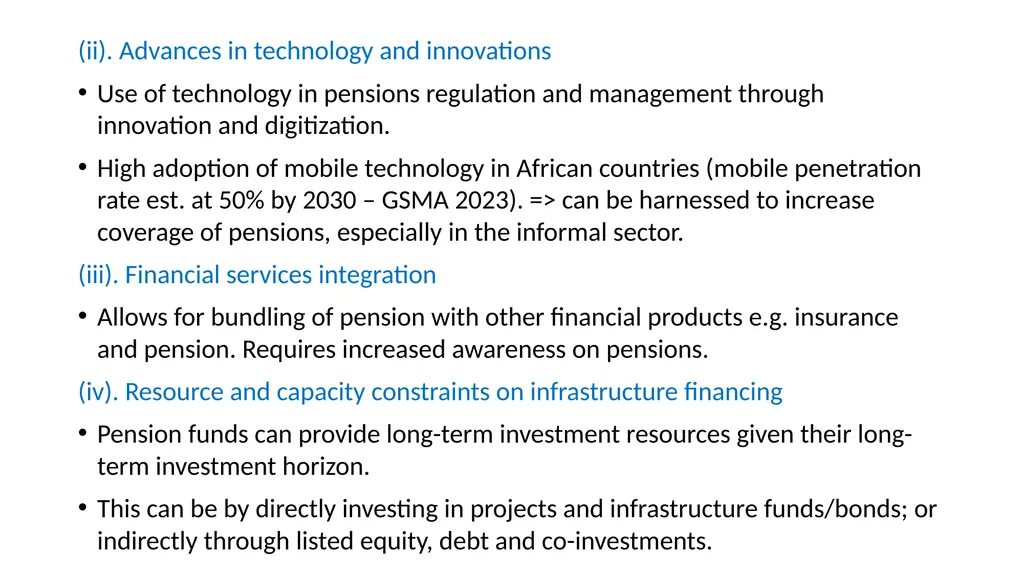
(ii). Advances in technology and innovations
Use of technology in pensions regulation and management through innovation and digitization.
High adoption of mobile technology in African countries (mobile penetration rate est. at 50% by 2030 – GSMA 2023). => can be harnessed to increase coverage of pensions, especially in the informal sector.
(iii). Financial services integration
Allows for bundling of pension with other financial products e.g. insurance and pension. Requires increased awareness on pensions.
(iv). Resource and capacity constraints on infrastructure financing
Pension funds can provide long-term investment resources given their long-term investment horizon.
This can be by directly investing in projects and infrastructure funds/bonds; or indirectly through listed equity, debt and co-investments.<br>
Use of technology in pensions regulation and management through innovation and digitization.
High adoption of mobile technology in African countries (mobile penetration rate est. at 50% by 2030 – GSMA 2023). => can be harnessed to increase coverage of pensions, especially in the informal sector.
(iii). Financial services integration
Allows for bundling of pension with other financial products e.g. insurance and pension. Requires increased awareness on pensions.
(iv). Resource and capacity constraints on infrastructure financing
Pension funds can provide long-term investment resources given their long-term investment horizon.
This can be by directly investing in projects and infrastructure funds/bonds; or indirectly through listed equity, debt and co-investments.<br>
23
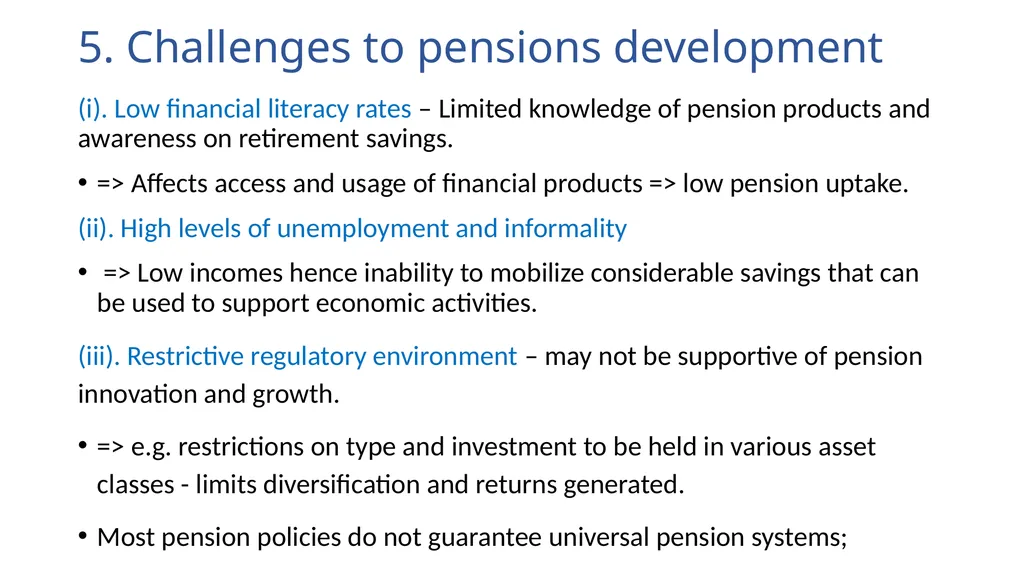
5. Challenges to pensions development (i). Low financial literacy rates – Limited knowledge of pension products and awareness on retirement savings.
=> Affects access and usage of financial products => low pension uptake.
(ii). High levels of unemployment and informality
=> Low incomes hence inability to mobilize considerable savings that can be used to support economic activities.
(iii). Restrictive regulatory environment – may not be supportive of pension innovation and growth.
=> e.g. restrictions on type and investment to be held in various asset classes - limits diversification and returns generated.
Most pension policies do not guarantee universal pension systems;<br>
=> Affects access and usage of financial products => low pension uptake.
(ii). High levels of unemployment and informality
=> Low incomes hence inability to mobilize considerable savings that can be used to support economic activities.
(iii). Restrictive regulatory environment – may not be supportive of pension innovation and growth.
=> e.g. restrictions on type and investment to be held in various asset classes - limits diversification and returns generated.
Most pension policies do not guarantee universal pension systems;<br>
24
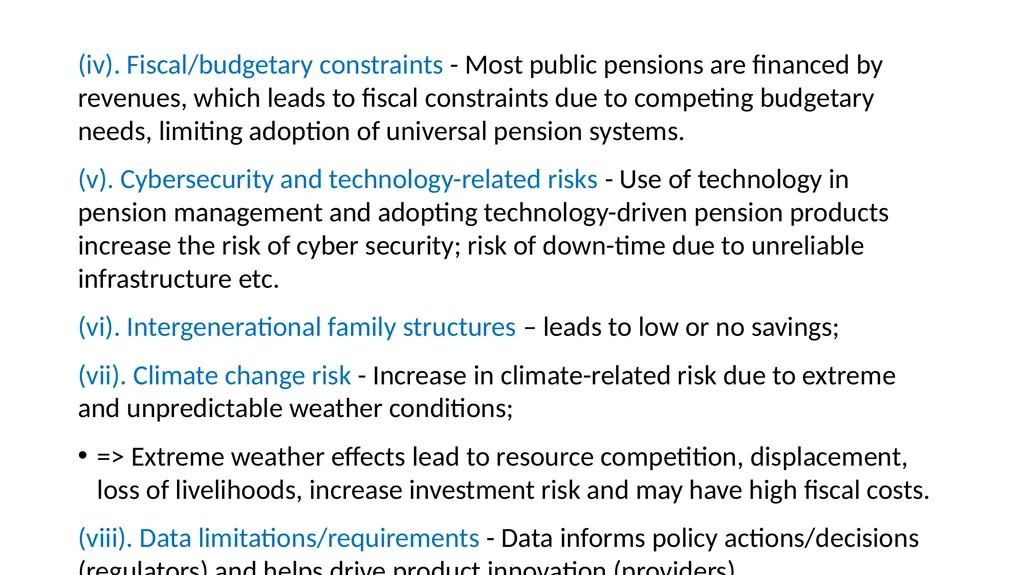
(iv). Fiscal/budgetary constraints - Most public pensions are financed by revenues, which leads to fiscal constraints due to competing budgetary needs, limiting adoption of universal pension systems.
(v). Cybersecurity and technology-related risks - Use of technology in pension management and adopting technology-driven pension products increase the risk of cyber security; risk of down-time due to unreliable infrastructure etc.
(vi). Intergenerational family structures – leads to low or no savings;
(vii). Climate change risk - Increase in climate-related risk due to extreme and unpredictable weather conditions;
=> Extreme weather effects lead to resource competition, displacement, loss of livelihoods, increase investment risk and may have high fiscal costs.
(viii). Data limitations/requirements - Data informs policy actions/decisions (regulators) and helps drive product innovation (providers).<br>
(v). Cybersecurity and technology-related risks - Use of technology in pension management and adopting technology-driven pension products increase the risk of cyber security; risk of down-time due to unreliable infrastructure etc.
(vi). Intergenerational family structures – leads to low or no savings;
(vii). Climate change risk - Increase in climate-related risk due to extreme and unpredictable weather conditions;
=> Extreme weather effects lead to resource competition, displacement, loss of livelihoods, increase investment risk and may have high fiscal costs.
(viii). Data limitations/requirements - Data informs policy actions/decisions (regulators) and helps drive product innovation (providers).<br>
25
Thank You<br>