An Active Safety Net for Runway Overruns Presented by Logan JONES Airbus Flight Operations Solutions 7-8 June 2016 Eurocontrol Safety Forum 2016 7-8 June 2016 Eurocontrol Safety Forum 2016 Page 2 7-8 June 2016 Eurocontrol Safety Forum 2016
"An Active Safety Net for Runway Overruns Presented" is the property of its rightful owner. Permission is granted to
download and print the materials on this website for personal, non-commercial use only, and to display it
on your personal computer provided you do not modify the materials and that you retain all copyright
notices contained in the materials. By downloading content from our website, you accept the terms of this
agreement.
Presentation Transcript
01
An Active Safety Net for Runway Overruns Presented by Logan JONES
Airbus Flight Operations Solutions 7-8 June 2016 Eurocontrol Safety Forum 2016<br>
02
7-8 June 2016 Eurocontrol Safety Forum 2016 Page 2<br>
03
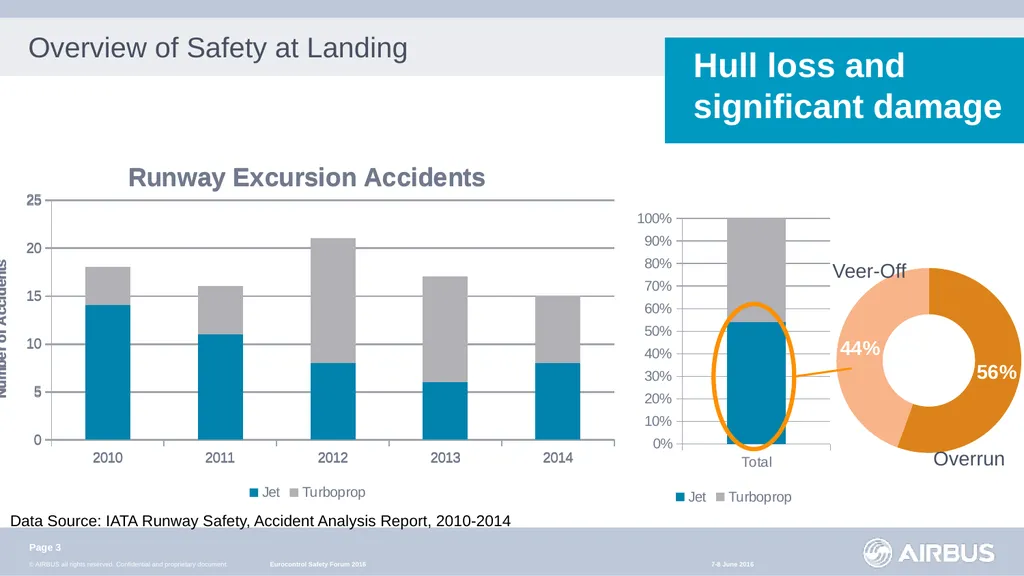
7-8 June 2016 Eurocontrol Safety Forum 2016 Page 3 Overview of Safety at Landing Hull loss and significant damage Data Source: IATA Runway Safety, Accident Analysis Report, 2010-2014<br>
04
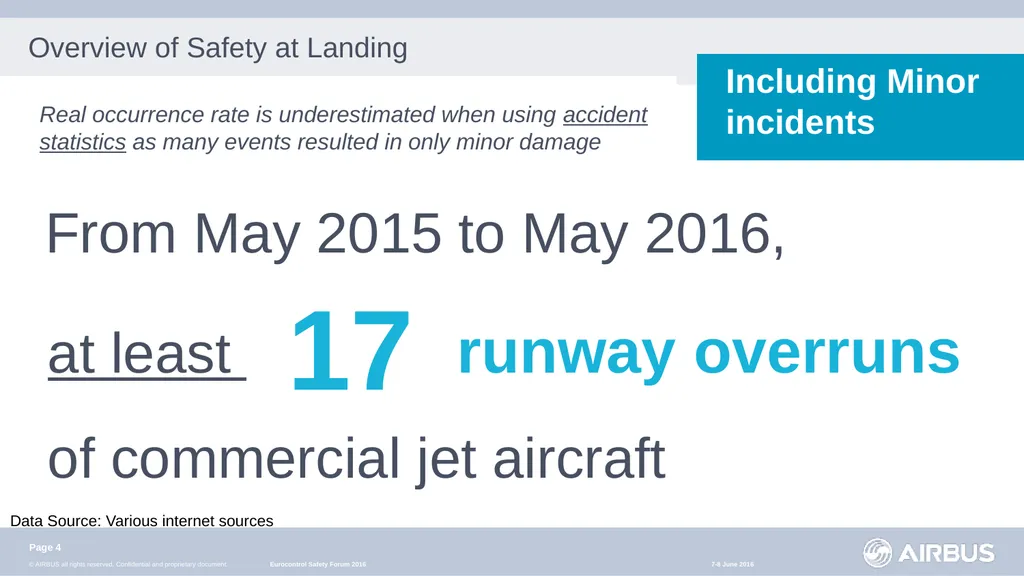
7-8 June 2016 Eurocontrol Safety Forum 2016 Page 4 Overview of Safety at Landing Including Minor incidents Real occurrence rate is underestimated when using accident statistics as many events resulted in only minor damage From May 2015 to May 2016, at least runway overruns of commercial jet aircraft 17 Data Source: Various internet sources<br>
05
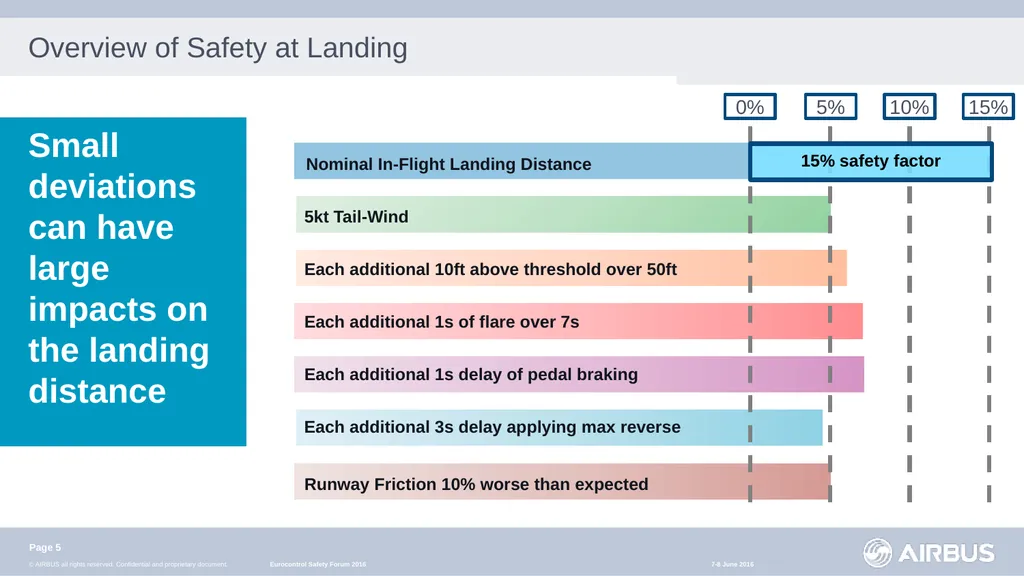
7-8 June 2016 Eurocontrol Safety Forum 2016 Page 5 Overview of Safety at Landing 5% 10% 15% 0% 15% safety factor Small deviations can have large impacts on the landing distance<br>
06
7-8 June 2016 Eurocontrol Safety Forum 2016 Page 6 Overview of Safety at Landing Provide the right tools to the flight crew, to make the right decision at the right time How can we enhance safety at landing?<br>
07
7-8 June 2016 Eurocontrol Safety Forum 2016 Page 7<br>
08
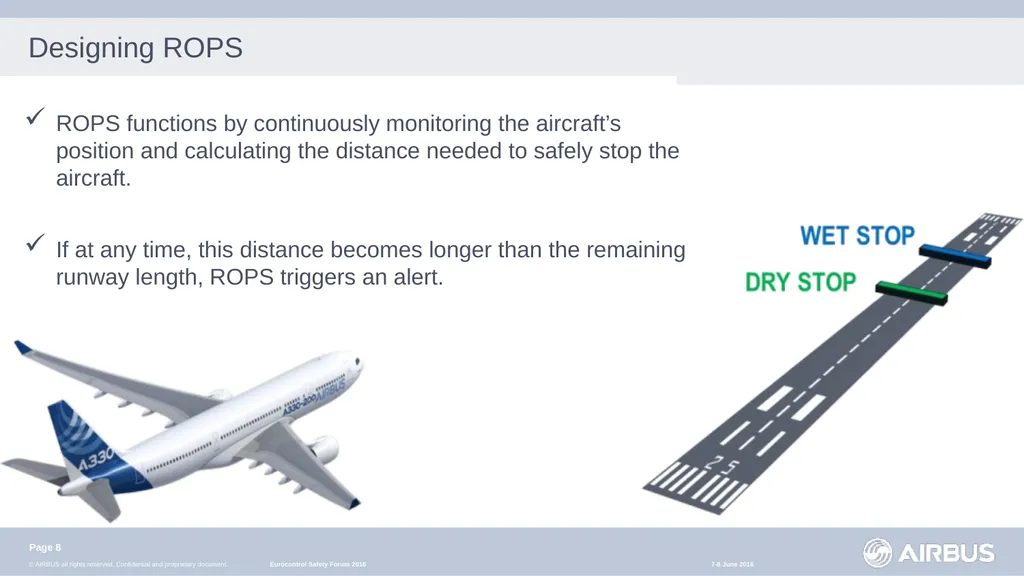
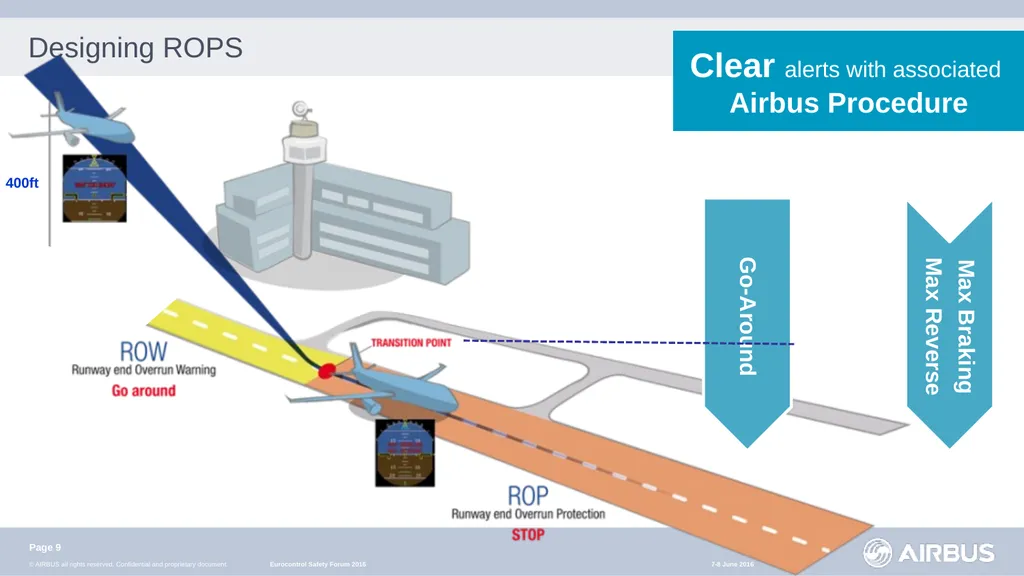
7-8 June 2016 Eurocontrol Safety Forum 2016 Page 8 Designing ROPS ROPS functions by continuously monitoring the aircraft’s position and calculating the distance needed to safely stop the aircraft.
If at any time, this distance becomes longer than the remaining runway length, ROPS triggers an alert.<br>
09
7-8 June 2016 Eurocontrol Safety Forum 2016 Page 9 Designing ROPS Clear alerts with associated Airbus Procedure<br>
10
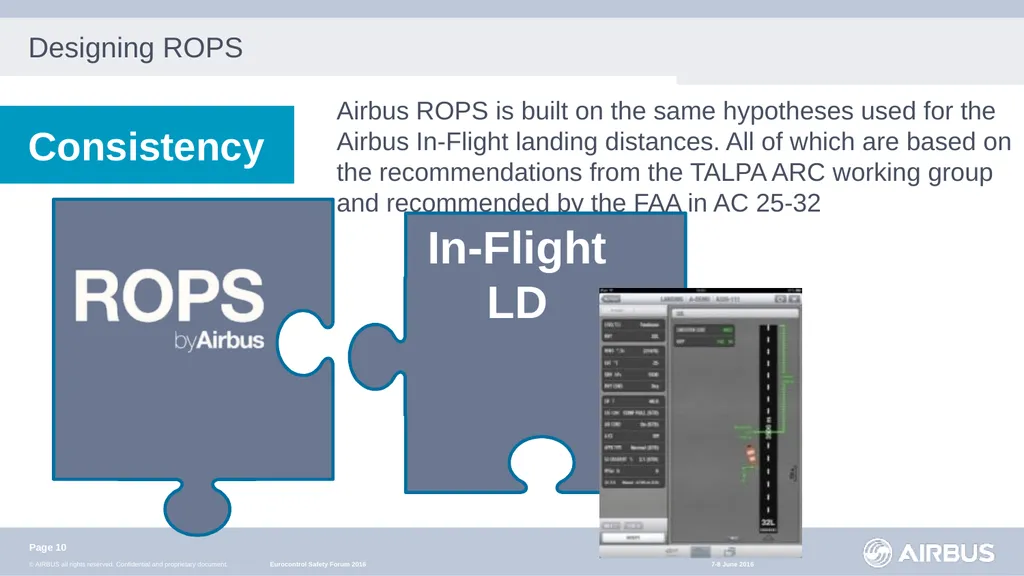
7-8 June 2016 Eurocontrol Safety Forum 2016 Page 10 Designing ROPS Consistency Airbus ROPS is built on the same hypotheses used for the Airbus In-Flight landing distances. All of which are based on the recommendations from the TALPA ARC working group and recommended by the FAA in AC 25-32 In-Flight LD<br>
11
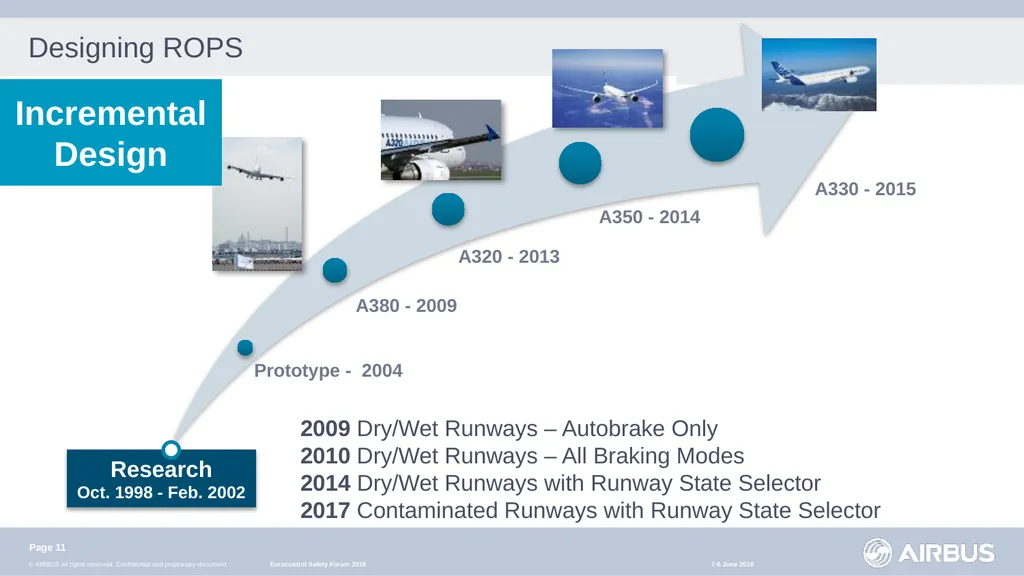
7-8 June 2016 Eurocontrol Safety Forum 2016 Page 11 Designing ROPS Research
Oct. 1998 - Feb. 2002 Incremental Design 2009 Dry/Wet Runways – Autobrake Only
2010 Dry/Wet Runways – All Braking Modes
2014 Dry/Wet Runways with Runway State Selector
2017 Contaminated Runways with Runway State Selector<br>
12
7-8 June 2016 Eurocontrol Safety Forum 2016 Page 12<br>
13
7-8 June 2016 Eurocontrol Safety Forum 2016 Page 13 It is Airbus’ practice to limit the installation of new functions to a limited number of companies in order to gain operational feedback. Feedback Controlled
Entry-into-Service Airbus setup a dedicated team of ROPS experts to closely follow ROPS introduction and act as an interface between the design team and the customer ROPS Support<br>
14
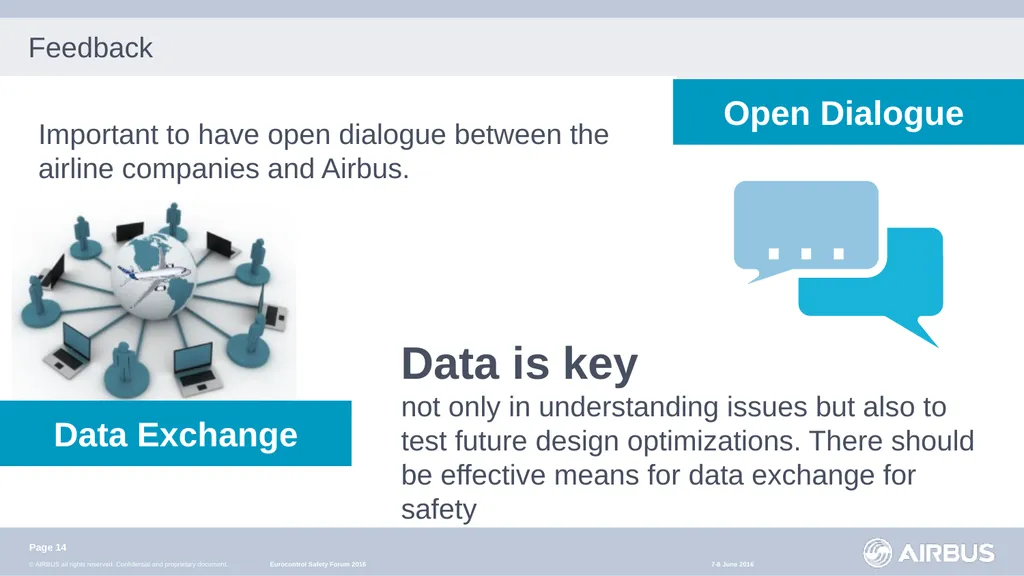
7-8 June 2016 Eurocontrol Safety Forum 2016 Page 14 Important to have open dialogue between the airline companies and Airbus. Feedback Open Dialogue Data Exchange Data is key not only in understanding issues but also to test future design optimizations. There should be effective means for data exchange for safety …<br>
15
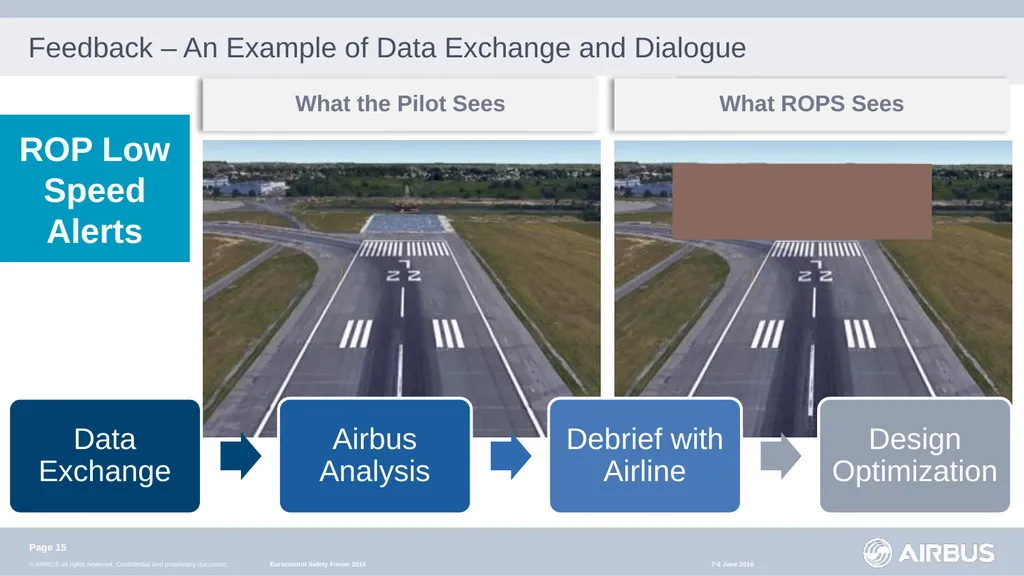
7-8 June 2016 Eurocontrol Safety Forum 2016 Page 15 Feedback – An Example of Data Exchange and Dialogue What the Pilot Sees What ROPS Sees ROP Low Speed Alerts<br>
16
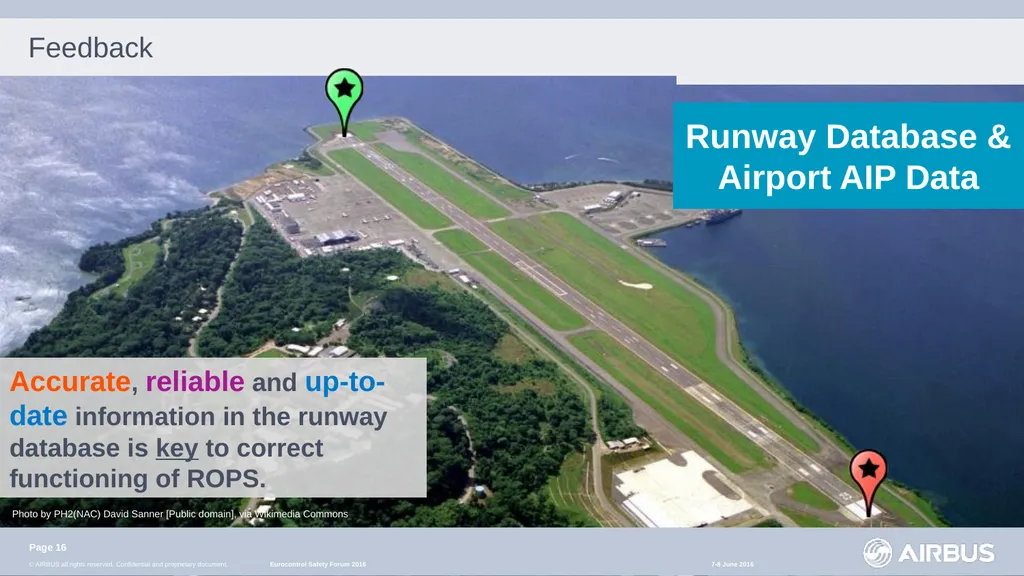
7-8 June 2016 Eurocontrol Safety Forum 2016 Page 16 Feedback Runway Database & Airport AIP Data Accurate, reliable and up-to-date information in the runway database is key to correct functioning of ROPS. Photo by PH2(NAC) David Sanner [Public domain], via Wikimedia Commons<br>
17
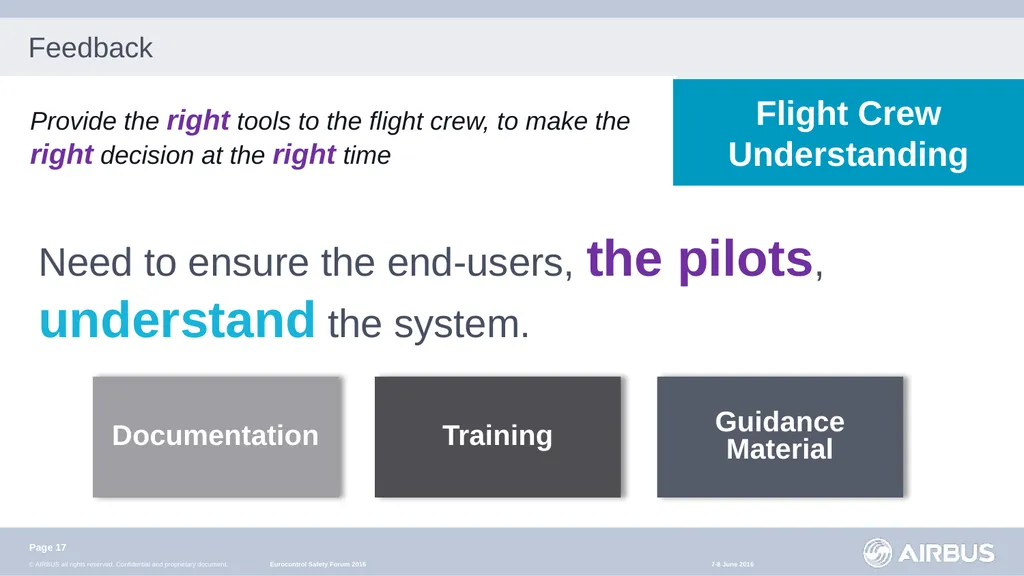
7-8 June 2016 Eurocontrol Safety Forum 2016 Page 17 Need to ensure the end-users, the pilots, understand the system. Feedback Flight Crew Understanding Provide the right tools to the flight crew, to make the right decision at the right time Documentation Training Guidance Material<br>
18
7-8 June 2016 Eurocontrol Safety Forum 2016 Page 18<br>
19
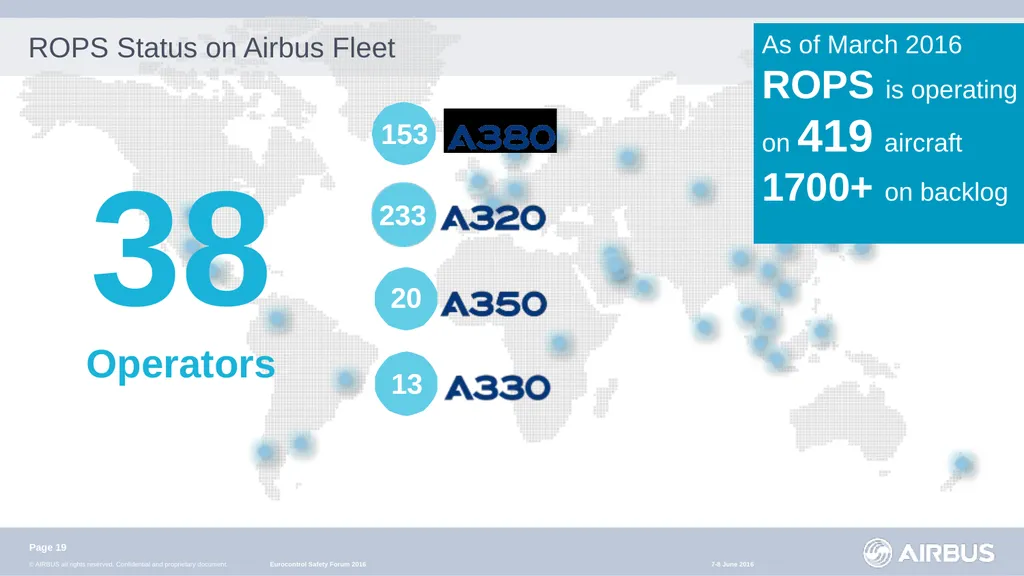
7-8 June 2016 Eurocontrol Safety Forum 2016 Page 19 ROPS Status on Airbus Fleet As of March 2016 ROPS is operating on 419 aircraft
1700+ on backlog 38
Operators<br>
20
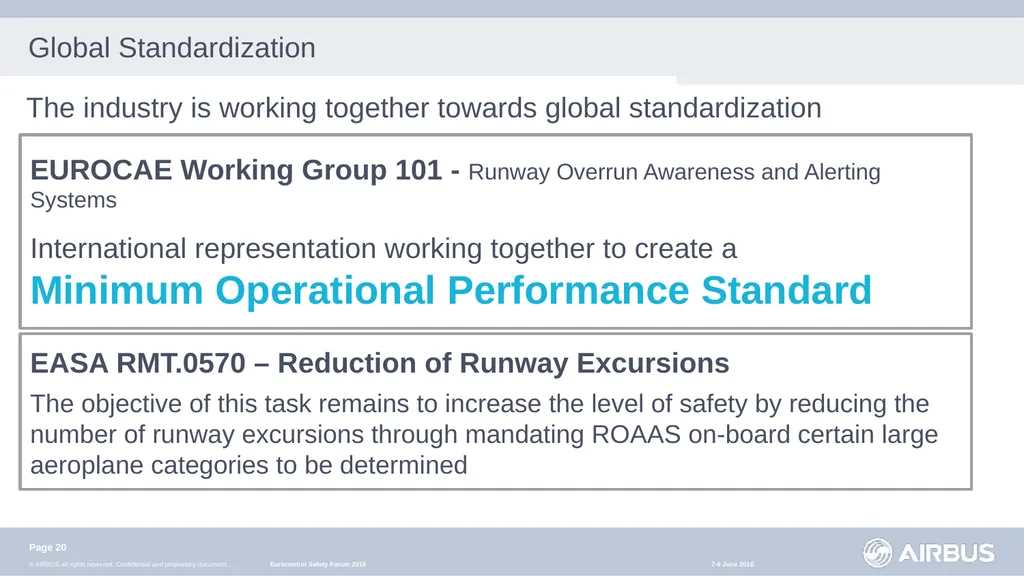
EASA RMT.0570 – Reduction of Runway Excursions
The objective of this task remains to increase the level of safety by reducing the number of runway excursions through mandating ROAAS on-board certain large aeroplane categories to be determined EUROCAE Working Group 101 - Runway Overrun Awareness and Alerting Systems
International representation working together to create a Minimum Operational Performance Standard 7-8 June 2016 Eurocontrol Safety Forum 2016 Page 20 Global Standardization The industry is working together towards global standardization<br>
21
7-8 June 2016 Eurocontrol Safety Forum 2016 Page 21 Safety Nets add an additional layer of security but are only one part of the solution.
Aircraft operators, civil aviation authorities, aerodromes and ANSPs all have an important role to play
Together we can reverse the trend of runway overruns and improve safety at landing. A Global Success<br>
22
7-8 June 2016 Eurocontrol Safety Forum 2016 Page 22<br>