An evaluation of computational imaging techniques
Description: An evaluation of computational imaging techniques for inverse scattering Looking inside stuff making sense of this New imaging capabilities selecting which photons to measure Problem statement and contributions heterogeneous inverse
Related Topics
Download Presentation
"An evaluation of computational imaging techniques" is the property of its rightful owner. Permission is granted to download and print the materials on this website for personal, non-commercial use only, and to display it on your personal computer provided you do not modify the materials and that you retain all copyright notices contained in the materials. By downloading content from our website, you accept the terms of this agreement.
Presentation Transcript
slide1. An evaluation of computational imaging techniques for inverse scattering<br>
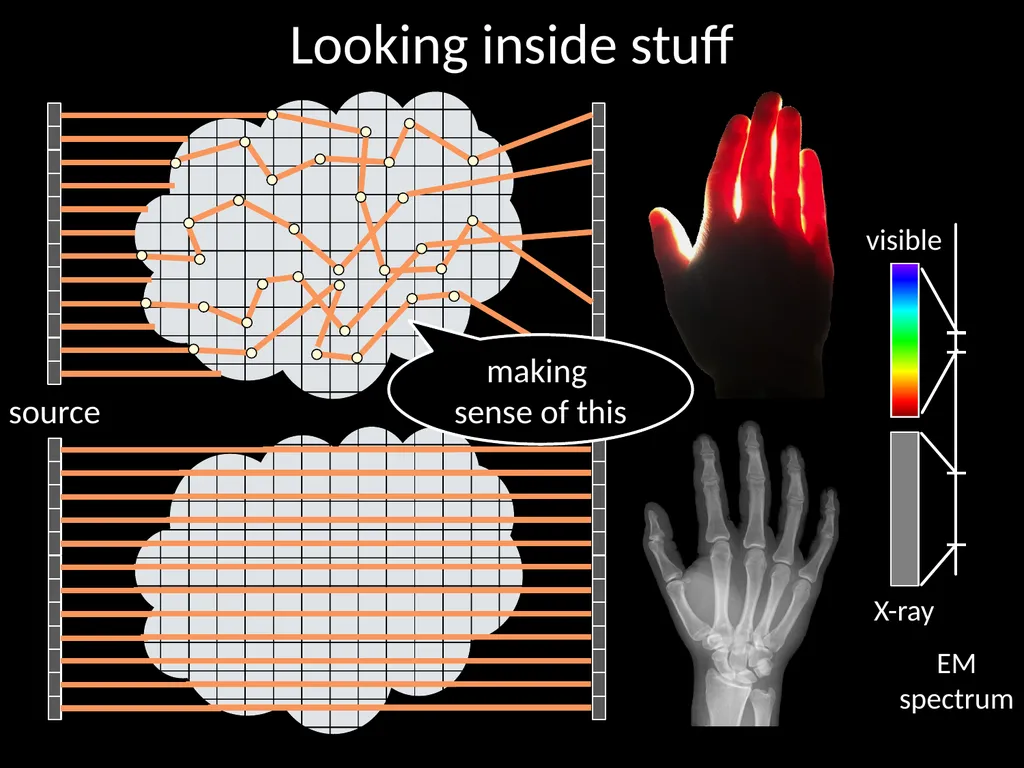
slide2. Looking inside stuff making sense of this<br>
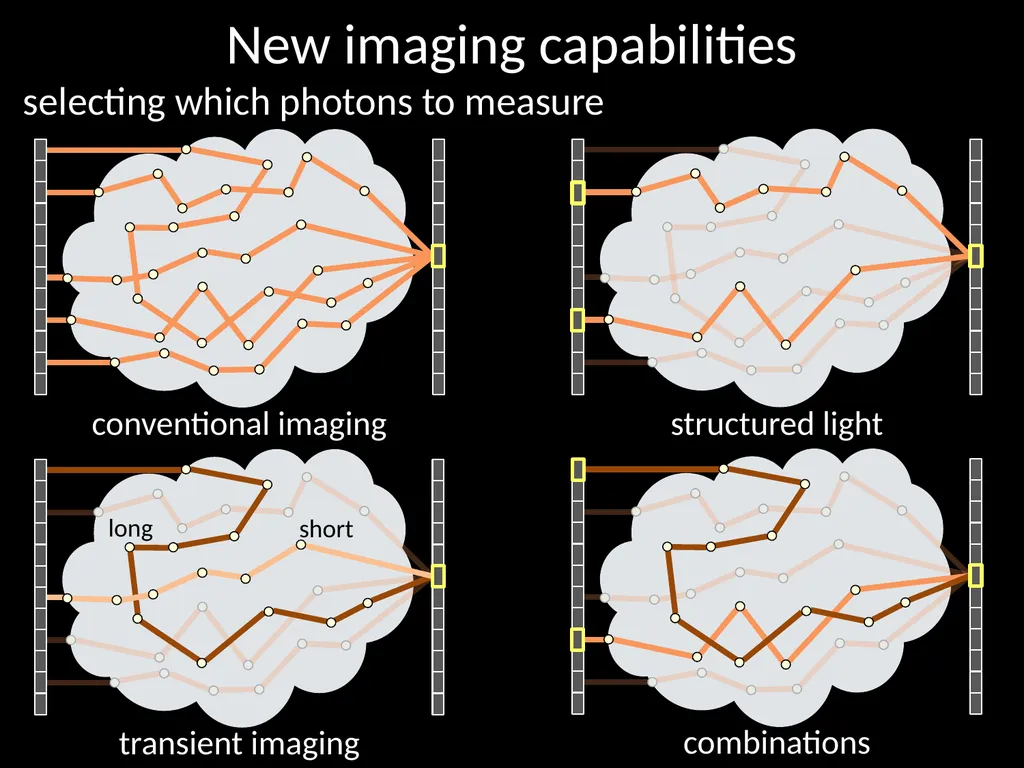
slide3. New imaging capabilities selecting which photons to measure<br>
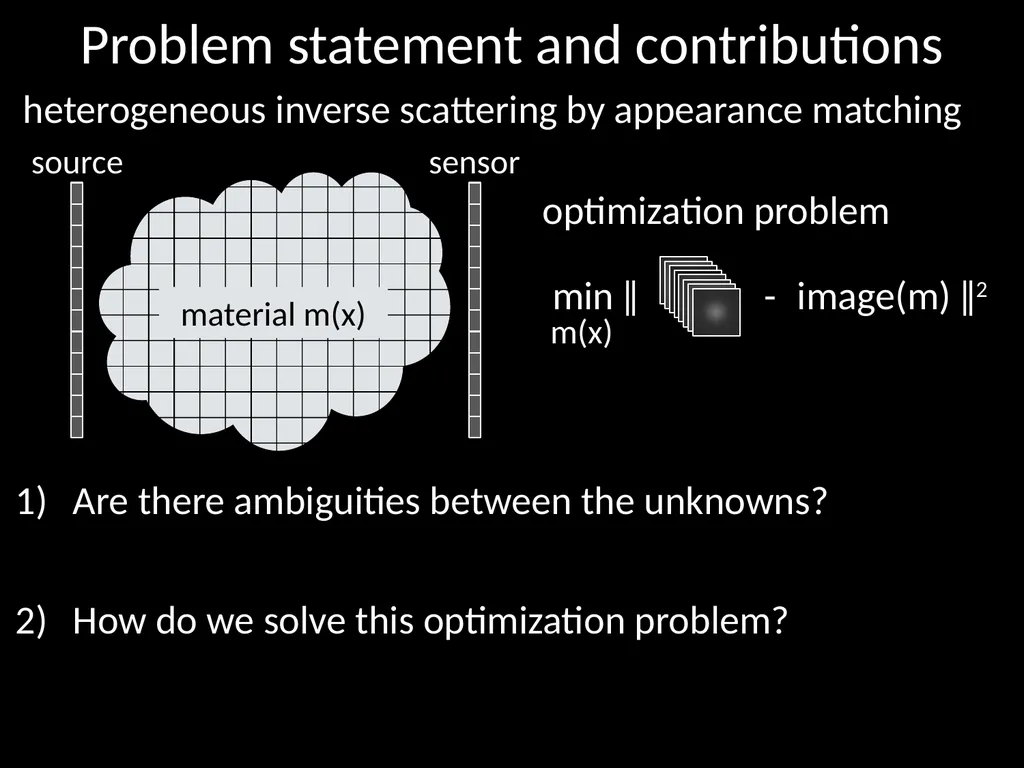
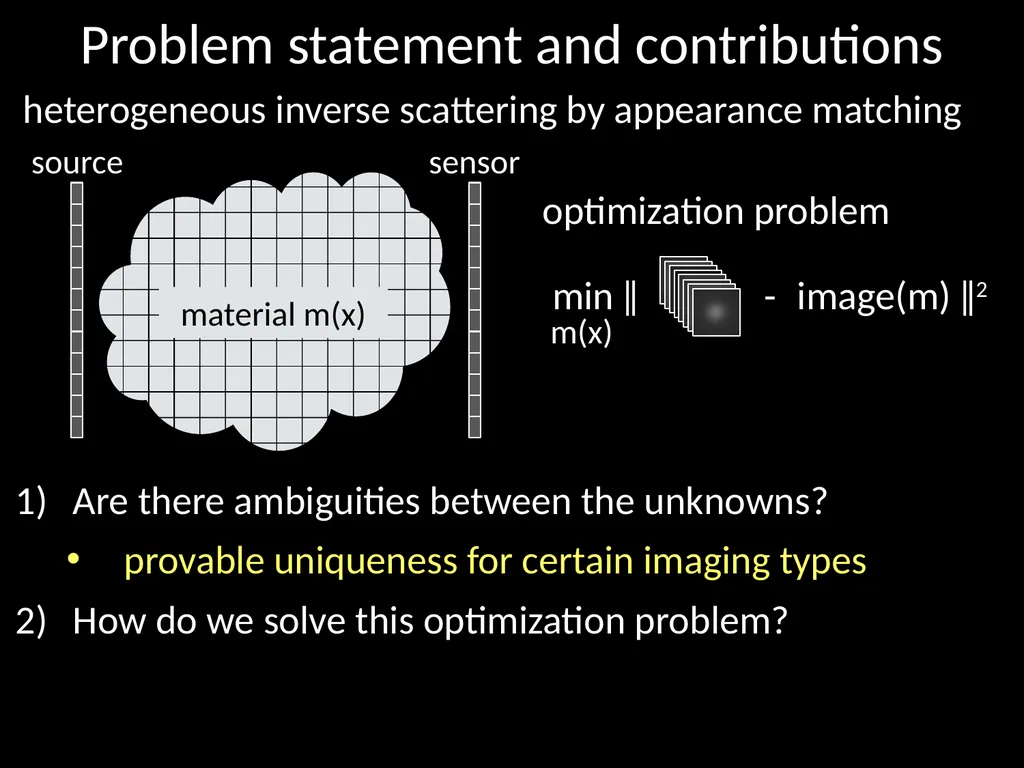
slide4. Problem statement and contributions heterogeneous inverse scattering by appearance matching Are there ambiguities between the unknowns? How do we solve this optimization problem?<br>
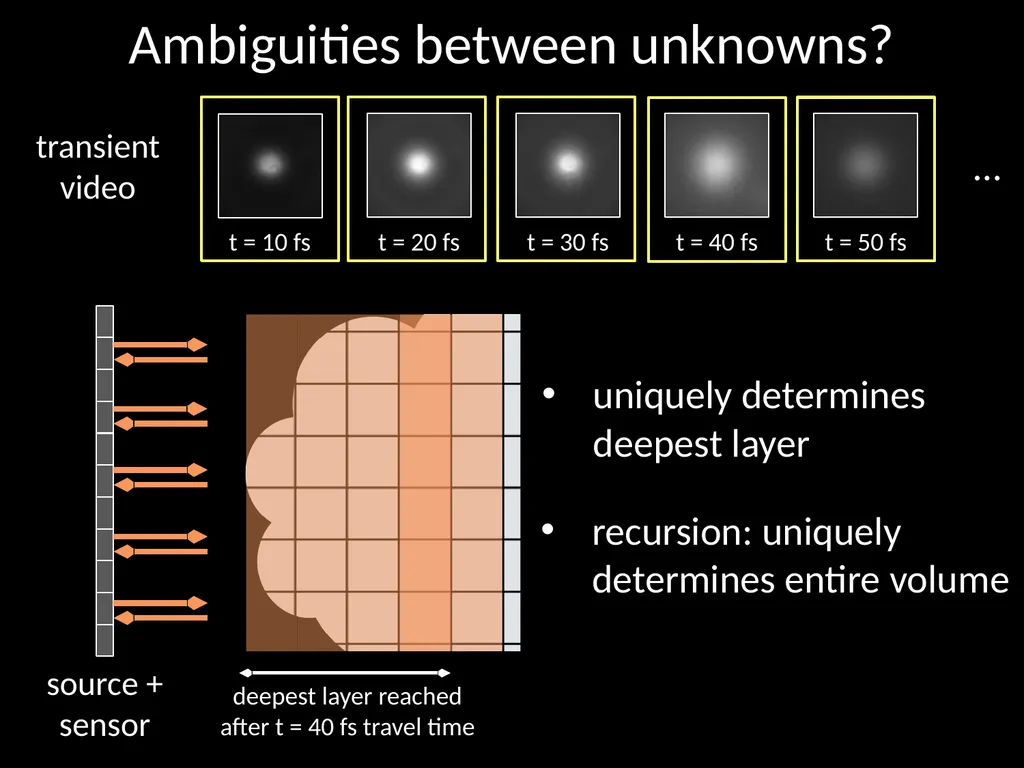
slide5. Ambiguities between unknowns? uniquely determines deepest layer recursion: uniquely determines entire volume deepest layer reached after t = 40 fs travel time<br>
slide6. Problem statement and contributions heterogeneous inverse scattering by appearance matching source sensor How do we solve this optimization problem? Are there ambiguities between the unknowns? provable uniqueness for certain imaging types material m(x)<br>
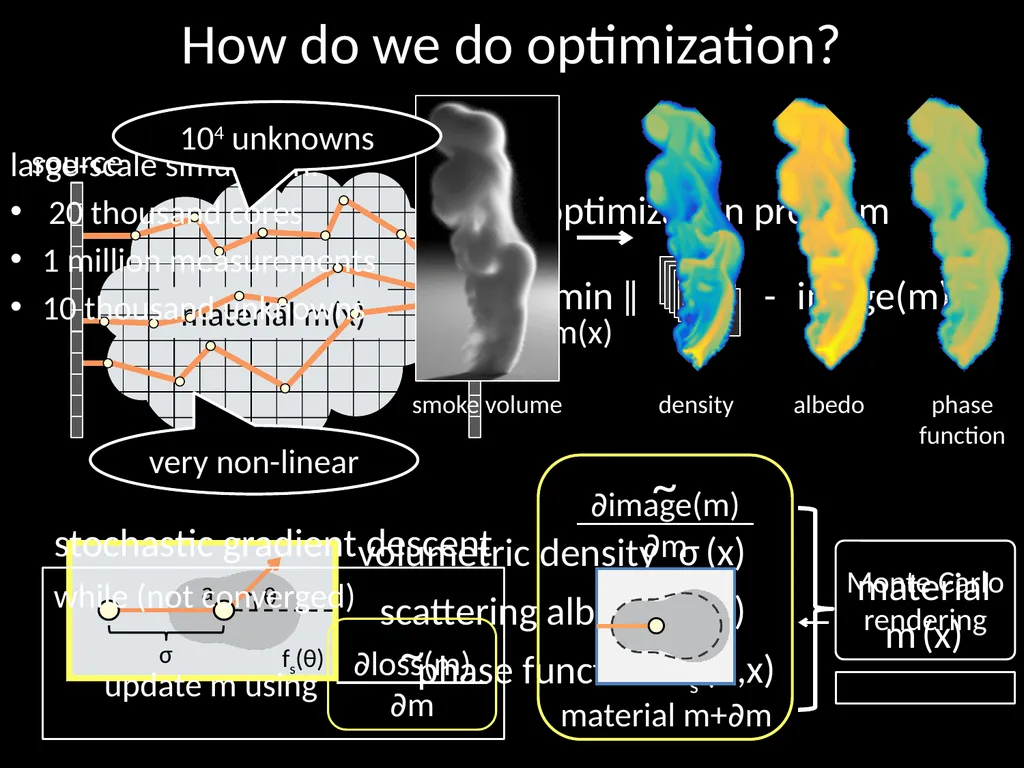
slide7. material m(x) How do we do optimization? very non-linear 104 unknowns<br>
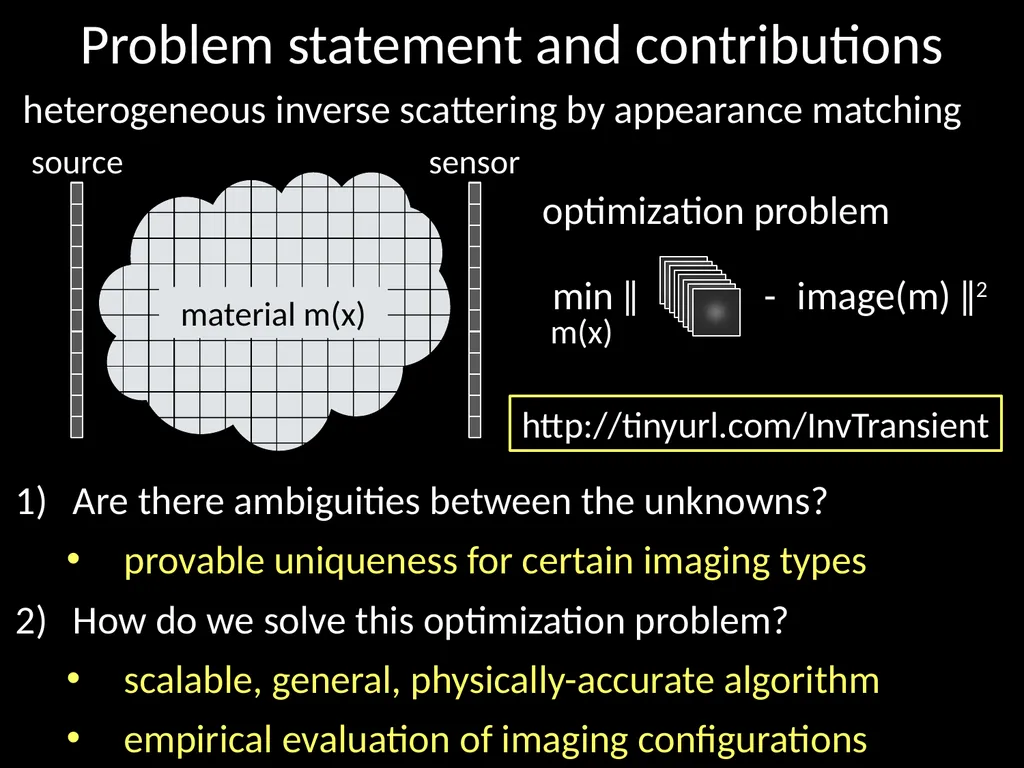
slide8. Problem statement and contributions heterogeneous inverse scattering by appearance matching http://tinyurl.com/InvTransient Are there ambiguities between the unknowns? How do we solve this optimization problem? provable uniqueness for certain imaging types scalable, general, physically-accurate algorithm source sensor material m(x) empirical evaluation of imaging configurations<br>
slide2. Looking inside stuff making sense of this<br>
slide3. New imaging capabilities selecting which photons to measure<br>
slide4. Problem statement and contributions heterogeneous inverse scattering by appearance matching Are there ambiguities between the unknowns? How do we solve this optimization problem?<br>
slide5. Ambiguities between unknowns? uniquely determines deepest layer recursion: uniquely determines entire volume deepest layer reached after t = 40 fs travel time<br>
slide6. Problem statement and contributions heterogeneous inverse scattering by appearance matching source sensor How do we solve this optimization problem? Are there ambiguities between the unknowns? provable uniqueness for certain imaging types material m(x)<br>
slide7. material m(x) How do we do optimization? very non-linear 104 unknowns<br>
slide8. Problem statement and contributions heterogeneous inverse scattering by appearance matching http://tinyurl.com/InvTransient Are there ambiguities between the unknowns? How do we solve this optimization problem? provable uniqueness for certain imaging types scalable, general, physically-accurate algorithm source sensor material m(x) empirical evaluation of imaging configurations<br>