04
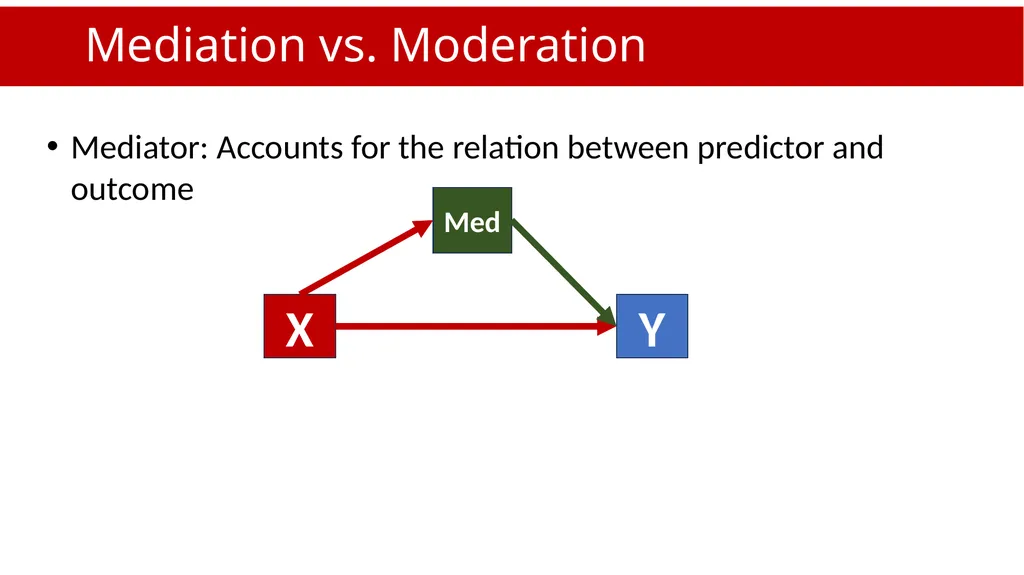
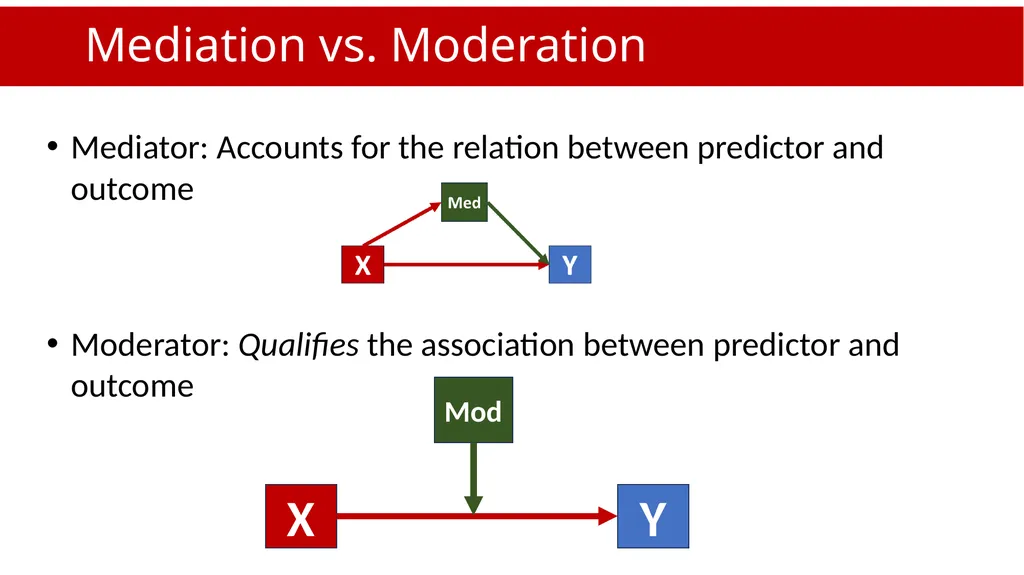
Mediation vs. Moderation Mediator: Accounts for the relation between predictor and outcome X Y Med<br>
05
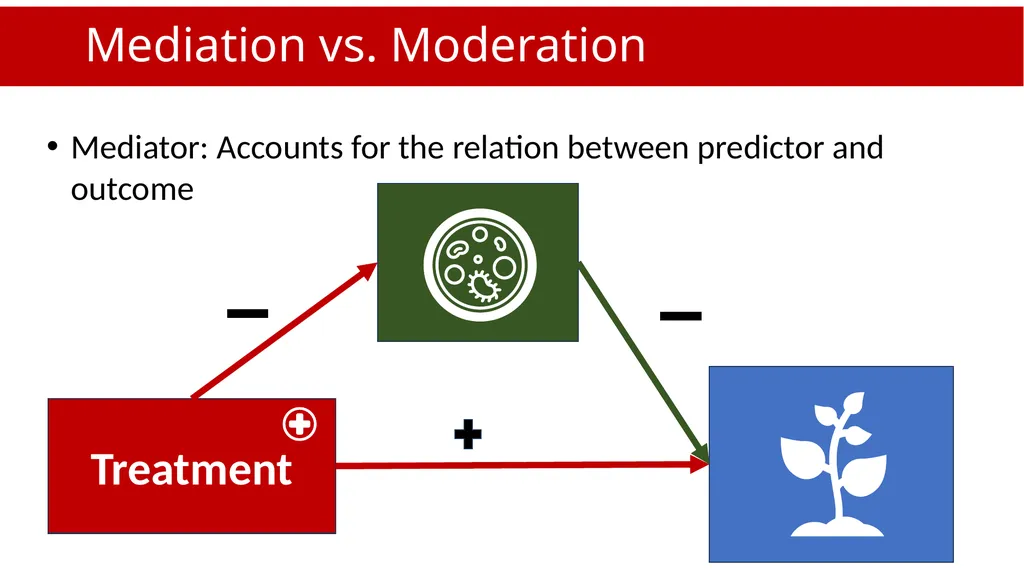
Mediation vs. Moderation Mediator: Accounts for the relation between predictor and outcome Treatment<br>
06
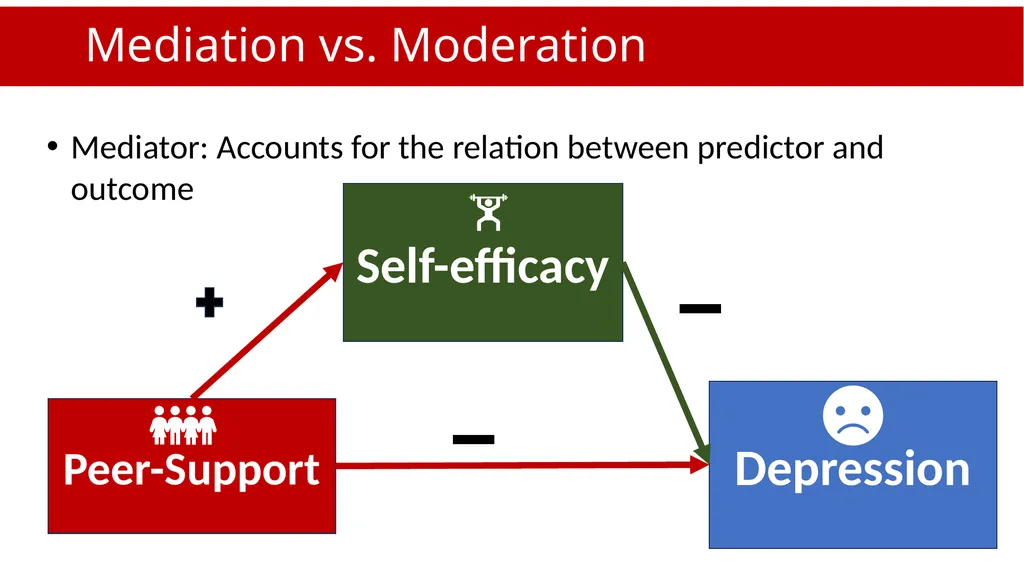
Mediation vs. Moderation Mediator: Accounts for the relation between predictor and outcome Peer-Support Depression Self-efficacy<br>
07
Mediation vs. Moderation Mediator: Accounts for the relation between predictor and outcome Moderator: Qualifies the association between predictor and outcome X Y Mod<br>
08
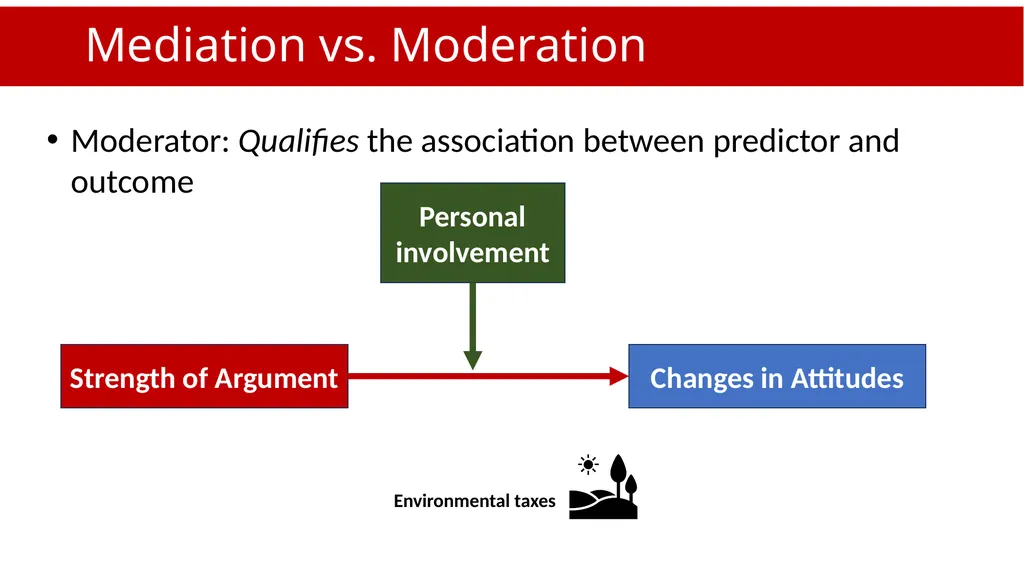
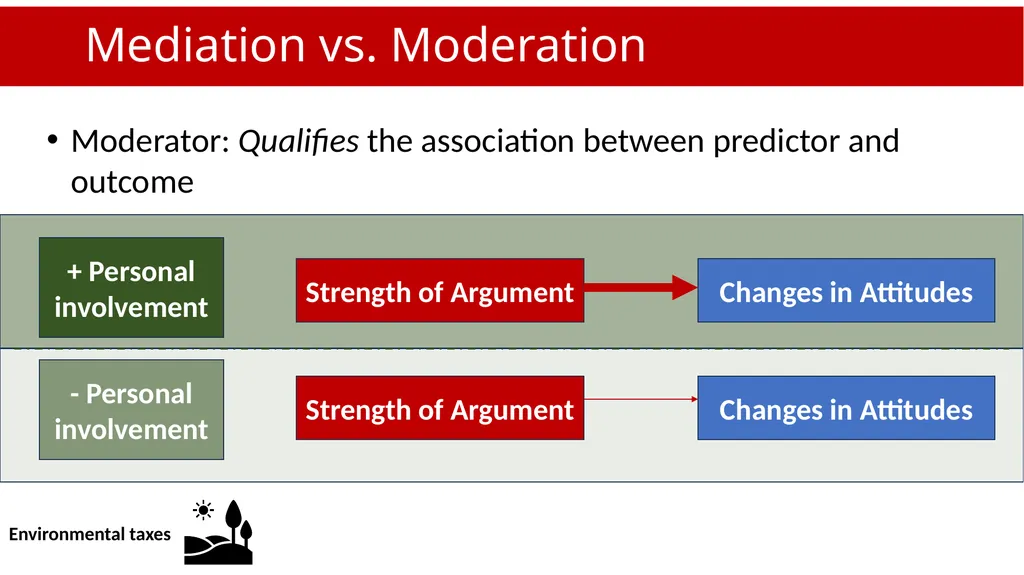
Mediation vs. Moderation Moderator: Qualifies the association between predictor and outcome Strength of Argument Changes in Attitudes Personal involvement Environmental taxes<br>
09
Mediation vs. Moderation Moderator: Qualifies the association between predictor and outcome Strength of Argument Changes in Attitudes + Personal involvement Environmental taxes - Personal involvement Strength of Argument Changes in Attitudes<br>
10
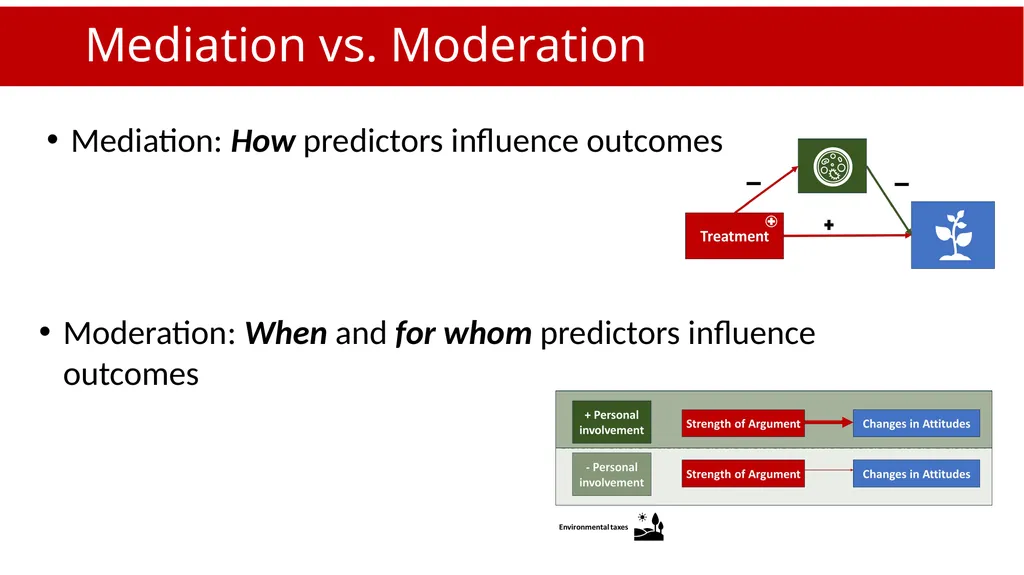
Mediation vs. Moderation Mediation: How predictors influence outcomes Moderation: When and for whom predictors influence outcomes<br>
11
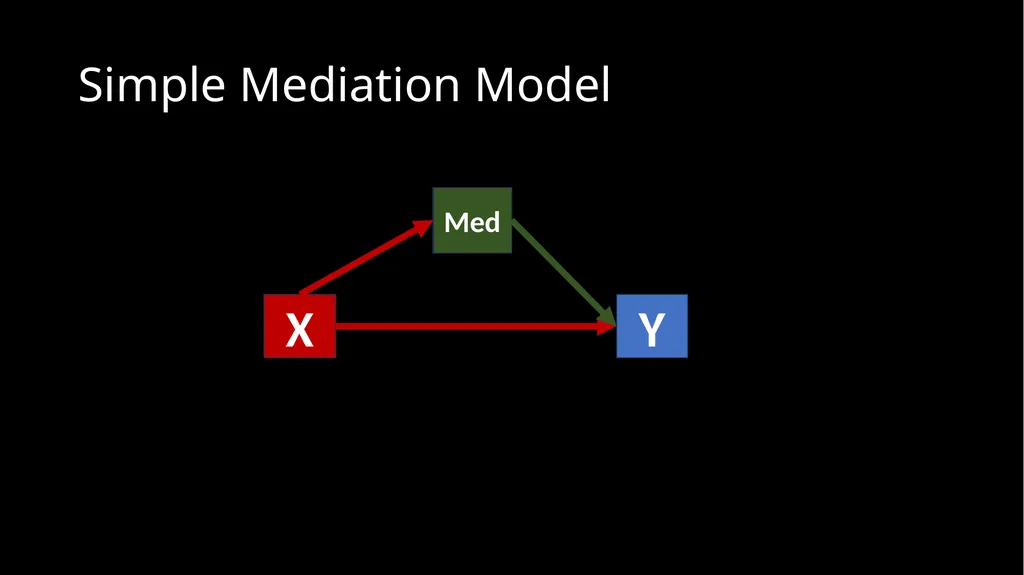
Simple Mediation Model X Y Med<br>
12
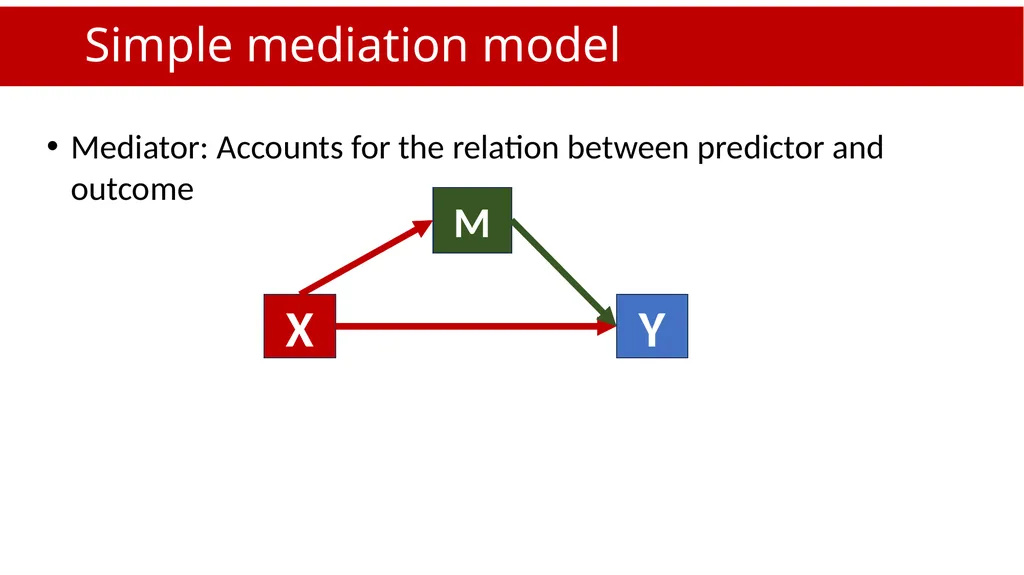
Simple mediation model Mediator: Accounts for the relation between predictor and outcome X Y M<br>
13
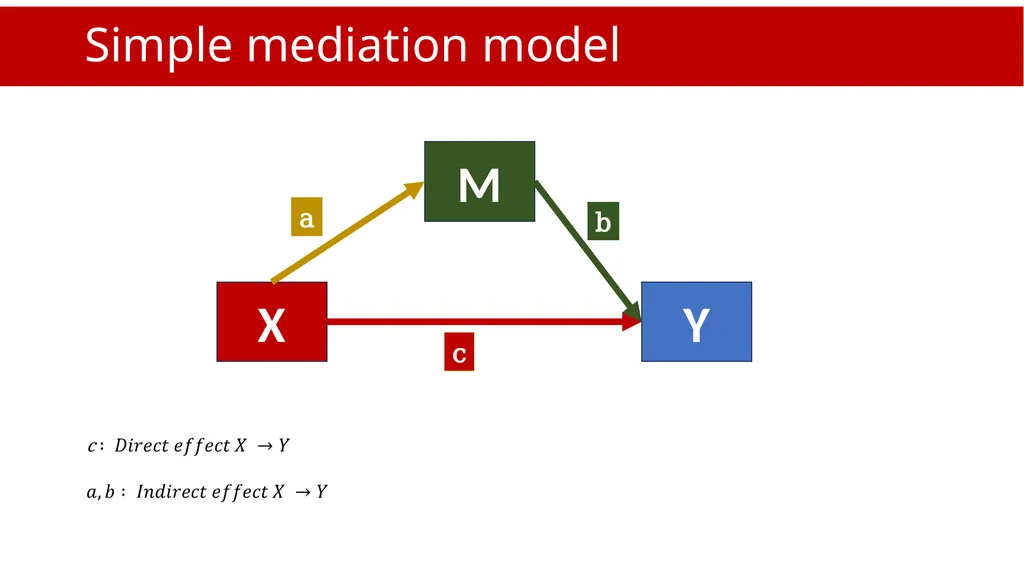
Simple mediation model X Y M a b c<br>
14
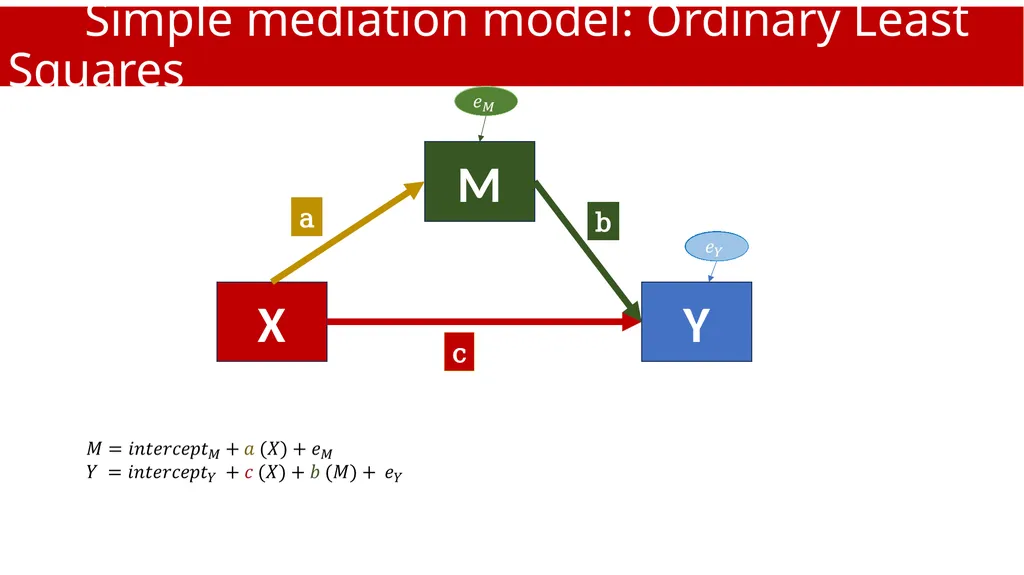
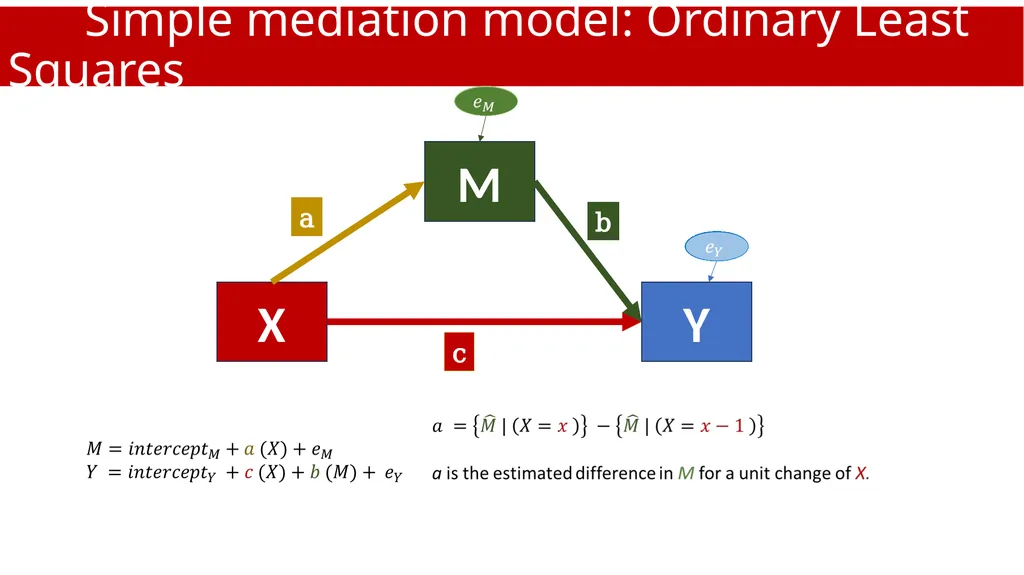
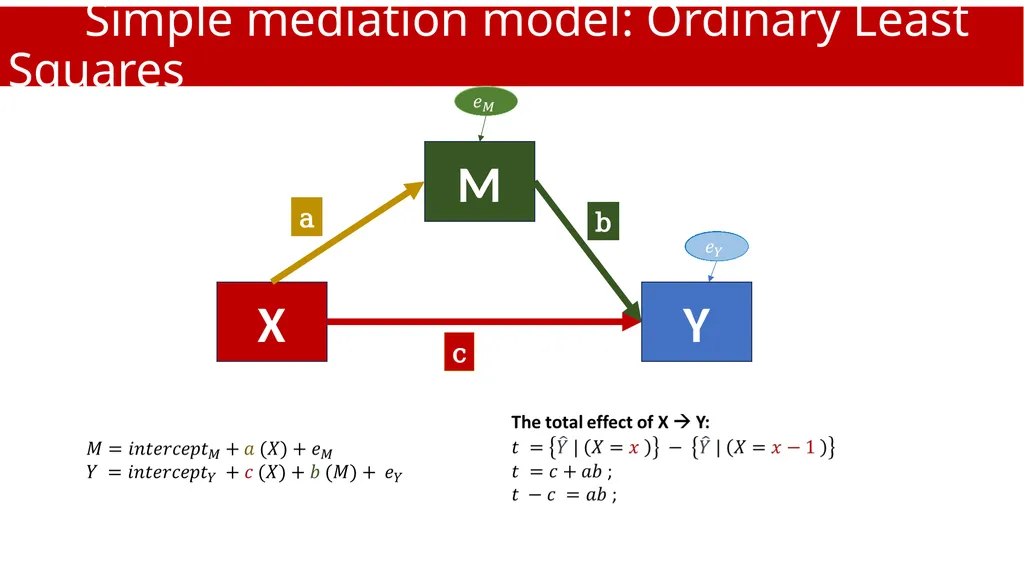
Simple mediation model: Ordinary Least Squares X Y M a b c<br>
15
Simple mediation model: Ordinary Least Squares Y M a b c X<br>
16
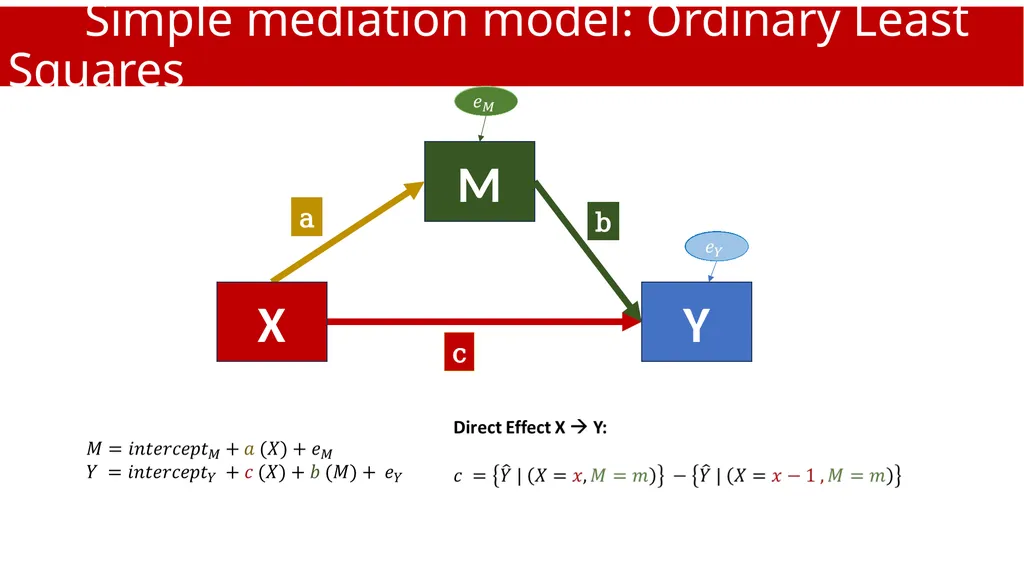
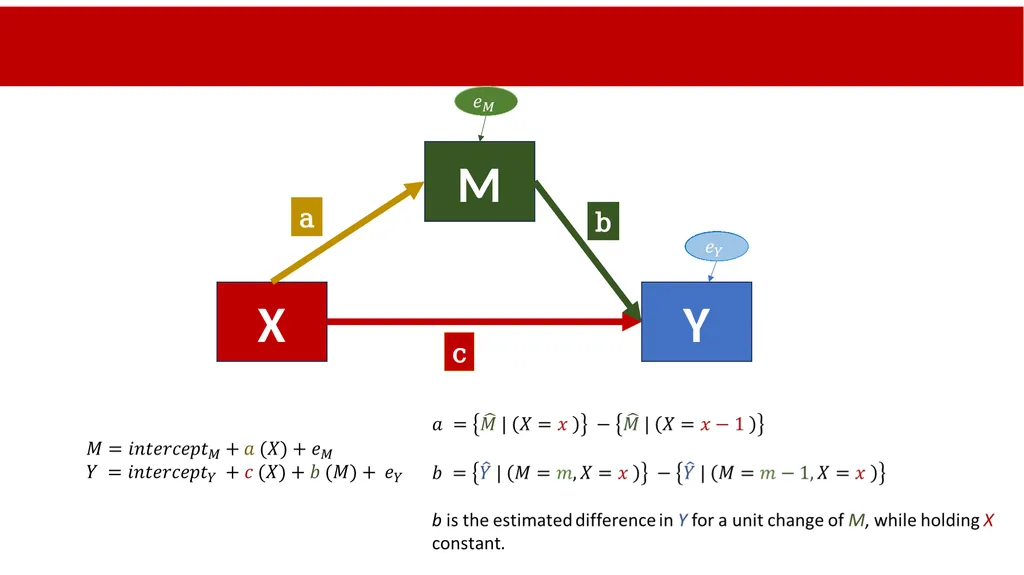
Simple mediation model: Ordinary Least Squares X Y M a b c<br>
17
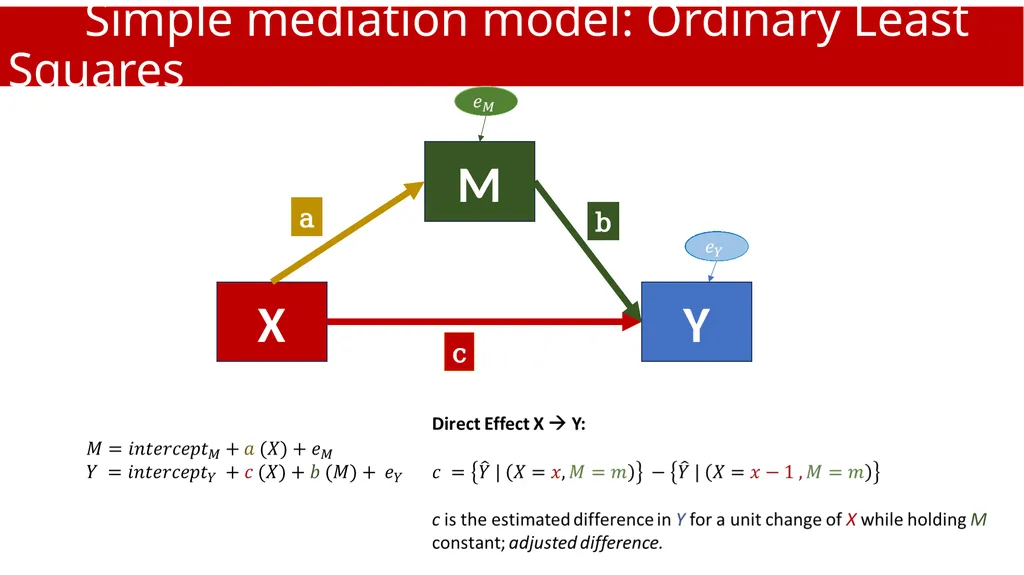
Simple mediation model: Ordinary Least Squares X Y M a b c<br>
19
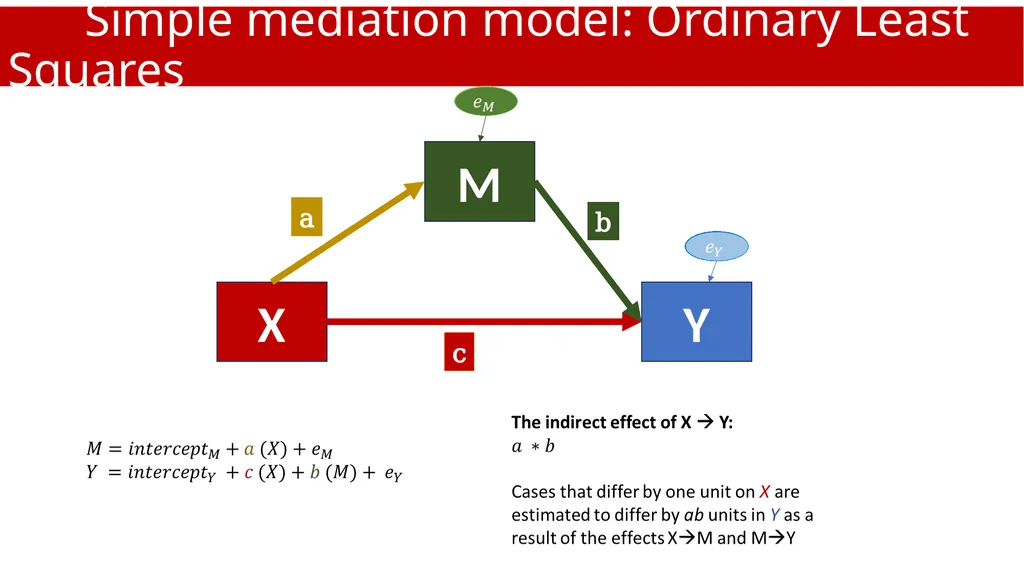
Simple mediation model: Ordinary Least Squares X Y M a b c<br>
20
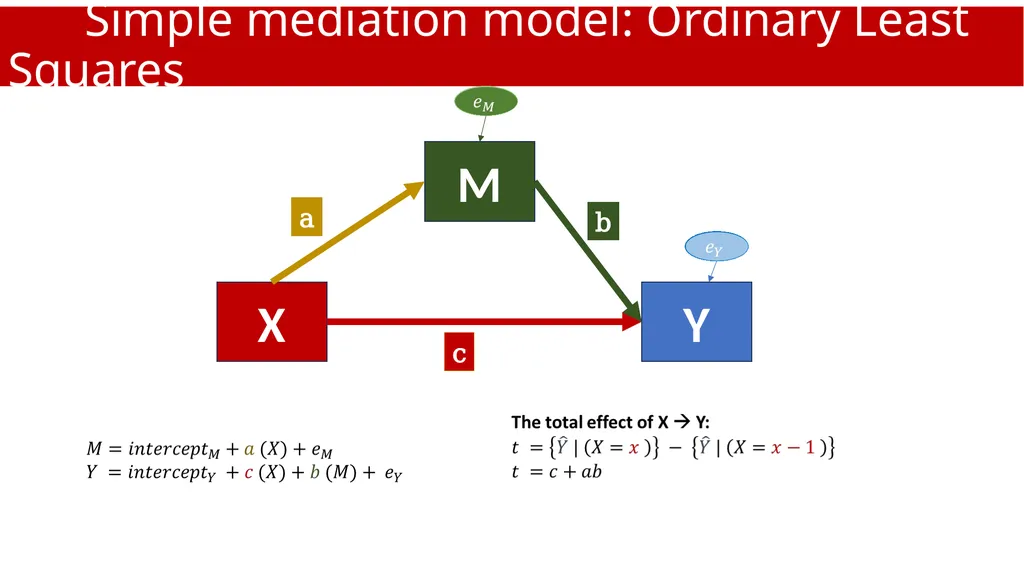
Simple mediation model: Ordinary Least Squares X Y M a b c<br>
21
Simple mediation model: Ordinary Least Squares X Y M a b c<br>
22
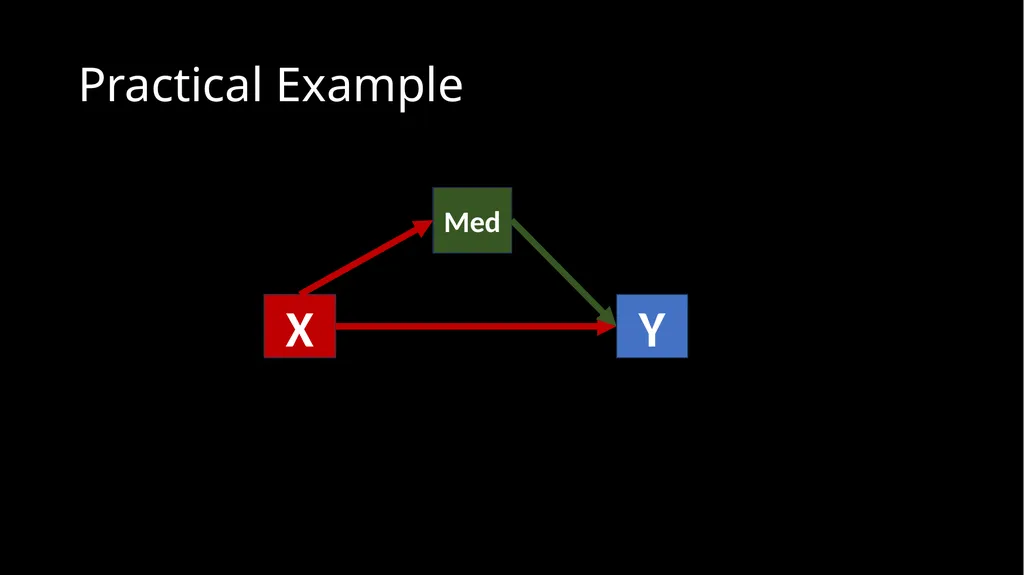
Practical Example X Y Med<br>
23
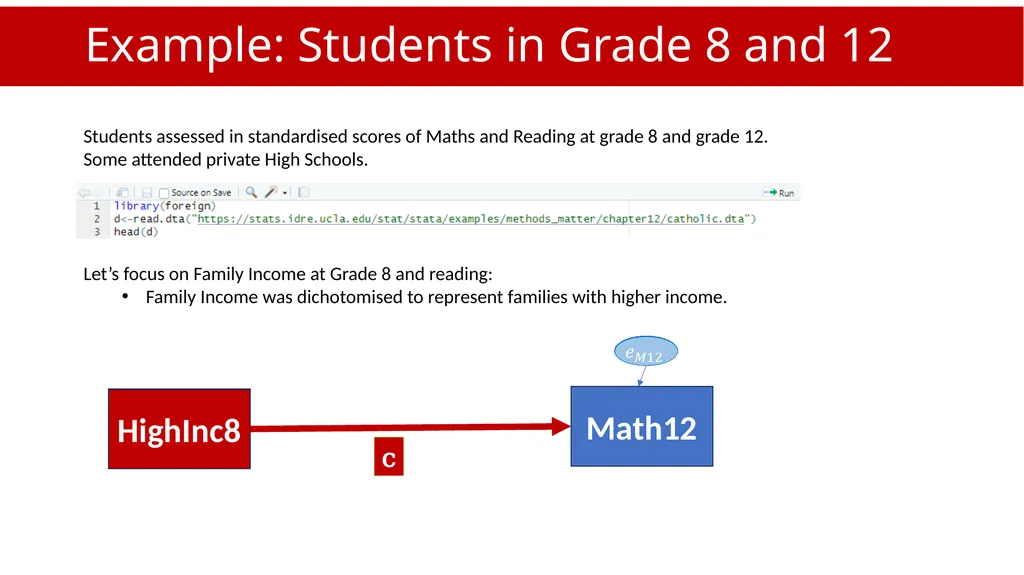
Example: Students in Grade 8 and 12 Students assessed in standardised scores of Maths and Reading at grade 8 and grade 12.
Some attended private High Schools. HighInc8 Math12 c Let’s focus on Family Income at Grade 8 and reading:
Family Income was dichotomised to represent families with higher income.<br>
24
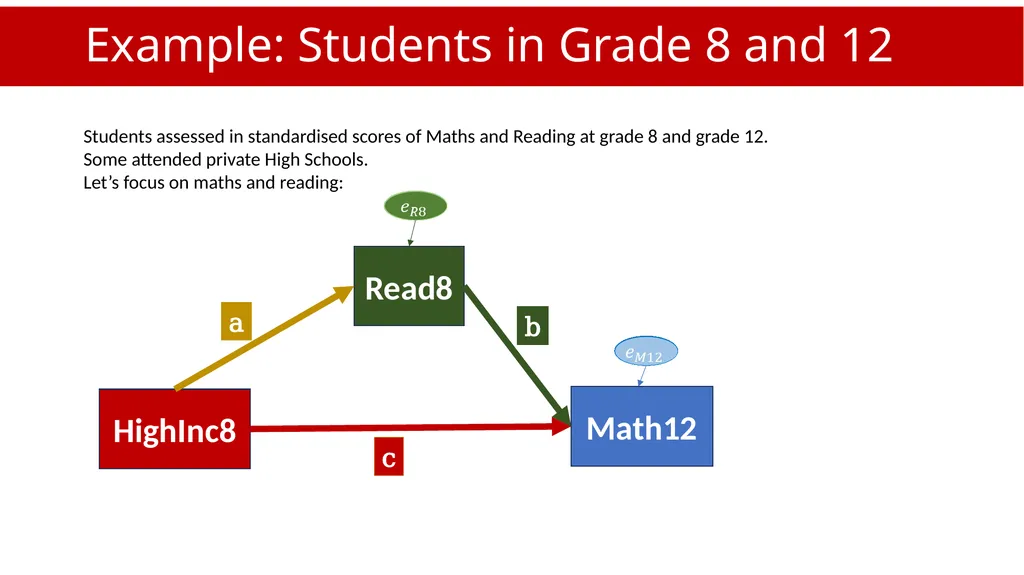
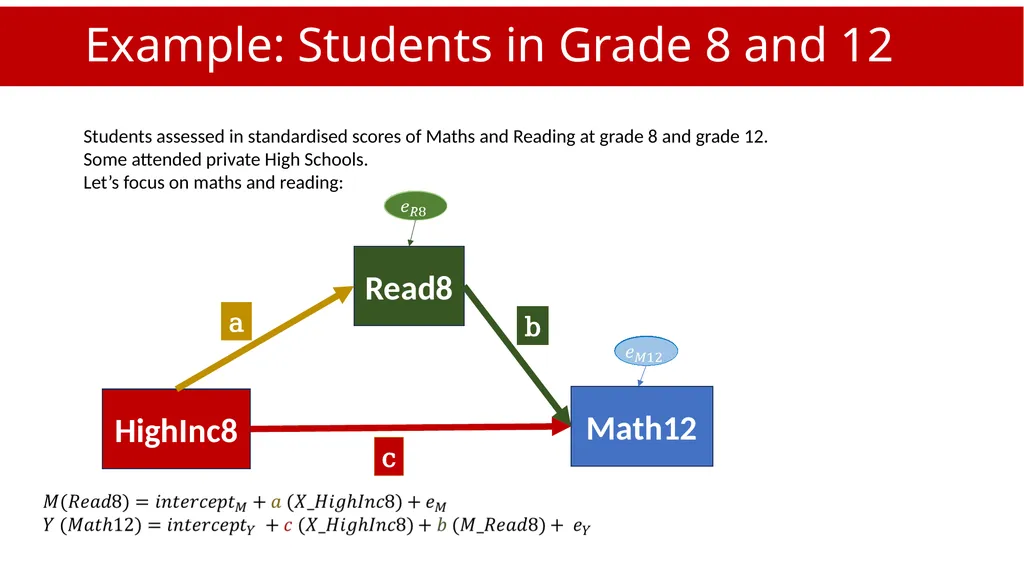
Example: Students in Grade 8 and 12 Students assessed in standardised scores of Maths and Reading at grade 8 and grade 12.
Some attended private High Schools.
Let’s focus on maths and reading: HighInc8 Math12 Read8 a b c<br>
25
Example: Students in Grade 8 and 12 Students assessed in standardised scores of Maths and Reading at grade 8 and grade 12.
Some attended private High Schools.
Let’s focus on maths and reading: HighInc8 Math12 Read8 a b c<br>
26
Example: Students in Grade 8 and 12 Students assessed in standardised scores of Maths and Reading at grade 8 and grade 12.
Some attended private High Schools.
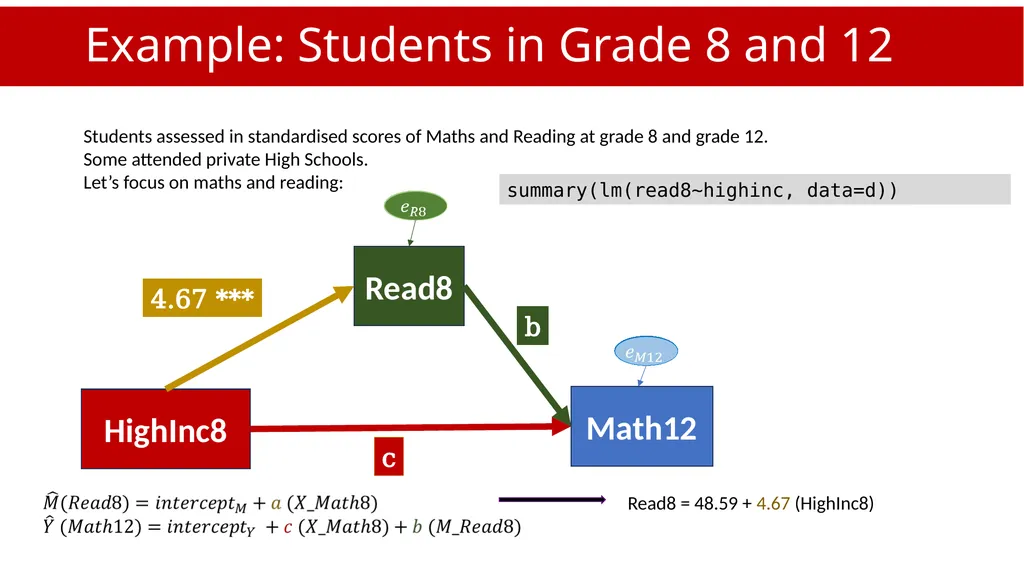
Let’s focus on maths and reading: HighInc8 Math12 Read8 4.67 *** b c Read8 = 48.59 + 4.67 (HighInc8) summary(lm(read8~highinc, data=d))<br>
27
Example: Students in Grade 8 and 12 Students assessed in standardised scores of Maths and Reading at grade 8 and grade 12.
Some attended private High Schools.
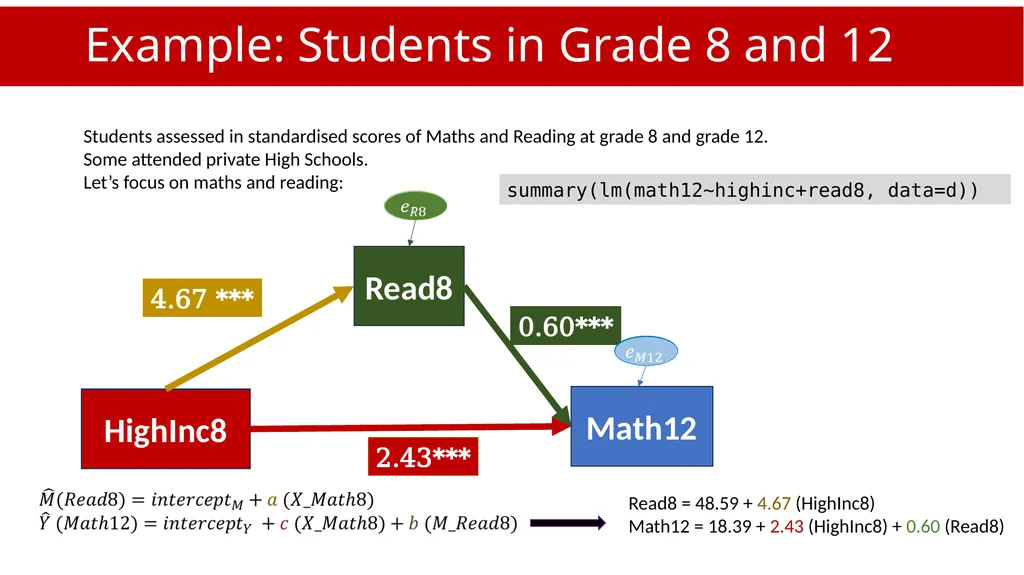
Let’s focus on maths and reading: HighInc8 Math12 Read8 4.67 *** 0.60*** 2.43*** Read8 = 48.59 + 4.67 (HighInc8)
Math12 = 18.39 + 2.43 (HighInc8) + 0.60 (Read8) summary(lm(math12~highinc+read8, data=d))<br>
28
Example: Students in Grade 8 and 12 Students assessed in standardised scores of Maths and Reading at grade 8 and grade 12.
Some attended private High Schools.
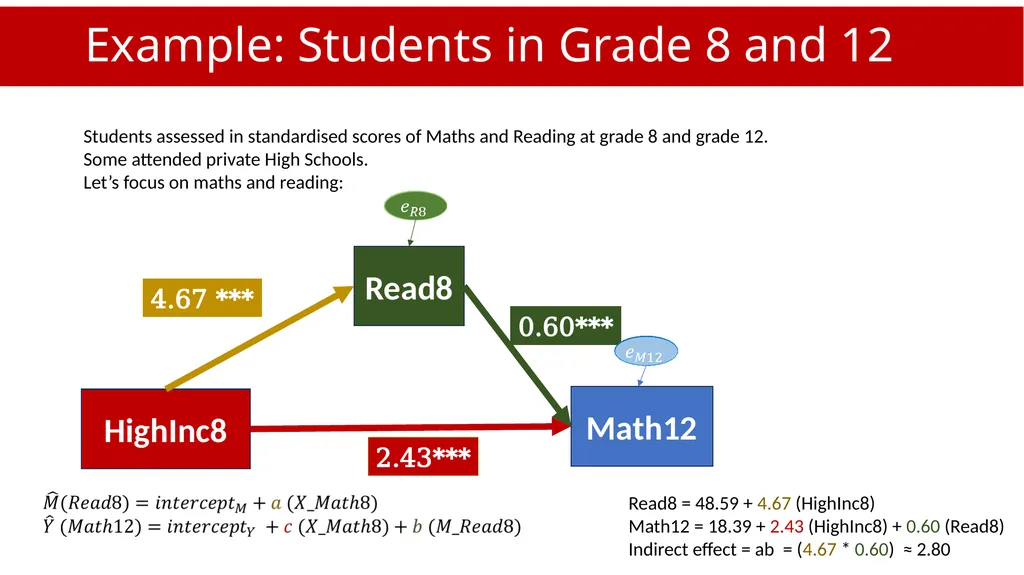
Let’s focus on maths and reading: HighInc8 Math12 Read8 4.67 *** 0.60*** 2.43*** Read8 = 48.59 + 4.67 (HighInc8)
Math12 = 18.39 + 2.43 (HighInc8) + 0.60 (Read8)
Indirect effect = ab = (4.67 * 0.60) ≈ 2.80<br>
29
Example: Students in Grade 8 and 12 Students assessed in standardised scores of Maths and Reading at grade 8 and grade 12.
Some attended private High Schools.
Let’s focus on maths and reading: HighInc8 Math12 Read8 4.67 *** 0.60*** 2.43*** Read8 = 48.59 + 4.67 (HighInc8)
Math12 = 18.39 + 2.43 (HighInc8) + 0.60 (Read8)
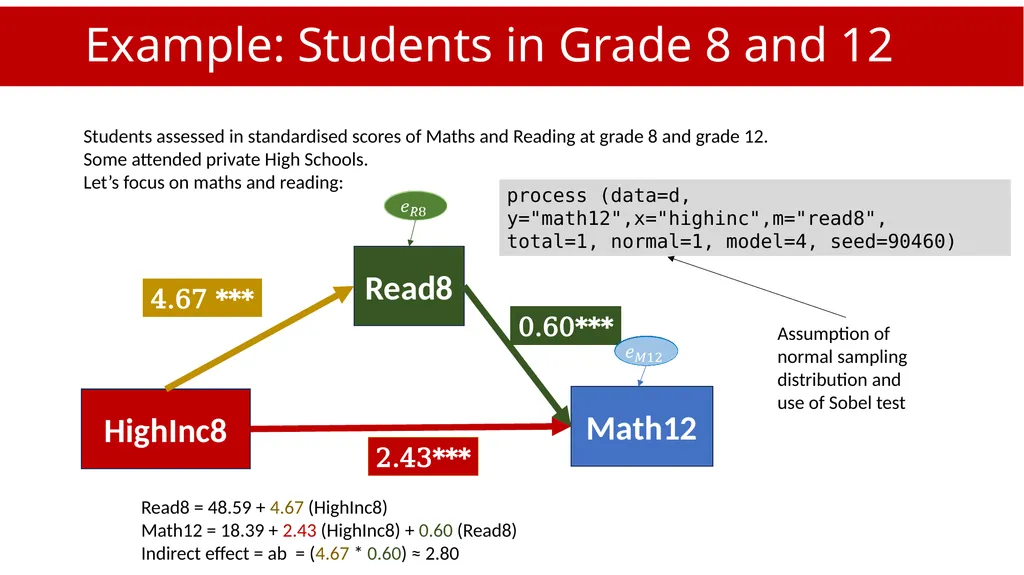
Indirect effect = ab = (4.67 * 0.60) ≈ 2.80 process (data=d,
y="math12",x="highinc",m="read8",
total=1, normal=1, model=4, seed=90460) Assumption of normal sampling distribution and use of Sobel test<br>
30
Example: Students in Grade 8 and 12 Students assessed in standardised scores of Maths and Reading at grade 8 and grade 12.
Some attended private High Schools.
Let’s focus on maths and reading: HighInc8 Math12 Read8 4.67 *** 0.60*** 2.43*** Read8 = 48.59 + 4.67 (HighInc8)
Math12 = 18.39 + 2.43 (HighInc8) + 0.60 (Read8)
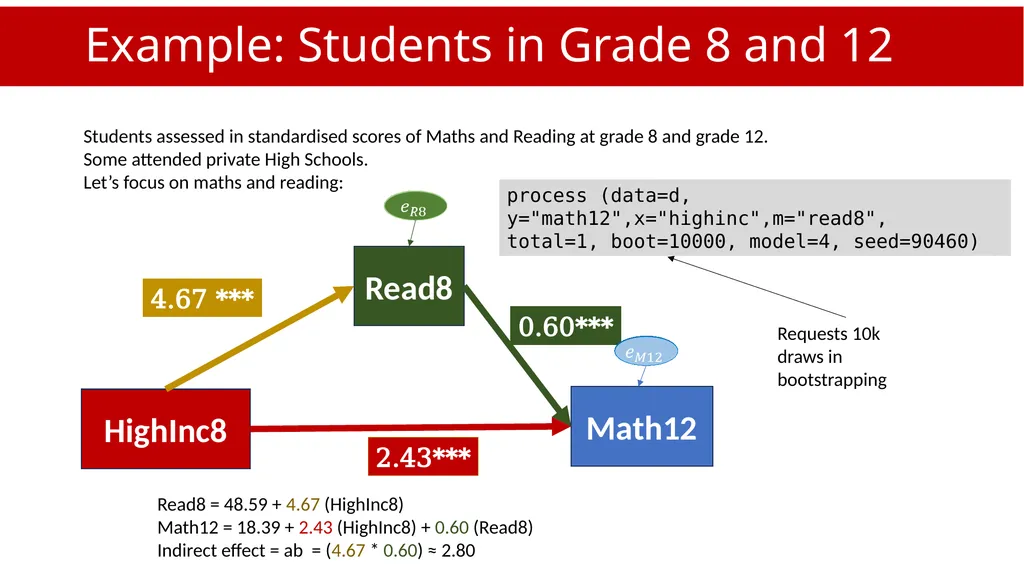
Indirect effect = ab = (4.67 * 0.60) ≈ 2.80 process (data=d,
y="math12",x="highinc",m="read8",
total=1, boot=10000, model=4, seed=90460) Requests 10k draws in bootstrapping<br>
31
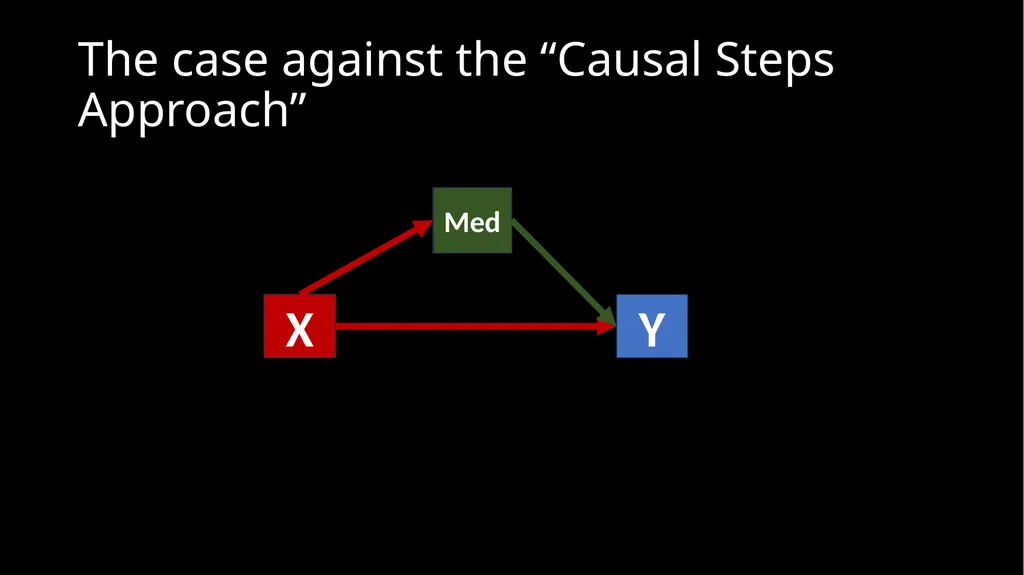
The case against the “Causal Steps Approach” X Y Med<br>
32
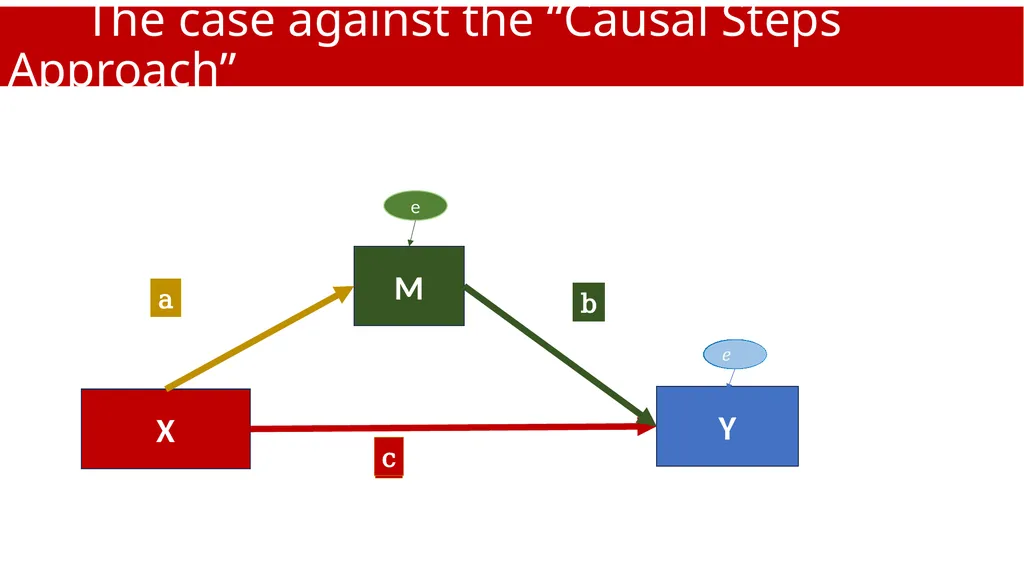
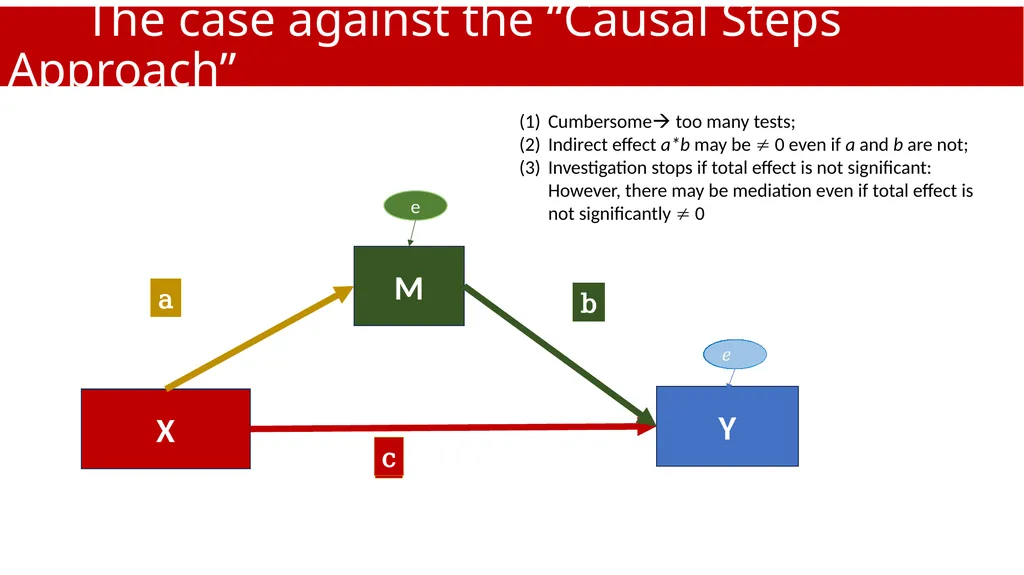
t The case against the “Causal Steps Approach” X Y M e a c b<br>
33
t The case against the “Causal Steps Approach” X Y M e a c b Cumbersome too many tests;
Indirect effect a*b may be 0 even if a and b are not;
Investigation stops if total effect is not significant: However, there may be mediation even if total effect is not significantly 0<br>
34
Summary Mediation vs. Moderation
Example of simple mediation model
The case against the “causal approach”<br>