Analyzing Human Inheritance Pedigrees are graphic representations of an individuals family tree Used to predict the chances of an offspring receiving a trait Used to determine the inheritance pattern of a particular trait How Can We Study
"Analyzing Human Inheritance Pedigrees are graphic" is the property of its rightful owner. Permission is granted to
download and print the materials on this website for personal, non-commercial use only, and to display it
on your personal computer provided you do not modify the materials and that you retain all copyright
notices contained in the materials. By downloading content from our website, you accept the terms of this
agreement.
Presentation Transcript
01
Analyzing Human Inheritance<br>
02
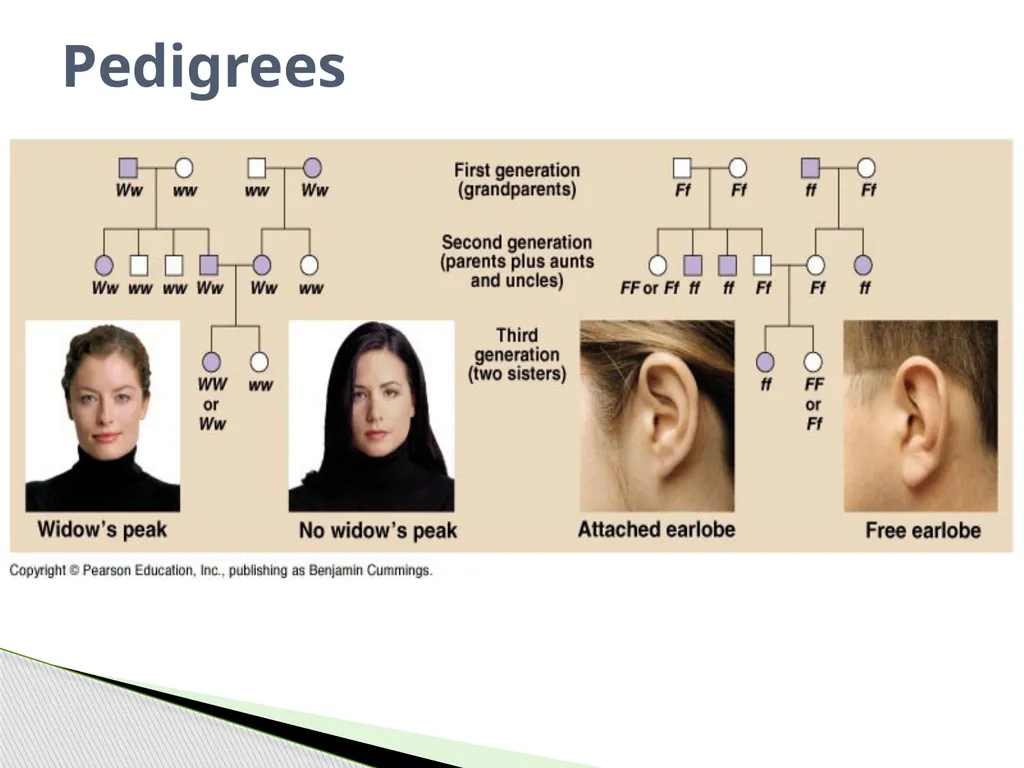
Pedigrees are graphic representations of an individual’s family tree
Used to predict the chances of an offspring receiving a trait
Used to determine the inheritance pattern of a particular trait How Can We Study Human Inheritance?<br>
03
Pedigrees<br>
04
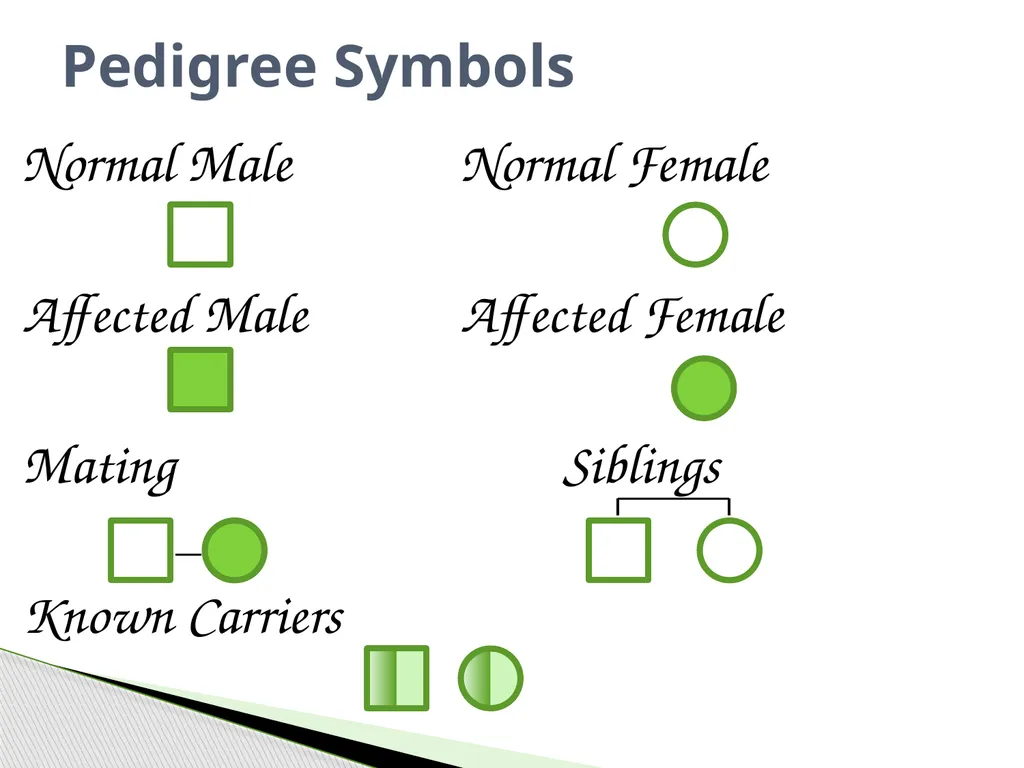
Normal Male Normal Female
Affected Male Affected Female
Mating Siblings
Known Carriers Pedigree Symbols<br>
05
Cystic Fibrosis (CF)
Caused by a recessive allele
A missing membrane protein causes mucous build up in places like the lungs
Most common among Caucasions Inherited Genetic Disorders<br>
06
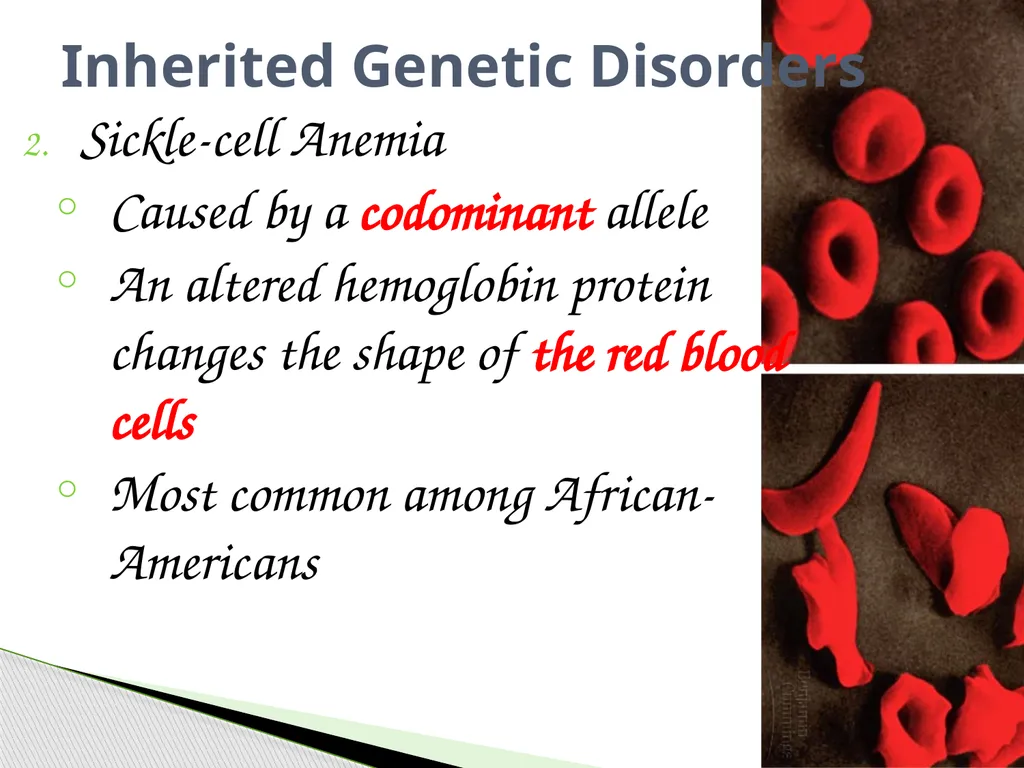
Sickle-cell Anemia
Caused by a codominant allele
An altered hemoglobin protein changes the shape of the red blood cells
Most common among African-Americans Inherited Genetic Disorders<br>
07
Tay-Sachs
Caused by a recessive allele
A missing enzyme causes lipid build up in the brain (death by age 4)
Most common among eastern European Jews Inherited Genetic Disorders<br>
08
Huntington’s
Caused by a dominant allele
Late-onset of symptoms (age 40) result in the deterioration of the nervous system Inherited Genetic Disorders<br>
09
Phenylketonuria (PKU)
Caused by a recessive allele
A missing enzyme prevents the break down of phenylalanine (the build up can cause brain damage)
If caught early, an altered diet can prevent damage Inherited Genetic Disorders<br>
10
Analyzing Chromosomes<br>
11
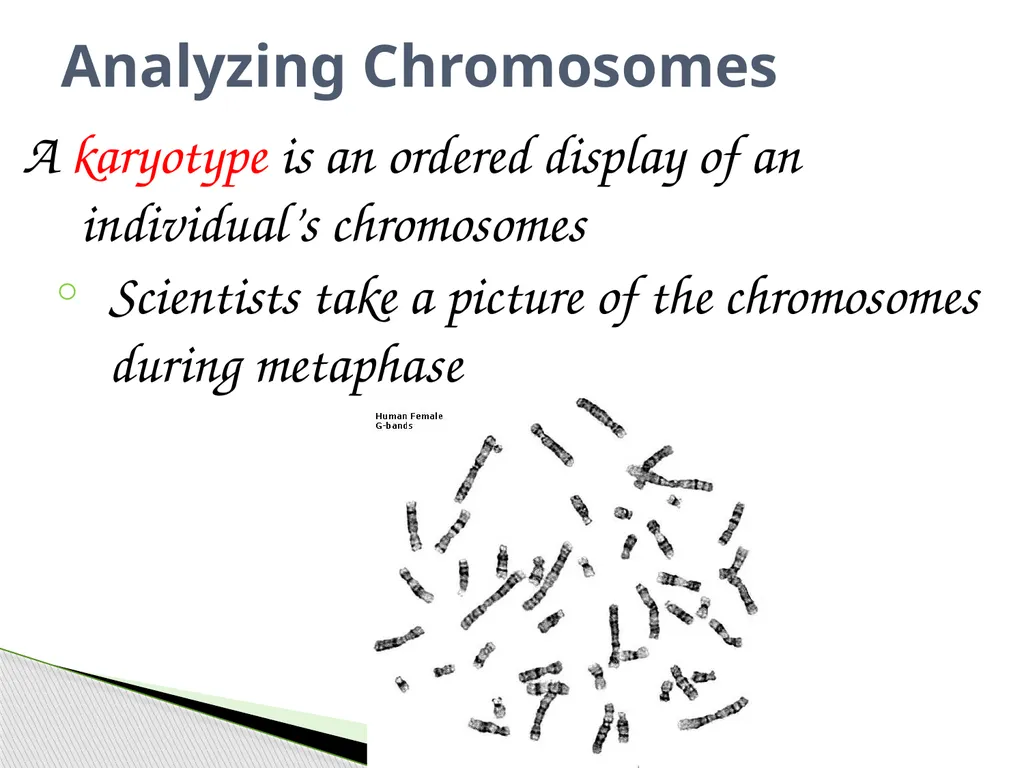
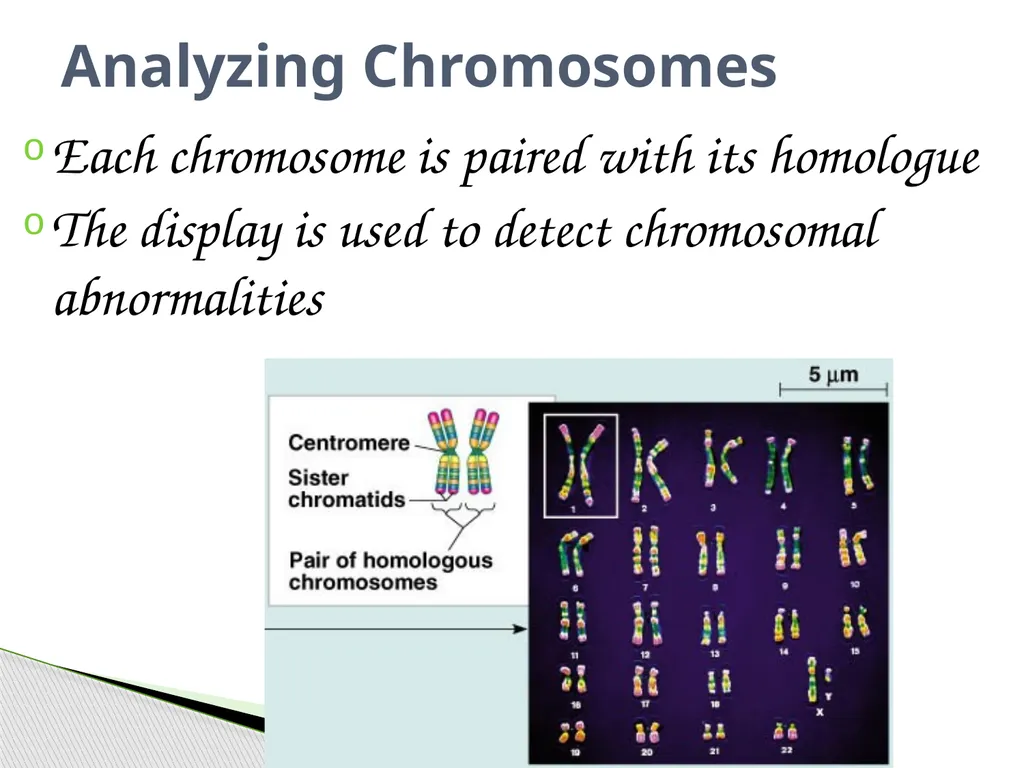
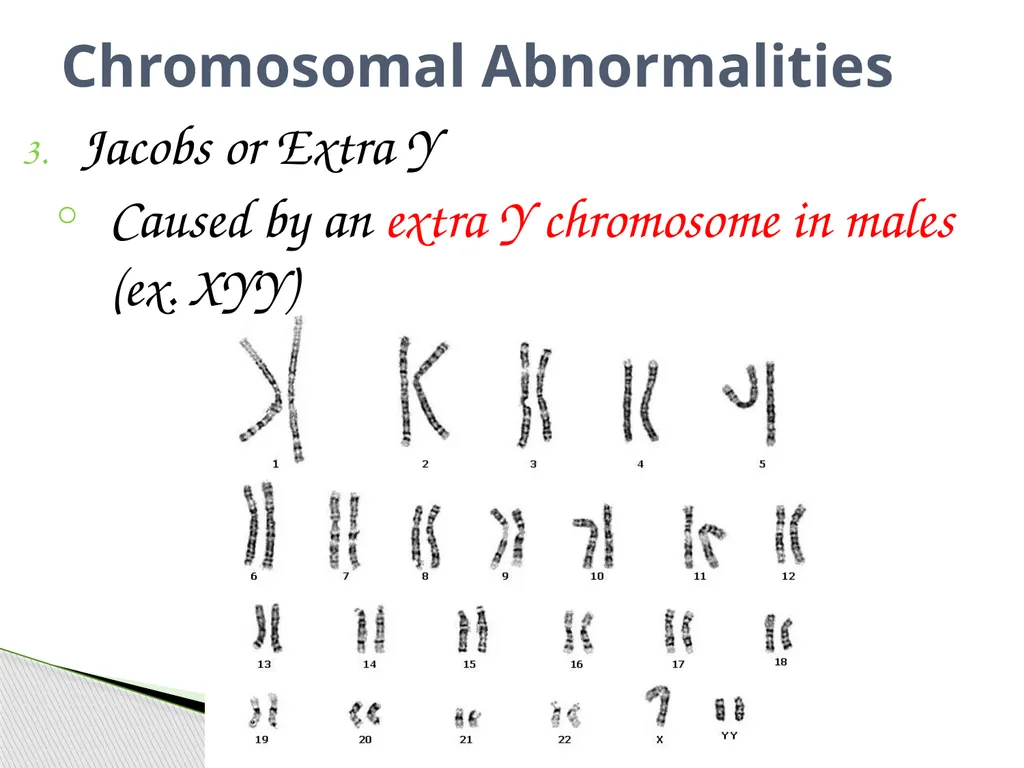
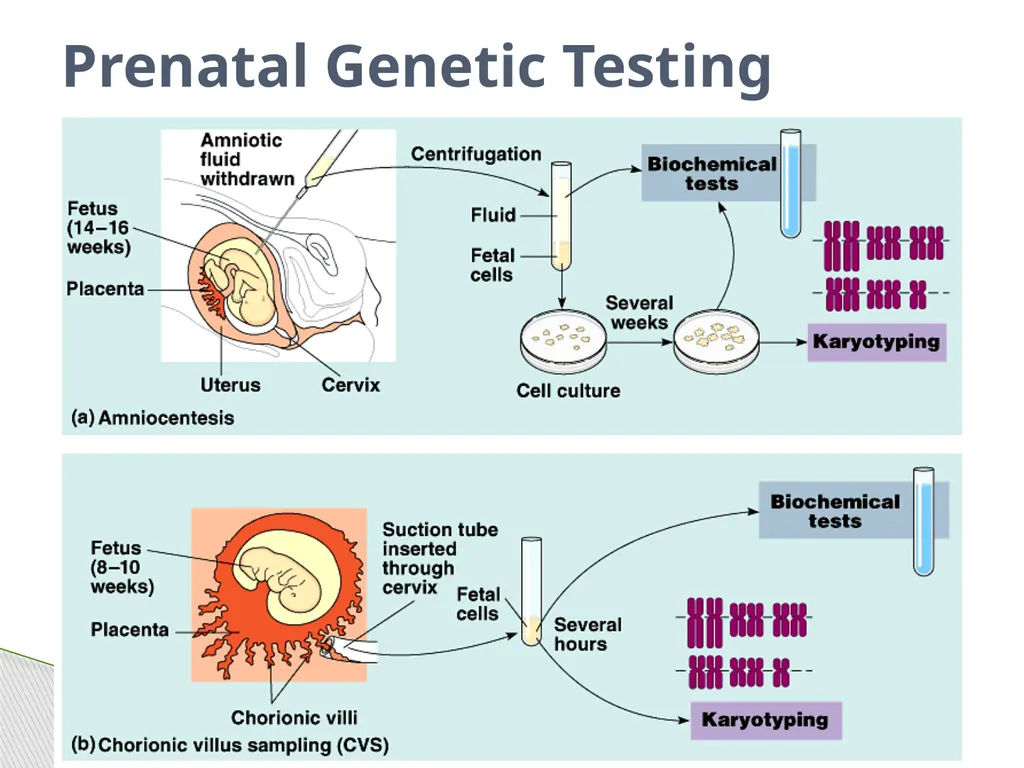
A karyotype is an ordered display of an individual’s chromosomes
Scientists take a picture of the chromosomes during metaphase Analyzing Chromosomes<br>
12
Each chromosome is paired with its homologue
The display is used to detect chromosomal abnormalities Analyzing Chromosomes<br>
13
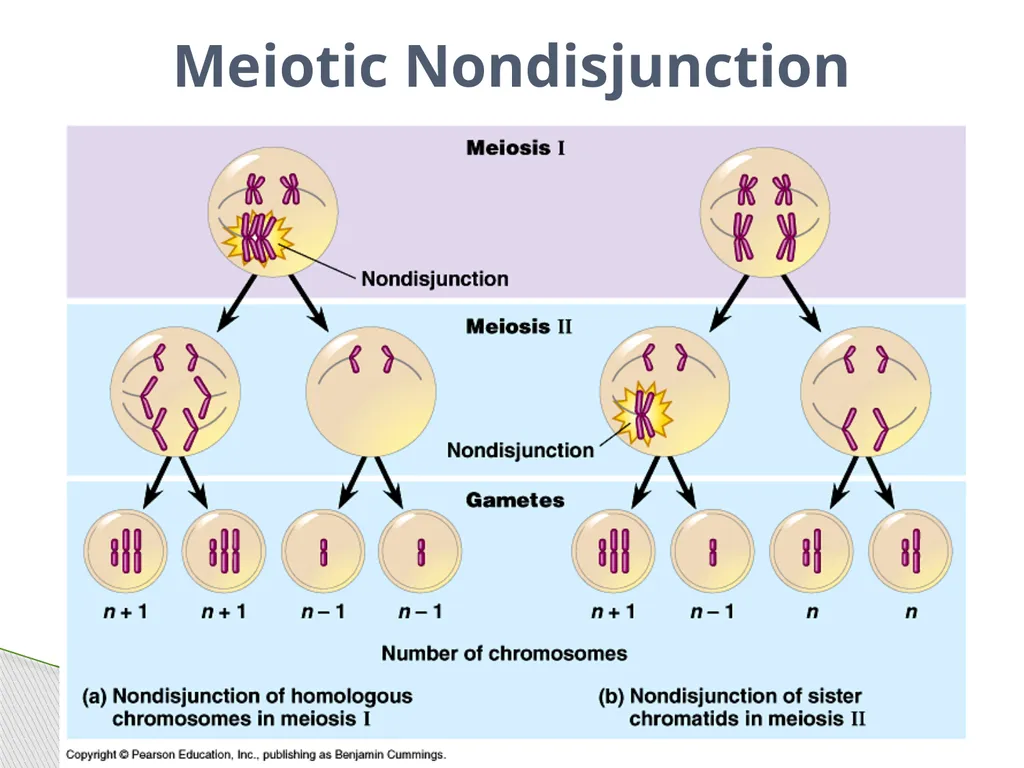
During (meiosis) cell division, sometimes chromosomes fail to separate correctly
Nondisjunction
This produces gametes with incorrect numbers of chromosomes How Do Chromosomal Abnormalities Occur?<br>
14
Meiotic Nondisjunction<br>
15
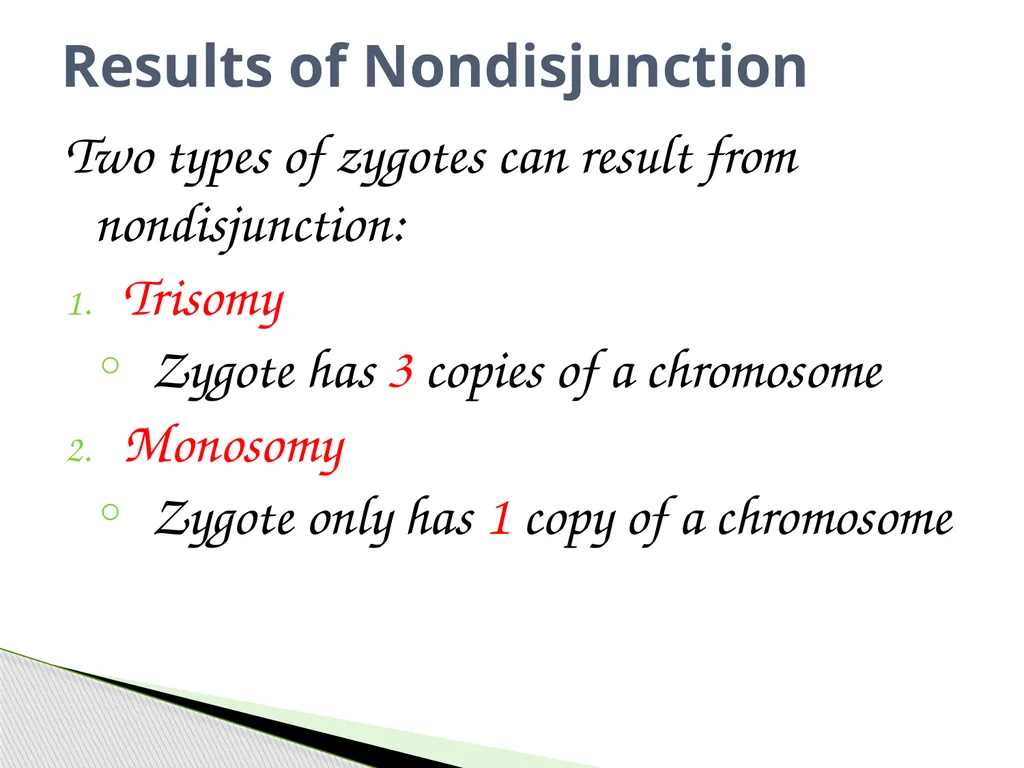
Two types of zygotes can result from nondisjunction:
Trisomy
Zygote has 3 copies of a chromosome
Monosomy
Zygote only has 1 copy of a chromosome Results of Nondisjunction<br>
16
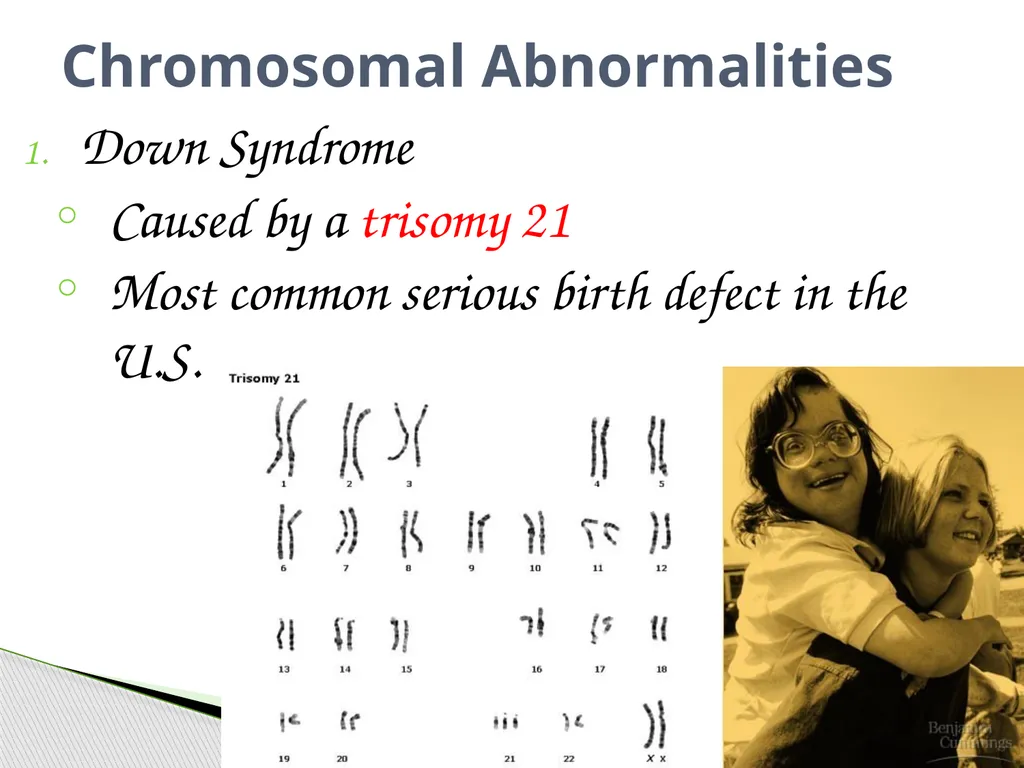
Down Syndrome
Caused by a trisomy 21
Most common serious birth defect in the U.S. Chromosomal Abnormalities<br>
17
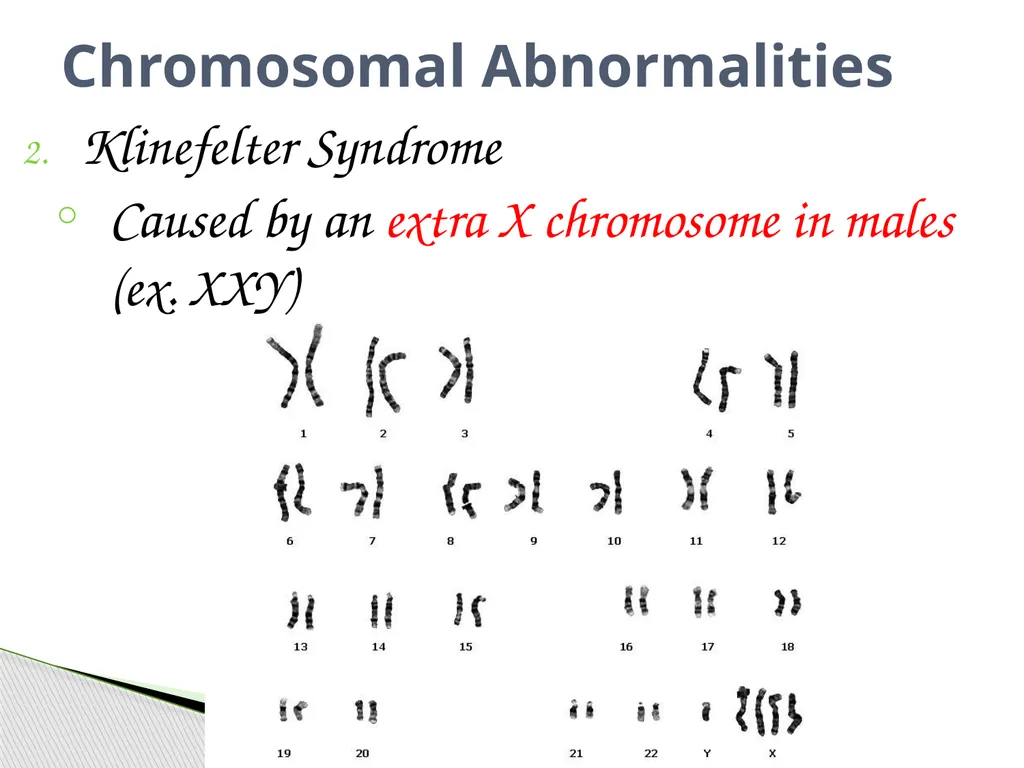
Klinefelter Syndrome
Caused by an extra X chromosome in males (ex. XXY) Chromosomal Abnormalities<br>
18
Jacobs or Extra Y
Caused by an extra Y chromosome in males (ex. XYY) Chromosomal Abnormalities<br>
19
Metafemale or Triple X
Caused by an extra X chromosome in females (ex. XXX)
Turner Syndrome
Caused when females only get one X chromosome (XO)
This is the only viable human
monosomy Chromosomal Abnormalities<br>