
Animal Behavior and Restraint Equine Equine


Description: Animal Behavior and Restraint Equine Equine Characteristics Prey animals Grazers Fight or flight Monofocal and biofocal vision Blind spots Directly in front Directly behind Just In Time Training Animal Behavior and Restraint: Equine Normal
Related Topics
Download Presentation
"Animal Behavior and Restraint Equine Equine" is the property of its rightful owner. Permission is granted to download and print the materials on this website for personal, non-commercial use only, and to display it on your personal computer provided you do not modify the materials and that you retain all copyright notices contained in the materials. By downloading content from our website, you accept the terms of this agreement.
Presentation Transcript
slide1. Animal Behavior
and Restraint Equine<br>
slide2. Equine Characteristics Prey animals
Grazers
Fight or flight
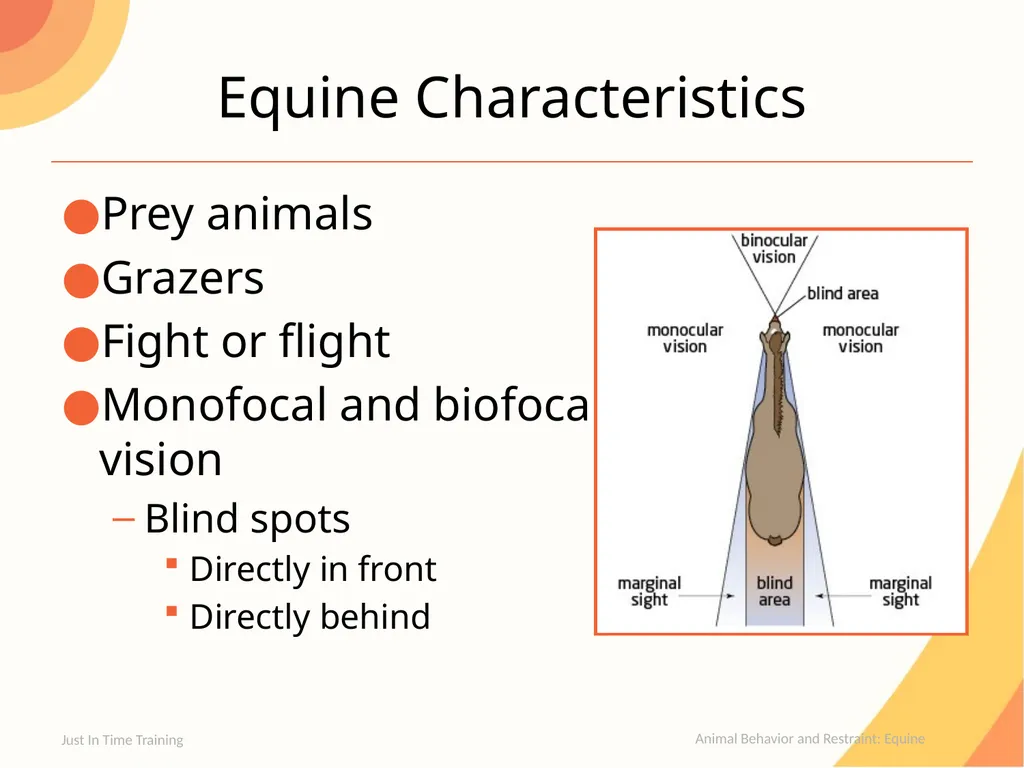
Monofocal and biofocal vision
Blind spots
Directly in front
Directly behind Just In Time Training Animal Behavior and Restraint: Equine<br>
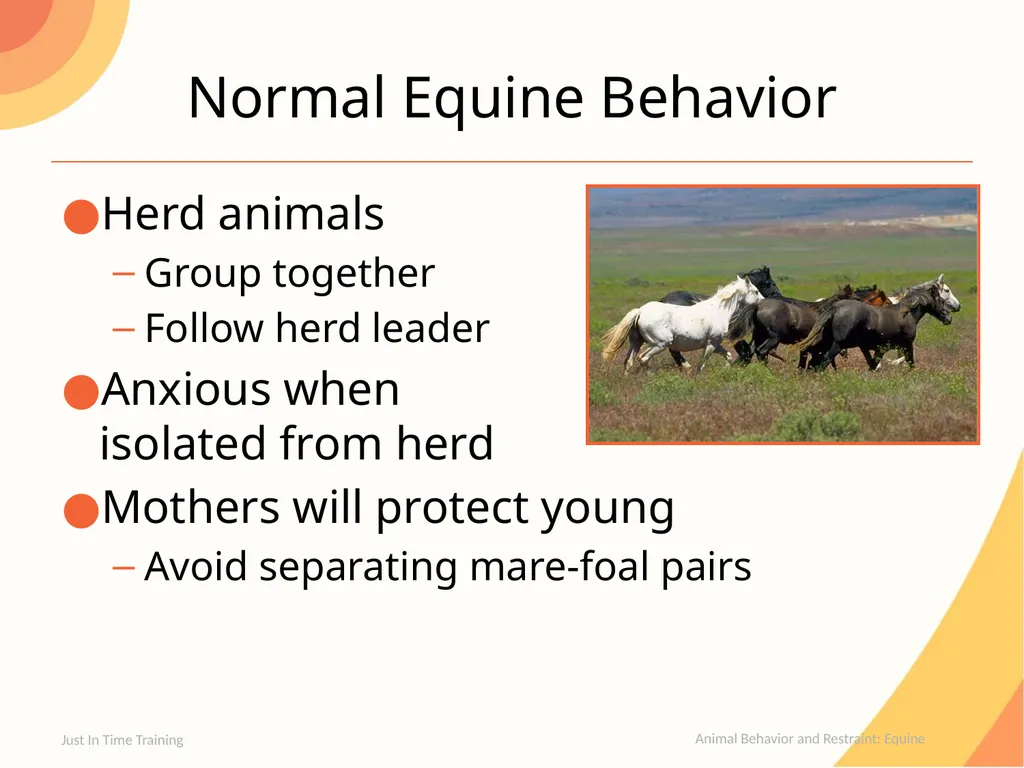
slide3. Normal Equine Behavior Herd animals
Group together
Follow herd leader
Anxious when isolated from herd
Mothers will protect young
Avoid separating mare-foal pairs Just In Time Training Animal Behavior and Restraint: Equine<br>
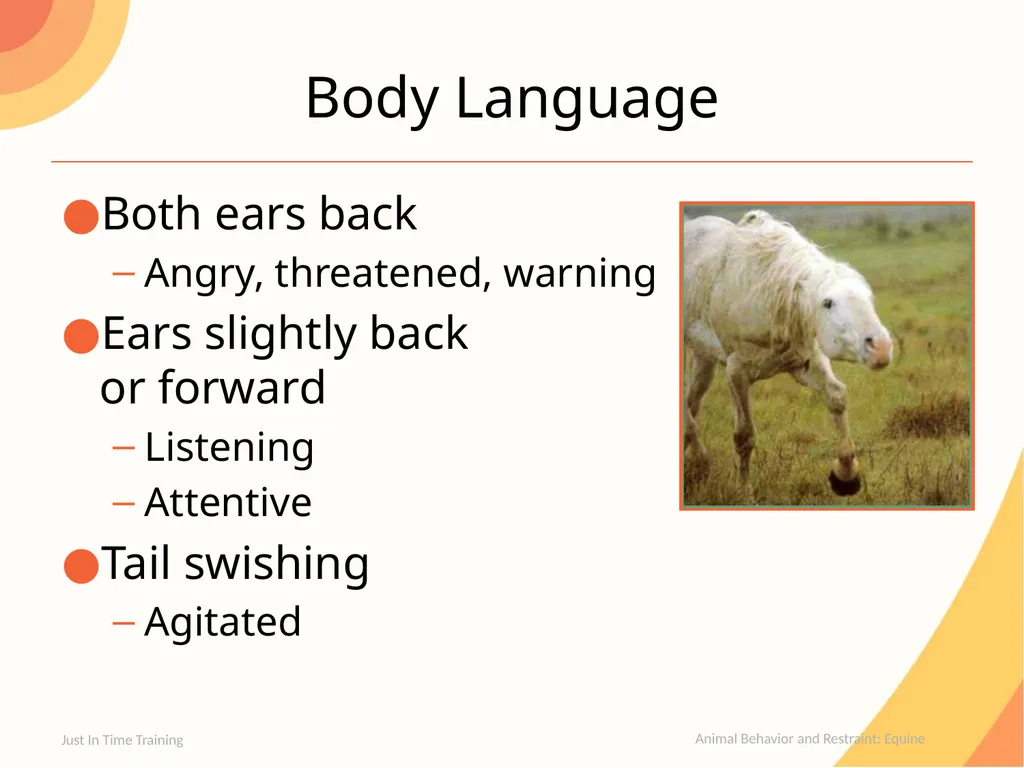
slide4. Body Language Both ears back
Angry, threatened, warning
Ears slightly back or forward
Listening
Attentive
Tail swishing
Agitated Just In Time Training Animal Behavior and Restraint: Equine<br>
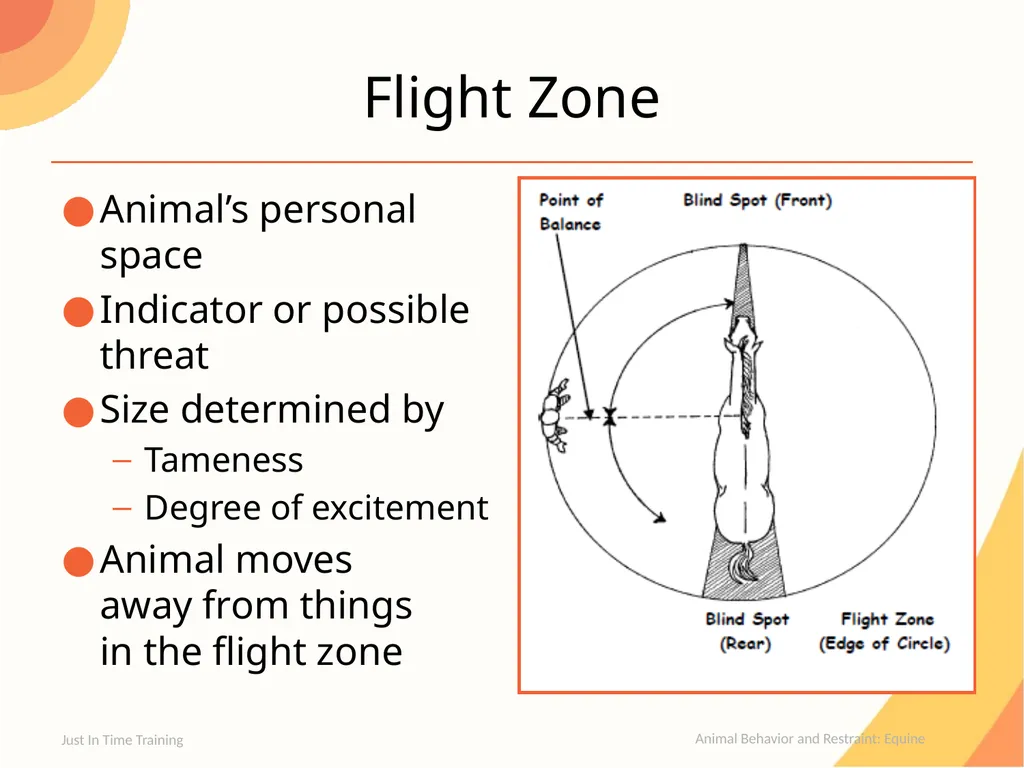
slide5. Flight Zone Animal’s personal space
Indicator or possible threat
Size determined by
Tameness
Degree of excitement
Animal moves away from things in the flight zone Just In Time Training Animal Behavior and Restraint: Equine<br>
slide6. Herding & Moving Equine Startled by sudden movements and loud noises
Avoid
Abuse
Loud noises, yelling
Isolating animals
Distractions
Use slow movements
Easily dominated by humans Just In Time Training Animal Behavior and Restraint: Equine<br>
slide7. Capture & Containment Tame horses
Used to humans
Easily penned
Wild horses
Other horses should be used in containment
Avoid running them Use food to entice them
Be alert of surroundings
Makeshift corrals can be used
Wire fencing should be avoided Just In Time Training Animal Behavior and Restraint: Equine<br>
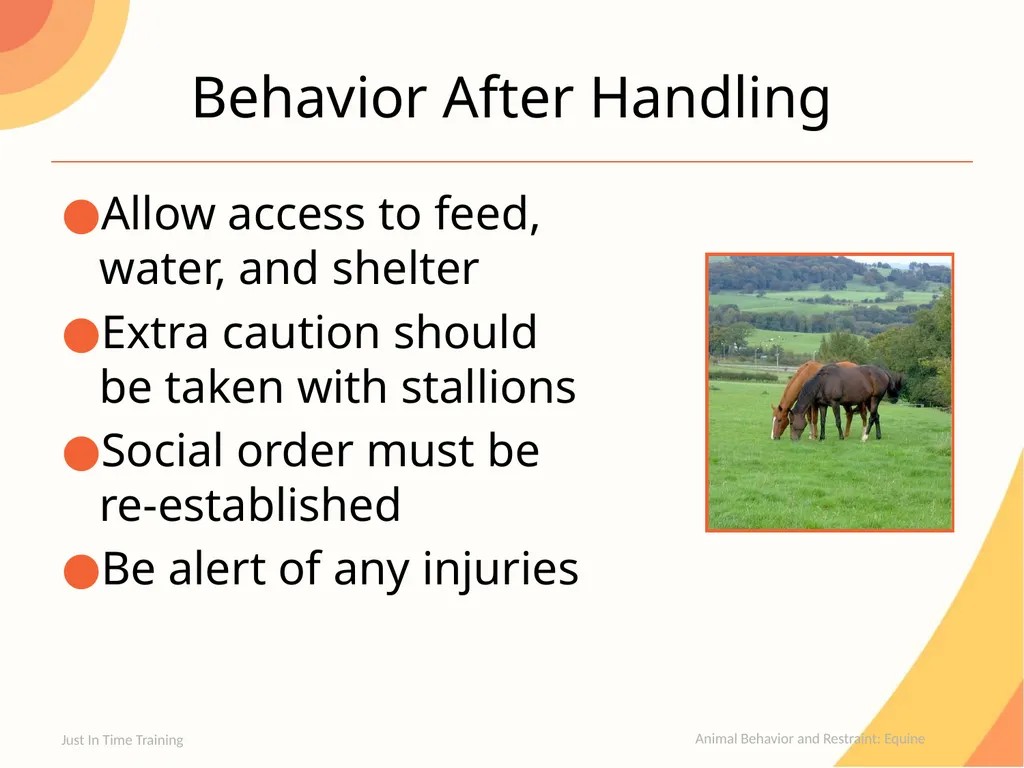
slide8. Behavior After Handling Allow access to feed, water, and shelter
Extra caution should be taken with stallions
Social order must be re-established
Be alert of any injuries Just In Time Training Animal Behavior and Restraint: Equine<br>
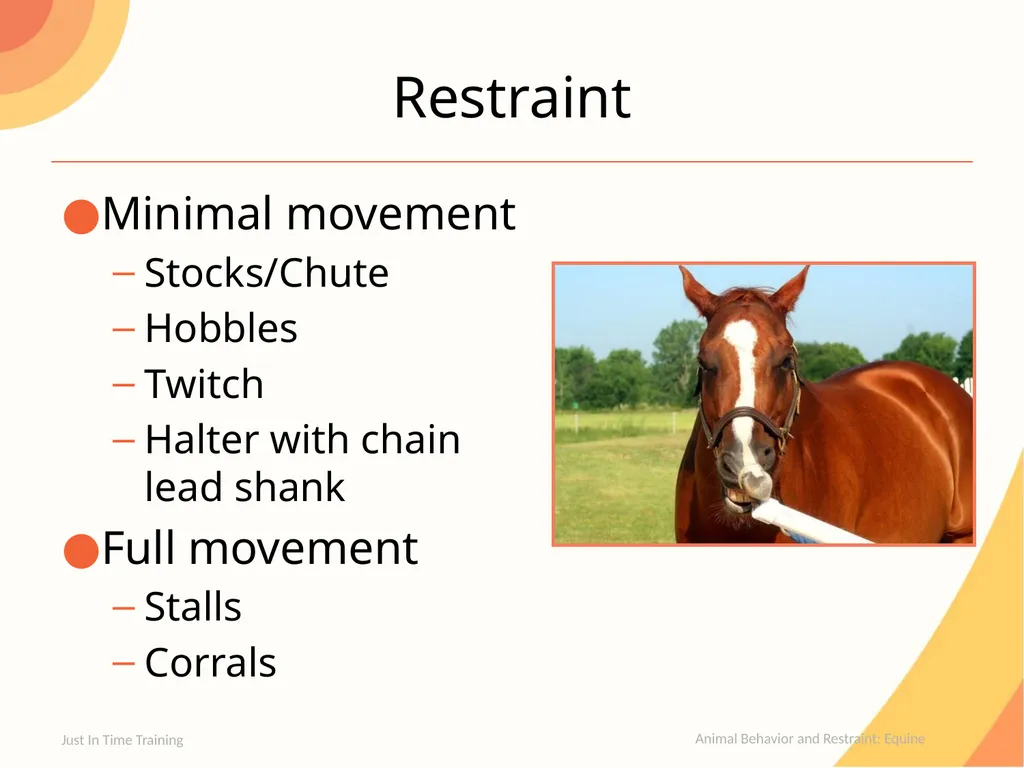
slide9. Restraint Minimal movement
Stocks/Chute
Hobbles
Twitch
Halter with chain lead shank
Full movement
Stalls
Corrals Just In Time Training Animal Behavior and Restraint: Equine<br>
slide10. Special Considerations Monitor in conditions of high heat or extreme cold
Farrier needs
Winter weather requires special equipment
Heaters or wind break
Gritty, non-slip substances
Blankets Just In Time Training Animal Behavior and Restraint: Equine<br>
slide11. Safety Avoid injuries from equine
Kicks
Striking
Rearing
Biting
Can inflict injuries with head
Will run over you if desperate Just In Time Training Animal Behavior and Restraint: Equine<br>
slide12. Additional Information Approaching a Horse Safely. American Youth Horse Council. http://ayhc.com/uploads/approaching-a-horse-safely-2011.pdf
Approaching, Catching, and Haltering Horses Safely. Rutgers Cooperative Extension. http://nasdonline.org/static_content/documents/1043/d000837.pdf
Techniques for Safely Handling Horses. Oklahoma Cooperative Extension Service. http://pods.dasnr.okstate.edu/docushare/dsweb/Get/Document-2755/E-960.pdf Just In Time Training Animal Behavior and Restraint: Equine<br>
slide13. Acknowledgments Development of this presentation was by the Center for Food Security and Public Health at Iowa State University through funding from the Multi-State Partnership for Security in Agriculture Authors: Abbey Smith, Glenda Dvorak, DVM, MPH, DACVPM<br>
slide2. Equine Characteristics Prey animals
Grazers
Fight or flight
Monofocal and biofocal vision
Blind spots
Directly in front
Directly behind Just In Time Training Animal Behavior and Restraint: Equine<br>
slide3. Normal Equine Behavior Herd animals
Group together
Follow herd leader
Anxious when isolated from herd
Mothers will protect young
Avoid separating mare-foal pairs Just In Time Training Animal Behavior and Restraint: Equine<br>
slide4. Body Language Both ears back
Angry, threatened, warning
Ears slightly back or forward
Listening
Attentive
Tail swishing
Agitated Just In Time Training Animal Behavior and Restraint: Equine<br>
slide5. Flight Zone Animal’s personal space
Indicator or possible threat
Size determined by
Tameness
Degree of excitement
Animal moves away from things in the flight zone Just In Time Training Animal Behavior and Restraint: Equine<br>
slide6. Herding & Moving Equine Startled by sudden movements and loud noises
Avoid
Abuse
Loud noises, yelling
Isolating animals
Distractions
Use slow movements
Easily dominated by humans Just In Time Training Animal Behavior and Restraint: Equine<br>
slide7. Capture & Containment Tame horses
Used to humans
Easily penned
Wild horses
Other horses should be used in containment
Avoid running them Use food to entice them
Be alert of surroundings
Makeshift corrals can be used
Wire fencing should be avoided Just In Time Training Animal Behavior and Restraint: Equine<br>
slide8. Behavior After Handling Allow access to feed, water, and shelter
Extra caution should be taken with stallions
Social order must be re-established
Be alert of any injuries Just In Time Training Animal Behavior and Restraint: Equine<br>
slide9. Restraint Minimal movement
Stocks/Chute
Hobbles
Twitch
Halter with chain lead shank
Full movement
Stalls
Corrals Just In Time Training Animal Behavior and Restraint: Equine<br>
slide10. Special Considerations Monitor in conditions of high heat or extreme cold
Farrier needs
Winter weather requires special equipment
Heaters or wind break
Gritty, non-slip substances
Blankets Just In Time Training Animal Behavior and Restraint: Equine<br>
slide11. Safety Avoid injuries from equine
Kicks
Striking
Rearing
Biting
Can inflict injuries with head
Will run over you if desperate Just In Time Training Animal Behavior and Restraint: Equine<br>
slide12. Additional Information Approaching a Horse Safely. American Youth Horse Council. http://ayhc.com/uploads/approaching-a-horse-safely-2011.pdf
Approaching, Catching, and Haltering Horses Safely. Rutgers Cooperative Extension. http://nasdonline.org/static_content/documents/1043/d000837.pdf
Techniques for Safely Handling Horses. Oklahoma Cooperative Extension Service. http://pods.dasnr.okstate.edu/docushare/dsweb/Get/Document-2755/E-960.pdf Just In Time Training Animal Behavior and Restraint: Equine<br>
slide13. Acknowledgments Development of this presentation was by the Center for Food Security and Public Health at Iowa State University through funding from the Multi-State Partnership for Security in Agriculture Authors: Abbey Smith, Glenda Dvorak, DVM, MPH, DACVPM<br>