"AQA GCSE Chemistry Required Practicals –" is the property of its rightful owner. Permission is granted to
download and print the materials on this website for personal, non-commercial use only, and to display it
on your personal computer provided you do not modify the materials and that you retain all copyright
notices contained in the materials. By downloading content from our website, you accept the terms of this
agreement.
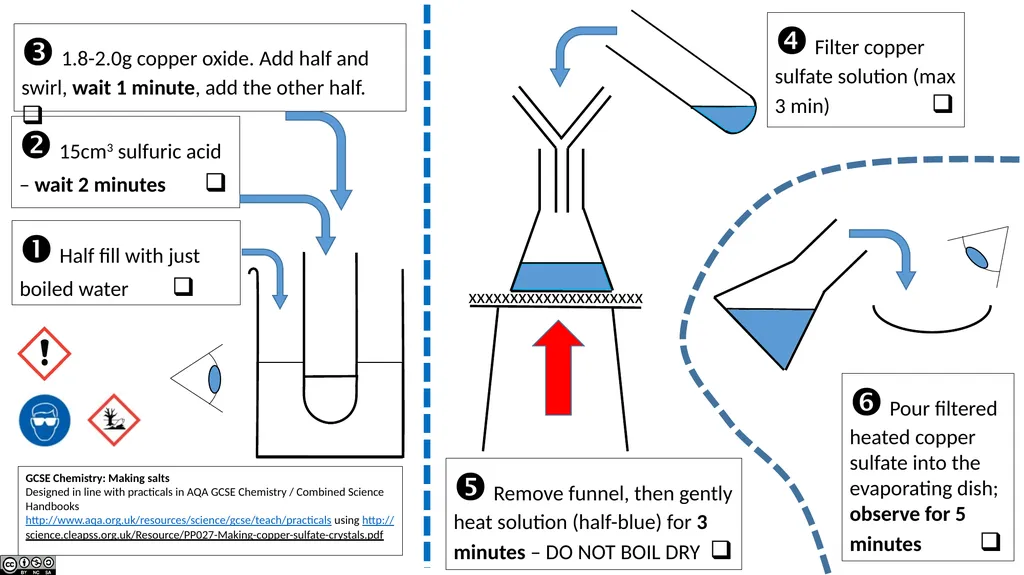
Half fill with just boiled water 15cm3 sulfuric acid – wait 2 minutes 1.8-2.0g copper oxide. Add half and swirl, wait 1 minute, add the other half. xxxxxxxxxxxxxxxxxxxxx Filter copper sulfate solution (max 3 min) Remove funnel, then gently heat solution (half-blue) for 3 minutes – DO NOT BOIL DRY Pour filtered heated copper sulfate into the evaporating dish; observe for 5 minutes GCSE Chemistry: Making salts
Designed in line with practicals in AQA GCSE Chemistry / Combined Science Handbooks
http://www.aqa.org.uk/resources/science/gcse/teach/practicals using http://science.cleapss.org.uk/Resource/PP027-Making-copper-sulfate-crystals.pdf<br>
03
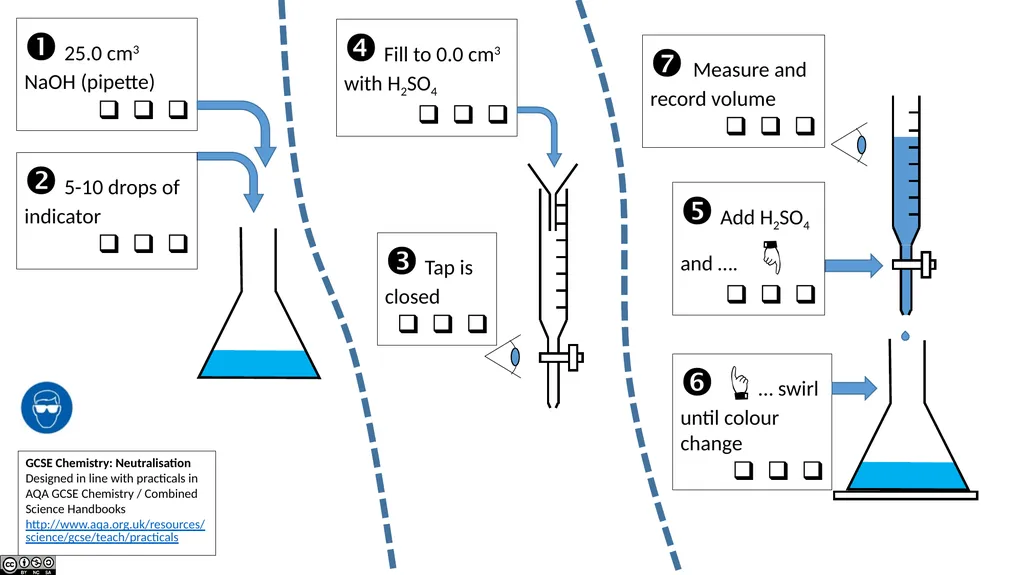
25.0 cm3 NaOH (pipette)
5-10 drops of indicator
Fill to 0.0 cm3 with H2SO4
Tap is closed
Add H2SO4 and ….
… swirl until colour change
Measure and record volume
GCSE Chemistry: Neutralisation
Designed in line with practicals in AQA GCSE Chemistry / Combined Science Handbooks
http://www.aqa.org.uk/resources/science/gcse/teach/practicals<br>
04
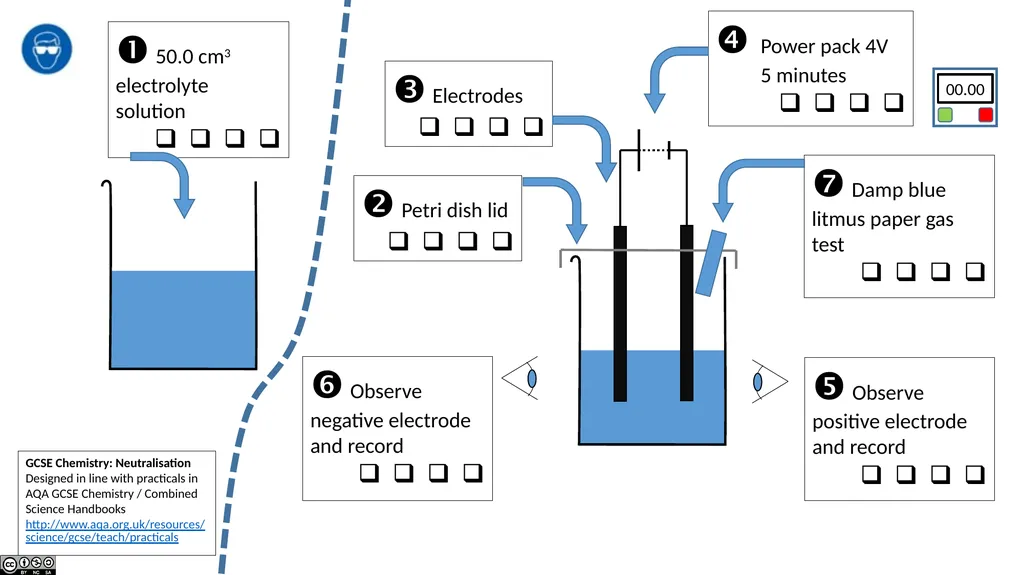
50.0 cm3 electrolyte solution
Petri dish lid
Electrodes
Power pack 4V 5 minutes
Observe positive electrode and record
Observe negative electrode and record
Damp blue litmus paper gas test
GCSE Chemistry: Neutralisation
Designed in line with practicals in AQA GCSE Chemistry / Combined Science Handbooks
http://www.aqa.org.uk/resources/science/gcse/teach/practicals<br>
05
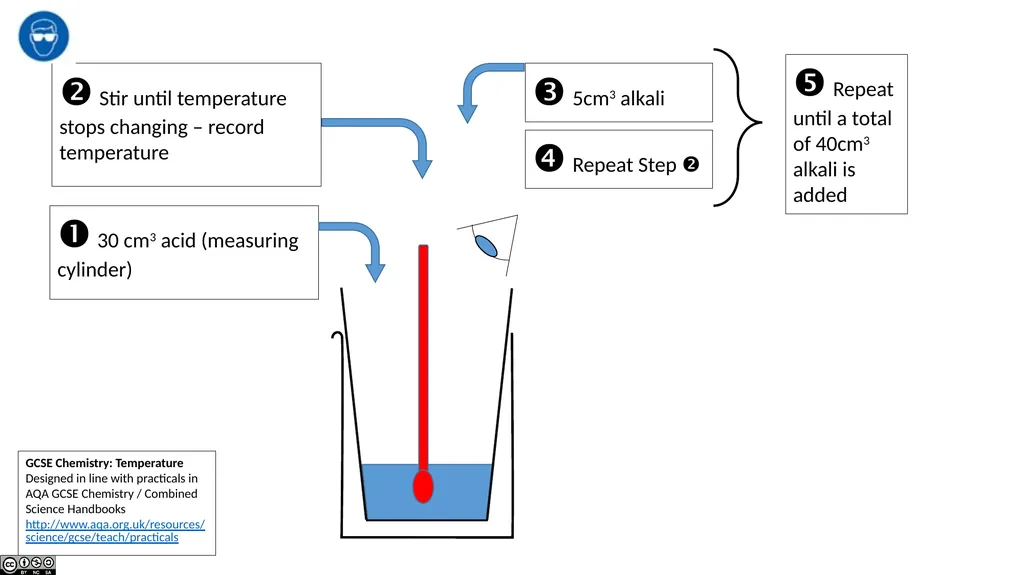
30 cm3 acid (measuring cylinder) 5cm3 alkali Stir until temperature stops changing – record temperature Repeat Step Repeat until a total of 40cm3 alkali is added GCSE Chemistry: Temperature
Designed in line with practicals in AQA GCSE Chemistry / Combined Science Handbooks
http://www.aqa.org.uk/resources/science/gcse/teach/practicals<br>
06
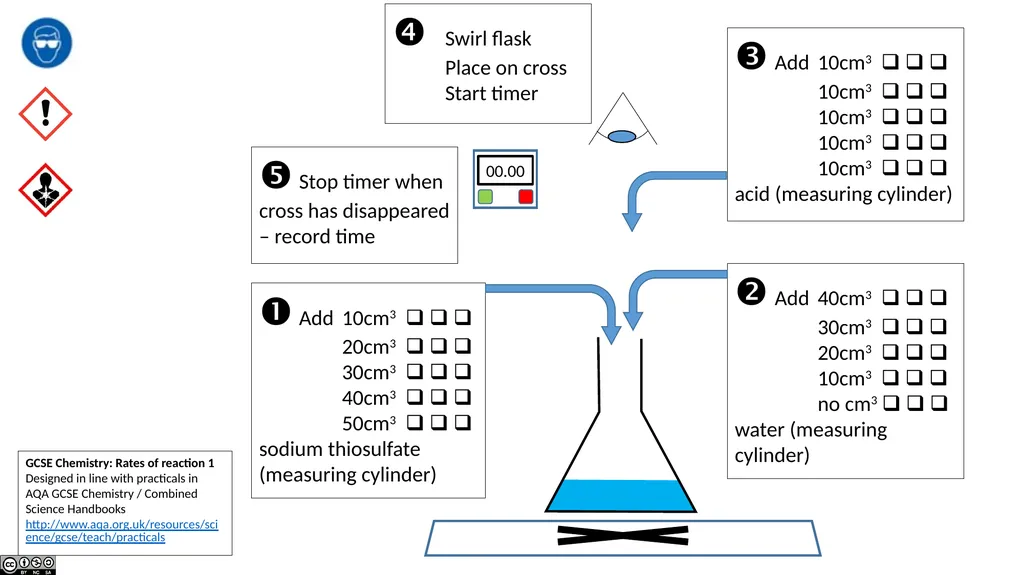
Add 10cm3
20cm3
30cm3
40cm3
50cm3
sodium thiosulfate (measuring cylinder) Add 40cm3
30cm3
20cm3
10cm3
no cm3
water (measuring cylinder) Add 10cm3
10cm3
10cm3
10cm3
10cm3
acid (measuring cylinder) Swirl flask
Place on cross
Start timer Stop timer when cross has disappeared – record time GCSE Chemistry: Rates of reaction 1
Designed in line with practicals in AQA GCSE Chemistry / Combined Science Handbooks
http://www.aqa.org.uk/resources/science/gcse/teach/practicals<br>
07
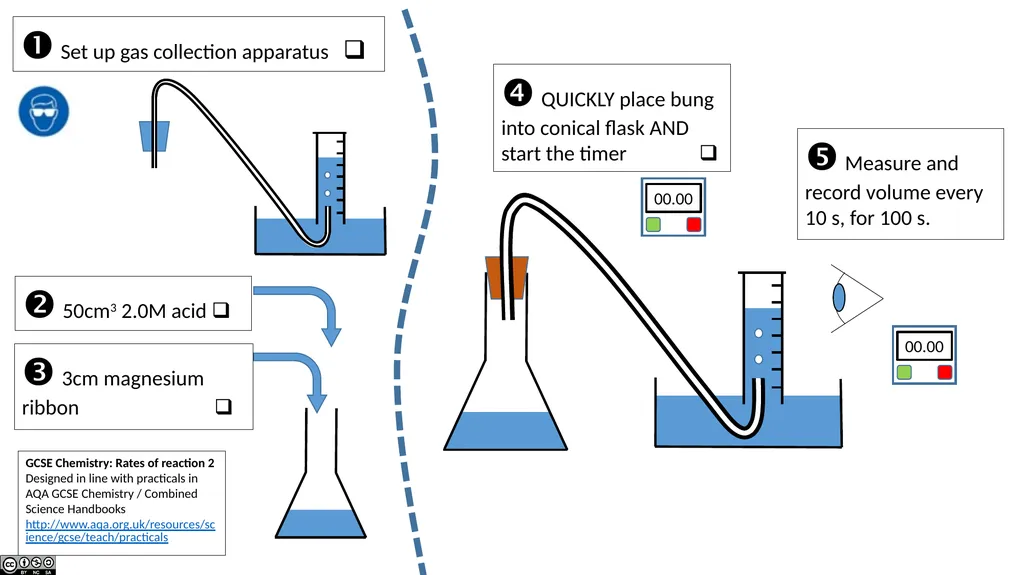
50cm3 2.0M acid Set up gas collection apparatus 3cm magnesium ribbon Measure and record volume every 10 s, for 100 s. QUICKLY place bung into conical flask AND start the timer GCSE Chemistry: Rates of reaction 2
Designed in line with practicals in AQA GCSE Chemistry / Combined Science Handbooks
http://www.aqa.org.uk/resources/science/gcse/teach/practicals<br>
08
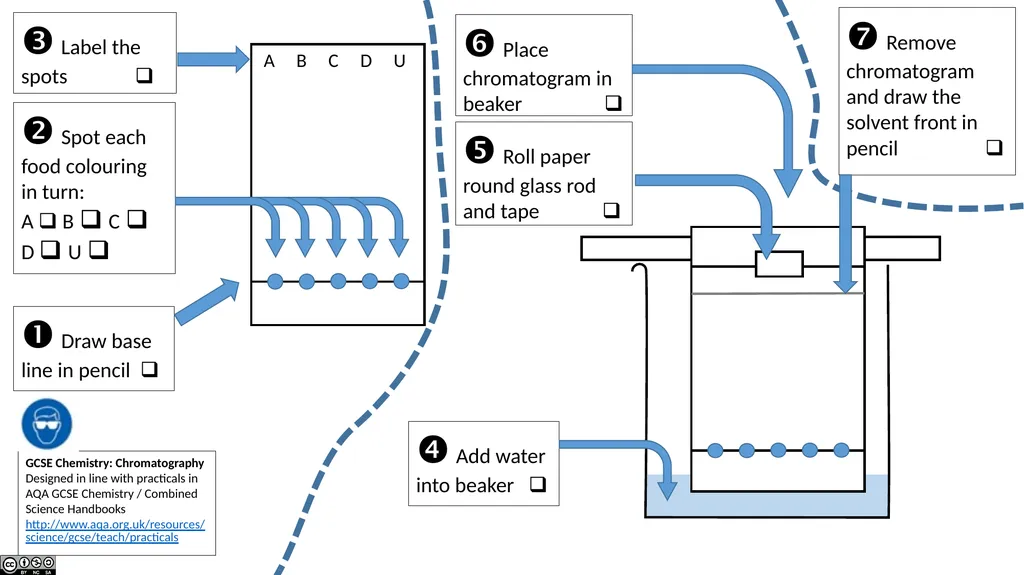
Draw base line in pencil Spot each food colouring in turn:
A B C
D U Label the spots Roll paper round glass rod and tape Place chromatogram in beaker Add water into beaker Remove chromatogram and draw the solvent front in pencil GCSE Chemistry: Chromatography
Designed in line with practicals in AQA GCSE Chemistry / Combined Science Handbooks
http://www.aqa.org.uk/resources/science/gcse/teach/practicals<br>
09
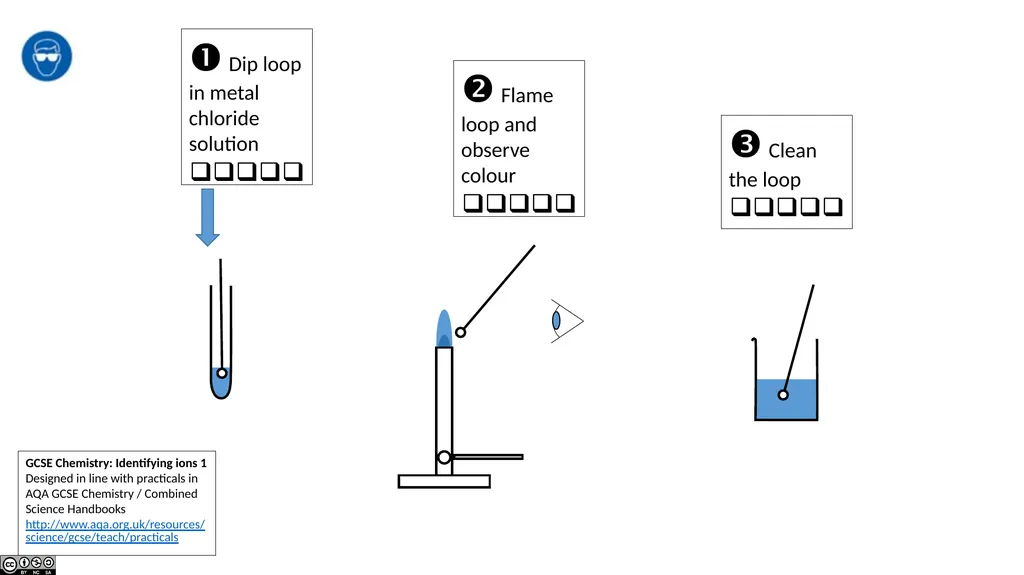
GCSE Chemistry: Identifying ions 1
Designed in line with practicals in AQA GCSE Chemistry / Combined Science Handbooks
http://www.aqa.org.uk/resources/science/gcse/teach/practicals Dip loop in metal chloride solution
Flame loop and observe colour
Clean the loop
<br>
10
GCSE Chemistry: Identifying ions 2
Designed in line with practicals in AQA GCSE Chemistry / Combined Science Handbooks
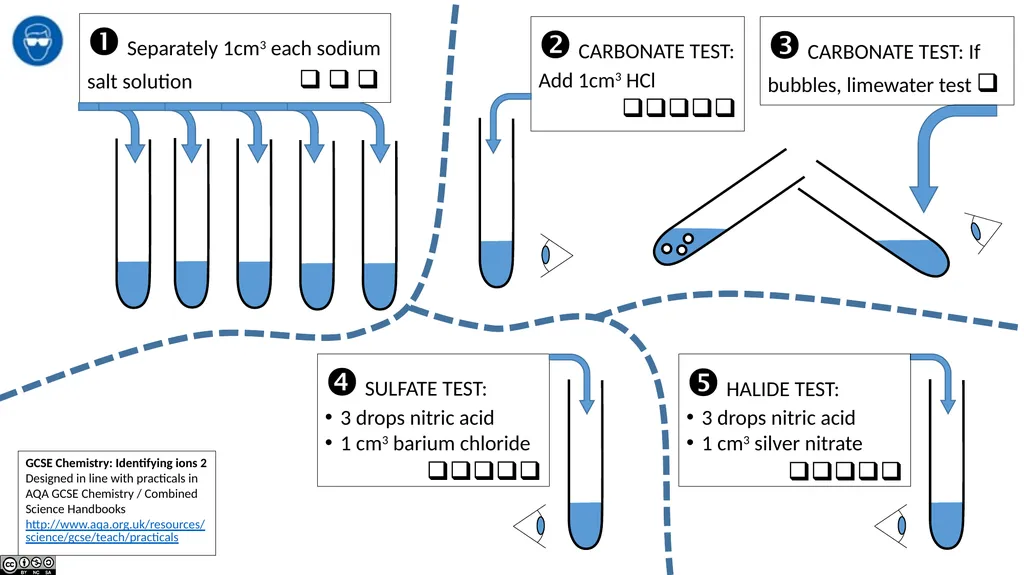
http://www.aqa.org.uk/resources/science/gcse/teach/practicals Separately 1cm3 each sodium salt solution CARBONATE TEST: Add 1cm3 HCl
CARBONATE TEST: If bubbles, limewater test SULFATE TEST:
3 drops nitric acid
1 cm3 barium chloride
HALIDE TEST:
3 drops nitric acid
1 cm3 silver nitrate
<br>
11
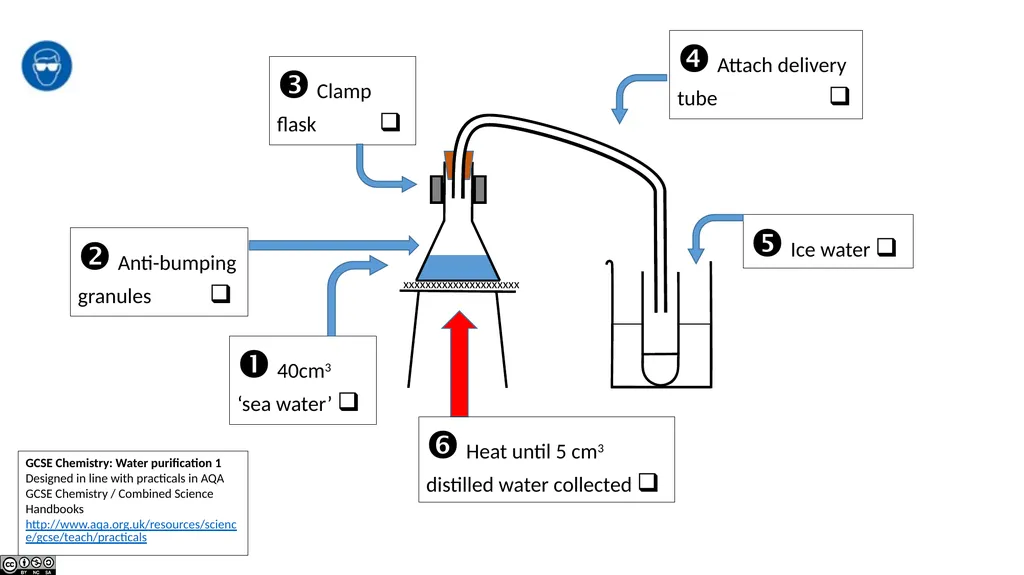
xxxxxxxxxxxxxxxxxxxxx GCSE Chemistry: Water purification 1
Designed in line with practicals in AQA GCSE Chemistry / Combined Science Handbooks
http://www.aqa.org.uk/resources/science/gcse/teach/practicals 40cm3 ‘sea water’ Clamp flask Ice water Heat until 5 cm3 distilled water collected Anti-bumping granules Attach delivery tube <br>
12
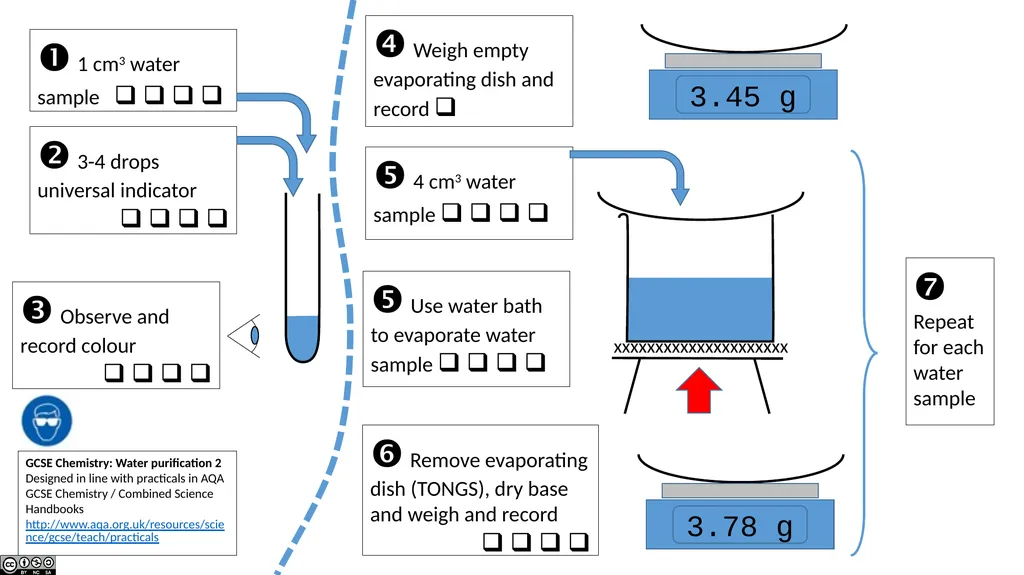
xxxxxxxxxxxxxxxxxxxxx 1 cm3 water sample 3-4 drops universal indicator
Observe and record colour
Weigh empty evaporating dish and record 4 cm3 water sample Use water bath to evaporate water sample Remove evaporating dish (TONGS), dry base and weigh and record
GCSE Chemistry: Water purification 2
Designed in line with practicals in AQA GCSE Chemistry / Combined Science Handbooks
http://www.aqa.org.uk/resources/science/gcse/teach/practicals Repeat for each water sample<br>
13
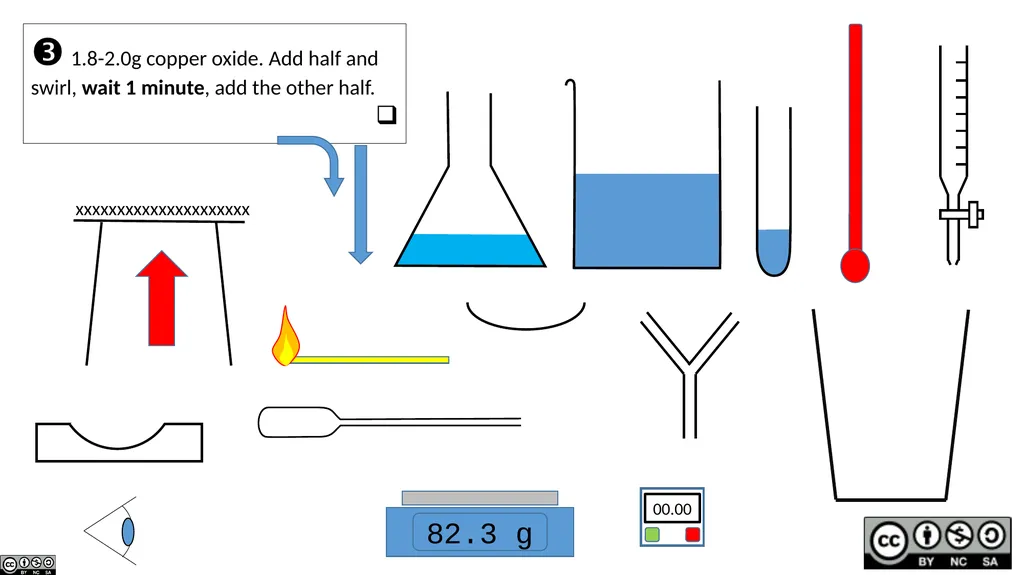
1.8-2.0g copper oxide. Add half and swirl, wait 1 minute, add the other half.
xxxxxxxxxxxxxxxxxxxxx<br>