AS English Language: Unit 1 CPD WALKING-TALKING MOCK Unit 1: Exploring Language 1¾ hours (80 marks) Section A: Analysing Language - 60 minutes (55 marks) Section B: Contemporary English - 45 minutes (25 marks) Paper Overview Question
"AS English Language: Unit 1 CPD WALKING-TALKING" is the property of its rightful owner. Permission is granted to
download and print the materials on this website for personal, non-commercial use only, and to display it
on your personal computer provided you do not modify the materials and that you retain all copyright
notices contained in the materials. By downloading content from our website, you accept the terms of this
agreement.
Presentation Transcript
01
AS English Language: Unit 1 CPD
WALKING-TALKING MOCK<br>
02
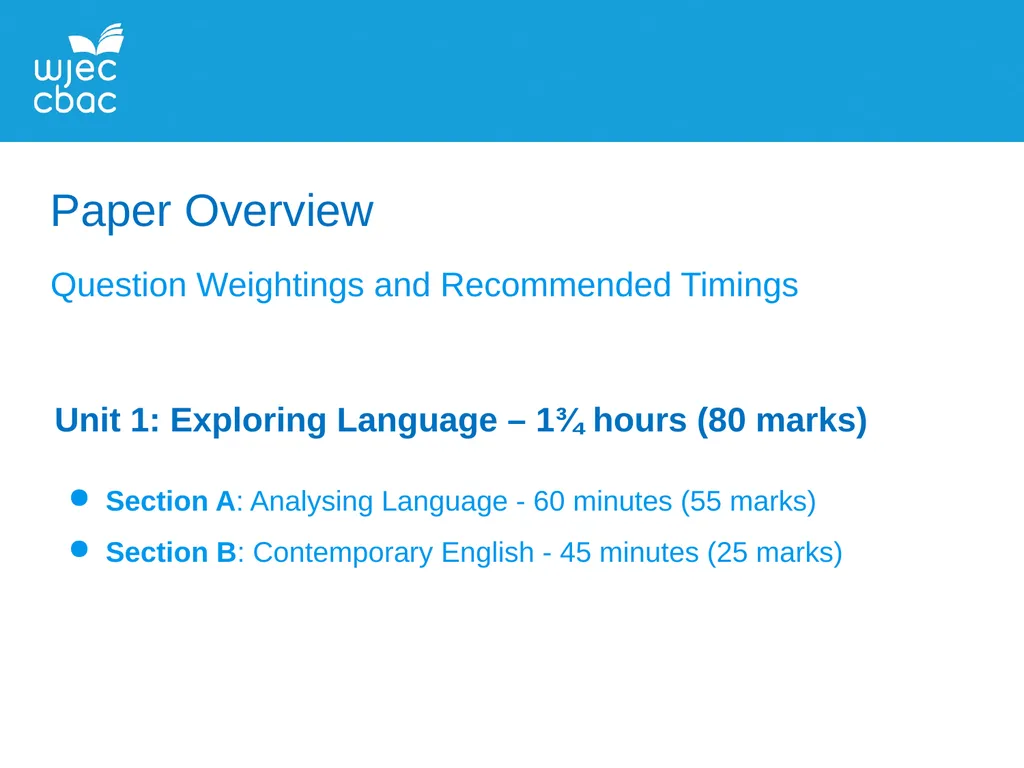
Unit 1: Exploring Language – 1¾ hours (80 marks)
Section A: Analysing Language - 60 minutes (55 marks)
Section B: Contemporary English - 45 minutes (25 marks) Paper Overview
Question Weightings and Recommended Timings<br>
03
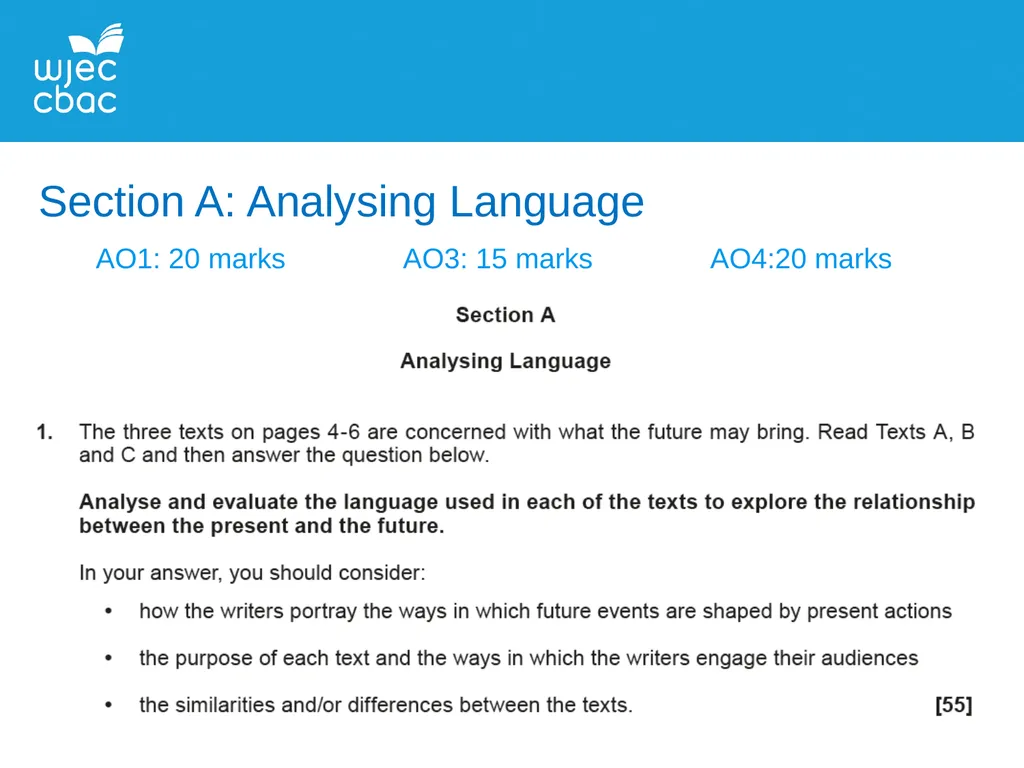
Section A: Analysing Language
AO1: 20 marks AO3: 15 marks AO4:20 marks<br>
04
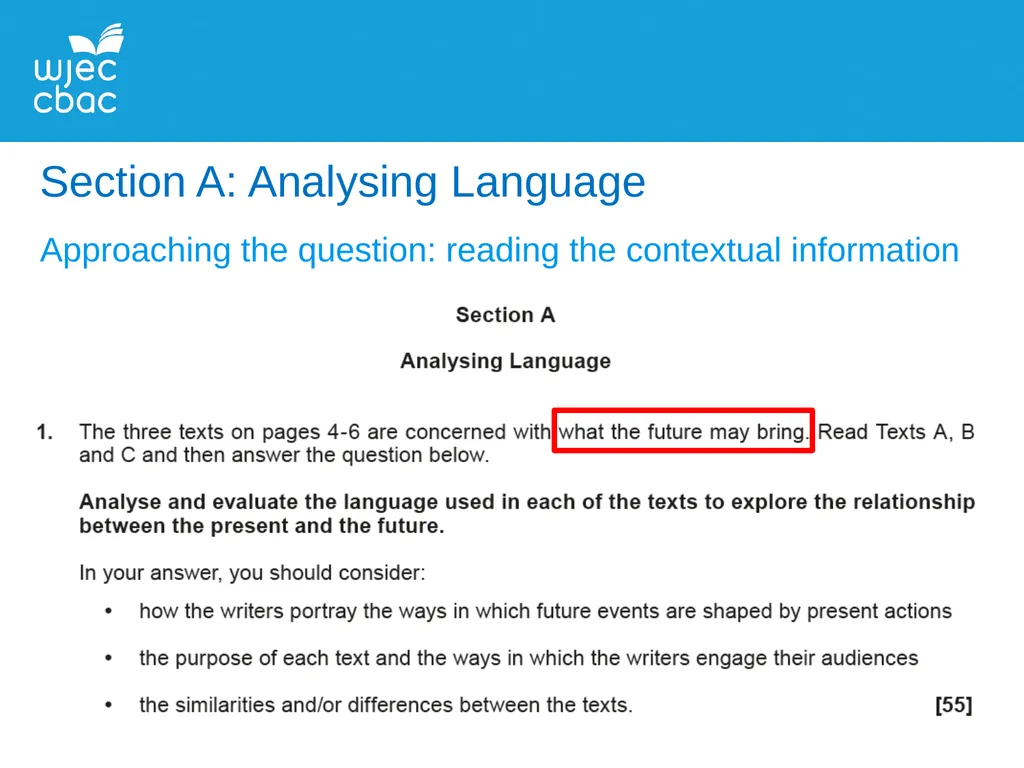
Section A: Analysing Language
Approaching the question: reading the contextual information<br>
05
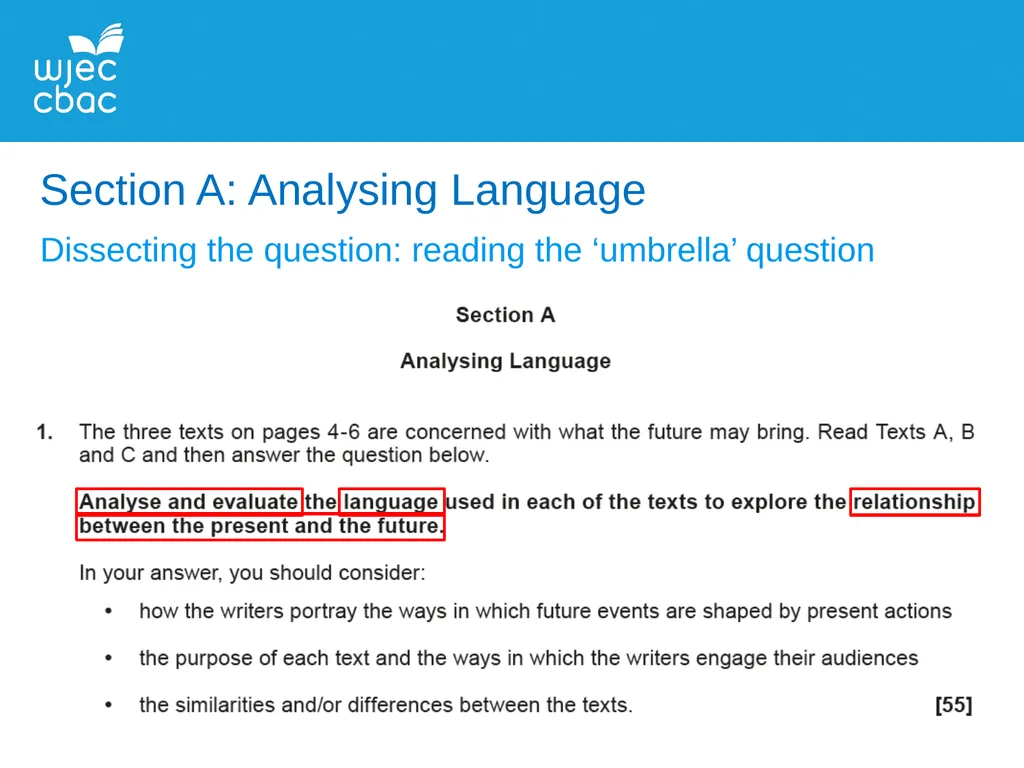
Section A: Analysing Language
Dissecting the question: reading the ‘umbrella’ question<br>
06
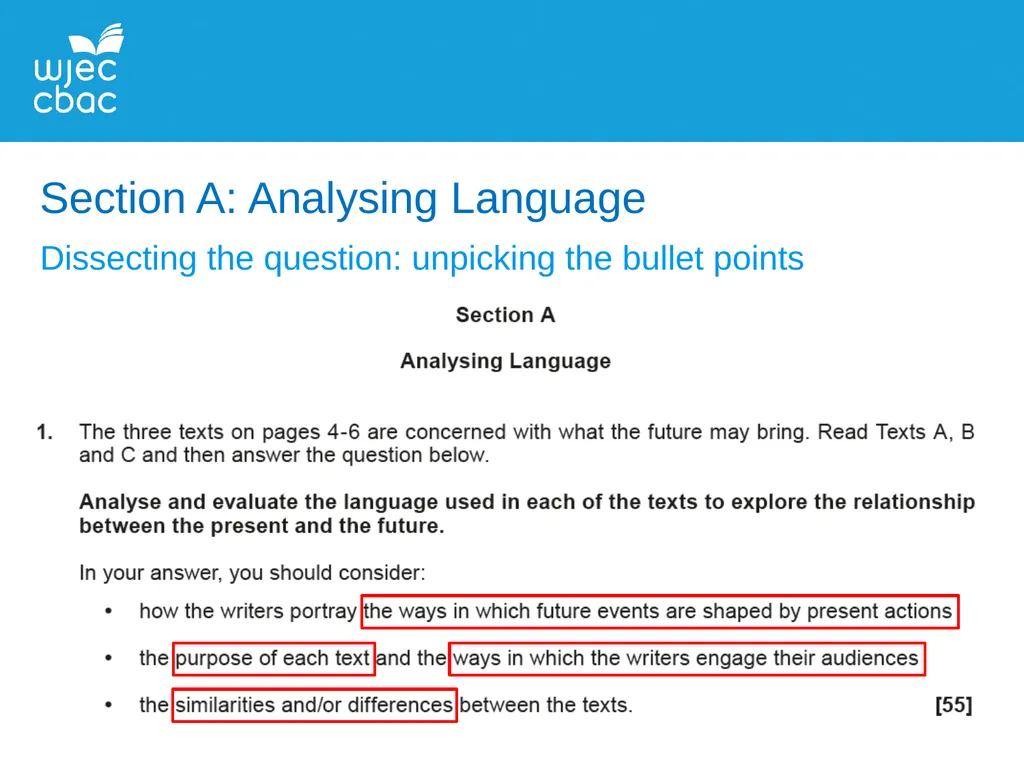
Section A: Analysing Language
Dissecting the question: unpicking the bullet points<br>
07
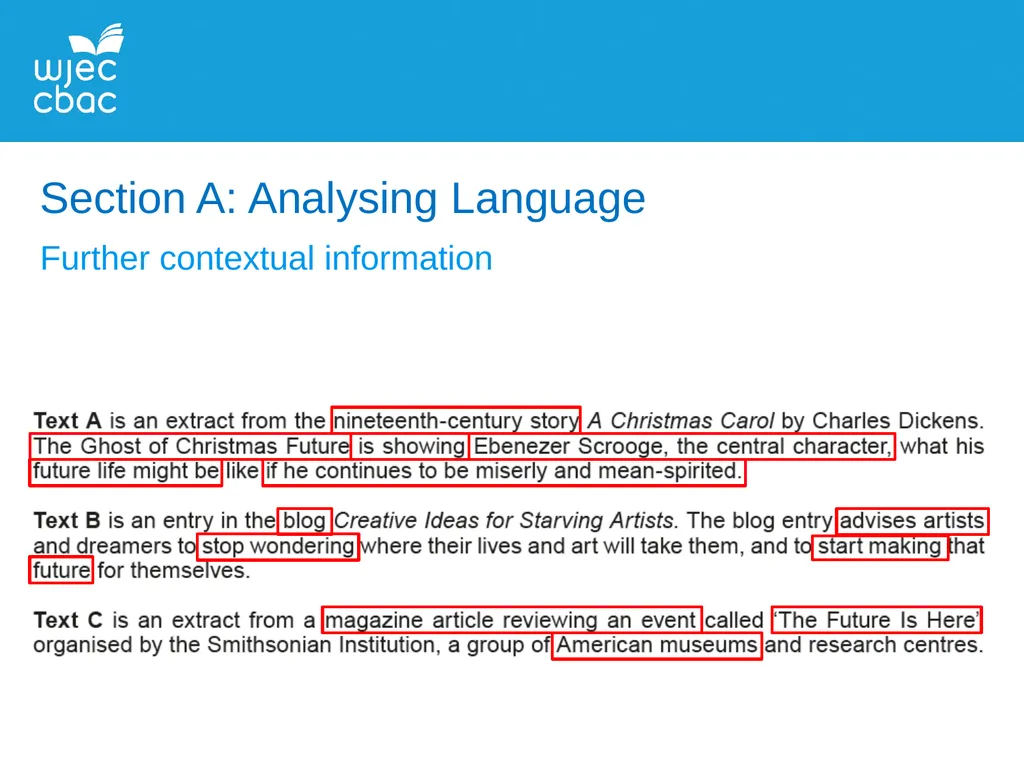
Section A: Analysing Language
Further contextual information<br>
08
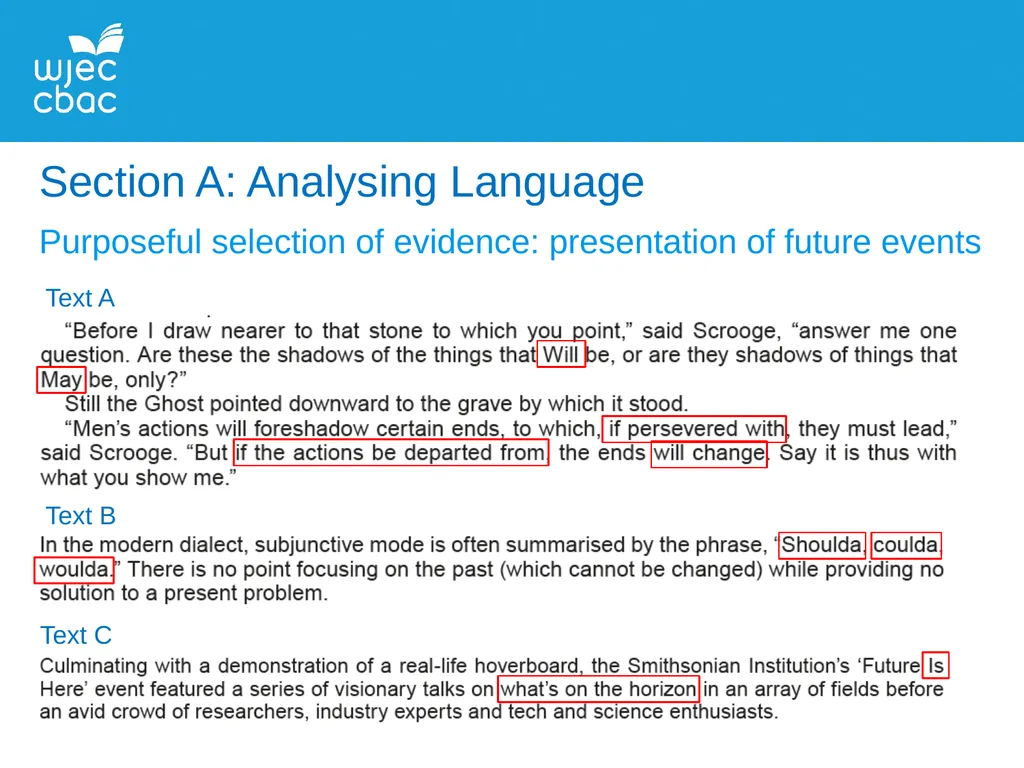
Section A: Analysing Language
Purposeful selection of evidence: presentation of future events Text A Text B Text C<br>
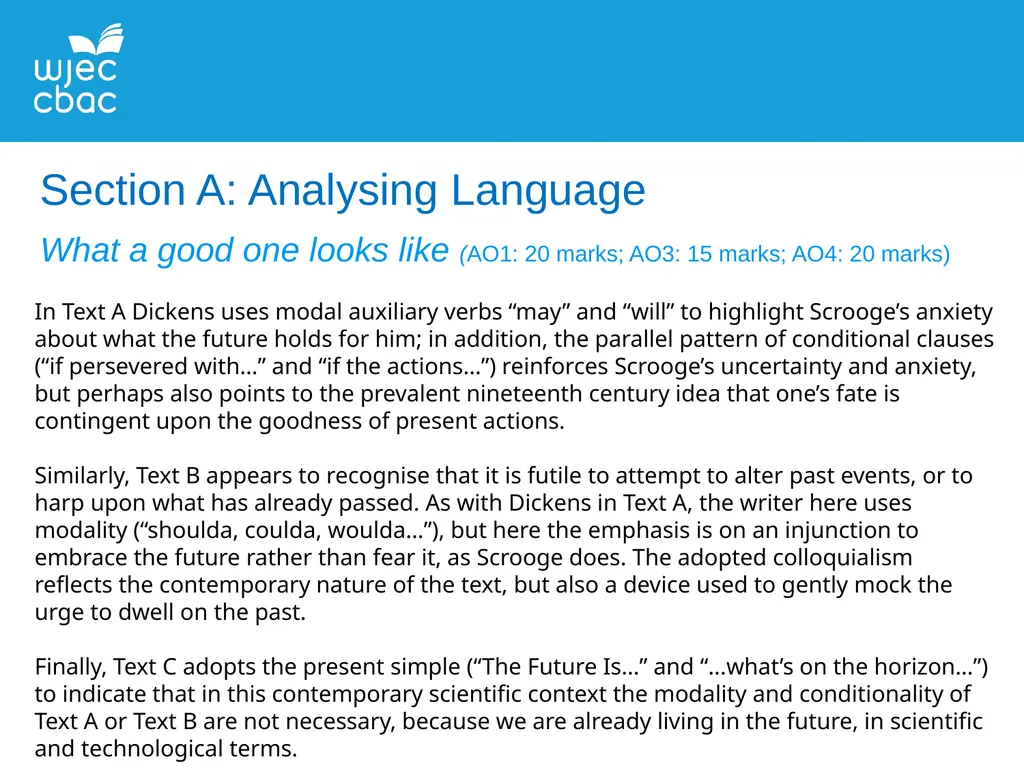
09
Section A: Analysing Language
What a good one looks like (AO1: 20 marks; AO3: 15 marks; AO4: 20 marks) In Text A Dickens uses modal auxiliary verbs “may” and “will” to highlight Scrooge’s anxiety about what the future holds for him; in addition, the parallel pattern of conditional clauses (“if persevered with…” and “if the actions…”) reinforces Scrooge’s uncertainty and anxiety, but perhaps also points to the prevalent nineteenth century idea that one’s fate is contingent upon the goodness of present actions.
Similarly, Text B appears to recognise that it is futile to attempt to alter past events, or to harp upon what has already passed. As with Dickens in Text A, the writer here uses modality (“shoulda, coulda, woulda…”), but here the emphasis is on an injunction to embrace the future rather than fear it, as Scrooge does. The adopted colloquialism reflects the contemporary nature of the text, but also a device used to gently mock the urge to dwell on the past.
Finally, Text C adopts the present simple (“The Future Is…” and “...what’s on the horizon…”) to indicate that in this contemporary scientific context the modality and conditionality of Text A or Text B are not necessary, because we are already living in the future, in scientific and technological terms.<br>
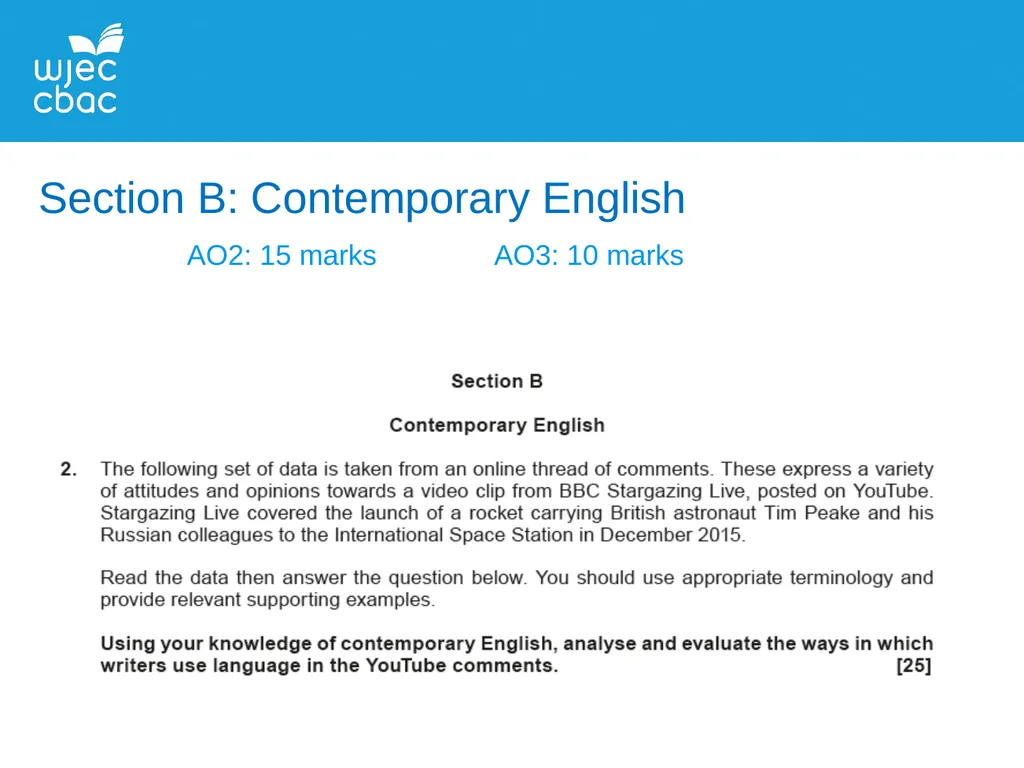
10
Section B: Contemporary English
AO2: 15 marks AO3: 10 marks<br>
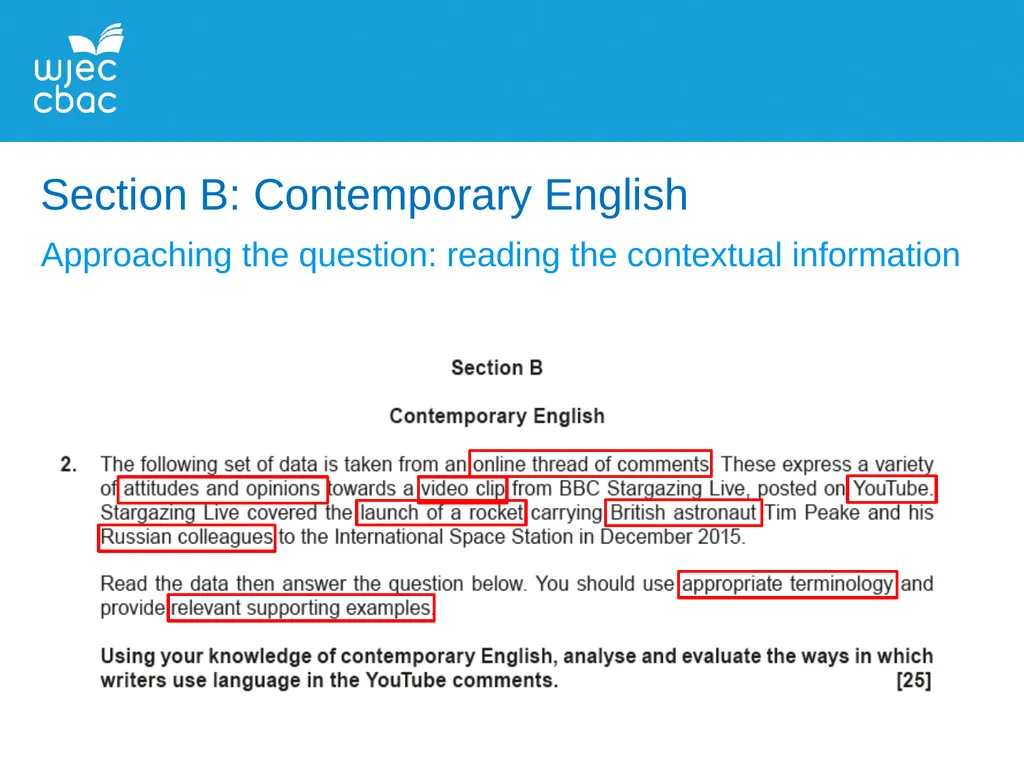
11
Section B: Contemporary English
Approaching the question: reading the contextual information<br>
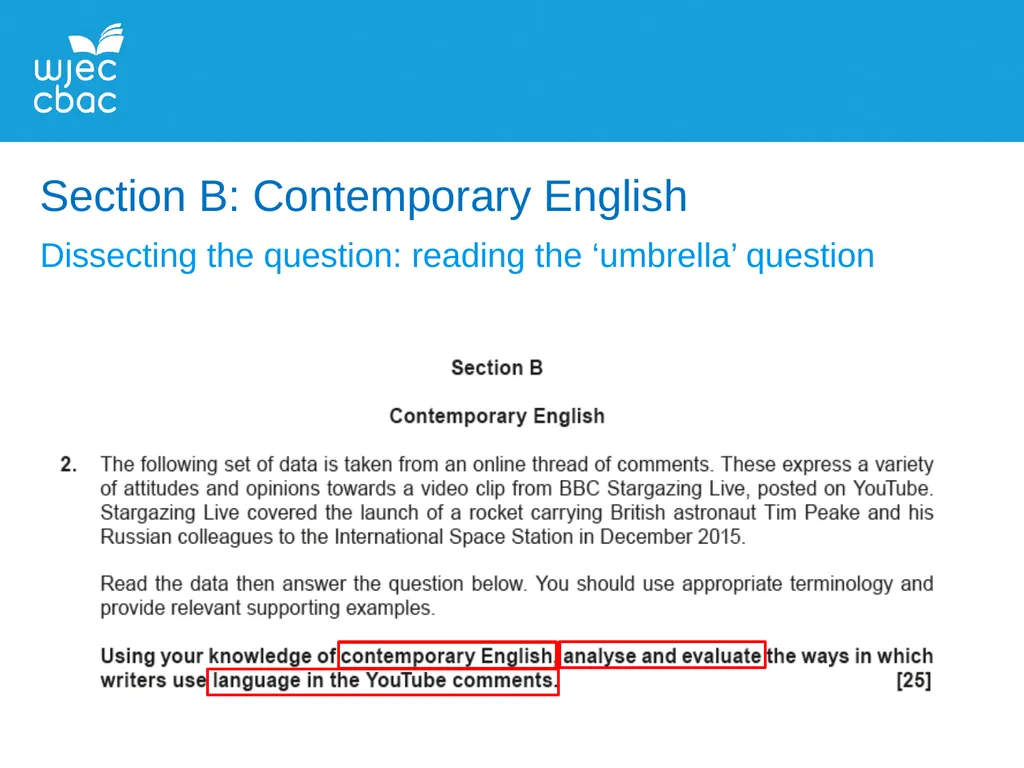
12
Section B: Contemporary English
Dissecting the question: reading the ‘umbrella’ question<br>
13
Section A: Analysing Language
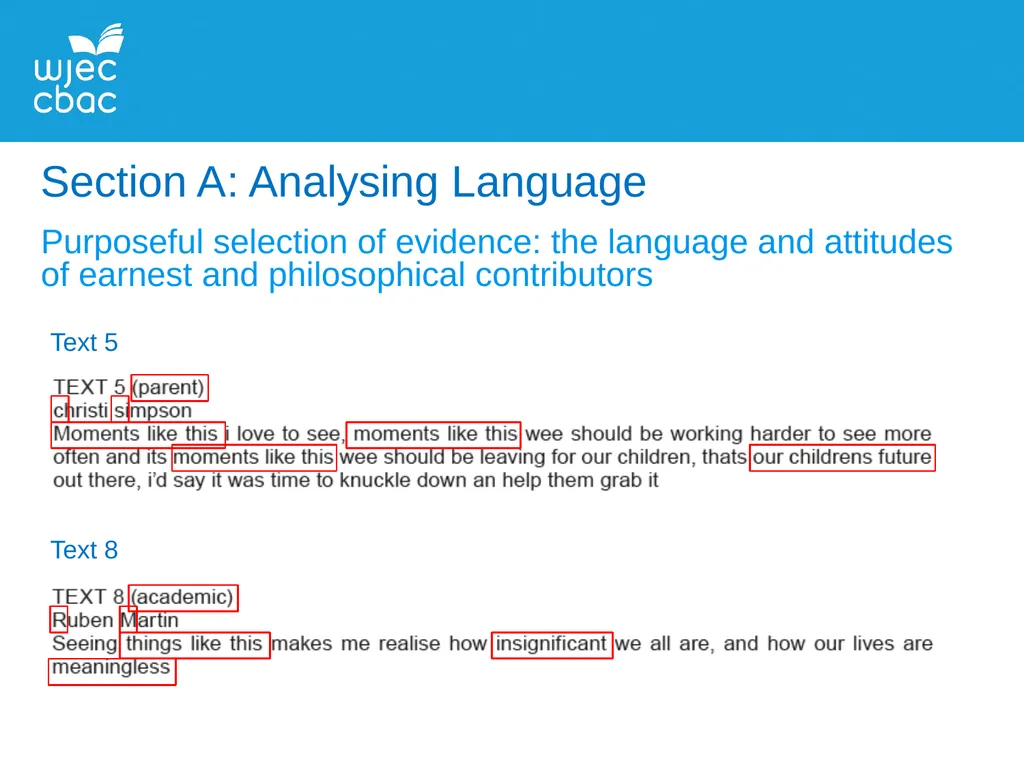
Purposeful selection of evidence: the language and attitudes of earnest and philosophical contributors Text 5 Text 8<br>
14
Section B: Contemporary English
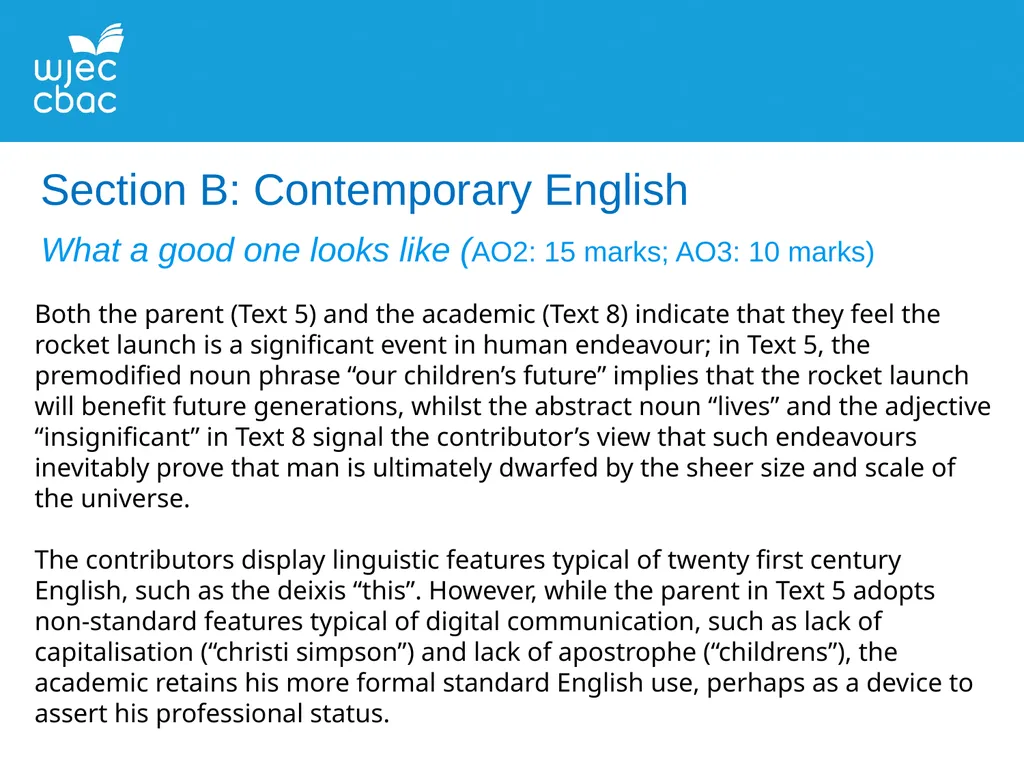
What a good one looks like (AO2: 15 marks; AO3: 10 marks) Both the parent (Text 5) and the academic (Text 8) indicate that they feel the rocket launch is a significant event in human endeavour; in Text 5, the premodified noun phrase “our children’s future” implies that the rocket launch will benefit future generations, whilst the abstract noun “lives” and the adjective “insignificant” in Text 8 signal the contributor’s view that such endeavours inevitably prove that man is ultimately dwarfed by the sheer size and scale of the universe.
The contributors display linguistic features typical of twenty first century English, such as the deixis “this”. However, while the parent in Text 5 adopts non-standard features typical of digital communication, such as lack of capitalisation (“christi simpson”) and lack of apostrophe (“childrens”), the academic retains his more formal standard English use, perhaps as a device to assert his professional status.<br>
15
RESOURCES FOR TEACHERS Supporting teaching and learning wjec.co.uk/qualifications/english
Free subject specific resources available for all to download from our website
resources.wjec.co.uk
Free digital resources to support the teaching and learning of a broad range of subjects
ADNODDAU I ATHRAWON Cefnogi addysgu a dysgu cbac.co.uk/qualifications/english
Adnoddau pwnc-benodol rhad ac am ddim ar gael i bawb eu llwytho i lawr o’n gwefan
adnoddau.cbac.co.uk
Adnoddau digidol rhad ac am ddim i gefnogi addysgu a dysgu amrediad eang o bynciau
aaa.cbac.co.uk
Gall athrawon ddefnyddio ein gwefan Adolygiad Arholiadau Ar-lein rhad ac am ddim er mwyn dadansoddi data ar lefel eitem, asesu papurau cwestiynau enghreifftiol yn feirniadol a derbyn adborth gan arholwyr<br>
17
Cwestiynau? | Any Questions? Cysylltwch â’n Swyddogion Pwnc arbenigol a thîm cefnogaeth weinyddol eich pwnc os oes gennych unrhyw gwestiynau.
gceenglish@wjec.co.uk
@wjec_cbac
@cbac_wjec
cbac.co.uk
wjec.co.uk Contact our specialist Subject Officers and administrative support team for your subject with any queries.<br>