Axis and Plane Dr. Subhas Chandra Nandi Anatomical Position Anatomical position: The position with the body erect with the arms at the sides and the palms forward. The anatomical position is of importance in anatomy because it is the
"Axis and Plane Dr. Subhas Chandra Nandi Anatomical" is the property of its rightful owner. Permission is granted to
download and print the materials on this website for personal, non-commercial use only, and to display it
on your personal computer provided you do not modify the materials and that you retain all copyright
notices contained in the materials. By downloading content from our website, you accept the terms of this
agreement.
Presentation Transcript
01
Axis and Plane Dr. Subhas Chandra Nandi<br>
02
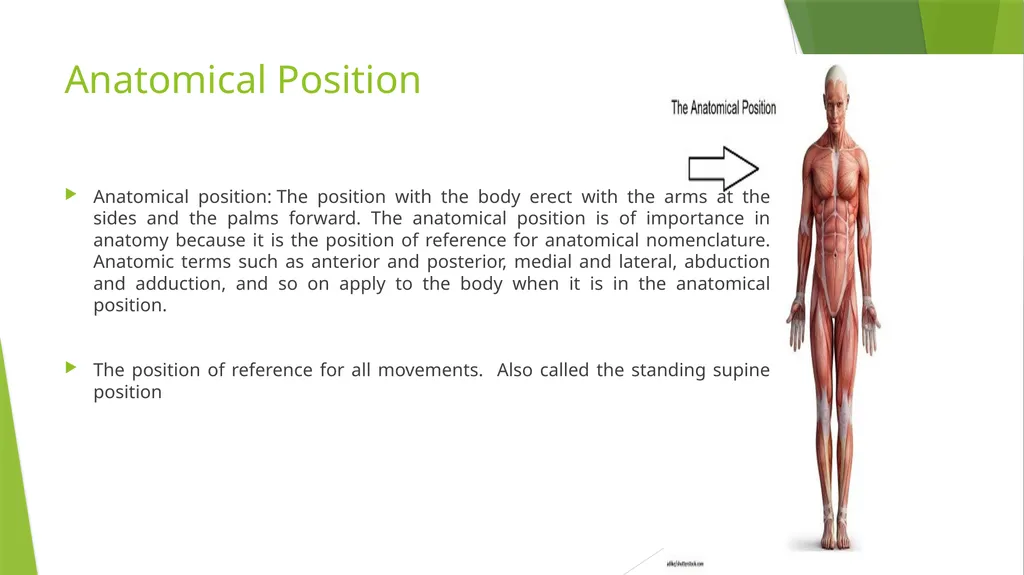
Anatomical Position Anatomical position: The position with the body erect with the arms at the sides and the palms forward. The anatomical position is of importance in anatomy because it is the position of reference for anatomical nomenclature. Anatomic terms such as anterior and posterior, medial and lateral, abduction and adduction, and so on apply to the body when it is in the anatomical position.
The position of reference for all movements. Also called the standing supine position<br>
03
Plane A plane is an imaginary flat surface along which a movement takes place.
The plane is the surface on which the movement occurs or takes place.
Sagittal Plane
Coronal Plane
Horizontal Plane<br>
04
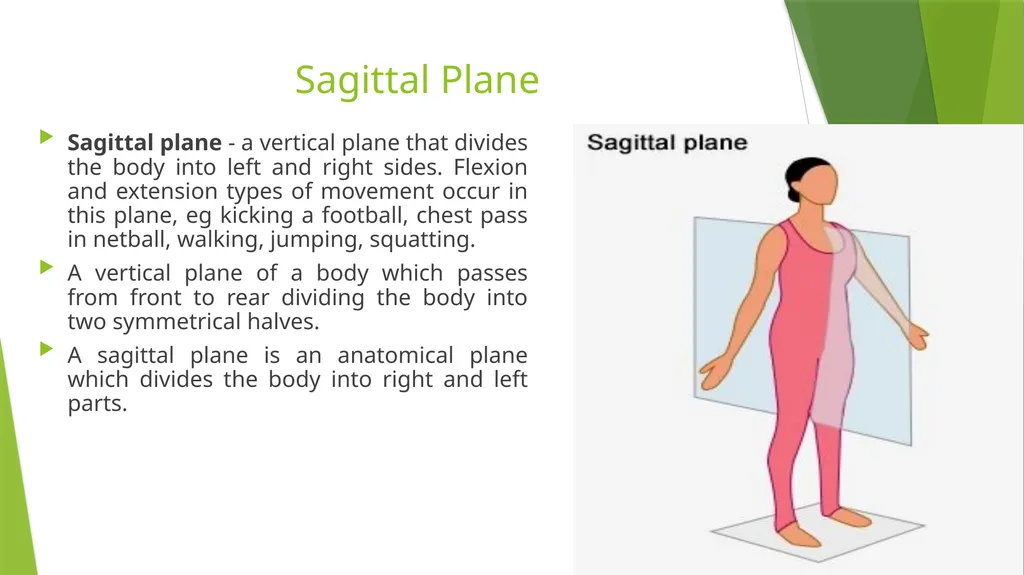
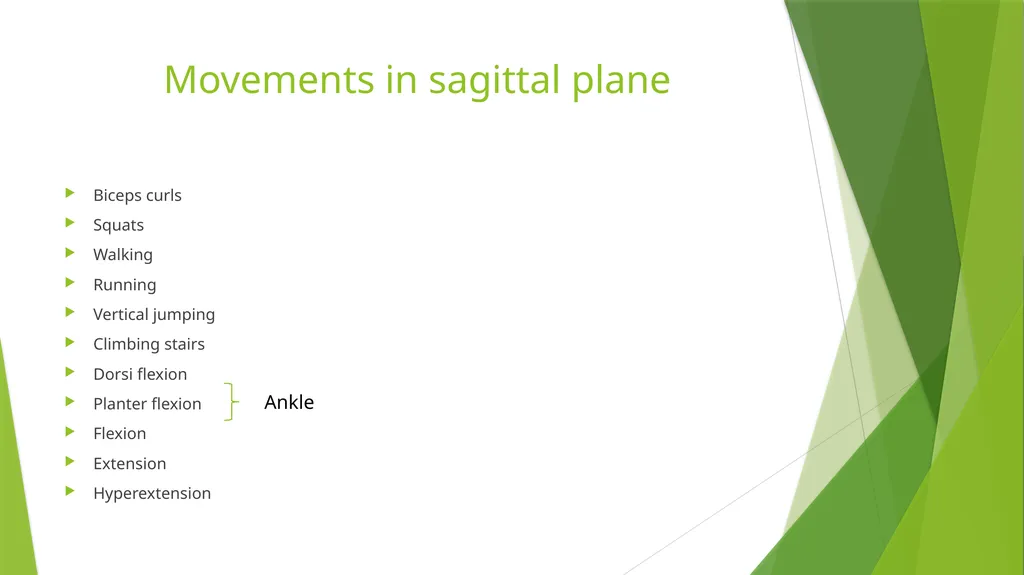
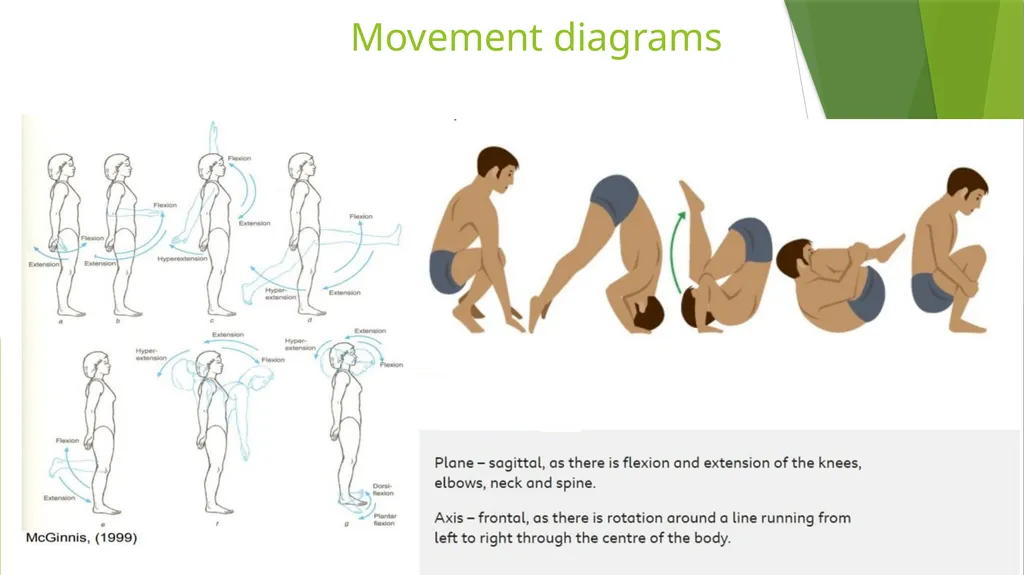
Sagittal Plane Sagittal plane - a vertical plane that divides the body into left and right sides. Flexion and extension types of movement occur in this plane, eg kicking a football, chest pass in netball, walking, jumping, squatting.
A vertical plane of a body which passes from front to rear dividing the body into two symmetrical halves.
A sagittal plane is an anatomical plane which divides the body into right and left parts.<br>
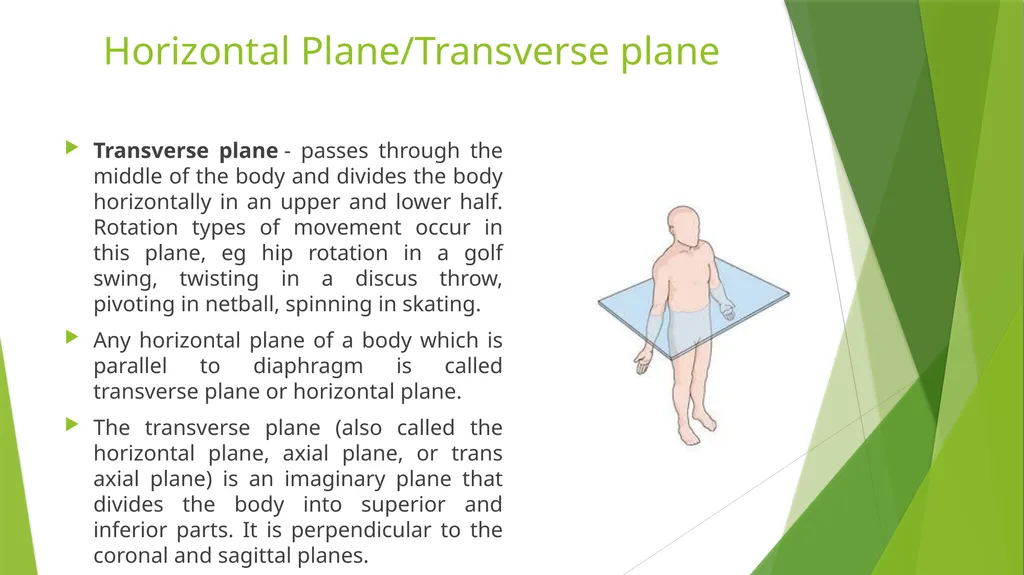
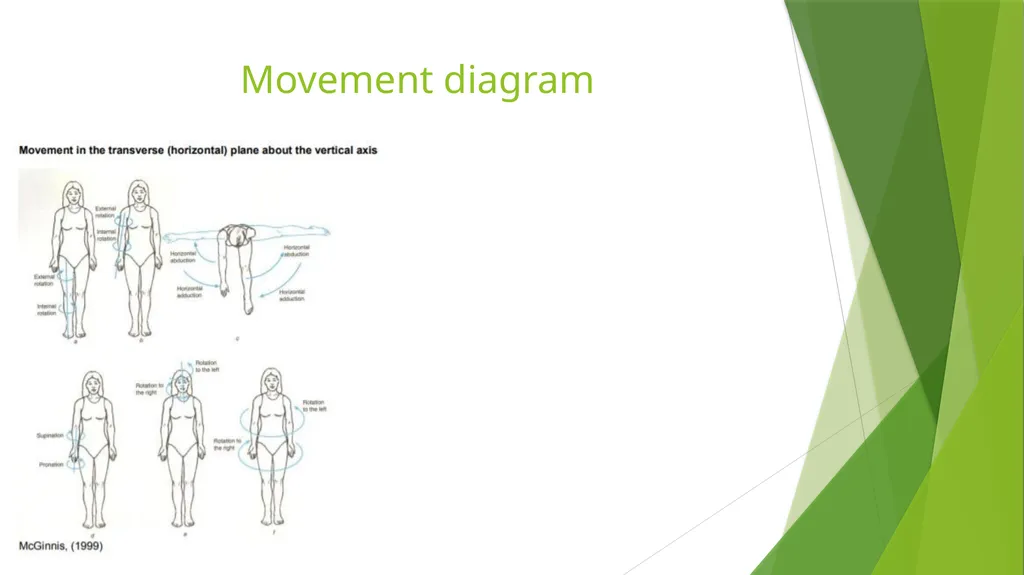
Horizontal Plane/Transverse plane Transverse plane - passes through the middle of the body and divides the body horizontally in an upper and lower half. Rotation types of movement occur in this plane, eg hip rotation in a golf swing, twisting in a discus throw, pivoting in netball, spinning in skating.
Any horizontal plane of a body which is parallel to diaphragm is called transverse plane or horizontal plane.
The transverse plane (also called the horizontal plane, axial plane, or trans axial plane) is an imaginary plane that divides the body into superior and inferior parts. It is perpendicular to the coronal and sagittal planes.<br>
08
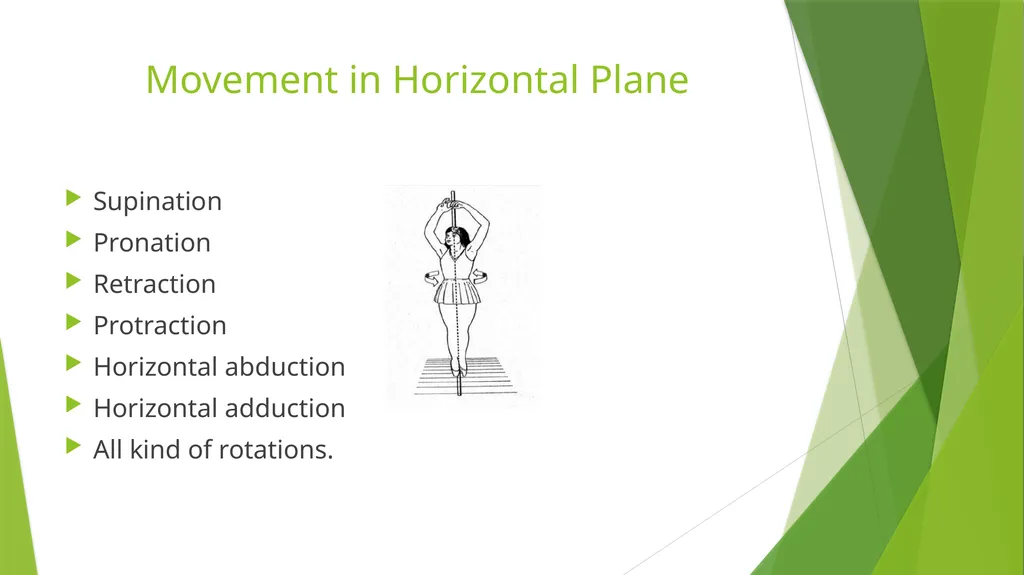
Movement in Horizontal Plane Supination
Pronation
Retraction
Protraction
Horizontal abduction
Horizontal adduction
All kind of rotations.<br>
09
Movement diagram<br>
10
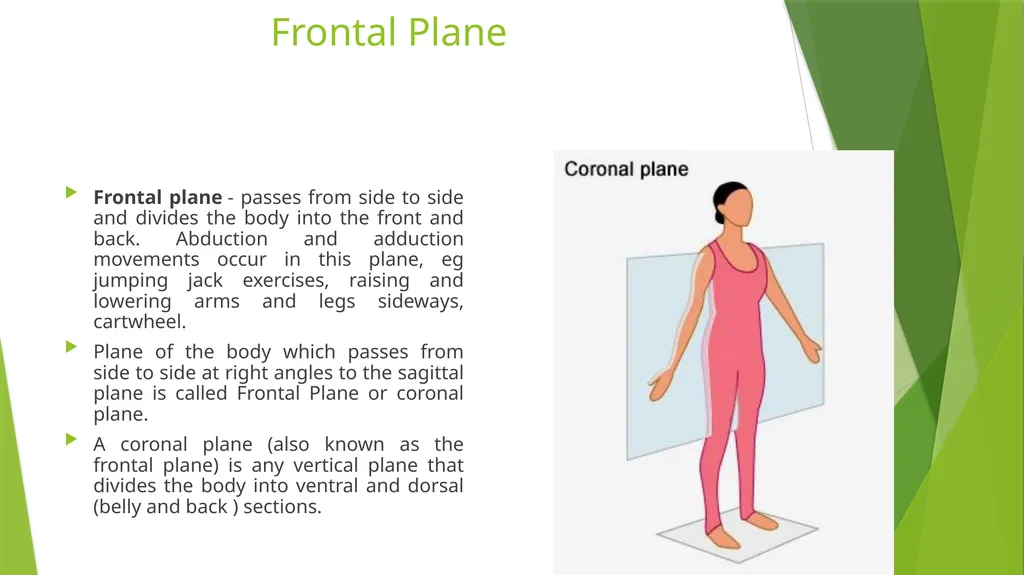
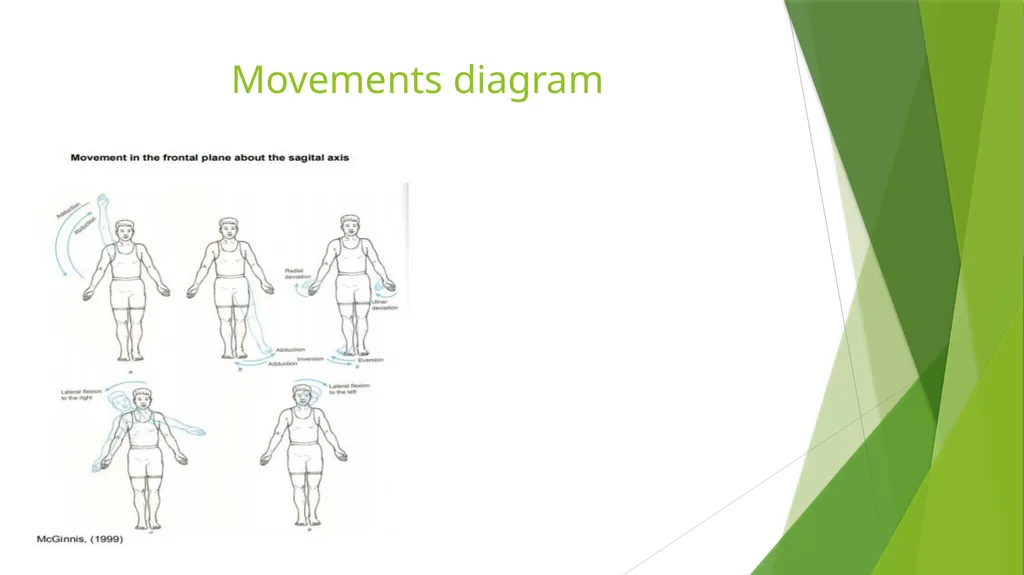
Frontal Plane Frontal plane - passes from side to side and divides the body into the front and back. Abduction and adduction movements occur in this plane, eg jumping jack exercises, raising and lowering arms and legs sideways, cartwheel.
Plane of the body which passes from side to side at right angles to the sagittal plane is called Frontal Plane or coronal plane.
A coronal plane (also known as the frontal plane) is any vertical plane that divides the body into ventral and dorsal (belly and back ) sections.<br>
11
Movements in Frontal Plane Abduction
Adduction
Radial deviation
Ulnar deviation
Side flexion of trunk
Side flexion of neck
Inversion
Eversion<br>
12
Movements diagram<br>
13
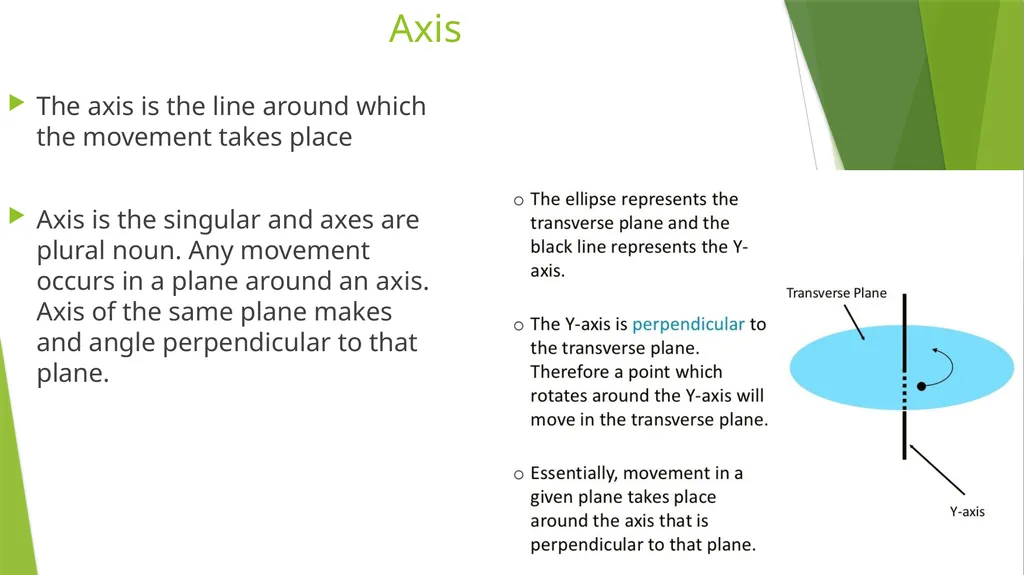
Axis The axis is the line around which the movement takes place
Axis is the singular and axes are plural noun. Any movement occurs in a plane around an axis. Axis of the same plane makes and angle perpendicular to that plane.<br>
14
Types Sagittal axis - passes horizontally from posterior to anterior and is formed by the intersection of the sagittal and transverse planes.
Frontal axis - passes horizontally from left to right and is formed by the intersection of the frontal and transverse planes.
Vertical axis - passes vertically from inferior to superior and is formed by the intersection of the sagittal and frontal planes<br>