04
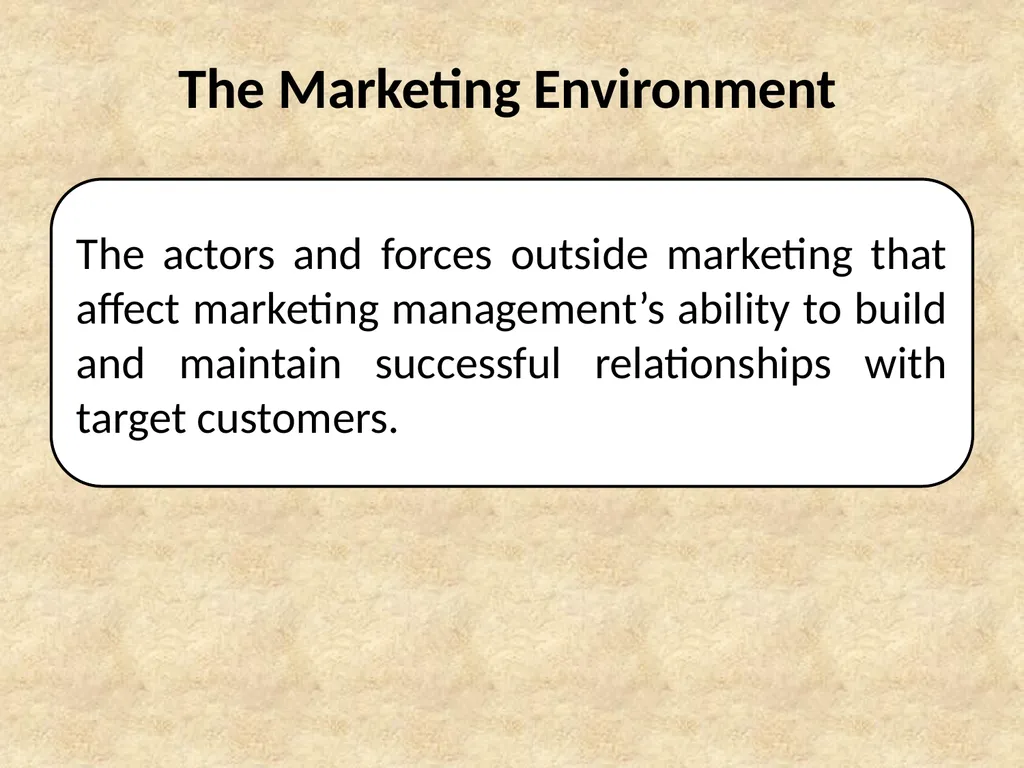
The Marketing Environment The actors and forces outside marketing that affect marketing management’s ability to build and maintain successful relationships with target customers.<br>
05
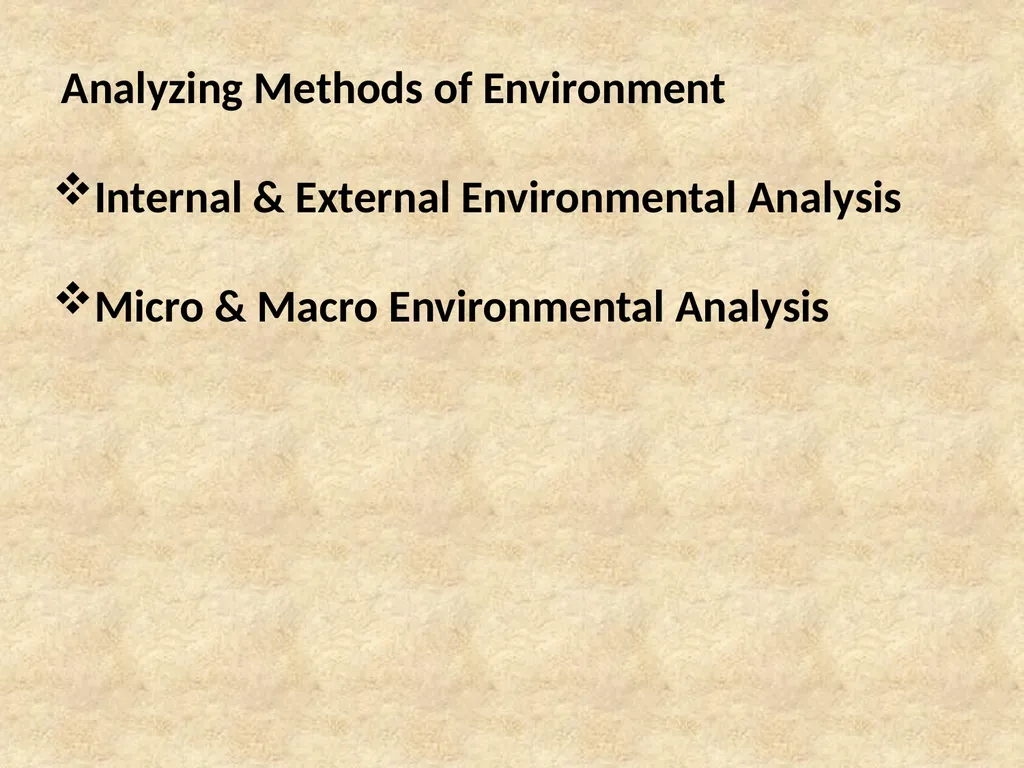
Analyzing Methods of Environment Internal & External Environmental Analysis
Micro & Macro Environmental Analysis<br>
06
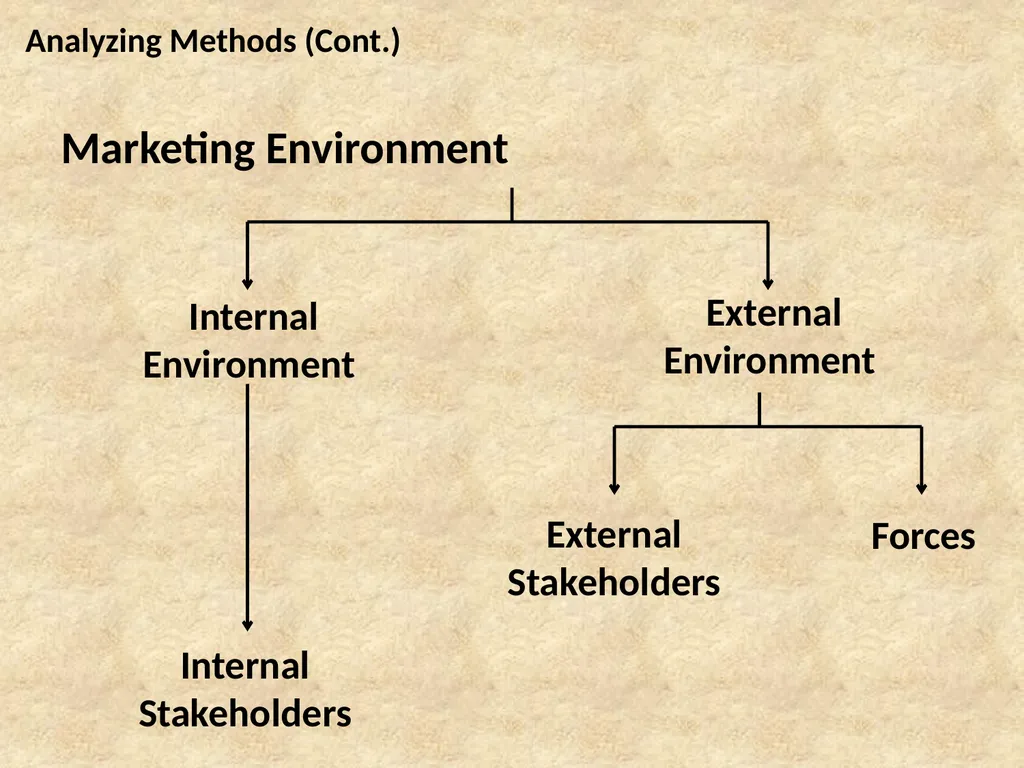
Marketing Environment External Environment Internal Stakeholders External Stakeholders Forces Internal Environment Analyzing Methods (Cont.)<br>
07
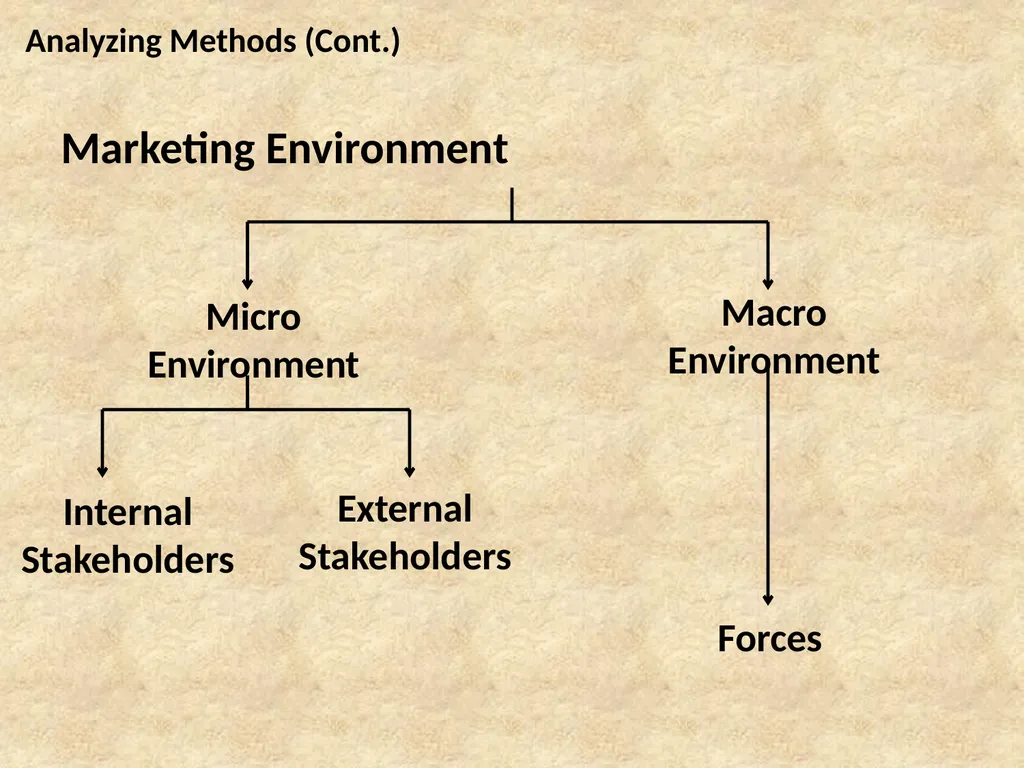
Marketing Environment Macro Environment Internal Stakeholders External Stakeholders Forces Micro Environment Analyzing Methods (Cont.)<br>
08
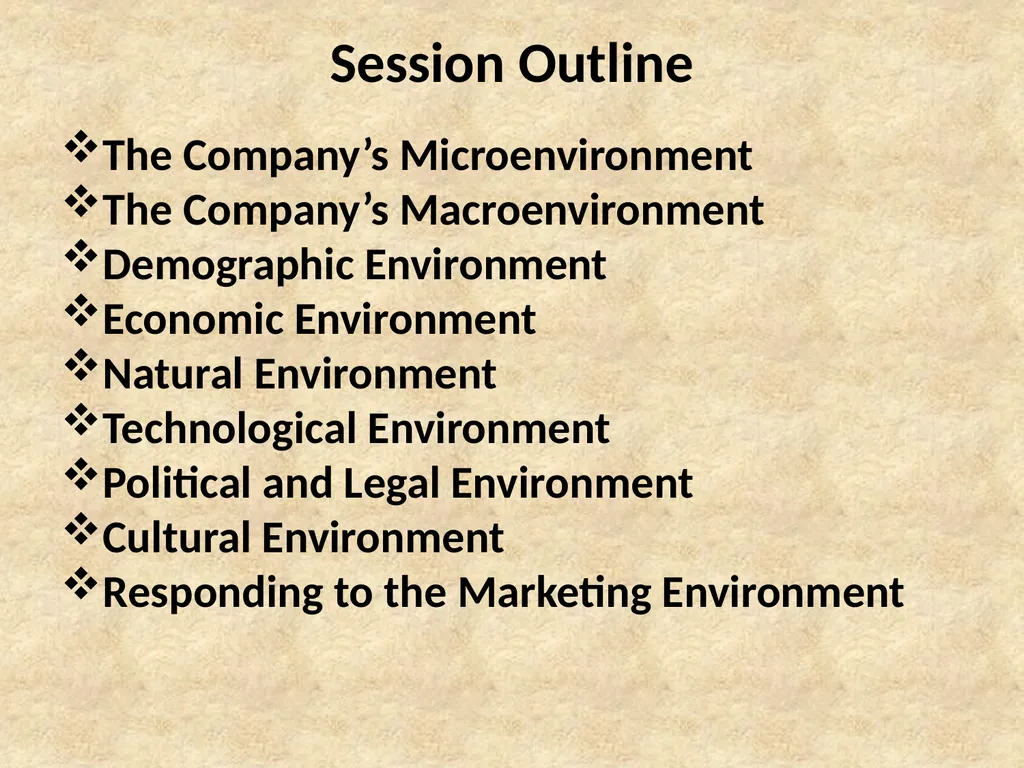
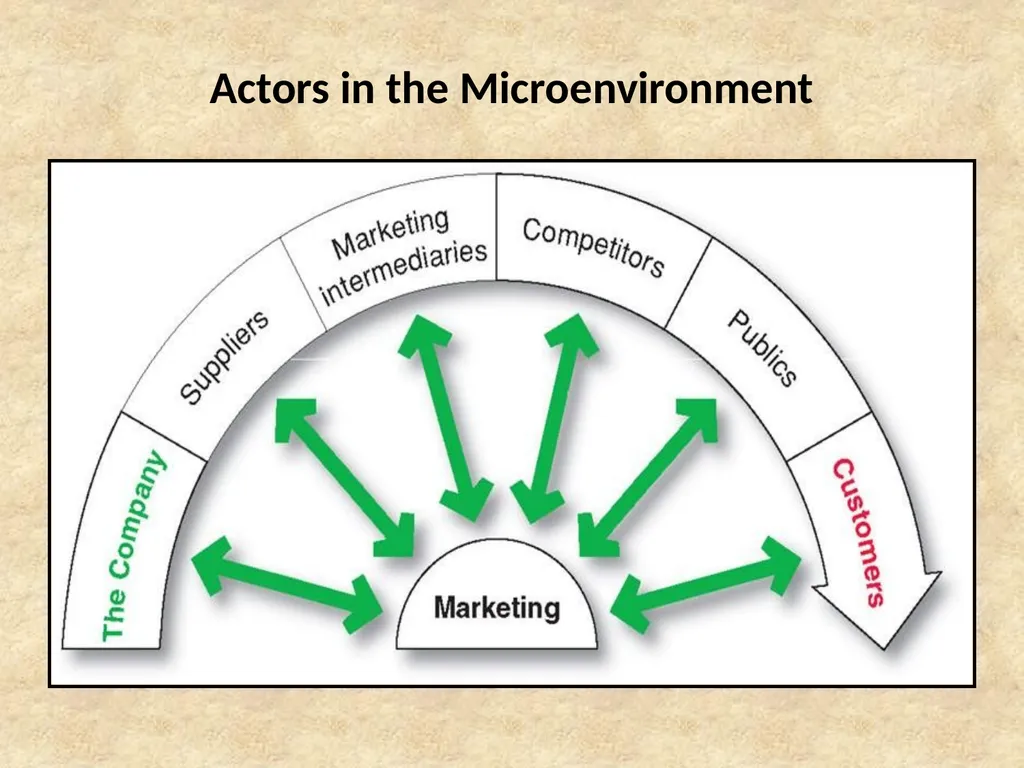
The Company’s Microenvironment The actors close to the company that affect its ability to serve its customers – the company, suppliers, marketing intermediaries, customer markets, competitors and publics.<br>
09
Actors in the Microenvironment<br>
10
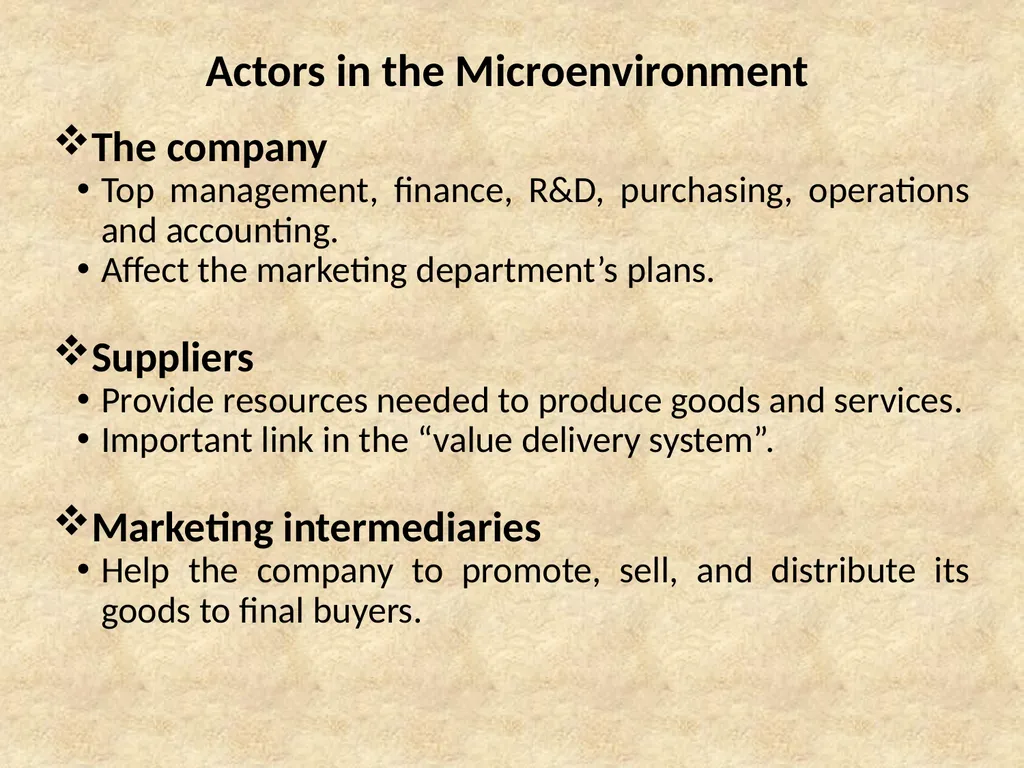
Actors in the Microenvironment The company
Top management, finance, R&D, purchasing, operations and accounting.
Affect the marketing department’s plans.
Suppliers
Provide resources needed to produce goods and services.
Important link in the “value delivery system”.
Marketing intermediaries
Help the company to promote, sell, and distribute its goods to final buyers.<br>
11
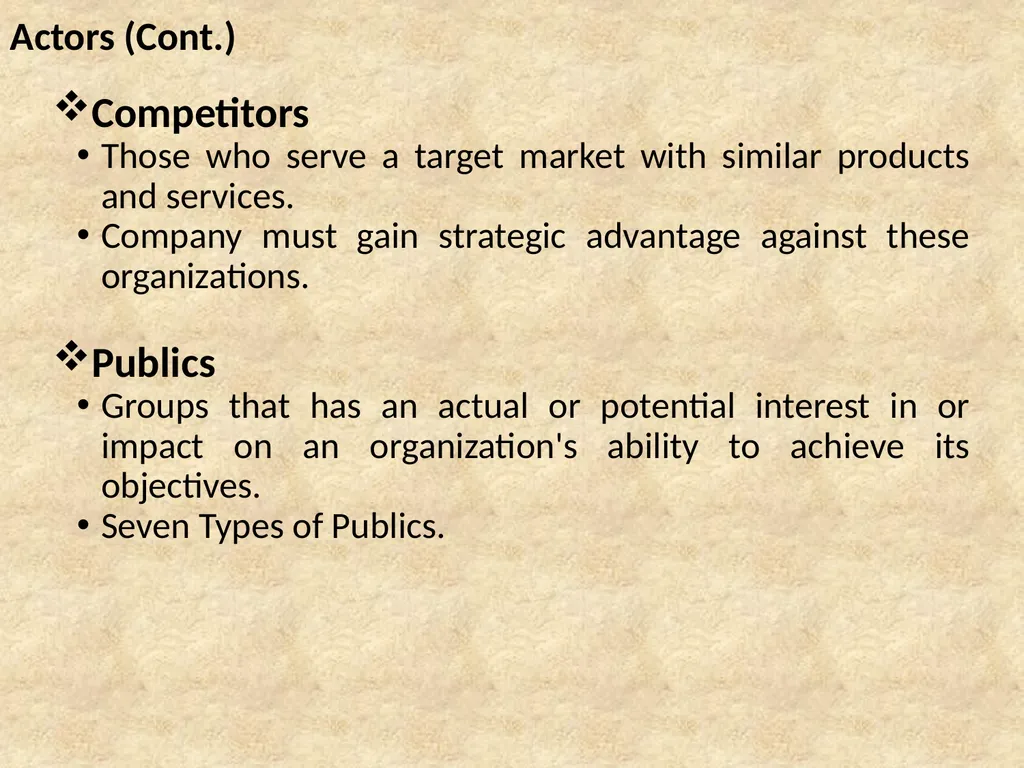
Competitors
Those who serve a target market with similar products and services.
Company must gain strategic advantage against these organizations.
Publics
Groups that has an actual or potential interest in or impact on an organization's ability to achieve its objectives.
Seven Types of Publics. Actors (Cont.)<br>
12
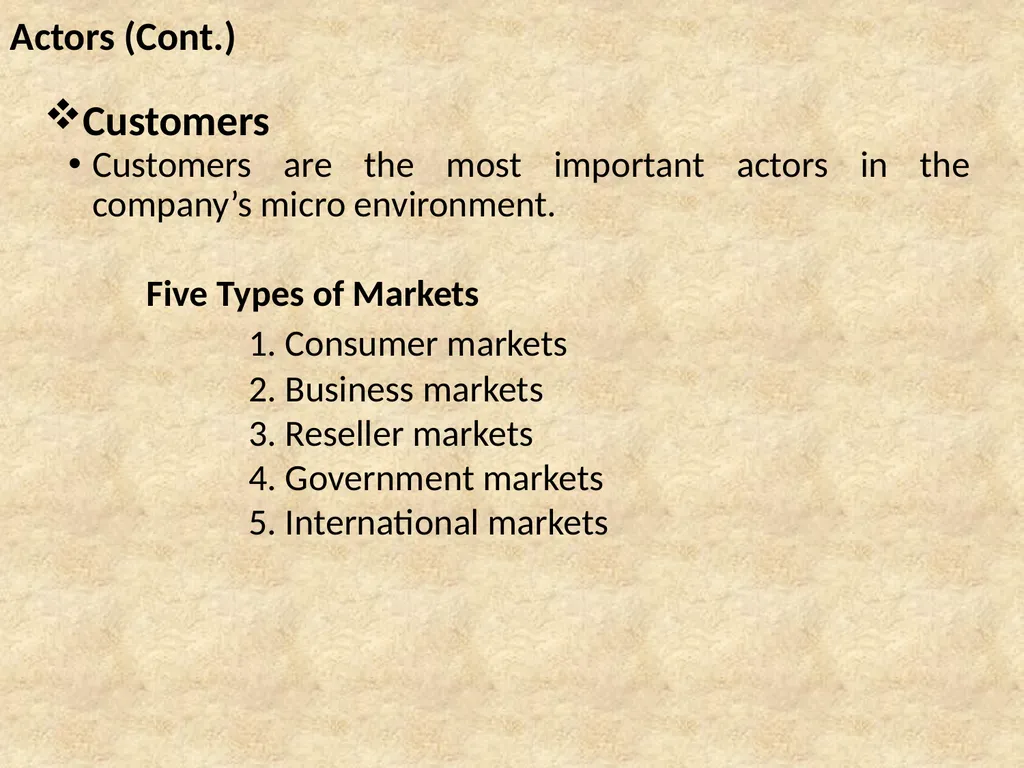
Actors (Cont.) Customers
Customers are the most important actors in the company’s micro environment.
Five Types of Markets
1. Consumer markets
2. Business markets
3. Reseller markets
4. Government markets
5. International markets<br>
13
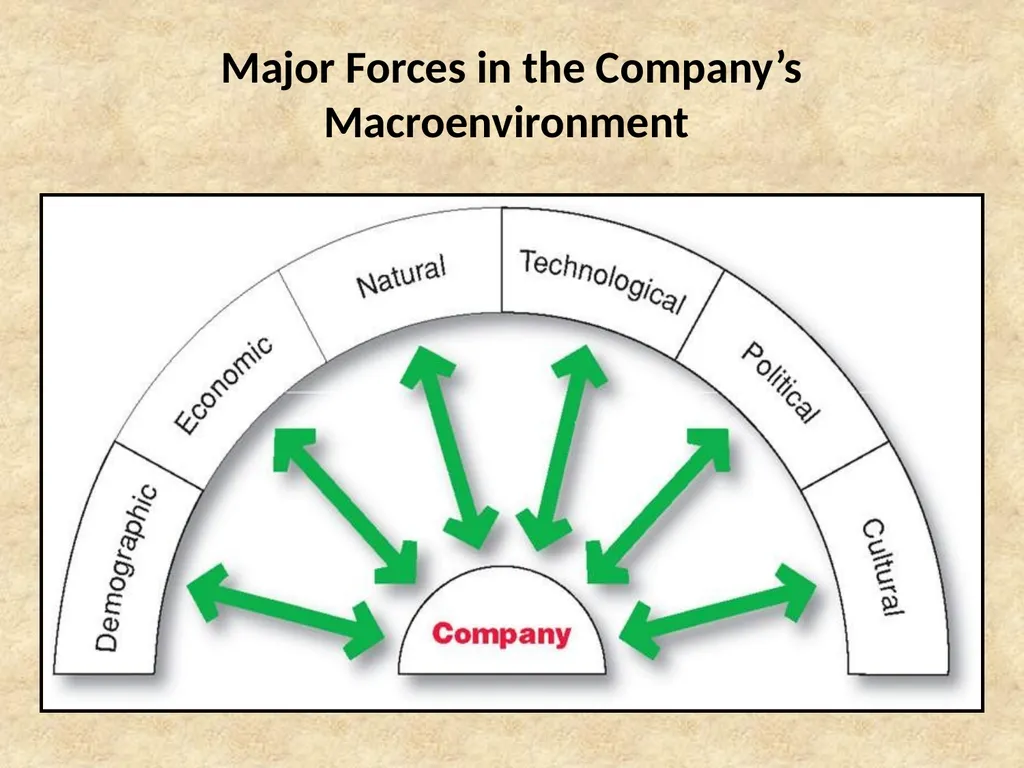
The Company’s Macroenvironment The larger societal forces that affect the microenvironment - demographic, economic, natural, technological, political and cultural forces.<br>
14
Major Forces in the Company’s Macroenvironment<br>
15
Fads, Trends and Mega Trends Fad - Unpredictable, short-lived, and without social, economic, and political significance. Trend - A direction or sequence of events with momentum and durability. Trends are more predictable and durable than a fad; trends reveal the shape of the future and can provide strategic direction. Megatrend - Large social, economic, political, and technological changes (that) are slow to form, and once in place, influences us for some time between seven and ten years, or longer.<br>
16
Demographic Environment Demography is the study of human populations in terms of size, density, location, age, gender, race, occupation, and other statistics.<br>
17
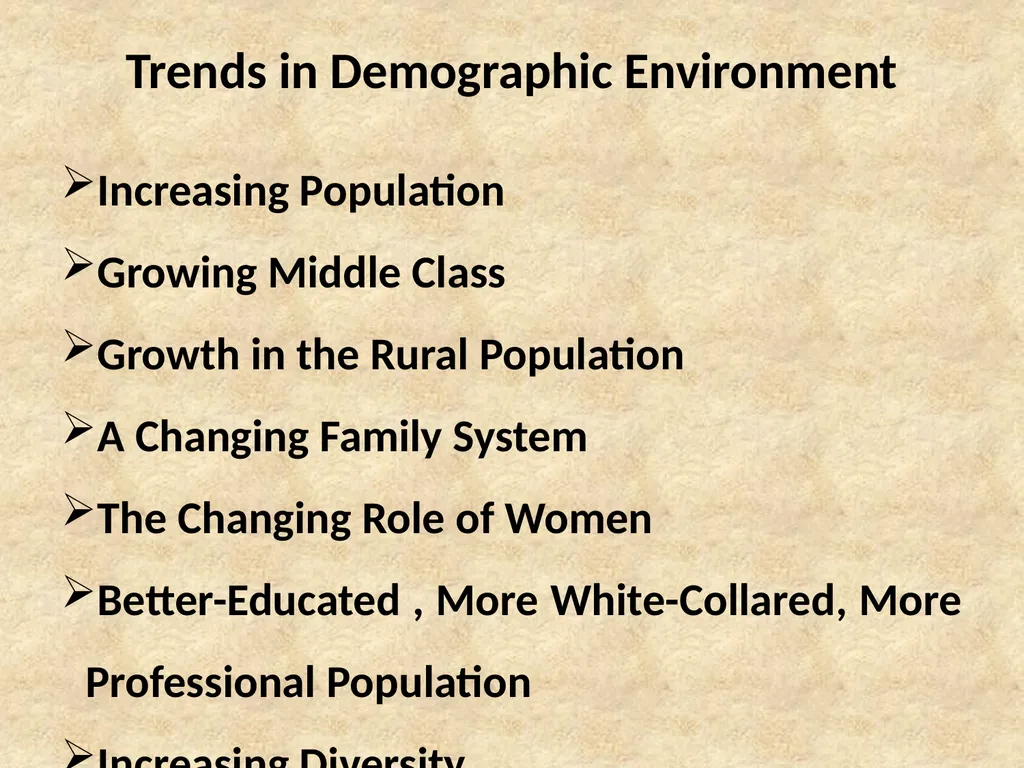
Trends in Demographic Environment Increasing Population
Growing Middle Class
Growth in the Rural Population
A Changing Family System
The Changing Role of Women
Better-Educated , More White-Collared, More Professional Population
Increasing Diversity<br>
18
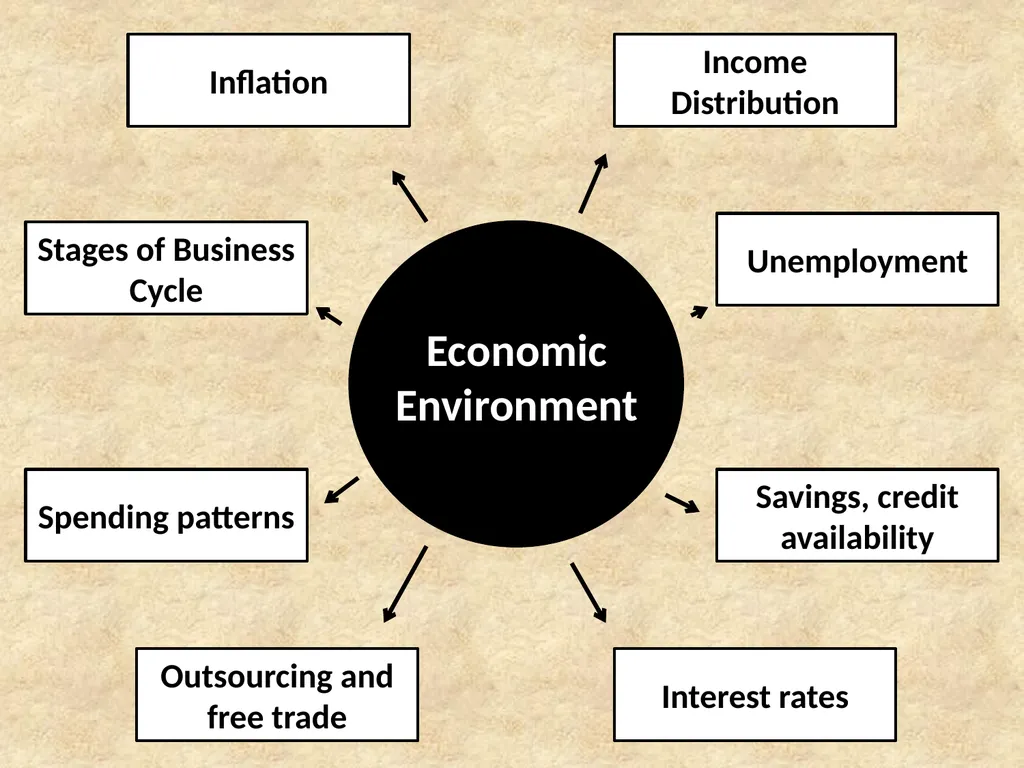
Economic Environment Economic environment consists of factors that affect consumer purchasing power and spending patterns.<br>
19
Income Distribution Inflation Unemployment Savings, credit
availability Interest rates Spending patterns Stages of Business Cycle Outsourcing and free trade Economic
Environment<br>
20
Natural Environment The natural environment involves the natural resources that are needed as inputs by marketers or that are affected by marketing activities.<br>
21
Key Areas of Concern in the Natural Environment Shortage of Raw Materials
Increased pollution
Increased government intervention
Environmental sustainability
Anti pollution pressures
Increased energy costs<br>
22
Technological Environment Forces that create new technologies, creating new product and market opportunities.<br>
23
Technological Trends Accelerating pace of change
Unlimited opportunities for innovation
Varying R & D budgets
Increased regulation of technological change<br>
24
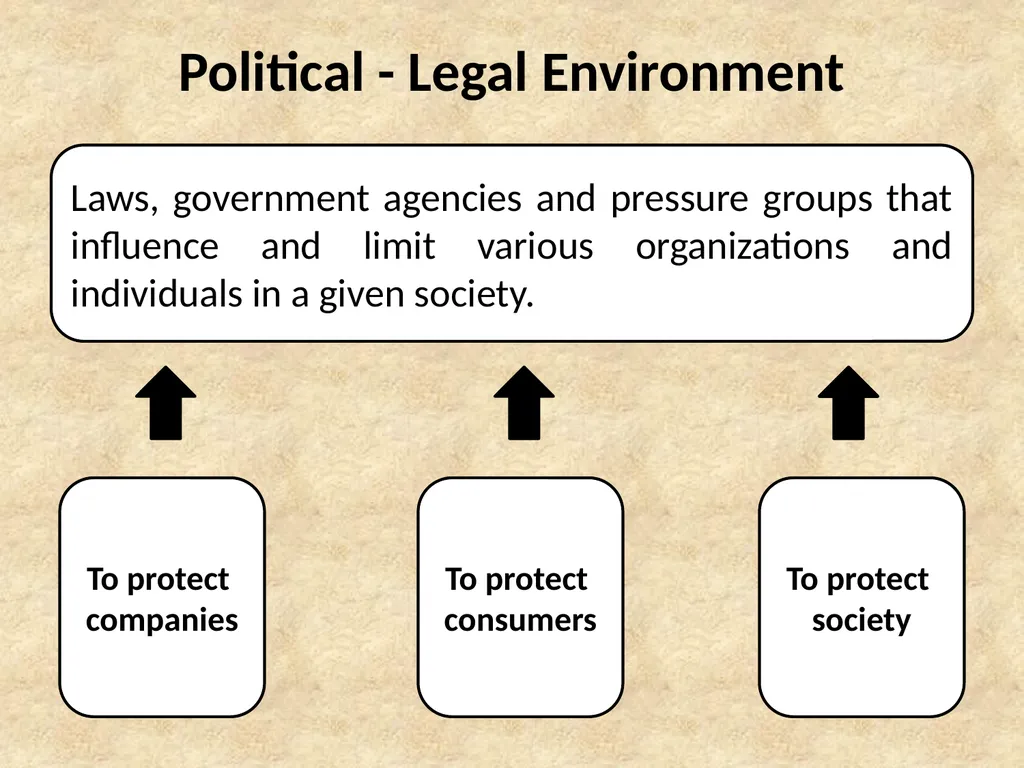
Political - Legal Environment Laws, government agencies and pressure groups that influence and limit various organizations and individuals in a given society. To protect
society To protect
consumers To protect
companies<br>
25
Trends in Political & Legal Environment Legislation Regulating Business
Increasing Legislation
Changing Government Agency Enforcement
New Forms of Nontariff Barriers in Trade
Growth of Special Interests Groups<br>
26
Social-Cultural Environment Cultural Environment
Institutions and other forces that affect society’s basic values, perceptions, preferences and behaviours.<br>
27
Trends in the Social-cultural Environment Increased Emphasis on Ethics and Socially Responsible Actions
Socially Responsible Behaviour
Cause-Related Marketing
Persistence of Cultural Values
Shifts in Secondary Cultural Values
Existence of Subcultures
The major cultural values of a society are expressed in people’s views of themselves and others, as well as in their views of organizations, society, nature, and the universe.<br>
28
Responding to the Marketing Environment<br>
29
Summary and Conclusions<br>