"Behavior Intervention Plans: Developing a" is the property of its rightful owner. Permission is granted to
download and print the materials on this website for personal, non-commercial use only, and to display it
on your personal computer provided you do not modify the materials and that you retain all copyright
notices contained in the materials. By downloading content from our website, you accept the terms of this
agreement.
Presentation Transcript
01
Behavior Intervention Plans: Developing a Competing Pathway<br>
Expectations Be Respectful
Be an active listener
Use notes for side bar conversations
Be Responsible
Silence cell phones—reply appropriately
Complete work within activities
Be a Problem Solver
Ask questions as needed to clarify concepts or directions 2<br>
04
Learner Outcomes Identify defining features of behavior intervention planning from current best practice.
Work with sample scenarios to develop a competing behavior pathway 3<br>
05
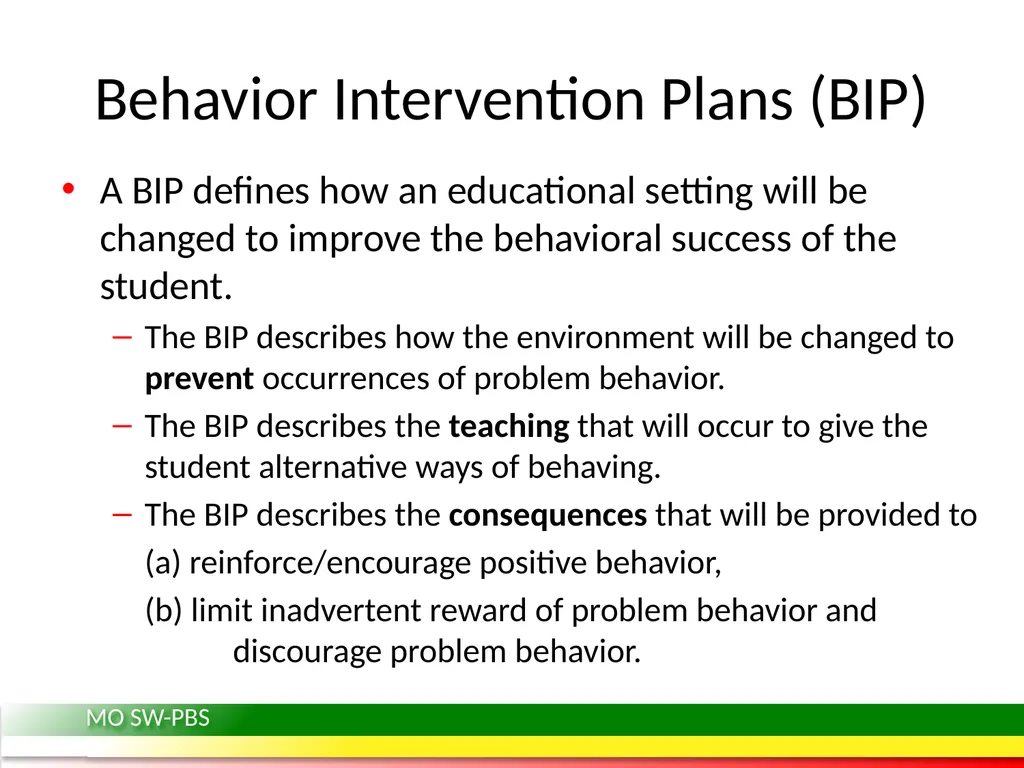
Behavior Intervention Plans (BIP) A BIP defines how an educational setting will be changed to improve the behavioral success of the student.
The BIP describes how the environment will be changed to prevent occurrences of problem behavior.
The BIP describes the teaching that will occur to give the student alternative ways of behaving.
The BIP describes the consequences that will be provided to
(a) reinforce/encourage positive behavior,
(b) limit inadvertent reward of problem behavior and discourage problem behavior.<br>
06
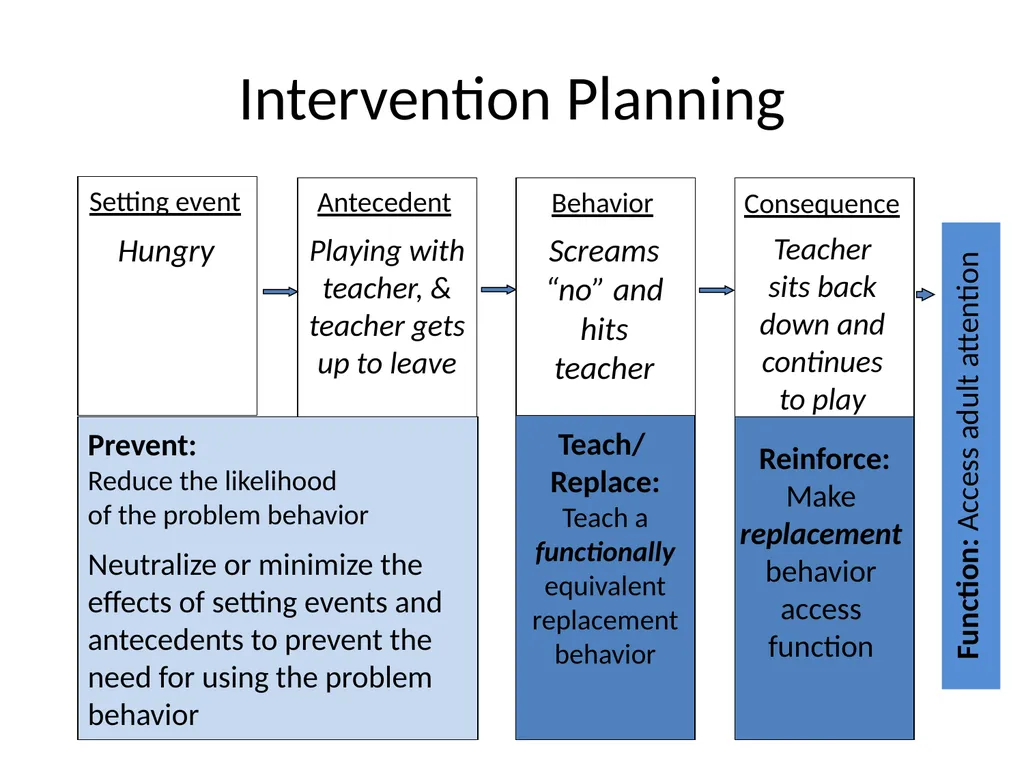
Intervention Planning Prevent:
Reduce the likelihood
of the problem behavior
Neutralize or minimize the
effects of setting events and
antecedents to prevent the
need for using the problem
behavior Teach/
Replace:
Teach a
functionally
equivalent
replacement
behavior Reinforce:
Make
replacement
behavior
access
function Setting event Antecedent Behavior Consequence Hungry Playing with teacher, & teacher gets up to leave Screams “no” and hits teacher Teacher sits back down and continues to play Function: Access adult attention<br>
07
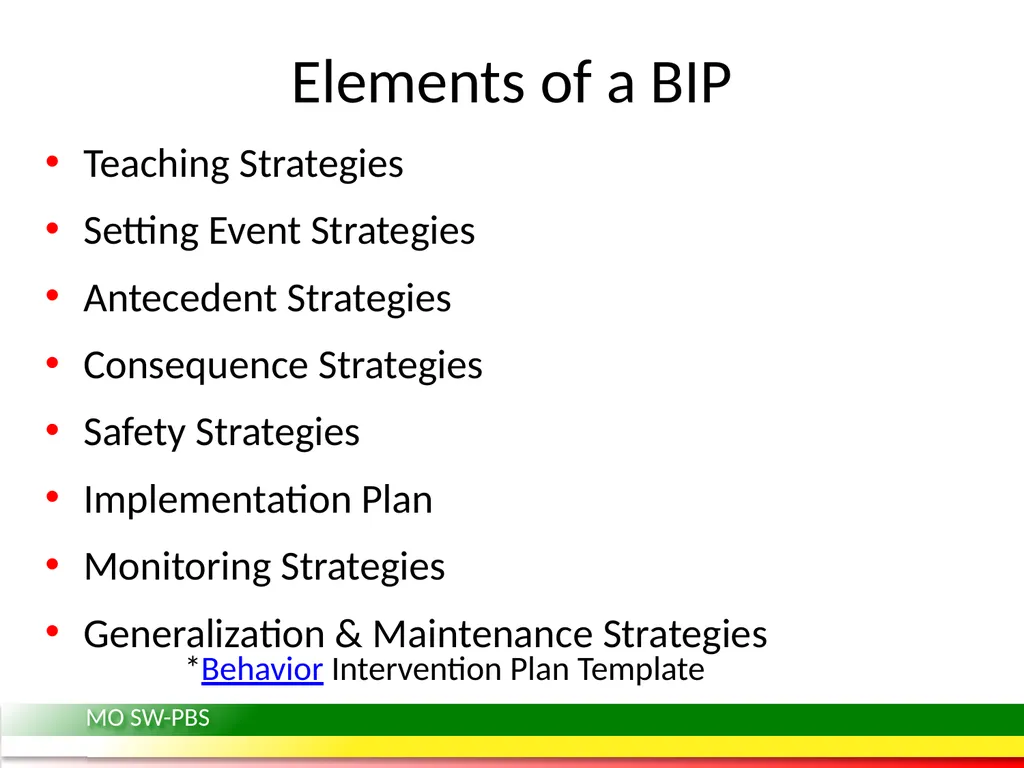
Elements of a BIP Teaching Strategies
Setting Event Strategies
Antecedent Strategies
Consequence Strategies
Safety Strategies
Implementation Plan
Monitoring Strategies
Generalization & Maintenance Strategies *Behavior Intervention Plan Template<br>
08
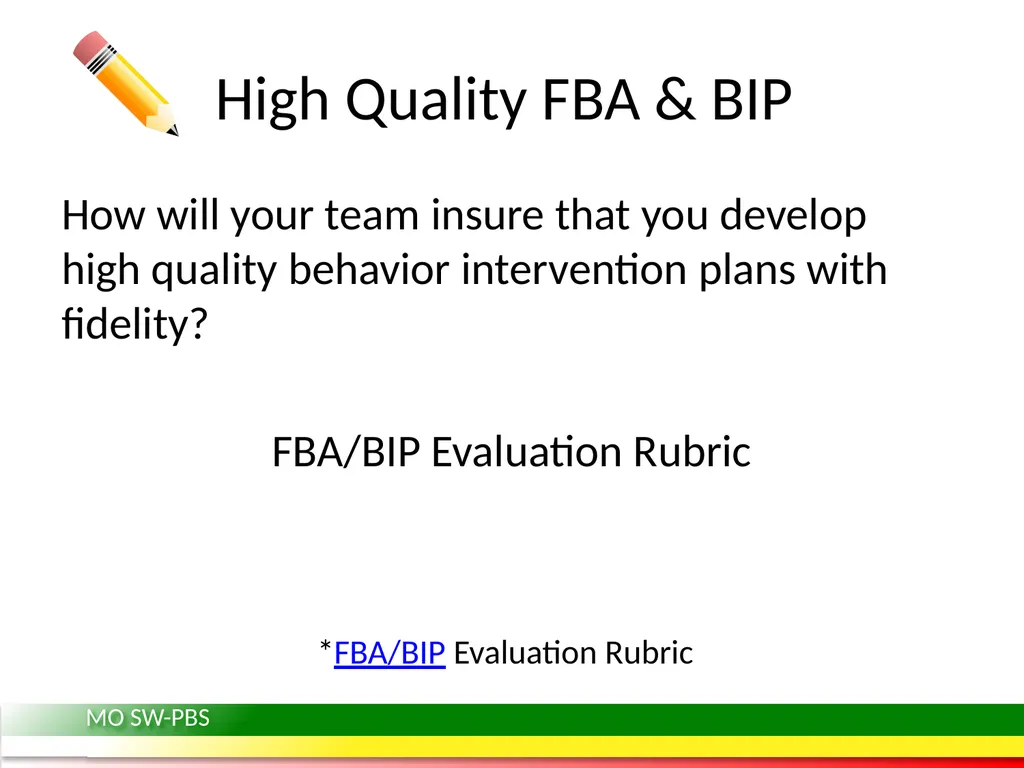
High Quality FBA & BIP How will your team insure that you develop high quality behavior intervention plans with fidelity?
Learner Outcomes Identify defining features of behavior intervention planning from current best practice.
Work with sample scenarios to develop a competing behavior pathway 3<br>
10
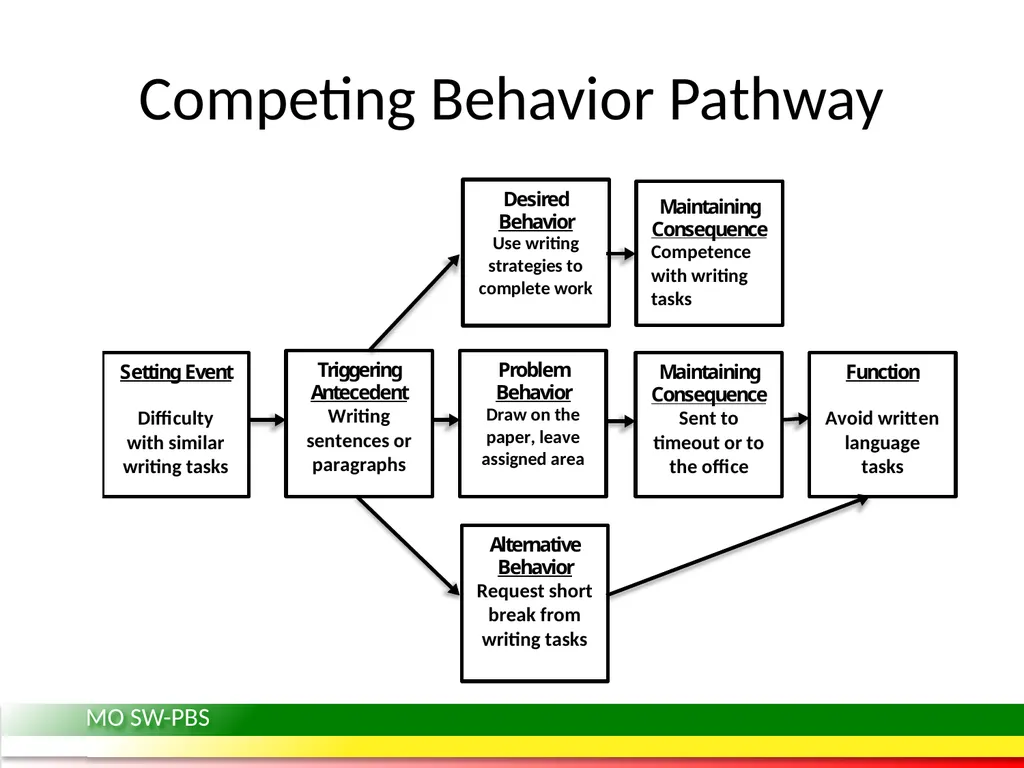
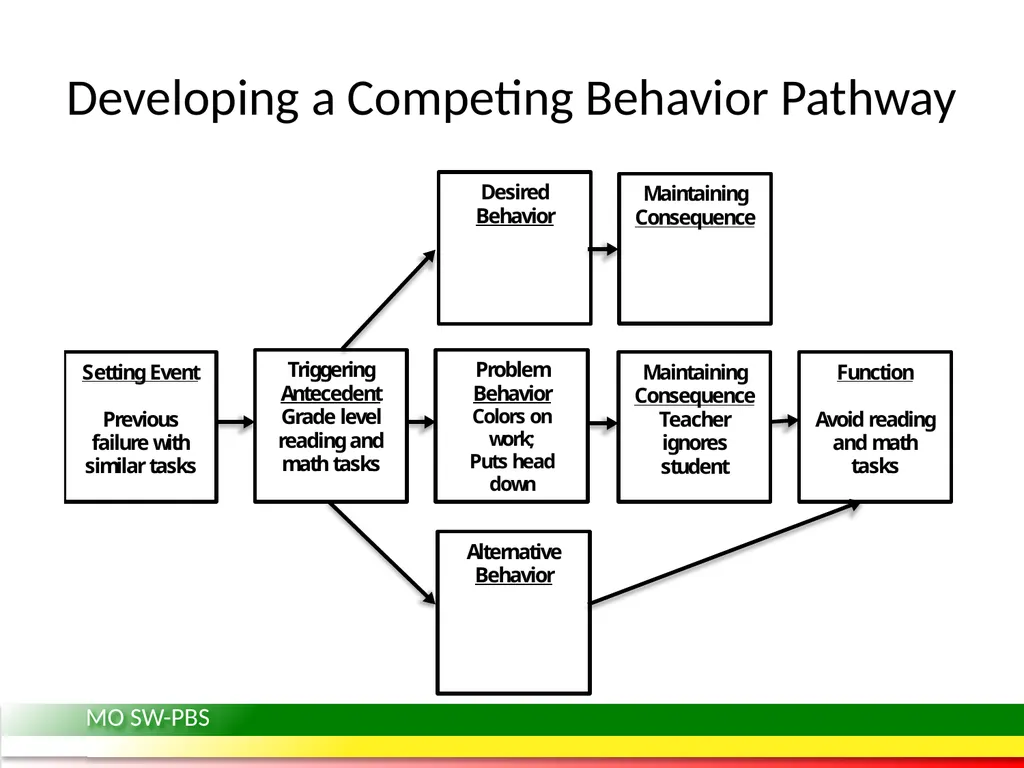
Developing a Competing Behavior Pathway The Competing Behavior Pathway model is used to create a link between the functional behavior assessment and the behavior intervention plan.<br>
11
Competing Behavior Pathway<br>
12
Developing A Competing Behavior Pathway Step 1
The team copies the functional assessment summary statement into the behavior pathway diagram.<br>
13
Developing a Competing Behavior Pathway<br>
14
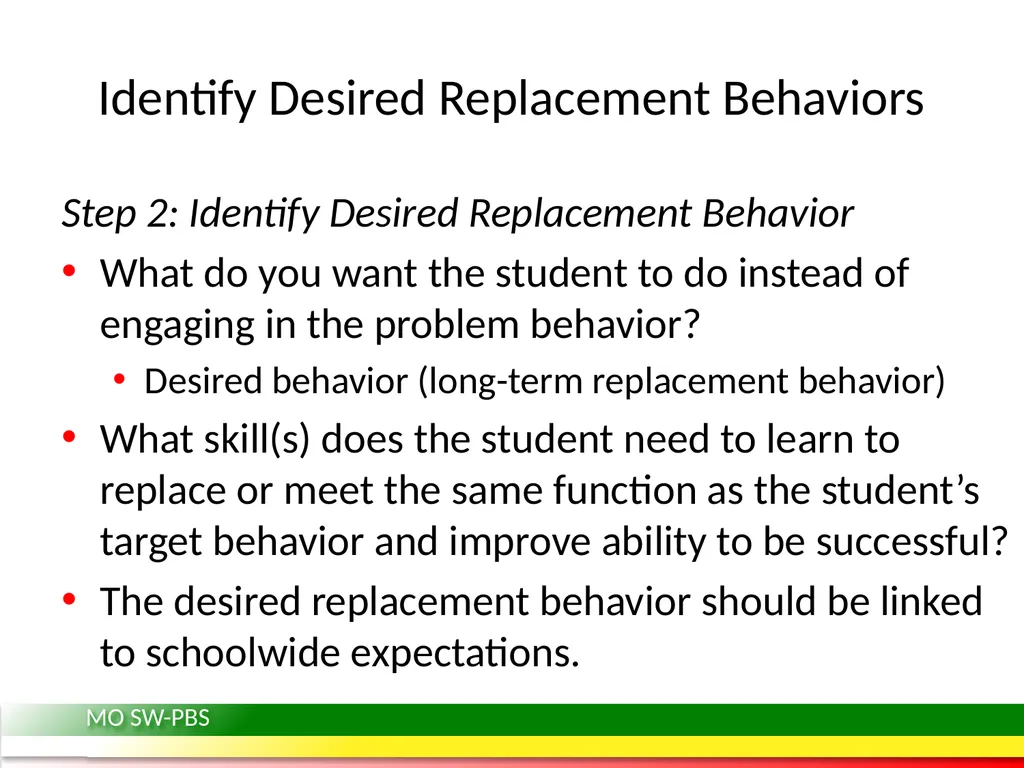
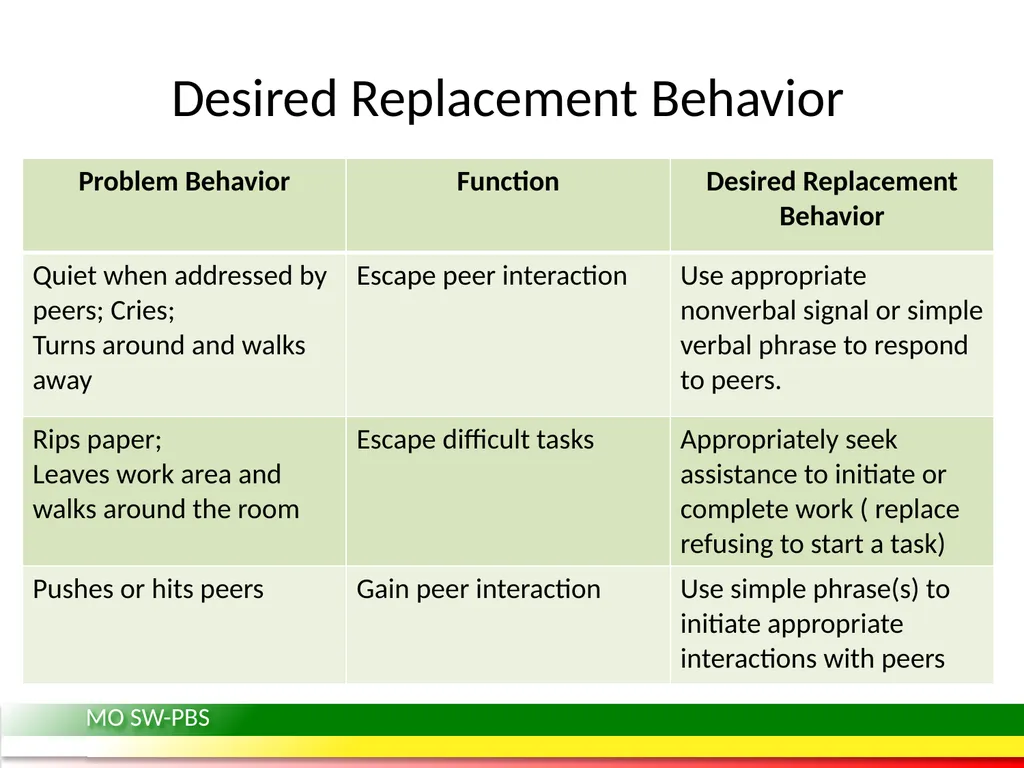
Identify Desired Replacement Behaviors Step 2: Identify Desired Replacement Behavior
What do you want the student to do instead of engaging in the problem behavior?
Desired behavior (long-term replacement behavior)
What skill(s) does the student need to learn to replace or meet the same function as the student’s target behavior and improve ability to be successful?
The desired replacement behavior should be linked to schoolwide expectations.<br>
15
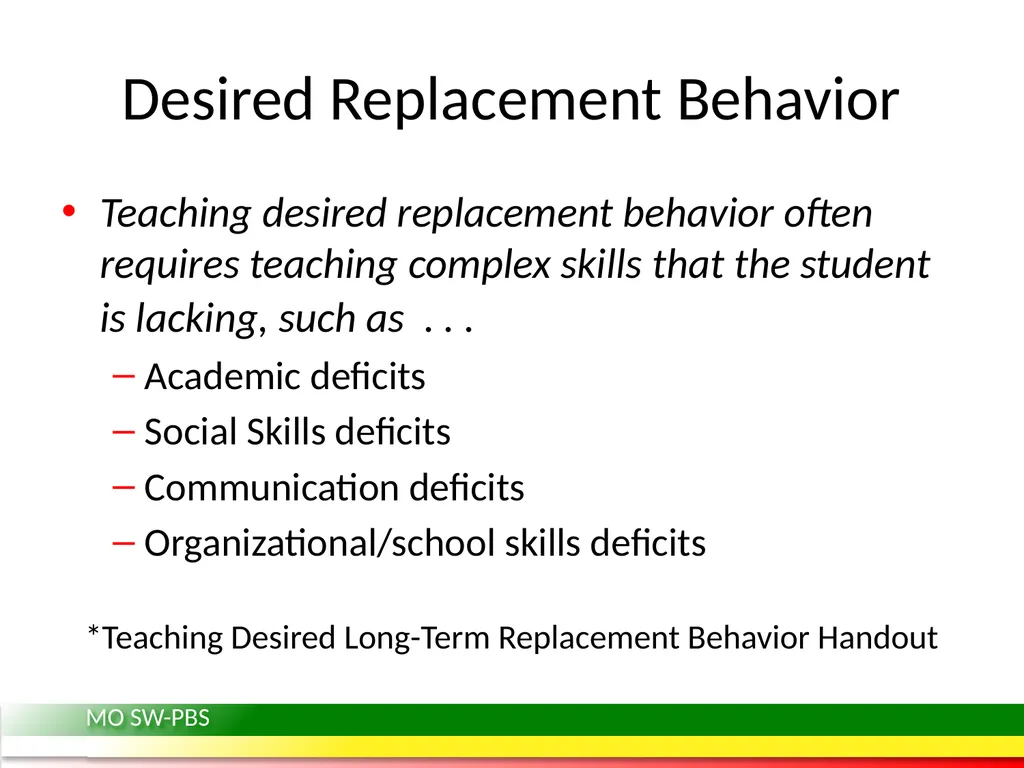
Desired Replacement Behavior Teaching desired replacement behavior often requires teaching complex skills that the student is lacking, such as . . .
Academic deficits
Social Skills deficits
Communication deficits
Organizational/school skills deficits
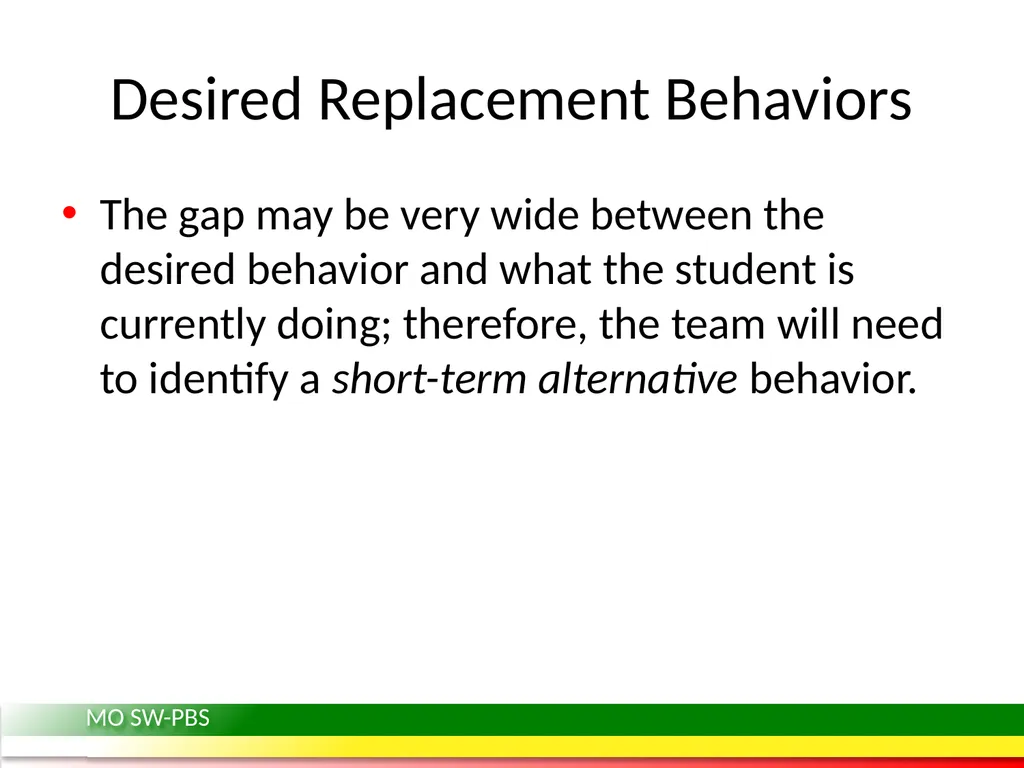
Desired Replacement Behaviors The gap may be very wide between the desired behavior and what the student is currently doing; therefore, the team will need to identify a short-term alternative behavior.<br>
19
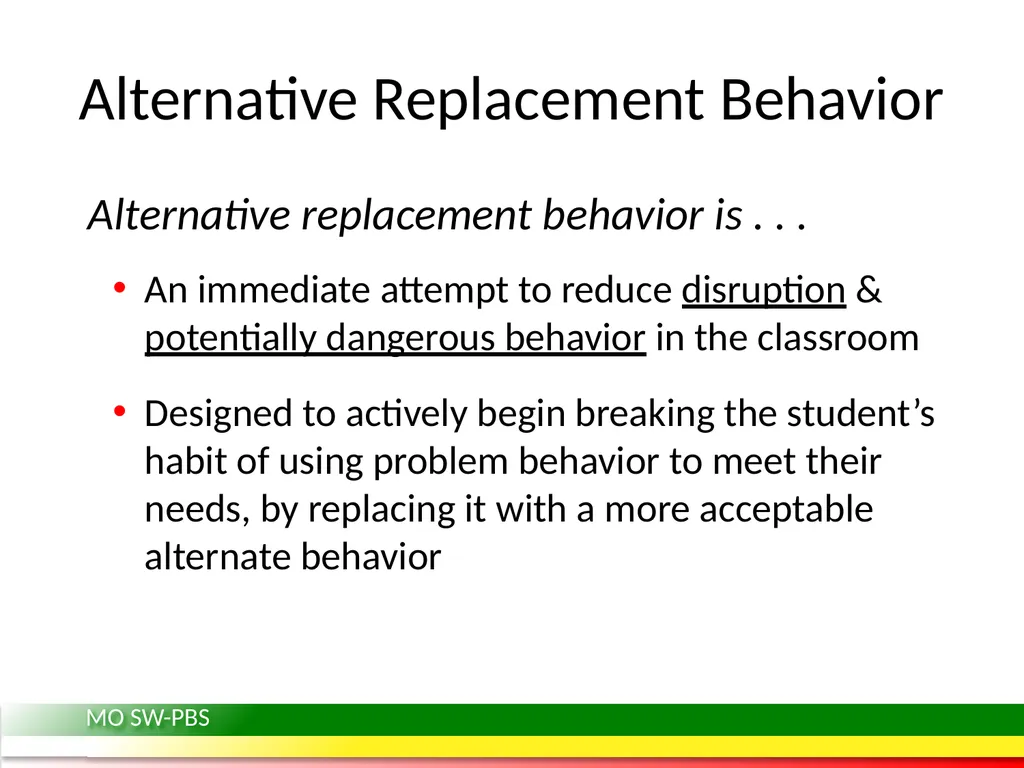
Alternative Replacement Behavior Alternative replacement behavior is . . .
An immediate attempt to reduce disruption & potentially dangerous behavior in the classroom
Designed to actively begin breaking the student’s habit of using problem behavior to meet their needs, by replacing it with a more acceptable alternate behavior<br>
20
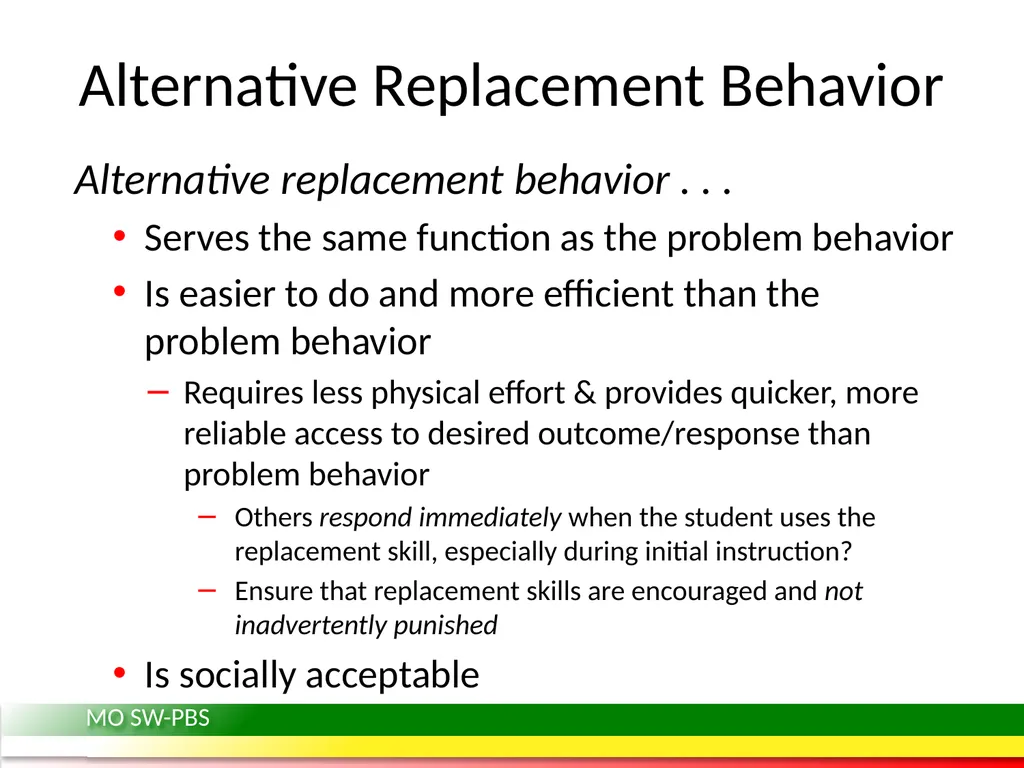
Alternative Replacement Behavior Alternative replacement behavior . . .
Serves the same function as the problem behavior
Is easier to do and more efficient than the problem behavior
Requires less physical effort & provides quicker, more reliable access to desired outcome/response than problem behavior
Others respond immediately when the student uses the replacement skill, especially during initial instruction?
Ensure that replacement skills are encouraged and not inadvertently punished
Is socially acceptable<br>
21
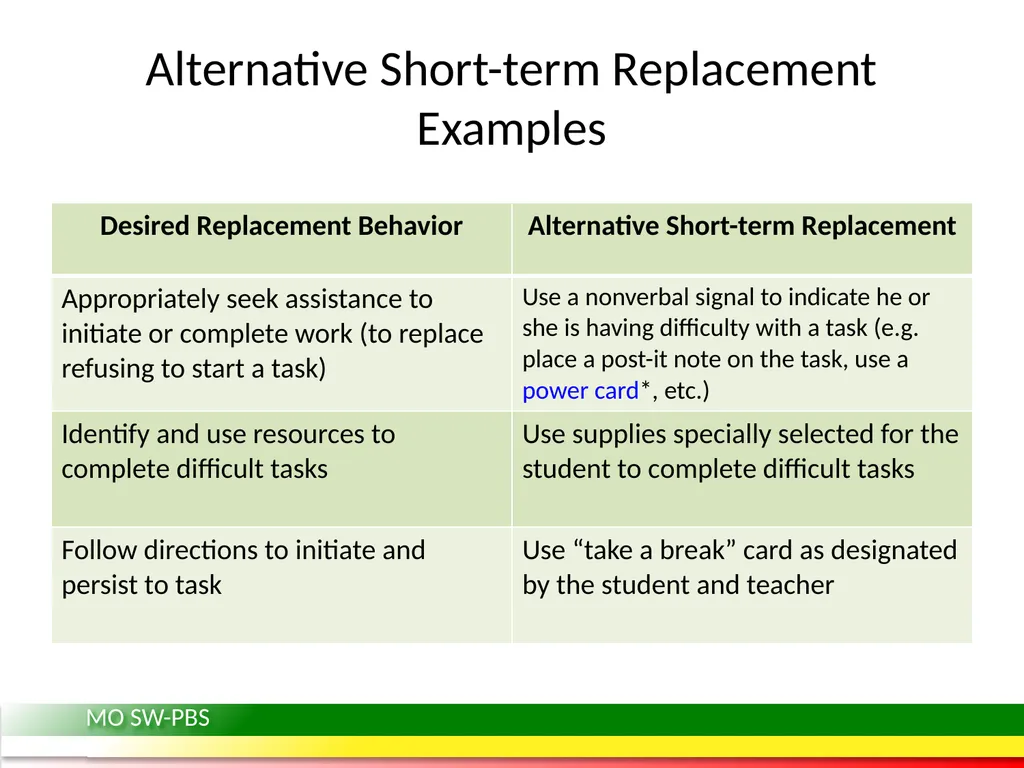
Alternative Short-term Replacement Examples<br>
22
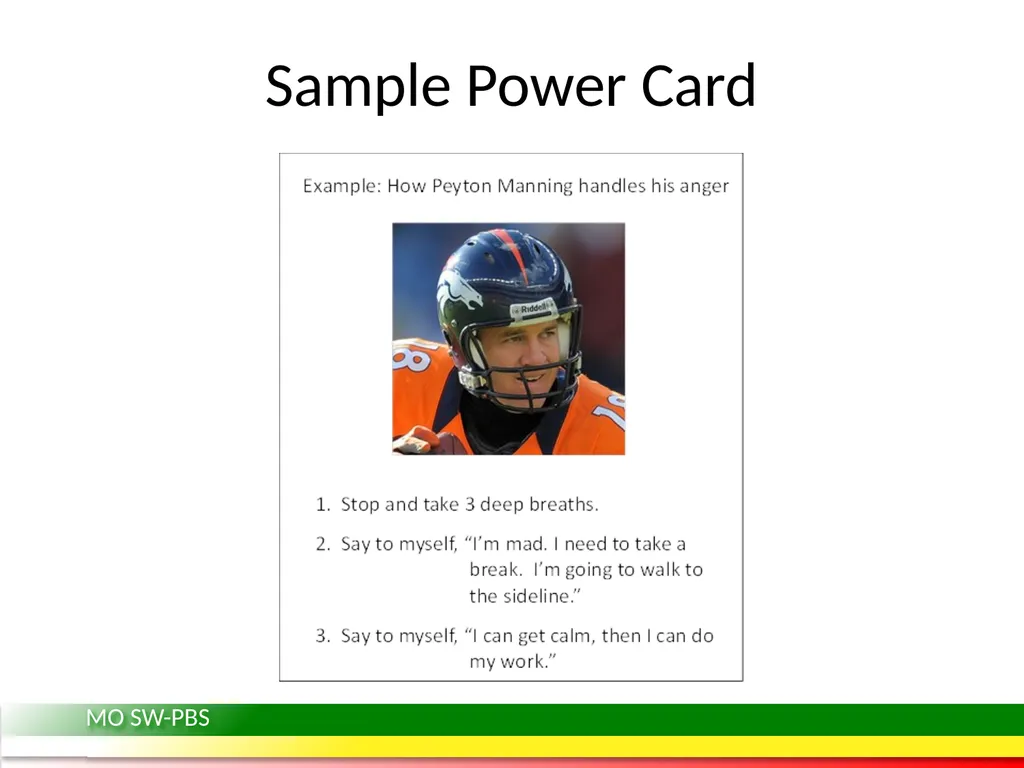
Sample Power Card<br>
23
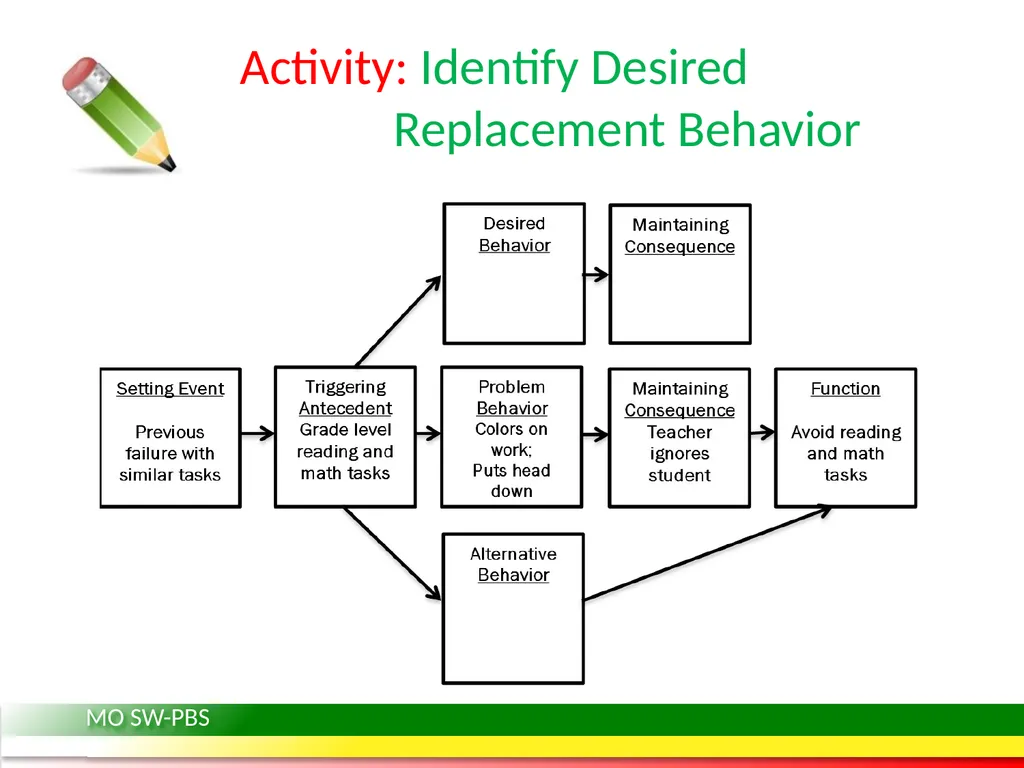
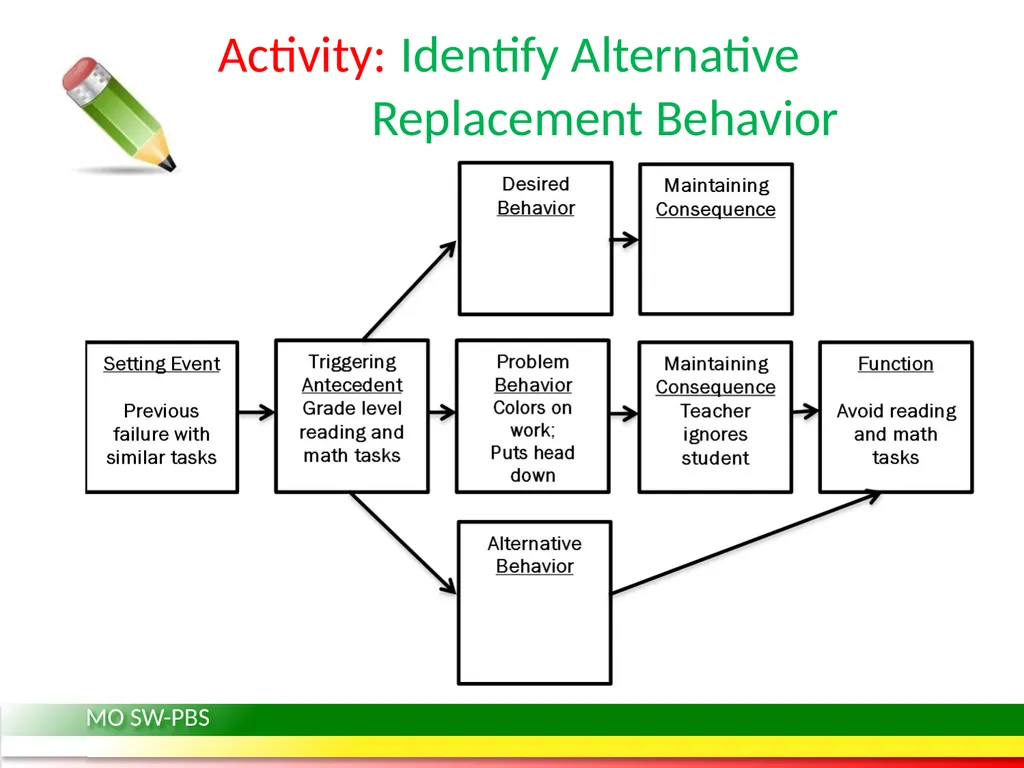
Activity: Identify Alternative Replacement Behavior<br>
24
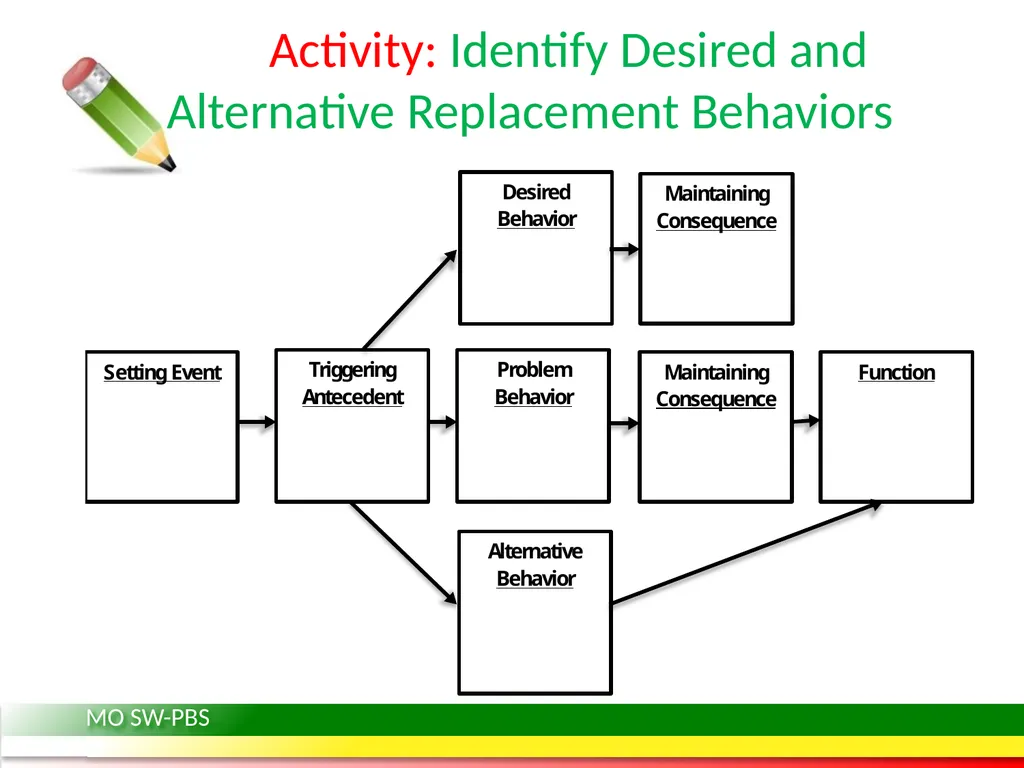
Activity: Identify Desired and Alternative Replacement Behaviors<br>
25
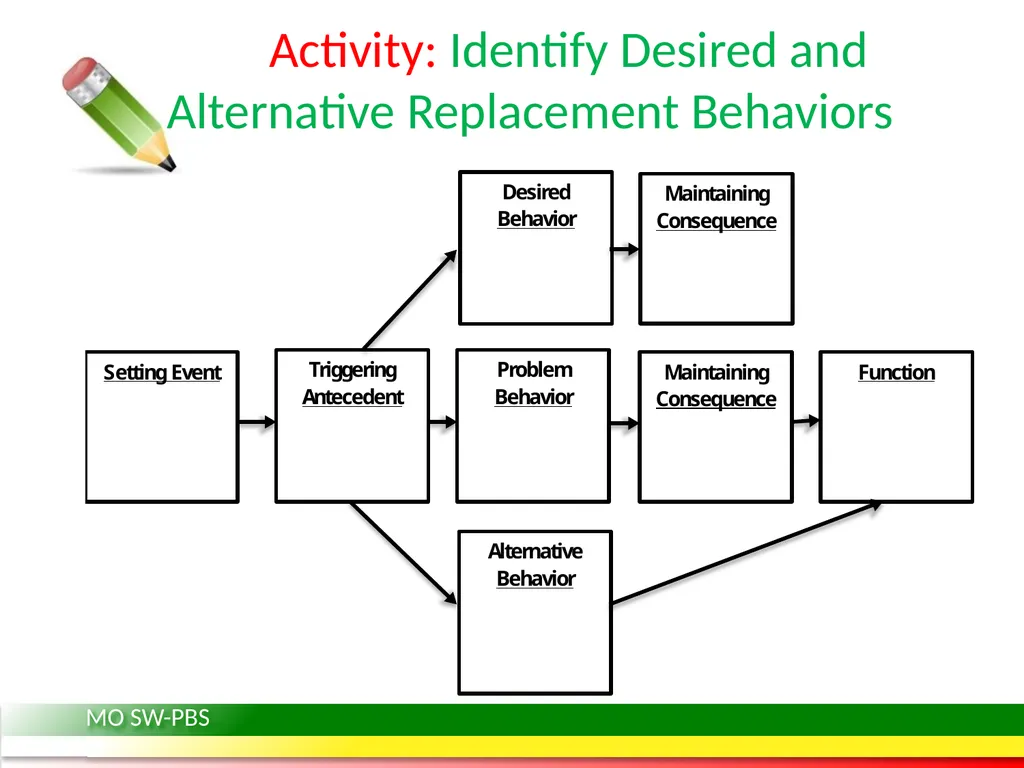
Activity: Identify Desired and Alternative Replacement Behaviors<br>
26
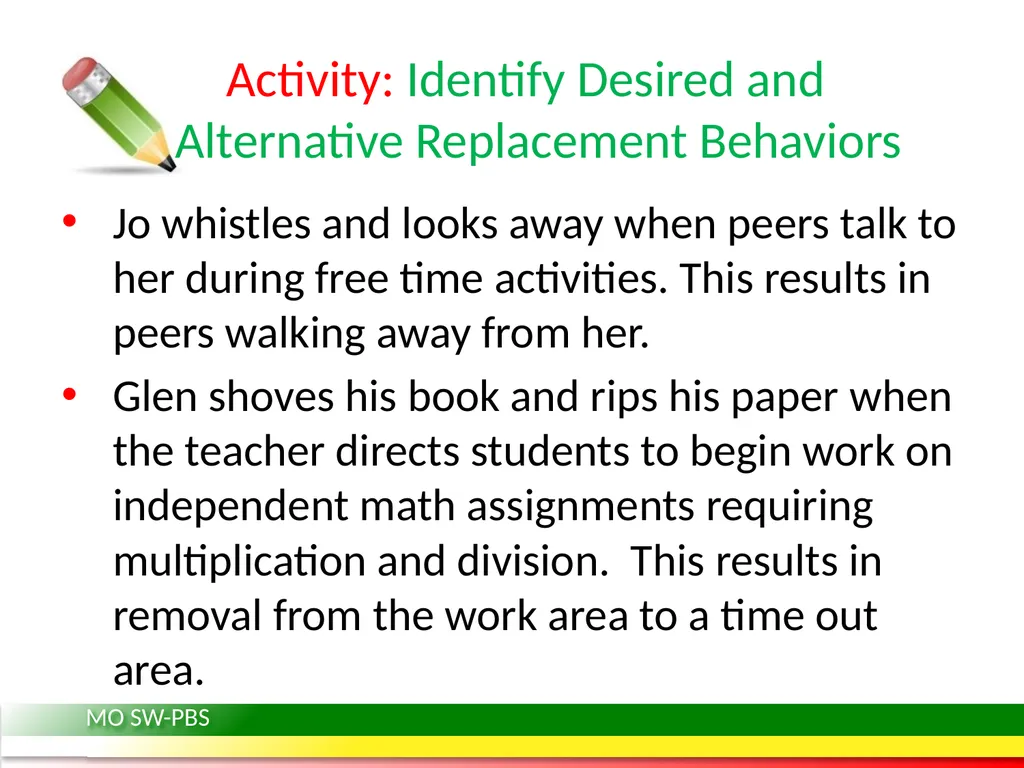
Activity: Identify Desired and Alternative Replacement Behaviors Jo whistles and looks away when peers talk to her during free time activities. This results in peers walking away from her.
Glen shoves his book and rips his paper when the teacher directs students to begin work on independent math assignments requiring multiplication and division. This results in removal from the work area to a time out area.<br>