
Biology Essentials Chapter 8: Patterns of
Description: Biology Essentials Chapter 8: Patterns of Inheritance Learning Objectives By the end of this chapter, you will be able to: Describe how Gregor Mendels experiments with pea plants challenged the blending theory of inheritance. Describe
Related Topics
Download Presentation
"Biology Essentials Chapter 8: Patterns of" is the property of its rightful owner. Permission is granted to download and print the materials on this website for personal, non-commercial use only, and to display it on your personal computer provided you do not modify the materials and that you retain all copyright notices contained in the materials. By downloading content from our website, you accept the terms of this agreement.
Presentation Transcript
slide1. Biology Essentials Chapter 8: Patterns of Inheritance<br>
slide2. Learning Objectives By the end of this chapter, you will be able to:
Describe how Gregor Mendel’s experiments with pea plants challenged the blending theory of inheritance.
Describe Mendel’s monohybrid experiments, including the P, F1, and F2 generations, using diagrams or Punnett squares.
Explain the Law of Segregation, relating it to modern concepts of alleles and gamete formation.
Explain the Law of Independent Assortment.
Apply Mendel’s laws of inheritance to predict simple inheritance patterns through Punnett squares.
Explain how Mendel’s discoveries about heredity apply broadly to sexually reproducing organisms, including humans.<br>
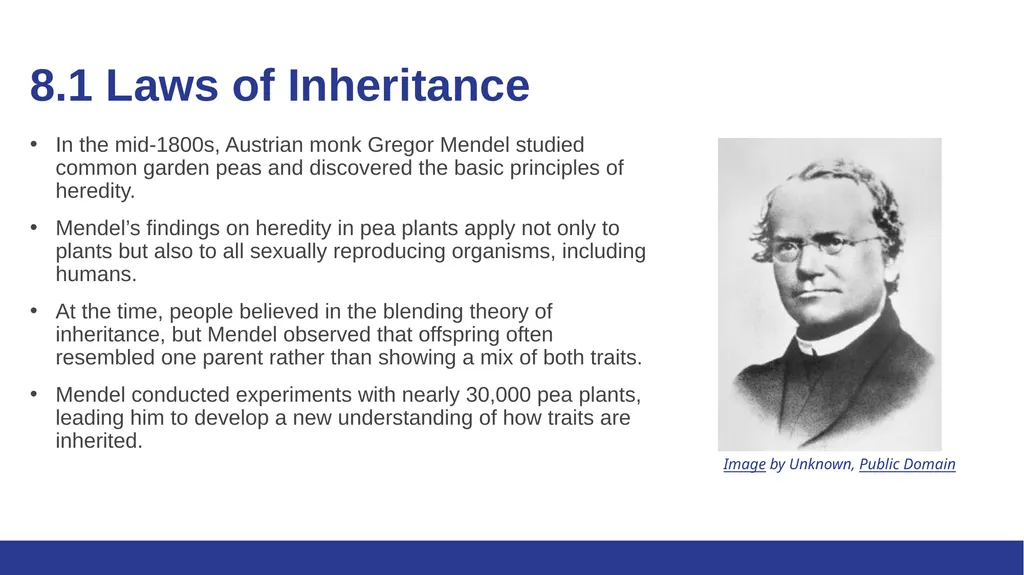
slide3. 8.1 Laws of Inheritance In the mid-1800s, Austrian monk Gregor Mendel studied common garden peas and discovered the basic principles of heredity.
Mendel’s findings on heredity in pea plants apply not only to plants but also to all sexually reproducing organisms, including humans.
At the time, people believed in the blending theory of inheritance, but Mendel observed that offspring often resembled one parent rather than showing a mix of both traits.
Mendel conducted experiments with nearly 30,000 pea plants, leading him to develop a new understanding of how traits are inherited. Image by Unknown, Public Domain<br>
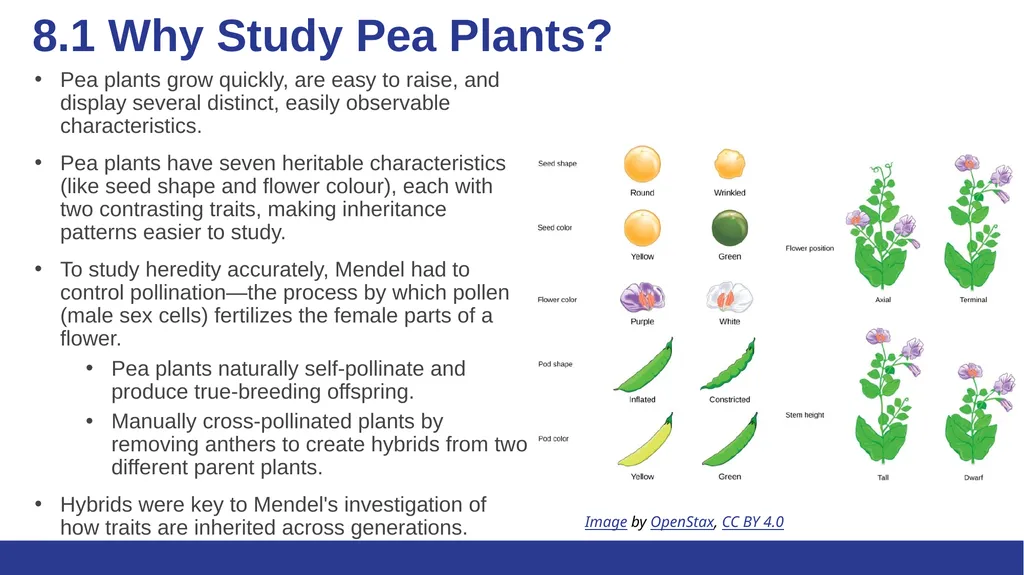
slide4. 8.1 Why Study Pea Plants? Pea plants grow quickly, are easy to raise, and display several distinct, easily observable characteristics.
Pea plants have seven heritable characteristics (like seed shape and flower colour), each with two contrasting traits, making inheritance patterns easier to study.
To study heredity accurately, Mendel had to control pollination—the process by which pollen (male sex cells) fertilizes the female parts of a flower.
Pea plants naturally self-pollinate and produce true-breeding offspring.
Manually cross-pollinated plants by removing anthers to create hybrids from two different parent plants.
Hybrids were key to Mendel's investigation of how traits are inherited across generations. Image by OpenStax, CC BY 4.0<br>
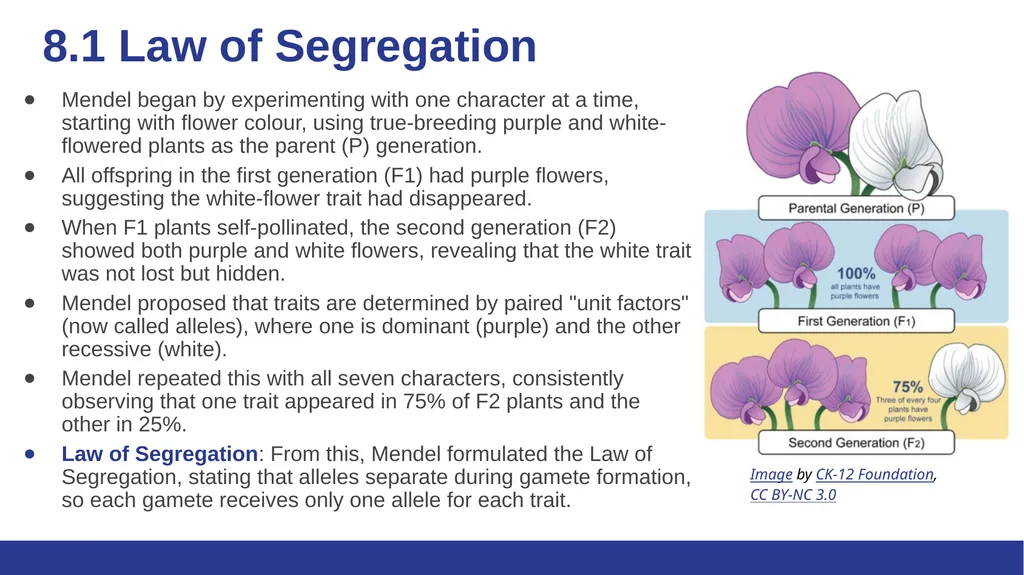
slide5. 8.1 Law of Segregation Mendel began by experimenting with one character at a time, starting with flower colour, using true-breeding purple and white-flowered plants as the parent (P) generation.
All offspring in the first generation (F1) had purple flowers, suggesting the white-flower trait had disappeared.
When F1 plants self-pollinated, the second generation (F2) showed both purple and white flowers, revealing that the white trait was not lost but hidden.
Mendel proposed that traits are determined by paired "unit factors" (now called alleles), where one is dominant (purple) and the other recessive (white).
Mendel repeated this with all seven characters, consistently observing that one trait appeared in 75% of F2 plants and the other in 25%.
Law of Segregation: From this, Mendel formulated the Law of Segregation, stating that alleles separate during gamete formation, so each gamete receives only one allele for each trait. Image by CK-12 Foundation, CC BY-NC 3.0<br>
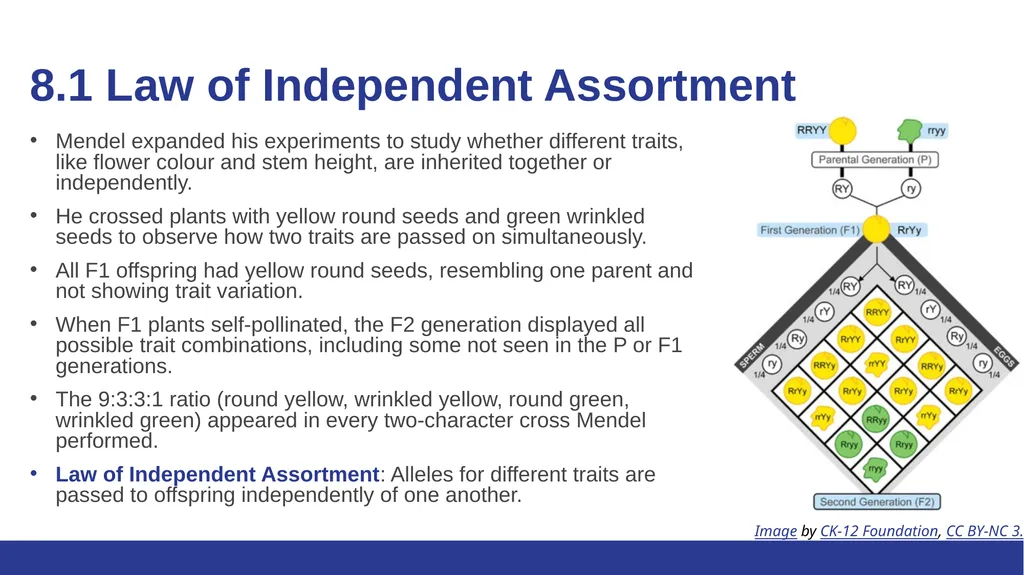
slide6. 8.1 Law of Independent Assortment Mendel expanded his experiments to study whether different traits, like flower colour and stem height, are inherited together or independently.
He crossed plants with yellow round seeds and green wrinkled seeds to observe how two traits are passed on simultaneously.
All F1 offspring had yellow round seeds, resembling one parent and not showing trait variation.
When F1 plants self-pollinated, the F2 generation displayed all possible trait combinations, including some not seen in the P or F1 generations.
The 9:3:3:1 ratio (round yellow, wrinkled yellow, round green, wrinkled green) appeared in every two-character cross Mendel performed.
Law of Independent Assortment: Alleles for different traits are passed to offspring independently of one another. Image by CK-12 Foundation, CC BY-NC 3.0<br>
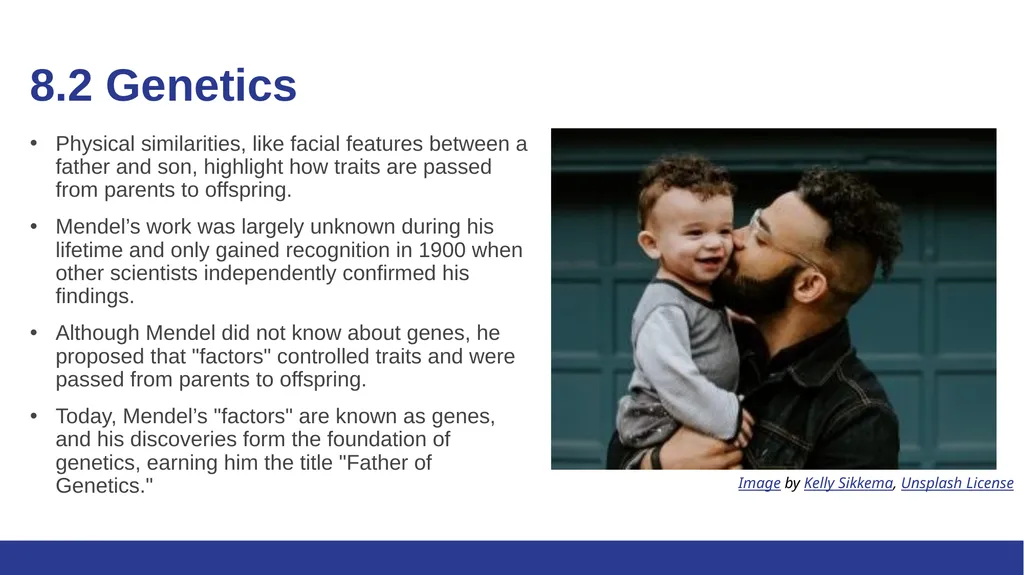
slide7. 8.2 Genetics Physical similarities, like facial features between a father and son, highlight how traits are passed from parents to offspring.
Mendel’s work was largely unknown during his lifetime and only gained recognition in 1900 when other scientists independently confirmed his findings.
Although Mendel did not know about genes, he proposed that "factors" controlled traits and were passed from parents to offspring.
Today, Mendel’s "factors" are known as genes, and his discoveries form the foundation of genetics, earning him the title "Father of Genetics." Image by Kelly Sikkema, Unsplash License<br>
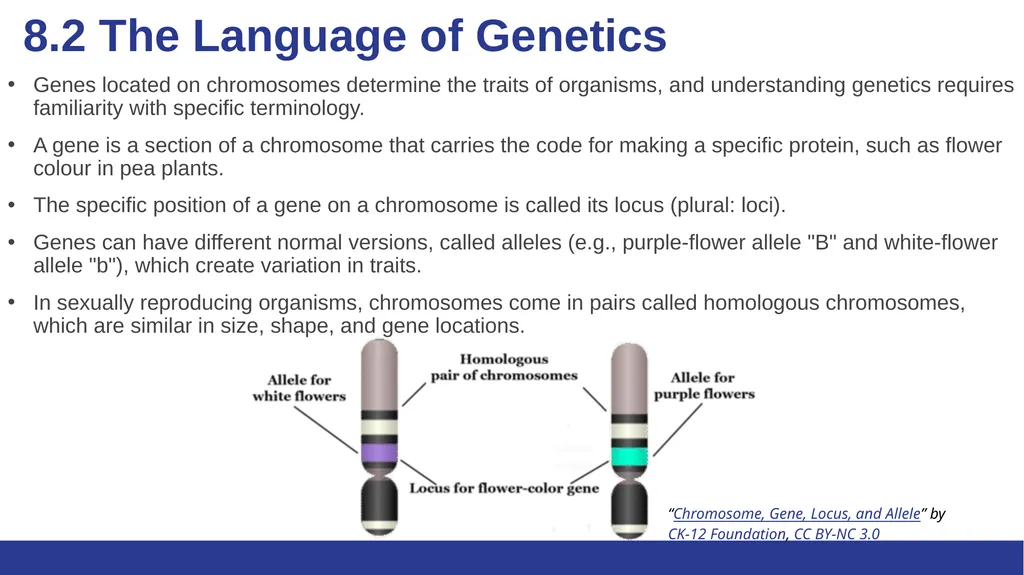
slide8. 8.2 The Language of Genetics Genes located on chromosomes determine the traits of organisms, and understanding genetics requires familiarity with specific terminology.
A gene is a section of a chromosome that carries the code for making a specific protein, such as flower colour in pea plants.
The specific position of a gene on a chromosome is called its locus (plural: loci).
Genes can have different normal versions, called alleles (e.g., purple-flower allele "B" and white-flower allele "b"), which create variation in traits.
In sexually reproducing organisms, chromosomes come in pairs called homologous chromosomes, which are similar in size, shape, and gene locations. “Chromosome, Gene, Locus, and Allele” by CK-12 Foundation, CC BY-NC 3.0<br>
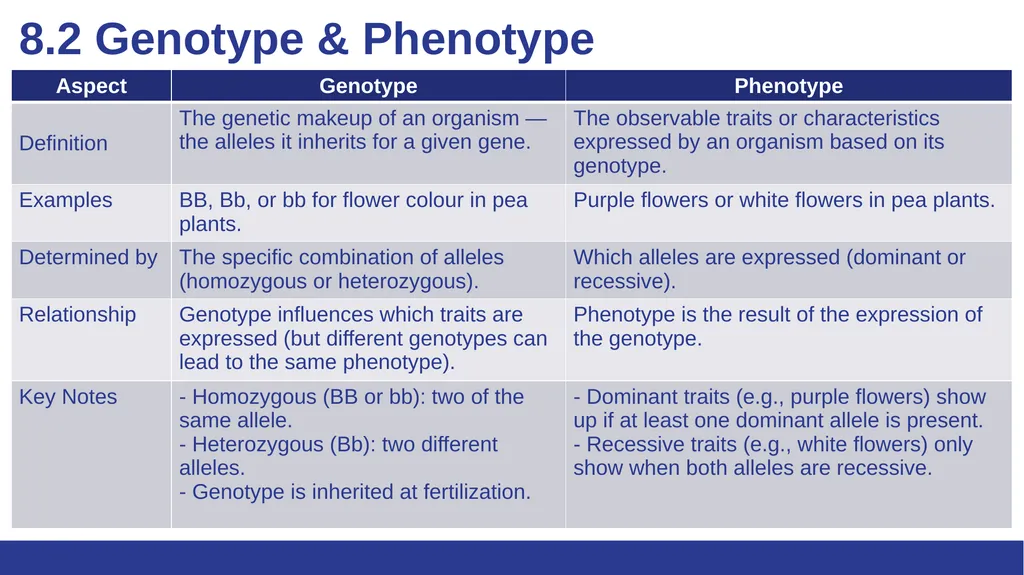
slide9. 8.2 Genotype & Phenotype<br>
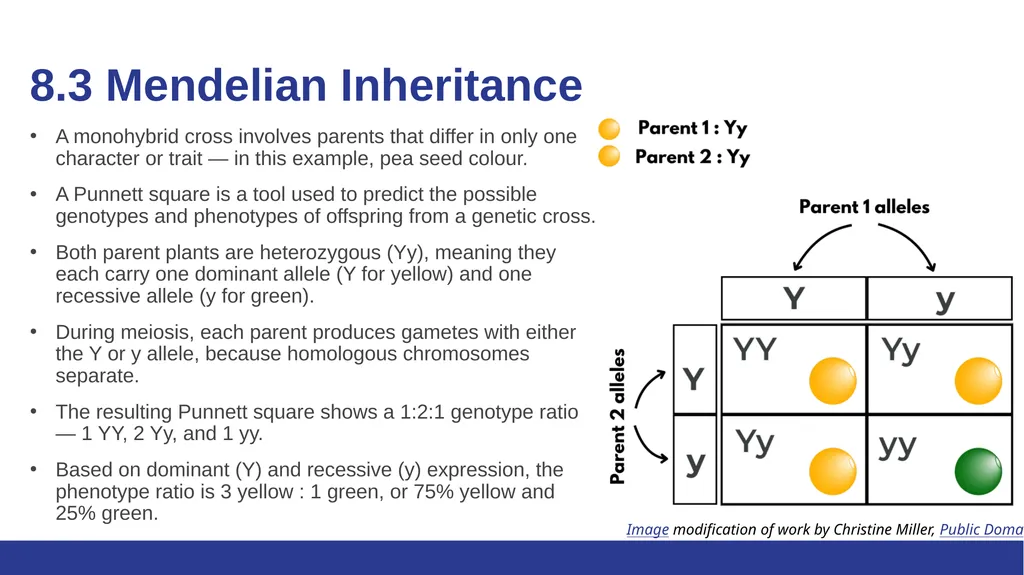
slide10. 8.3 Mendelian Inheritance A monohybrid cross involves parents that differ in only one character or trait — in this example, pea seed colour.
A Punnett square is a tool used to predict the possible genotypes and phenotypes of offspring from a genetic cross.
Both parent plants are heterozygous (Yy), meaning they each carry one dominant allele (Y for yellow) and one recessive allele (y for green).
During meiosis, each parent produces gametes with either the Y or y allele, because homologous chromosomes separate.
The resulting Punnett square shows a 1:2:1 genotype ratio — 1 YY, 2 Yy, and 1 yy.
Based on dominant (Y) and recessive (y) expression, the phenotype ratio is 3 yellow : 1 green, or 75% yellow and 25% green. Image modification of work by Christine Miller, Public Domain<br>
slide11. 8.3 Probability Basics Mendel’s results can be explained using probability, which measures the likelihood of an event occurring.
A probability of 1 (100%) means an event is certain, 0 (0%) means it will not happen, and 0.5 (50%) means an equal chance of occurring or not.
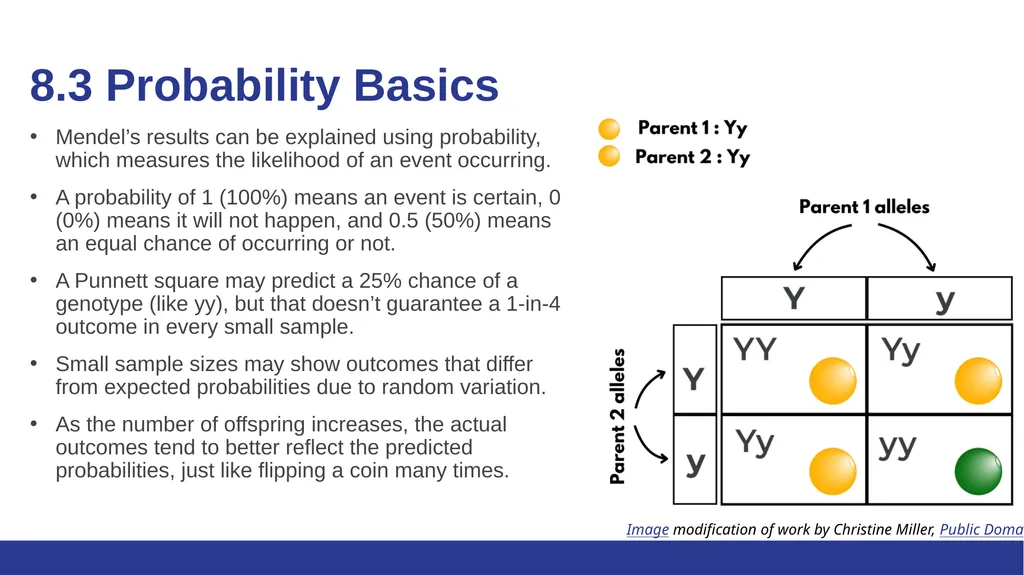
A Punnett square may predict a 25% chance of a genotype (like yy), but that doesn’t guarantee a 1-in-4 outcome in every small sample.
Small sample sizes may show outcomes that differ from expected probabilities due to random variation.
As the number of offspring increases, the actual outcomes tend to better reflect the predicted probabilities, just like flipping a coin many times. Image modification of work by Christine Miller, Public Domain<br>
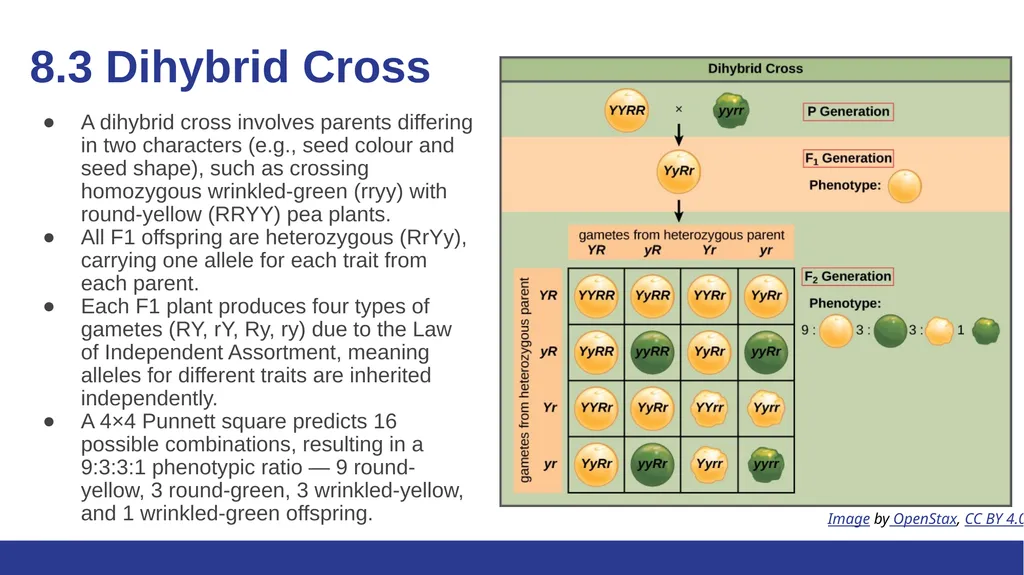
slide12. 8.3 Dihybrid Cross A dihybrid cross involves parents differing in two characters (e.g., seed colour and seed shape), such as crossing homozygous wrinkled-green (rryy) with round-yellow (RRYY) pea plants.
All F1 offspring are heterozygous (RrYy), carrying one allele for each trait from each parent.
Each F1 plant produces four types of gametes (RY, rY, Ry, ry) due to the Law of Independent Assortment, meaning alleles for different traits are inherited independently.
A 4×4 Punnett square predicts 16 possible combinations, resulting in a 9:3:3:1 phenotypic ratio — 9 round-yellow, 3 round-green, 3 wrinkled-yellow, and 1 wrinkled-green offspring. Image by OpenStax, CC BY 4.0<br>
slide13. 8.3 Mendelian Inheritance in Humans Mendelian inheritance describes traits controlled by a single gene with two alleles, where one allele may be completely dominant over the other.
Autosomal Traits: Traits controlled by genes on the 22 pairs of autosomes (non-sex chromosomes) are inherited similarly by males and females.
Example: Albinism is a Mendelian autosomal trait where the dominant allele (R) produces normal pigmentation and the recessive allele (r) results in albinism when two recessive alleles are inherited.
Two parents who are carriers (Rr) but show normal pigmentation can have a child with albinism (rr).
Huntington’s disease and the type of earwax (wet or dry) are examples of other human traits with a Mendelian inheritance pattern.
Many traits once thought to be Mendelian (like dimples and tongue rolling) are now known to be influenced by multiple genes or more than two alleles, making them non-Mendelian.<br>
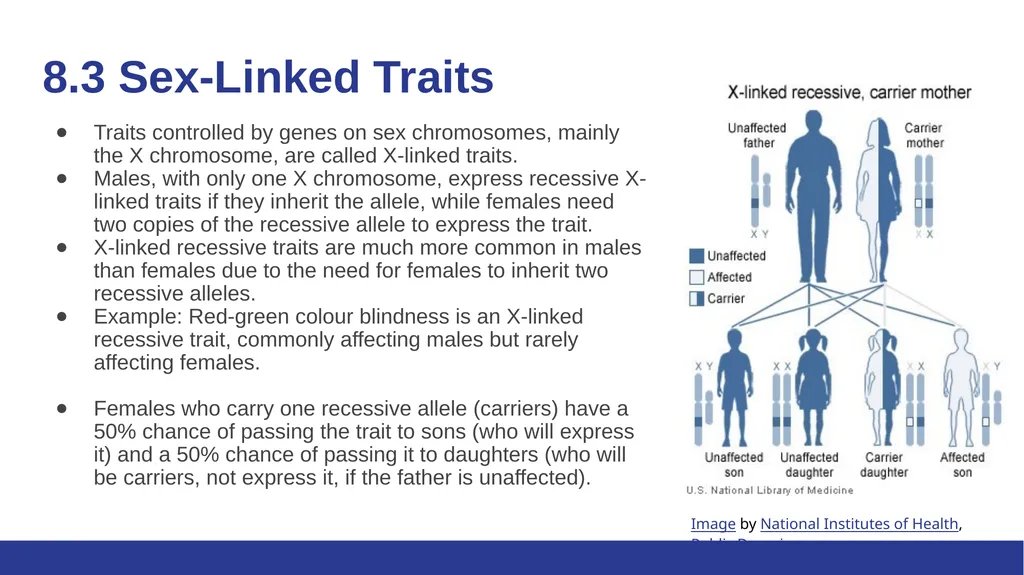
slide14. 8.3 Sex-Linked Traits Traits controlled by genes on sex chromosomes, mainly the X chromosome, are called X-linked traits.
Males, with only one X chromosome, express recessive X-linked traits if they inherit the allele, while females need two copies of the recessive allele to express the trait.
X-linked recessive traits are much more common in males than females due to the need for females to inherit two recessive alleles.
Example: Red-green colour blindness is an X-linked recessive trait, commonly affecting males but rarely affecting females.
Females who carry one recessive allele (carriers) have a 50% chance of passing the trait to sons (who will express it) and a 50% chance of passing it to daughters (who will be carriers, not express it, if the father is unaffected). Image by National Institutes of Health, Public Domain<br>
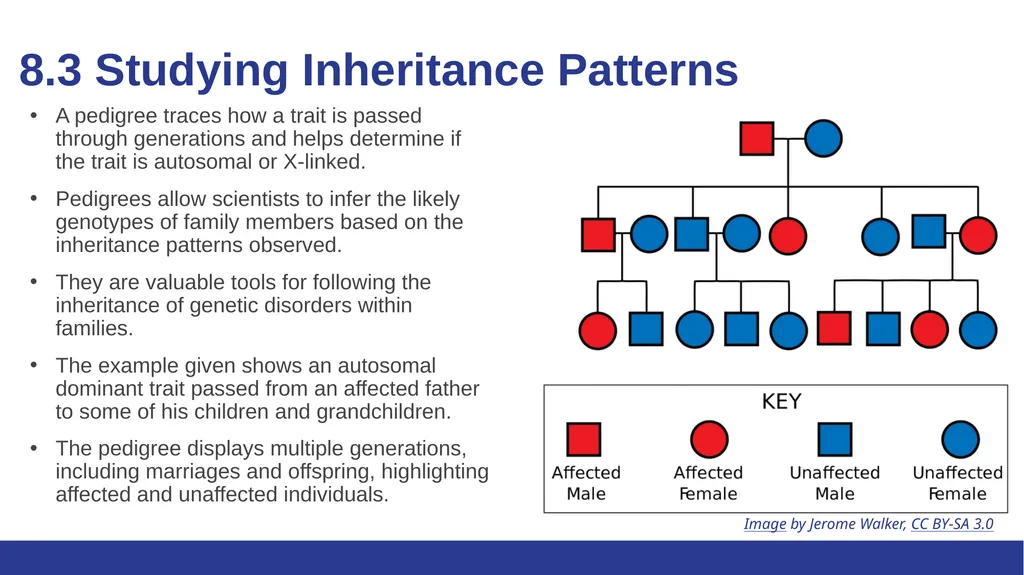
slide15. 8.3 Studying Inheritance Patterns A pedigree traces how a trait is passed through generations and helps determine if the trait is autosomal or X-linked.
Pedigrees allow scientists to infer the likely genotypes of family members based on the inheritance patterns observed.
They are valuable tools for following the inheritance of genetic disorders within families.
The example given shows an autosomal dominant trait passed from an affected father to some of his children and grandchildren.
The pedigree displays multiple generations, including marriages and offspring, highlighting affected and unaffected individuals. Image by Jerome Walker, CC BY-SA 3.0<br>
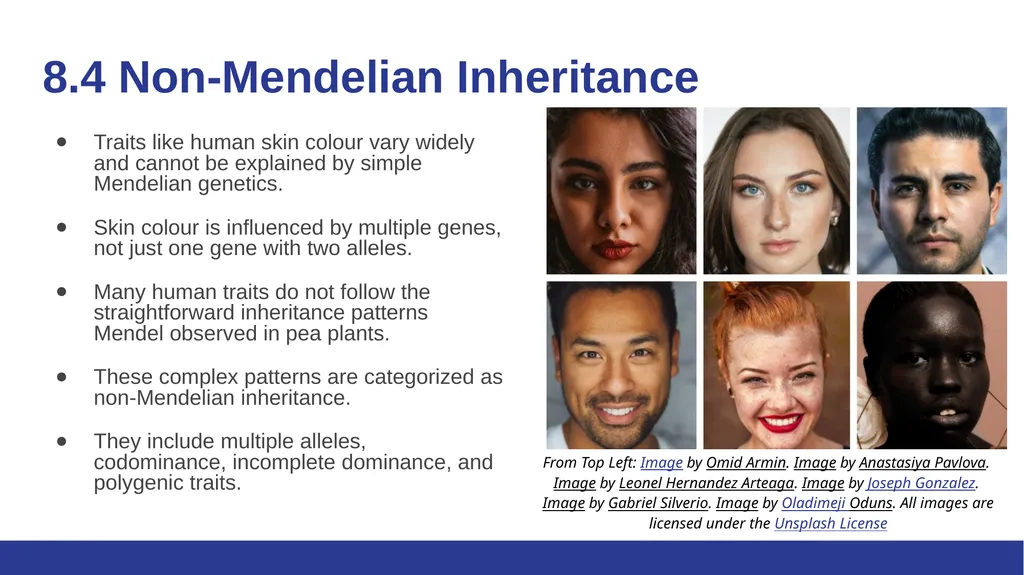
slide16. 8.4 Non-Mendelian Inheritance Traits like human skin colour vary widely and cannot be explained by simple Mendelian genetics.
Skin colour is influenced by multiple genes, not just one gene with two alleles.
Many human traits do not follow the straightforward inheritance patterns Mendel observed in pea plants.
These complex patterns are categorized as non-Mendelian inheritance.
They include multiple alleles, codominance, incomplete dominance, and polygenic traits. From Top Left: Image by Omid Armin. Image by Anastasiya Pavlova. Image by Leonel Hernandez Arteaga. Image by Joseph Gonzalez. Image by Gabriel Silverio. Image by Oladimeji Oduns. All images are licensed under the Unsplash License<br>
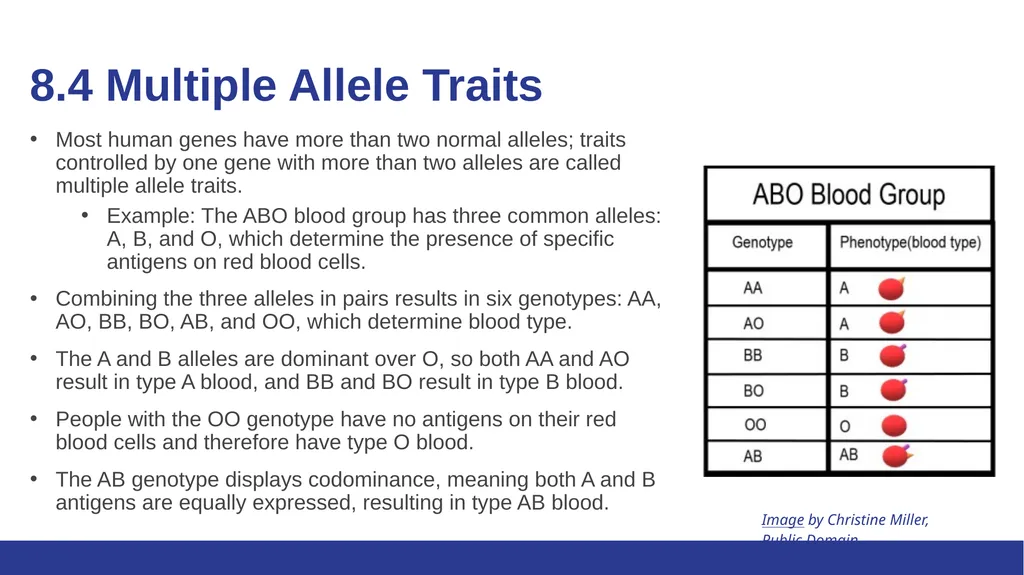
slide17. 8.4 Multiple Allele Traits Most human genes have more than two normal alleles; traits controlled by one gene with more than two alleles are called multiple allele traits.
Example: The ABO blood group has three common alleles: A, B, and O, which determine the presence of specific antigens on red blood cells.
Combining the three alleles in pairs results in six genotypes: AA, AO, BB, BO, AB, and OO, which determine blood type.
The A and B alleles are dominant over O, so both AA and AO result in type A blood, and BB and BO result in type B blood.
People with the OO genotype have no antigens on their red blood cells and therefore have type O blood.
The AB genotype displays codominance, meaning both A and B antigens are equally expressed, resulting in type AB blood. Image by Christine Miller, Public Domain<br>
slide18. 8.4 Incomplete Dominance Incomplete dominance occurs when the dominant allele is not fully dominant, resulting in a blended or intermediate phenotype in heterozygotes.
This typically happens when both alleles produce proteins, but one produces a nonfunctional protein, leading to reduced overall protein levels in heterozygotes.
Example: In Tay Sachs, heterozygotes produce half the amount of a functional lipid-breaking enzyme—enough for normal development—while homozygotes with two defective alleles produce no functional enzyme.
Individuals with two defective alleles accumulate lipids in the brain, causing severe brain damage and death by around age five.
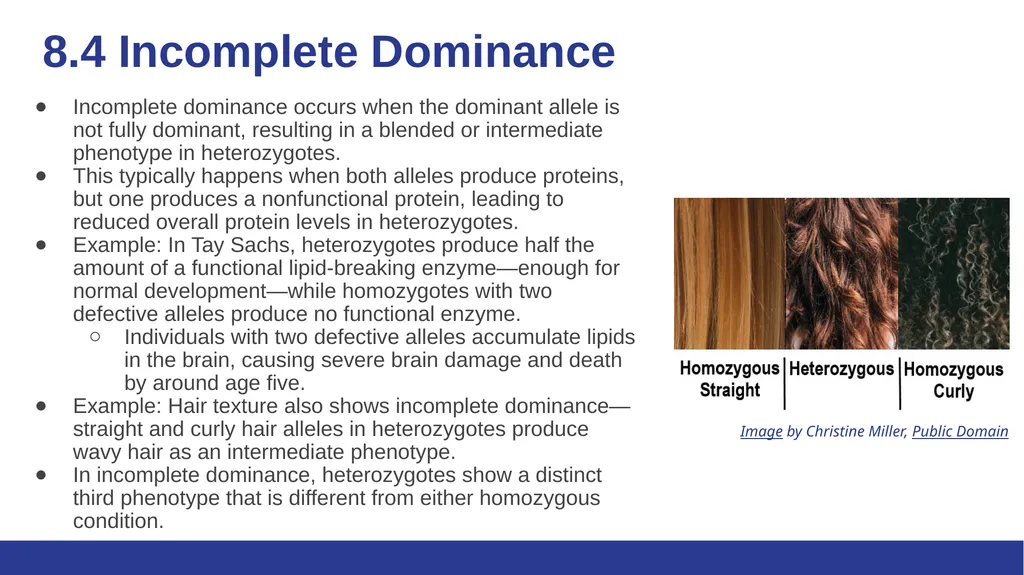
Example: Hair texture also shows incomplete dominance—straight and curly hair alleles in heterozygotes produce wavy hair as an intermediate phenotype.
In incomplete dominance, heterozygotes show a distinct third phenotype that is different from either homozygous condition. Image by Christine Miller, Public Domain<br>
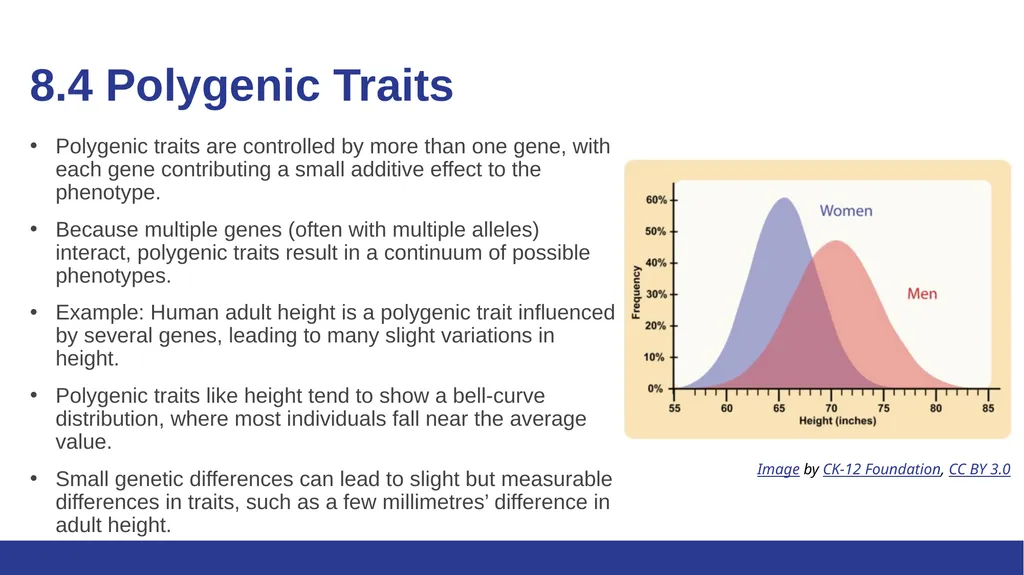
slide19. 8.4 Polygenic Traits Polygenic traits are controlled by more than one gene, with each gene contributing a small additive effect to the phenotype.
Because multiple genes (often with multiple alleles) interact, polygenic traits result in a continuum of possible phenotypes.
Example: Human adult height is a polygenic trait influenced by several genes, leading to many slight variations in height.
Polygenic traits like height tend to show a bell-curve distribution, where most individuals fall near the average value.
Small genetic differences can lead to slight but measurable differences in traits, such as a few millimetres’ difference in adult height. Image by CK-12 Foundation, CC BY 3.0<br>
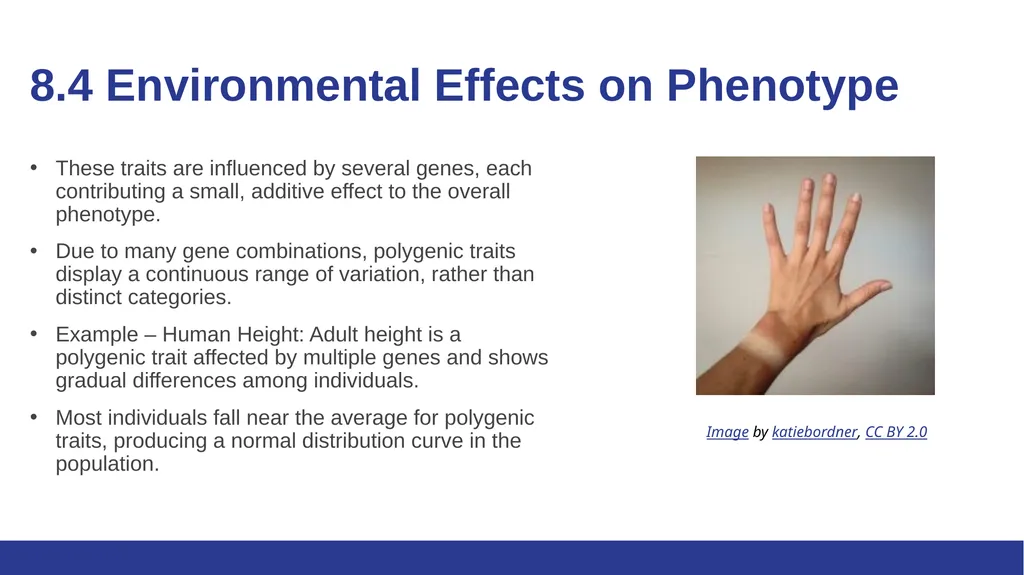
slide20. 8.4 Environmental Effects on Phenotype These traits are influenced by several genes, each contributing a small, additive effect to the overall phenotype.
Due to many gene combinations, polygenic traits display a continuous range of variation, rather than distinct categories.
Example – Human Height: Adult height is a polygenic trait affected by multiple genes and shows gradual differences among individuals.
Most individuals fall near the average for polygenic traits, producing a normal distribution curve in the population. Image by katiebordner, CC BY 2.0<br>
slide21. 8.4 Pleiotropy Pleiotropy occurs when a single gene affects multiple phenotypic traits.
Pleiotropic genes often encode important proteins that influence the development or function of more than one organ system.
Example – Collagen Gene: A gene that affects bone formation also impacts the ears and eyes, showing how one mutation can affect multiple traits.
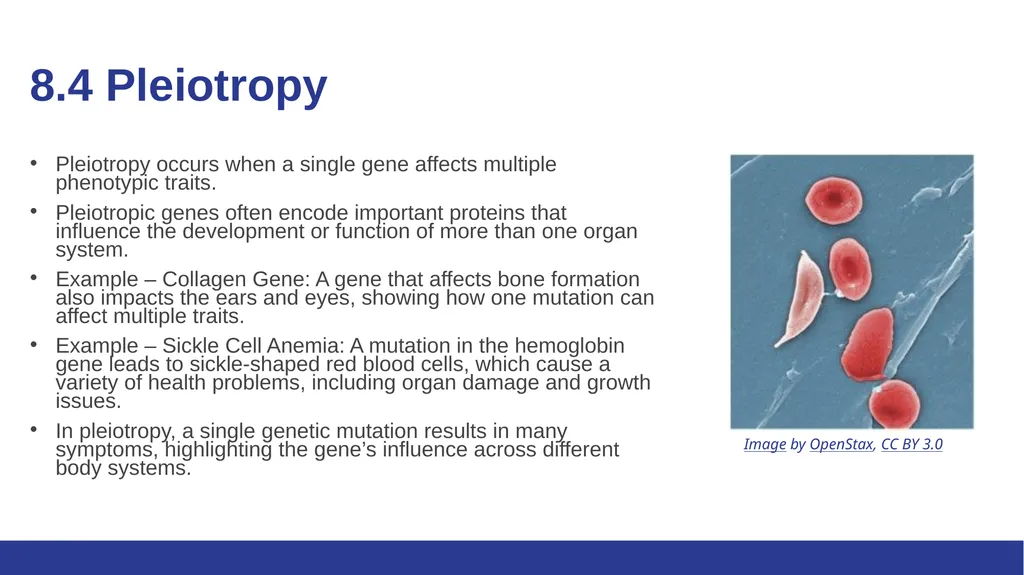
Example – Sickle Cell Anemia: A mutation in the hemoglobin gene leads to sickle-shaped red blood cells, which cause a variety of health problems, including organ damage and growth issues.
In pleiotropy, a single genetic mutation results in many symptoms, highlighting the gene’s influence across different body systems. Image by OpenStax, CC BY 3.0<br>
slide22. 8.4 Epistasis Epistasis occurs when one gene affects or masks the expression of another gene.
Unlike dominance, which involves alleles of the same gene, epistasis involves interactions between different genes.
Example – Albinism: Albinism is caused by a gene mutation that prevents the production of tyrosinase, an enzyme needed for pigment production.
Even if a person inherits skin colour genes for dark pigmentation, albinism will override those traits if the tyrosinase gene is mutated.
Epistatic genes can completely suppress the visible effects of other genes, altering or eliminating expected phenotypes.<br>
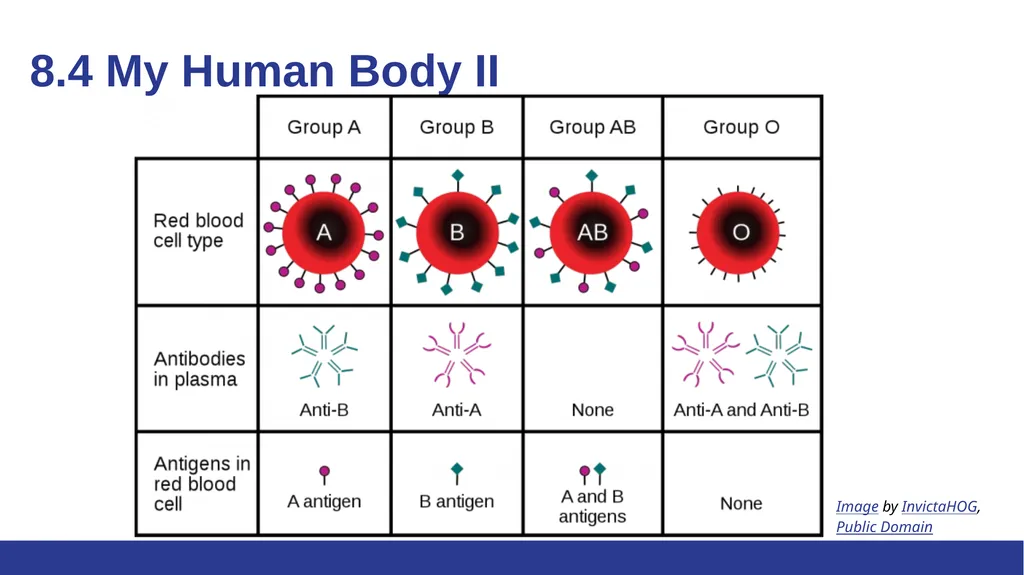
slide23. 8.4 My Human Body I Knowing your ABO blood type is critical in emergencies, especially for safe blood transfusions.
If transfused blood contains unfamiliar antigens, your immune system produces antibodies that attack the red blood cells, causing dangerous clumping (agglutination).
Antigens and Antibodies by Blood Type:
Type A: A antigens, anti-B antibodies
Type B: B antigens, anti-A antibodies
Type AB: A and B antigens, no antibodies
Type O: No antigens, both anti-A and anti-B antibodies
Type O blood lacks A and B antigens, so it can be donated to anyone without triggering an immune response.
Type AB blood contains no anti-A or anti-B antibodies, so people with this type can receive blood from any ABO group.
Type AB blood can only be safely received by AB individuals, while type O blood can only be safely received by other type O individuals.<br>
slide24. 8.4 My Human Body II Image by InvictaHOG, Public Domain<br>
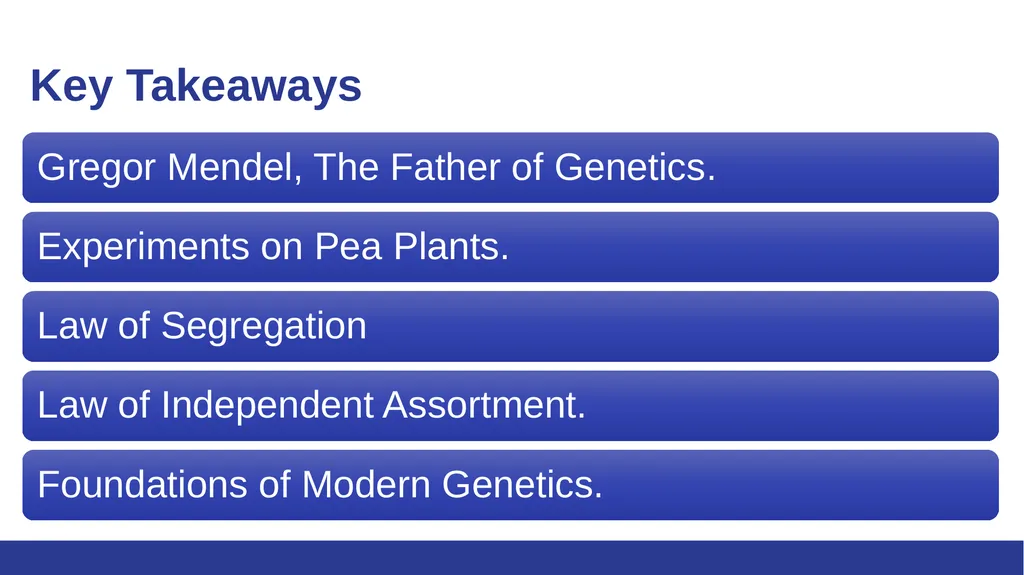
slide25. Key Takeaways<br>
slide2. Learning Objectives By the end of this chapter, you will be able to:
Describe how Gregor Mendel’s experiments with pea plants challenged the blending theory of inheritance.
Describe Mendel’s monohybrid experiments, including the P, F1, and F2 generations, using diagrams or Punnett squares.
Explain the Law of Segregation, relating it to modern concepts of alleles and gamete formation.
Explain the Law of Independent Assortment.
Apply Mendel’s laws of inheritance to predict simple inheritance patterns through Punnett squares.
Explain how Mendel’s discoveries about heredity apply broadly to sexually reproducing organisms, including humans.<br>
slide3. 8.1 Laws of Inheritance In the mid-1800s, Austrian monk Gregor Mendel studied common garden peas and discovered the basic principles of heredity.
Mendel’s findings on heredity in pea plants apply not only to plants but also to all sexually reproducing organisms, including humans.
At the time, people believed in the blending theory of inheritance, but Mendel observed that offspring often resembled one parent rather than showing a mix of both traits.
Mendel conducted experiments with nearly 30,000 pea plants, leading him to develop a new understanding of how traits are inherited. Image by Unknown, Public Domain<br>
slide4. 8.1 Why Study Pea Plants? Pea plants grow quickly, are easy to raise, and display several distinct, easily observable characteristics.
Pea plants have seven heritable characteristics (like seed shape and flower colour), each with two contrasting traits, making inheritance patterns easier to study.
To study heredity accurately, Mendel had to control pollination—the process by which pollen (male sex cells) fertilizes the female parts of a flower.
Pea plants naturally self-pollinate and produce true-breeding offspring.
Manually cross-pollinated plants by removing anthers to create hybrids from two different parent plants.
Hybrids were key to Mendel's investigation of how traits are inherited across generations. Image by OpenStax, CC BY 4.0<br>
slide5. 8.1 Law of Segregation Mendel began by experimenting with one character at a time, starting with flower colour, using true-breeding purple and white-flowered plants as the parent (P) generation.
All offspring in the first generation (F1) had purple flowers, suggesting the white-flower trait had disappeared.
When F1 plants self-pollinated, the second generation (F2) showed both purple and white flowers, revealing that the white trait was not lost but hidden.
Mendel proposed that traits are determined by paired "unit factors" (now called alleles), where one is dominant (purple) and the other recessive (white).
Mendel repeated this with all seven characters, consistently observing that one trait appeared in 75% of F2 plants and the other in 25%.
Law of Segregation: From this, Mendel formulated the Law of Segregation, stating that alleles separate during gamete formation, so each gamete receives only one allele for each trait. Image by CK-12 Foundation, CC BY-NC 3.0<br>
slide6. 8.1 Law of Independent Assortment Mendel expanded his experiments to study whether different traits, like flower colour and stem height, are inherited together or independently.
He crossed plants with yellow round seeds and green wrinkled seeds to observe how two traits are passed on simultaneously.
All F1 offspring had yellow round seeds, resembling one parent and not showing trait variation.
When F1 plants self-pollinated, the F2 generation displayed all possible trait combinations, including some not seen in the P or F1 generations.
The 9:3:3:1 ratio (round yellow, wrinkled yellow, round green, wrinkled green) appeared in every two-character cross Mendel performed.
Law of Independent Assortment: Alleles for different traits are passed to offspring independently of one another. Image by CK-12 Foundation, CC BY-NC 3.0<br>
slide7. 8.2 Genetics Physical similarities, like facial features between a father and son, highlight how traits are passed from parents to offspring.
Mendel’s work was largely unknown during his lifetime and only gained recognition in 1900 when other scientists independently confirmed his findings.
Although Mendel did not know about genes, he proposed that "factors" controlled traits and were passed from parents to offspring.
Today, Mendel’s "factors" are known as genes, and his discoveries form the foundation of genetics, earning him the title "Father of Genetics." Image by Kelly Sikkema, Unsplash License<br>
slide8. 8.2 The Language of Genetics Genes located on chromosomes determine the traits of organisms, and understanding genetics requires familiarity with specific terminology.
A gene is a section of a chromosome that carries the code for making a specific protein, such as flower colour in pea plants.
The specific position of a gene on a chromosome is called its locus (plural: loci).
Genes can have different normal versions, called alleles (e.g., purple-flower allele "B" and white-flower allele "b"), which create variation in traits.
In sexually reproducing organisms, chromosomes come in pairs called homologous chromosomes, which are similar in size, shape, and gene locations. “Chromosome, Gene, Locus, and Allele” by CK-12 Foundation, CC BY-NC 3.0<br>
slide9. 8.2 Genotype & Phenotype<br>
slide10. 8.3 Mendelian Inheritance A monohybrid cross involves parents that differ in only one character or trait — in this example, pea seed colour.
A Punnett square is a tool used to predict the possible genotypes and phenotypes of offspring from a genetic cross.
Both parent plants are heterozygous (Yy), meaning they each carry one dominant allele (Y for yellow) and one recessive allele (y for green).
During meiosis, each parent produces gametes with either the Y or y allele, because homologous chromosomes separate.
The resulting Punnett square shows a 1:2:1 genotype ratio — 1 YY, 2 Yy, and 1 yy.
Based on dominant (Y) and recessive (y) expression, the phenotype ratio is 3 yellow : 1 green, or 75% yellow and 25% green. Image modification of work by Christine Miller, Public Domain<br>
slide11. 8.3 Probability Basics Mendel’s results can be explained using probability, which measures the likelihood of an event occurring.
A probability of 1 (100%) means an event is certain, 0 (0%) means it will not happen, and 0.5 (50%) means an equal chance of occurring or not.
A Punnett square may predict a 25% chance of a genotype (like yy), but that doesn’t guarantee a 1-in-4 outcome in every small sample.
Small sample sizes may show outcomes that differ from expected probabilities due to random variation.
As the number of offspring increases, the actual outcomes tend to better reflect the predicted probabilities, just like flipping a coin many times. Image modification of work by Christine Miller, Public Domain<br>
slide12. 8.3 Dihybrid Cross A dihybrid cross involves parents differing in two characters (e.g., seed colour and seed shape), such as crossing homozygous wrinkled-green (rryy) with round-yellow (RRYY) pea plants.
All F1 offspring are heterozygous (RrYy), carrying one allele for each trait from each parent.
Each F1 plant produces four types of gametes (RY, rY, Ry, ry) due to the Law of Independent Assortment, meaning alleles for different traits are inherited independently.
A 4×4 Punnett square predicts 16 possible combinations, resulting in a 9:3:3:1 phenotypic ratio — 9 round-yellow, 3 round-green, 3 wrinkled-yellow, and 1 wrinkled-green offspring. Image by OpenStax, CC BY 4.0<br>
slide13. 8.3 Mendelian Inheritance in Humans Mendelian inheritance describes traits controlled by a single gene with two alleles, where one allele may be completely dominant over the other.
Autosomal Traits: Traits controlled by genes on the 22 pairs of autosomes (non-sex chromosomes) are inherited similarly by males and females.
Example: Albinism is a Mendelian autosomal trait where the dominant allele (R) produces normal pigmentation and the recessive allele (r) results in albinism when two recessive alleles are inherited.
Two parents who are carriers (Rr) but show normal pigmentation can have a child with albinism (rr).
Huntington’s disease and the type of earwax (wet or dry) are examples of other human traits with a Mendelian inheritance pattern.
Many traits once thought to be Mendelian (like dimples and tongue rolling) are now known to be influenced by multiple genes or more than two alleles, making them non-Mendelian.<br>
slide14. 8.3 Sex-Linked Traits Traits controlled by genes on sex chromosomes, mainly the X chromosome, are called X-linked traits.
Males, with only one X chromosome, express recessive X-linked traits if they inherit the allele, while females need two copies of the recessive allele to express the trait.
X-linked recessive traits are much more common in males than females due to the need for females to inherit two recessive alleles.
Example: Red-green colour blindness is an X-linked recessive trait, commonly affecting males but rarely affecting females.
Females who carry one recessive allele (carriers) have a 50% chance of passing the trait to sons (who will express it) and a 50% chance of passing it to daughters (who will be carriers, not express it, if the father is unaffected). Image by National Institutes of Health, Public Domain<br>
slide15. 8.3 Studying Inheritance Patterns A pedigree traces how a trait is passed through generations and helps determine if the trait is autosomal or X-linked.
Pedigrees allow scientists to infer the likely genotypes of family members based on the inheritance patterns observed.
They are valuable tools for following the inheritance of genetic disorders within families.
The example given shows an autosomal dominant trait passed from an affected father to some of his children and grandchildren.
The pedigree displays multiple generations, including marriages and offspring, highlighting affected and unaffected individuals. Image by Jerome Walker, CC BY-SA 3.0<br>
slide16. 8.4 Non-Mendelian Inheritance Traits like human skin colour vary widely and cannot be explained by simple Mendelian genetics.
Skin colour is influenced by multiple genes, not just one gene with two alleles.
Many human traits do not follow the straightforward inheritance patterns Mendel observed in pea plants.
These complex patterns are categorized as non-Mendelian inheritance.
They include multiple alleles, codominance, incomplete dominance, and polygenic traits. From Top Left: Image by Omid Armin. Image by Anastasiya Pavlova. Image by Leonel Hernandez Arteaga. Image by Joseph Gonzalez. Image by Gabriel Silverio. Image by Oladimeji Oduns. All images are licensed under the Unsplash License<br>
slide17. 8.4 Multiple Allele Traits Most human genes have more than two normal alleles; traits controlled by one gene with more than two alleles are called multiple allele traits.
Example: The ABO blood group has three common alleles: A, B, and O, which determine the presence of specific antigens on red blood cells.
Combining the three alleles in pairs results in six genotypes: AA, AO, BB, BO, AB, and OO, which determine blood type.
The A and B alleles are dominant over O, so both AA and AO result in type A blood, and BB and BO result in type B blood.
People with the OO genotype have no antigens on their red blood cells and therefore have type O blood.
The AB genotype displays codominance, meaning both A and B antigens are equally expressed, resulting in type AB blood. Image by Christine Miller, Public Domain<br>
slide18. 8.4 Incomplete Dominance Incomplete dominance occurs when the dominant allele is not fully dominant, resulting in a blended or intermediate phenotype in heterozygotes.
This typically happens when both alleles produce proteins, but one produces a nonfunctional protein, leading to reduced overall protein levels in heterozygotes.
Example: In Tay Sachs, heterozygotes produce half the amount of a functional lipid-breaking enzyme—enough for normal development—while homozygotes with two defective alleles produce no functional enzyme.
Individuals with two defective alleles accumulate lipids in the brain, causing severe brain damage and death by around age five.
Example: Hair texture also shows incomplete dominance—straight and curly hair alleles in heterozygotes produce wavy hair as an intermediate phenotype.
In incomplete dominance, heterozygotes show a distinct third phenotype that is different from either homozygous condition. Image by Christine Miller, Public Domain<br>
slide19. 8.4 Polygenic Traits Polygenic traits are controlled by more than one gene, with each gene contributing a small additive effect to the phenotype.
Because multiple genes (often with multiple alleles) interact, polygenic traits result in a continuum of possible phenotypes.
Example: Human adult height is a polygenic trait influenced by several genes, leading to many slight variations in height.
Polygenic traits like height tend to show a bell-curve distribution, where most individuals fall near the average value.
Small genetic differences can lead to slight but measurable differences in traits, such as a few millimetres’ difference in adult height. Image by CK-12 Foundation, CC BY 3.0<br>
slide20. 8.4 Environmental Effects on Phenotype These traits are influenced by several genes, each contributing a small, additive effect to the overall phenotype.
Due to many gene combinations, polygenic traits display a continuous range of variation, rather than distinct categories.
Example – Human Height: Adult height is a polygenic trait affected by multiple genes and shows gradual differences among individuals.
Most individuals fall near the average for polygenic traits, producing a normal distribution curve in the population. Image by katiebordner, CC BY 2.0<br>
slide21. 8.4 Pleiotropy Pleiotropy occurs when a single gene affects multiple phenotypic traits.
Pleiotropic genes often encode important proteins that influence the development or function of more than one organ system.
Example – Collagen Gene: A gene that affects bone formation also impacts the ears and eyes, showing how one mutation can affect multiple traits.
Example – Sickle Cell Anemia: A mutation in the hemoglobin gene leads to sickle-shaped red blood cells, which cause a variety of health problems, including organ damage and growth issues.
In pleiotropy, a single genetic mutation results in many symptoms, highlighting the gene’s influence across different body systems. Image by OpenStax, CC BY 3.0<br>
slide22. 8.4 Epistasis Epistasis occurs when one gene affects or masks the expression of another gene.
Unlike dominance, which involves alleles of the same gene, epistasis involves interactions between different genes.
Example – Albinism: Albinism is caused by a gene mutation that prevents the production of tyrosinase, an enzyme needed for pigment production.
Even if a person inherits skin colour genes for dark pigmentation, albinism will override those traits if the tyrosinase gene is mutated.
Epistatic genes can completely suppress the visible effects of other genes, altering or eliminating expected phenotypes.<br>
slide23. 8.4 My Human Body I Knowing your ABO blood type is critical in emergencies, especially for safe blood transfusions.
If transfused blood contains unfamiliar antigens, your immune system produces antibodies that attack the red blood cells, causing dangerous clumping (agglutination).
Antigens and Antibodies by Blood Type:
Type A: A antigens, anti-B antibodies
Type B: B antigens, anti-A antibodies
Type AB: A and B antigens, no antibodies
Type O: No antigens, both anti-A and anti-B antibodies
Type O blood lacks A and B antigens, so it can be donated to anyone without triggering an immune response.
Type AB blood contains no anti-A or anti-B antibodies, so people with this type can receive blood from any ABO group.
Type AB blood can only be safely received by AB individuals, while type O blood can only be safely received by other type O individuals.<br>
slide24. 8.4 My Human Body II Image by InvictaHOG, Public Domain<br>
slide25. Key Takeaways<br>