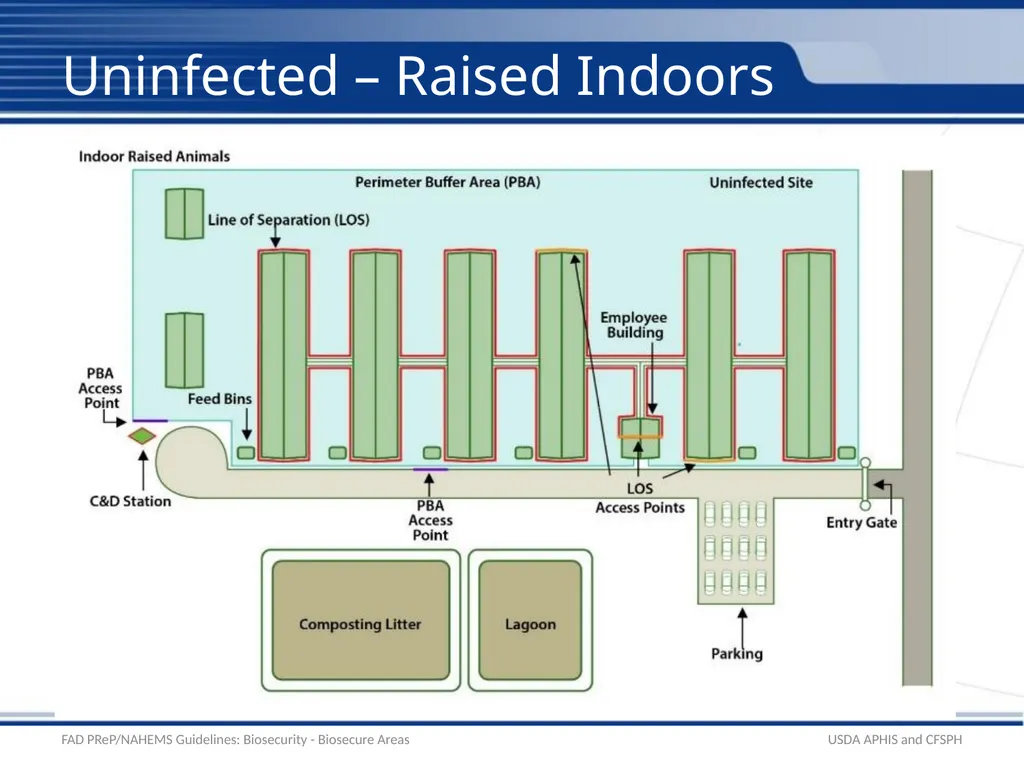
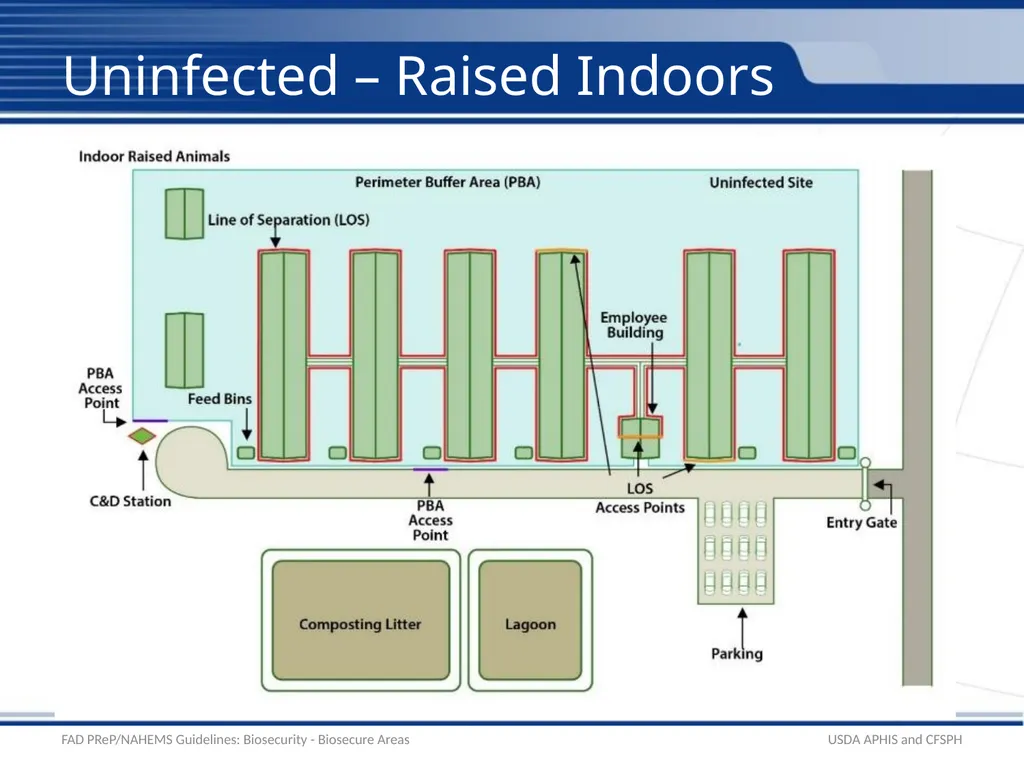
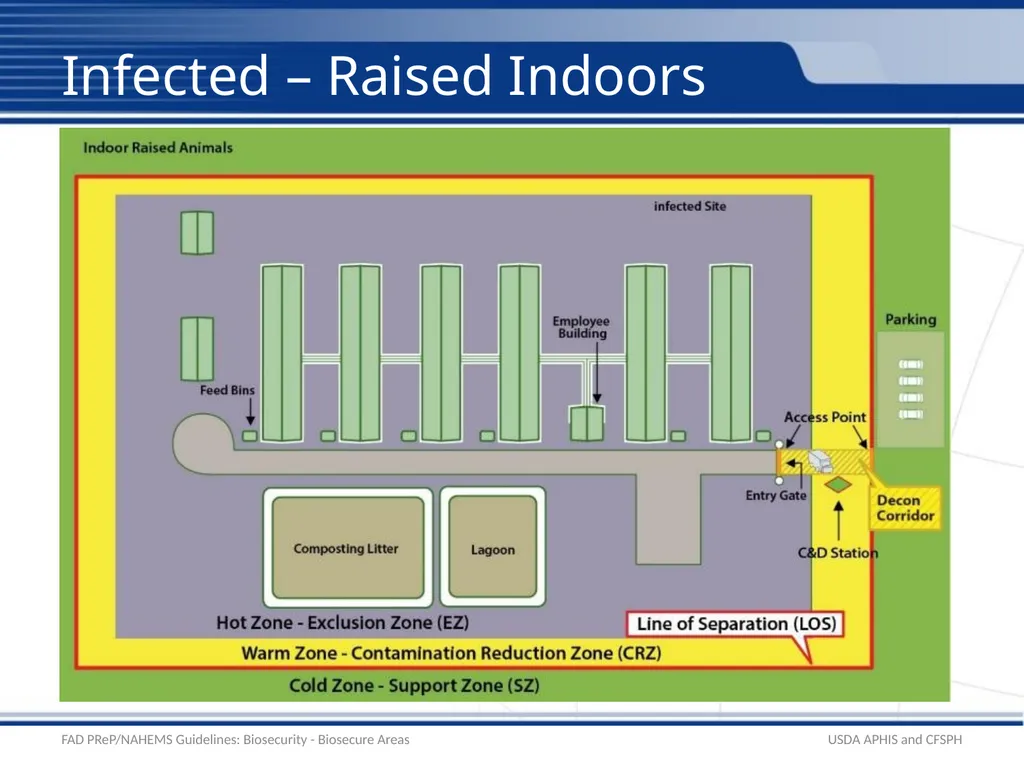
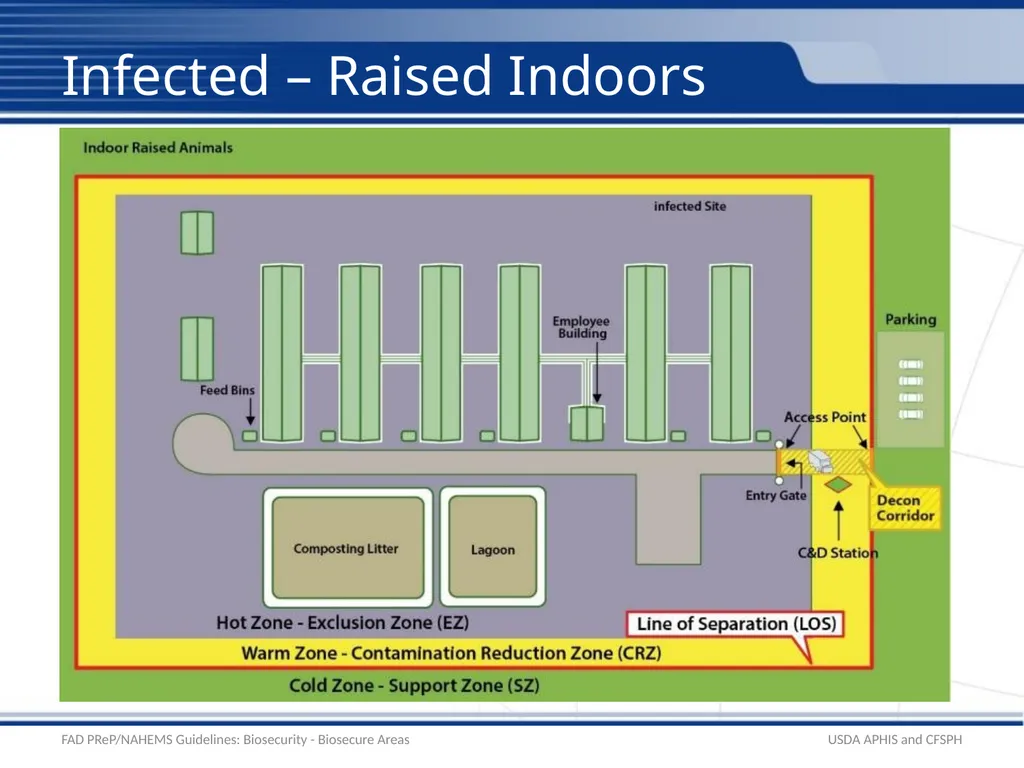
Biosecurity Biosecure Areas Uninfected and Infected Adapted from the FAD PRePNAHEMS Guidelines: Biosecurity (2016) Illustrated examples of biosecure areas Uninfected premises Infected premises Line of Separation No transfer of disease
"Biosecurity Biosecure Areas Uninfected and" is the property of its rightful owner. Permission is granted to
download and print the materials on this website for personal, non-commercial use only, and to display it
on your personal computer provided you do not modify the materials and that you retain all copyright
notices contained in the materials. By downloading content from our website, you accept the terms of this
agreement.
Presentation Transcript
01
Biosecurity Biosecure Areas
Uninfected and Infected Adapted from the FAD PReP/NAHEMS Guidelines: Biosecurity (2016)<br>
02
Illustrated examples of biosecure areas
Uninfected premises
Infected premises
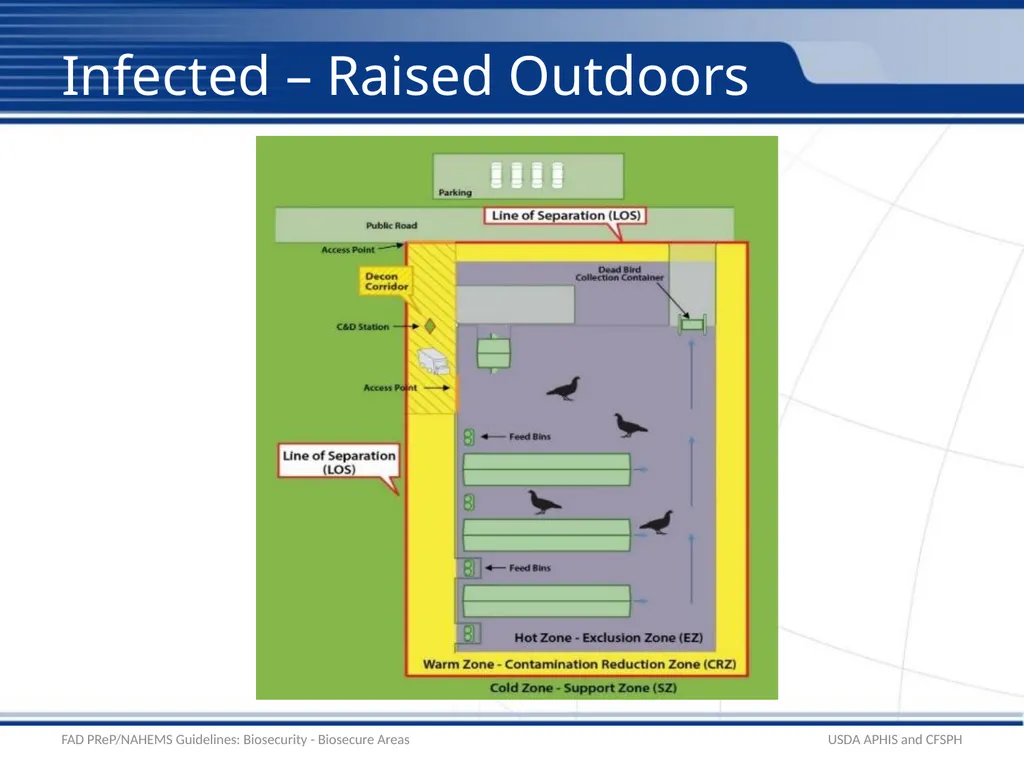
Line of Separation
No transfer of disease
Separates clean and dirty areas
Location based on specific situation, facility arrangement, and animal health status USDA APHIS and CFSPH FAD PReP/NAHEMS Guidelines: Biosecurity - Biosecure Areas This Presentation<br>
03
Provide broad guidance
Separation based on housing, work paths, and animal health status
Protocols implemented at the most strategic points
Indoor and outdoor production, uninfected and infected USDA APHIS and CFSPH FAD PReP/NAHEMS Guidelines: Biosecurity - Biosecure Areas Two Examples<br>
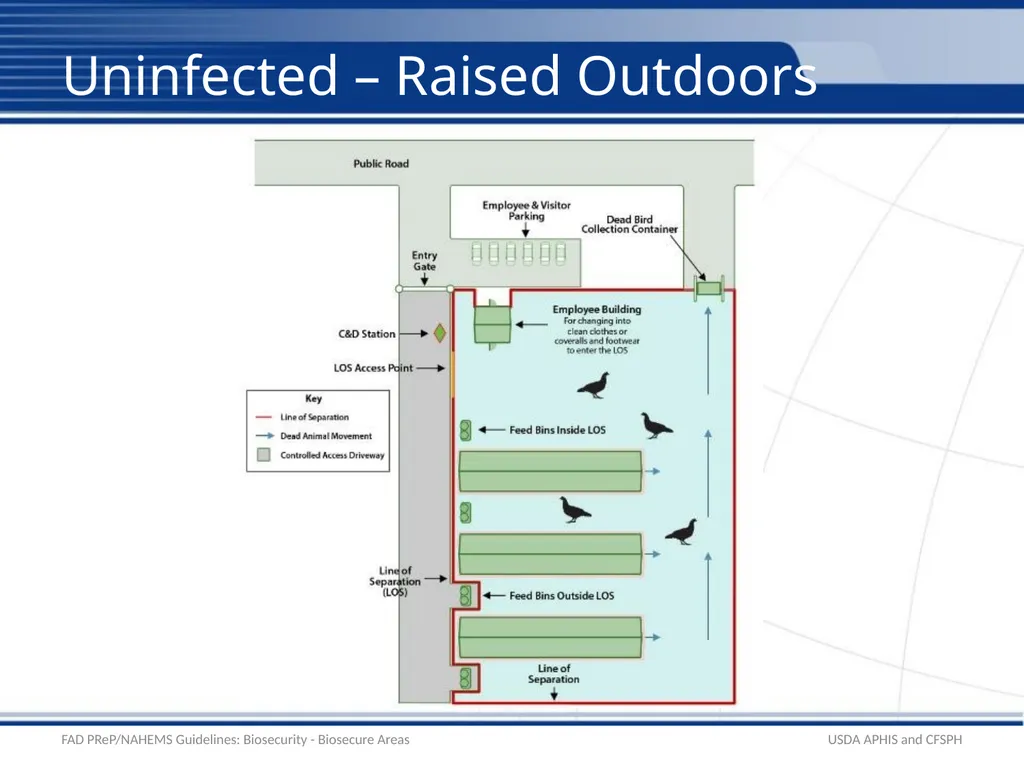
USDA APHIS and CFSPH FAD PReP/NAHEMS Guidelines: Biosecurity - Biosecure Areas Uninfected – Raised Outdoors<br>
11
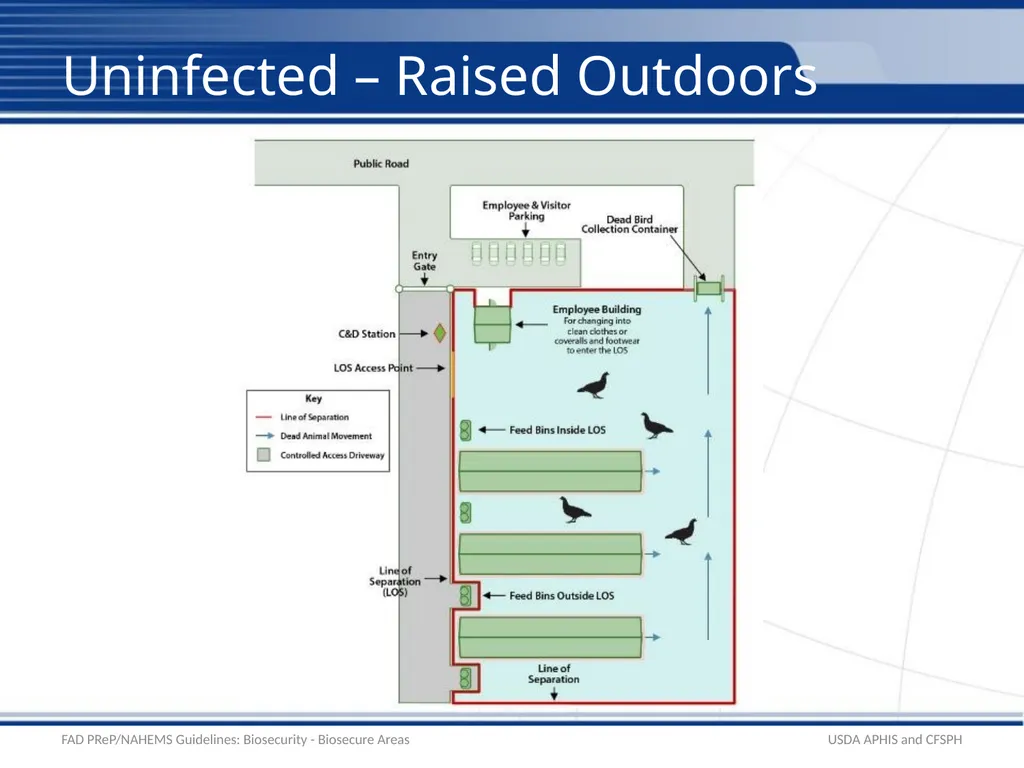
USDA APHIS and CFSPH FAD PReP/NAHEMS Guidelines: Biosecurity - Biosecure Areas Uninfected – Raised Outdoors<br>
12
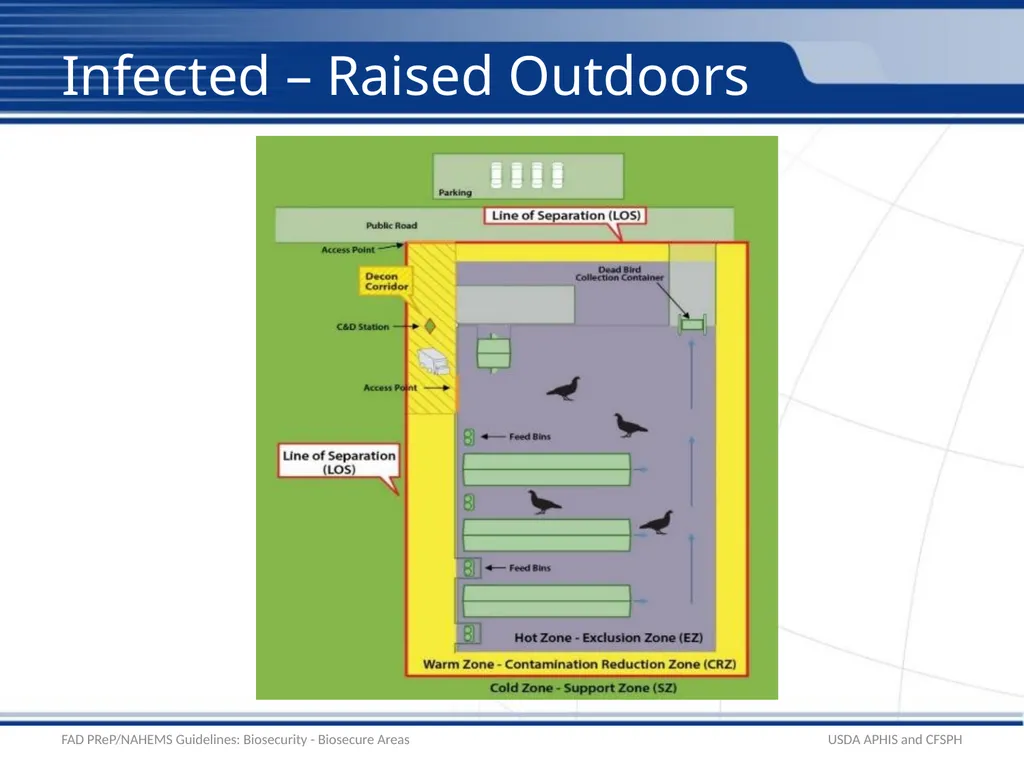
USDA APHIS and CFSPH FAD PReP/NAHEMS Guidelines: Biosecurity - Biosecure Areas Infected – Raised Outdoors<br>
13
USDA APHIS and CFSPH FAD PReP/NAHEMS Guidelines: Biosecurity - Biosecure Areas Infected – Raised Outdoors<br>
14
Biosecurity is challenging for both bioexclusion and biocontainment
Biosecure areas are designated on uninfected and infected premises
Line of Separation is defended
Protocols are similar to prevent the transfer of disease
Evaluate according to the specific situation USDA APHIS and CFSPH FAD PReP/NAHEMS Guidelines: Biosecurity - Biosecure Areas Conclusion<br>
15
USDA APHIS and CFSPH FAD PReP/NAHEMS Guidelines: Biosecurity - Biosecure Areas For More Information FAD PReP/NAHEMS Guidelines & SOP: Biosecurity (2016)
http://www.aphis.usda.gov/fadprep
Biosecurity web-based training module:
http://naherc.sws.iastate.edu/<br>
16
Authors (CFSPH)
Janice P. Mogan, DVM
Heather Allen, PhD, MPA
Kristen Bretz, MS
Reviewers (USDA)
Jonathan T. Zack, DVM
James A. Roth, DVM, PhD, DACVM USDA APHIS and CFSPH FAD PReP/NAHEMS Guidelines: Biosecurity - Biosecure Areas Guidelines Content<br>
17
Acknowledgments Development of this presentation was by the Center for Food Security and Public Health at Iowa State University through funding from the USDA APHIS Veterinary Services PPT Authors: Janice P. Mogan, DVM; Logan Kilburn Reviewer: Kristen Bretz, MS<br>