Breaking Down the Worm Katie Alger April 21, 2011 What is the worm? An iconic break-dancing move also known as the kick-worm or the caterpillar First invented in the 1920s Seen during the 1970s punk emergence Popularized in the infancy of
"Breaking Down the Worm Katie Alger April 21, 2011" is the property of its rightful owner. Permission is granted to
download and print the materials on this website for personal, non-commercial use only, and to display it
on your personal computer provided you do not modify the materials and that you retain all copyright
notices contained in the materials. By downloading content from our website, you accept the terms of this
agreement.
Presentation Transcript
01
Breaking Down the Worm Katie Alger
April 21, 2011<br>
02
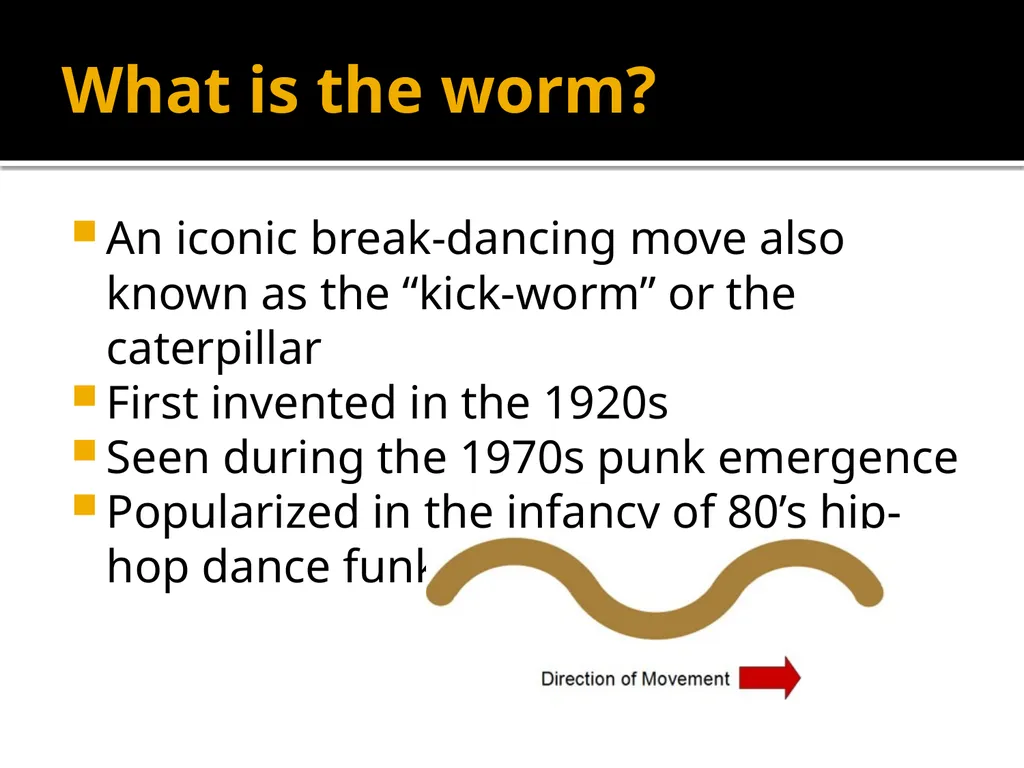
What is the worm? An iconic break-dancing move also known as the “kick-worm” or the caterpillar
First invented in the 1920s
Seen during the 1970s punk emergence
Popularized in the infancy of 80’s hip-hop dance funk<br>
03
Is it useful? Listed as a “life skill” on eHow.com
Recommended for:
Parties
Bat mitzvahs
Sweet 16s
Weddings
Spring fling<br>
04
How do I do it? Lie flat on the ground with your palms near your head and your elbows at your sides.
Prop your toes up on the floor with your feet close together.
Using your toes, pick up your feet, legs and hips in a fluid motion.
Follow through with lifting your body as your feet and legs go back down to the floor.
Lift up the top half of your body with your hands, palms down.
Lift up your head as your body arcs to the top of your torso.
Fall back down into the flat on the floor position.
Repeat these steps over and over as you move across the room or dance floor.<br>
05
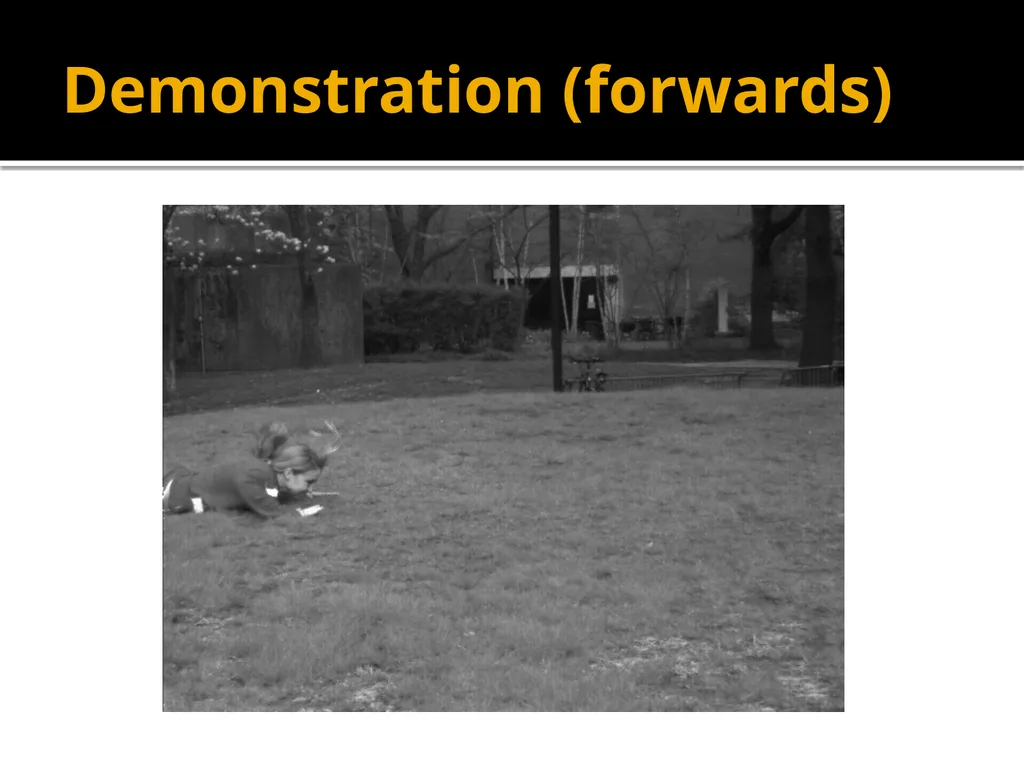
Demonstration (forwards)<br>
06
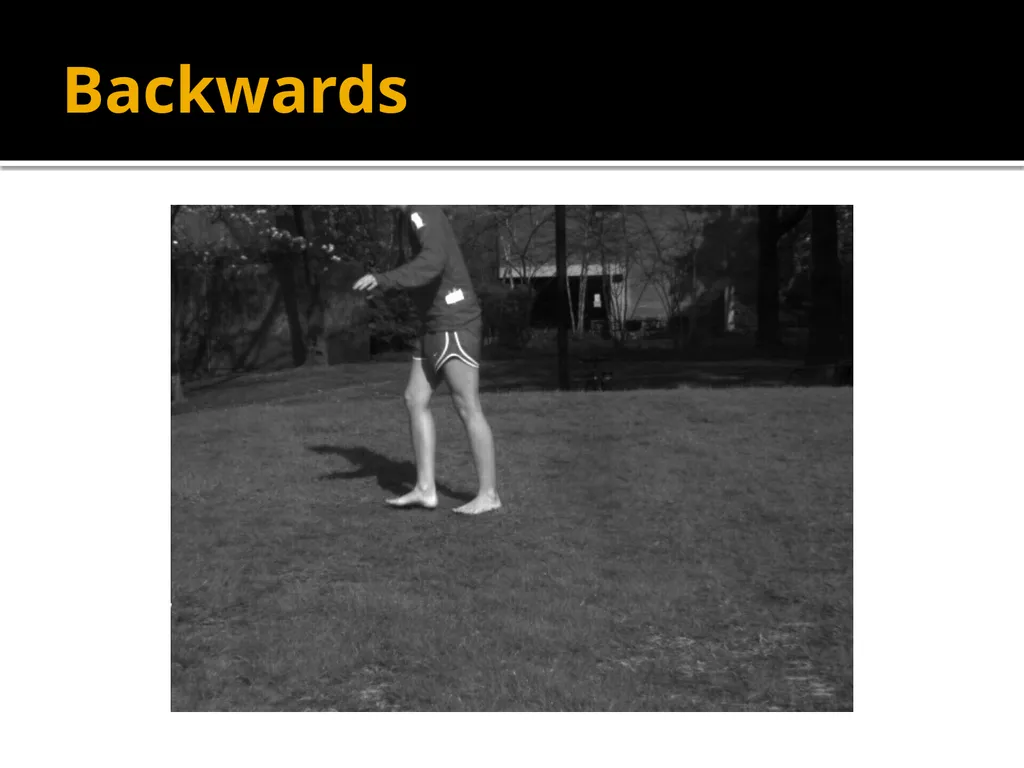
Backwards<br>
07
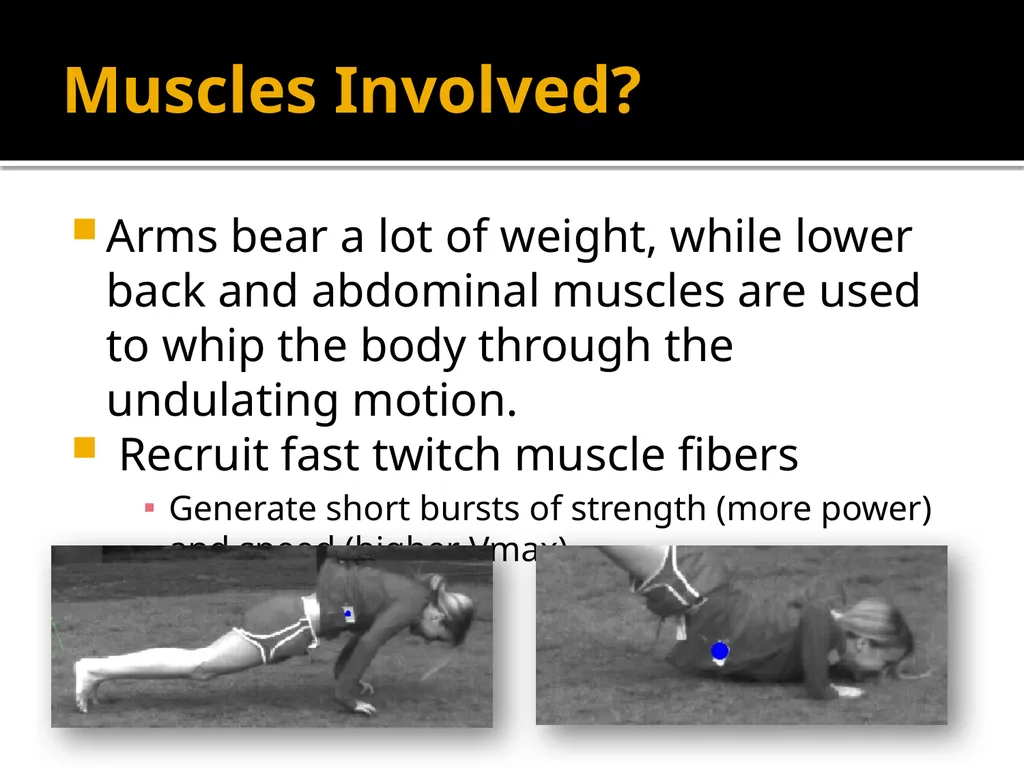
Muscles Involved? Arms bear a lot of weight, while lower back and abdominal muscles are used to whip the body through the undulating motion.
Recruit fast twitch muscle fibers
Generate short bursts of strength (more power) and speed (higher Vmax).<br>
08
Difference in Motion? To the naked eye (without the aid of a high speed camera), the motion of the forwards and backwards worm look almost the same
When performing the worm, the two types feel much different (forward hurts!)
Question: Which parts of the body move differently during the two versions?<br>
09
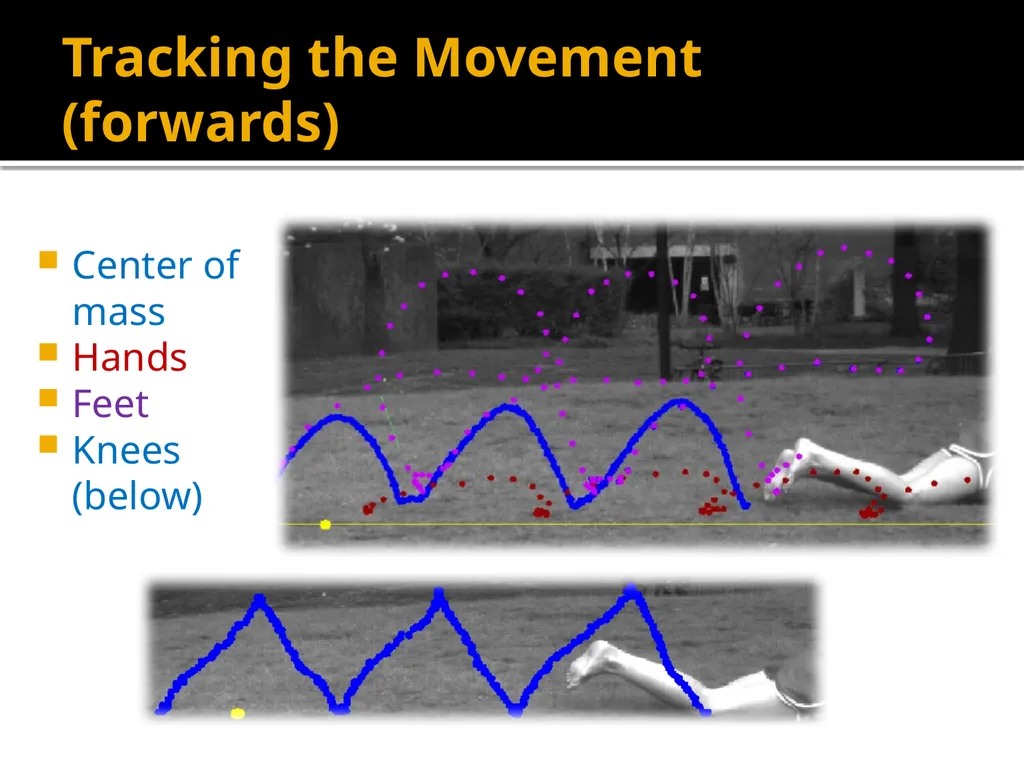
Tracking the Movement (forwards) Center of mass
Hands
Feet
Knees (below)<br>
10
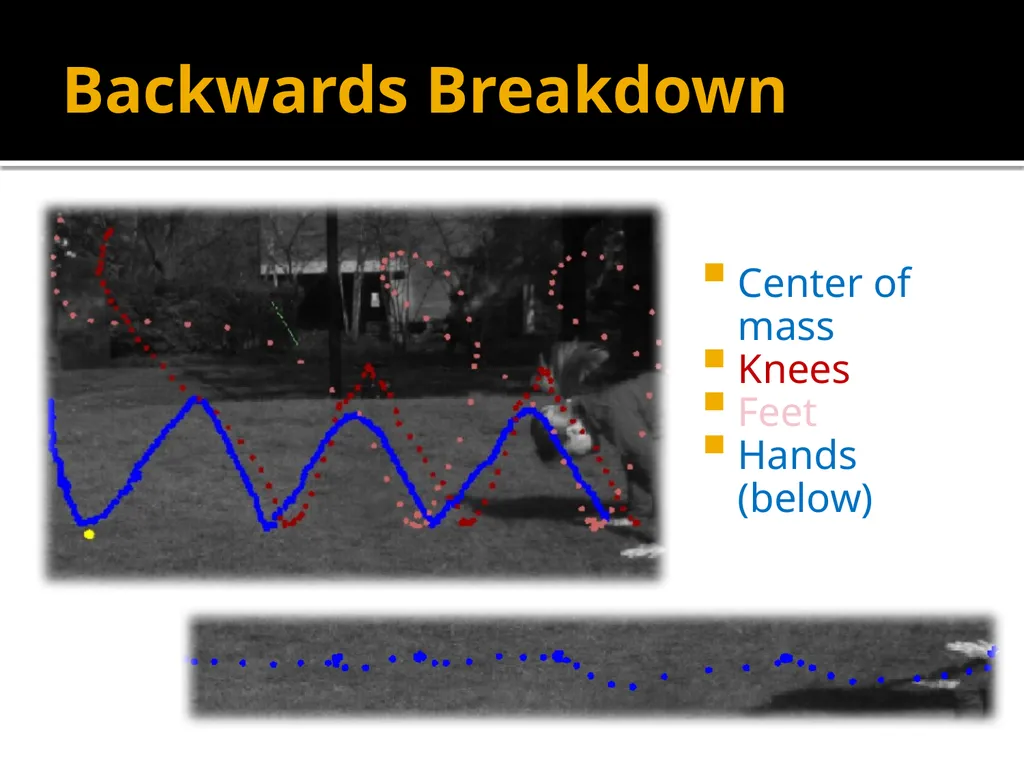
Backwards Breakdown Center of mass
Knees
Feet
Hands (below)<br>
11
Underlying Questions Which part of the body generates the most momentum?
Are there large differences in momentum between the two versions of the worm?<br>
12
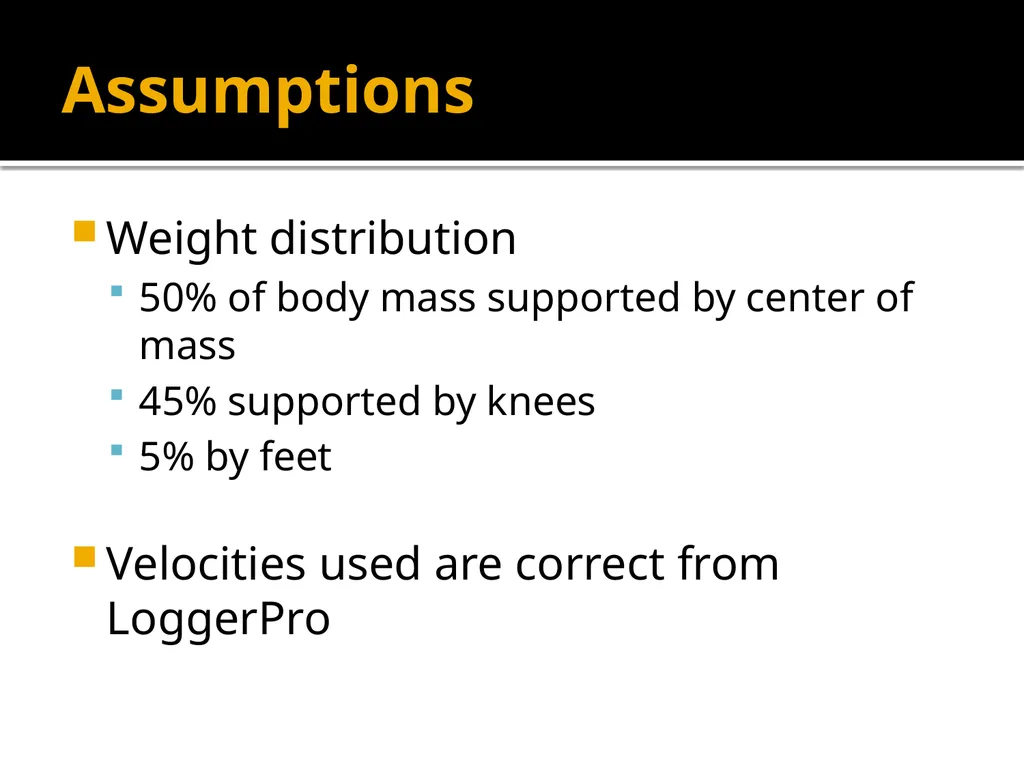
Assumptions Weight distribution
50% of body mass supported by center of mass
45% supported by knees
5% by feet
Velocities used are correct from LoggerPro<br>
13
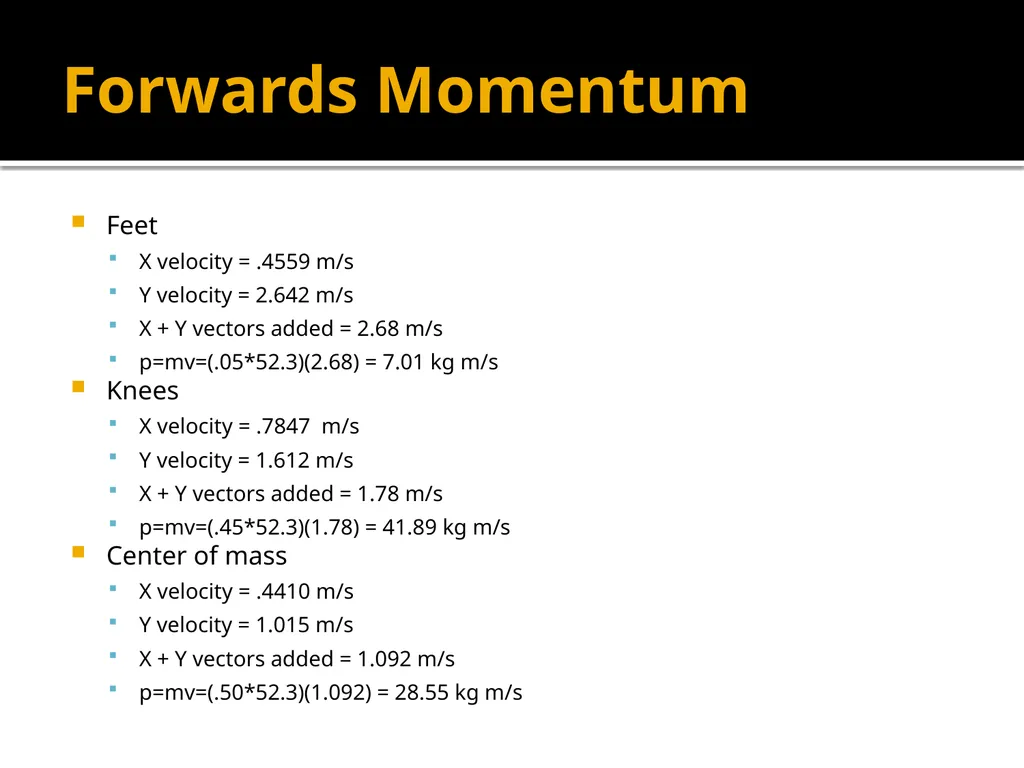
Forwards Momentum Feet
X velocity = .4559 m/s
Y velocity = 2.642 m/s
X + Y vectors added = 2.68 m/s
p=mv=(.05*52.3)(2.68) = 7.01 kg m/s
Knees
X velocity = .7847 m/s
Y velocity = 1.612 m/s
X + Y vectors added = 1.78 m/s
p=mv=(.45*52.3)(1.78) = 41.89 kg m/s
Center of mass
X velocity = .4410 m/s
Y velocity = 1.015 m/s
X + Y vectors added = 1.092 m/s
p=mv=(.50*52.3)(1.092) = 28.55 kg m/s<br>
14
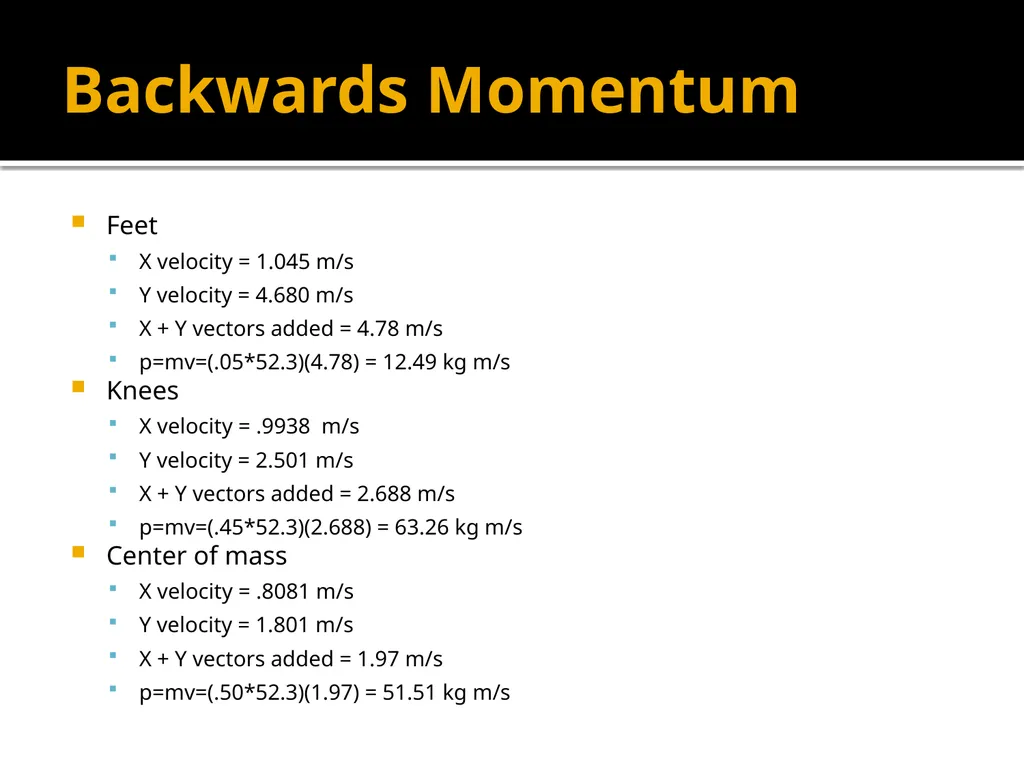
Backwards Momentum Feet
X velocity = 1.045 m/s
Y velocity = 4.680 m/s
X + Y vectors added = 4.78 m/s
p=mv=(.05*52.3)(4.78) = 12.49 kg m/s
Knees
X velocity = .9938 m/s
Y velocity = 2.501 m/s
X + Y vectors added = 2.688 m/s
p=mv=(.45*52.3)(2.688) = 63.26 kg m/s
Center of mass
X velocity = .8081 m/s
Y velocity = 1.801 m/s
X + Y vectors added = 1.97 m/s
p=mv=(.50*52.3)(1.97) = 51.51 kg m/s<br>
15
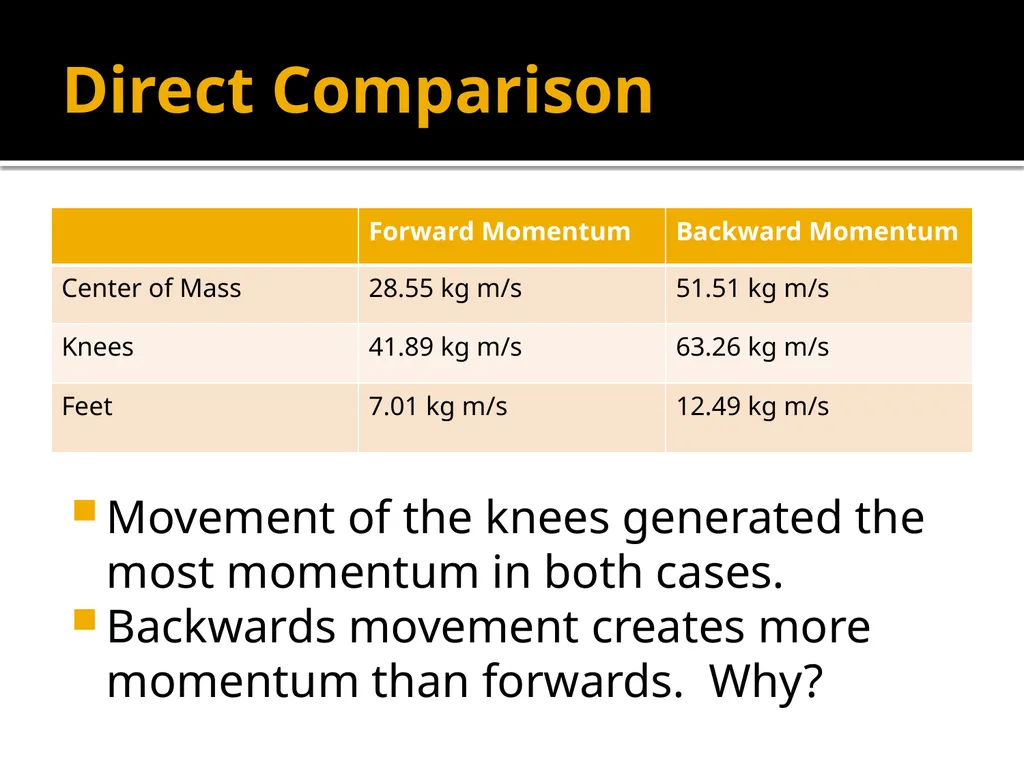
Direct Comparison Movement of the knees generated the most momentum in both cases.
Backwards movement creates more momentum than forwards. Why?<br>
16
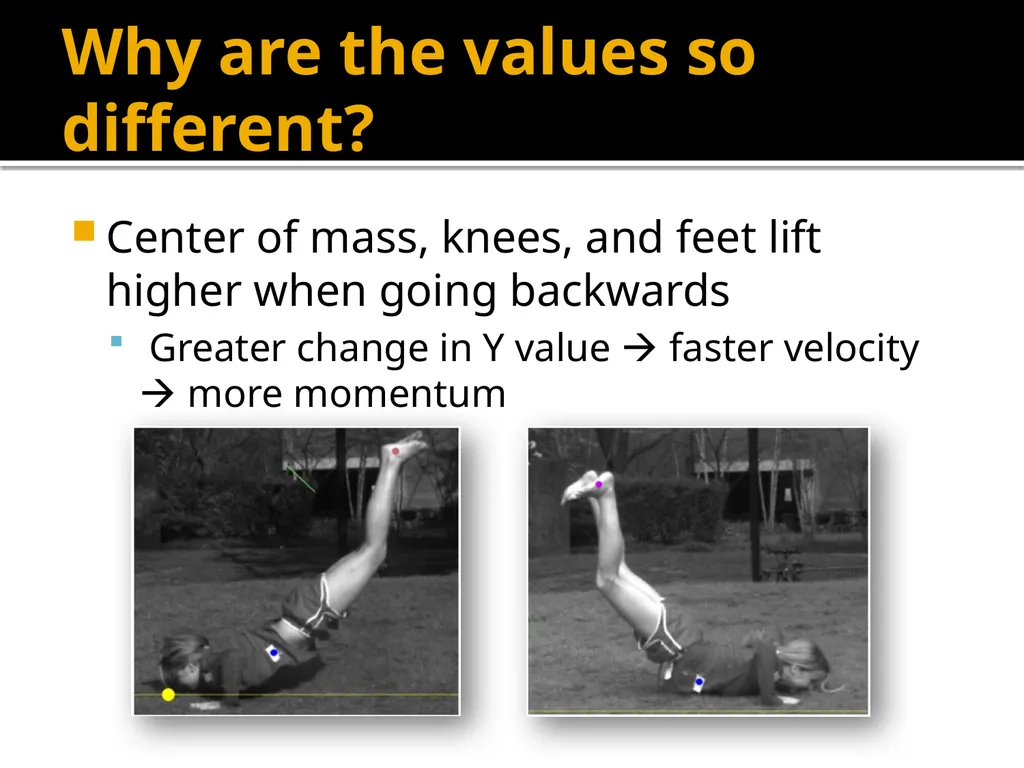
Why are the values so different? Center of mass, knees, and feet lift higher when going backwards
Greater change in Y value faster velocity more momentum<br>
17
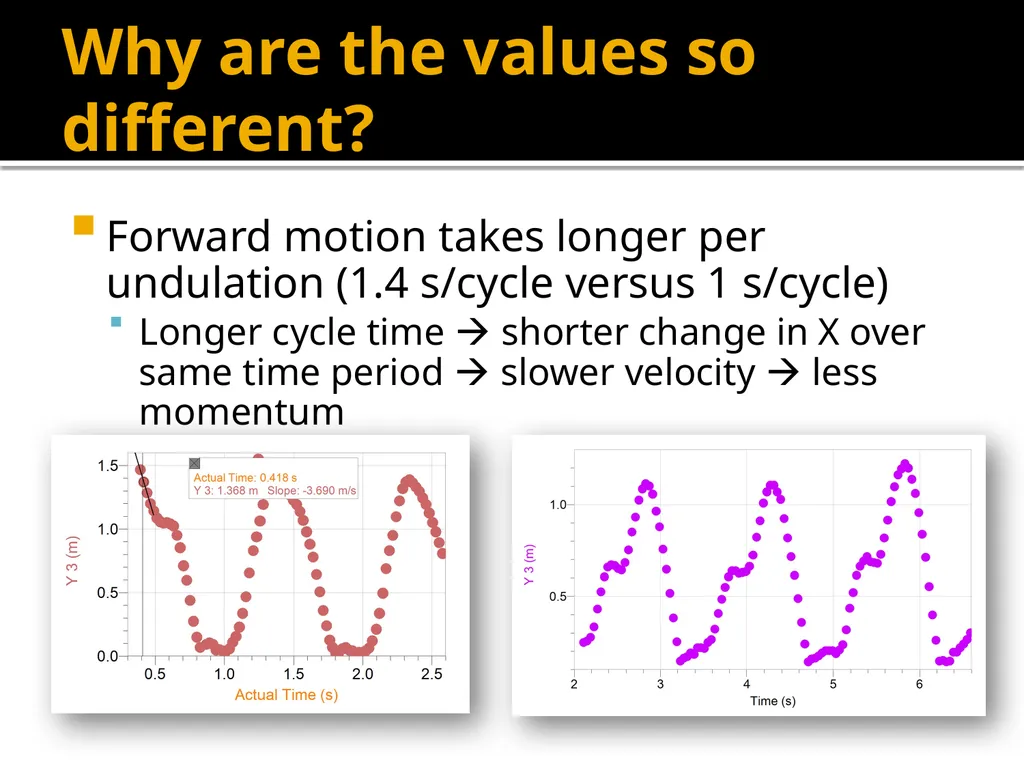
Why are the values so different? Forward motion takes longer per undulation (1.4 s/cycle versus 1 s/cycle)
Longer cycle time shorter change in X over same time period slower velocity less momentum<br>
18
Future Directions Does backwards motion really create more momentum?
Increase sample size
Is the impact on trunk, knees, and feet much different between the two types?
Use force plates.
Which version of the worm would be a better exercise?
Break down energy to see calories burned.<br>