Building your Clinical Portfolio: Showcasing your Impact and Effectiveness Terri Magruder, MD, MPH Sept. 22, 2017 Congratulations you are hired (onboarded)! Clinical Faculty track vs. Academic Faculty Appointment Well-defined clinical
"Building your Clinical Portfolio: Showcasing your" is the property of its rightful owner. Permission is granted to
download and print the materials on this website for personal, non-commercial use only, and to display it
on your personal computer provided you do not modify the materials and that you retain all copyright
notices contained in the materials. By downloading content from our website, you accept the terms of this
agreement.
Presentation Transcript
01
Building your Clinical Portfolio: Showcasing your Impact and Effectiveness Terri Magruder, MD, MPH
Sept. 22, 2017<br>
02
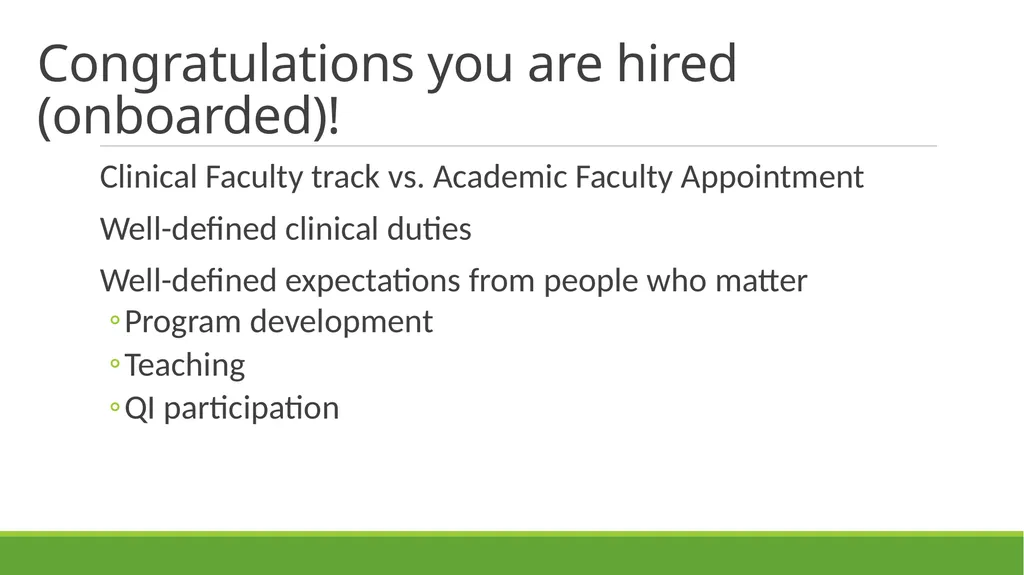
Congratulations you are hired (onboarded)! Clinical Faculty track vs. Academic Faculty Appointment
Well-defined clinical duties
Well-defined expectations from people who matter
Program development
Teaching
QI participation<br>
03
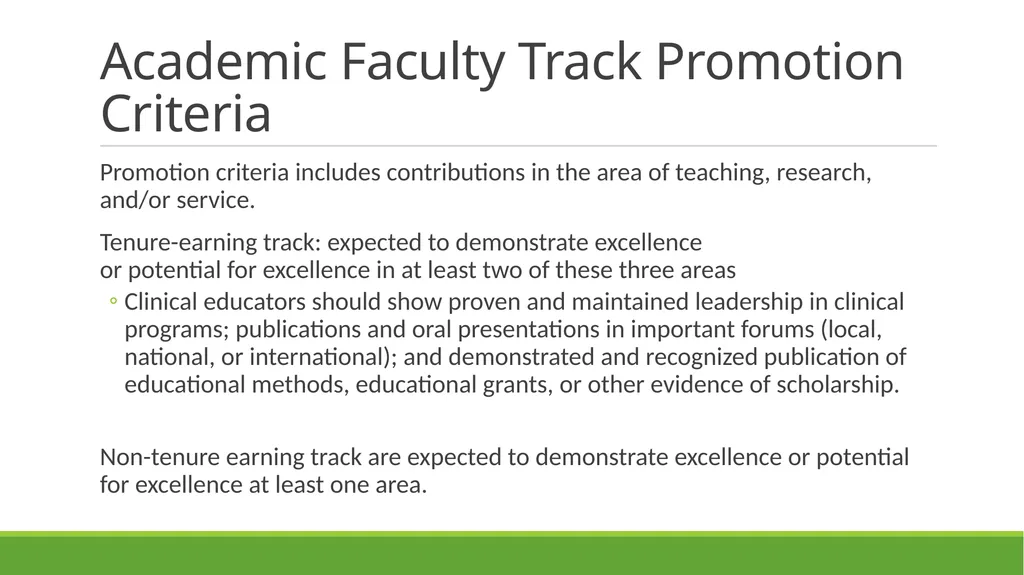
Academic Faculty Track Promotion Criteria Promotion criteria includes contributions in the area of teaching, research, and/or service.
Tenure-earning track: expected to demonstrate excellence or potential for excellence in at least two of these three areas
Clinical educators should show proven and maintained leadership in clinical programs; publications and oral presentations in important forums (local, national, or international); and demonstrated and recognized publication of educational methods, educational grants, or other evidence of scholarship.
Non-tenure earning track are expected to demonstrate excellence or potential for excellence at least one area.<br>
04
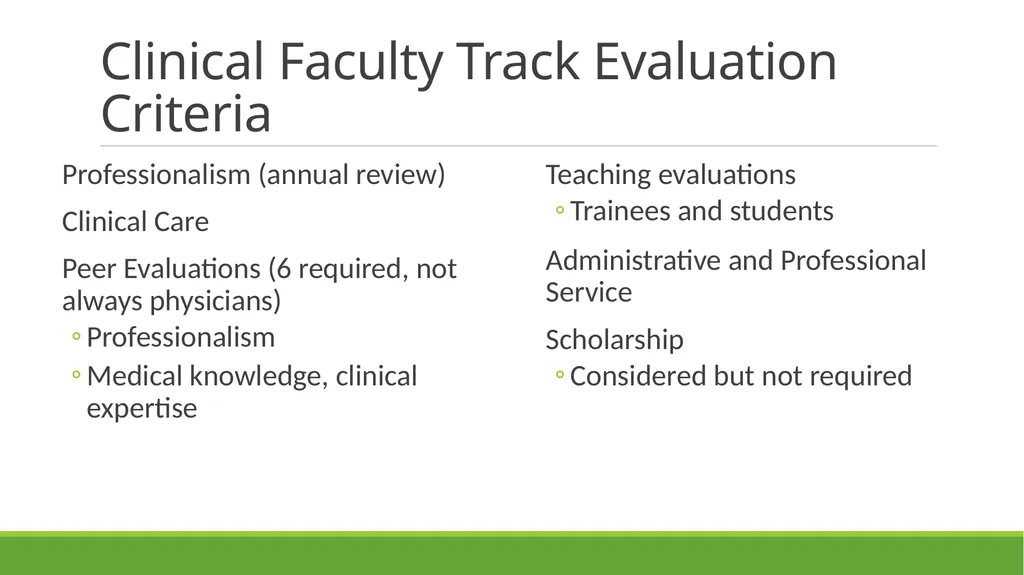
Clinical Faculty Track Evaluation Criteria Professionalism (annual review)
Clinical Care
Peer Evaluations (6 required, not always physicians)
Professionalism
Medical knowledge, clinical expertise Teaching evaluations
Trainees and students
Administrative and Professional Service
Scholarship
Considered but not required<br>
05
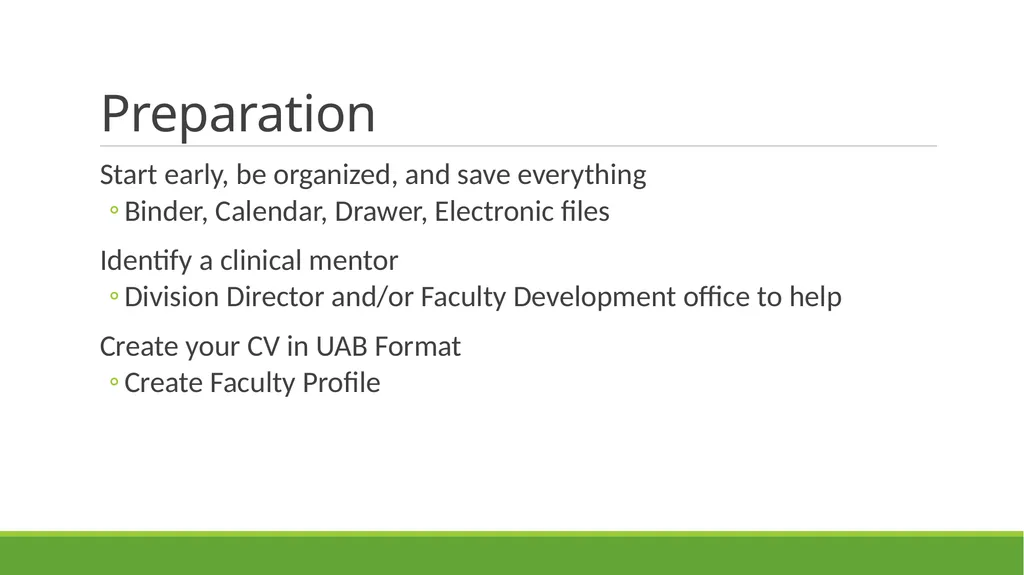
Preparation Start early, be organized, and save everything
Binder, Calendar, Drawer, Electronic files
Identify a clinical mentor
Division Director and/or Faculty Development office to help
Create your CV in UAB Format
Create Faculty Profile<br>
06
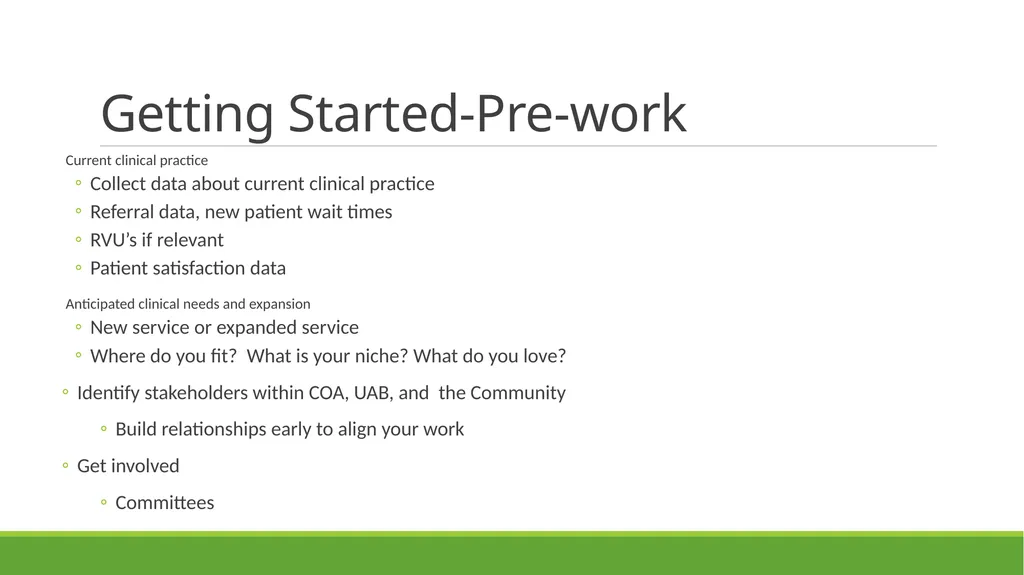
Getting Started-Pre-work Current clinical practice
Collect data about current clinical practice
Referral data, new patient wait times
RVU’s if relevant
Patient satisfaction data
Anticipated clinical needs and expansion
New service or expanded service
Where do you fit? What is your niche? What do you love?
Identify stakeholders within COA, UAB, and the Community
Build relationships early to align your work
Get involved
Committees<br>
07
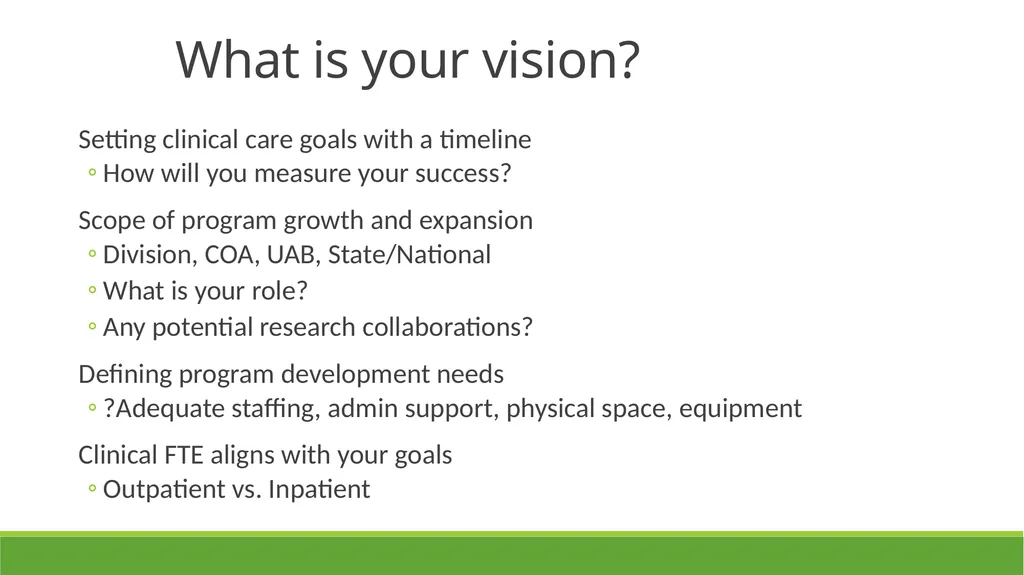
What is your vision? Setting clinical care goals with a timeline
How will you measure your success?
Scope of program growth and expansion
Division, COA, UAB, State/National
What is your role?
Any potential research collaborations?
Defining program development needs
?Adequate staffing, admin support, physical space, equipment
Clinical FTE aligns with your goals
Outpatient vs. Inpatient<br>
08
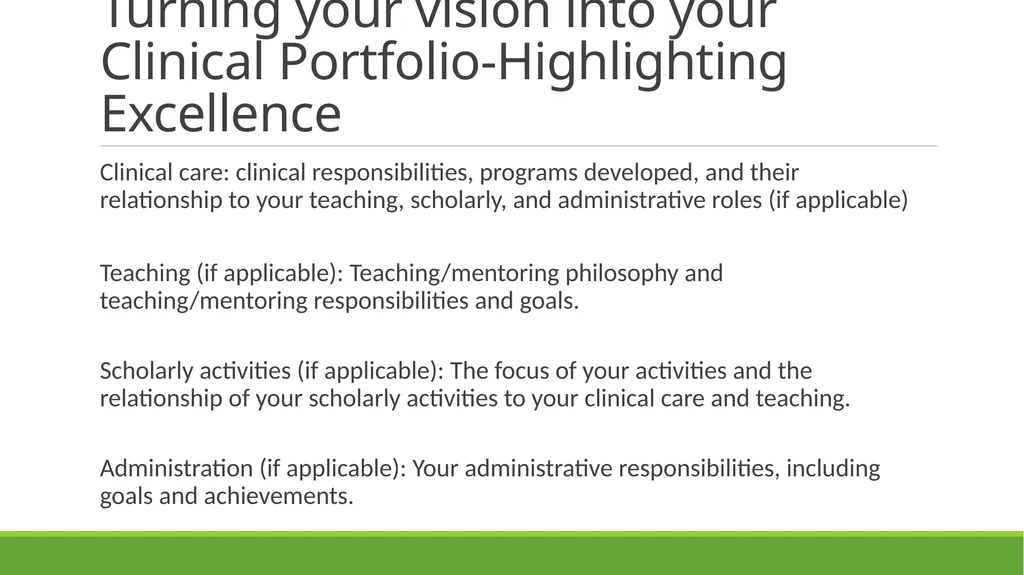
Turning your vision into your Clinical Portfolio-Highlighting Excellence Clinical care: clinical responsibilities, programs developed, and their relationship to your teaching, scholarly, and administrative roles (if applicable)
Teaching (if applicable): Teaching/mentoring philosophy and teaching/mentoring responsibilities and goals.
Scholarly activities (if applicable): The focus of your activities and the relationship of your scholarly activities to your clinical care and teaching.
Administration (if applicable): Your administrative responsibilities, including goals and achievements.<br>
09
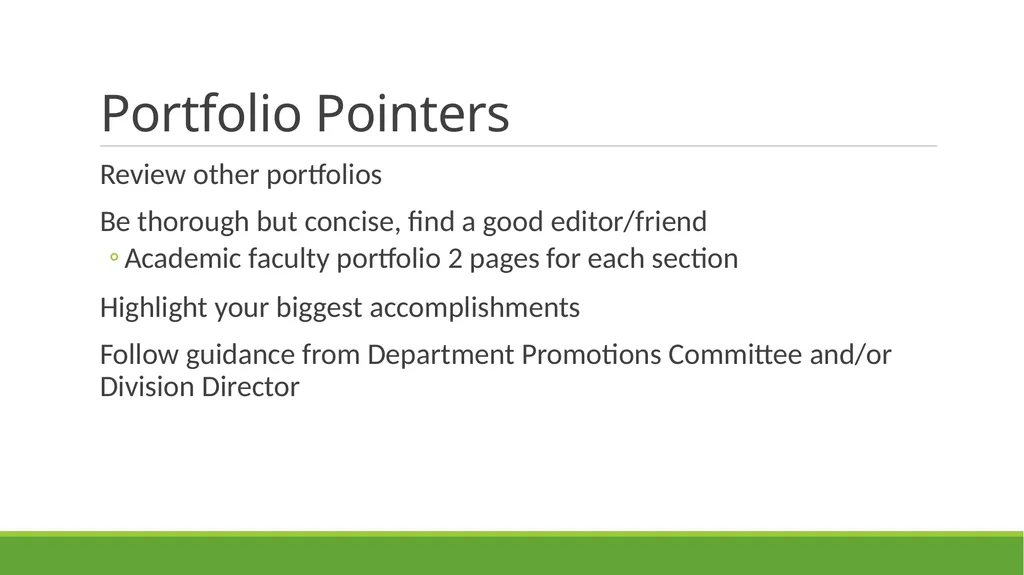
Portfolio Pointers Review other portfolios
Be thorough but concise, find a good editor/friend
Academic faculty portfolio 2 pages for each section
Highlight your biggest accomplishments
Follow guidance from Department Promotions Committee and/or Division Director<br>
10
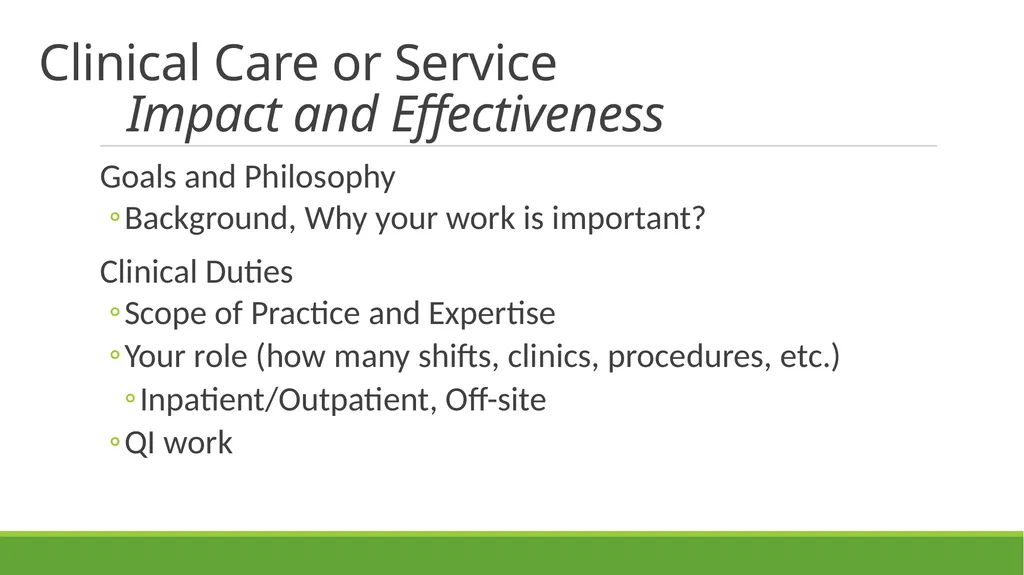
Clinical Care or Service Impact and Effectiveness Goals and Philosophy
Background, Why your work is important?
Clinical Duties
Scope of Practice and Expertise
Your role (how many shifts, clinics, procedures, etc.)
Inpatient/Outpatient, Off-site
QI work<br>
11
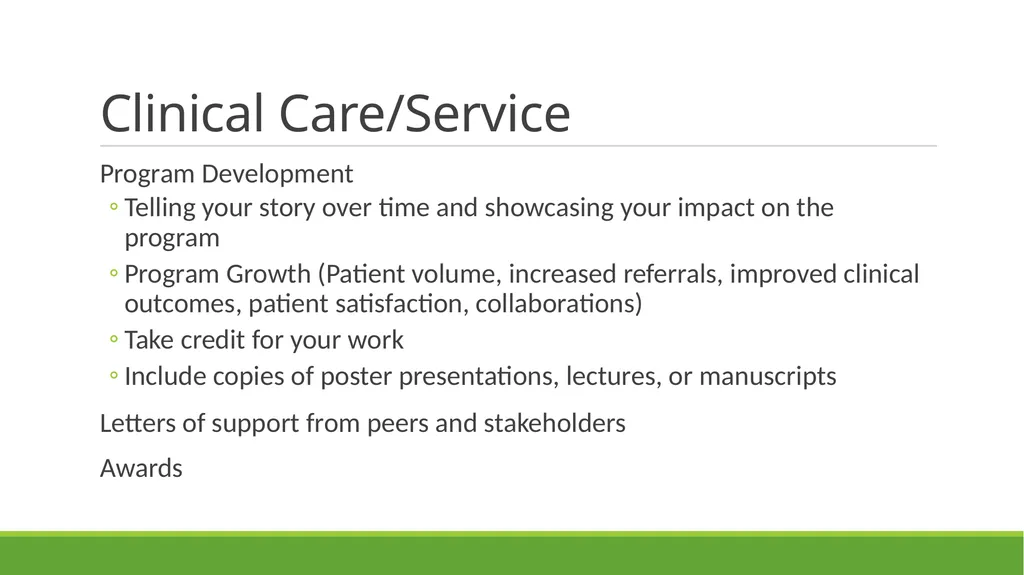
Clinical Care/Service Program Development
Telling your story over time and showcasing your impact on the program
Program Growth (Patient volume, increased referrals, improved clinical outcomes, patient satisfaction, collaborations)
Take credit for your work
Include copies of poster presentations, lectures, or manuscripts
Letters of support from peers and stakeholders
Awards<br>
12
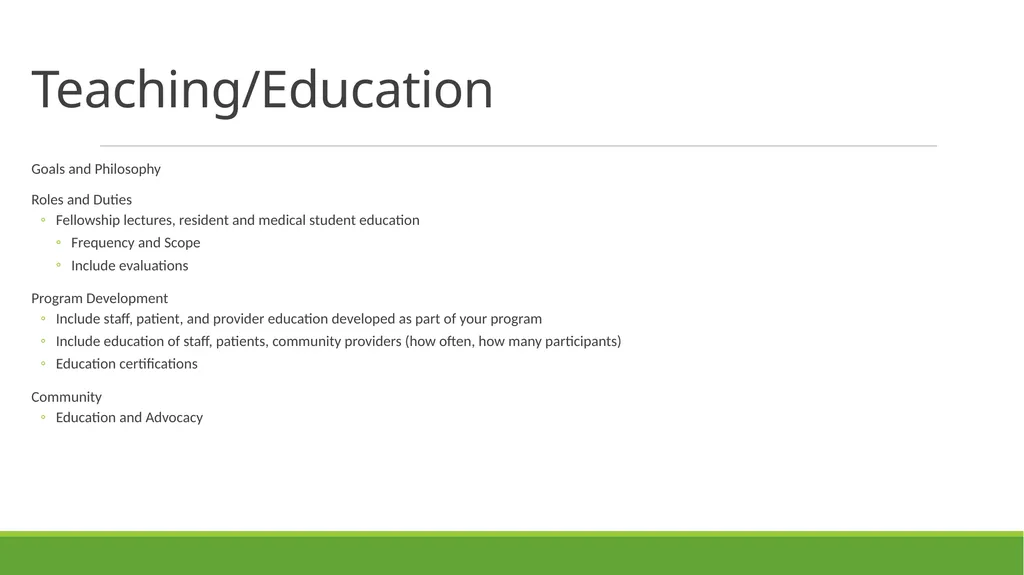
Teaching/Education Goals and Philosophy
Roles and Duties
Fellowship lectures, resident and medical student education
Frequency and Scope
Include evaluations
Program Development
Include staff, patient, and provider education developed as part of your program
Include education of staff, patients, community providers (how often, how many participants)
Education certifications
Community
Education and Advocacy<br>
13
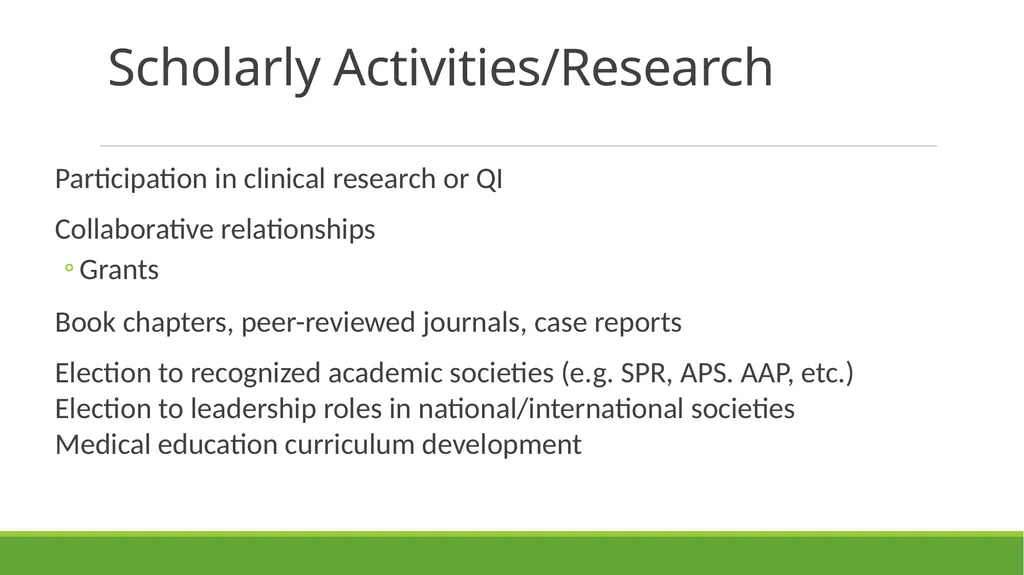
Scholarly Activities/Research Participation in clinical research or QI
Collaborative relationships
Grants
Book chapters, peer-reviewed journals, case reports
Election to recognized academic societies (e.g. SPR, APS. AAP, etc.) Election to leadership roles in national/international societies Medical education curriculum development<br>
14
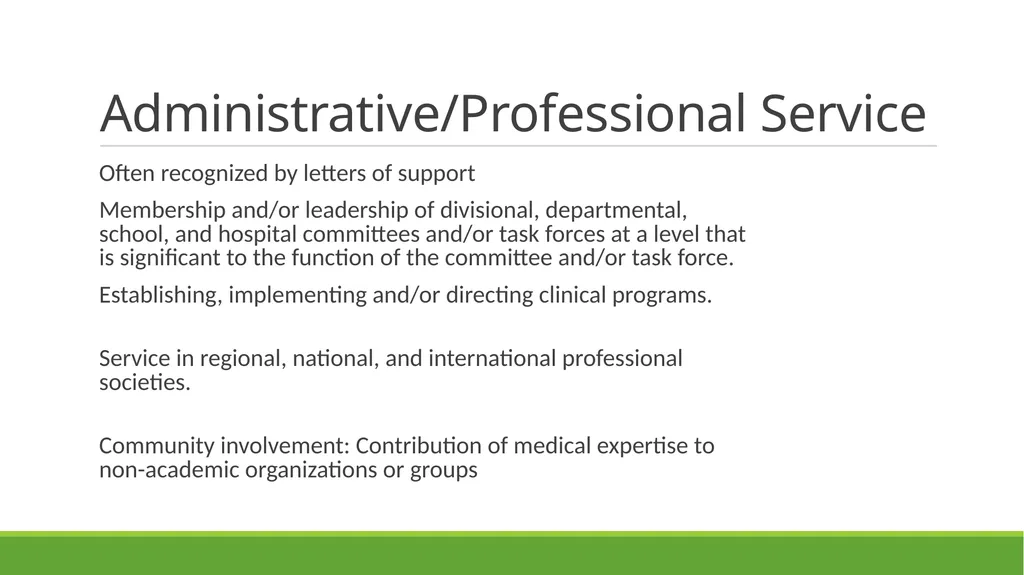
Administrative/Professional Service Often recognized by letters of support
Membership and/or leadership of divisional, departmental, school, and hospital committees and/or task forces at a level that is significant to the function of the committee and/or task force.
Establishing, implementing and/or directing clinical programs.
Service in regional, national, and international professional societies.
Community involvement: Contribution of medical expertise to non-academic organizations or groups<br>
15
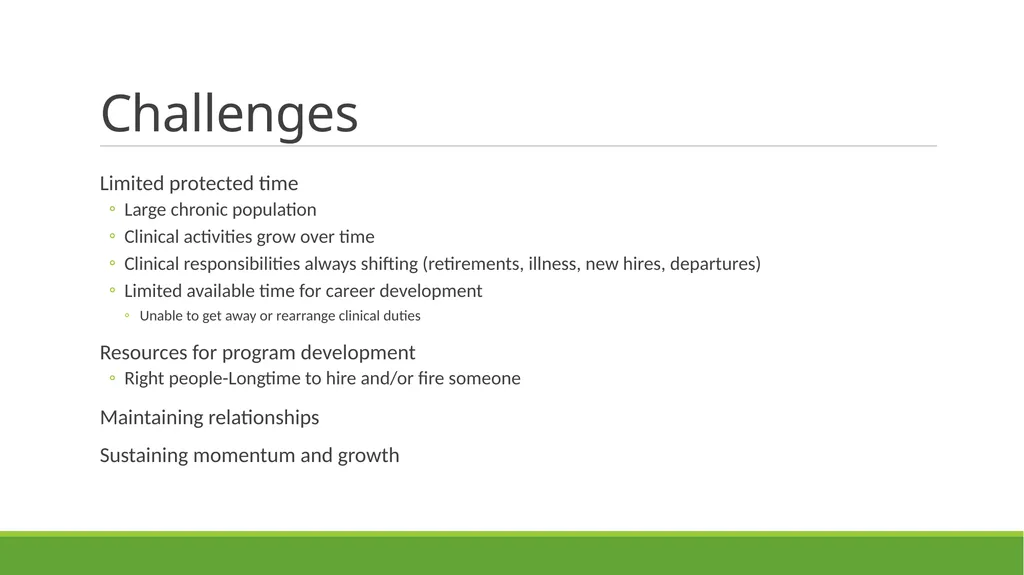
Challenges Limited protected time
Large chronic population
Clinical activities grow over time
Clinical responsibilities always shifting (retirements, illness, new hires, departures)
Limited available time for career development
Unable to get away or rearrange clinical duties
Resources for program development
Right people-Longtime to hire and/or fire someone
Maintaining relationships
Sustaining momentum and growth<br>
16
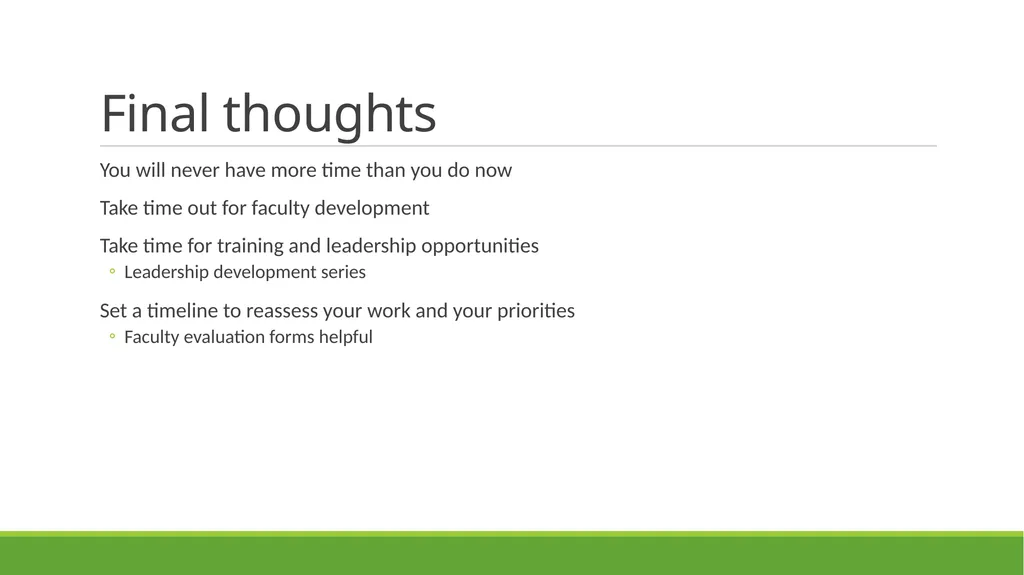
Final thoughts You will never have more time than you do now
Take time out for faculty development
Take time for training and leadership opportunities
Leadership development series
Set a timeline to reassess your work and your priorities
Faculty evaluation forms helpful<br>