
C Programming Language Tutorial By Mrs. Muneeswari

Description: C Programming Language Tutorial By Mrs. Muneeswari Lecturer in computer Applications SVCRGDC,Palamaner What is c language:- C is mother language of all programming language. It is a popular computer programming language. It is
Related Topics
Download Presentation
"C Programming Language Tutorial By Mrs. Muneeswari" is the property of its rightful owner. Permission is granted to download and print the materials on this website for personal, non-commercial use only, and to display it on your personal computer provided you do not modify the materials and that you retain all copyright notices contained in the materials. By downloading content from our website, you accept the terms of this agreement.
Presentation Transcript
slide1. C Programming Language Tutorial By Mrs. Muneeswari
Lecturer in computer Applications
SVCRGDC,Palamaner<br>
slide2. What is c language:- C is mother language of all programming language.
It is a popular computer programming language.
It is procedure-oriented programming language.
It is also called mid level programming language.<br>
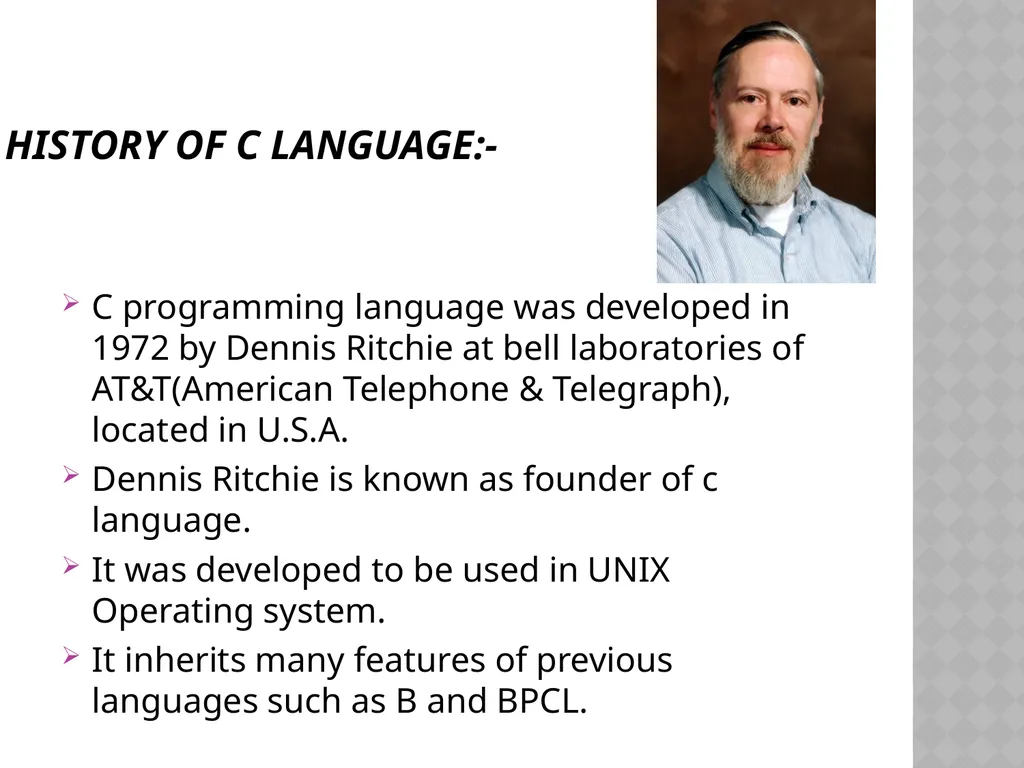
slide3. History of c language:- C programming language was developed in 1972 by Dennis Ritchie at bell laboratories of AT&T(American Telephone & Telegraph), located in U.S.A.
Dennis Ritchie is known as founder of c language.
It was developed to be used in UNIX Operating system.
It inherits many features of previous languages such as B and BPCL.<br>
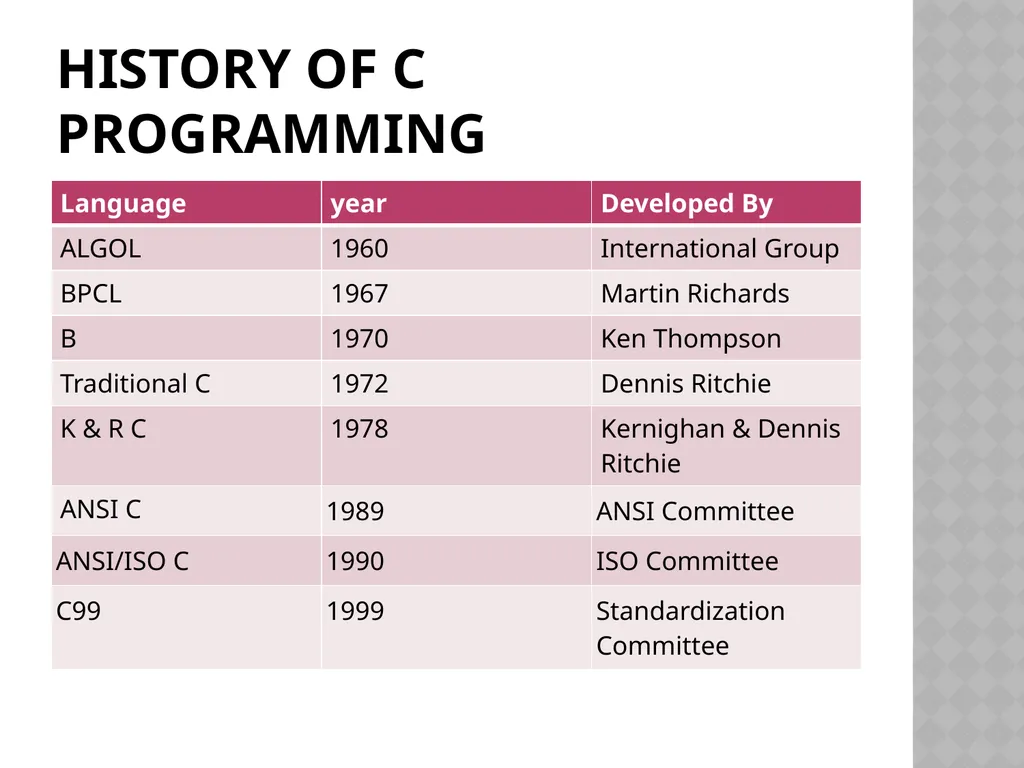
slide4. History of c programming<br>
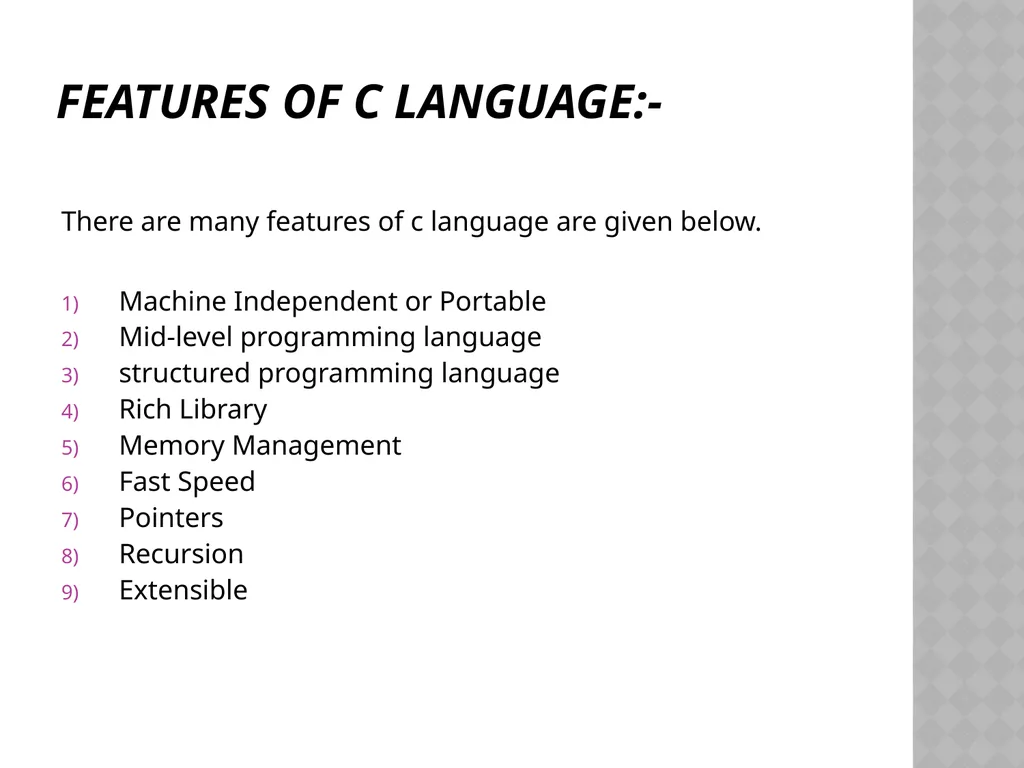
slide5. Features of C Language:- There are many features of c language are given below.
Machine Independent or Portable
Mid-level programming language
structured programming language
Rich Library
Memory Management
Fast Speed
Pointers
Recursion
Extensible<br>
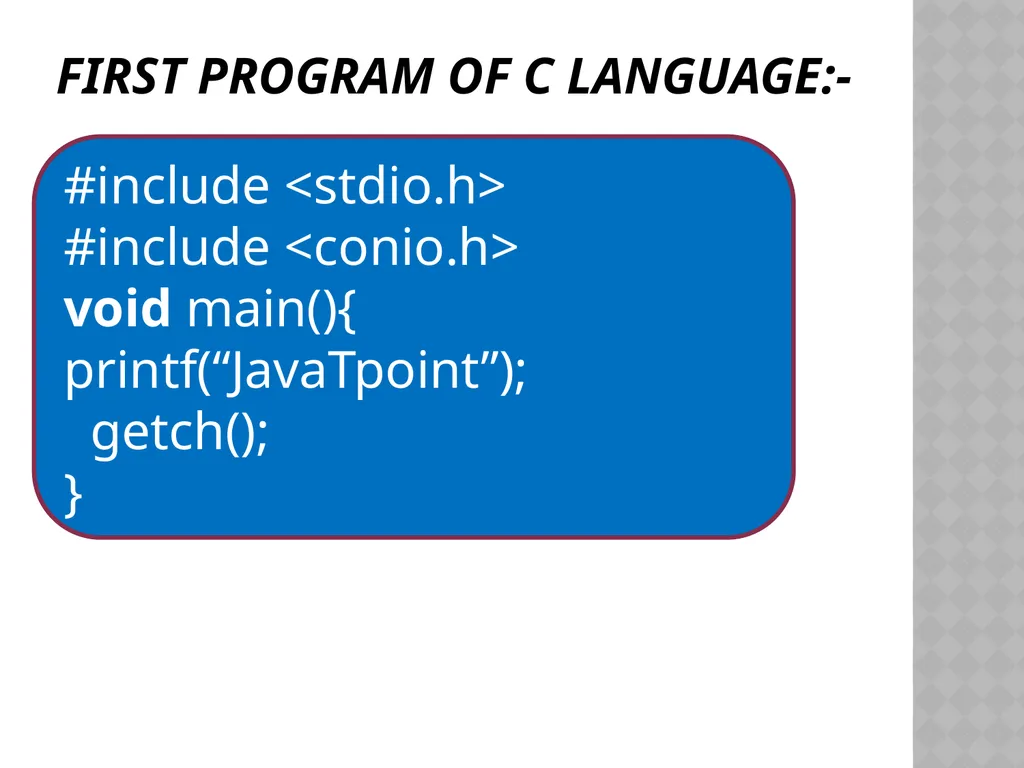
slide6. First Program of C Language:- #include <stdio.h>
#include <conio.h>
void main(){
printf(“JavaTpoint”);
getch();
}<br>
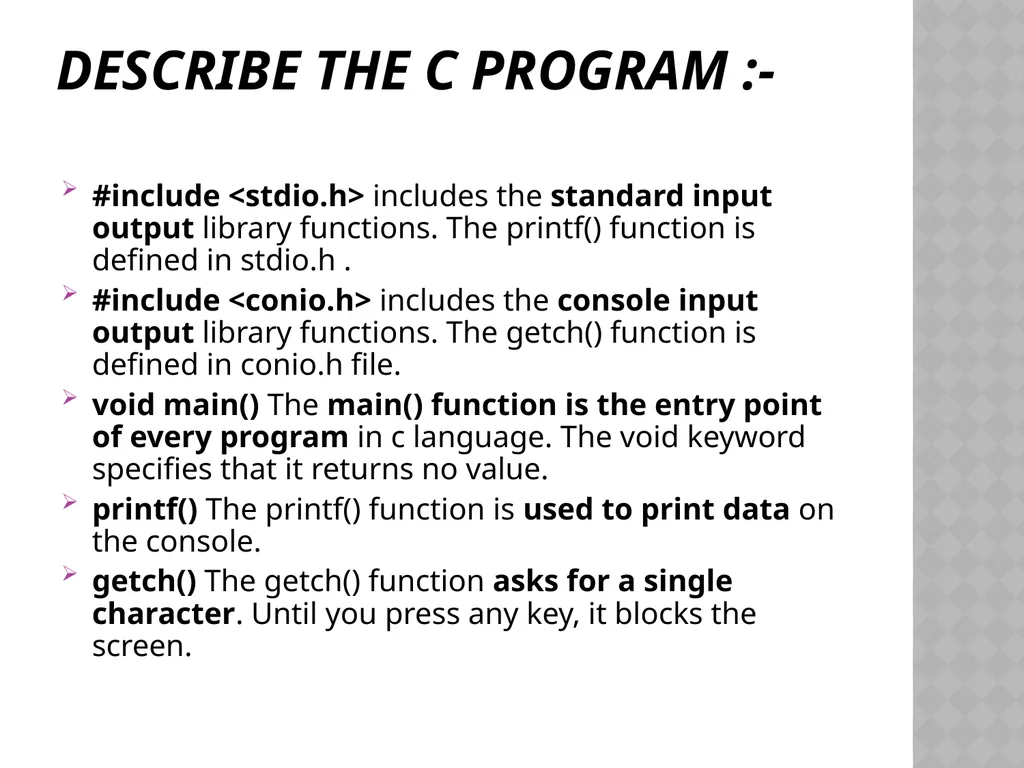
slide7. Describe the C Program :- #include <stdio.h> includes the standard input output library functions. The printf() function is defined in stdio.h .
#include <conio.h> includes the console input output library functions. The getch() function is defined in conio.h file.
void main() The main() function is the entry point of every program in c language. The void keyword specifies that it returns no value.
printf() The printf() function is used to print data on the console.
getch() The getch() function asks for a single character. Until you press any key, it blocks the screen.<br>
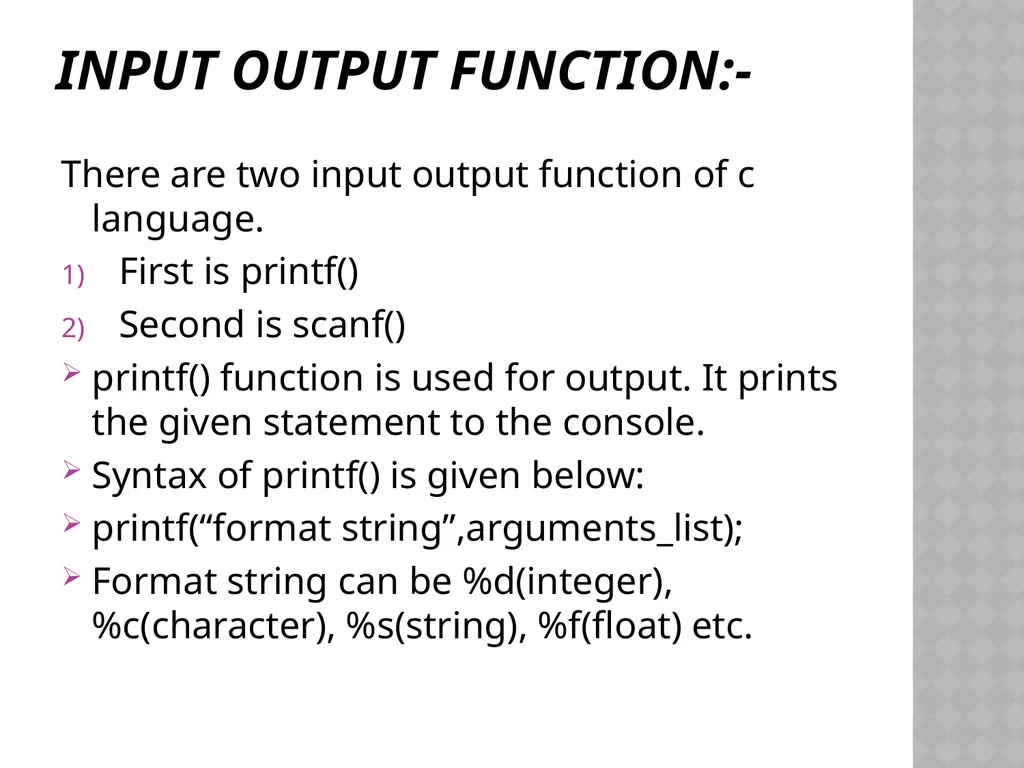
slide8. Input output function:- There are two input output function of c language.
First is printf()
Second is scanf()
printf() function is used for output. It prints the given statement to the console.
Syntax of printf() is given below:
printf(“format string”,arguments_list);
Format string can be %d(integer), %c(character), %s(string), %f(float) etc.<br>
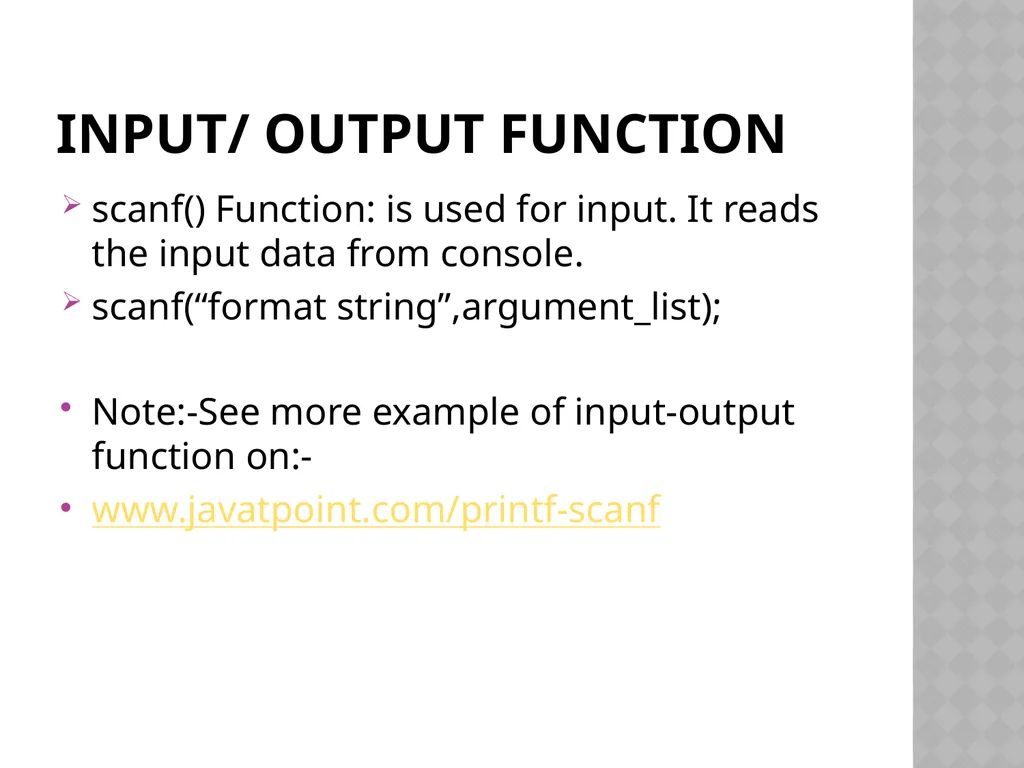
slide9. Input/ output function scanf() Function: is used for input. It reads the input data from console.
scanf(“format string”,argument_list);
Note:-See more example of input-output function on:-
www.javatpoint.com/printf-scanf<br>
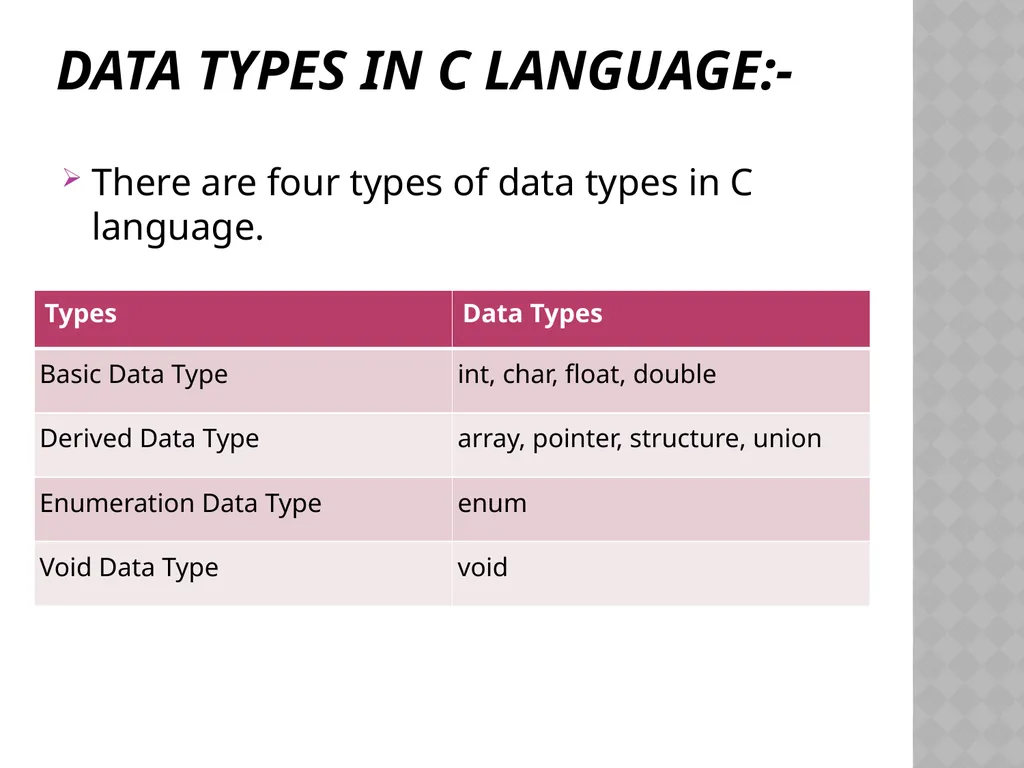
slide10. Data types in C language:- There are four types of data types in C language.<br>
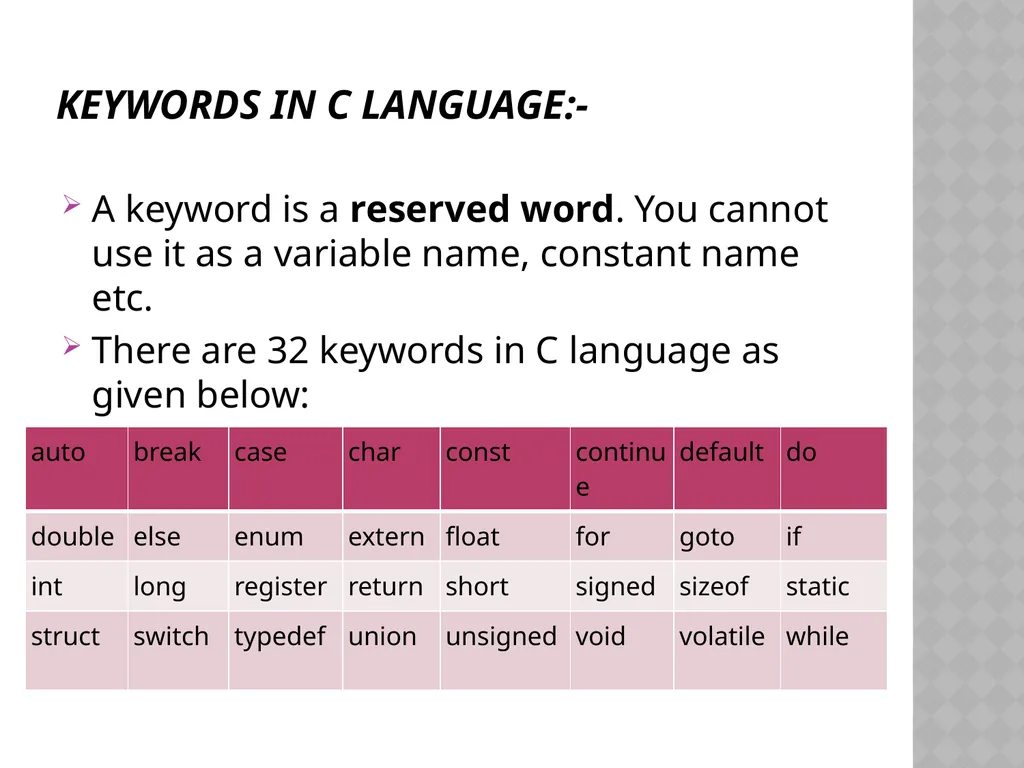
slide11. Keywords in C Language:- A keyword is a reserved word. You cannot use it as a variable name, constant name etc.
There are 32 keywords in C language as given below:<br>
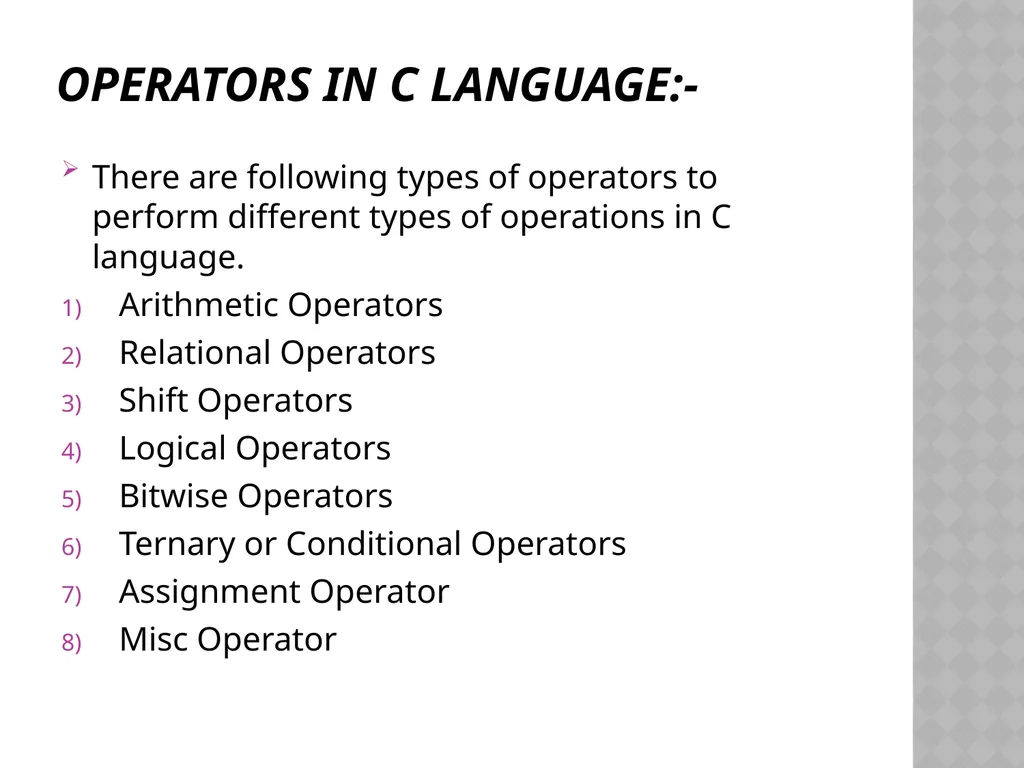
slide12. Operators in C language:- There are following types of operators to perform different types of operations in C language.
Arithmetic Operators
Relational Operators
Shift Operators
Logical Operators
Bitwise Operators
Ternary or Conditional Operators
Assignment Operator
Misc Operator<br>
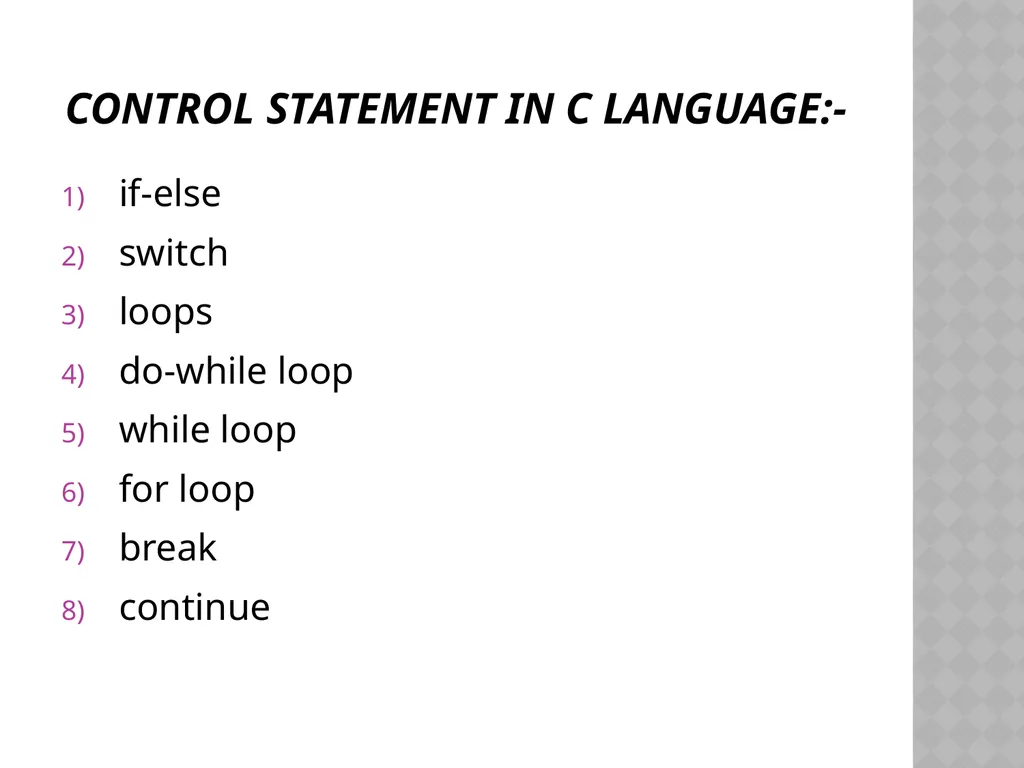
slide13. Control statement in C language:- if-else
switch
loops
do-while loop
while loop
for loop
break
continue<br>
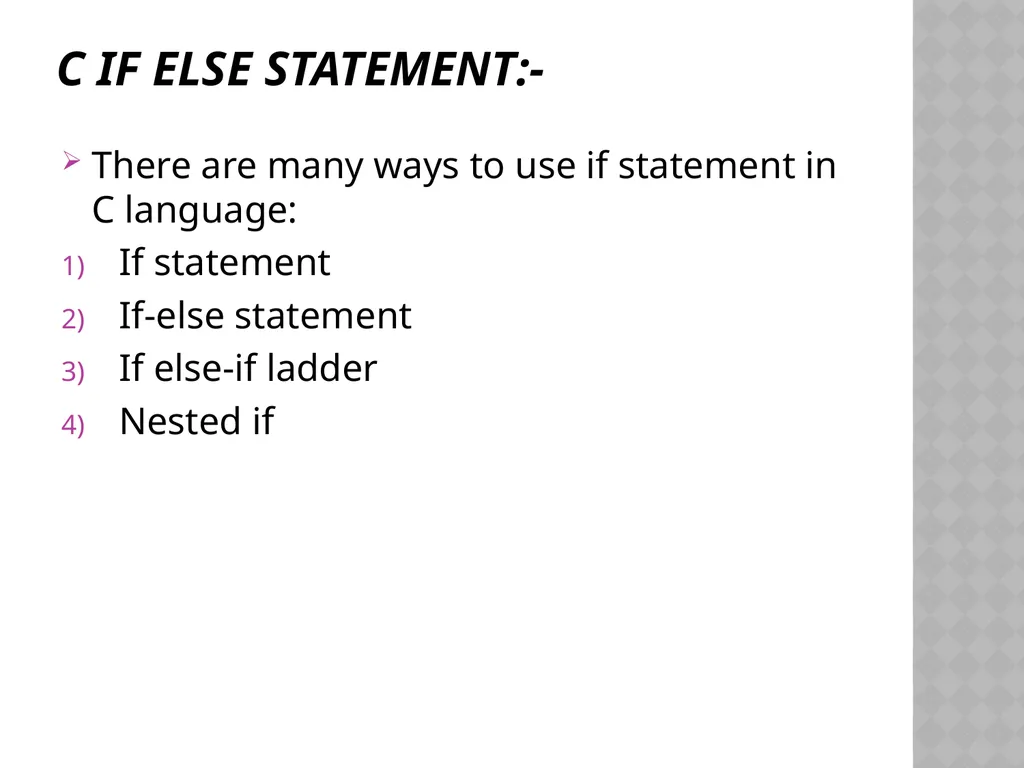
slide14. C if else statement:- There are many ways to use if statement in C language:
If statement
If-else statement
If else-if ladder
Nested if<br>
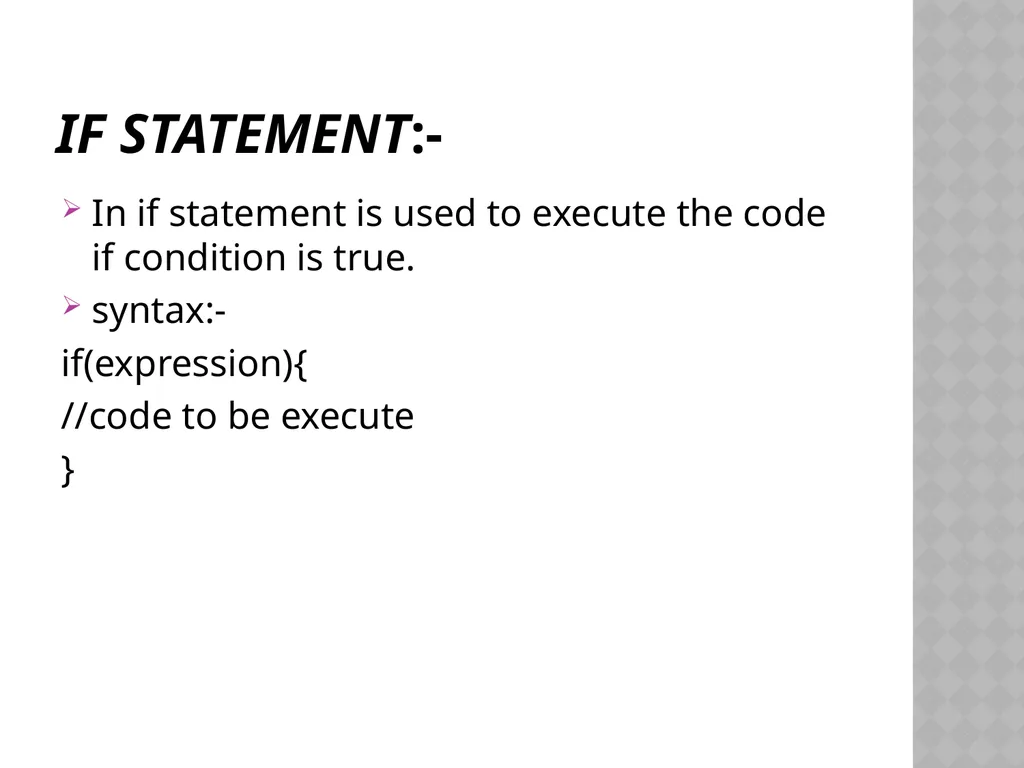
slide15. if statement:- In if statement is used to execute the code if condition is true.
syntax:-
if(expression){
//code to be execute
}<br>
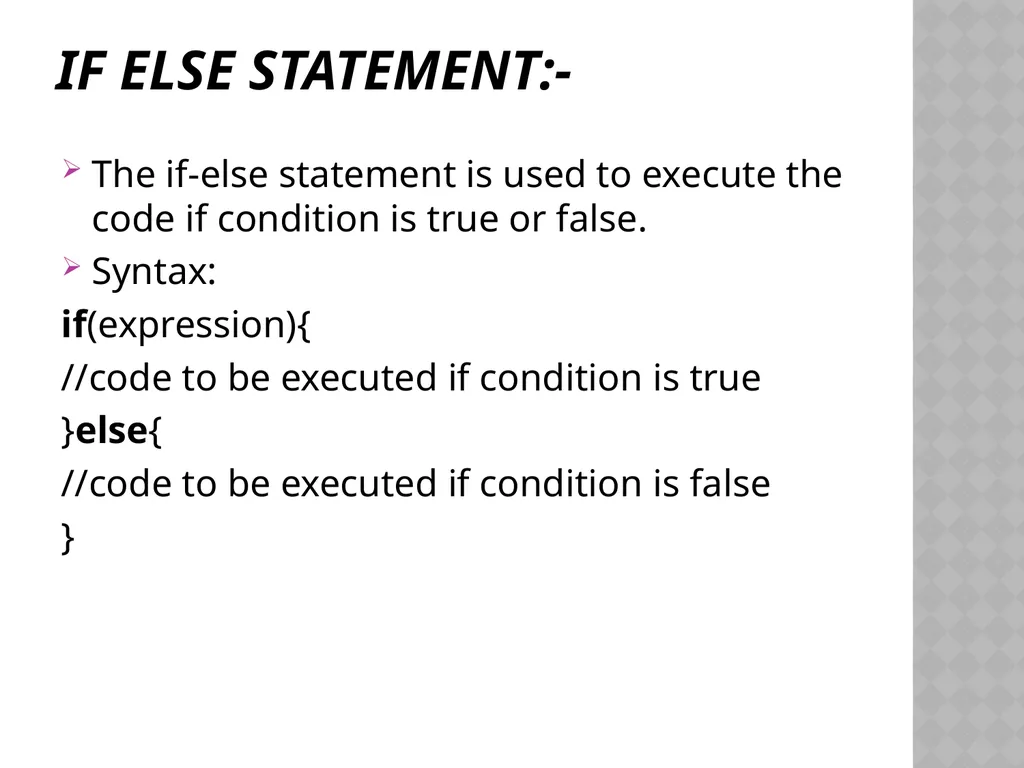
slide16. If else statement:- The if-else statement is used to execute the code if condition is true or false.
Syntax:
if(expression){
//code to be executed if condition is true
}else{
//code to be executed if condition is false
}<br>
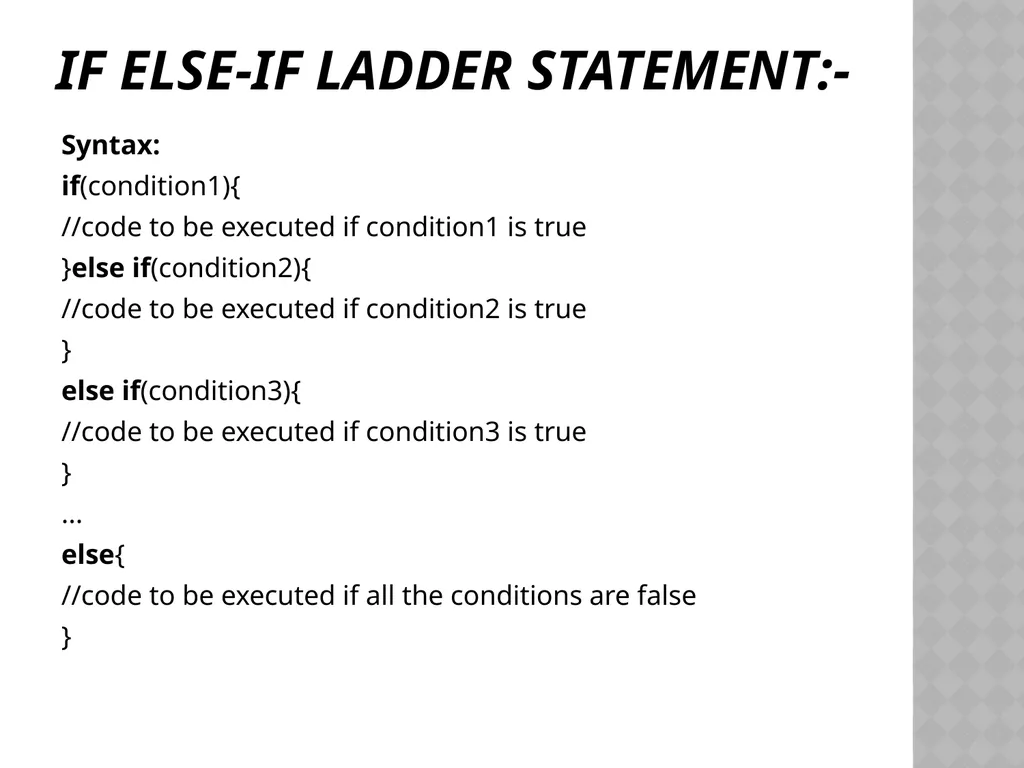
slide17. if else-if ladder Statement:- Syntax:
if(condition1){
//code to be executed if condition1 is true
}else if(condition2){
//code to be executed if condition2 is true
}
else if(condition3){
//code to be executed if condition3 is true
}
...
else{
//code to be executed if all the conditions are false
}<br>
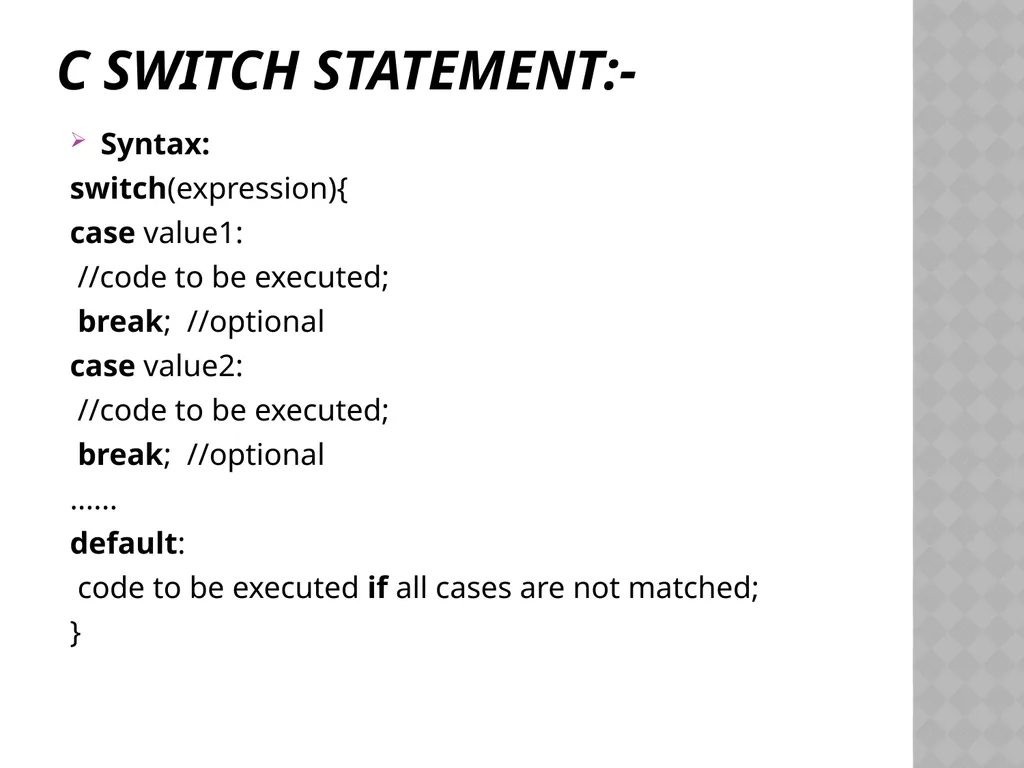
slide18. C Switch Statement:- Syntax:
switch(expression){
case value1:
//code to be executed;
break; //optional
case value2:
//code to be executed;
break; //optional
......
default:
code to be executed if all cases are not matched;
}<br>
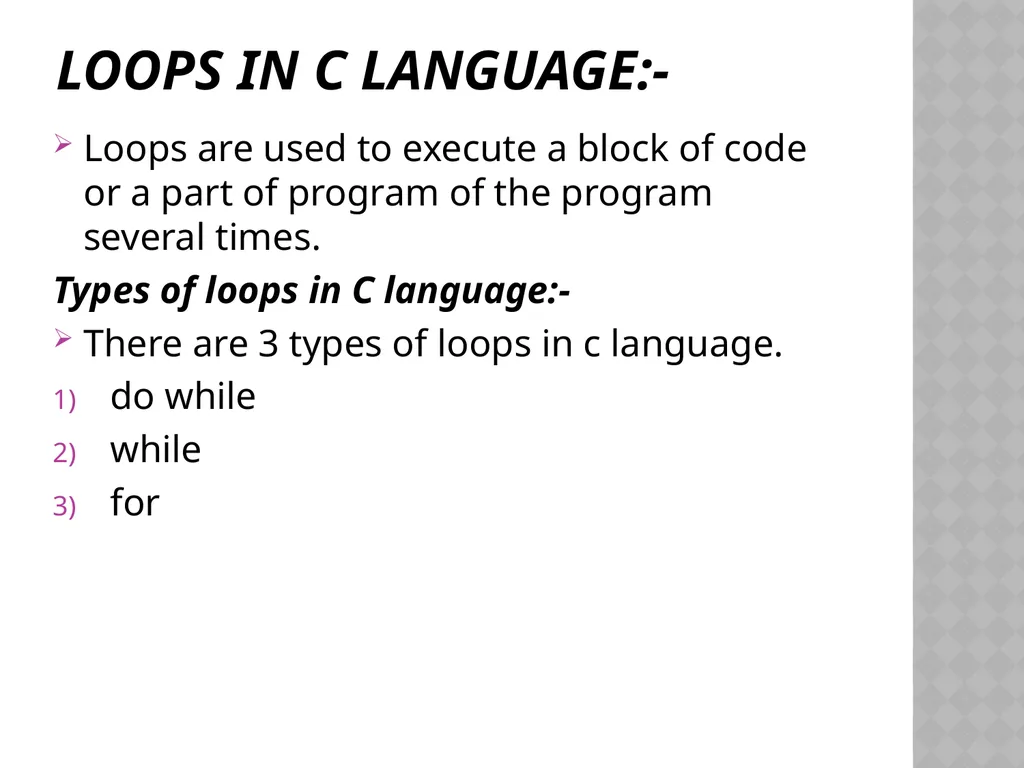
slide19. Loops in C language:- Loops are used to execute a block of code or a part of program of the program several times.
Types of loops in C language:-
There are 3 types of loops in c language.
do while
while
for<br>
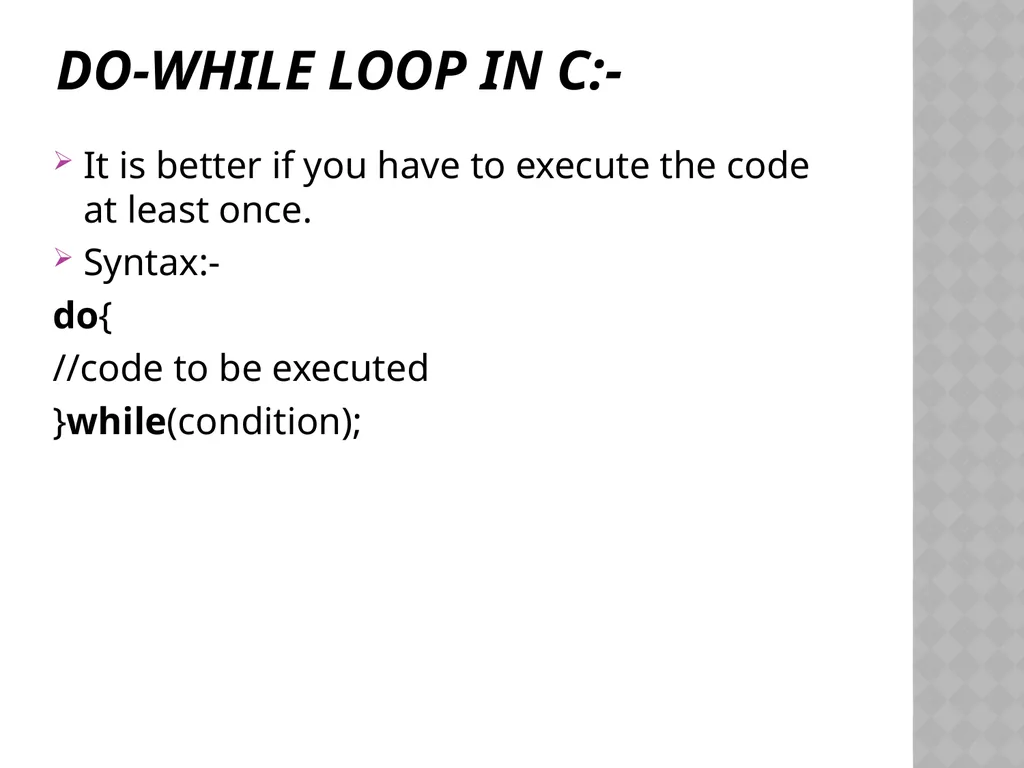
slide20. do-while loop in C:- It is better if you have to execute the code at least once.
Syntax:-
do{
//code to be executed
}while(condition);<br>
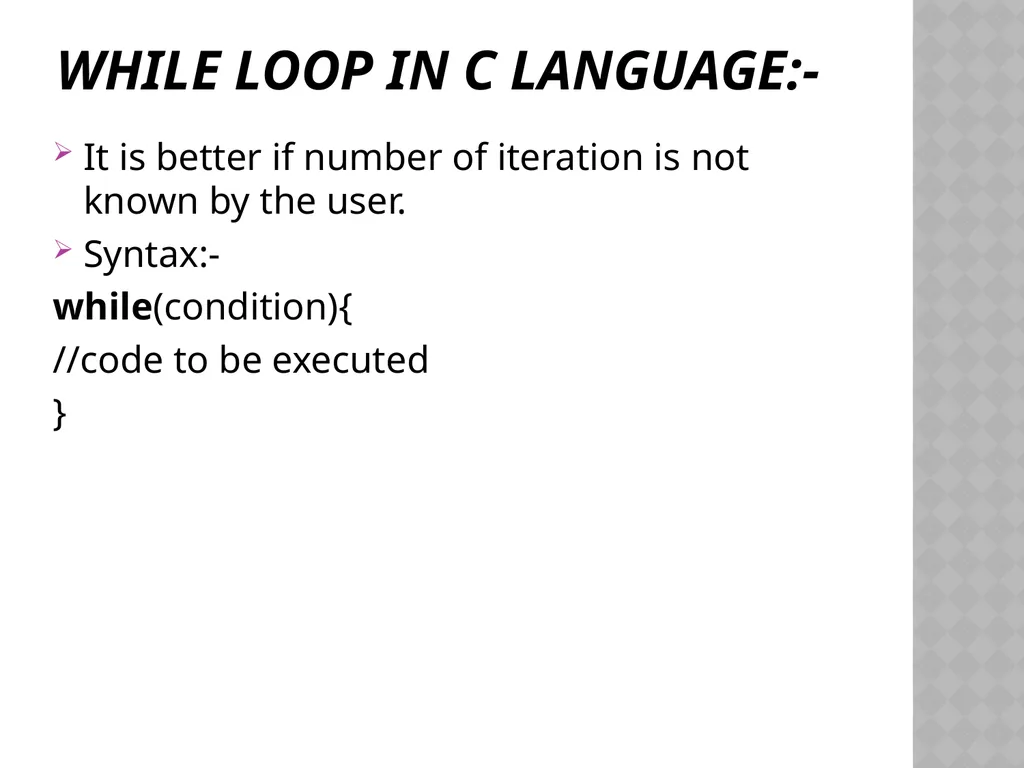
slide21. while loop in c language:- It is better if number of iteration is not known by the user.
Syntax:-
while(condition){
//code to be executed
}<br>
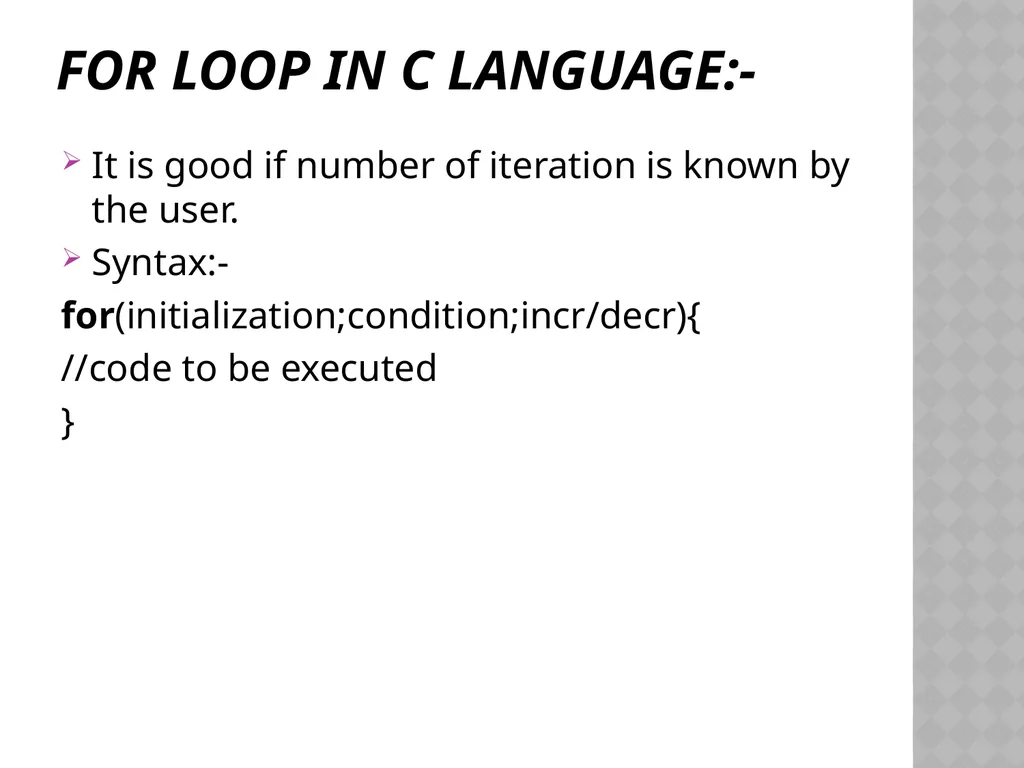
slide22. For loop in C language:- It is good if number of iteration is known by the user.
Syntax:-
for(initialization;condition;incr/decr){
//code to be executed
}<br>
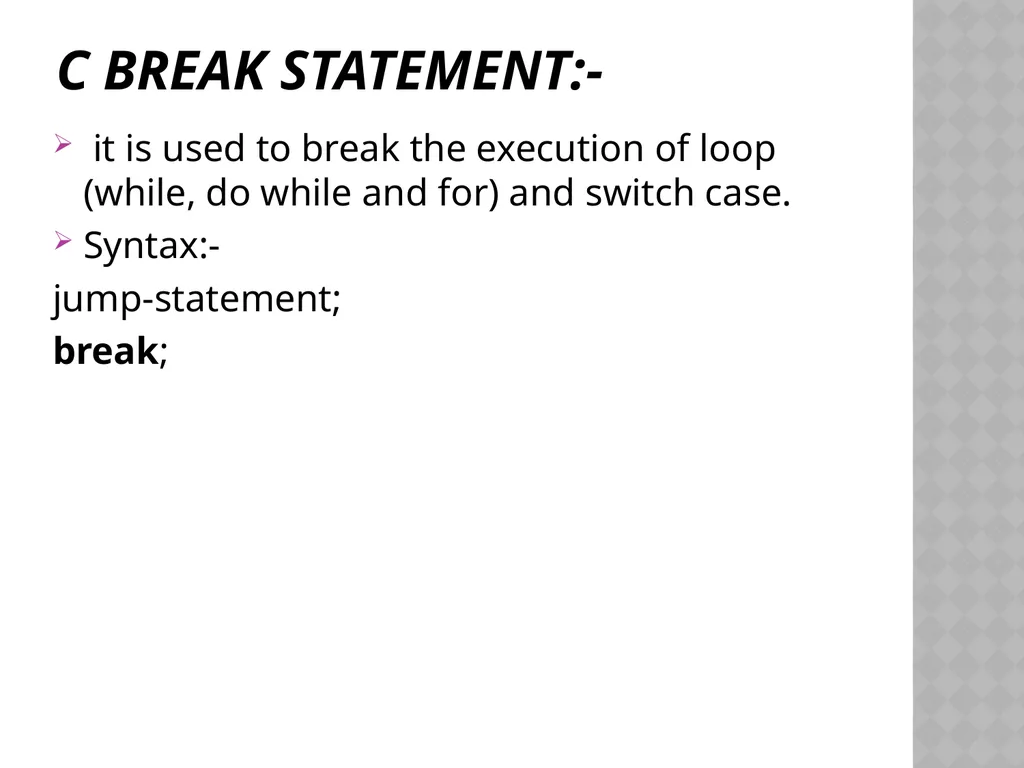
slide23. C break statement:- it is used to break the execution of loop (while, do while and for) and switch case.
Syntax:-
jump-statement;
break;<br>
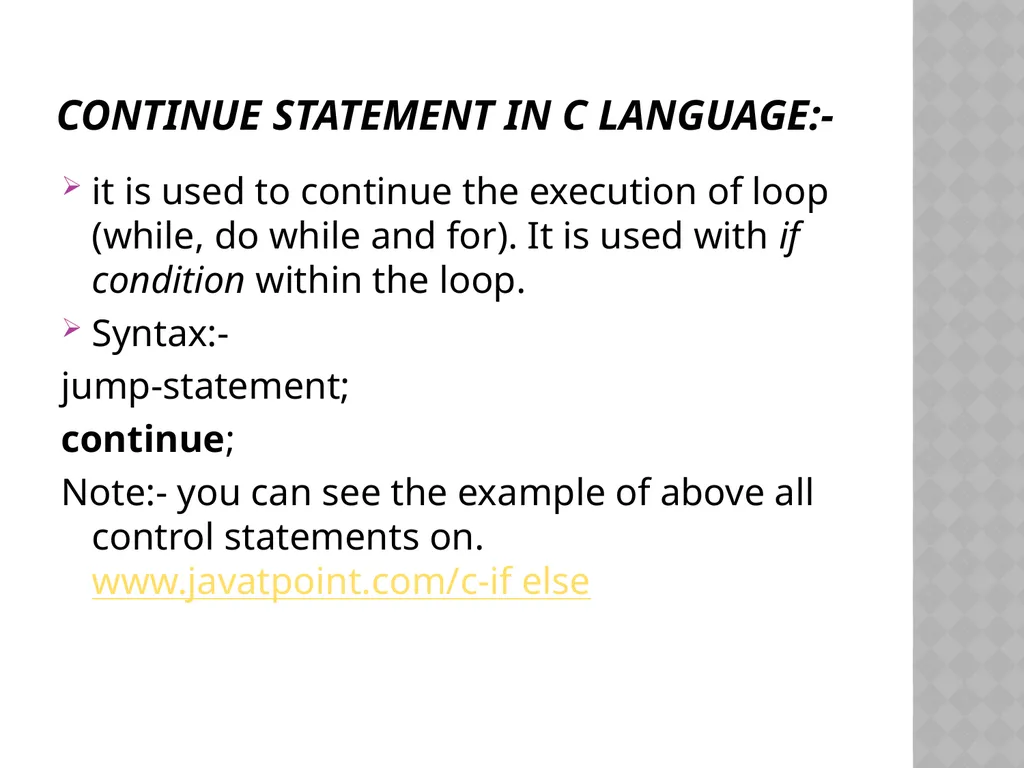
slide24. Continue statement in C language:- it is used to continue the execution of loop (while, do while and for). It is used with if condition within the loop.
Syntax:-
jump-statement;
continue;
Note:- you can see the example of above all control statements on. www.javatpoint.com/c-if else<br>
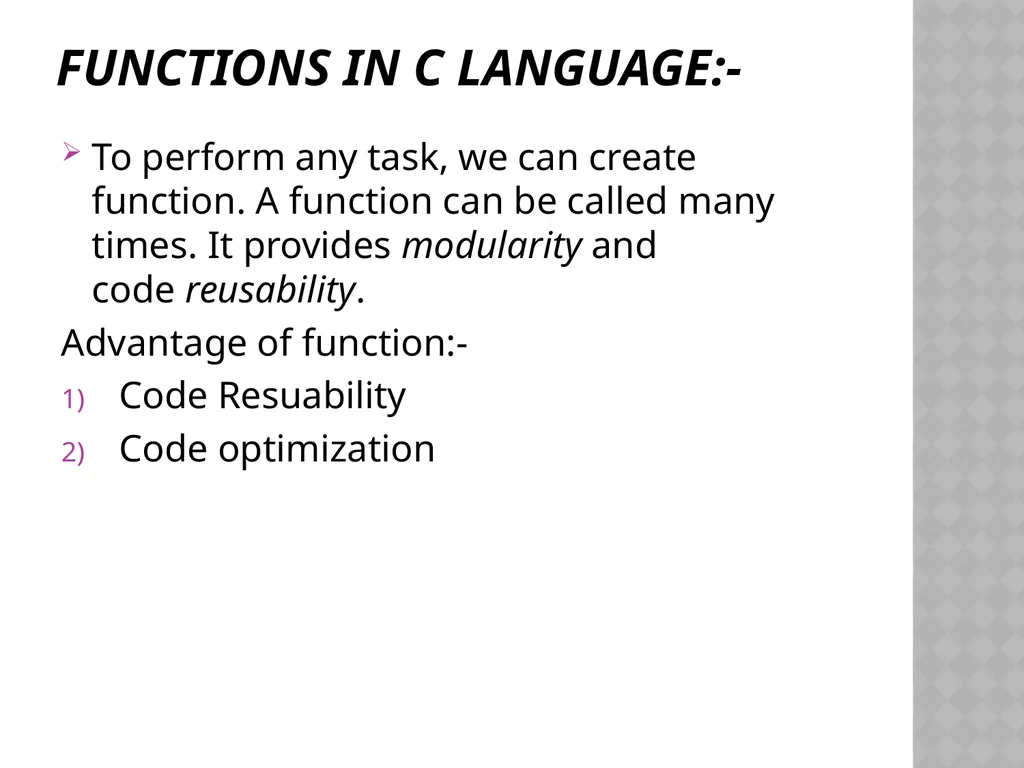
slide25. Functions in C language:- To perform any task, we can create function. A function can be called many times. It provides modularity and code reusability.
Advantage of function:-
Code Resuability
Code optimization<br>
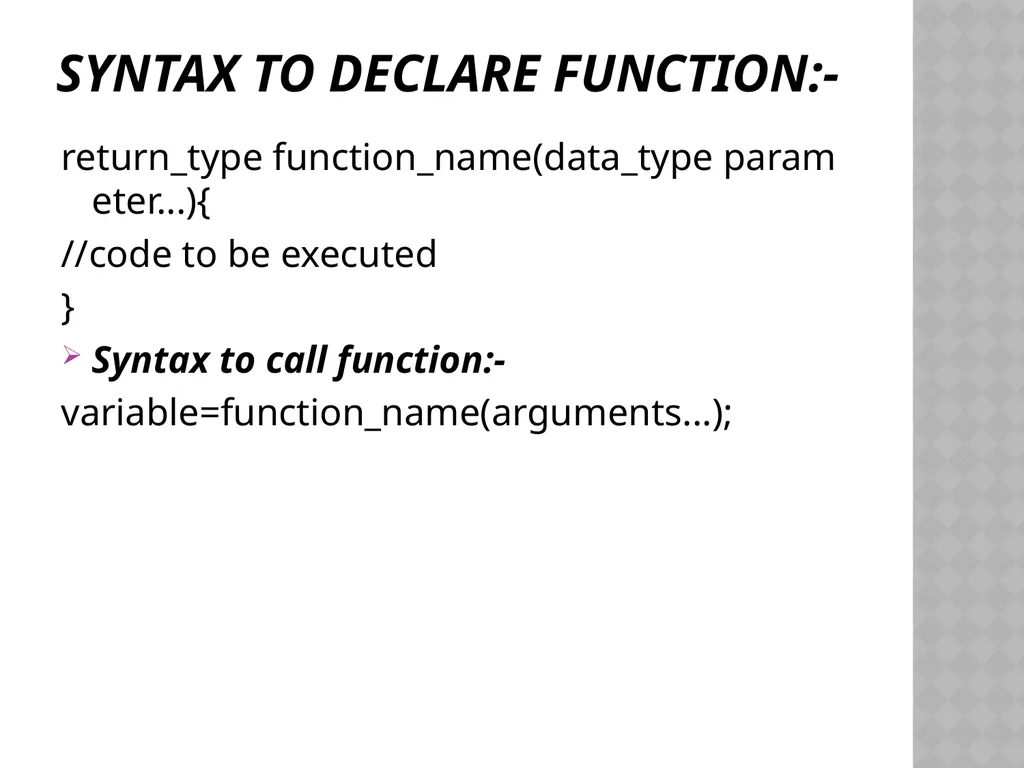
slide26. Syntax to declare function:- return_type function_name(data_type parameter...){
//code to be executed
}
Syntax to call function:-
variable=function_name(arguments...);<br>
Lecturer in computer Applications
SVCRGDC,Palamaner<br>
slide2. What is c language:- C is mother language of all programming language.
It is a popular computer programming language.
It is procedure-oriented programming language.
It is also called mid level programming language.<br>
slide3. History of c language:- C programming language was developed in 1972 by Dennis Ritchie at bell laboratories of AT&T(American Telephone & Telegraph), located in U.S.A.
Dennis Ritchie is known as founder of c language.
It was developed to be used in UNIX Operating system.
It inherits many features of previous languages such as B and BPCL.<br>
slide4. History of c programming<br>
slide5. Features of C Language:- There are many features of c language are given below.
Machine Independent or Portable
Mid-level programming language
structured programming language
Rich Library
Memory Management
Fast Speed
Pointers
Recursion
Extensible<br>
slide6. First Program of C Language:- #include <stdio.h>
#include <conio.h>
void main(){
printf(“JavaTpoint”);
getch();
}<br>
slide7. Describe the C Program :- #include <stdio.h> includes the standard input output library functions. The printf() function is defined in stdio.h .
#include <conio.h> includes the console input output library functions. The getch() function is defined in conio.h file.
void main() The main() function is the entry point of every program in c language. The void keyword specifies that it returns no value.
printf() The printf() function is used to print data on the console.
getch() The getch() function asks for a single character. Until you press any key, it blocks the screen.<br>
slide8. Input output function:- There are two input output function of c language.
First is printf()
Second is scanf()
printf() function is used for output. It prints the given statement to the console.
Syntax of printf() is given below:
printf(“format string”,arguments_list);
Format string can be %d(integer), %c(character), %s(string), %f(float) etc.<br>
slide9. Input/ output function scanf() Function: is used for input. It reads the input data from console.
scanf(“format string”,argument_list);
Note:-See more example of input-output function on:-
www.javatpoint.com/printf-scanf<br>
slide10. Data types in C language:- There are four types of data types in C language.<br>
slide11. Keywords in C Language:- A keyword is a reserved word. You cannot use it as a variable name, constant name etc.
There are 32 keywords in C language as given below:<br>
slide12. Operators in C language:- There are following types of operators to perform different types of operations in C language.
Arithmetic Operators
Relational Operators
Shift Operators
Logical Operators
Bitwise Operators
Ternary or Conditional Operators
Assignment Operator
Misc Operator<br>
slide13. Control statement in C language:- if-else
switch
loops
do-while loop
while loop
for loop
break
continue<br>
slide14. C if else statement:- There are many ways to use if statement in C language:
If statement
If-else statement
If else-if ladder
Nested if<br>
slide15. if statement:- In if statement is used to execute the code if condition is true.
syntax:-
if(expression){
//code to be execute
}<br>
slide16. If else statement:- The if-else statement is used to execute the code if condition is true or false.
Syntax:
if(expression){
//code to be executed if condition is true
}else{
//code to be executed if condition is false
}<br>
slide17. if else-if ladder Statement:- Syntax:
if(condition1){
//code to be executed if condition1 is true
}else if(condition2){
//code to be executed if condition2 is true
}
else if(condition3){
//code to be executed if condition3 is true
}
...
else{
//code to be executed if all the conditions are false
}<br>
slide18. C Switch Statement:- Syntax:
switch(expression){
case value1:
//code to be executed;
break; //optional
case value2:
//code to be executed;
break; //optional
......
default:
code to be executed if all cases are not matched;
}<br>
slide19. Loops in C language:- Loops are used to execute a block of code or a part of program of the program several times.
Types of loops in C language:-
There are 3 types of loops in c language.
do while
while
for<br>
slide20. do-while loop in C:- It is better if you have to execute the code at least once.
Syntax:-
do{
//code to be executed
}while(condition);<br>
slide21. while loop in c language:- It is better if number of iteration is not known by the user.
Syntax:-
while(condition){
//code to be executed
}<br>
slide22. For loop in C language:- It is good if number of iteration is known by the user.
Syntax:-
for(initialization;condition;incr/decr){
//code to be executed
}<br>
slide23. C break statement:- it is used to break the execution of loop (while, do while and for) and switch case.
Syntax:-
jump-statement;
break;<br>
slide24. Continue statement in C language:- it is used to continue the execution of loop (while, do while and for). It is used with if condition within the loop.
Syntax:-
jump-statement;
continue;
Note:- you can see the example of above all control statements on. www.javatpoint.com/c-if else<br>
slide25. Functions in C language:- To perform any task, we can create function. A function can be called many times. It provides modularity and code reusability.
Advantage of function:-
Code Resuability
Code optimization<br>
slide26. Syntax to declare function:- return_type function_name(data_type parameter...){
//code to be executed
}
Syntax to call function:-
variable=function_name(arguments...);<br>