C1 Chapter 6 Arithmetic Series Dr J Frost
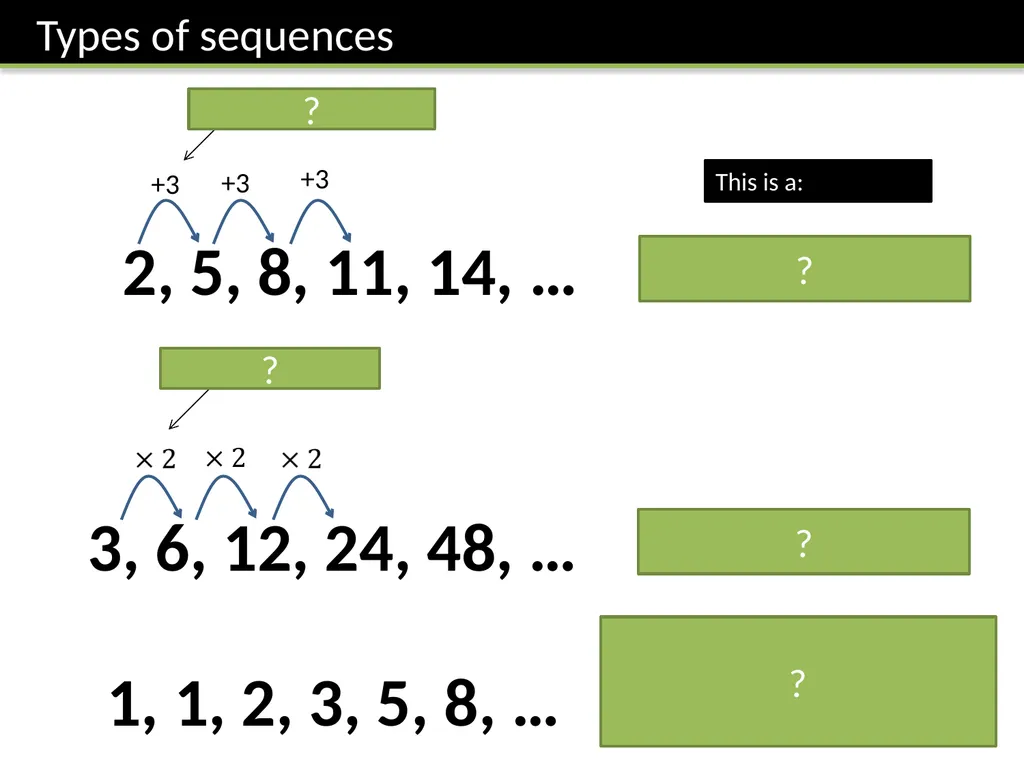
Description: C1 Chapter 6 Arithmetic Series Dr J Frost (jfrosttiffin.kingston.sch.uk) Last modified: 7th October 2013 2, 5, 8, 11, 14, 3 3 3 This is a: Arithmetic Series ? Geometric Series ? 3, 6, 12, 24, 48, ? ? 1, 1, 2, 3, 5, 8, This is the
Related Topics
Download Presentation
"C1 Chapter 6 Arithmetic Series Dr J Frost" is the property of its rightful owner. Permission is granted to download and print the materials on this website for personal, non-commercial use only, and to display it on your personal computer provided you do not modify the materials and that you retain all copyright notices contained in the materials. By downloading content from our website, you accept the terms of this agreement.
Presentation Transcript
slide1. C1 Chapter 6 Arithmetic Series Dr J Frost (jfrost@tiffin.kingston.sch.uk) Last modified: 7th October 2013<br>
slide2. 2, 5, 8, 11, 14, … +3 +3 +3 This is a: Arithmetic Series ? Geometric Series ? 3, 6, 12, 24, 48, … ? ? 1, 1, 2, 3, 5, 8, … This is the Fibonacci Sequence. The terms follow a recurrence relation because each term can be generated using the previous ones. ?<br>
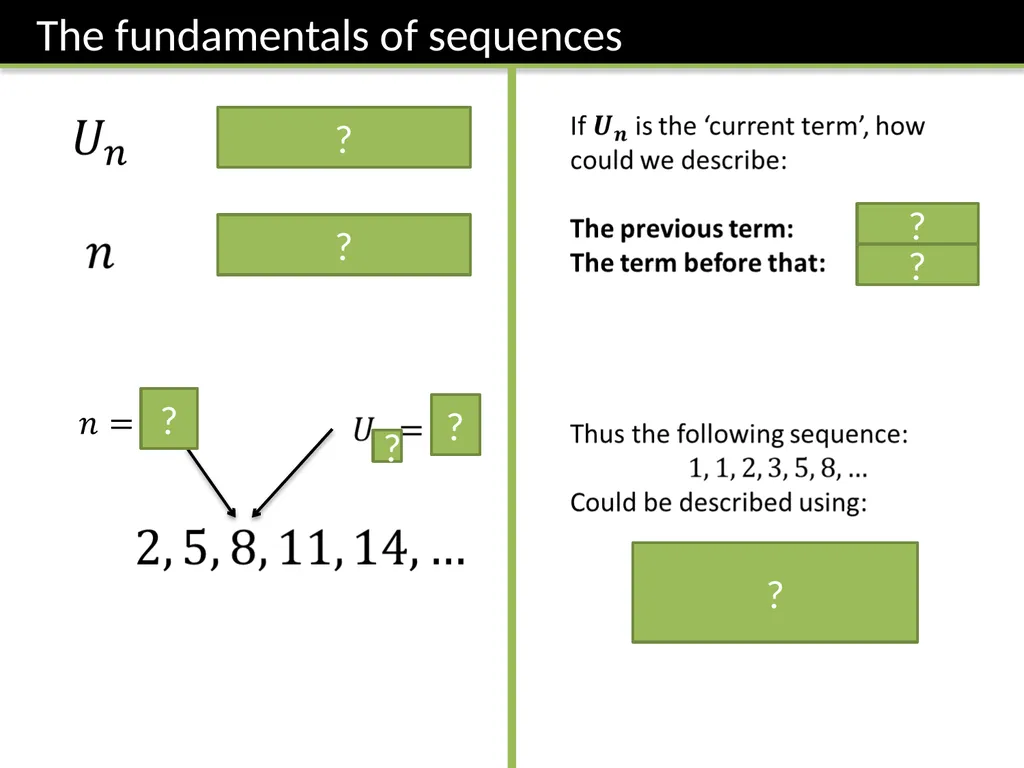
slide3. The position. ? ? ? ? ? ? ? ?<br>
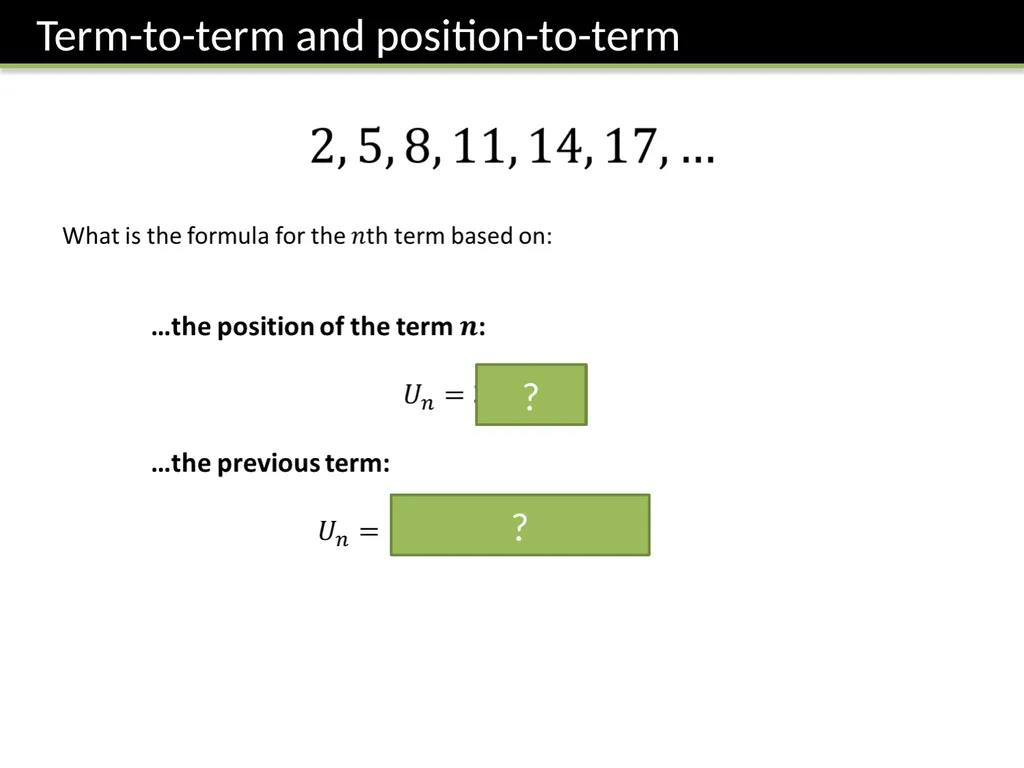
slide4. ? ?<br>
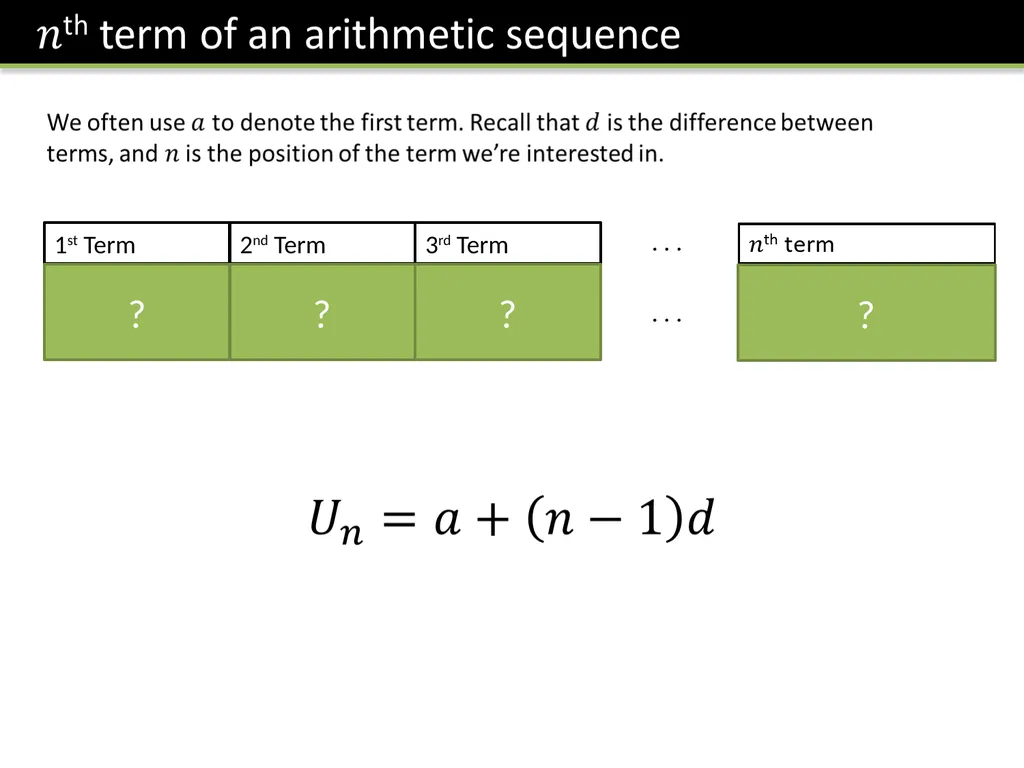
slide5. 1st Term 2nd Term 3rd Term . . . ? ? ? ? . . .<br>
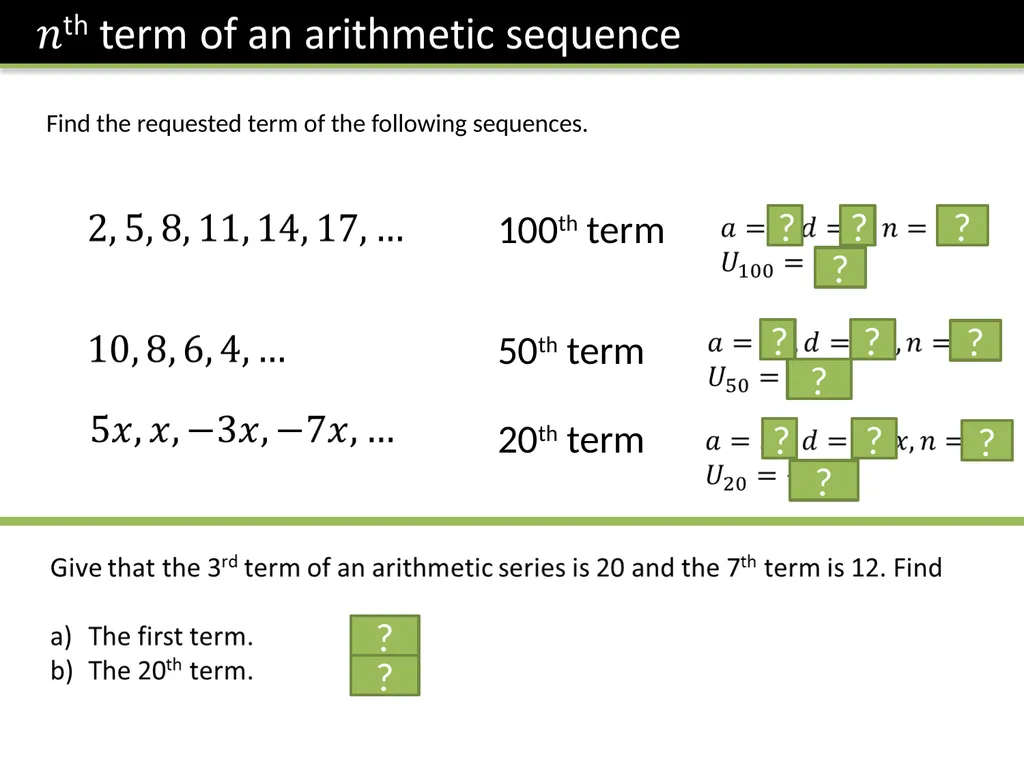
slide6. Find the requested term of the following sequences. 100th term 50th term 20th term ? ? ? ? ? ? ? ? ? ? ? ? ? ?<br>
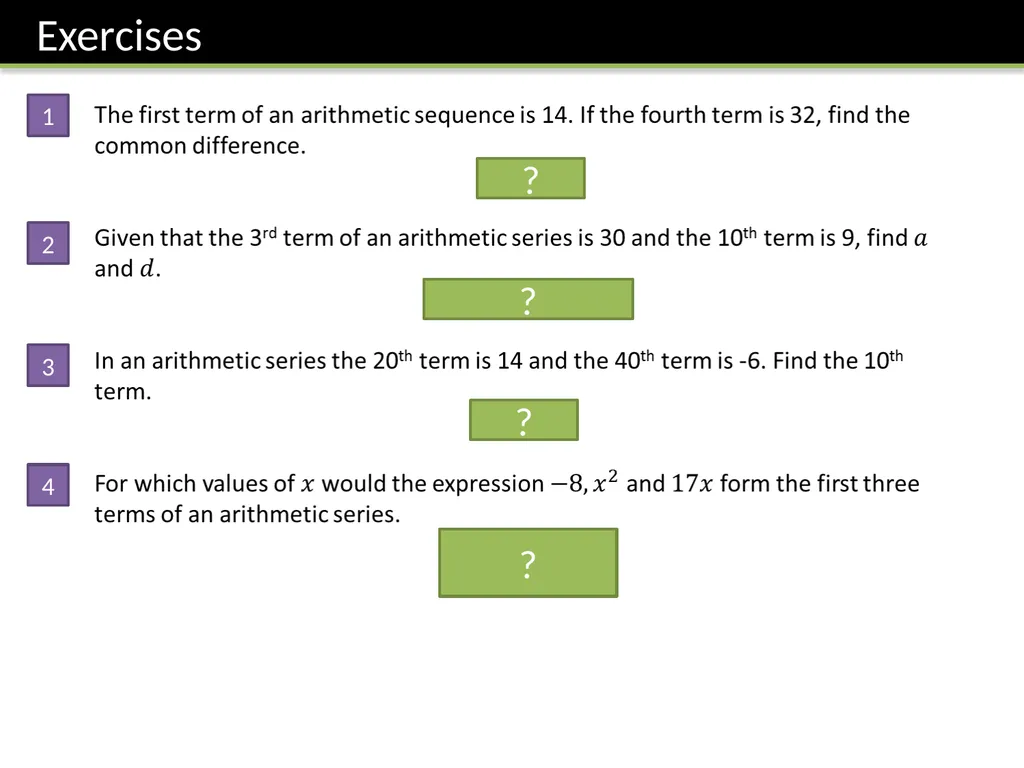
slide7. ? ? ? ? 1 2 3 4<br>
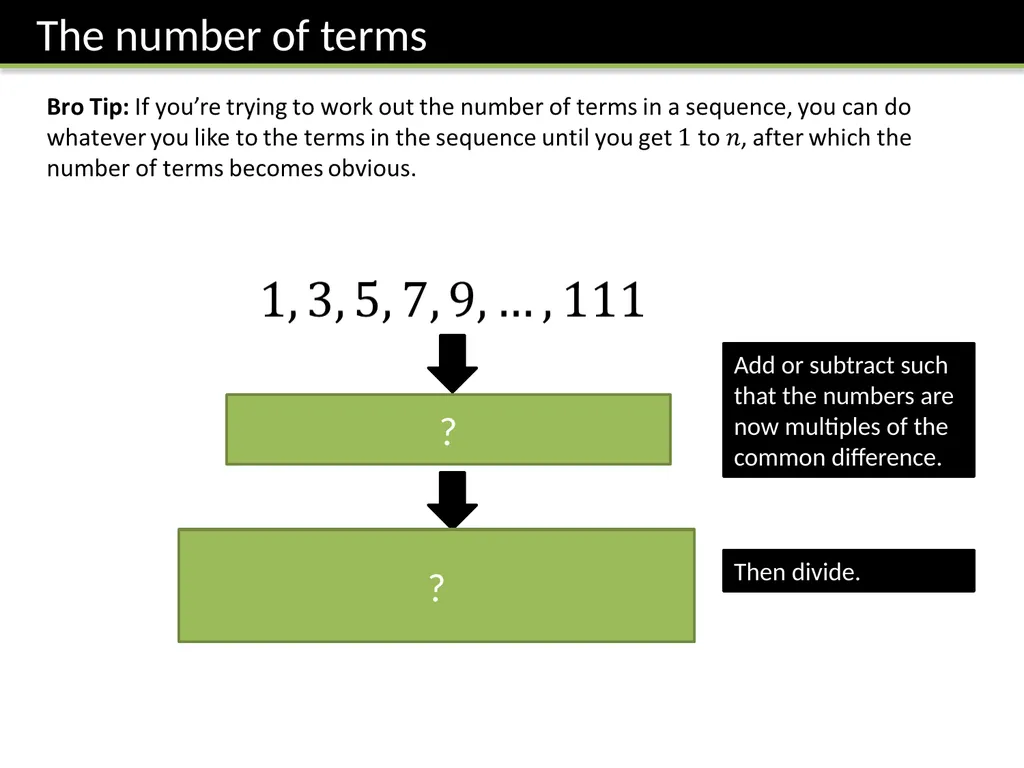
slide8. ? ? Add or subtract such that the numbers are now multiples of the common difference. Then divide.<br>
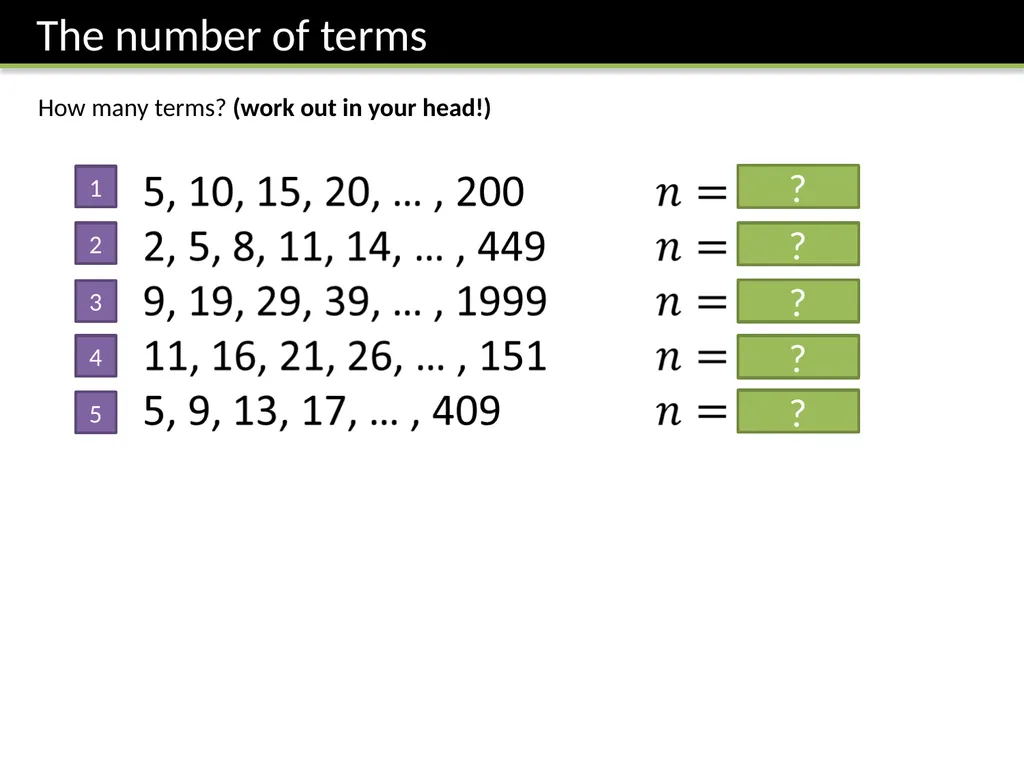
slide9. How many terms? (work out in your head!) 1 2 3 4 5 ? ? ? ? ?<br>
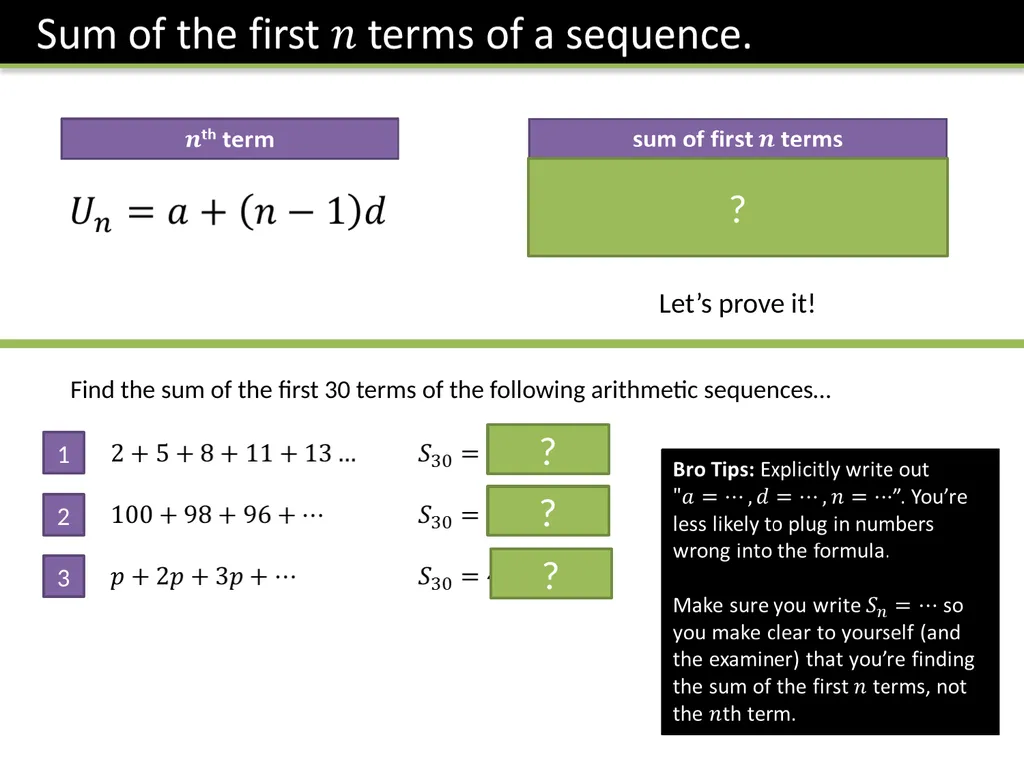
slide10. ? Let’s prove it! Find the sum of the first 30 terms of the following arithmetic sequences… 1 2 3 ? ? ?<br>
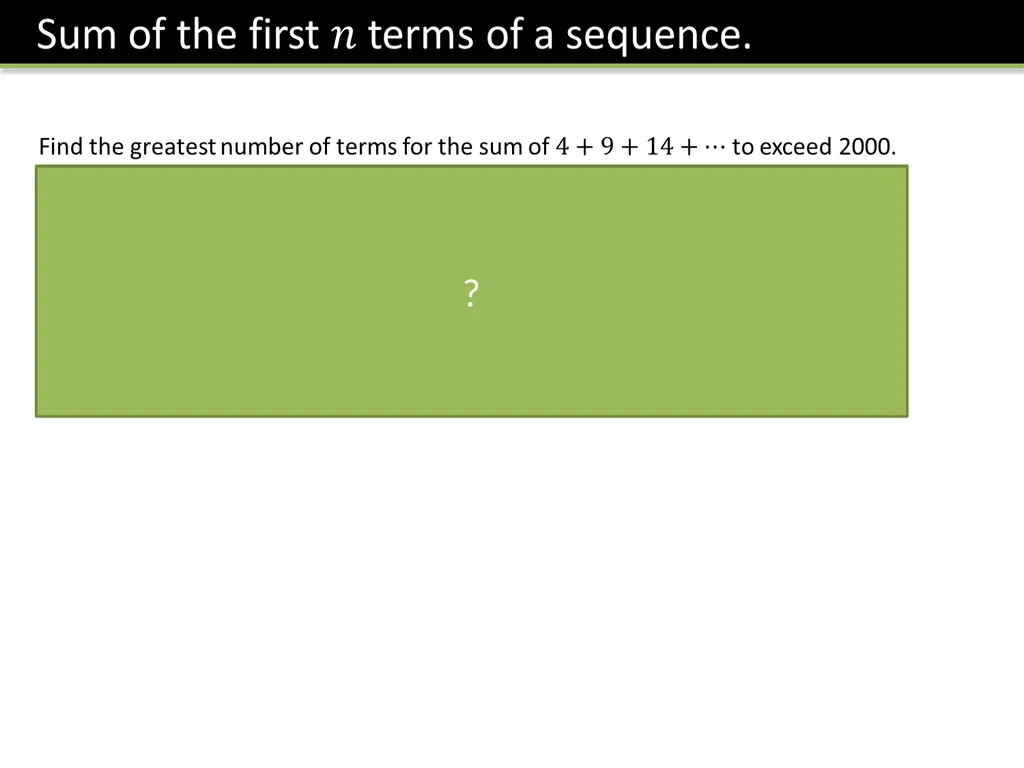
slide11. ?<br>
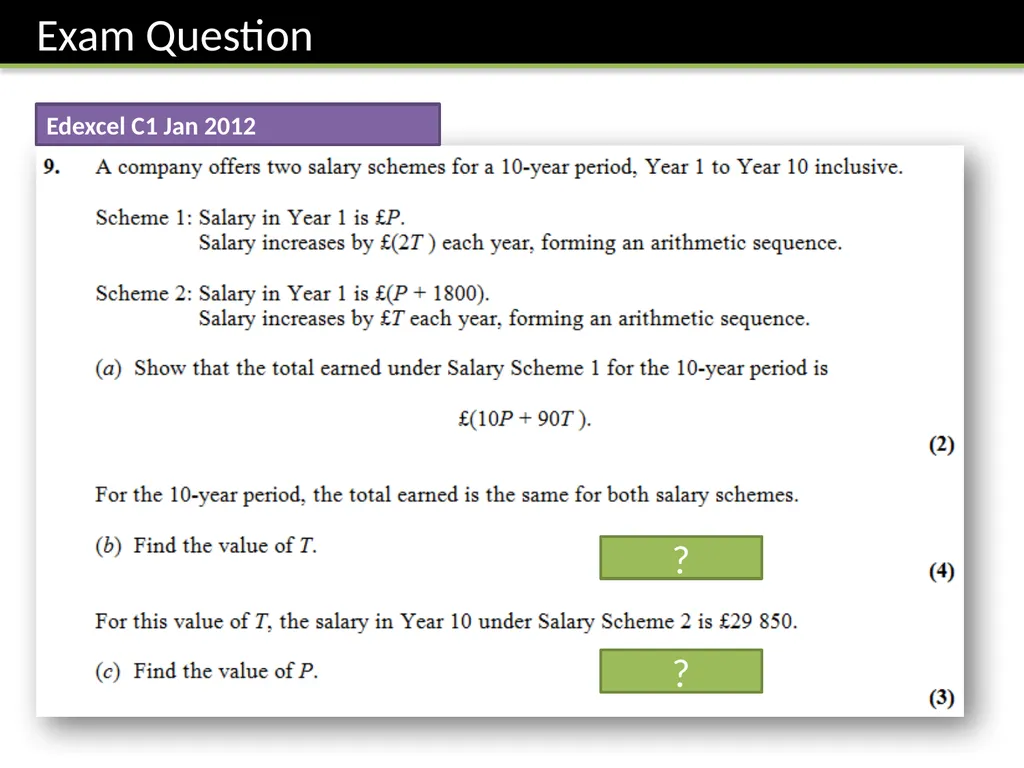
slide12. Edexcel C1 Jan 2012 ? ?<br>
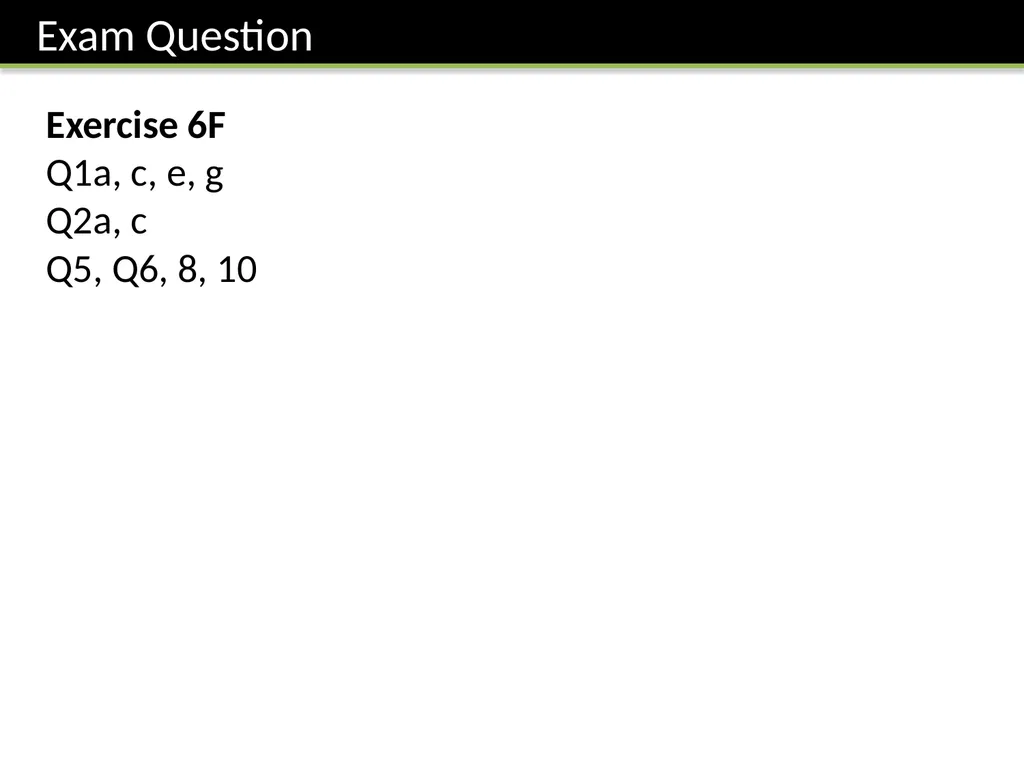
slide13. Exercise 6F
Q1a, c, e, g
Q2a, c
Q5, Q6, 8, 10<br>
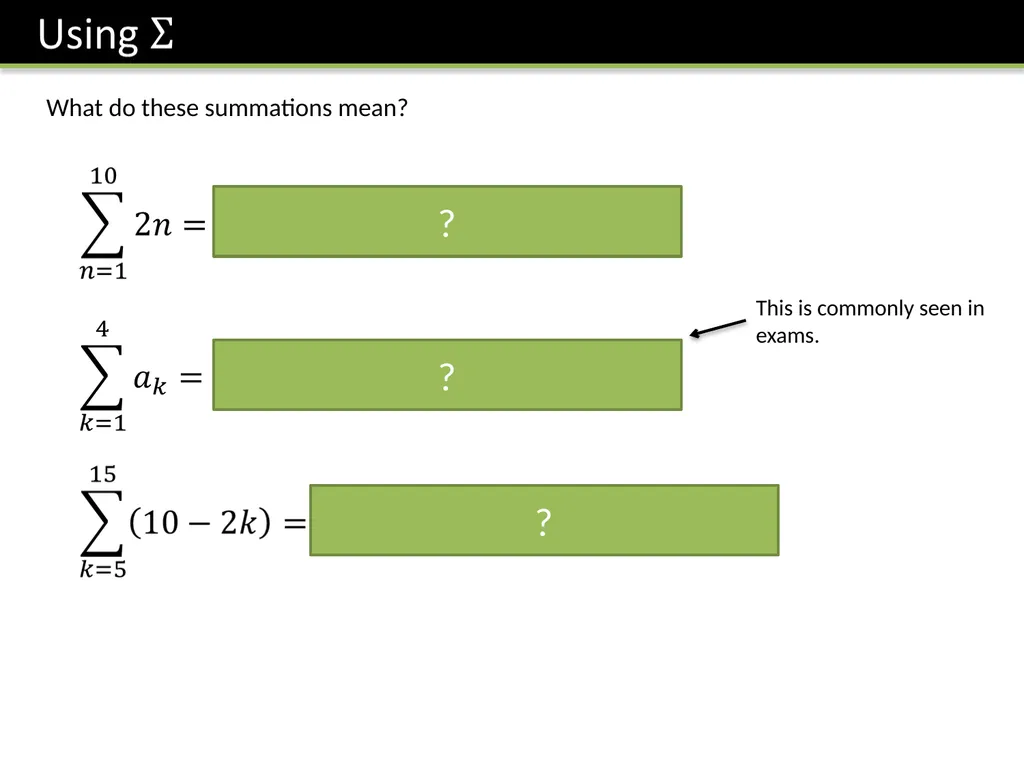
slide14. What do these summations mean? ? ? ? This is commonly seen in exams.<br>
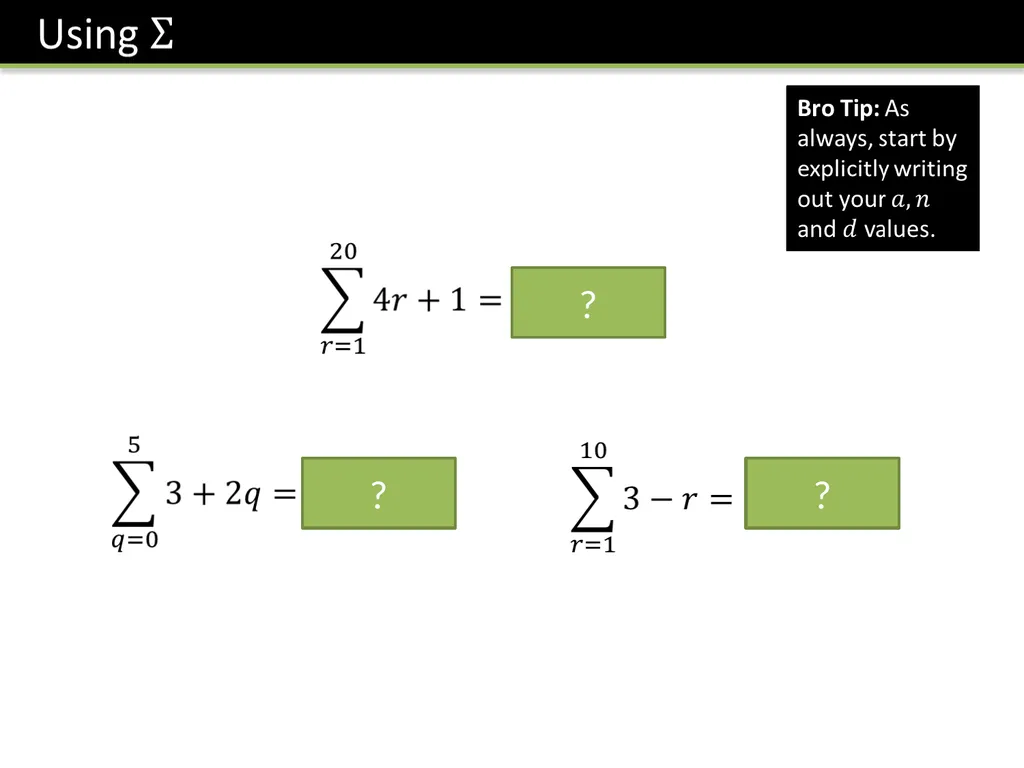
slide15. ? ? ?<br>
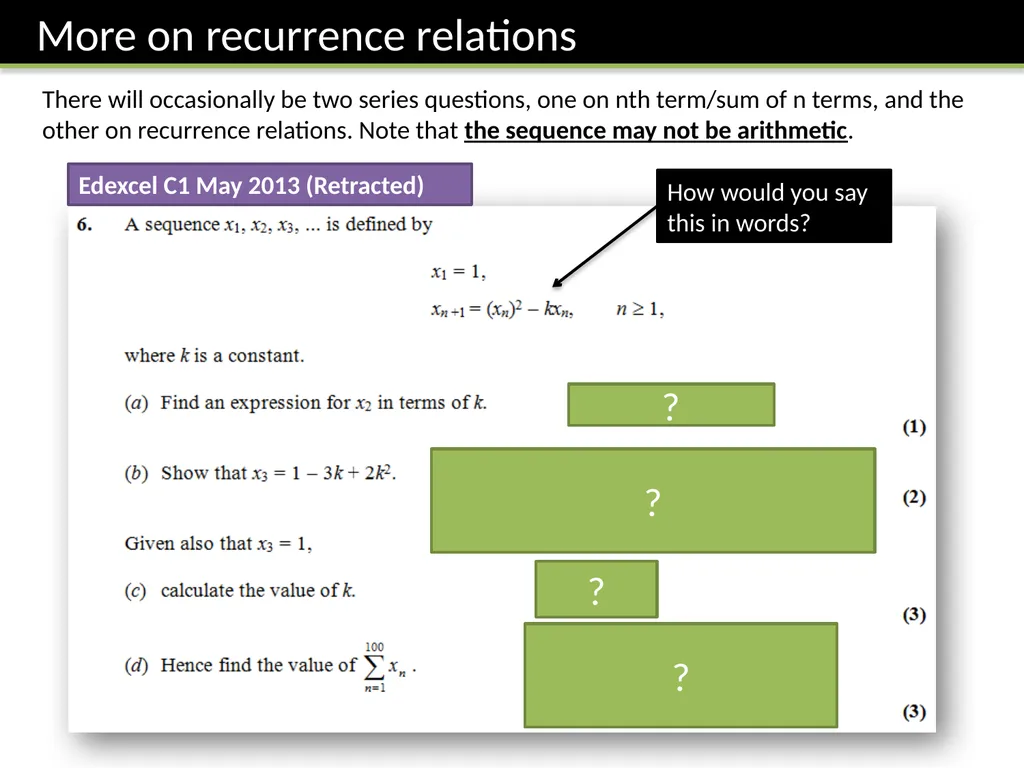
slide16. There will occasionally be two series questions, one on nth term/sum of n terms, and the other on recurrence relations. Note that the sequence may not be arithmetic. Edexcel C1 May 2013 (Retracted) How would you say this in words? ? ? ? ?<br>
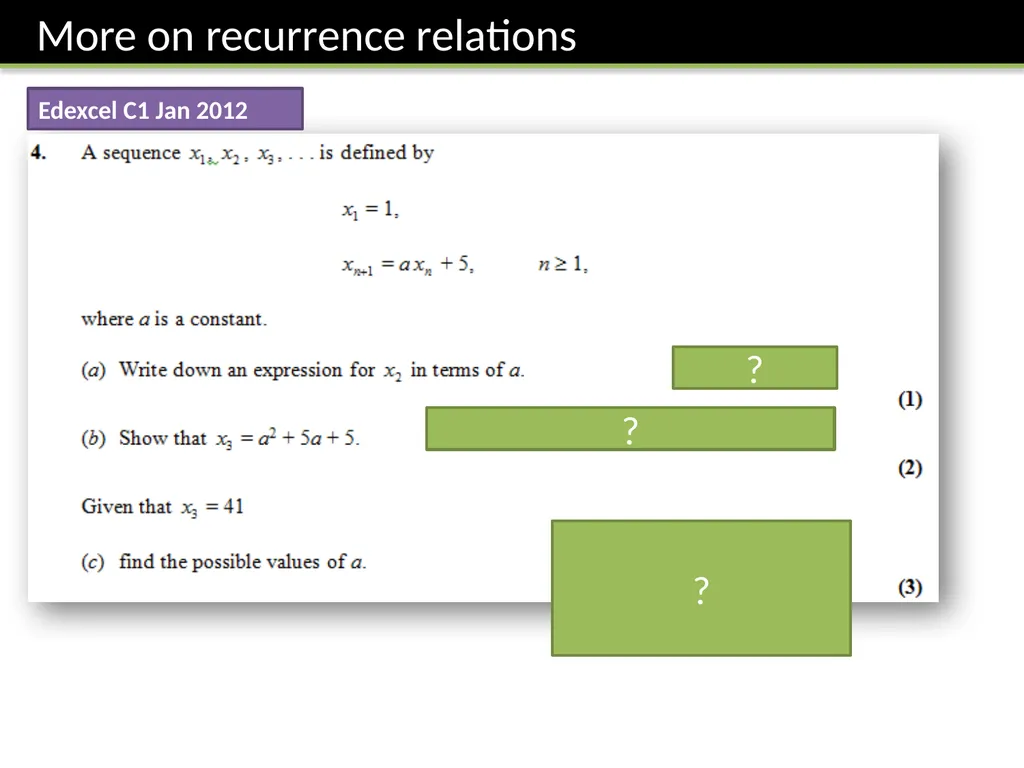
slide17. Edexcel C1 Jan 2012 ? ? ?<br>
slide2. 2, 5, 8, 11, 14, … +3 +3 +3 This is a: Arithmetic Series ? Geometric Series ? 3, 6, 12, 24, 48, … ? ? 1, 1, 2, 3, 5, 8, … This is the Fibonacci Sequence. The terms follow a recurrence relation because each term can be generated using the previous ones. ?<br>
slide3. The position. ? ? ? ? ? ? ? ?<br>
slide4. ? ?<br>
slide5. 1st Term 2nd Term 3rd Term . . . ? ? ? ? . . .<br>
slide6. Find the requested term of the following sequences. 100th term 50th term 20th term ? ? ? ? ? ? ? ? ? ? ? ? ? ?<br>
slide7. ? ? ? ? 1 2 3 4<br>
slide8. ? ? Add or subtract such that the numbers are now multiples of the common difference. Then divide.<br>
slide9. How many terms? (work out in your head!) 1 2 3 4 5 ? ? ? ? ?<br>
slide10. ? Let’s prove it! Find the sum of the first 30 terms of the following arithmetic sequences… 1 2 3 ? ? ?<br>
slide11. ?<br>
slide12. Edexcel C1 Jan 2012 ? ?<br>
slide13. Exercise 6F
Q1a, c, e, g
Q2a, c
Q5, Q6, 8, 10<br>
slide14. What do these summations mean? ? ? ? This is commonly seen in exams.<br>
slide15. ? ? ?<br>
slide16. There will occasionally be two series questions, one on nth term/sum of n terms, and the other on recurrence relations. Note that the sequence may not be arithmetic. Edexcel C1 May 2013 (Retracted) How would you say this in words? ? ? ? ?<br>
slide17. Edexcel C1 Jan 2012 ? ? ?<br>