CARBON CAPTURE AND UTILIZATION (CCU) CARBON
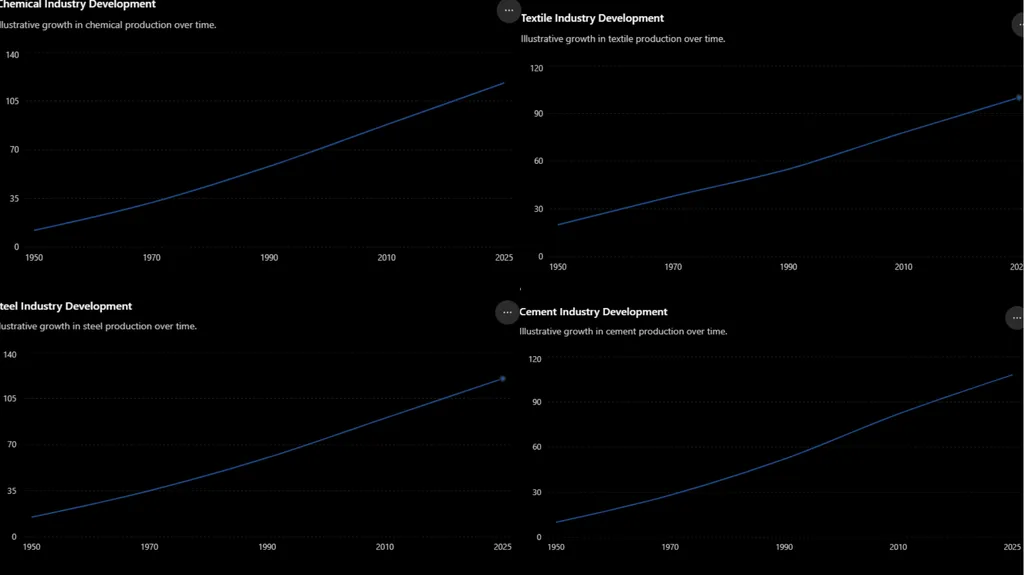
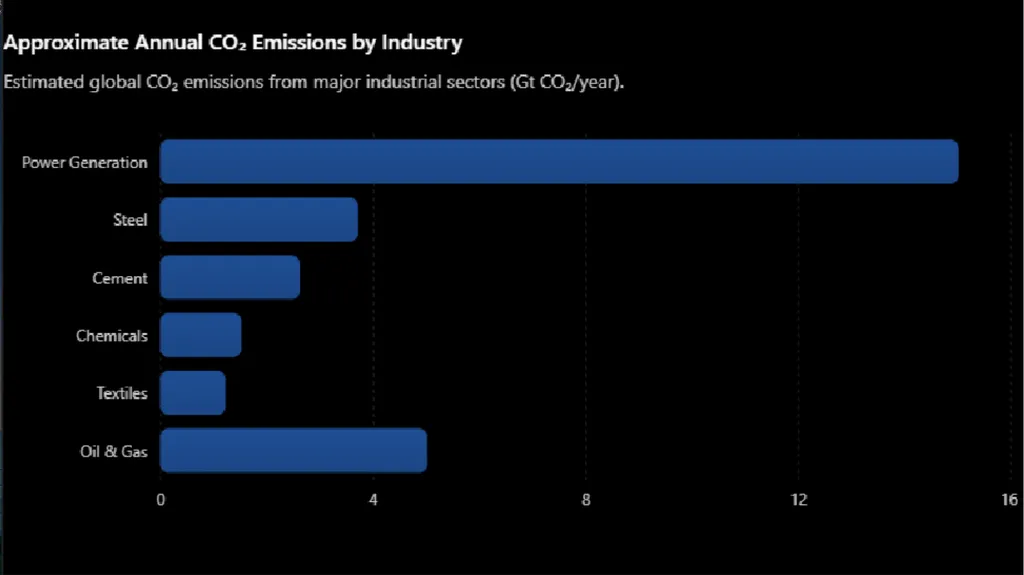
Description: CARBON CAPTURE AND UTILIZATION (CCU) CARBON CAPTURE AND UTILIZATION (CCU) High Capital Operational Costs Structural Mechanical Instability PROBLEMS Massive Energy Inefficiency PROBLEM Unavoidable COâ‚‚ Production in Industries
Related Topics
Download Presentation
"CARBON CAPTURE AND UTILIZATION (CCU) CARBON" is the property of its rightful owner. Permission is granted to download and print the materials on this website for personal, non-commercial use only, and to display it on your personal computer provided you do not modify the materials and that you retain all copyright notices contained in the materials. By downloading content from our website, you accept the terms of this agreement.
Presentation Transcript
slide1. CARBON CAPTURE AND UTILIZATION (CCU)<br>
slide2. CARBON CAPTURE AND UTILIZATION (CCU)<br>
slide3. High Capital & Operational Costs Structural & Mechanical Instability PROBLEMS Massive Energy Inefficiency<br>
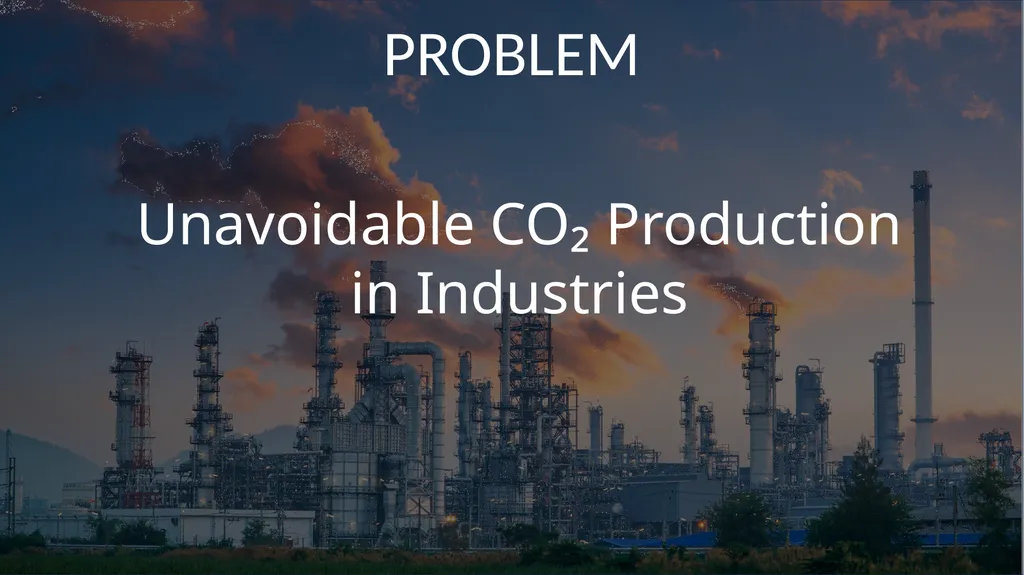
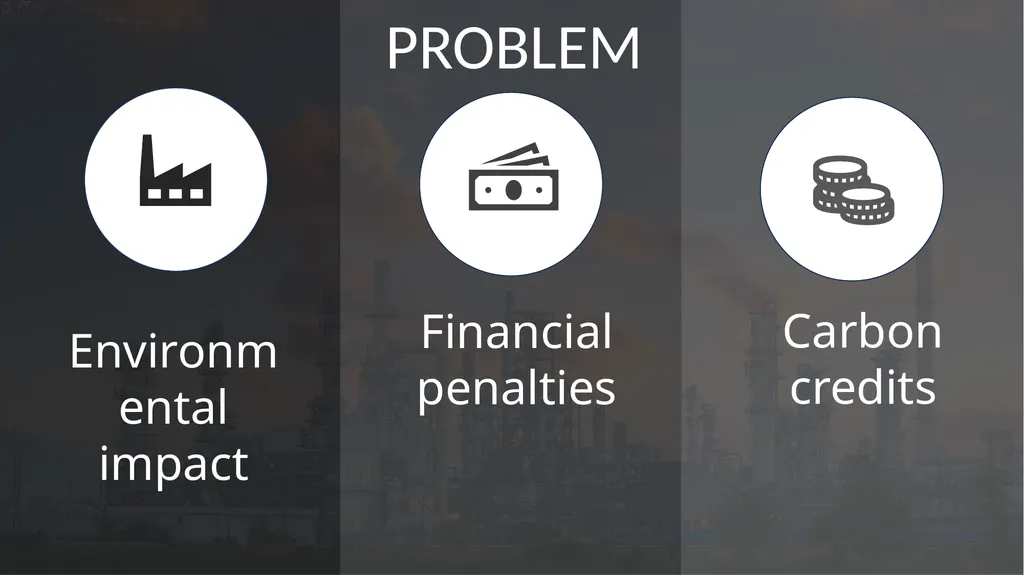
slide4. PROBLEM Unavoidable COâ‚‚ Production in Industries Environmental impact Financial penalties Carbon credits PROBLEM<br>
slide5. Environmental impact Financial penalties Carbon credits PROBLEM<br>
slide6. High Capital & Operational Costs Structural & Mechanical Instability Massive Energy Inefficiency PROBLEMS SOLUTION Develop a 3D-printed conductive activated carbon filter that captures COâ‚‚ from industrial exhausts and uses Joule heating for rapid regeneration, enabling continuous, energy-efficient COâ‚‚ recovery and reuse.<br>
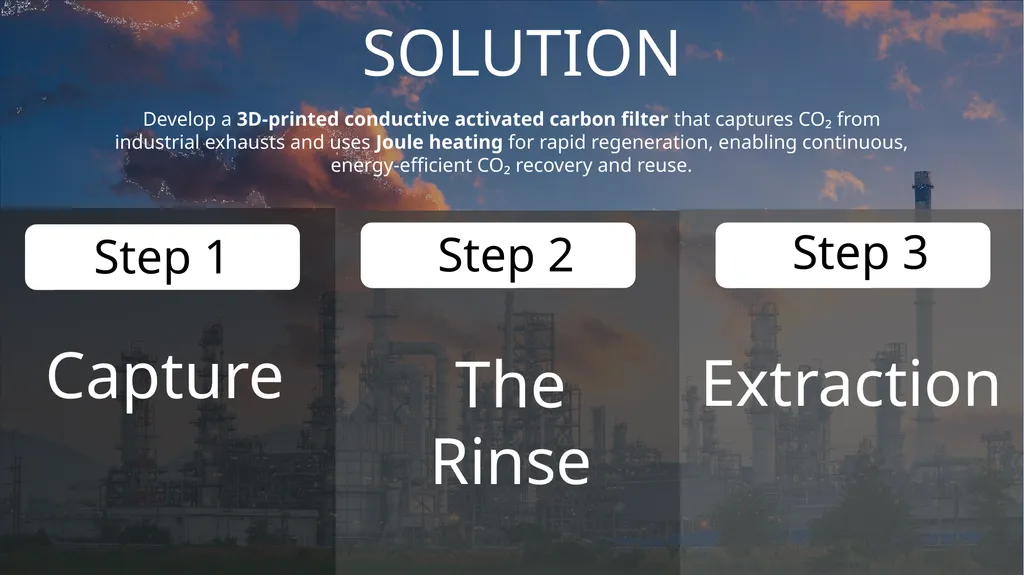
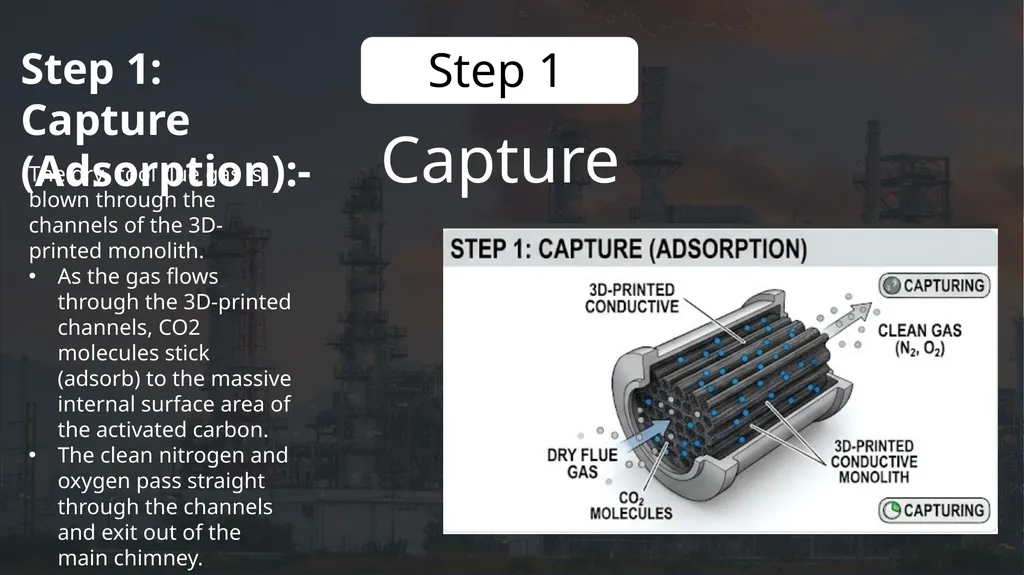
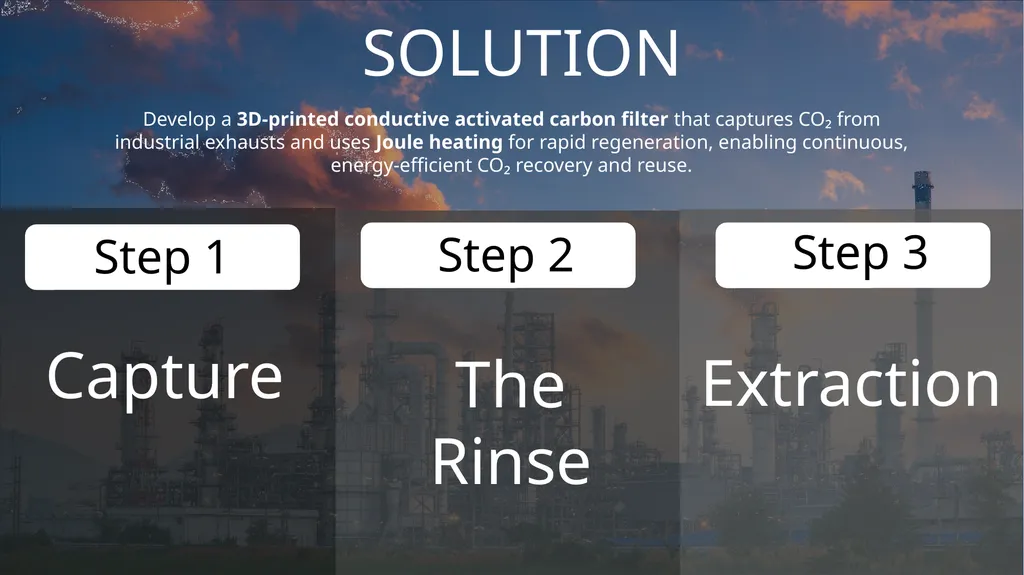
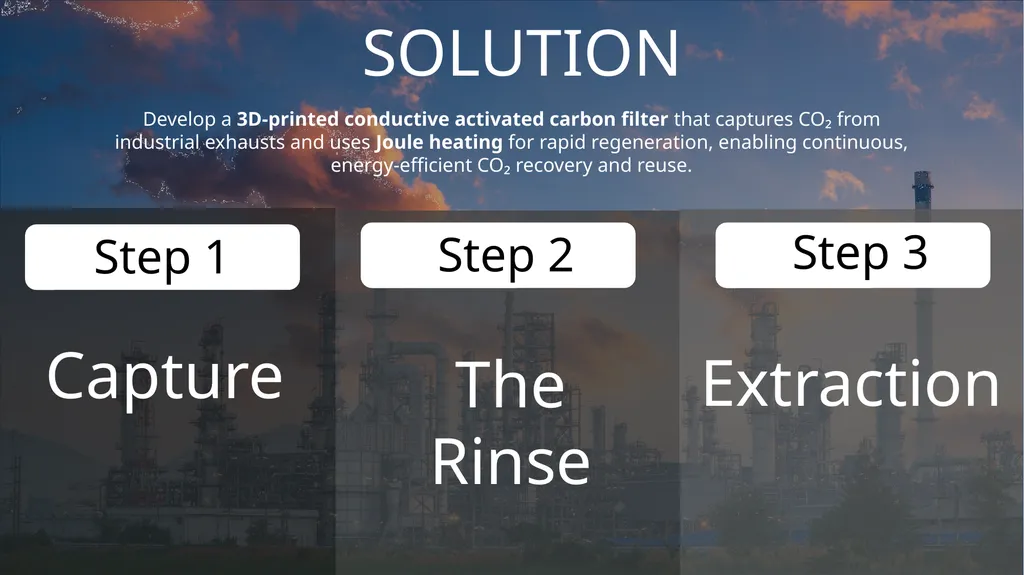
slide7. SOLUTION Develop a 3D-printed conductive activated carbon filter that captures COâ‚‚ from industrial exhausts and uses Joule heating for rapid regeneration, enabling continuous, energy-efficient COâ‚‚ recovery and reuse. Step 1 Capture Step 2 Step 3 The Rinse Extraction Step 1: Capture (Adsorption):- The dry, cool flue gas is blown through the channels of the 3D-printed monolith.
As the gas flows through the 3D-printed channels, CO2 molecules stick (adsorb) to the massive internal surface area of the activated carbon.
The clean nitrogen and oxygen pass straight through the channels and exit out of the main chimney.<br>
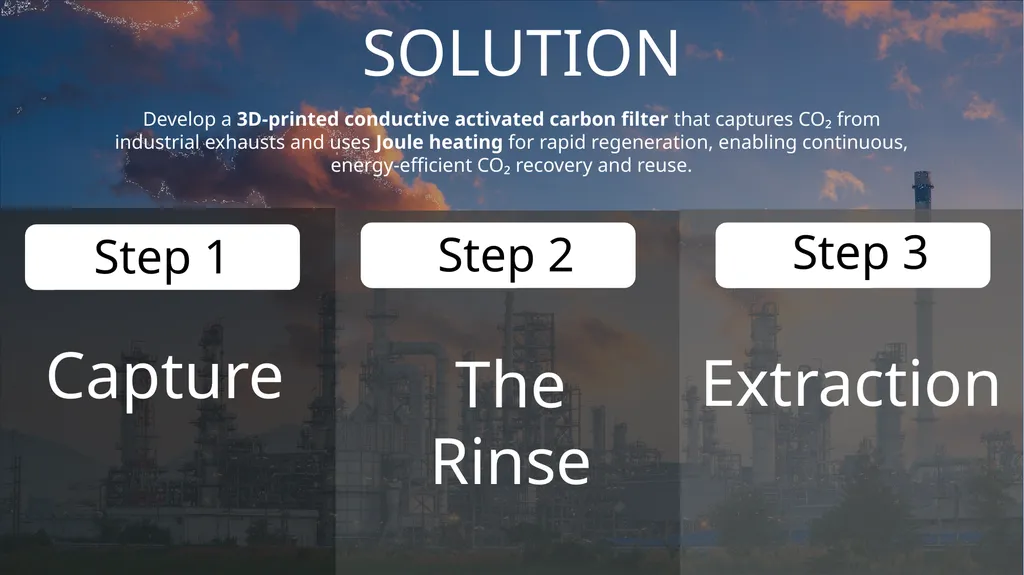
slide8. SOLUTION Develop a 3D-printed conductive activated carbon filter that captures COâ‚‚ from industrial exhausts and uses Joule heating for rapid regeneration, enabling continuous, energy-efficient COâ‚‚ recovery and reuse. Step 1 Capture Step 2 Step 3 Extraction The Rinse Step 1: Capture (Adsorption):- The dry, cool flue gas is blown through the channels of the 3D-printed monolith.
As the gas flows through the 3D-printed channels, CO2 molecules stick (adsorb) to the massive internal surface area of the activated carbon.
The clean nitrogen and oxygen pass straight through the channels and exit out of the main chimney.<br>
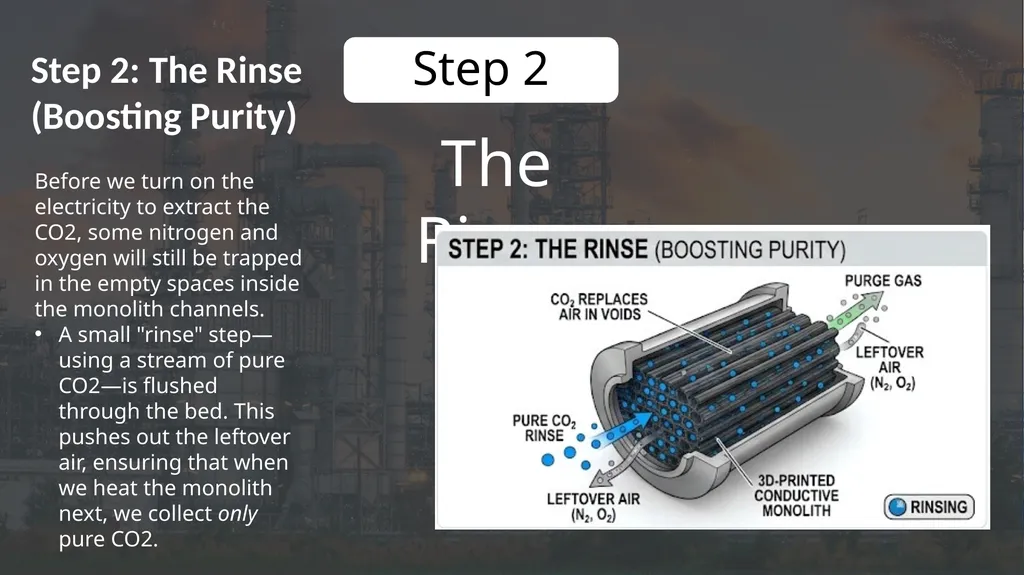
slide9. SOLUTION Develop a 3D-printed conductive activated carbon filter that captures COâ‚‚ from industrial exhausts and uses Joule heating for rapid regeneration, enabling continuous, energy-efficient COâ‚‚ recovery and reuse. Step 1 Capture Step 2 Step 3 The Rinse Extraction Step 2: The Rinse (Boosting Purity) Before we turn on the electricity to extract the CO2, some nitrogen and oxygen will still be trapped in the empty spaces inside the monolith channels.
A small "rinse" step—using a stream of pure CO2—is flushed through the bed. This pushes out the leftover air, ensuring that when we heat the monolith next, we collect only pure CO2.<br>
slide10. SOLUTION Develop a 3D-printed conductive activated carbon filter that captures COâ‚‚ from industrial exhausts and uses Joule heating for rapid regeneration, enabling continuous, energy-efficient COâ‚‚ recovery and reuse. Step 1 Capture Step 2 Step 3 The Rinse Extraction Step 2: The Rinse (Boosting Purity) Before we turn on the electricity to extract the CO2, some nitrogen and oxygen will still be trapped in the empty spaces inside the monolith channels.
A small "rinse" step—using a stream of pure CO2—is flushed through the bed. This pushes out the leftover air, ensuring that when we heat the monolith next, we collect only pure CO2.<br>
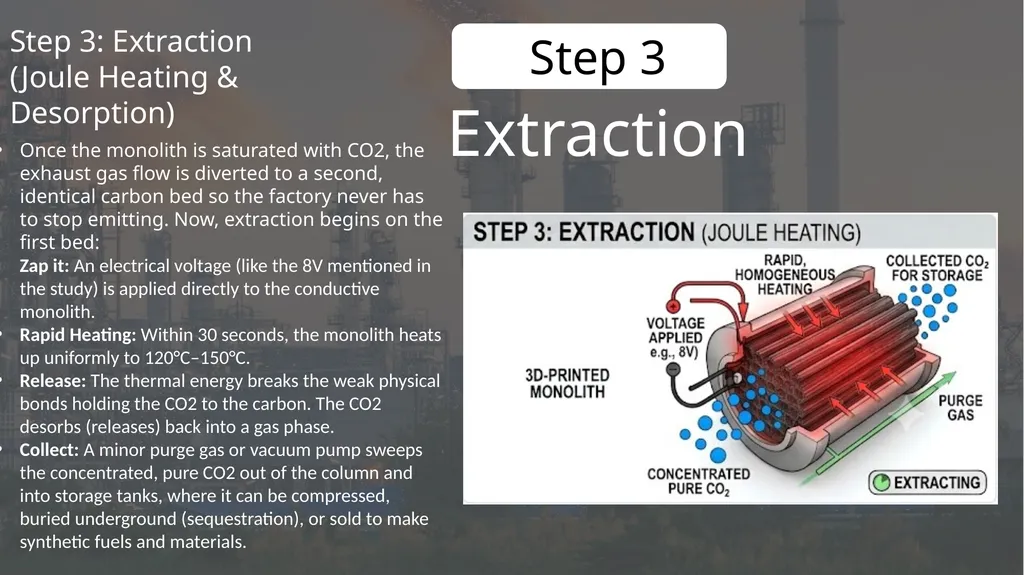
slide11. SOLUTION Develop a 3D-printed conductive activated carbon filter that captures COâ‚‚ from industrial exhausts and uses Joule heating for rapid regeneration, enabling continuous, energy-efficient COâ‚‚ recovery and reuse. Step 1 Capture Step 2 Step 3 The Rinse Extraction Step 3: Extraction (Joule Heating & Desorption) Once the monolith is saturated with CO2, the exhaust gas flow is diverted to a second, identical carbon bed so the factory never has to stop emitting. Now, extraction begins on the first bed:Zap it: An electrical voltage (like the 8V mentioned in the study) is applied directly to the conductive monolith.
Rapid Heating: Within 30 seconds, the monolith heats up uniformly to 120°C–150°C.
Release: The thermal energy breaks the weak physical bonds holding the CO2 to the carbon. The CO2 desorbs (releases) back into a gas phase.
Collect: A minor purge gas or vacuum pump sweeps the concentrated, pure CO2 out of the column and into storage tanks, where it can be compressed, buried underground (sequestration), or sold to make synthetic fuels and materials.<br>
slide12. SOLUTION Develop a 3D-printed conductive activated carbon filter that captures COâ‚‚ from industrial exhausts and uses Joule heating for rapid regeneration, enabling continuous, energy-efficient COâ‚‚ recovery and reuse. Step 1 Capture Step 2 Step 3 The Rinse Extraction Step 3: Extraction (Joule Heating & Desorption) Once the monolith is saturated with CO2, the exhaust gas flow is diverted to a second, identical carbon bed so the factory never has to stop emitting. Now, extraction begins on the first bed:Zap it: An electrical voltage (like the 8V mentioned in the study) is applied directly to the conductive monolith.
Rapid Heating: Within 30 seconds, the monolith heats up uniformly to 120°C–150°C.
Release: The thermal energy breaks the weak physical bonds holding the CO2 to the carbon. The CO2 desorbs (releases) back into a gas phase.
Collect: A minor purge gas or vacuum pump sweeps the concentrated, pure CO2 out of the column and into storage tanks, where it can be compressed, buried underground (sequestration), or sold to make synthetic fuels and materials.<br>
slide13. SOLUTION Develop a 3D-printed conductive activated carbon filter that captures COâ‚‚ from industrial exhausts and uses Joule heating for rapid regeneration, enabling continuous, energy-efficient COâ‚‚ recovery and reuse. Step 1 Capture Step 2 Step 3 The Rinse Extraction Step 3: Extraction (Joule Heating & Desorption) Once the monolith is saturated with CO2, the exhaust gas flow is diverted to a second, identical carbon bed so the factory never has to stop emitting. Now, extraction begins on the first bed:Zap it: An electrical voltage (like the 8V mentioned in the study) is applied directly to the conductive monolith.
Rapid Heating: Within 30 seconds, the monolith heats up uniformly to 120°C–150°C.
Release: The thermal energy breaks the weak physical bonds holding the CO2 to the carbon. The CO2 desorbs (releases) back into a gas phase.
Collect: A minor purge gas or vacuum pump sweeps the concentrated, pure CO2 out of the column and into storage tanks, where it can be compressed, buried underground (sequestration), or sold to make synthetic fuels and materials. Prototype Cost<br>
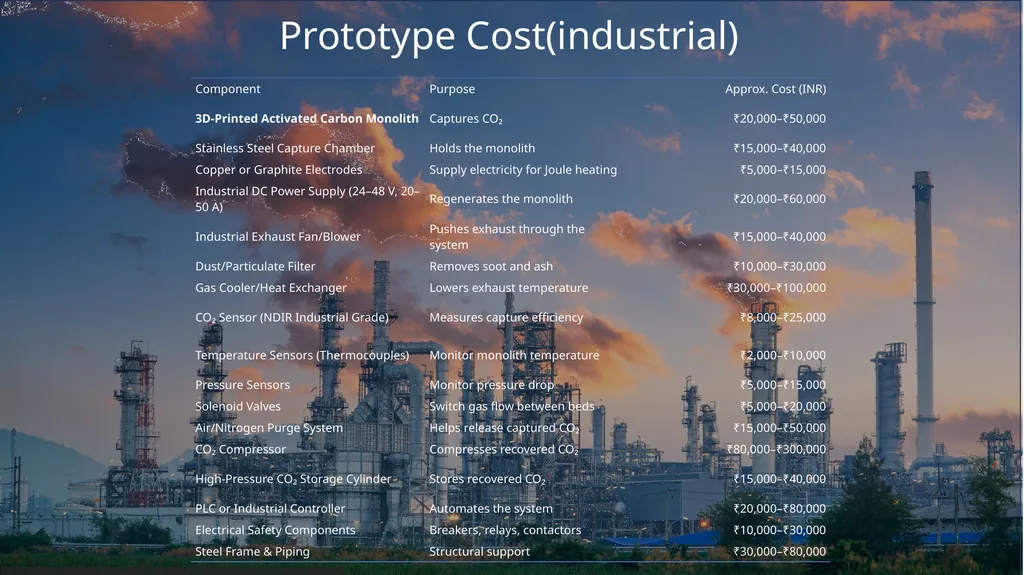
slide14. SOLUTION Develop a 3D-printed conductive activated carbon filter that captures COâ‚‚ from industrial exhausts and uses Joule heating for rapid regeneration, enabling continuous, energy-efficient COâ‚‚ recovery and reuse. Step 1 Capture Step 2 Step 3 The Rinse Extraction Prototype Cost(industrial) Vehicle exhaust system Future Scope Ships and Marine Vessels Landfills & Waste Treatment Plants<br>
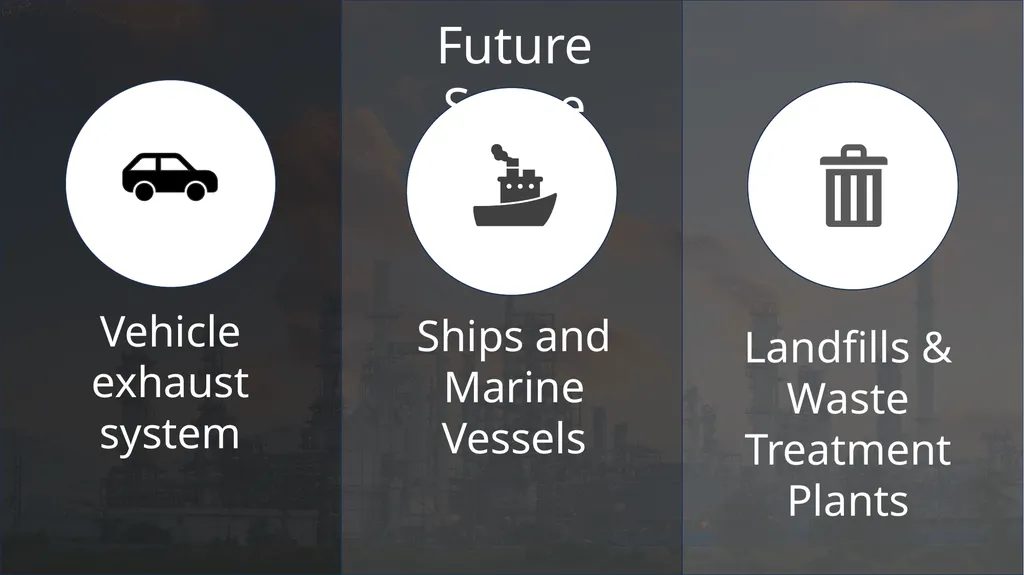
slide15. Prototype Cost(industrial) Vehicle exhaust system Future Scope Ships and Marine Vessels Landfills & Waste Treatment Plants<br>
slide16. Vehicle exhaust system Future Scope Ships and Marine Vessels Landfills & Waste Treatment Plants Thank You<br>

slide2. CARBON CAPTURE AND UTILIZATION (CCU)<br>
slide3. High Capital & Operational Costs Structural & Mechanical Instability PROBLEMS Massive Energy Inefficiency<br>
slide4. PROBLEM Unavoidable COâ‚‚ Production in Industries Environmental impact Financial penalties Carbon credits PROBLEM<br>
slide5. Environmental impact Financial penalties Carbon credits PROBLEM<br>
slide6. High Capital & Operational Costs Structural & Mechanical Instability Massive Energy Inefficiency PROBLEMS SOLUTION Develop a 3D-printed conductive activated carbon filter that captures COâ‚‚ from industrial exhausts and uses Joule heating for rapid regeneration, enabling continuous, energy-efficient COâ‚‚ recovery and reuse.<br>
slide7. SOLUTION Develop a 3D-printed conductive activated carbon filter that captures COâ‚‚ from industrial exhausts and uses Joule heating for rapid regeneration, enabling continuous, energy-efficient COâ‚‚ recovery and reuse. Step 1 Capture Step 2 Step 3 The Rinse Extraction Step 1: Capture (Adsorption):- The dry, cool flue gas is blown through the channels of the 3D-printed monolith.
As the gas flows through the 3D-printed channels, CO2 molecules stick (adsorb) to the massive internal surface area of the activated carbon.
The clean nitrogen and oxygen pass straight through the channels and exit out of the main chimney.<br>
slide8. SOLUTION Develop a 3D-printed conductive activated carbon filter that captures COâ‚‚ from industrial exhausts and uses Joule heating for rapid regeneration, enabling continuous, energy-efficient COâ‚‚ recovery and reuse. Step 1 Capture Step 2 Step 3 Extraction The Rinse Step 1: Capture (Adsorption):- The dry, cool flue gas is blown through the channels of the 3D-printed monolith.
As the gas flows through the 3D-printed channels, CO2 molecules stick (adsorb) to the massive internal surface area of the activated carbon.
The clean nitrogen and oxygen pass straight through the channels and exit out of the main chimney.<br>
slide9. SOLUTION Develop a 3D-printed conductive activated carbon filter that captures COâ‚‚ from industrial exhausts and uses Joule heating for rapid regeneration, enabling continuous, energy-efficient COâ‚‚ recovery and reuse. Step 1 Capture Step 2 Step 3 The Rinse Extraction Step 2: The Rinse (Boosting Purity) Before we turn on the electricity to extract the CO2, some nitrogen and oxygen will still be trapped in the empty spaces inside the monolith channels.
A small "rinse" step—using a stream of pure CO2—is flushed through the bed. This pushes out the leftover air, ensuring that when we heat the monolith next, we collect only pure CO2.<br>
slide10. SOLUTION Develop a 3D-printed conductive activated carbon filter that captures COâ‚‚ from industrial exhausts and uses Joule heating for rapid regeneration, enabling continuous, energy-efficient COâ‚‚ recovery and reuse. Step 1 Capture Step 2 Step 3 The Rinse Extraction Step 2: The Rinse (Boosting Purity) Before we turn on the electricity to extract the CO2, some nitrogen and oxygen will still be trapped in the empty spaces inside the monolith channels.
A small "rinse" step—using a stream of pure CO2—is flushed through the bed. This pushes out the leftover air, ensuring that when we heat the monolith next, we collect only pure CO2.<br>
slide11. SOLUTION Develop a 3D-printed conductive activated carbon filter that captures COâ‚‚ from industrial exhausts and uses Joule heating for rapid regeneration, enabling continuous, energy-efficient COâ‚‚ recovery and reuse. Step 1 Capture Step 2 Step 3 The Rinse Extraction Step 3: Extraction (Joule Heating & Desorption) Once the monolith is saturated with CO2, the exhaust gas flow is diverted to a second, identical carbon bed so the factory never has to stop emitting. Now, extraction begins on the first bed:Zap it: An electrical voltage (like the 8V mentioned in the study) is applied directly to the conductive monolith.
Rapid Heating: Within 30 seconds, the monolith heats up uniformly to 120°C–150°C.
Release: The thermal energy breaks the weak physical bonds holding the CO2 to the carbon. The CO2 desorbs (releases) back into a gas phase.
Collect: A minor purge gas or vacuum pump sweeps the concentrated, pure CO2 out of the column and into storage tanks, where it can be compressed, buried underground (sequestration), or sold to make synthetic fuels and materials.<br>
slide12. SOLUTION Develop a 3D-printed conductive activated carbon filter that captures COâ‚‚ from industrial exhausts and uses Joule heating for rapid regeneration, enabling continuous, energy-efficient COâ‚‚ recovery and reuse. Step 1 Capture Step 2 Step 3 The Rinse Extraction Step 3: Extraction (Joule Heating & Desorption) Once the monolith is saturated with CO2, the exhaust gas flow is diverted to a second, identical carbon bed so the factory never has to stop emitting. Now, extraction begins on the first bed:Zap it: An electrical voltage (like the 8V mentioned in the study) is applied directly to the conductive monolith.
Rapid Heating: Within 30 seconds, the monolith heats up uniformly to 120°C–150°C.
Release: The thermal energy breaks the weak physical bonds holding the CO2 to the carbon. The CO2 desorbs (releases) back into a gas phase.
Collect: A minor purge gas or vacuum pump sweeps the concentrated, pure CO2 out of the column and into storage tanks, where it can be compressed, buried underground (sequestration), or sold to make synthetic fuels and materials.<br>
slide13. SOLUTION Develop a 3D-printed conductive activated carbon filter that captures COâ‚‚ from industrial exhausts and uses Joule heating for rapid regeneration, enabling continuous, energy-efficient COâ‚‚ recovery and reuse. Step 1 Capture Step 2 Step 3 The Rinse Extraction Step 3: Extraction (Joule Heating & Desorption) Once the monolith is saturated with CO2, the exhaust gas flow is diverted to a second, identical carbon bed so the factory never has to stop emitting. Now, extraction begins on the first bed:Zap it: An electrical voltage (like the 8V mentioned in the study) is applied directly to the conductive monolith.
Rapid Heating: Within 30 seconds, the monolith heats up uniformly to 120°C–150°C.
Release: The thermal energy breaks the weak physical bonds holding the CO2 to the carbon. The CO2 desorbs (releases) back into a gas phase.
Collect: A minor purge gas or vacuum pump sweeps the concentrated, pure CO2 out of the column and into storage tanks, where it can be compressed, buried underground (sequestration), or sold to make synthetic fuels and materials. Prototype Cost<br>
slide14. SOLUTION Develop a 3D-printed conductive activated carbon filter that captures COâ‚‚ from industrial exhausts and uses Joule heating for rapid regeneration, enabling continuous, energy-efficient COâ‚‚ recovery and reuse. Step 1 Capture Step 2 Step 3 The Rinse Extraction Prototype Cost(industrial) Vehicle exhaust system Future Scope Ships and Marine Vessels Landfills & Waste Treatment Plants<br>
slide15. Prototype Cost(industrial) Vehicle exhaust system Future Scope Ships and Marine Vessels Landfills & Waste Treatment Plants<br>
slide16. Vehicle exhaust system Future Scope Ships and Marine Vessels Landfills & Waste Treatment Plants Thank You<br>