Catabolism: Tricarboxylic acid cycle (TCA ) or Citric acid cycle Krebs cycle (TCA): Acetyle CoA is the substrate of this cycle, it arises from the catabolism of many carbohydrates, lipids and amino acids. It is an energy-rich molecule
"Catabolism: Tricarboxylic acid cycle (TCA ) or" is the property of its rightful owner. Permission is granted to
download and print the materials on this website for personal, non-commercial use only, and to display it
on your personal computer provided you do not modify the materials and that you retain all copyright
notices contained in the materials. By downloading content from our website, you accept the terms of this
agreement.
Presentation Transcript
01
Catabolism: Tricarboxylic acid cycle (TCA ) or Citric acid cycle<br>
02
Kreb’s cycle (TCA):
Acetyle CoA is the substrate of this cycle, it arises from
the catabolism of many carbohydrates, lipids and
amino acids. It is an energy-rich molecule composed
of coenzyme A and acetic acid joined by a high –
energy thiolester bond..<br>
03
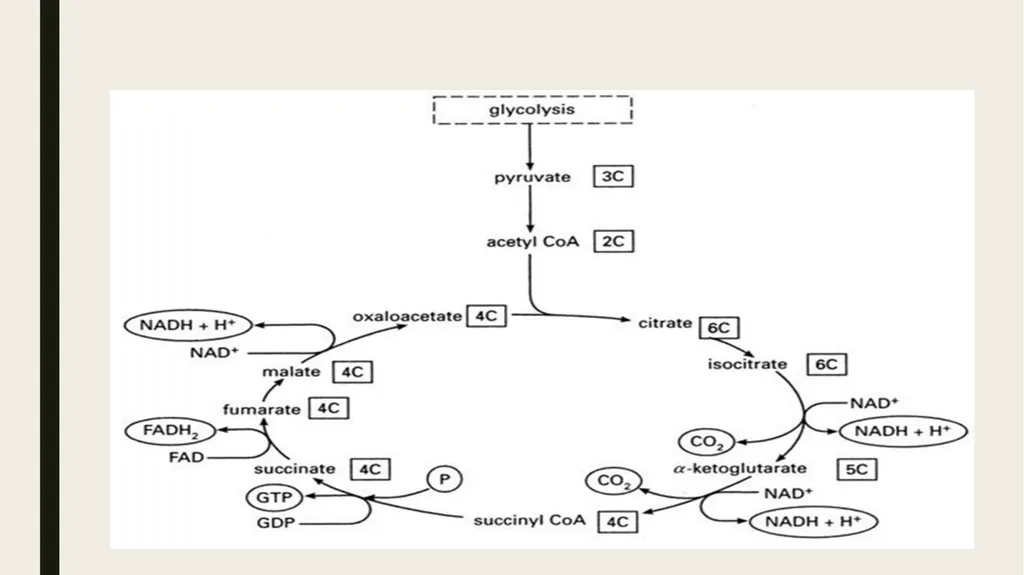
TCA cycle generates : 2 CO2s ,3 NADHs ,1 FADH2 ,1 GTP for each acetyl –CoA molecule oxidized .
The cycle enzymes are widely distributed among M.O. The complete cycle is functional in many aerobic bacteria, the facultative anaerobes does not use the full TCA cycle under anaerobic conditions, this cycle is an important source of energy and provide carbon skeleton for use in biosynthesis. Only 4ATP molecules is directly synthesized when 1 glucose molecules is oxidized to 6 CO2 molecules by glycolysis and TCA cycle. Most ATP generated comes from the oxidation of NADH and FADH2 in the electron transport chain.<br>
04
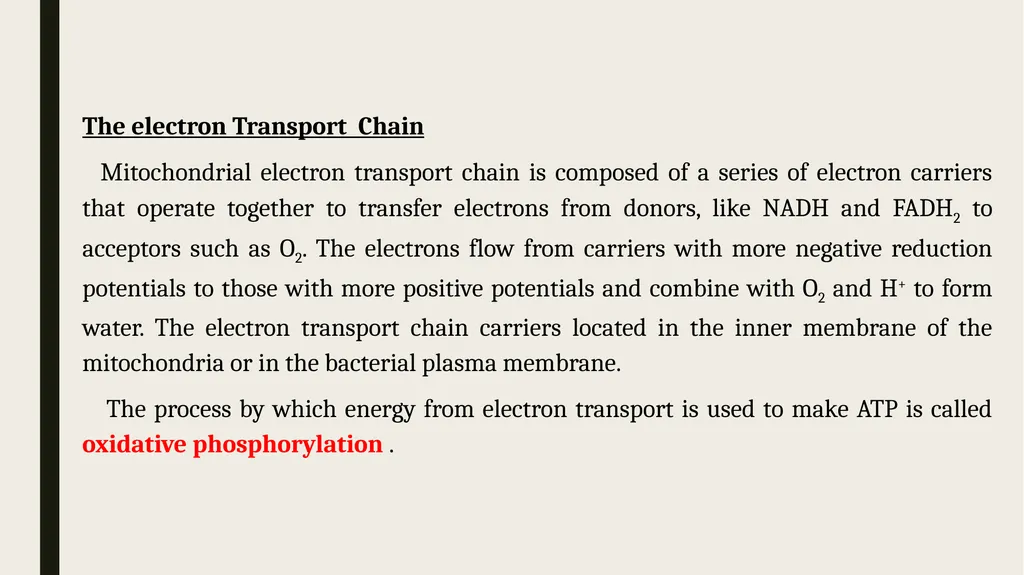
The electron Transport Chain
Mitochondrial electron transport chain is composed of a series of electron carriers that operate together to transfer electrons from donors, like NADH and FADH2 to acceptors such as O2. The electrons flow from carriers with more negative reduction potentials to those with more positive potentials and combine with O2 and H+ to form water. The electron transport chain carriers located in the inner membrane of the mitochondria or in the bacterial plasma membrane.
The process by which energy from electron transport is used to make ATP is called oxidative phosphorylation .<br>
05
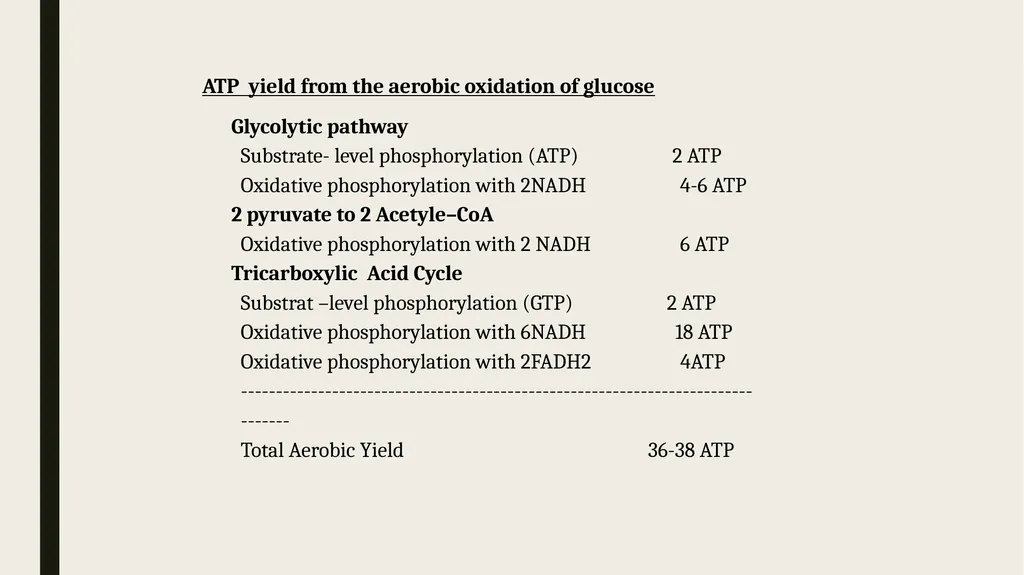
ATP yield from the aerobic oxidation of glucose
Glycolytic pathway
Substrate- level phosphorylation (ATP) 2 ATP
Oxidative phosphorylation with 2NADH 4-6 ATP
2 pyruvate to 2 Acetyle–CoA
Oxidative phosphorylation with 2 NADH 6 ATP
Tricarboxylic Acid Cycle
Substrat –level phosphorylation (GTP) 2 ATP
Oxidative phosphorylation with 6NADH 18 ATP
Oxidative phosphorylation with 2FADH2 4ATP
--------------------------------------------------------------------------------
Total Aerobic Yield 36-38 ATP<br>
06
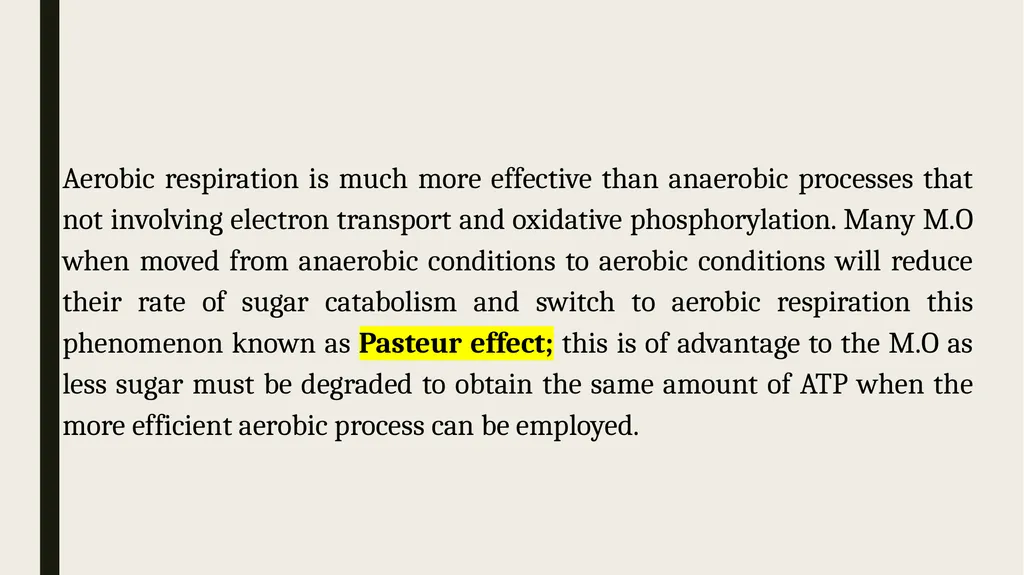
Aerobic respiration is much more effective than anaerobic processes that not involving electron transport and oxidative phosphorylation. Many M.O when moved from anaerobic conditions to aerobic conditions will reduce their rate of sugar catabolism and switch to aerobic respiration this phenomenon known as Pasteur effect; this is of advantage to the M.O as less sugar must be degraded to obtain the same amount of ATP when the more efficient aerobic process can be employed.<br>
07
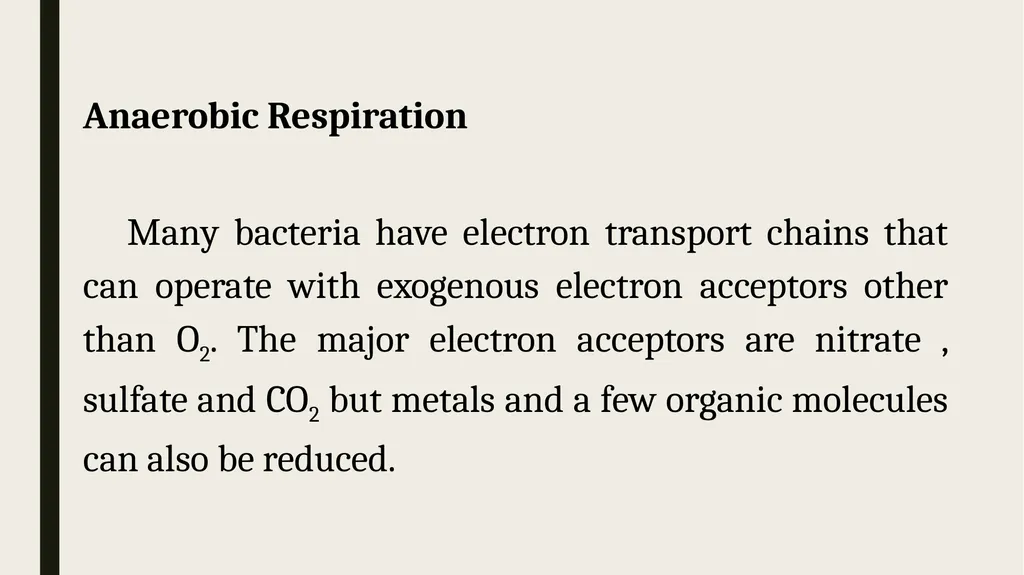
Anaerobic Respiration
Many bacteria have electron transport chains that can operate with exogenous electron acceptors other than O2. The major electron acceptors are nitrate , sulfate and CO2 but metals and a few organic molecules can also be reduced.<br>
08
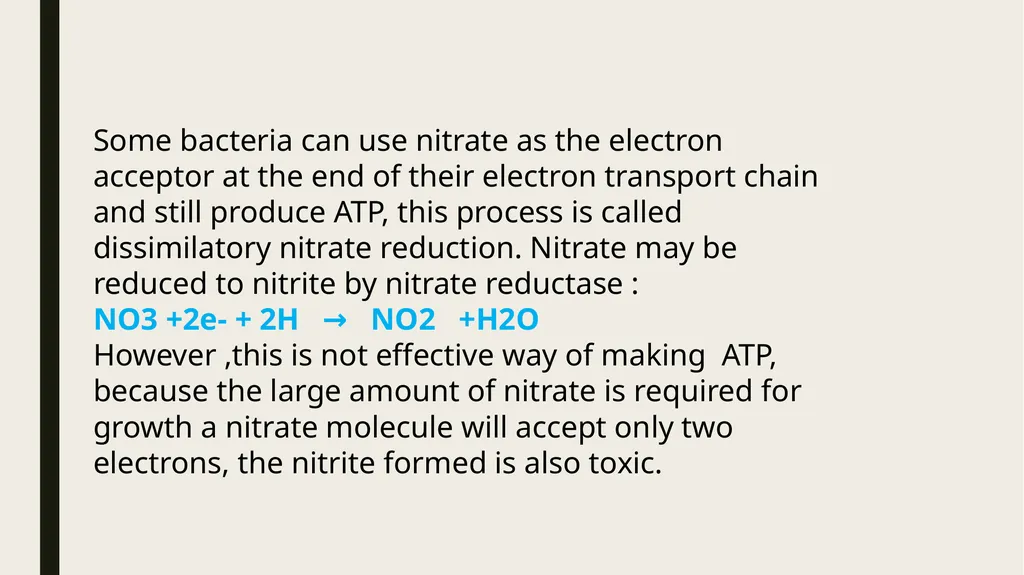
Some bacteria can use nitrate as the electron acceptor at the end of their electron transport chain and still produce ATP, this process is called dissimilatory nitrate reduction. Nitrate may be reduced to nitrite by nitrate reductase :
NO3 +2e- + 2H → NO2 +H2O
However ,this is not effective way of making ATP, because the large amount of nitrate is required for growth a nitrate molecule will accept only two electrons, the nitrite formed is also toxic.<br>
09
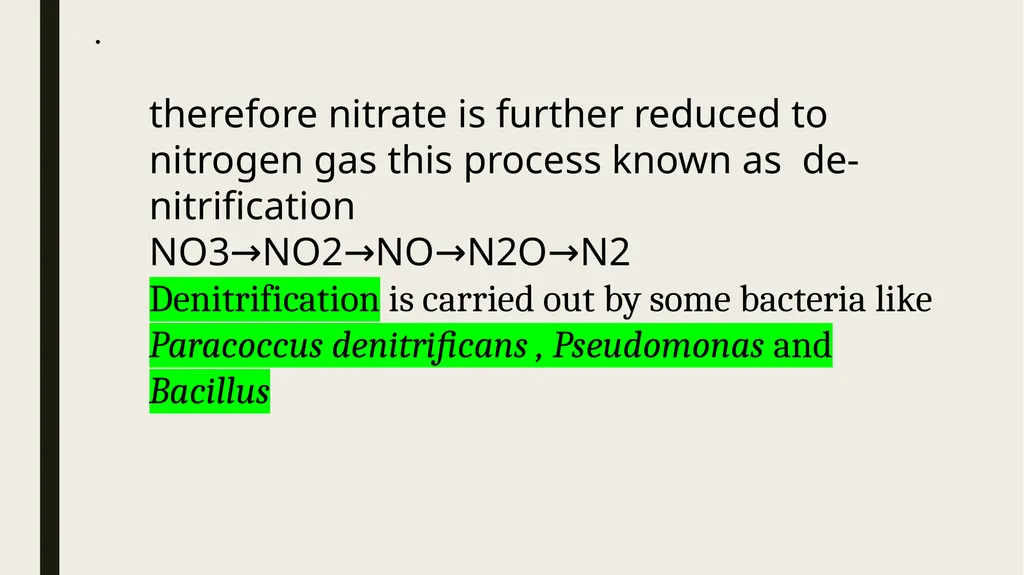
. therefore nitrate is further reduced to nitrogen gas this process known as de-nitrification
NO3→NO2→NO→N2O→N2
Denitrification is carried out by some bacteria like Paracoccus denitrificans , Pseudomonas and Bacillus<br>
10
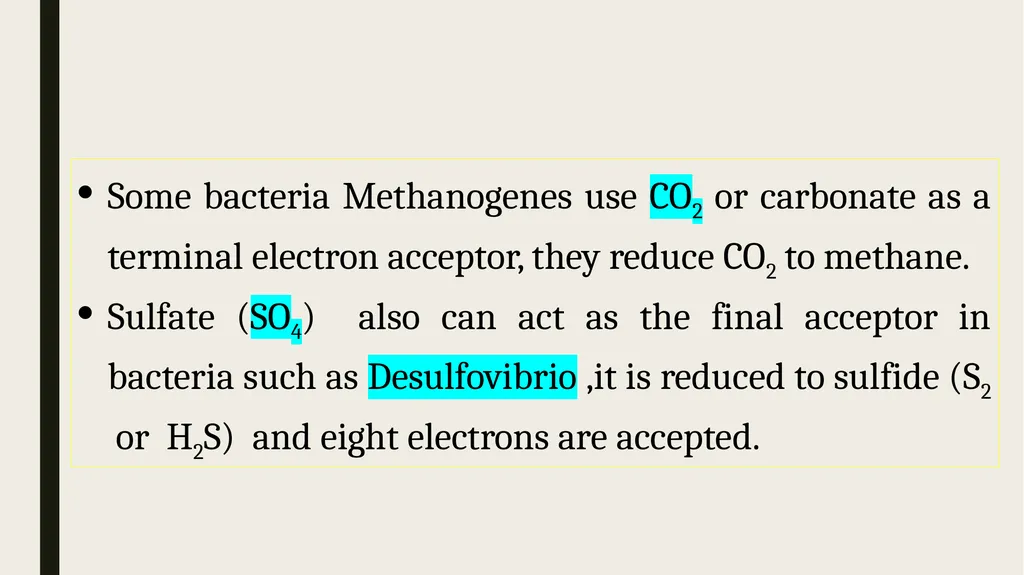
Some bacteria Methanogenes use CO2 or carbonate as a terminal electron acceptor, they reduce CO2 to methane.
Sulfate (SO4) also can act as the final acceptor in bacteria such as Desulfovibrio ,it is reduced to sulfide (S2 or H2S) and eight electrons are accepted.<br>
11
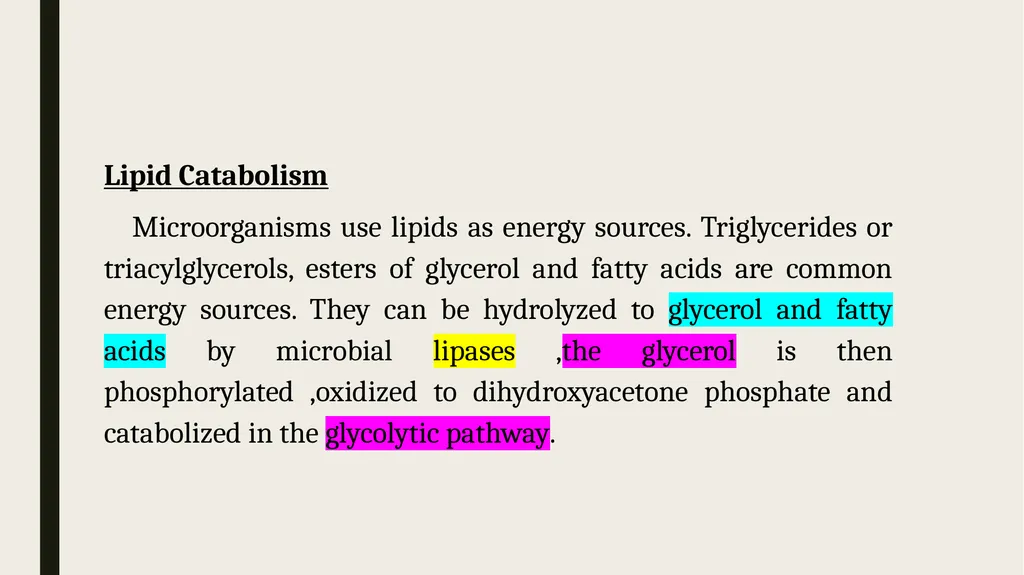
Lipid Catabolism
Microorganisms use lipids as energy sources. Triglycerides or triacylglycerols, esters of glycerol and fatty acids are common energy sources. They can be hydrolyzed to glycerol and fatty acids by microbial lipases ,the glycerol is then phosphorylated ,oxidized to dihydroxyacetone phosphate and catabolized in the glycolytic pathway.<br>
12
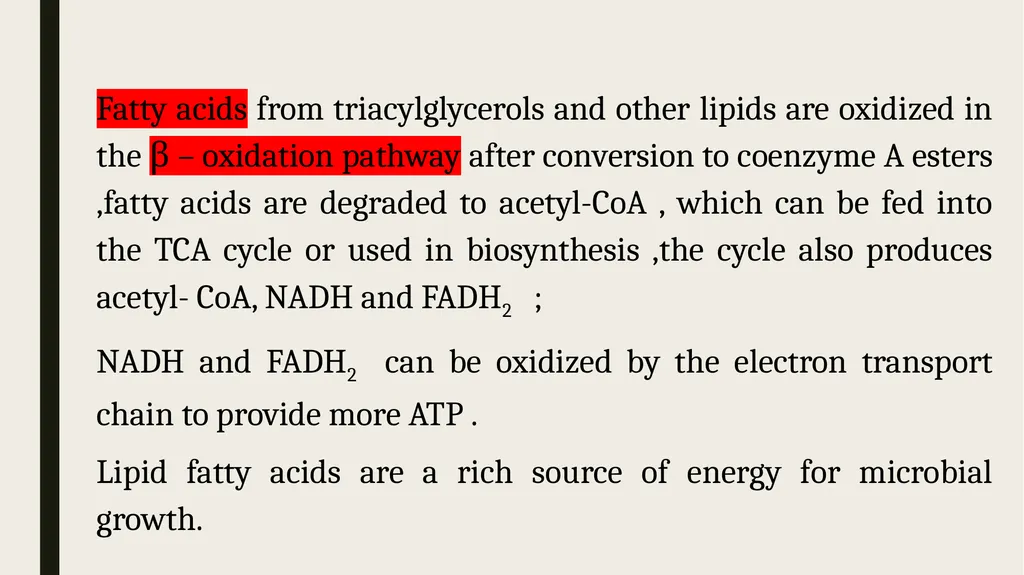
Fatty acids from triacylglycerols and other lipids are oxidized in the β – oxidation pathway after conversion to coenzyme A esters ,fatty acids are degraded to acetyl-CoA , which can be fed into the TCA cycle or used in biosynthesis ,the cycle also produces acetyl- CoA, NADH and FADH2 ;
NADH and FADH2 can be oxidized by the electron transport chain to provide more ATP .
Lipid fatty acids are a rich source of energy for microbial growth.<br>
13
Protein and Amino Acid Catabolism
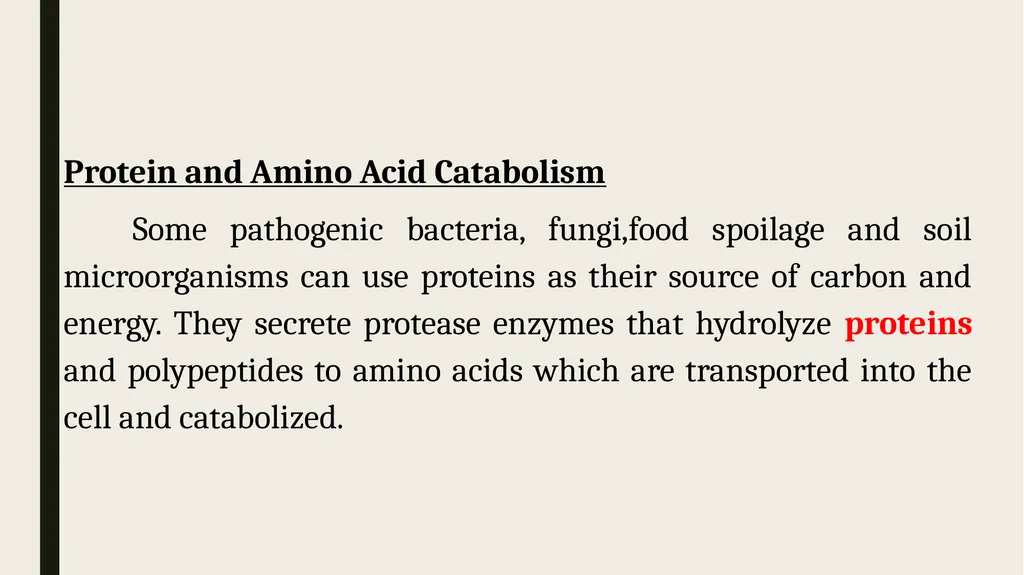
Some pathogenic bacteria, fungi,food spoilage and soil microorganisms can use proteins as their source of carbon and energy. They secrete protease enzymes that hydrolyze proteins and polypeptides to amino acids which are transported into the cell and catabolized.<br>
14
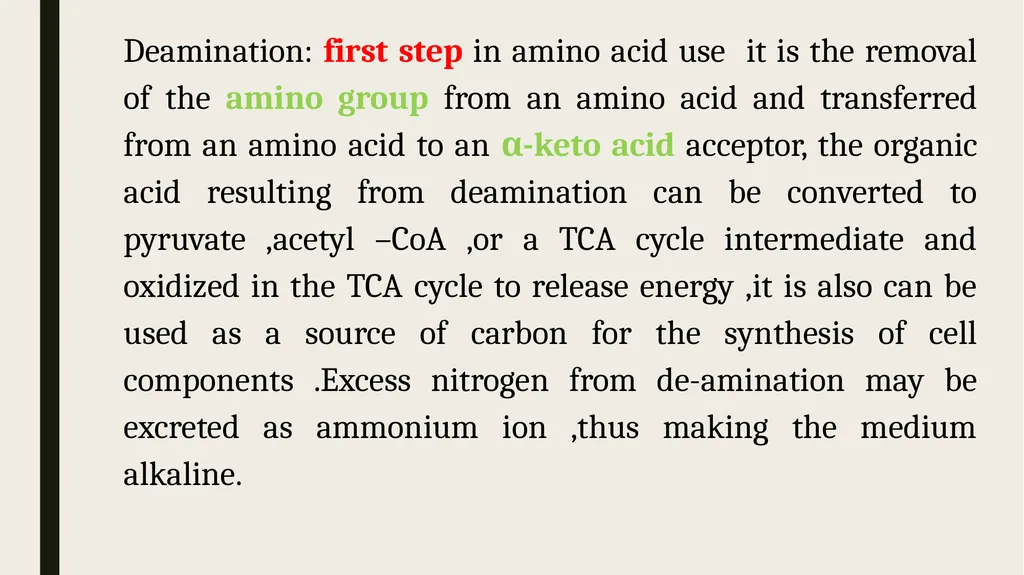
Deamination: first step in amino acid use it is the removal of the amino group from an amino acid and transferred from an amino acid to an α-keto acid acceptor, the organic acid resulting from deamination can be converted to pyruvate ,acetyl –CoA ,or a TCA cycle intermediate and oxidized in the TCA cycle to release energy ,it is also can be used as a source of carbon for the synthesis of cell components .Excess nitrogen from de-amination may be excreted as ammonium ion ,thus making the medium alkaline.<br>
15
References 1. Microbial Physiology. Albert G Moat, John W Foster, Michael P. Spector. 2002. Fourth Edition. A John Wiley and sons, INC., publication.
2. Microbiology. Lansing M Prescott, John P. Harley, Donald A. Klein.2004. Sixth Edition. Higher Education.
3. Microbial an introduction. 2004. Gerard J Tortora, Berdell R Funke, Christine L Case. Eighth Edition.<br>