
Chapter 10 Biodiversity 10.1 What is biodiversity?


Description: Chapter 10 Biodiversity 10.1 What is biodiversity? 10.2 Biodiversity at risk 10.3 The future of biodiversity Biodiversity the variety of living things in an area; Three levels of biodiversity: 1. Genetic diversity 2. Species diversity 3.
Related Topics
Download Presentation
"Chapter 10 Biodiversity 10.1 What is biodiversity?" is the property of its rightful owner. Permission is granted to download and print the materials on this website for personal, non-commercial use only, and to display it on your personal computer provided you do not modify the materials and that you retain all copyright notices contained in the materials. By downloading content from our website, you accept the terms of this agreement.
Presentation Transcript
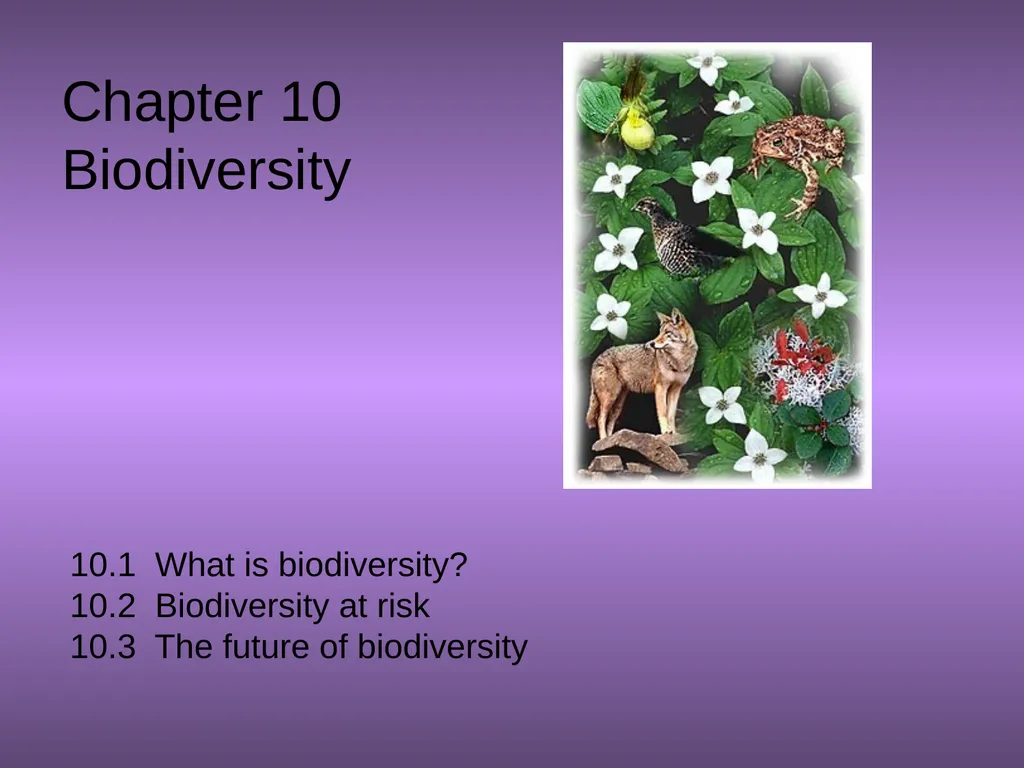
slide1. Chapter 10
Biodiversity 10.1 What is biodiversity?
10.2 Biodiversity at risk
10.3 The future of biodiversity<br>
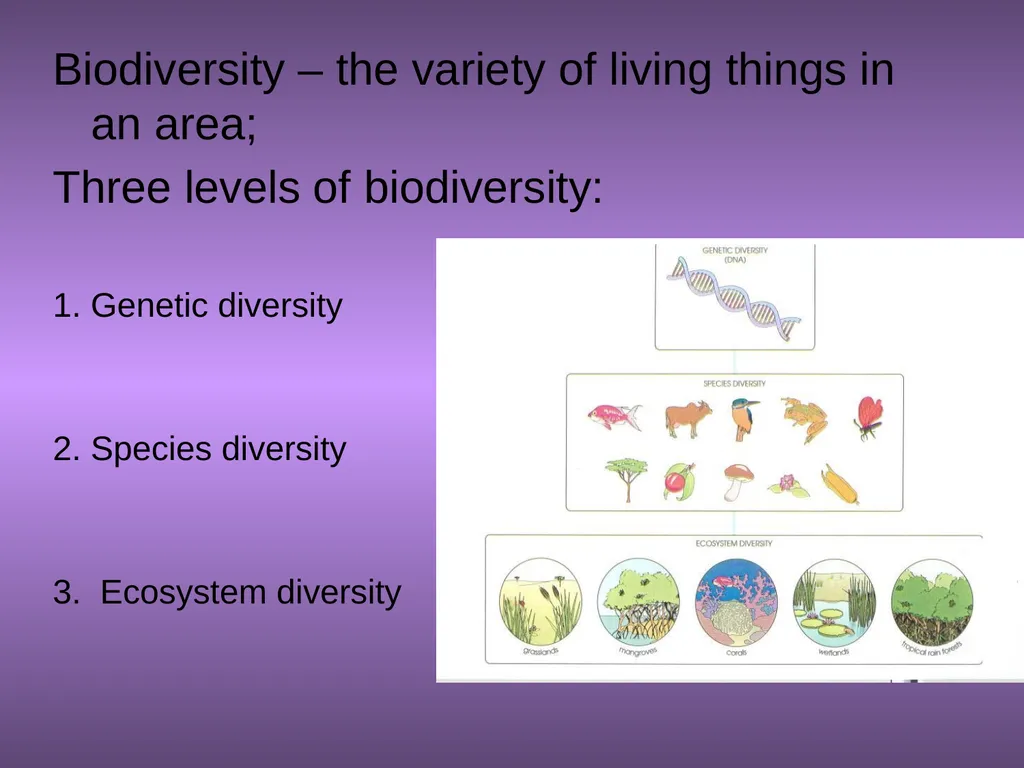
slide2. Biodiversity – the variety of living things in an area;
Three levels of biodiversity:
1. Genetic diversity
2. Species diversity
3. Ecosystem diversity<br>
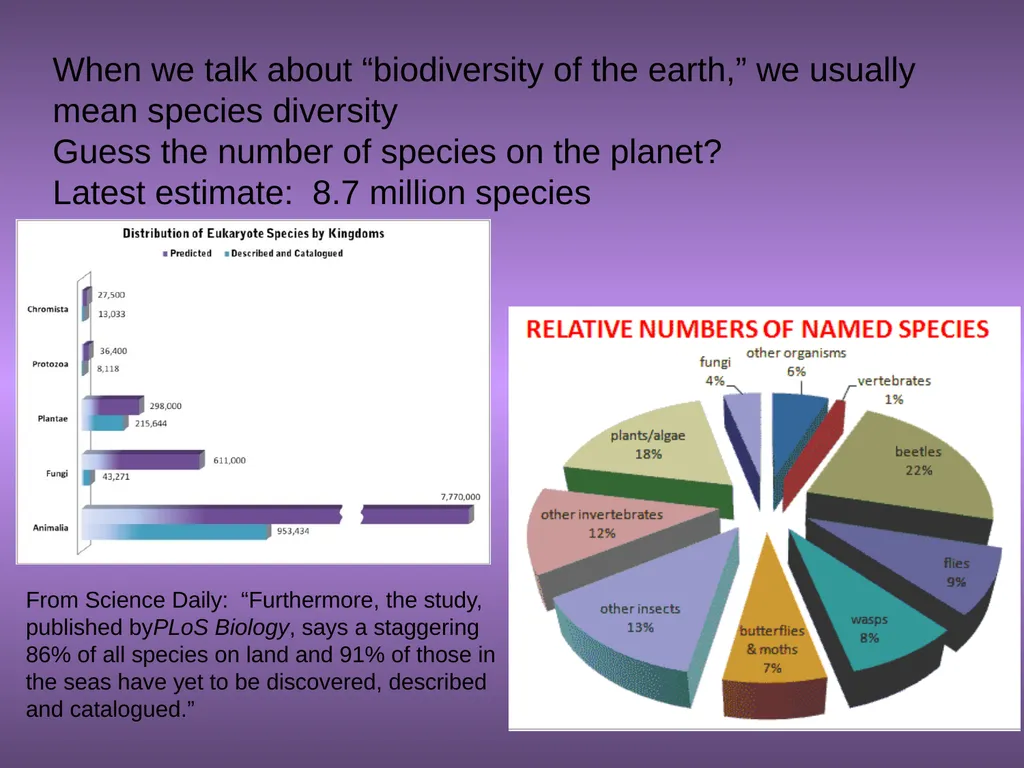
slide3. When we talk about “biodiversity of the earth,” we usually mean species diversity
Guess the number of species on the planet?
Latest estimate: 8.7 million species From Science Daily: “Furthermore, the study, published byPLoS Biology, says a staggering 86% of all species on land and 91% of those in the seas have yet to be discovered, described and catalogued.”<br>
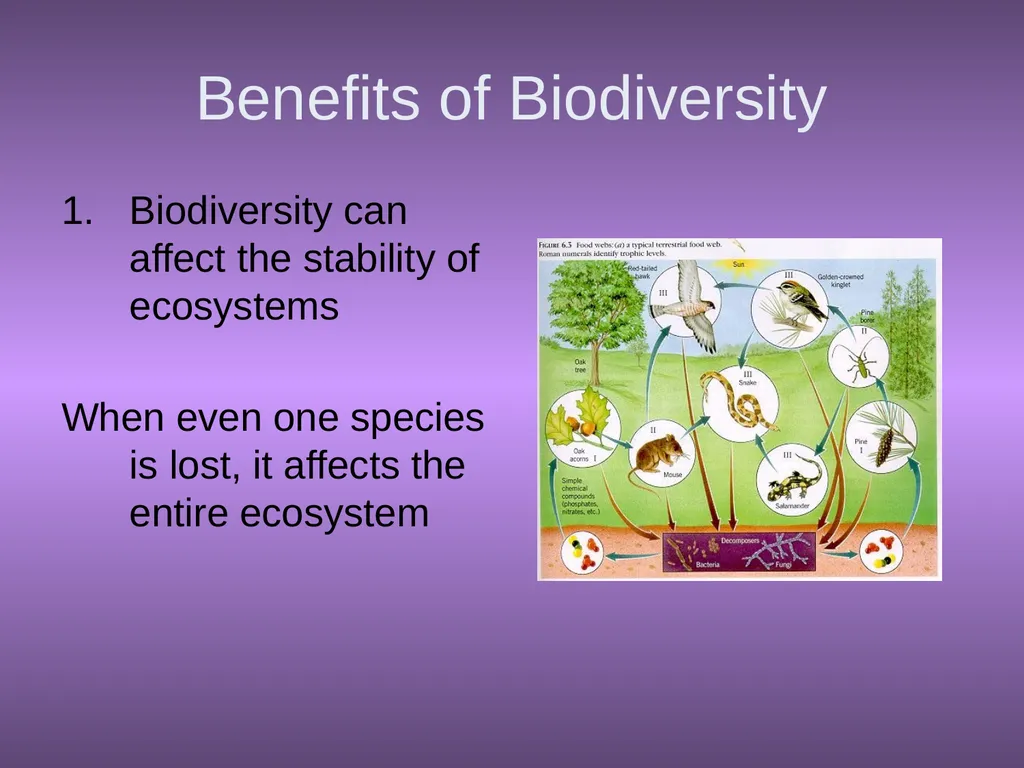
slide4. Benefits of Biodiversity Biodiversity can affect the stability of ecosystems
When even one species is lost, it affects the entire ecosystem<br>
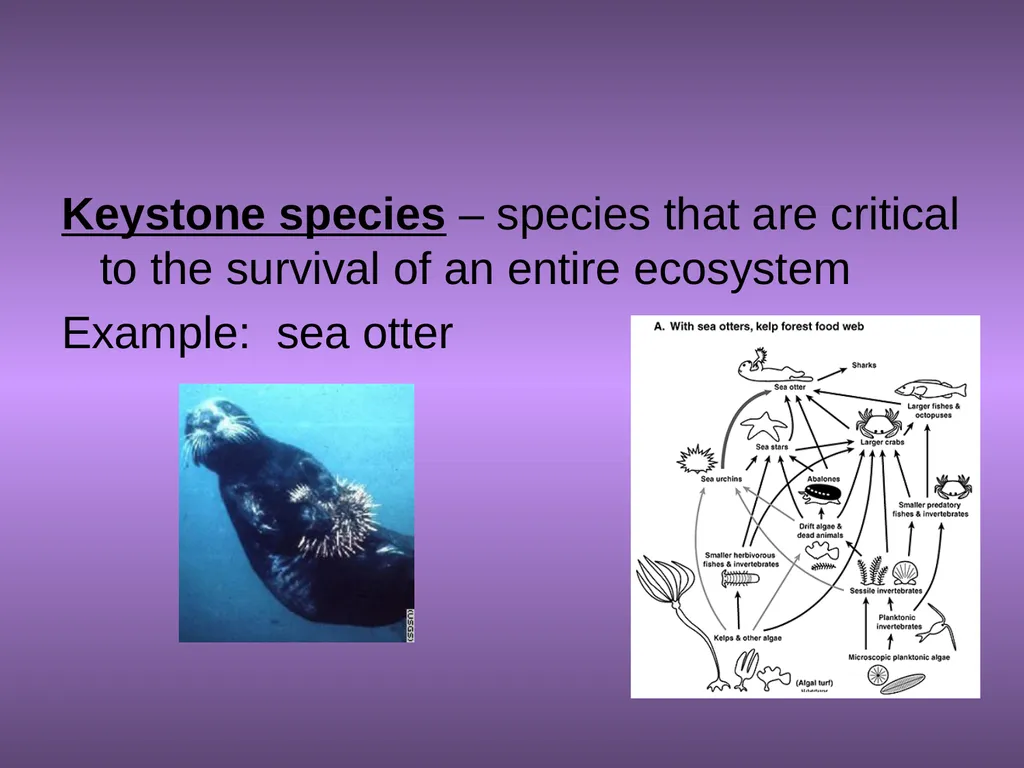
slide5. Keystone species – species that are critical to the survival of an entire ecosystem
Example: sea otter<br>
slide6. Benefits of Biodiversity 2. Healthy ecosystems provide good ecosystem services – the benefits that people obtain from ecosystems<br>
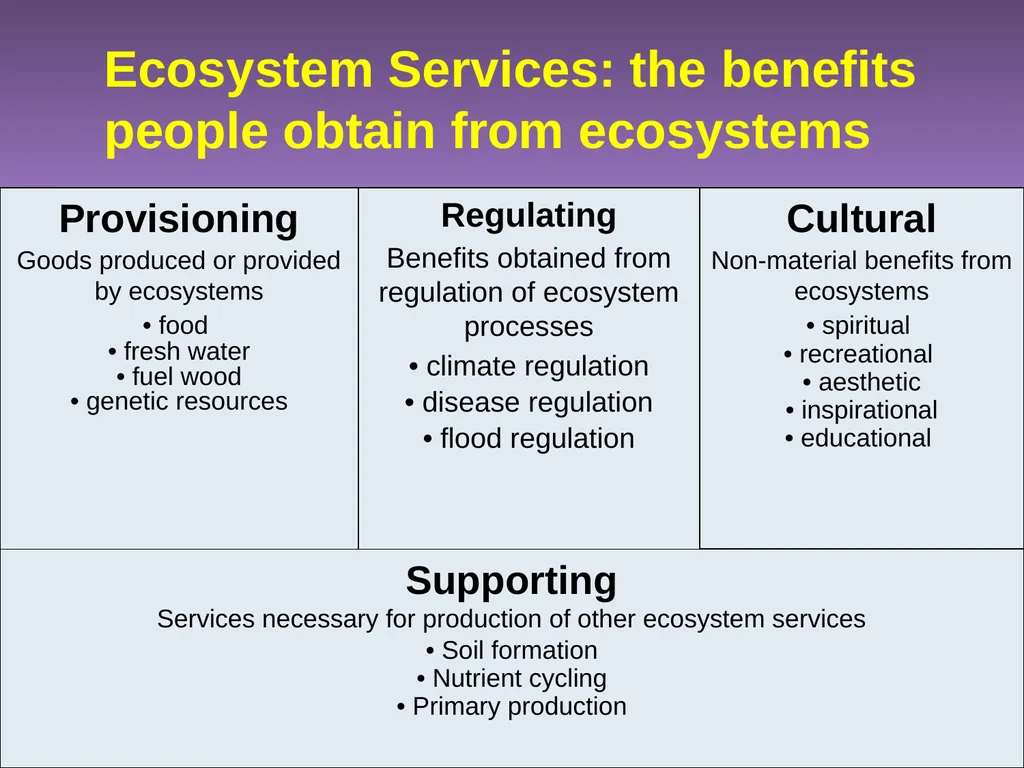
slide7. Ecosystem Services: the benefits people obtain from ecosystems Regulating
Benefits obtained from regulation of ecosystem processes
• climate regulation
• disease regulation
• flood regulation Provisioning
Goods produced or provided by ecosystems
• food
• fresh water
• fuel wood
• genetic resources Cultural
Non-material benefits from ecosystems
• spiritual
• recreational
• aesthetic
• inspirational
• educational Supporting
Services necessary for production of other ecosystem services
• Soil formation
• Nutrient cycling
• Primary production<br>
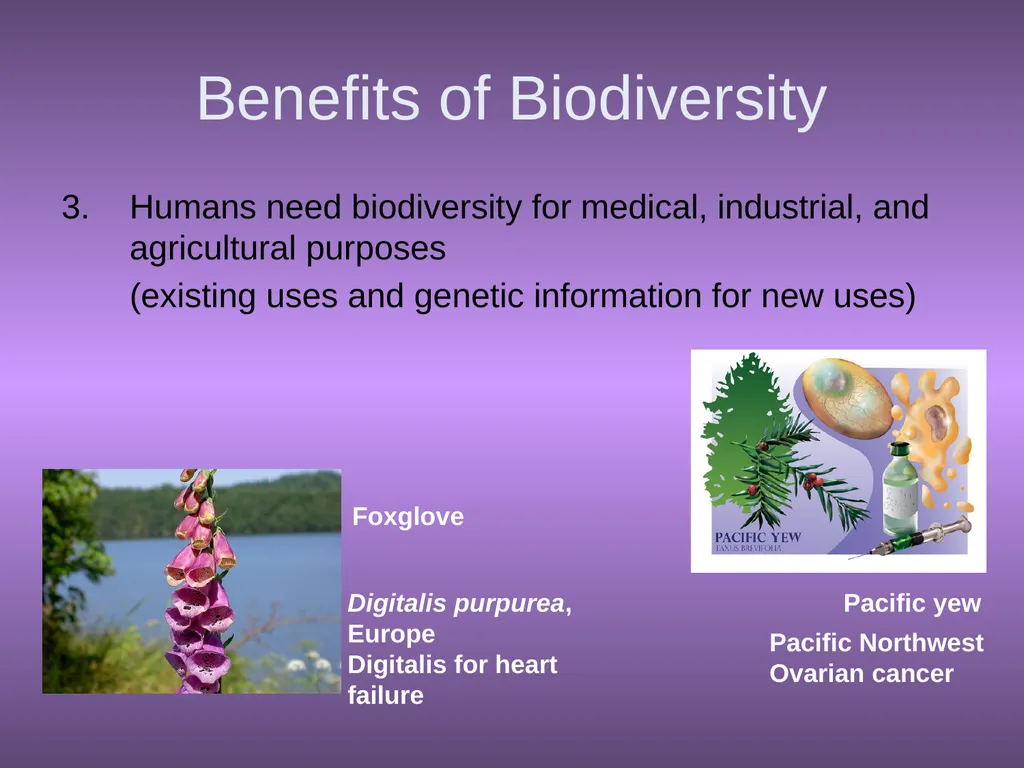
slide8. Benefits of Biodiversity Humans need biodiversity for medical, industrial, and agricultural purposes
(existing uses and genetic information for new uses) Foxglove Digitalis purpurea,
Europe
Digitalis for heart failure Pacific yew Pacific Northwest
Ovarian cancer<br>
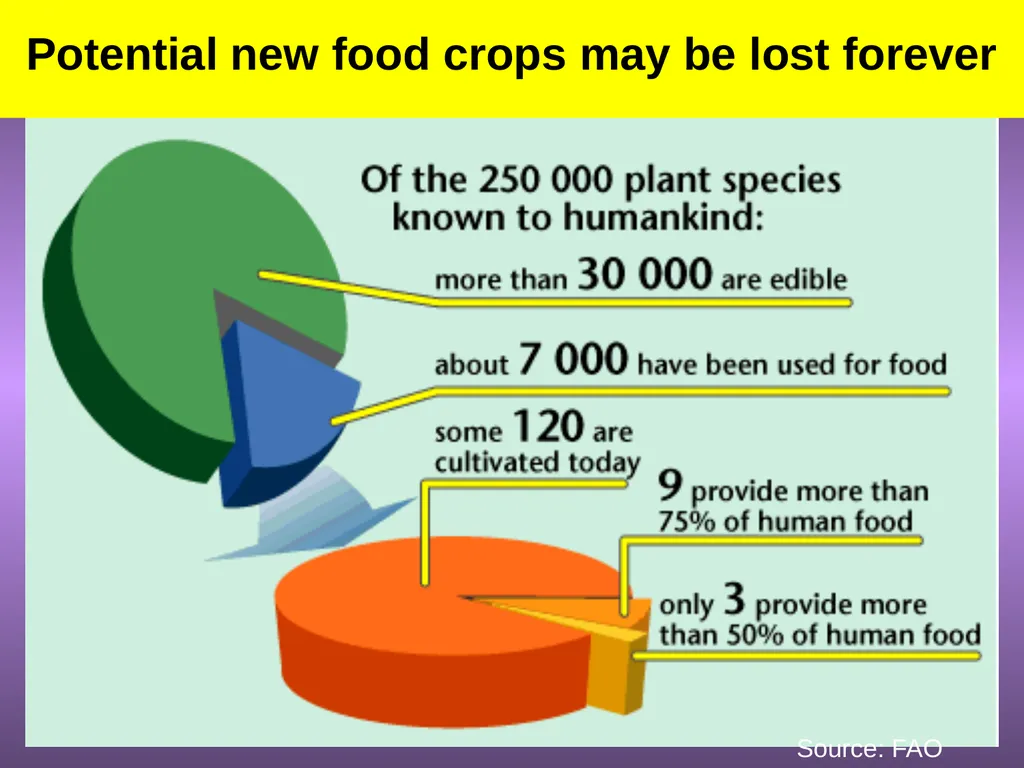
slide9. Potential new food crops may be lost forever Source: FAO<br>
slide10. Ethics, aesthetics, and recreation
E.O. Wilson: there is “spiritual, religious and psychological value” in preserving biodiversity
Ecotourism – tourism that supports conservation and sustainable development of ecologically unique areas<br>
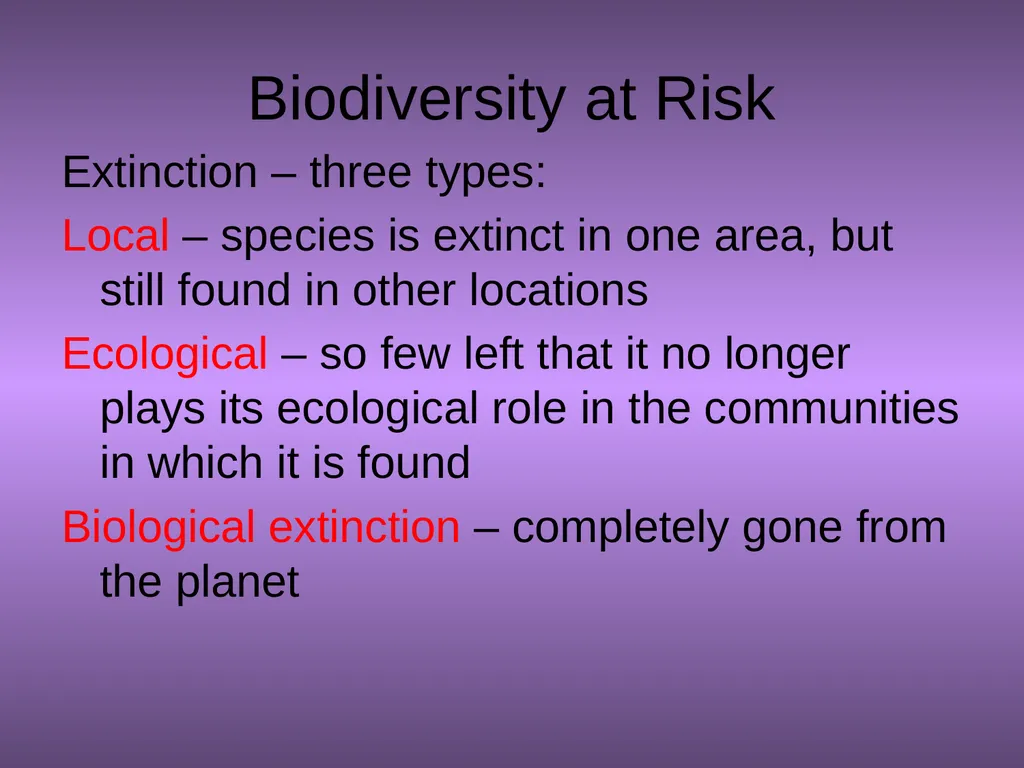
slide11. Extinction – three types:
Local – species is extinct in one area, but still found in other locations
Ecological – so few left that it no longer plays its ecological role in the communities in which it is found
Biological extinction – completely gone from the planet Biodiversity at Risk<br>
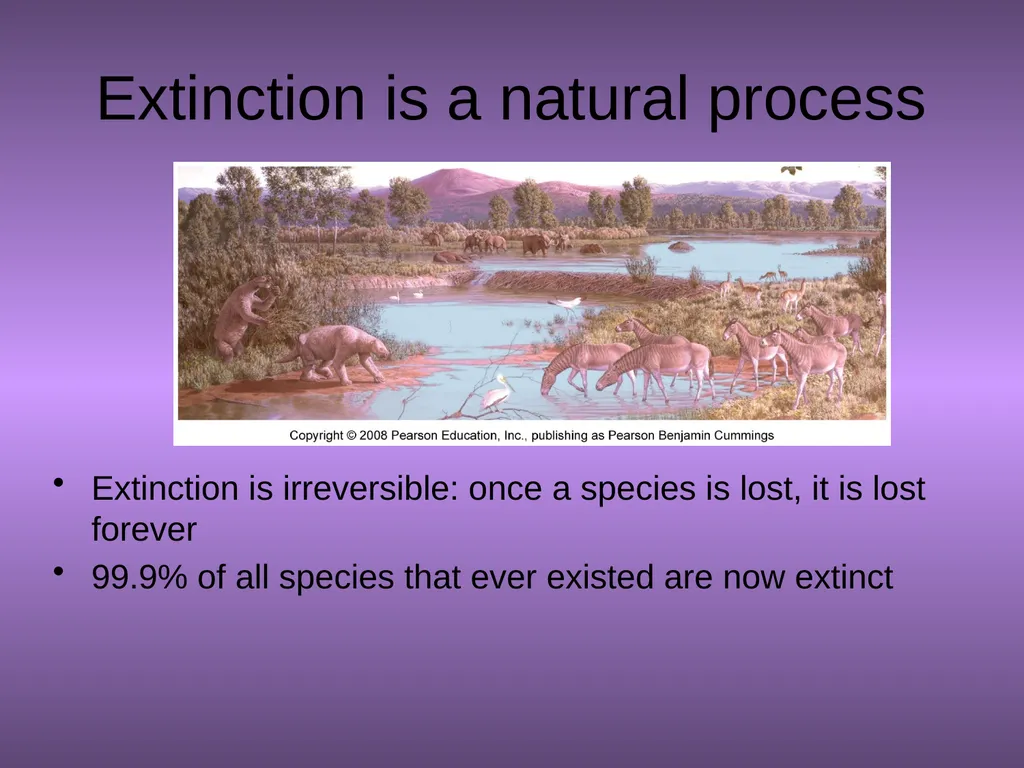
slide12. Extinction is a natural process Extinction is irreversible: once a species is lost, it is lost forever
99.9% of all species that ever existed are now extinct<br>
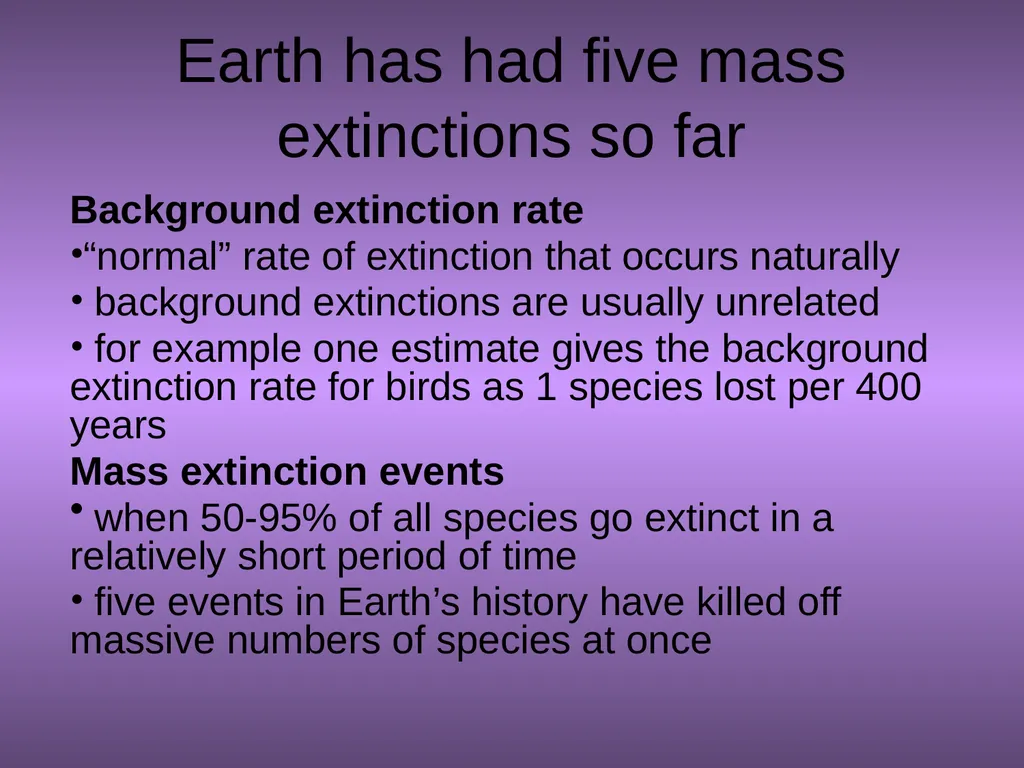
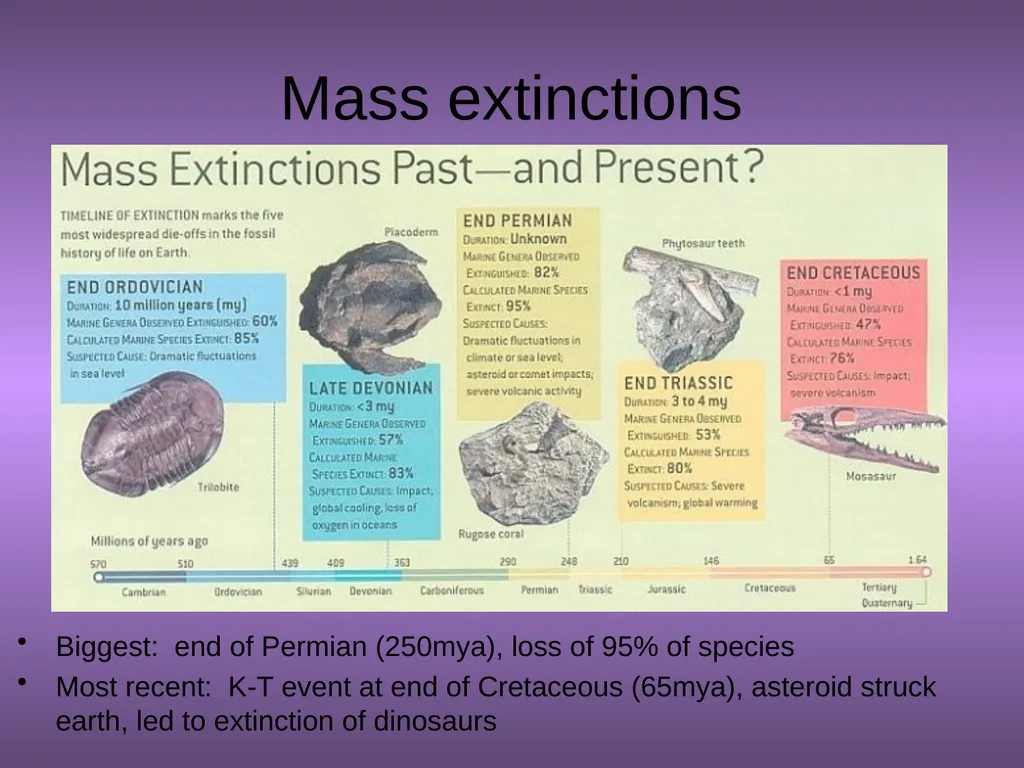
slide13. Earth has had five mass extinctions so far Background extinction rate
“normal” rate of extinction that occurs naturally
background extinctions are usually unrelated
for example one estimate gives the background extinction rate for birds as 1 species lost per 400 years
Mass extinction events
when 50-95% of all species go extinct in a relatively short period of time
five events in Earth’s history have killed off massive numbers of species at once<br>
slide14. Mass extinctions Biggest: end of Permian (250mya), loss of 95% of species
Most recent: K-T event at end of Cretaceous (65mya), asteroid struck earth, led to extinction of dinosaurs<br>
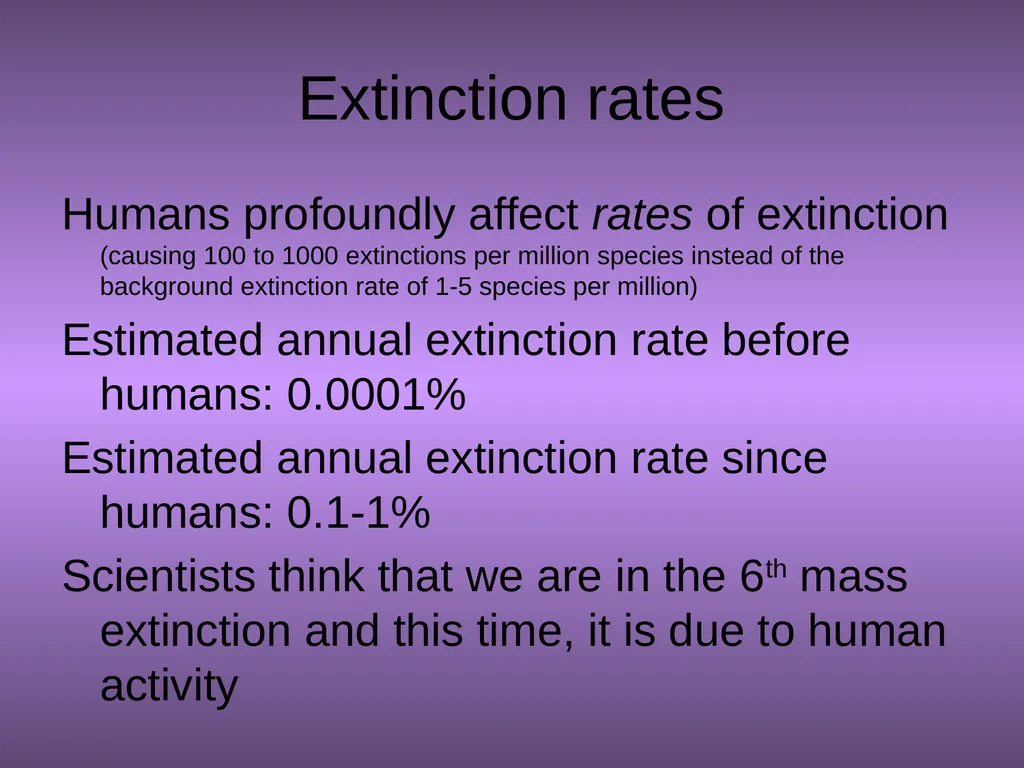
slide15. Extinction rates Humans profoundly affect rates of extinction (causing 100 to 1000 extinctions per million species instead of the background extinction rate of 1-5 species per million)
Estimated annual extinction rate before humans: 0.0001%
Estimated annual extinction rate since humans: 0.1-1%
Scientists think that we are in the 6th mass extinction and this time, it is due to human activity<br>
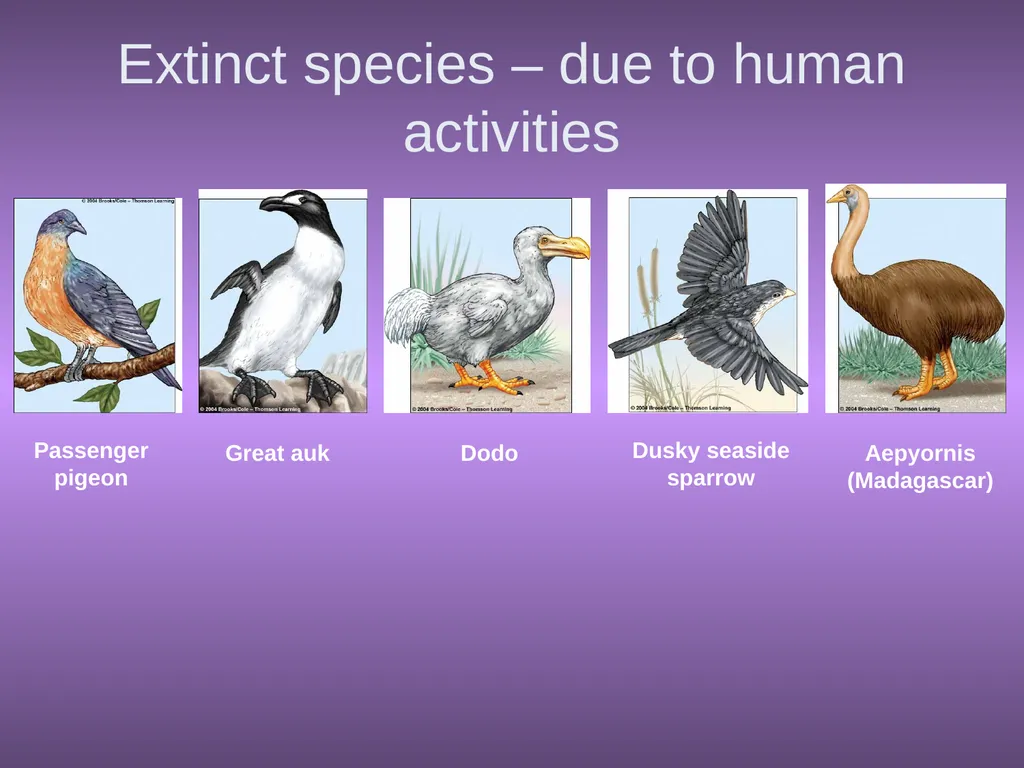
slide16. Passenger pigeon Great auk Dodo Dusky seaside sparrow Aepyornis
(Madagascar) Extinct species – due to human activities<br>
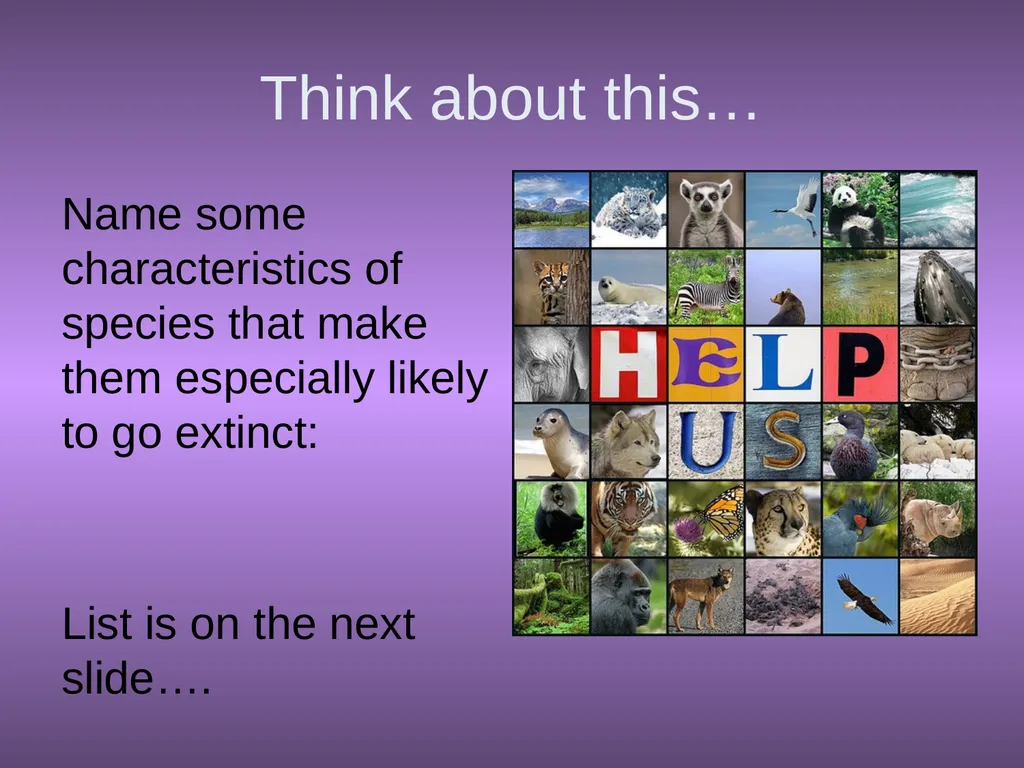
slide17. Think about this… Name some characteristics of species that make them especially likely to go extinct:
List is on the next slide….<br>
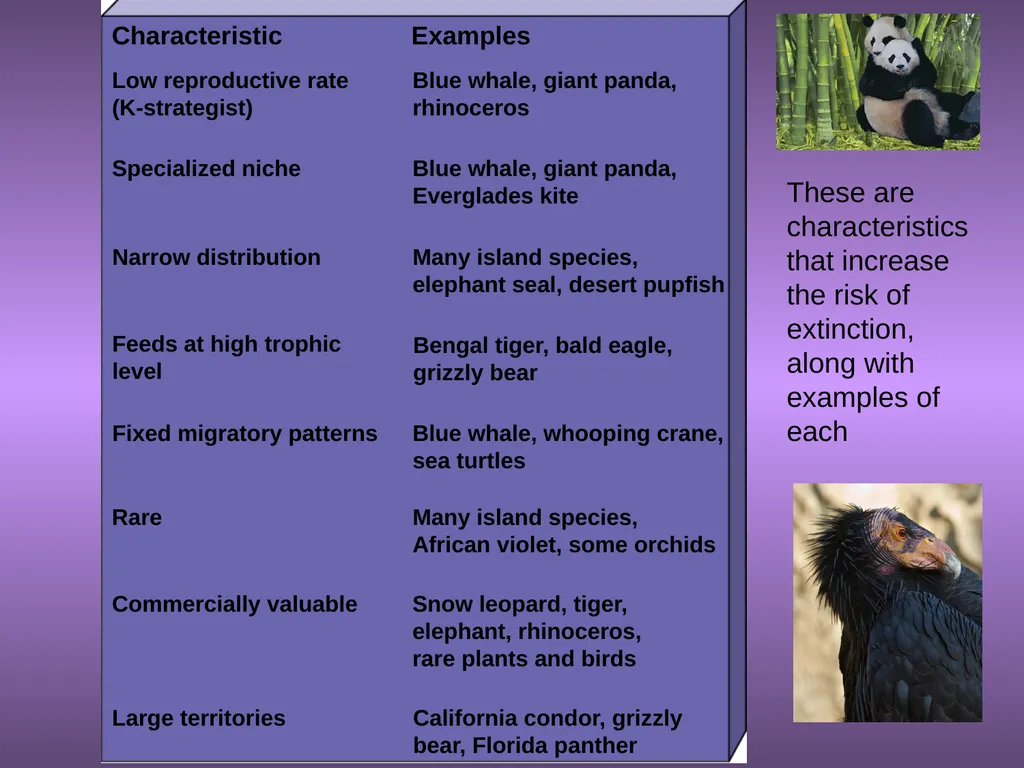
slide18. Characteristic Examples Low reproductive rate
(K-strategist) Specialized niche Narrow distribution Feeds at high trophic
level Fixed migratory patterns Rare Commercially valuable Large territories Blue whale, giant panda,
rhinoceros Blue whale, giant panda,
Everglades kite Many island species,
elephant seal, desert pupfish Bengal tiger, bald eagle,
grizzly bear Blue whale, whooping crane,
sea turtles Many island species,
African violet, some orchids Snow leopard, tiger,
elephant, rhinoceros,
rare plants and birds California condor, grizzly
bear, Florida panther These are characteristics that increase the risk of extinction, along with examples of each<br>
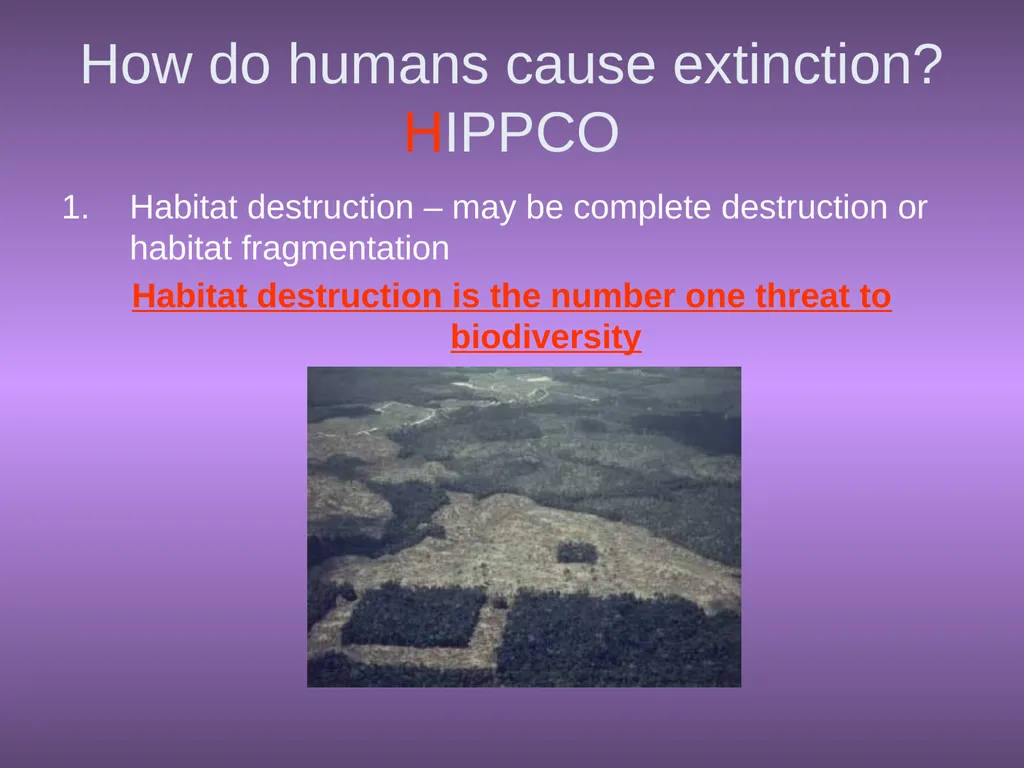
slide19. How do humans cause extinction? HIPPCO Habitat destruction – may be complete destruction or habitat fragmentation
Habitat destruction is the number one threat to biodiversity<br>
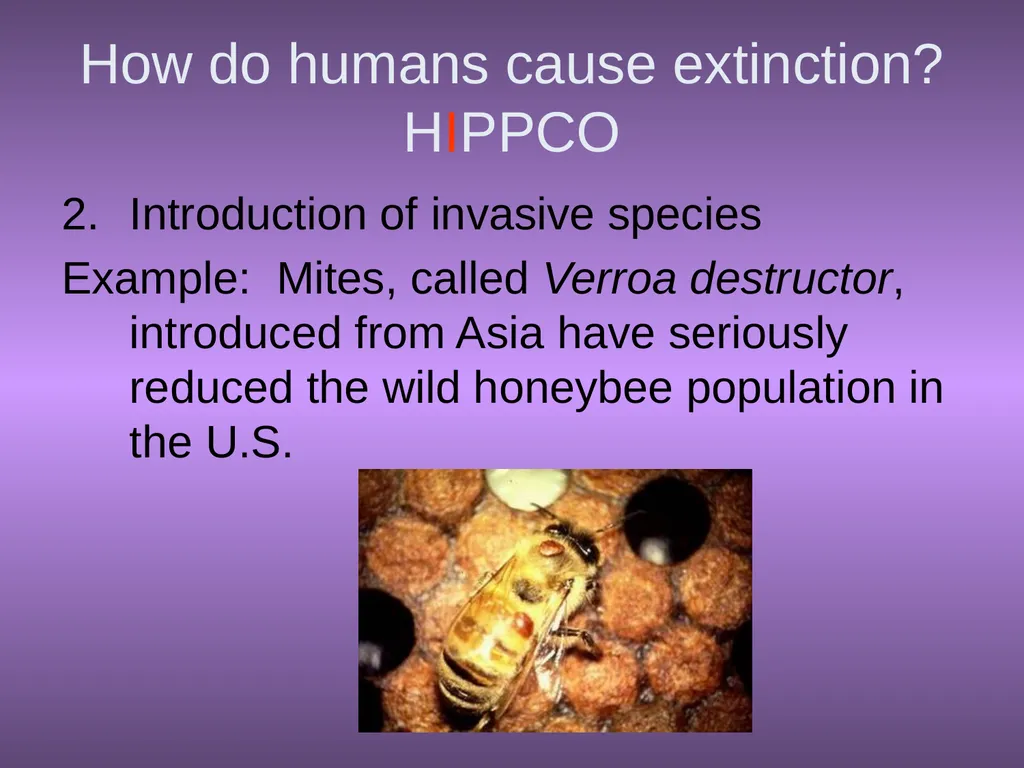
slide20. How do humans cause extinction? HIPPCO Introduction of invasive species
Example: Mites, called Verroa destructor, introduced from Asia have seriously reduced the wild honeybee population in the U.S.<br>
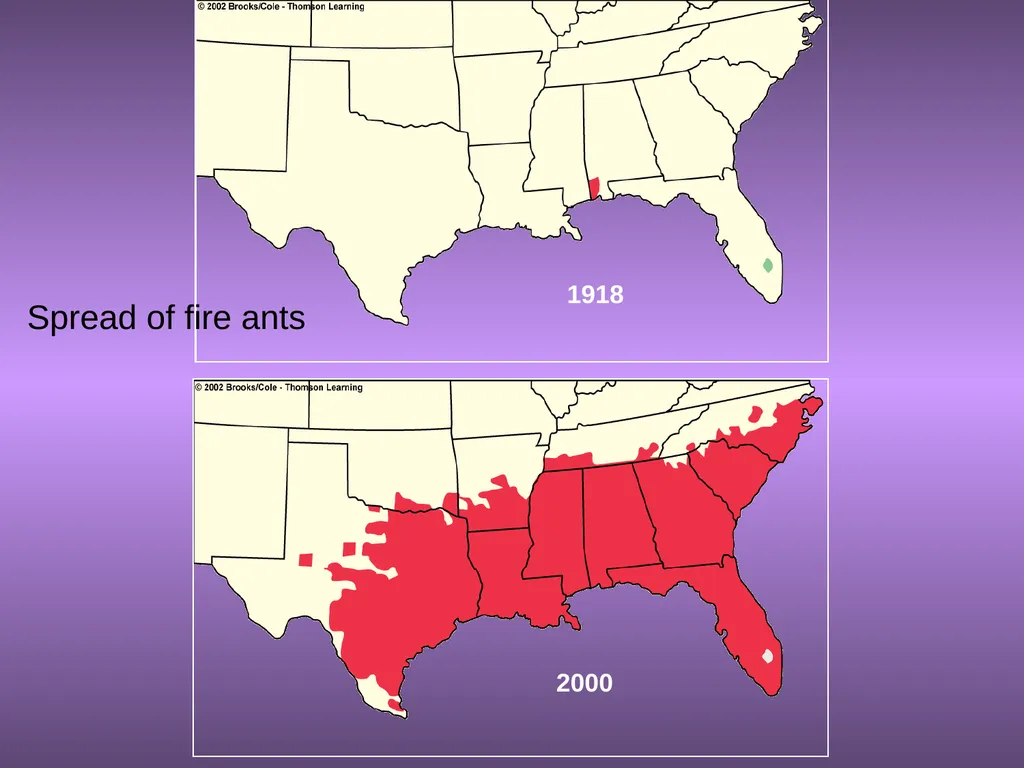
slide21. Spread of fire ants<br>
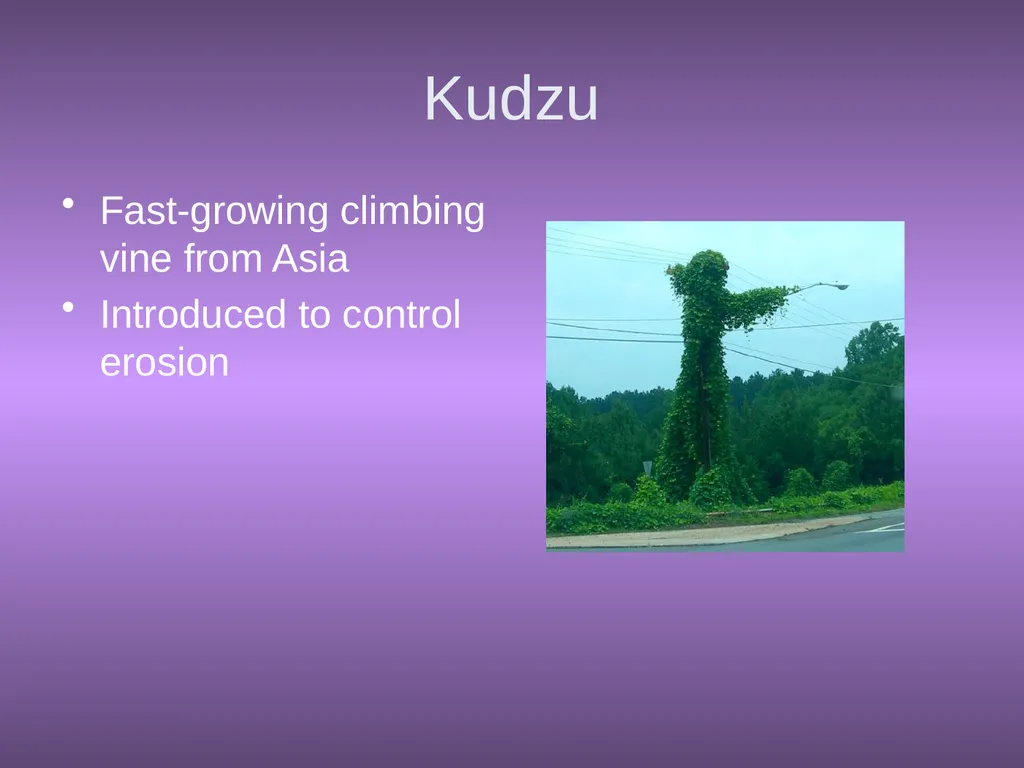
slide22. Kudzu Fast-growing climbing vine from Asia
Introduced to control erosion<br>
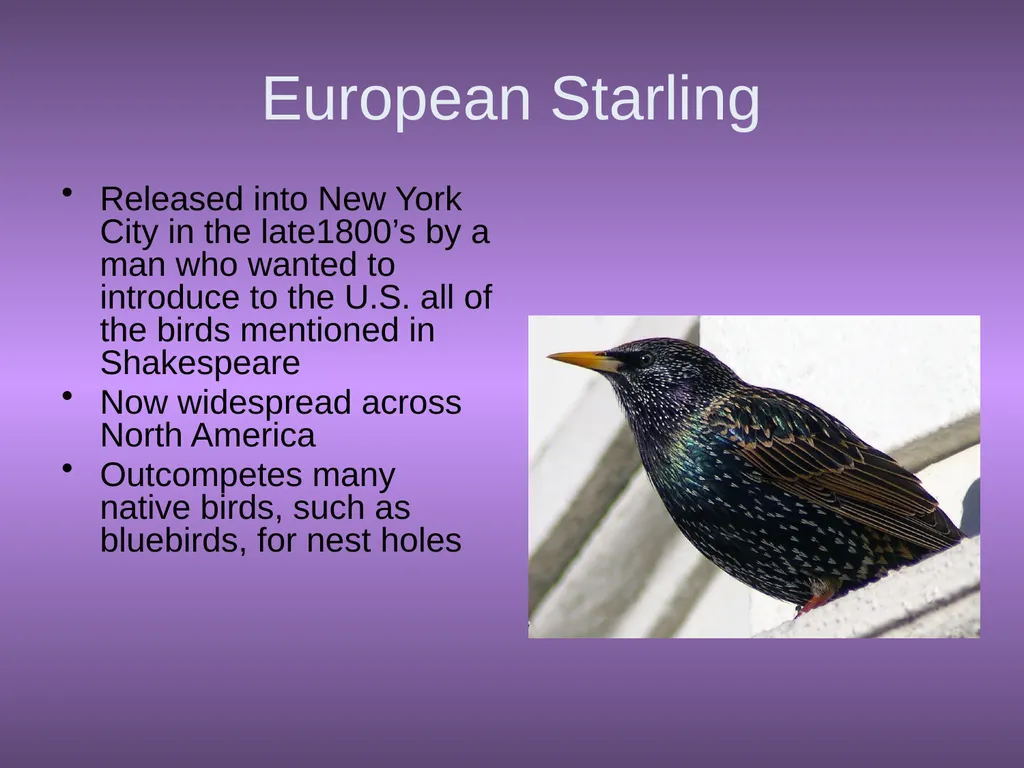
slide23. European Starling Released into New York City in the late1800’s by a man who wanted to introduce to the U.S. all of the birds mentioned in Shakespeare
Now widespread across North America
Outcompetes many native birds, such as bluebirds, for nest holes<br>
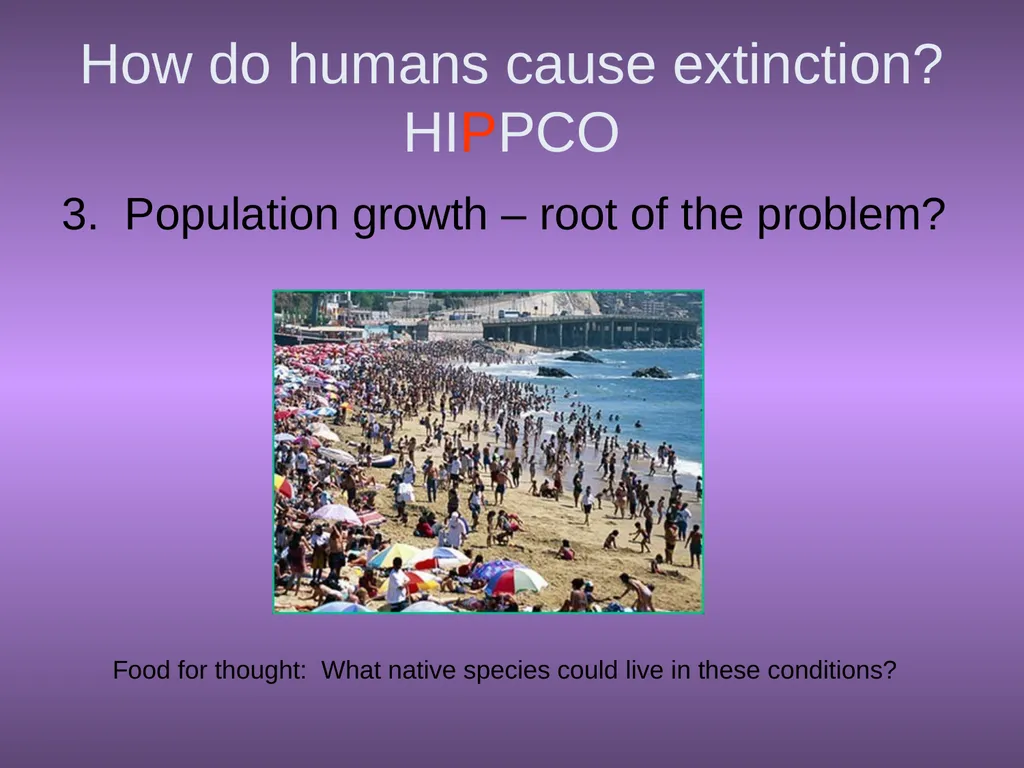
slide24. How do humans cause extinction? HIPPCO 3. Population growth – root of the problem? Food for thought: What native species could live in these conditions?<br>
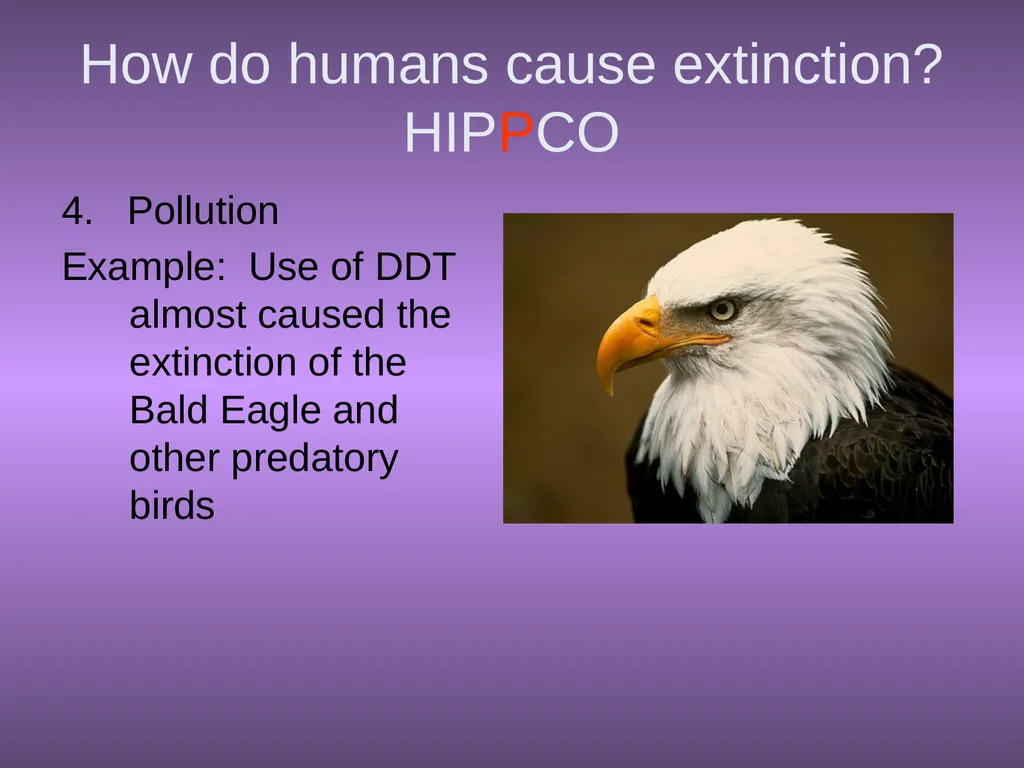
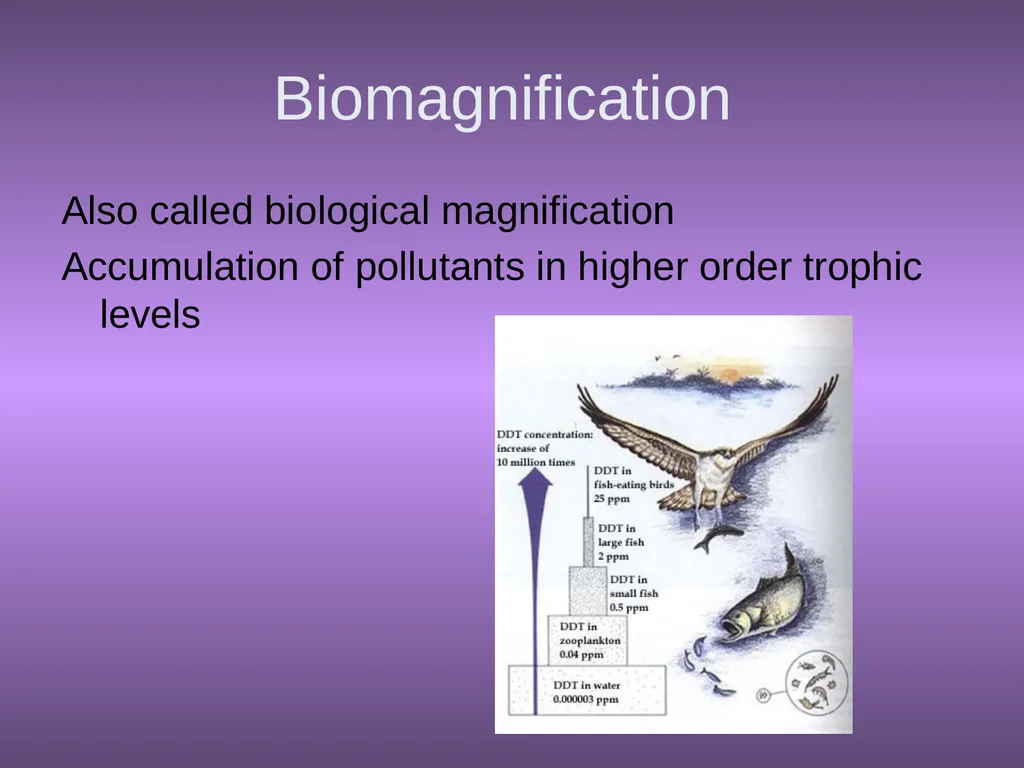
slide25. How do humans cause extinction? HIPPCO 4. Pollution
Example: Use of DDT almost caused the extinction of the Bald Eagle and other predatory birds<br>
slide26. Biomagnification Also called biological magnification
Accumulation of pollutants in higher order trophic levels<br>
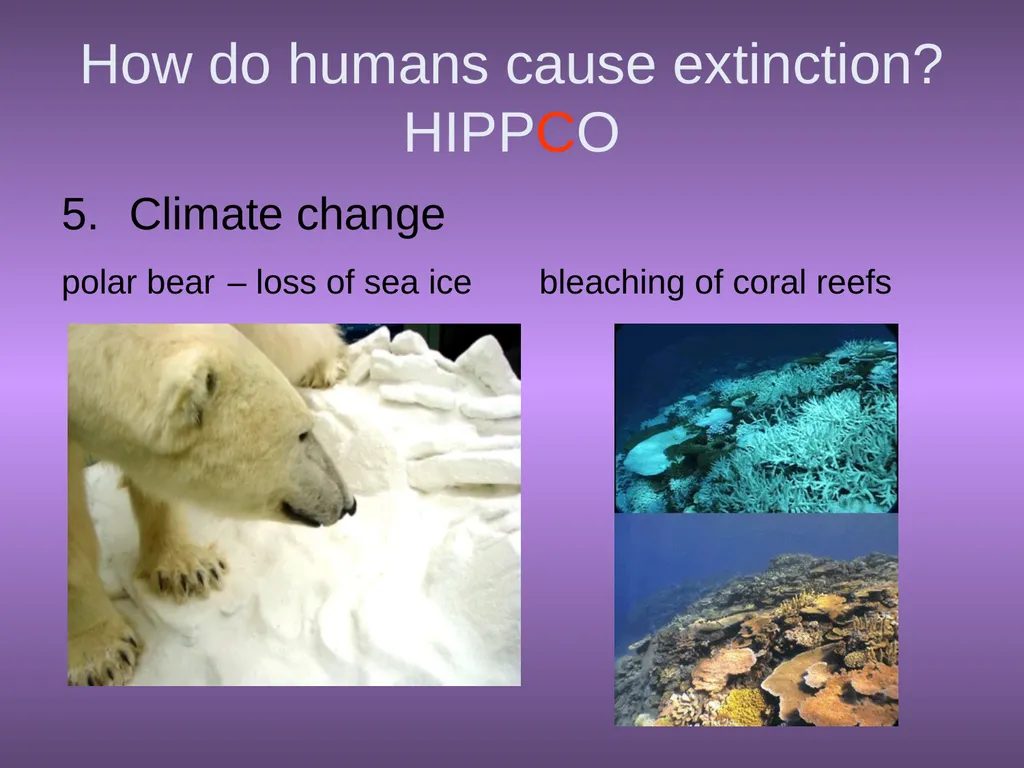
slide27. How do humans cause extinction? HIPPCO Climate change
polar bear – loss of sea ice bleaching of coral reefs<br>
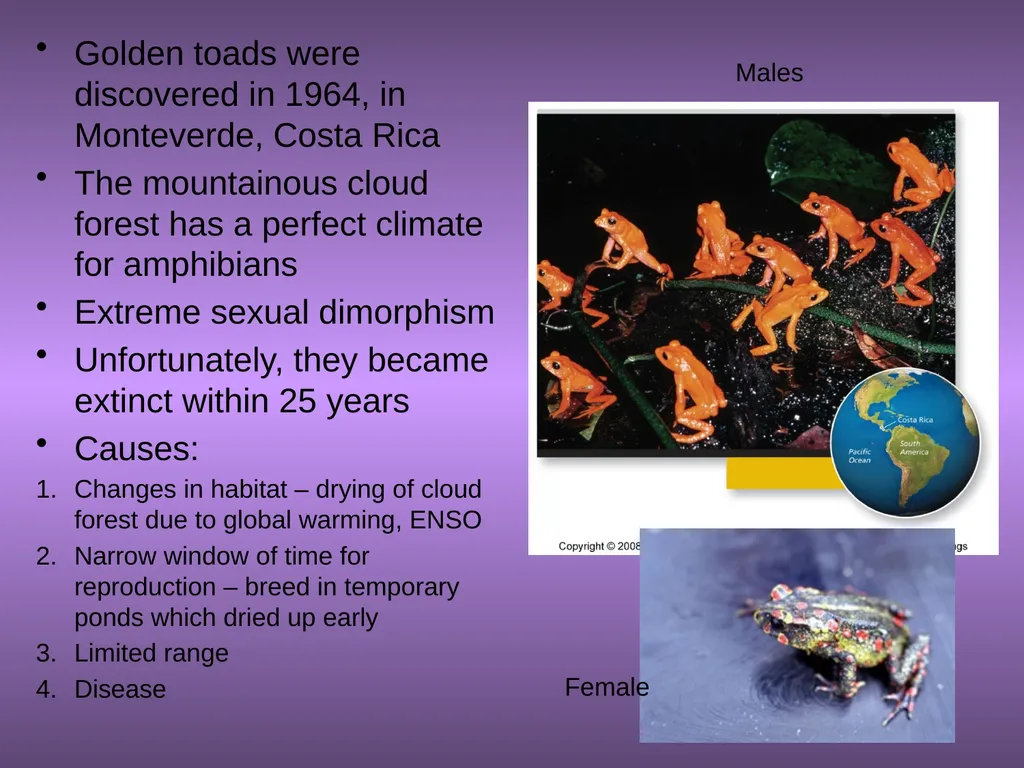
slide28. Golden toads were discovered in 1964, in Monteverde, Costa Rica
The mountainous cloud forest has a perfect climate for amphibians
Extreme sexual dimorphism
Unfortunately, they became extinct within 25 years
Causes:
Changes in habitat – drying of cloud forest due to global warming, ENSO
Narrow window of time for reproduction – breed in temporary ponds which dried up early
Limited range
Disease Female Males<br>
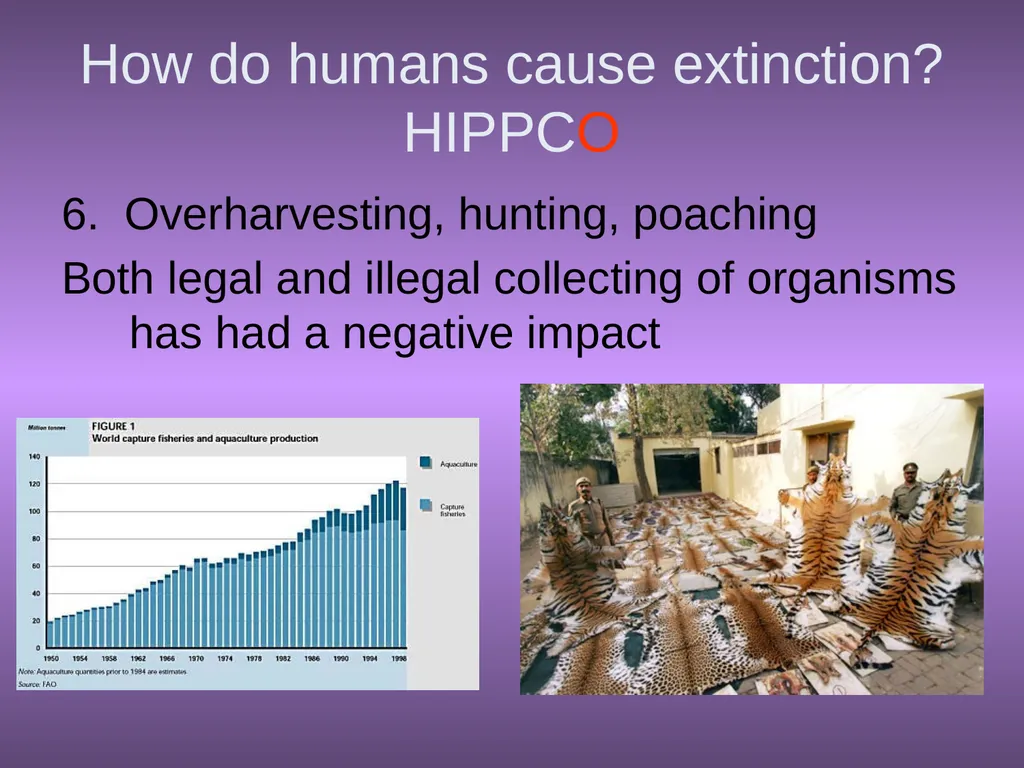
slide29. How do humans cause extinction? HIPPCO 6. Overharvesting, hunting, poaching
Both legal and illegal collecting of organisms has had a negative impact<br>
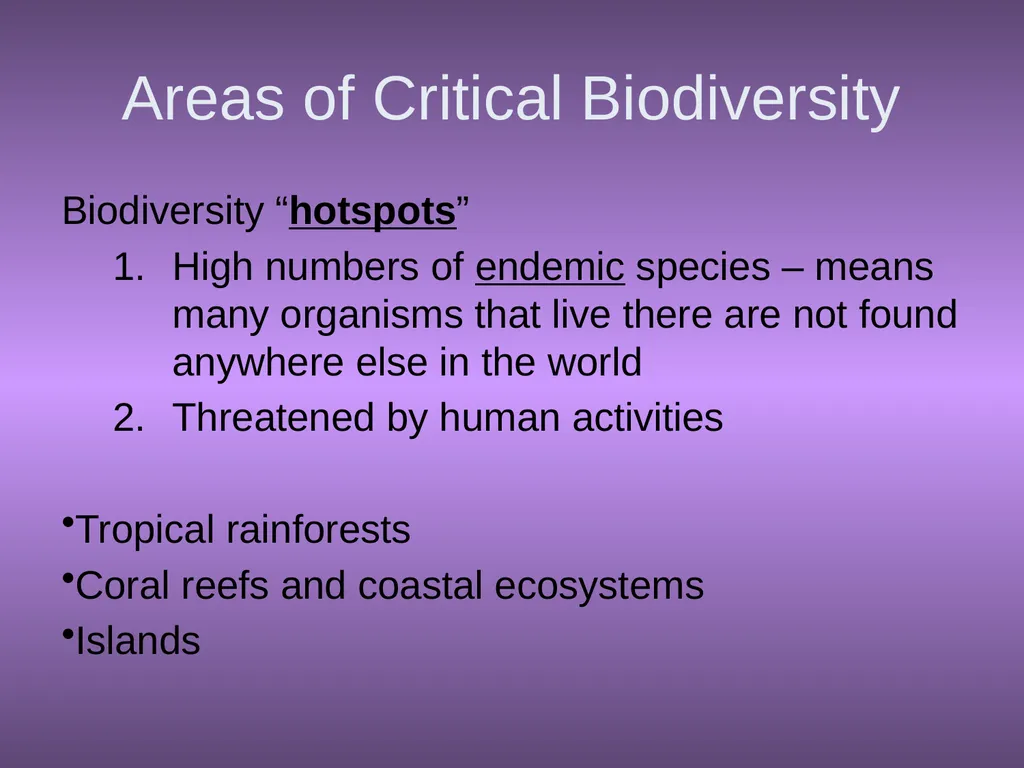
slide30. Areas of Critical Biodiversity Biodiversity “hotspots”
High numbers of endemic species – means many organisms that live there are not found anywhere else in the world
Threatened by human activities
Tropical rainforests
Coral reefs and coastal ecosystems
Islands<br>
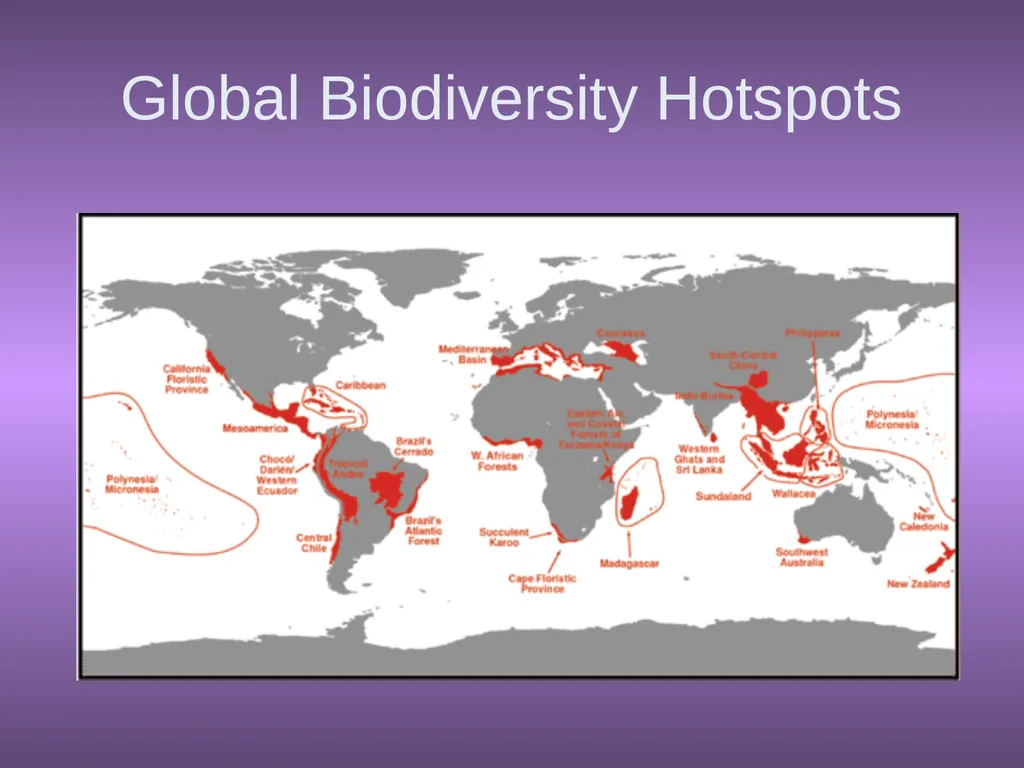
slide31. Global Biodiversity Hotspots<br>
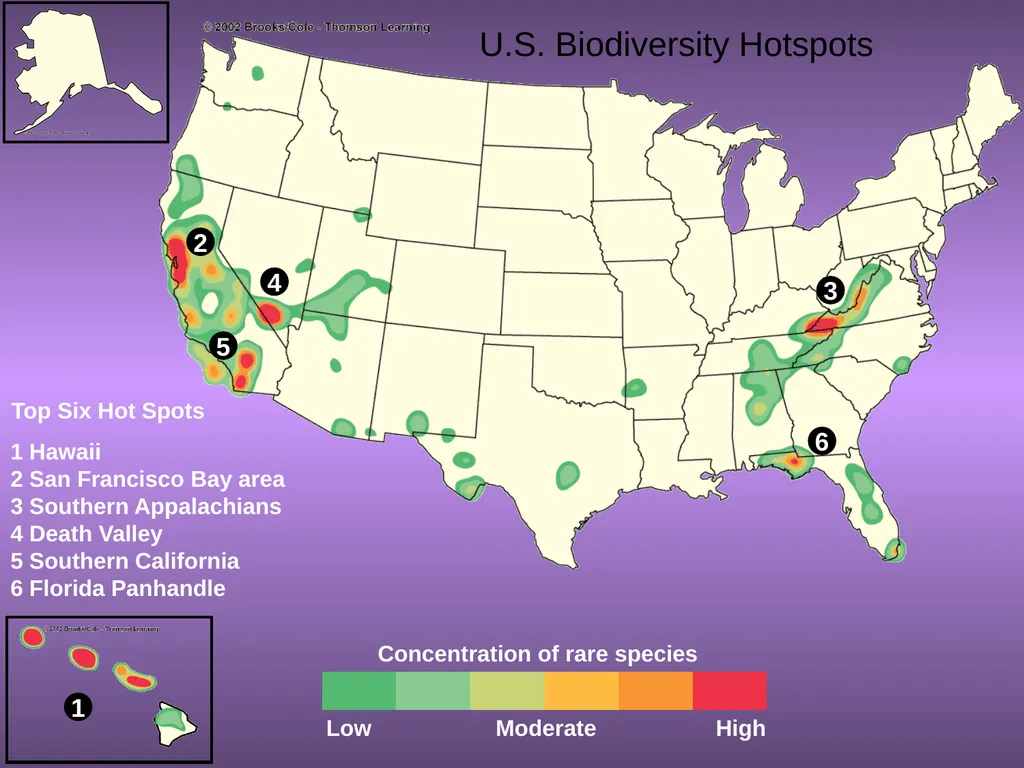
slide32. Concentration of rare species Low Moderate High Top Six Hot Spots 1 Hawaii
2 San Francisco Bay area
3 Southern Appalachians
4 Death Valley
5 Southern California
6 Florida Panhandle 4 5 2 6 3 1 U.S. Biodiversity Hotspots<br>
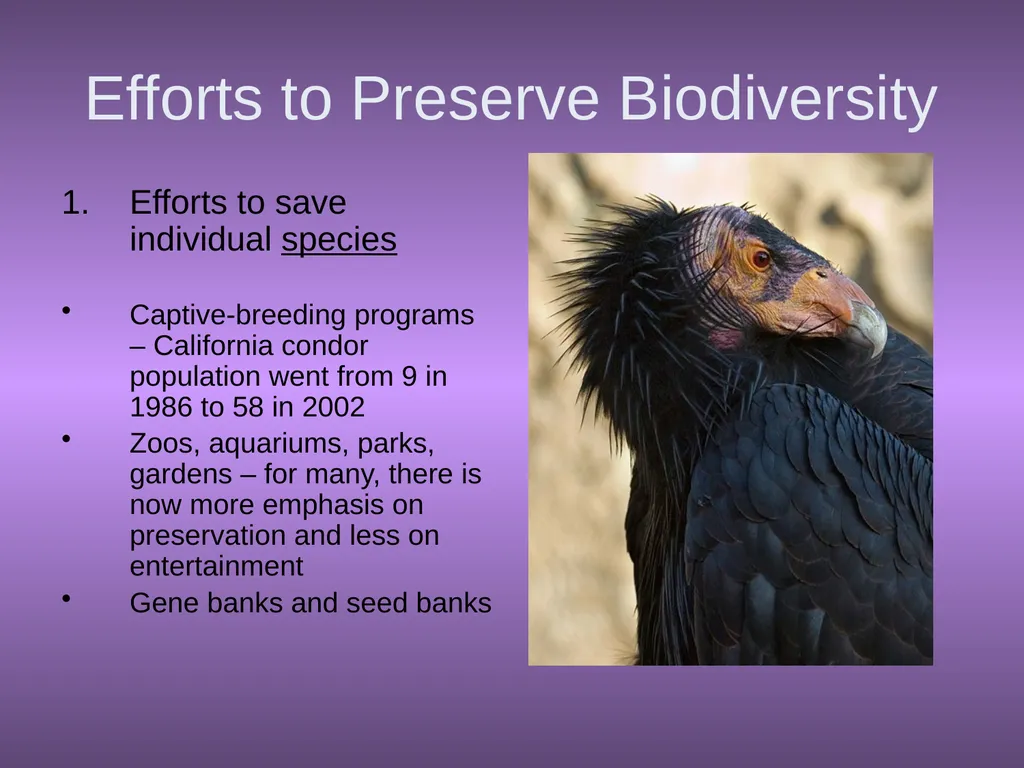
slide33. Efforts to Preserve Biodiversity Efforts to save individual species
Captive-breeding programs – California condor population went from 9 in 1986 to 58 in 2002
Zoos, aquariums, parks, gardens – for many, there is now more emphasis on preservation and less on entertainment
Gene banks and seed banks<br>
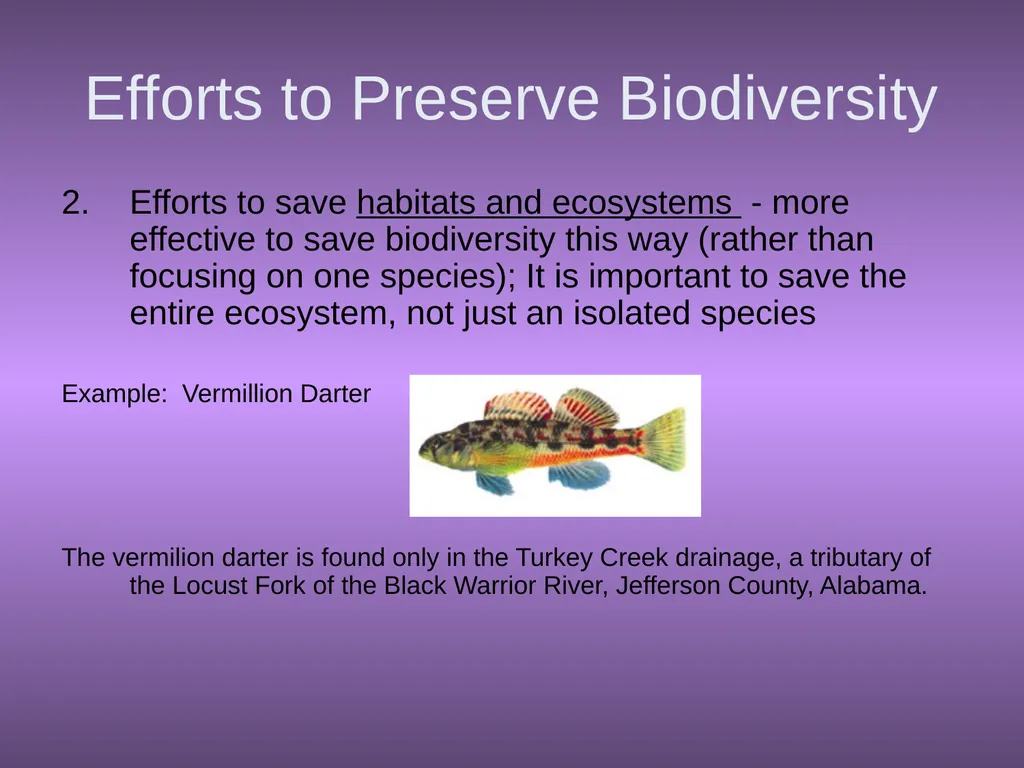
slide34. Efforts to Preserve Biodiversity Efforts to save habitats and ecosystems - more effective to save biodiversity this way (rather than focusing on one species); It is important to save the entire ecosystem, not just an isolated species
Example: Vermillion Darter
The vermilion darter is found only in the Turkey Creek drainage, a tributary of the Locust Fork of the Black Warrior River, Jefferson County, Alabama.<br>
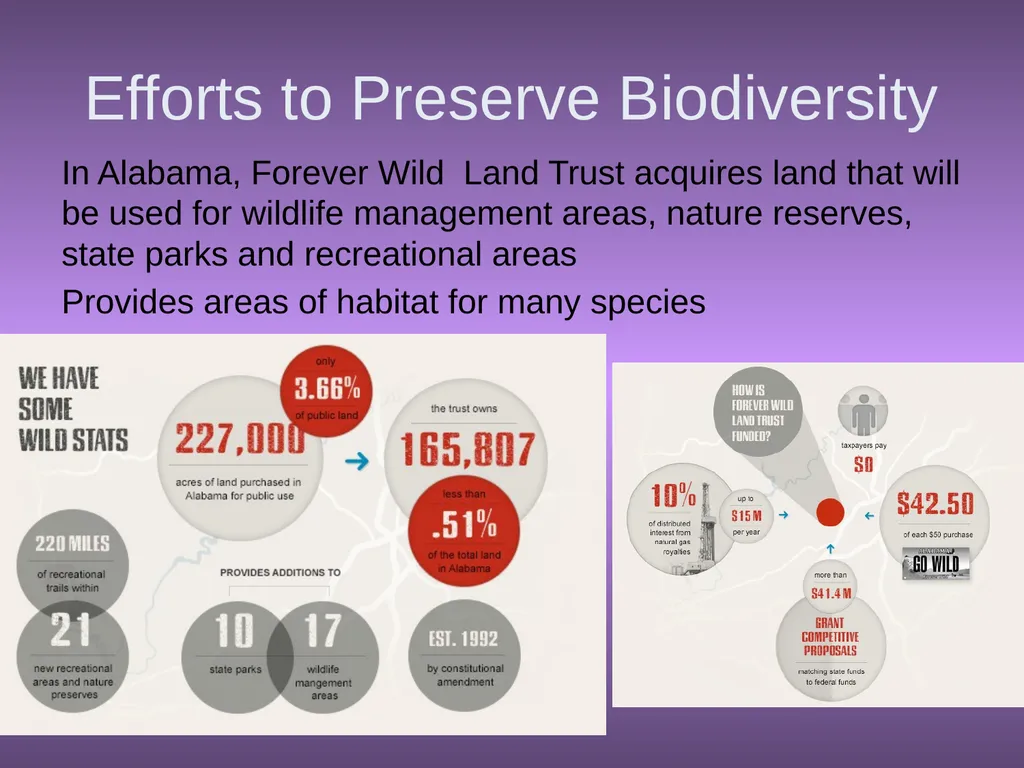
slide35. Efforts to Preserve Biodiversity In Alabama, Forever Wild Land Trust acquires land that will be used for wildlife management areas, nature reserves, state parks and recreational areas
Provides areas of habitat for many species<br>
slide36. Efforts to Preserve Biodiversity Legal protection – exists in many countries
U.S. has Endangered Species Act (ESA), passed in 1973
Main Provisions:
U.S. Fish and Wildlife Service (USFWS) compiles a list of endangered and threatened species on land and in freshwater, National Marine Fisheries Service (NMFS) is responsible for marine species
End./Thr. Species may not be killed, caught, sold (penalties include fines and jail, enforced mainly by USFWS, also Coast Guard)
Fed. Govt. may not carry out projects that jeopardize listed species
Dept. of Interior should designate and protect critical habitat necessary for survival of listed species
USFWS must develop a recovery plan for each
listed species<br>
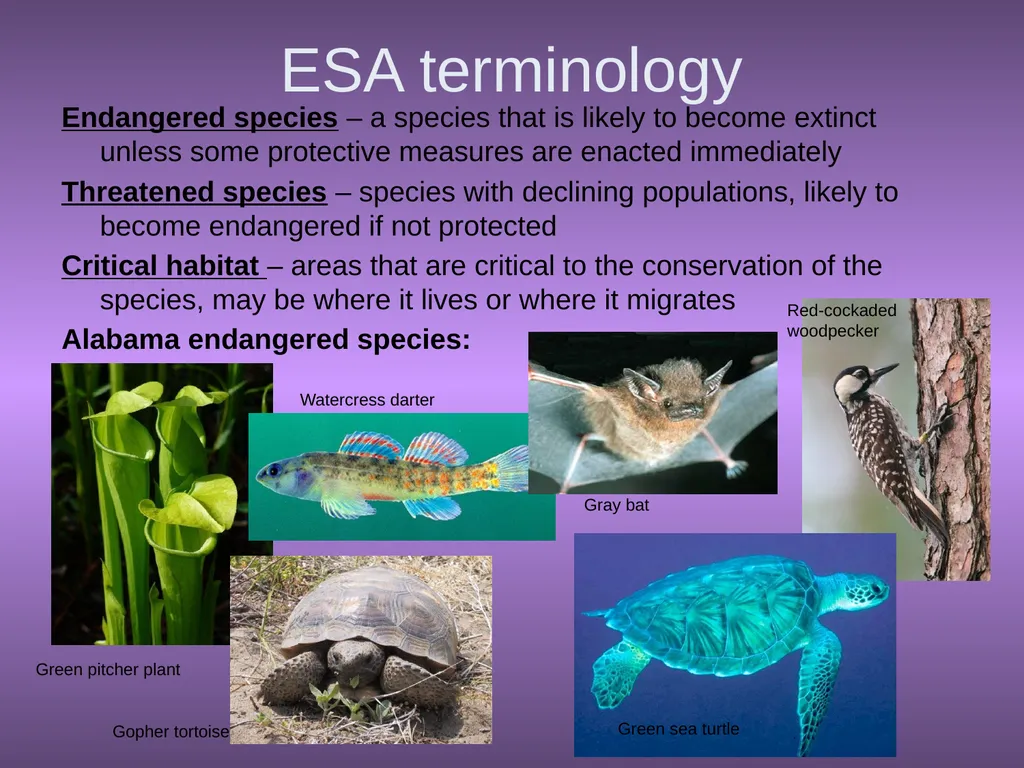
slide37. ESA terminology Endangered species – a species that is likely to become extinct unless some protective measures are enacted immediately
Threatened species – species with declining populations, likely to become endangered if not protected
Critical habitat – areas that are critical to the conservation of the species, may be where it lives or where it migrates
Alabama endangered species: Green pitcher plant Watercress darter Gopher tortoise Gray bat Green sea turtle Red-cockaded woodpecker<br>
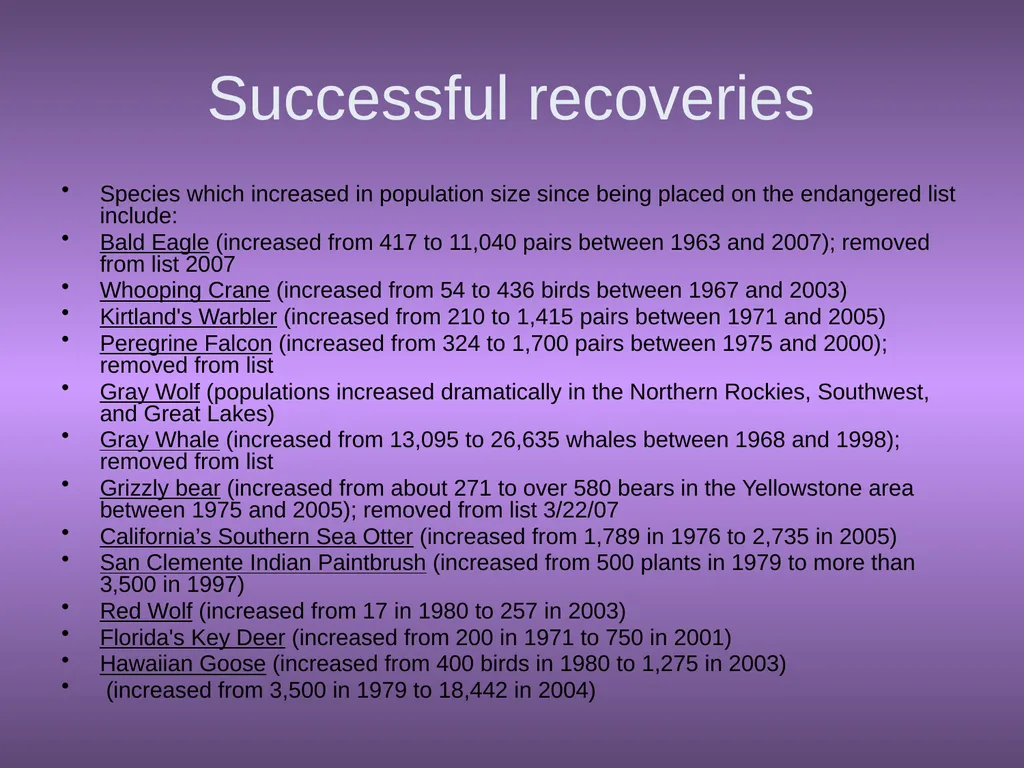
slide38. Successful recoveries Species which increased in population size since being placed on the endangered list include:
Bald Eagle (increased from 417 to 11,040 pairs between 1963 and 2007); removed from list 2007
Whooping Crane (increased from 54 to 436 birds between 1967 and 2003)
Kirtland's Warbler (increased from 210 to 1,415 pairs between 1971 and 2005)
Peregrine Falcon (increased from 324 to 1,700 pairs between 1975 and 2000); removed from list
Gray Wolf (populations increased dramatically in the Northern Rockies, Southwest, and Great Lakes)
Gray Whale (increased from 13,095 to 26,635 whales between 1968 and 1998); removed from list
Grizzly bear (increased from about 271 to over 580 bears in the Yellowstone area between 1975 and 2005); removed from list 3/22/07
California’s Southern Sea Otter (increased from 1,789 in 1976 to 2,735 in 2005)
San Clemente Indian Paintbrush (increased from 500 plants in 1979 to more than 3,500 in 1997)
Red Wolf (increased from 17 in 1980 to 257 in 2003)
Florida's Key Deer (increased from 200 in 1971 to 750 in 2001)
Hawaiian Goose (increased from 400 birds in 1980 to 1,275 in 2003)
(increased from 3,500 in 1979 to 18,442 in 2004)<br>
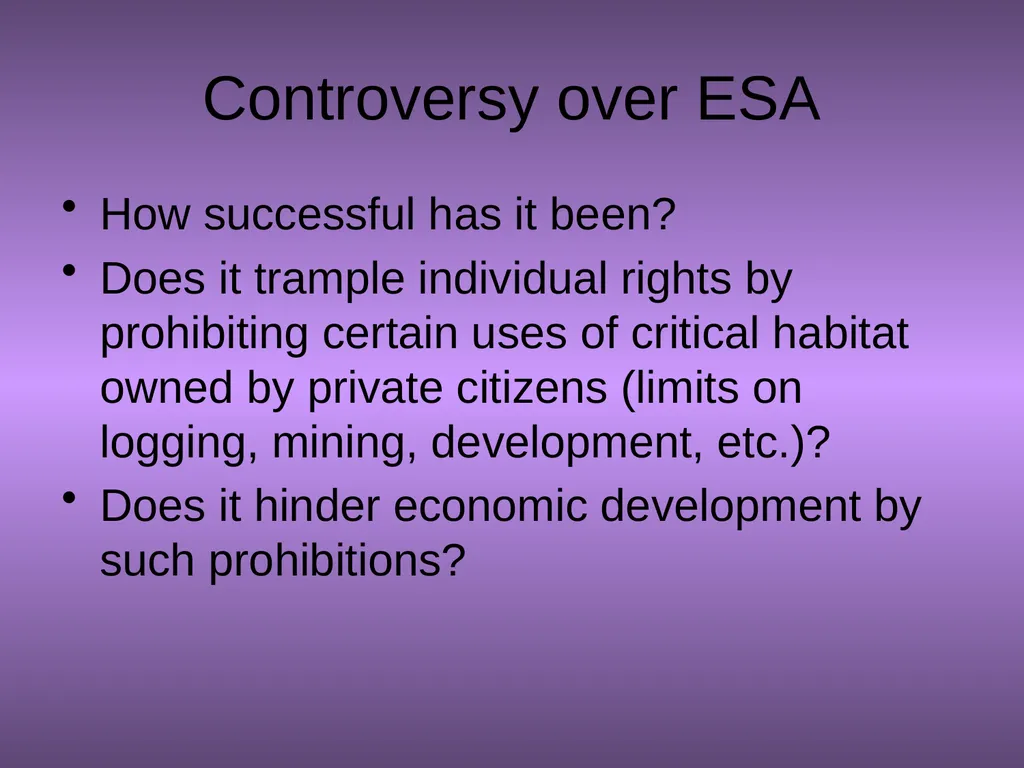
slide39. Controversy over ESA How successful has it been?
Does it trample individual rights by prohibiting certain uses of critical habitat owned by private citizens (limits on logging, mining, development, etc.)?
Does it hinder economic development by such prohibitions?<br>
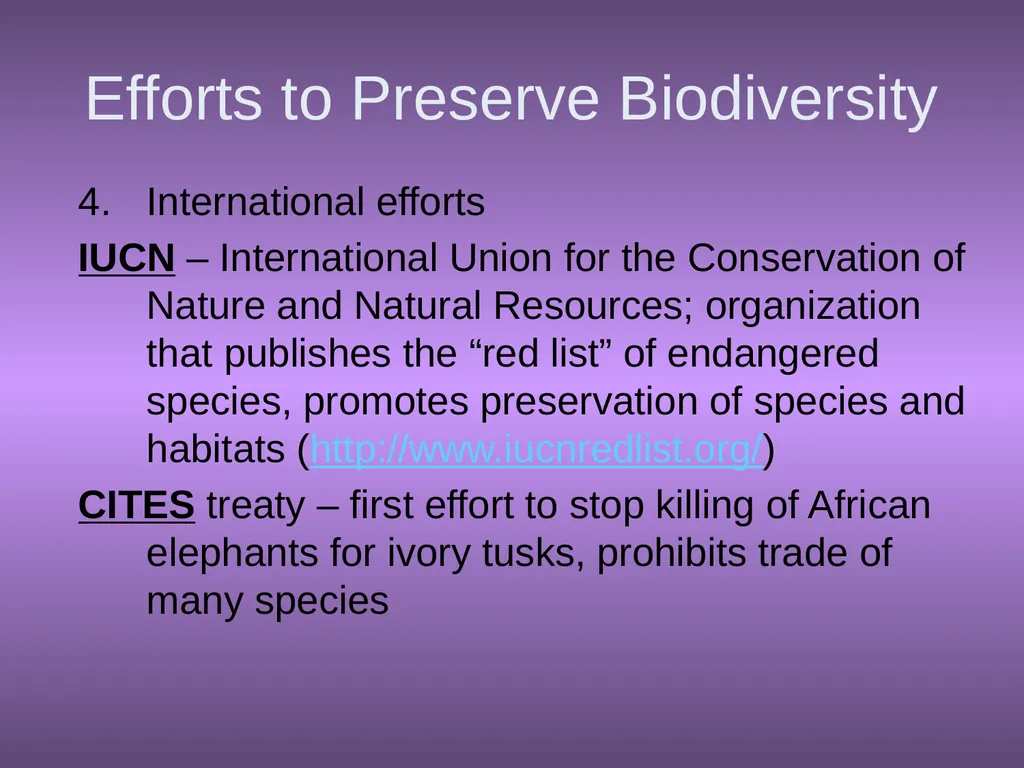
slide40. Efforts to Preserve Biodiversity International efforts
IUCN – International Union for the Conservation of Nature and Natural Resources; organization that publishes the “red list” of endangered species, promotes preservation of species and habitats (http://www.iucnredlist.org/)
CITES treaty – first effort to stop killing of African elephants for ivory tusks, prohibits trade of many species<br>
slide41. Efforts to Preserve Biodiversity Private organizations
Examples: World Wildlife Fund, Nature Conservancy, Greenpeace International
Freshwater Land Trust– in Alabama, buys land to enhance water quality and preserve natural areas<br>
10.2 Biodiversity at risk
10.3 The future of biodiversity<br>
slide2. Biodiversity – the variety of living things in an area;
Three levels of biodiversity:
1. Genetic diversity
2. Species diversity
3. Ecosystem diversity<br>
slide3. When we talk about “biodiversity of the earth,” we usually mean species diversity
Guess the number of species on the planet?
Latest estimate: 8.7 million species From Science Daily: “Furthermore, the study, published byPLoS Biology, says a staggering 86% of all species on land and 91% of those in the seas have yet to be discovered, described and catalogued.”<br>
slide4. Benefits of Biodiversity Biodiversity can affect the stability of ecosystems
When even one species is lost, it affects the entire ecosystem<br>
slide5. Keystone species – species that are critical to the survival of an entire ecosystem
Example: sea otter<br>
slide6. Benefits of Biodiversity 2. Healthy ecosystems provide good ecosystem services – the benefits that people obtain from ecosystems<br>
slide7. Ecosystem Services: the benefits people obtain from ecosystems Regulating
Benefits obtained from regulation of ecosystem processes
• climate regulation
• disease regulation
• flood regulation Provisioning
Goods produced or provided by ecosystems
• food
• fresh water
• fuel wood
• genetic resources Cultural
Non-material benefits from ecosystems
• spiritual
• recreational
• aesthetic
• inspirational
• educational Supporting
Services necessary for production of other ecosystem services
• Soil formation
• Nutrient cycling
• Primary production<br>
slide8. Benefits of Biodiversity Humans need biodiversity for medical, industrial, and agricultural purposes
(existing uses and genetic information for new uses) Foxglove Digitalis purpurea,
Europe
Digitalis for heart failure Pacific yew Pacific Northwest
Ovarian cancer<br>
slide9. Potential new food crops may be lost forever Source: FAO<br>
slide10. Ethics, aesthetics, and recreation
E.O. Wilson: there is “spiritual, religious and psychological value” in preserving biodiversity
Ecotourism – tourism that supports conservation and sustainable development of ecologically unique areas<br>
slide11. Extinction – three types:
Local – species is extinct in one area, but still found in other locations
Ecological – so few left that it no longer plays its ecological role in the communities in which it is found
Biological extinction – completely gone from the planet Biodiversity at Risk<br>
slide12. Extinction is a natural process Extinction is irreversible: once a species is lost, it is lost forever
99.9% of all species that ever existed are now extinct<br>
slide13. Earth has had five mass extinctions so far Background extinction rate
“normal” rate of extinction that occurs naturally
background extinctions are usually unrelated
for example one estimate gives the background extinction rate for birds as 1 species lost per 400 years
Mass extinction events
when 50-95% of all species go extinct in a relatively short period of time
five events in Earth’s history have killed off massive numbers of species at once<br>
slide14. Mass extinctions Biggest: end of Permian (250mya), loss of 95% of species
Most recent: K-T event at end of Cretaceous (65mya), asteroid struck earth, led to extinction of dinosaurs<br>
slide15. Extinction rates Humans profoundly affect rates of extinction (causing 100 to 1000 extinctions per million species instead of the background extinction rate of 1-5 species per million)
Estimated annual extinction rate before humans: 0.0001%
Estimated annual extinction rate since humans: 0.1-1%
Scientists think that we are in the 6th mass extinction and this time, it is due to human activity<br>
slide16. Passenger pigeon Great auk Dodo Dusky seaside sparrow Aepyornis
(Madagascar) Extinct species – due to human activities<br>
slide17. Think about this… Name some characteristics of species that make them especially likely to go extinct:
List is on the next slide….<br>
slide18. Characteristic Examples Low reproductive rate
(K-strategist) Specialized niche Narrow distribution Feeds at high trophic
level Fixed migratory patterns Rare Commercially valuable Large territories Blue whale, giant panda,
rhinoceros Blue whale, giant panda,
Everglades kite Many island species,
elephant seal, desert pupfish Bengal tiger, bald eagle,
grizzly bear Blue whale, whooping crane,
sea turtles Many island species,
African violet, some orchids Snow leopard, tiger,
elephant, rhinoceros,
rare plants and birds California condor, grizzly
bear, Florida panther These are characteristics that increase the risk of extinction, along with examples of each<br>
slide19. How do humans cause extinction? HIPPCO Habitat destruction – may be complete destruction or habitat fragmentation
Habitat destruction is the number one threat to biodiversity<br>
slide20. How do humans cause extinction? HIPPCO Introduction of invasive species
Example: Mites, called Verroa destructor, introduced from Asia have seriously reduced the wild honeybee population in the U.S.<br>
slide21. Spread of fire ants<br>
slide22. Kudzu Fast-growing climbing vine from Asia
Introduced to control erosion<br>
slide23. European Starling Released into New York City in the late1800’s by a man who wanted to introduce to the U.S. all of the birds mentioned in Shakespeare
Now widespread across North America
Outcompetes many native birds, such as bluebirds, for nest holes<br>
slide24. How do humans cause extinction? HIPPCO 3. Population growth – root of the problem? Food for thought: What native species could live in these conditions?<br>
slide25. How do humans cause extinction? HIPPCO 4. Pollution
Example: Use of DDT almost caused the extinction of the Bald Eagle and other predatory birds<br>
slide26. Biomagnification Also called biological magnification
Accumulation of pollutants in higher order trophic levels<br>
slide27. How do humans cause extinction? HIPPCO Climate change
polar bear – loss of sea ice bleaching of coral reefs<br>
slide28. Golden toads were discovered in 1964, in Monteverde, Costa Rica
The mountainous cloud forest has a perfect climate for amphibians
Extreme sexual dimorphism
Unfortunately, they became extinct within 25 years
Causes:
Changes in habitat – drying of cloud forest due to global warming, ENSO
Narrow window of time for reproduction – breed in temporary ponds which dried up early
Limited range
Disease Female Males<br>
slide29. How do humans cause extinction? HIPPCO 6. Overharvesting, hunting, poaching
Both legal and illegal collecting of organisms has had a negative impact<br>
slide30. Areas of Critical Biodiversity Biodiversity “hotspots”
High numbers of endemic species – means many organisms that live there are not found anywhere else in the world
Threatened by human activities
Tropical rainforests
Coral reefs and coastal ecosystems
Islands<br>
slide31. Global Biodiversity Hotspots<br>
slide32. Concentration of rare species Low Moderate High Top Six Hot Spots 1 Hawaii
2 San Francisco Bay area
3 Southern Appalachians
4 Death Valley
5 Southern California
6 Florida Panhandle 4 5 2 6 3 1 U.S. Biodiversity Hotspots<br>
slide33. Efforts to Preserve Biodiversity Efforts to save individual species
Captive-breeding programs – California condor population went from 9 in 1986 to 58 in 2002
Zoos, aquariums, parks, gardens – for many, there is now more emphasis on preservation and less on entertainment
Gene banks and seed banks<br>
slide34. Efforts to Preserve Biodiversity Efforts to save habitats and ecosystems - more effective to save biodiversity this way (rather than focusing on one species); It is important to save the entire ecosystem, not just an isolated species
Example: Vermillion Darter
The vermilion darter is found only in the Turkey Creek drainage, a tributary of the Locust Fork of the Black Warrior River, Jefferson County, Alabama.<br>
slide35. Efforts to Preserve Biodiversity In Alabama, Forever Wild Land Trust acquires land that will be used for wildlife management areas, nature reserves, state parks and recreational areas
Provides areas of habitat for many species<br>
slide36. Efforts to Preserve Biodiversity Legal protection – exists in many countries
U.S. has Endangered Species Act (ESA), passed in 1973
Main Provisions:
U.S. Fish and Wildlife Service (USFWS) compiles a list of endangered and threatened species on land and in freshwater, National Marine Fisheries Service (NMFS) is responsible for marine species
End./Thr. Species may not be killed, caught, sold (penalties include fines and jail, enforced mainly by USFWS, also Coast Guard)
Fed. Govt. may not carry out projects that jeopardize listed species
Dept. of Interior should designate and protect critical habitat necessary for survival of listed species
USFWS must develop a recovery plan for each
listed species<br>
slide37. ESA terminology Endangered species – a species that is likely to become extinct unless some protective measures are enacted immediately
Threatened species – species with declining populations, likely to become endangered if not protected
Critical habitat – areas that are critical to the conservation of the species, may be where it lives or where it migrates
Alabama endangered species: Green pitcher plant Watercress darter Gopher tortoise Gray bat Green sea turtle Red-cockaded woodpecker<br>
slide38. Successful recoveries Species which increased in population size since being placed on the endangered list include:
Bald Eagle (increased from 417 to 11,040 pairs between 1963 and 2007); removed from list 2007
Whooping Crane (increased from 54 to 436 birds between 1967 and 2003)
Kirtland's Warbler (increased from 210 to 1,415 pairs between 1971 and 2005)
Peregrine Falcon (increased from 324 to 1,700 pairs between 1975 and 2000); removed from list
Gray Wolf (populations increased dramatically in the Northern Rockies, Southwest, and Great Lakes)
Gray Whale (increased from 13,095 to 26,635 whales between 1968 and 1998); removed from list
Grizzly bear (increased from about 271 to over 580 bears in the Yellowstone area between 1975 and 2005); removed from list 3/22/07
California’s Southern Sea Otter (increased from 1,789 in 1976 to 2,735 in 2005)
San Clemente Indian Paintbrush (increased from 500 plants in 1979 to more than 3,500 in 1997)
Red Wolf (increased from 17 in 1980 to 257 in 2003)
Florida's Key Deer (increased from 200 in 1971 to 750 in 2001)
Hawaiian Goose (increased from 400 birds in 1980 to 1,275 in 2003)
(increased from 3,500 in 1979 to 18,442 in 2004)<br>
slide39. Controversy over ESA How successful has it been?
Does it trample individual rights by prohibiting certain uses of critical habitat owned by private citizens (limits on logging, mining, development, etc.)?
Does it hinder economic development by such prohibitions?<br>
slide40. Efforts to Preserve Biodiversity International efforts
IUCN – International Union for the Conservation of Nature and Natural Resources; organization that publishes the “red list” of endangered species, promotes preservation of species and habitats (http://www.iucnredlist.org/)
CITES treaty – first effort to stop killing of African elephants for ivory tusks, prohibits trade of many species<br>
slide41. Efforts to Preserve Biodiversity Private organizations
Examples: World Wildlife Fund, Nature Conservancy, Greenpeace International
Freshwater Land Trust– in Alabama, buys land to enhance water quality and preserve natural areas<br>